 Skip to content
How Delsney Began
# From a Small Craft Workshop to an Engineering-Led Plush Manufacturer
Delsney started as a small craft-focused workshop founded by a group of artisans passionate about character design, soft materials and hand-crafted plush toys. In the early years, production involved only three sewing tables, one embroidery station, and a team of five artisans experimenting with shapes, textures and construction methods.
As product demand grew, Delsney began transitioning from a handmade workshop into a structured manufacturing facility equipped with industrial-grade sewing lines, digital pattern systems and professional QC processes. The shift was driven by a single idea: a plush toy must combine emotional value with engineering-level consistency.
Today, after 18+ years, the company has evolved into a global partner trusted by:
- Retail chains
- Licensing companies
- Corporate gift programs
- E-commerce brands
- Character design studios
What started as a craft-focused practice became a data-driven plush manufacturing ecosystem.
Our Evolution Through the Years
Delsney’s journey reflects steady investment in engineering, compliance and global readiness.
Each milestone strengthened our ability to serve international brands.
Key Milestones
Year 1–3: Foundation
- Small workshop formed by artisans
- First handmade plush collections created
- Early partnerships with local brands
Year 4–6: Factory Establishment
- First production building with structured sewing lines
- Early QC protocols introduced
- Expanded team to 30+ trained craftworkers
Year 7–10: Export Expansion
- First overseas shipment delivered
- Compliance system established (EN71 / ASTM / CPSIA)
- Annual shipment volume surpassed 200+ orders
Year 11–14: Engineering Integration
- Digital pattern-cutting introduced
- Metal detection system installed
- Golden Sample engineering workflow standardized
Year 15–18: Modernization & Sustainability
- Energy-efficient facilities installed
- RPET materials integrated into plush lines
- Annual shipments exceeded 6 million + units
- Now serving 86+ countries
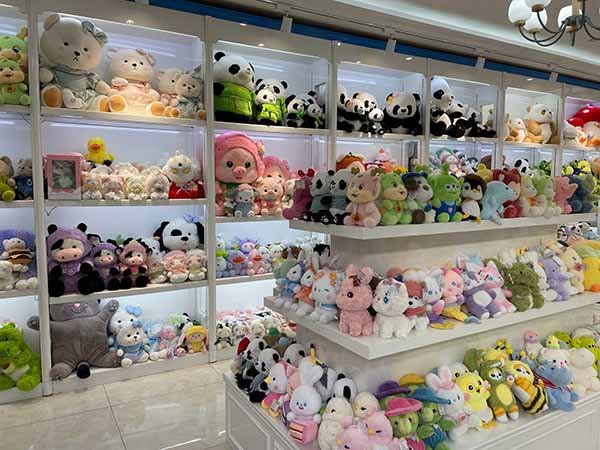
The Values That Shape Delsney
Delsney’s story is built on a set of principles carried since the first handmade plush:
1. Craftsmanship at the Core
Every design begins with attention to detail—shape, expression, texture and stitching. Even today, all prototypes are still hand-crafted by senior modelers with 10+ years of plush experience.
2. Engineering-Led Production
Plush toys must be cute—but also structurally reliable. Our engineering team documents every measurement, seam density, stuffing matrix and accessory specification to deliver consistent output across thousands of units.
3. Reliability Above All
Brands rely on stable timelines and consistent quality. Delsney maintains:
- 97% on-time delivery rate
- 98% sample-to-mass-production accuracy
- A zero metal-contamination record for 18+ years
4. Sustainability as a Long-Term Responsibility
We integrate recycled materials, energy-efficient operations, waste-reduction systems and eco packaging across production lines.
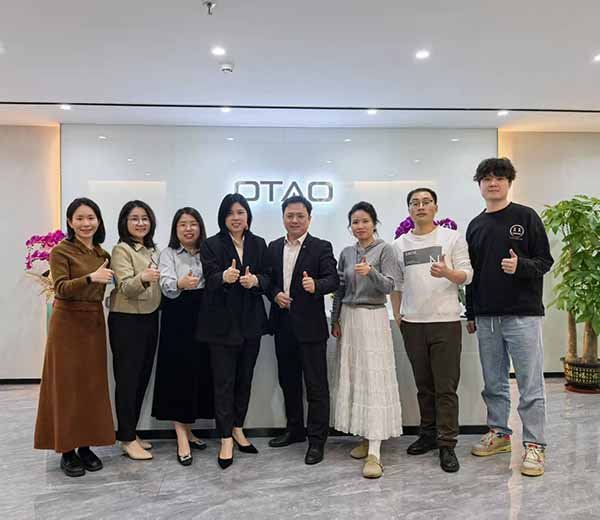
The Founding Team Behind Delsney
A Group of Designers, Craftsmen & Engineers with One Shared Vision
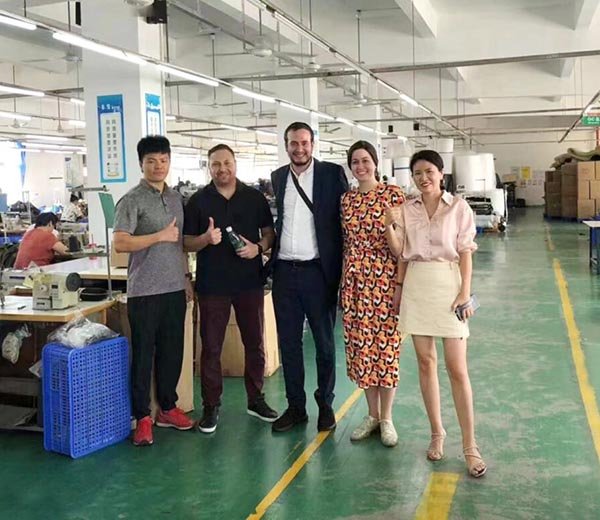
Delsney was founded by a small group of designers, craftsmen and production engineers who believed plush toys could be manufactured with the same precision, durability and structure found in industrial product engineering — without losing the emotional warmth that handmade toys provide.
The core founding members each brought a different competence:
- Lead Designer (15+ years): specialized in character expression, proportion control and plush modeling.
- Senior Sewing Craftsman (18+ years): experienced in high-precision stitching, multi-layer fabric handling and structural reinforcement.
- Production Engineer (12+ years): focused on consistency, pattern documentation, seam density rules and scalable production planning.
- Quality Specialist (10+ years): developed the early sample evaluation checklist that later evolved into Delsney’s modern QC system.
Shared by all was the mission to create plush products that combined emotional value and engineering integrity. This balance remains the cornerstone of Delsney’s approach today.




Why Plush Manufacturing Became Our Mission
Delsney did not grow into plush manufacturing by accident.
In the early years, the founders noticed a gap in the industry: many plush makers relied entirely on handcrafting without standardized measurement rules, golden sample systems or structural durability testing.
This caused issues for global brands — inconsistent shapes, unstable stitching, uneven stuffing and unpredictable production timelines.
Delsney set out to solve these problems by establishing a manufacturing philosophy based on three pillars:

1. Plush Should Be Engineered, Not Just Sewn
Every plush model follows documented measurements, stuffing density maps, seam tension standards and accessory specifications.
2. Consistency Matters As Much As Creativity
A design is only successful if the 5,000th unit looks the same as the first prototype. This belief drove Delsney to develop:
- A strict Golden Sample process
- A measurement database
- A repeatability-focused production workflow
3. Safety & Durability Must Be Non-Negotiable
Plush toys experience high-touch usage, especially among children. Delsney built early durability rules such as:
- Double stitching for stress points
- Solid-anchored small parts
- Stuffing rebound requirements
- Fabric abrasion minimum thresholds
Today, these principles define Delsney’s global reputation.
From Craftsmanship to Global Engineering
How Delsney Transformed Small-Scale Handwork Into an International Production System
The transformation from a handmade workshop to a global plush production facility did not happen overnight.
It took years of reinvestment, system building and detailed engineering refinement.
Craftsmanship Stage
The first stage focused on perfecting shapes, expressions and soft textures.
Designers manually adjusted proportions, studied fabric behavior and tested different stuffing densities by hand.
This period built the artistic foundation of the brand — a sensitivity to how plush toys should “feel” when held.
Engineering Integration
As demand increased, Delsney introduced technical systems including:
- Digital pattern-making
- Seam density rules
- Stuffing volume calculations
- Material compatibility charts
- Reinforcement standards
- Accessory safety protocols
This allowed complex plush characters to be reproduced accurately across large orders.
Modern Manufacturing Expansion
Delsney now operates with:
- Multiple sewing lines with trained operators
- Computerized embroidery stations
- Metal detection systems
- Digital cutting machines
- A climate-controlled materials warehouse
- A structured QC department with category specialists
The combination of craft and engineering is what differentiates Delsney from standard plush factories.
Our Craftsmanship Philosophy
Craftsmanship remains the emotional core of Delsney’s identity.
Even after expanding into an engineering-led manufacturing system, the foundation of every plush begins at the craft table.
Delsney’s modeling team follows a craft philosophy built on three key principles:
1. Expression Before Construction
Plush toys are emotional products—expression defines character. Senior modelers spend hours adjusting:
- Eye angles
- Ear symmetry
- Facial curves
- Body proportions
- Gesture personality
Before a single measurement is taken, the plush must “feel alive.”
2. Touch & Texture Matter
Fabric selection is handled with care. Modelers compare multiple piles, sheens and densities to find the texture that fits the character’s personality—soft, fluffy, short-pile, velour-like or structured.
3. Craft Detail Must Survive Scale
When products are mass-produced, handmade charm must not be lost. We evaluate every detail—stitch visibility, nose curvature, stuffing distribution—to ensure it remains consistent even in batches of 10,000+ units.
Engineering the Modern Plush
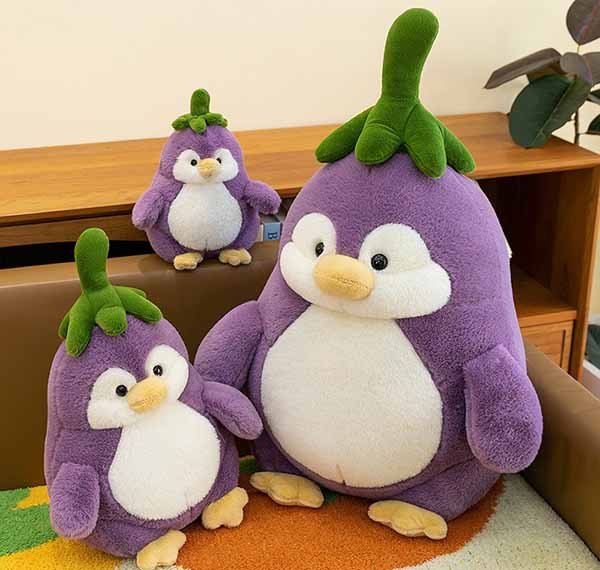
Behind every plush that leaves Delsney’s facility is a fully engineered framework, combining technical rules with repeatable processes.
Our engineering team documents every step in the Golden Sample and mass-production workflow:
01
Measurement Documentation System
Each plush model includes over 25–60 measurement points, covering:
- Body diameter
- Limb lengths
- Facial element placement
- Fabric stretch behavior
- Stuffing thickness at specific zones
This system ensures production teams replicate the prototype precisely.
02
Seam Engineering & Density Rules
Stitch types and densities are defined based on:
- Fabric elasticity
- Plush size
- Load-bearing locations
- Stress simulation
Critical points use double or triple stitching to prevent seam failure.
03
Stuffing Density Mapping
Unlike factories that fill uniformly, Delsney models stuffing density by zones:
- High-density core for structure
- Medium-density arms/legs for movement
- Soft-density surface layers for comfort
This mapping results in better shape retention after compression.
04
Accessory Engineering
Parts such as eyes, badges, clothing, wings, horns and tails are designed with safety and reinforcement rules to meet:
- EN71
- ASTM F963
- CPSIA
Each accessory undergoes pull testing and torque checking before approval.
05
Safety & Durability Protocols
Delsney performs:
- Seam strength tests (≥70N)
- Fabric abrasion tests (≥20,000 cycles)
- Stuffing rebound tests (24h compression)
- Metal detection checks
These engineering steps guarantee long-term durability during play or display.
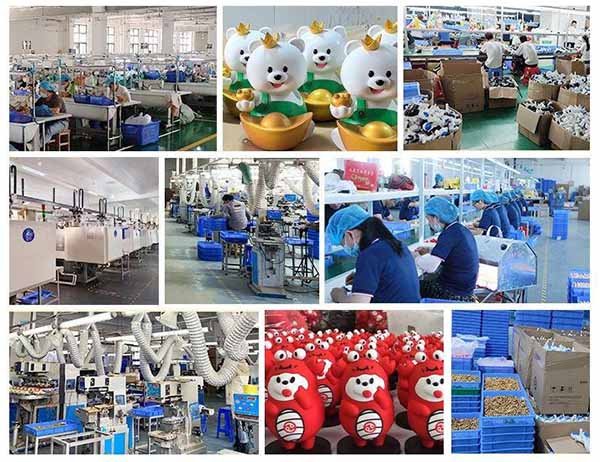
The Facility That Shapes Our Capabilities
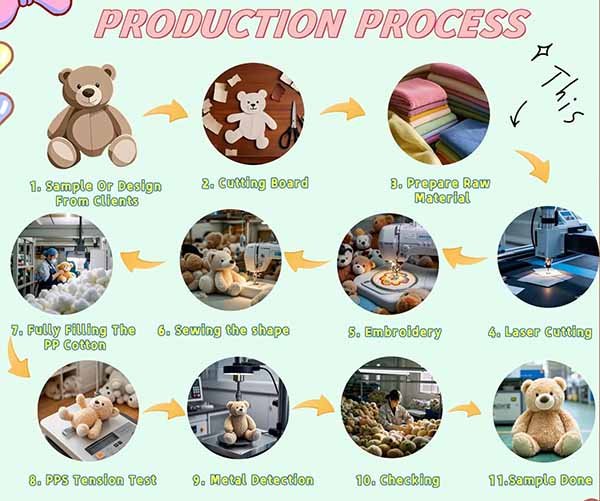
Delsney operates a modern manufacturing facility engineered specifically for plush production.
Every section—from cutting to embroidery to QC—has been built to support consistent, safe and scalable manufacturing with a clear focus on engineering precision.
Structured Production Lines
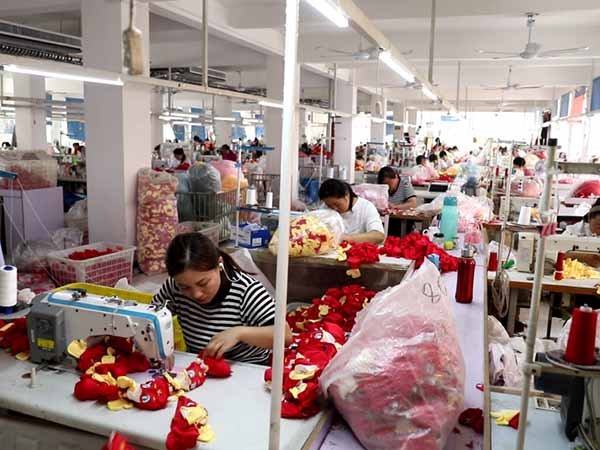
The factory features multiple specialized production zones:
- Digital pattern-cutting area
- Computerized embroidery room
- Dedicated sewing lines for different plush categories
- Pre-stuffing shaping area
- Post-stuffing finishing zone
These structured lines allow efficient flow and high repeatability for large-volume orders.
Equipment That Ensures Accuracy
To support engineering-level consistency, the facility includes:
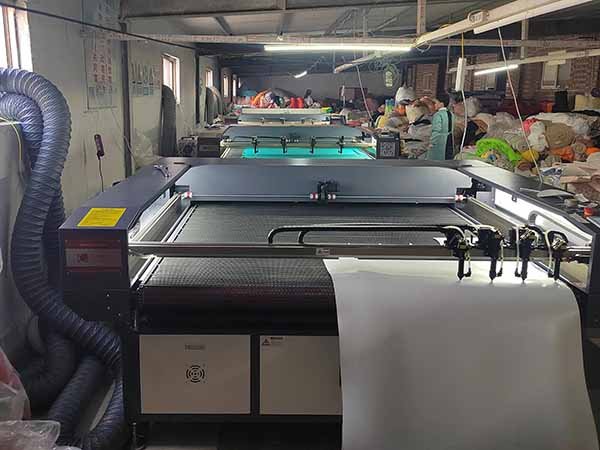
- Digital cutting machines for precise fabric shaping
- Computerized embroidery machines for exact detailing
- Metal detection systems to ensure safety standards
- Industrial steam machines for plush shape-setting
- QC measurement tools (digital calipers, templates, seam gauges)
This infrastructure ensures every phase is controlled and quantifiable.
Clean & Safe Production Environment
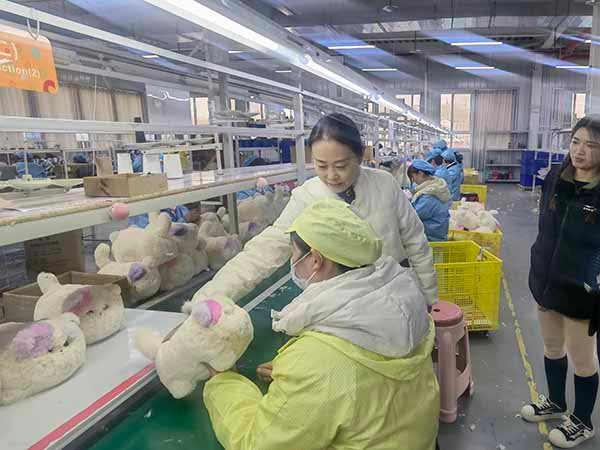
Delsney prioritizes workplace safety not just for compliance, but for ensuring product purity:
- Climate-controlled warehouse for material stability
- Dust-controlled cutting zones
- Organized accessory inventory management
- Clearly marked movement pathways
- Daily sanitation of sewing and stuffing areas
Such a controlled environment reduces defect rates and ensures higher reliability.
Measurable Performance Indicators
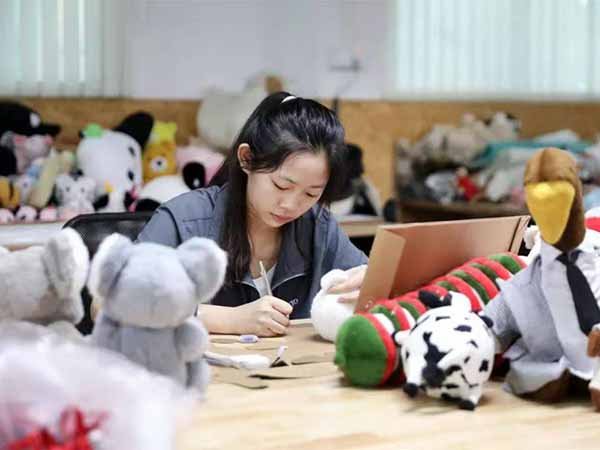
The factory maintains consistent performance supported by internal data:
- 97% on-time delivery rate
- 98% golden sample reproduction accuracy
- Zero metal-contamination incidents in 18+ years
- < 2.3% average defect rate
- Capacity to support 900+ yearly shipments
These metrics demonstrate the stability behind Delsney’s production capabilities.
Our Global Clients & Long-Term Partnerships
Trusted by Retail Chains, Character IP Licensors & International Brands
Over nearly two decades, Delsney has built strong relationships with international brands, character licensors, retail chains and fast-growing e-commerce companies.
Clients choose Delsney not only for craftsmanship and engineering, but for the reliability and transparency embedded into every production phase.
Global Reach
Delsney currently serves partners in 86+ countries, including:
- North America
- Europe
- Japan
- South Korea
- Australia
- Southeast Asia
Different regions rely on Delsney for different strengths—from compliance and documentation to high durability and custom character modeling.
Categories of Long-Term Partners
Our clients include:
- Retail store chains
- Animation/IP licensors
- Gift and promotional distributors
- E-commerce growth brands
- Character merchandise producers
- Corporate marketing teams
Each group relies on different parts of Delsney’s strengths—some focus on safety compliance, some on expression modeling, some on mass-production stability.
Why Clients Stay with Delsney for Years
The core reasons behind long-term partnerships include:
- High sample-to-production consistency (98%+)
- Structured engineering documentation
- Transparent QC pipeline
- Capability to absorb complex character designs
- Predictable timelines
- Sustainability readiness (RPET materials, eco packaging, energy-efficient production)
Many customers remain with Delsney for 5+ years, and some have grown together with us since the early workshop era.
A Partnership Approach
Rather than treating production as a single transaction, Delsney supports brands through:
- Design refinement
- Safety advising
- Packaging optimization
- Production scaling
- Annual category planning
- Compliance documentation
This partnership mindset has allowed clients to launch stable, long-lived plush collections worldwide.





Our Commitment to the Future
Building a Responsible, Innovative & Globally-Ready Plush Manufacturing Ecosystem
As the global plush market evolves—shaped by sustainability expectations, licensing standards and faster product cycles—Delsney continues investing in innovation, environmental responsibility and international readiness.
Our future plans are built on three core directions:
Technology Integration for Higher Accuracy
To enhance production consistency and reduce manual variability, Delsney is investing in:
- More advanced digital pattern-making systems
- Enhanced sewing machine automation
- Data-linked QC templates
- Expanded metal detection capacity
- Vision-based defect-checking in key processes
These technologies ensure that even complex character models can be reproduced reliably at scale.
Sustainable Manufacturing Expansion
Sustainability is at the center of our long-term strategy. Plans include:
- Increased use of GRS-certified RPET fabrics
- Transition toward recycled fiber stuffing across more categories
- Additional LED-light retrofits to reduce energy consumption
- Even stronger waste-sorting and material recovery systems
- Lower-impact packaging structures through carton optimization
- Exploration of solar-assisted facility zones
Our long-term goal is to reduce factory-wide energy use by 30% and packaging impact by 20% over the next five years.
Global Service & Compliance Readiness
As licensing partners and international brands expand into new regions, Delsney continues strengthening compliance, documentation and service systems, including:
- Streamlined EN71 / ASTM / CPSIA testing cycles
- Faster documentation delivery for retail portals
- Dedicated sustainability reporting support
- Country-specific compliance readiness (EU, US, JP, KR)
- Localized communication teams for faster feedback
These commitments ensure Delsney stays aligned with global expectations—not only today, but long into the future.
A Message From Our Founder
When Delsney was first established, our founder believed that plush toys should not simply be produced — they should be crafted with patience, shaped with engineering and delivered with responsibility.
The founder often says:
“A plush toy carries more than stuffing and fabric — it carries someone’s story, someone’s gift, someone’s memory.”
This belief still guides every decision the company makes.
A. Our Promise to Quality
The founder emphasizes that every plush leaving the factory must carry the same integrity as the first handmade prototype crafted years ago. Quality is not an inspection step — it is a culture. It begins with design, continues with engineering and is proven through consistency.
B. Our Responsibility to Clients
Delsney understands that each project represents more than a purchase order. It represents trust — trust to interpret a character correctly, to meet safety standards, to deliver on time and to respect the global market’s expectations.
This responsibility drives our investment into technology, compliance and transparency.
C. Our Commitment to Craft
Even as production scales, Delsney preserves its craft roots. Senior modelers continue hand-sculpting prototypes, adjusting expressions, and refining proportions just as they did in the early workshop years.
The founder often reminds the team:
“Engineering gives structure; craftsmanship gives soul.”
D. Looking Toward Tomorrow
With growing global demand, Delsney will continue strengthening:
- Engineering capabilities
- Sustainability systems
- International partnerships
- Craftsmanship traditions
The founder’s message is simple but enduring:
“If we build with intention, clients will trust us; if we persist with integrity, the future will trust us too.”

Frequently Asked Questions
Key Questions About Delsney’s History, Culture & Manufacturing Foundations
Q1: What inspired the creation of Delsney’s plush manufacturing business?
Delsney began when a group of craftsmen and designers realized that the plush industry lacked structured engineering, consistent sample replication and integrated safety systems. Many early manufacturers relied heavily on handwork without standardized measurements or durability rules. The founders believed plush toys deserved the same precision as engineered products, inspiring them to create a facility where craftsmanship and technical discipline could coexist, forming the foundation of Delsney’s current global manufacturing ecosystem.
Q2: How has Delsney evolved from a small workshop into a global manufacturing partner?
Over more than 18 years, Delsney invested in equipment upgrades, engineering documentation, safety systems, sustainability practices and professional QC processes. The company expanded from five artisans to multiple structured sewing lines, digital cutting systems, computerized embroidery rooms, a fully equipped QC lab and a climate-controlled warehouse. Along the way, Delsney also adopted international compliance standards, allowing the company to serve retailers, licensing companies and international brands across more than 86 countries.
Q3: What aspects of craftsmanship still influence Delsney’s production process today?
Despite technological expansion, craftsmanship remains central to prototype creation. Senior modelers continue sculpting expressions, adjusting proportions manually and evaluating fabric textures by hand. The early workshop’s focus on facial detail, proportion refinement and tactile feel still governs how prototypes are built. The transition to mass production simply transformed these handcrafted insights into documented engineering rules, ensuring the artistic foundation is preserved even at scale.
Q4: Why does Delsney emphasize engineering so heavily in plush production?
Engineering provides consistency, safety and repeatability—essential for global retail and licensing. Plush toys are soft, but their structural requirements are strict. Delsney’s engineering system covers measurement maps, seam-density rules, stuffing distribution, reinforcement standards and accessory safety protocols. These elements reduce variability between units and ensure every plush matches the approved golden sample, supporting large-scale orders with stable timelines and predictable quality.
Q5: How does Delsney ensure product safety across every character and SKU?
Safety begins at the design stage, where reinforcement requirements, fabric compatibility and accessory anchoring structures are defined. During production, seam-strength tests, fabric abrasion tests, synthetic fiber safety screening, torque and pull tests for accessories and metal detection checks ensure compliance with EN71, ASTM F963 and CPSIA. Safety is treated as a system, not a final checkpoint, allowing Delsney to maintain a zero incident history for over 18 years.
Q6: What makes Delsney different from standard plush factories?
Unlike typical producers that rely on repetition and manual experience, Delsney operates on a hybrid system of craftsmanship and engineering. Prototypes are handcrafted but then translated into documented specifications that govern mass production. The company manages a multi-tier QC pipeline, long-life durability rules, golden sample blueprinting and specialized machinery for precision execution. This combination of artistry, measurement and safety creates plush products that look better, last longer and scale reliably.
Q7: How does Delsney approach sustainability in its evolution story?
Sustainability is embedded into material selection, factory upgrades and packaging engineering. The facility integrates low-energy equipment, LED lighting, recycled filling options, RPET plush fabrics, structured waste sorting, carton optimization and biodegradable packaging selections. These decisions are part of a broader long-term goal—to reduce factory-wide energy usage by 30% and packaging waste by 20% within five years. Sustainability is treated as a measurable commitment, not a slogan.
Q8: How does Delsney support long-term partnerships with global brands?
Partnerships are supported through transparent communication, strong documentation, reliable timelines and consistent quality. Delsney assists in design refinement, safety compliance, packaging planning and long-term category development. Many partners remain with the company for more than five years because they can depend on the predictability of golden sample accuracy, on-time delivery, sustainability options and responsive engineering support.

Work With the Team Behind Delsney
A plush partner built on craftsmanship, engineering & long-term trust.
