 Skip to content
ODM Plush Manufacturing by Delsney
# Complete Concept-to-Product Creation for Brands Seeking Original Plush Designs
ODM plush manufacturing at Delsney is built for brands that require not only production, but original product development, market-ready design systems and stable engineering execution. With 18+ years of plush development experience, Delsney supports global brands, retailers, licensing agencies and corporate teams with full creation-to-manufacturing capabilities.
ODM at Delsney includes:
- Product concept development
- Sketch refinement & style alignment
- Market positioning advice
- Pattern engineering
- Prototype building
- Fabric selection
- Branding elements integration
- Packaging concepts
- Mass production
- Export preparation
Each project is developed using structured technical documentation, ensuring designs are not only visually appealing but also manufacturable at scale with consistent quality.
ODxD (Original Design x Development) Capabilities
ODM requires more than producing a plush toy—it requires shaping a complete product idea into a manufacturable item with brand-consistent features, cost feasibility and stable production attributes.
Delsney’s ODxD team includes:
- 4 concept designers
- 6 product stylists
- 12 sample engineers
- Dedicated pattern makers
- Fabric & accessory sourcing specialists
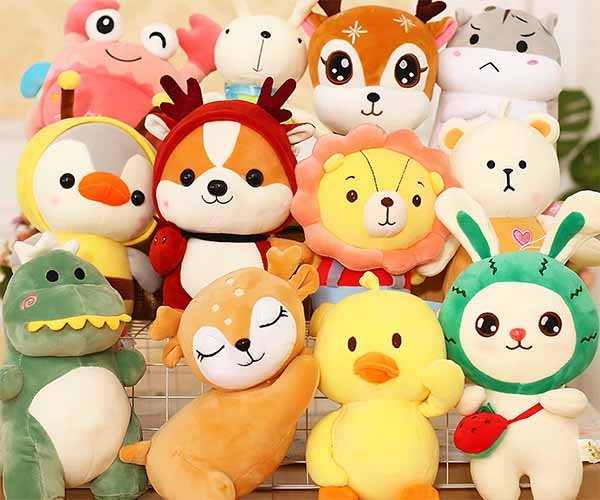
Market-Aligned Design Concepts
Delsney analyzes reference visuals, target region preferences, age groups, and brand identity to create styles suitable for gifting, retail, premium collectible lines or promotional campaigns.
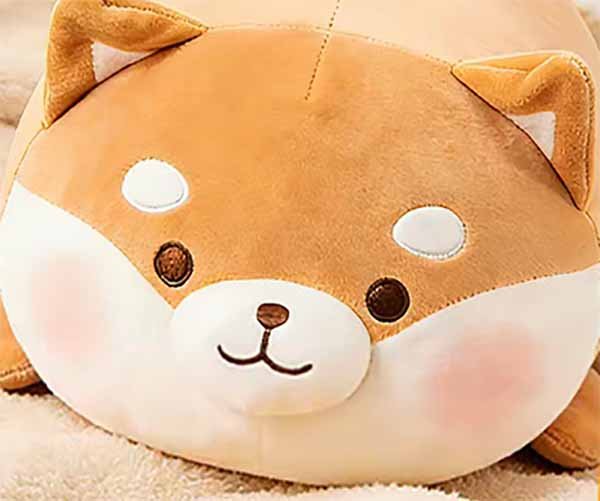
Character Expression Engineering
ODM design includes planning:
- Eye geometry
- Mouth curvature
- Facial ratios
- Proportion scaling
- Emotional consistency
Facial placement tolerances: ±1.5 mm.
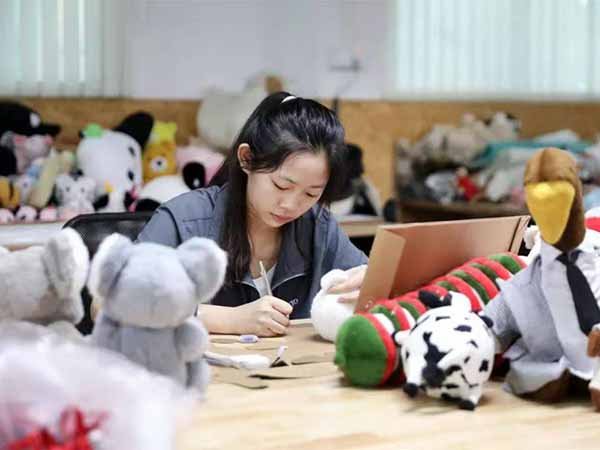
Production-Optimized Design
Designs are adjusted to:
- Reduce unnecessary seams
- Improve stuffing balance
- Simplify embroidery layout
- Control cost by adjusting panel count
This ensures designs stay beautiful without sacrificing manufacturability.
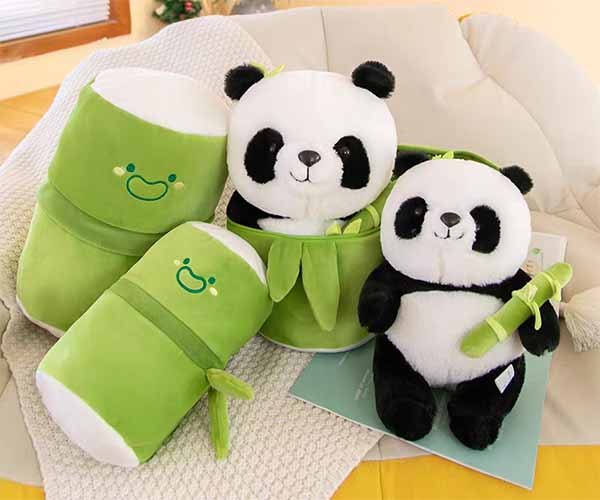
Multi-SKU Design Sets
Most ODM clients require more than one item. Delsney can create:
- Character families
- Seasonal collections
- Themed series
- Branded mascots in different outfits
All SKUs share one consistent design language.
ODM Concept Development & Creative Refinement
Turning Brand Ideas Into Practical, Manufacturable Plush Products
Delsney’s ODM concept development system translates initial ideas—whether sketches, mood boards, brand mascots or written descriptions—into engineered plush concepts that can be reproduced consistently.
Brand Style Extraction
Designers analyze:
- Brand colors
- Personality traits
- Existing products
- Preferred themes
- Retail positioning
- Safety requirements
This ensures the plush aligns with brand identity.
Draft Sketching & Shape Construction
Designers produce 3–6 initial sketches covering:
- Silhouette outlines
- Proportion variations
- Emotion styles
- Accessory options
- Fabric suggestions
Each sketch is reviewed with the brand for direction confirmation.
Technical Translation
Engineers translate the chosen sketch into:
- Panel segmentation
- Embroidery mapping
- Stuffing density plan
- Seam reinforcement points
- Material compatibility matrix
This ensures the plush is both visually appealing and structurally sound.
Production Feasibility Review
Before prototyping, engineers evaluate:
- Estimated cost
- Minimum panel count
- Embroidery area size
- Fabric consumption
- Accessory sourcing availability
- Sewing difficulty
If needed, the design team adjusts the concept to balance beauty and manufacturing efficiency.
Character Personality Mapping
For character plush, a personality sheet is created documenting:
- Emotion range
- Signature expressions
- Key visual elements
- Outfit variations
- Repeatability standards
This ensures long-term consistency across future variants.
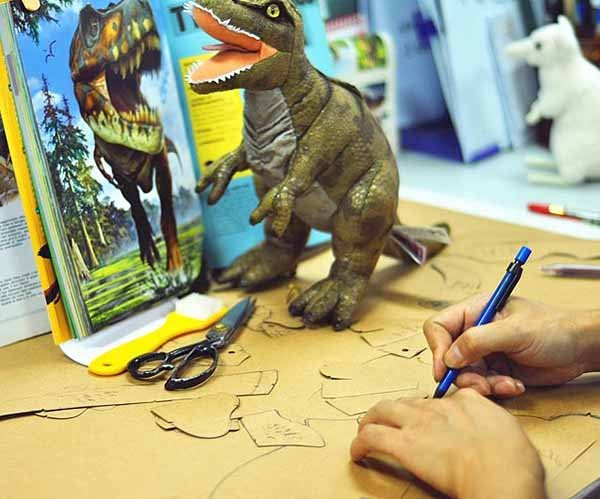
Pattern Engineering & Technical Sample Development
From 2D Concept Artwork to Manufacturing-Ready Plush Prototypes
ODM plush development requires a more advanced engineering process than OEM because the pattern must be created from scratch—not adapted. Delsney’s pattern engineering department consists of 12 full-time pattern makers and sample engineers, each trained to convert artistic sketches into precise 3D plush structures.
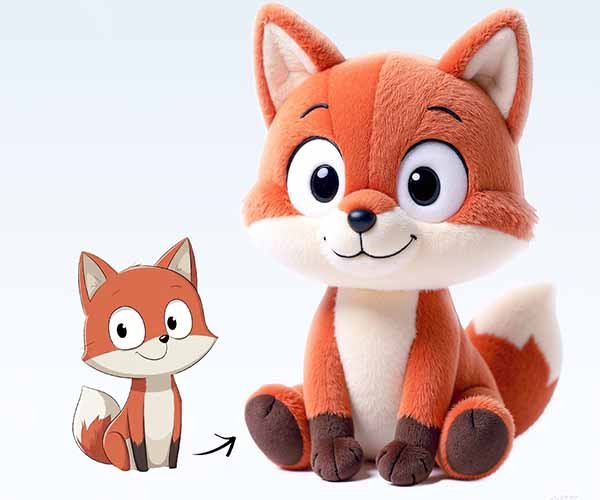
2D-to-3D Translation
Pattern makers analyze:
- Silhouette
- Limb proportions
- Curvature angles
- Facial placement
- Volume distribution
- Stress points for seams
The design is then segmented into panels according to:
- Optimal stuffing zones
- Embroidery areas
- Symmetry requirements
- Sewing difficulty levels
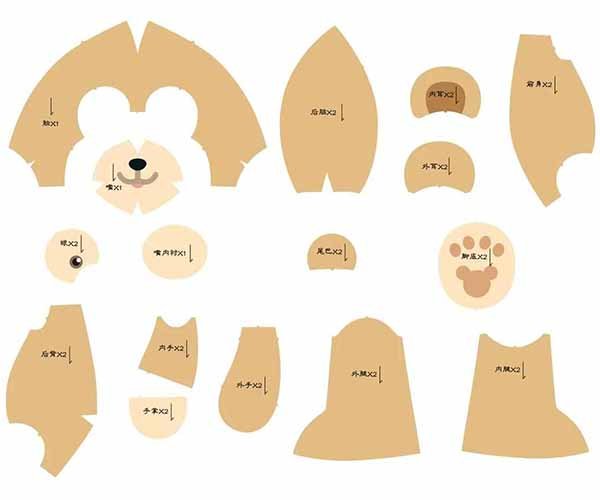
Digital Pattern Mapping
All finalized patterns are digitized with industrial software to ensure:
- Scaling accuracy for future size variants
- Correct curve smoothness
- Perfect left-right mirroring
- Consistent seam allowance (typically 0.6–0.8 cm)
Digitization improves repeatability across production batches.
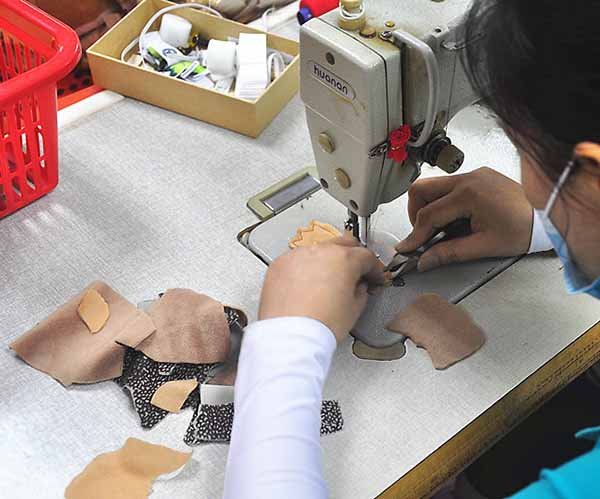
Prototype Sewing & Structural Testing
Technicians stitch the first prototype and evaluate:
- Surface smoothness
- Panel joining accuracy
- Facial ratio correctness
- Angle stability of ears, limbs, tail
- Fabric behavior under stuffing
Any structural deformation is corrected immediately.
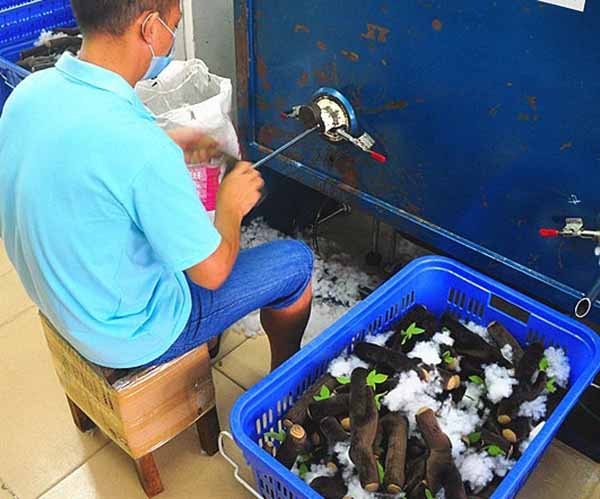
Stuffing Density Engineering
Stuffing density varies dramatically between plush categories. Delsney uses weight-based guidelines:
- 20 cm plush: 38–58g
- 30 cm plush: 60–88g
- Mascots: High-density with core support
- Mini plush: Low-high density combo for shape retention
Density adjustments affect roundness, balance and expression clarity.
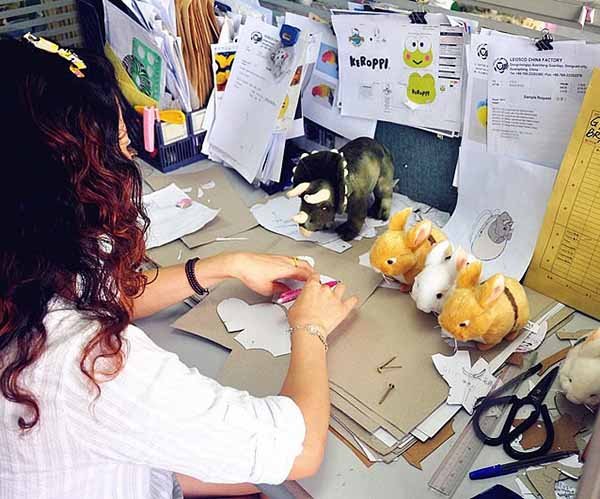
Revision Cycles (1–4 rounds depending on complexity)
Most ODM designs need structural corrections:
- Adjusting panel curves
- Changing limb angle
- Modifying head-body ratio
- Re-balancing stuffing levels
- Refining embroidery mapping
Only when all details match the intended look does Delsney proceed to golden sample creation.
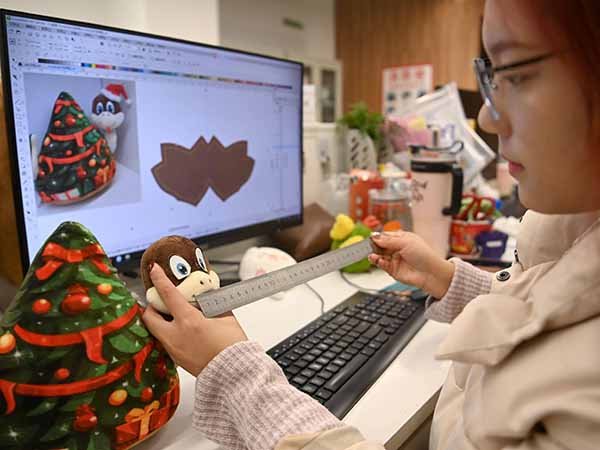
Golden Sample Documentation
Delsney creates complete engineering documentation:
- 25–60 measurement points
- Embroidery DST files
- Fabric GSM records
- Seam density guidelines
- Accessory installation notes
- Multi-angle photography
- Assembly instructions
This ensures mass production will reproduce the intended plush design consistently.
Material Engineering & Fabric Sourcing System
ODM plush requires different material rules than OEM. Because the design is original, fabrics must be selected not only for softness, but also for:
- Structural stability
- Embroidery performance
- Pile direction behavior
- Shape retention
- Color compatibility with the design language
Delsney sources fabrics from long-term partnered mills in Jiangsu, Zhejiang, and Guangdong.
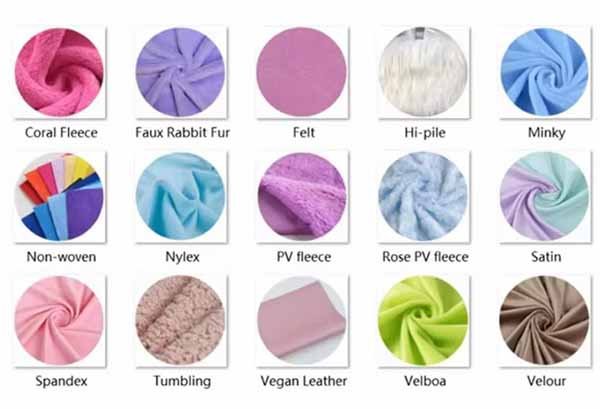
Material Categories Selected for ODM
1. Minky Plush (1.5–3 mm pile)
- GSM: 200–240
- Soft hand feel, vibrant Pantone stability
- Excellent for character plush
2. Velboa (1–2 mm pile)
- GSM: 160–200
- High edge stability for precise shapes
- Lower cost for large collections
3. Long-Pile Plush (6–14 mm)
- Requires controlled cutting speed
- Often used for mascots or stylized ODM plush
4. Sherpa / Fleece
- For plush clothing or stylized characters
- High stretch index—requires edge stabilization
5. Baby-Safe Fabrics
- OEKO-TEX certified
- Colorfastness ≥ Grade 4
- Odor-free and chemical-safe
ODM-Specific Fabric Testing Protocol
Incoming material QC includes:
- GSM measurement
- Pile direction consistency
- Shrinkage test (≤3% tolerance)
- Colorfastness to rubbing/wash
- Abrasion test (≥ Grade 4)
- Odor screening
- Thickness uniformity
Monthly rejection rate: 2–4% to maintain consistency.
Color Engineering for ODM Collections
ODM plush often uses branded color palettes. Delsney uses:
- Pantone TPX matching
- ΔE ≤ 1.2 shade tolerance
- Swatch card verification
- Controlled dye batch records
Color consistency across all SKUs is essential for full ODM collections.
Fabric Pre-Processing for Production Stability
Fabric rolls are pre-relaxed for 6–12 hours to eliminate rolling tension. This reduces shape deformation during sewing and stuffing.
Digital Cutting & ODM Production Workflow
Precision Cutting, Optimized Material Yield & High Repeatability for Original Designs
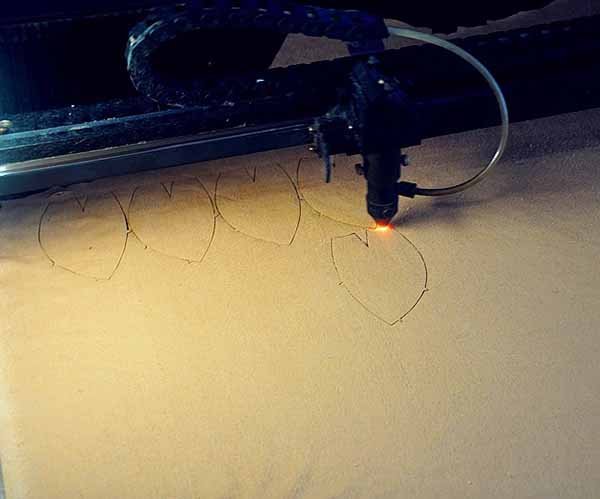
ODM designs contain unique shapes and curved structures that require higher cutting accuracy. Delsney uses a combination of digital cutting tables + controlled manual cutting depending on the fabric and design complexity.
Pattern Nesting for ODM
Digital nesting software arranges panels to:
- Reduce wastage by 8–15%
- Keep pile direction consistent
- Preserve symmetry
- Ensure repeatable panel geometry
Digital Cutting Specifications
- Cutting tolerance: ±1 mm
- Speed: 400–600 mm/s
- Edge quality optimized for embroidery precision
- Best for: minky, velboa, fleece, RPET plush
Manual Cutting for Special Fabrics
Manual cutting is applied for:
- Long-pile plush
- Ultra-stretch fleece
- Multi-layer panels
- Mascot-level plush
Technicians follow:
- Slower blade speed
- Directional pile control
- Extra edge stabilization
Labeling & Batch Identification
Every cut set is labeled with:
- SKU code
- Pattern number
- Fabric lot number
- Cutting date
- Assigned sewing line
Traceability supports QC audits and ensures correct assembly.
Daily Cutting Output
Cutting capacity ranges from 5,500–10,000 sets/day, depending on complexity and fabric type.
Multi-Stage Quality Control for ODM Plush
ODM plush features often include complex silhouettes, multi-layer structures, stylized expressions and specialized fabrics. To ensure manufacturing stability, Delsney applies a 6-stage QC pipeline built specifically for original designs.
Compared with OEM QC, ODM QC includes more structural checkpoints, more facial geometry checks, and more embroidery validation steps.
01
Material Pre-Check
Each roll and accessory is tested for:
- Shade accuracy (ΔE ≤ 1.2)
- Pile direction consistency
- GSM accuracy
- Stretch index stability
- Embroidery compatibility
- Odor & chemical safety
Long-pile fabrics undergo additional pile-floating tests to prevent deformation after stuffing.
02
Pre-Production Sample Audit
Before bulk production starts, QC verifies:
- Panel alignment vs golden sample
- Seam density (7–10 stitches/cm)
- Embroidery clarity and density
- Facial placement coordinates (±1.5 mm)
- Limb angle and curvature
- Stuffing density plan adherence
ODM prototypes typically include 30–60 measurement points, significantly more than OEM.
03
In-Line QC Per Sewing Line
One inspector is assigned for every 12–15 sewing operators. Checks include:
- Seam joining
- Panel smoothness
- Shape formation
- Fabric stretch control
- Accessory anchoring
- Embroidery consistency
- Left–right symmetry
This reduces rework by 25–35% and prevents late-stage defects.
04
Post-Sewing Structural QC
Specialized for ODM:
- Panel curvature check
- Embroidery alignment check
- Reinforcement seam placement
- Fabric distortion analysis
- Internal stabilizer positioning
Stylized characters or mascot plush are checked with additional template guides.
05
Post-Stuffing QC
QC tests:
- Stuffing density balance
- Lumps/hollow areas
- Standing/sitting stability
- Head-to-body ratio
- Ear/limb position under load
Stuffing weight guidelines:
- 20 cm plush: 38–58g
- 25 cm plush: 55–78g
- 30 cm plush: 70–95g
06
Final QC & Safety Checks
Final QC includes:
- Metal detection (conveyor system)
- Accessory pull test (≥7 kg)
- Chemical & odor review
- Dust/lint removal
- Packaging compliance
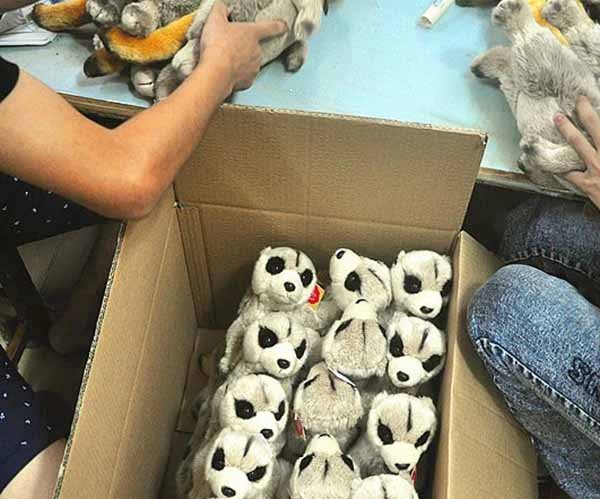
- Export carton QC
ODM products often require stricter QC to maintain consistency across variants.
Packaging Engineering & Export System
ODM projects usually require branded packaging, story-driven design, and SKU-specific retail presentation. Delsney manages packaging as a core part of the ODM ecosystem—not an afterthought.
Polybag Systems
- 0.03–0.06 mm polybags
- Biodegradable options
- Pantone-matched printed polybags
- Frosted display polybags
- Vent-hole engineered bags
Every polybag is heat-seal tested to prevent seam failure.
Full Retail Packaging Capabilities
ODM collections often require premium or themed packaging. Delsney supports:
- Full-color boxes
- Window display boxes
- Kraft packaging
- Holiday-themed boxes
- QR-integrated story cards
- FSC-certified packaging
Each dieline is optimized to prevent corner crush and maintain shape during shipping.
Custom Branding Items
ODM brands often build IP-based or mascot lines. Delsney supports:
- Woven labels
- Embroidered patches
- Printed hangtags
- QR code cards
- Brand book-based color alignment
- Seasonal variant packaging
Brand consistency is preserved across all SKUs.
Carton Engineering
Cartons use ECT 44–48 strength depending on plush size and shipping route. QC verifies:
- Compression resistance
- Moisture protection
- Correct label positioning
- Carton dimension consistency
- Desiccant placement
Optimized carton design reduces freight cost by 8–15% per shipment.
Export Documentation & Loading Optimization
Delsney prepares:
- Packing lists
- SKU-sorted carton lists
- QC report
- Carton photos
- Container loading images
- Testing certificates (EN71, ASTM, CPSIA) when needed
Average CBM utilization: 87–94%.
ODM Capacity & Scalability
Stable Large-Volume Output, Seasonal Expansion & Controlled Lead Time
Production Capacity Overview
Monthly output:
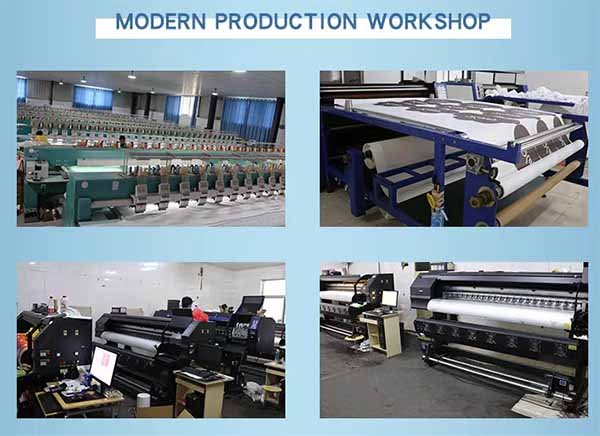
- 55,000–120,000 plush units
- 5,500–10,000 cut sets/day
- 9–12 active sewing lines
- 2000+ export shipments/year
Outputs vary according to panel count, pile length, embroidery density and clothing complexity.
Category-Based Sewing Lines
ODM lines are often specialized:
- Concept plush
- Character plush
- Plush with apparel
- Mini series
- Mascot plush
- Infant-safe plush
Specialized lines reduce defect rates by 15–20%.
Seasonal Scalability
During peak seasons, Delsney can:
- Expand to additional lines
- Run extended shifts
- Add temporary operators
- Pre-stock core fabrics
- Reserve cutting capacity
Ramp-up time: 72–96 hours.
Predictable Lead Times
Typical ODM lead times:
- Sampling: 6–15 days (depending on concept complexity)
- Mass production: 30–40 days
- Reorders: faster due to archived engineering files
Long-Term Data Archiving
For future reorder or variant development, Delsney stores:
- Patterns
- Embroidery files
- Fabric swatches
- Packaging dielines
- QC reports
- Accessory codes
This reduces development time for future versions from weeks to hours.
Frequently Asked Questions
Q1: What makes Delsney’s ODM system different from basic OEM?
In ODM, Delsney is responsible not only for production but also for concept development, character design, pattern creation and engineering. The design team and pattern engineers work together from the beginning to ensure the plush can be manufactured at scale. This integration reduces revision rounds, accelerates development, and prevents structural issues during mass production. ODM programs rely heavily on creativity supported by engineering, which is a specialty developed through 18+ years of experience.
Q2: How does Delsney ensure ODM designs remain manufacturable at large volumes?
Every design goes through feasibility checks before prototyping. Engineers verify pattern segmentation, seam structure, embroidery density, stuffing zones and fabric behavior. A golden sample blueprint is created with 25–60 measurement points and manufacturing tolerances. Digital cutting ensures stable shapes, while category-based sewing lines maintain consistency. This system achieves 95–98% repeatability across large orders.
Q3: How long does it take to develop an ODM plush from concept to finished sample?
The timeline depends on design complexity. Simple designs take around 6–10 days, while character plush or multi-accessory designs may take 10–18 days. Revision rounds typically add 1–4 days. Because Delsney keeps all engineering files and material records, variant development and future extensions of the same character line are much faster.
Q4: What input materials does Delsney need to begin ODM development?
Clients can submit sketches, brand mascots, photos, mood boards, style references or even simple written descriptions. The design team extracts key traits—proportions, personality, textures, color palettes—and develops multiple sketch directions. Engineers then translate the chosen concept into panel maps, embroidery layouts and structural plans.
Q5: How does Delsney manage complex character expressions?
Expression clarity is essential for ODM. Facial elements are converted into coordinates with precise placement tolerances (typically ±1.5 mm). Embroidery density is tested on matching fabrics, and multiple expression samples may be created to match the brand’s emotional tone. This ensures every plush unit reflects the intended personality consistently.
Q6: What safety and compliance standards can ODM plush meet?
Delsney supports EN71, ASTM F963, CPSIA, and REACH requirements. All plush go through metal detection, seam pull testing, accessory torque testing and stuffing control. For infant-safe collections, only certified fabrics and embroidered details are used. Compliance reports and testing documentation can be provided for retail audits and customs requirements.
Q7: What packaging options are available for ODM collections?
ODM brands can choose from polybags, frosted bags, biodegradable options, full-color printed boxes, window packaging, seasonal boxes, QR cards, hangtags and woven labels. Carton size and strength are engineered to optimize shipping cost. Packaging dielines and color proofs are provided for approval before production.
Q8: How does Delsney support large ODM collections with multiple SKUs?
Delsney maintains multi-line sewing capacity, digital cutting tables and additional seasonal lines. Designs with shared identity—such as character families—are reviewed together to ensure consistent proportions, colors and style. Engineering files and swatches are archived for each SKU, allowing smooth reorders and easy future expansions.

Build Your ODM Plush Collection With Confidence
Partnering with Delsney means developing plush products through a system built for reliability, creativity and long-term brand growth. Your ideas are supported by a fully integrated workflow—concept creation, pattern engineering, prototype refinement, digital cutting, category-based sewing, multi-stage QC and export preparation. Every stage is handled in-house to preserve consistency, shorten development cycles and protect creative direction.
Whether you are building a new character line, improving an existing mascot, or preparing a multi-SKU seasonal collection, Delsney ensures your plush line arrives polished, consistent and engineered for high-volume retail success.
