Skip to content
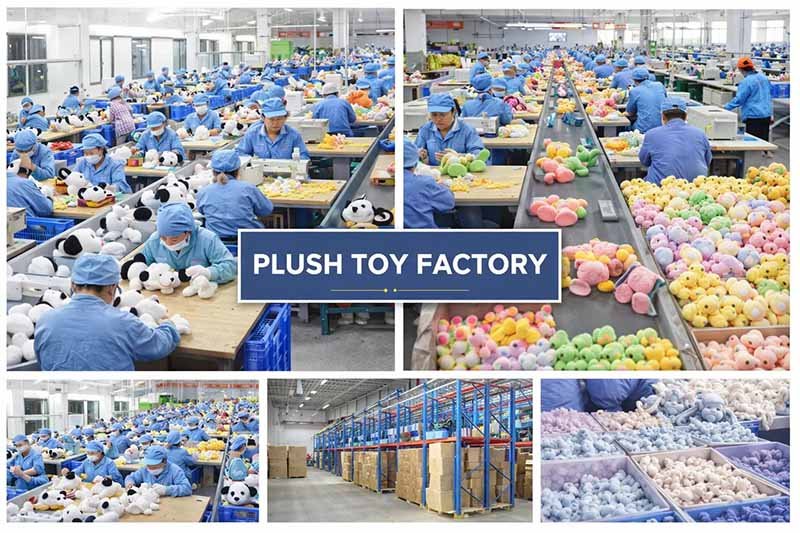
A plush toy project often begins with a simple creative idea: a company mascot, an original cartoon character, a pet-inspired plush, a soft animal toy, a children’s product, a retail gift item, or a private label stuffed animal. At the beginning, the idea may feel simple. Once the project moves toward real production, more practical questions appear. Who can turn the artwork into a soft toy with the right shape? Who can keep the face expression consistent across hundreds or thousands of pieces? Who can control fabric color, embroidery detail, filling weight, safety labels, custom packaging, and delivery schedule?
For commercial plush projects, China plush toy manufacturers are usually stronger for scalable production, OEM/ODM development, private label customization, cost control, custom packaging, and export compliance. Local plush makers are often better for handmade samples, very small runs, art dolls, and early concept testing. The right choice depends on order quantity, target price, quality level, safety requirements, packaging needs, and long-term sales plan.
Many companies make mistakes at the first step because they compare suppliers only by sample price. A beautiful handmade sample may not be practical for mass production. A low-cost factory quote may create problems if the supplier lacks pattern-making ability, safety knowledge, or inspection standards. A strong plush supplier should not only sew fabric together; it should help a company protect product quality, control development risk, and prepare a plush product for real market use.
Delsney is built for companies that need more than a single handmade piece. With more than 18 years of experience in plush product R&D, design, pattern making, manufacturing, and sales, Delsney supports custom plush toys, private label plush products, OEM projects, and ODM development for overseas medium-to-large companies and premium brands. The factory supports technical-file sampling, image-based sampling, sample-based development, free design, free sample support, flexible MOQ, 5–7 day fast sampling, three-view creation, 3D effect presentation, short bulk lead time, and finished plush accuracy up to 98% compared with approved artwork.
What Is the Main Difference Between China Plush Toy Manufacturers and Local Plush Makers?

China plush toy manufacturers usually work as full production partners. They can support design review, pattern making, fabric sourcing, sampling, embroidery, printing, sewing, filling, inspection, packaging, and export coordination. Local plush makers usually focus on handmade pieces, prototypes, art dolls, or low-volume custom work. The core difference is not only geography, but production system, repeatability, cost structure, compliance ability, and scaling capacity.
A local plush maker can be a useful choice when a project is still in the idea stage. If a company needs one mascot sample for an internal meeting, a handmade plush gift for a special event, or an art-style plush doll with unique handcraft details, a local maker may provide fast communication and creative flexibility. For very small quantities, local production can feel easier because there is no international freight, no customs process, and no factory MOQ pressure.
A China plush toy manufacturer becomes more valuable when a project needs commercial output. Once a plush product must be sold through retail stores, e-commerce platforms, gift distributors, IP licensing channels, theme parks, museums, school programs, or brand campaigns, consistency becomes more important than handmade uniqueness. Every plush toy must have the same face, same size, same softness, same color direction, same label placement, same packaging structure, and same safety control.
A plush toy may look simple from the outside, but factory development includes many technical decisions. Fabric pile length affects face shape. Filling density affects sitting posture and handfeel. Embroidery thread density affects eye expression. Seam allowance affects body proportion. Pattern adjustment affects whether a round character looks cute or distorted. Packaging compression affects whether the plush arrives full and attractive. A professional manufacturer turns these details into stable production rules.
Delsney helps companies move from creative design to controlled production. For projects involving animal plush toys, baby plush toys, character plush dolls, mascot plush, emotional support plush, weighted plush toys, plush keychains, plush pillows, holiday plush, licensed plush, or IP plush, the factory can review the design, create development files, prepare samples, adjust details, confirm production standards, and manage bulk manufacturing.
| Comparison Point | China Plush Toy Manufacturer | Local Plush Maker |
|---|---|---|
| Best project stage | Commercial production and repeat orders | Early idea testing and handmade samples |
| Suitable quantity | Usually 500 pcs and above | Often suitable for 1–50 pcs |
| Main strength | Scale, cost control, customization, packaging, compliance | Flexibility, local communication, handcraft detail |
| Product consistency | Stronger for bulk orders | More variation between pieces |
| OEM/ODM support | Strong with factory system | Limited or unavailable |
| Packaging options | Hang tags, labels, retail boxes, gift boxes, cartons | Usually basic or outsourced |
| Safety compliance | Stronger with export-experienced factories | Depends on local maker experience |
| Best customer fit | Brands, retailers, IP owners, gift companies, e-commerce sellers | Artists, collectors, local events, early prototypes |
What Defines a China Plush Toy Manufacturer?
A China plush toy manufacturer is a factory-based supplier with the equipment, workers, development team, and supply chain needed to produce plush products in quantity. A professional manufacturer usually handles design review, plush pattern development, fabric selection, color matching, embroidery artwork conversion, printing, applique, sewing, stuffing, accessory sourcing, logo customization, label production, tag production, retail packaging, export carton planning, quality inspection, and compliance support.
For companies planning a real product launch, the main value is repeatability. A design may need to be produced at 500 pcs, 2,000 pcs, 10,000 pcs, or more. Every batch must follow the approved sample. A manufacturer must control seam quality, body proportion, embroidery position, filling weight, loose threads, fabric direction, label placement, and packaging condition.
Delsney supports companies through a complete OEM/ODM process. The factory can develop plush toys from technical documents, hand sketches, brand artwork, reference pictures, or existing samples. For companies without finished production files, Delsney can provide free design support, three-view presentation, and 3D effect reference to help the design become easier to review before sampling.
What Defines a Local Plush Maker?
A local plush maker is often a small workshop, sewing studio, craft artist, local gift producer, or custom doll creator. The strength is personal creativity and low-volume flexibility. When a company needs only one or several pieces, a local maker can be easier to approach. Communication may also feel smoother because both sides share the same language, local business culture, and time zone.
Local makers are often suitable for handmade art dolls, one-off plush gifts, small mascot samples, collector plush pieces, local event prototypes, very low quantity testing, creative concept exploration, and projects without retail packaging needs.
The limitation comes when quantity grows. Handmade production depends heavily on individual sewing time. Fabric may be purchased from local retail channels instead of factory-scale textile suppliers. Embroidery, printing, packaging, and safety testing may need to be outsourced. When each step is handled separately, cost, timing, and consistency become harder to control.
Are They Serving the Same Type of Customer?
China plush toy manufacturers and local plush makers may both accept custom plush projects, but they often serve different needs. A local maker is usually stronger for low-quantity creative work. A manufacturer is stronger for companies that need a plush toy to become a commercial product.
For example, a children’s book creator may ask a local maker to produce one plush character for a book fair. That can be a smart early move. But if the same character later becomes a 1,000-piece retail product, the project requires pattern standardization, fabric supply, embroidery consistency, care labels, warning labels, barcode stickers, packaging, cartons, and delivery planning.
Commercial projects often come from retail brands launching plush collections, IP owners turning characters into merchandise, e-commerce sellers preparing inventory, gift companies creating promotional plush toys, museums and attractions developing souvenir plush, sports clubs producing mascot plush, baby product companies requiring safe materials, and premium brands needing private label plush products.
For these companies, supplier choice affects more than the first sample. It affects launch timing, margin, customer reviews, repeat order stability, and brand trust.
Which Option Fits Commercial Plush Production?
Commercial plush production usually fits a China plush toy manufacturer better because factory production is designed for repeatable output. Once a sample is approved, the factory can prepare production files, purchase materials, arrange cutting, embroidery, sewing, filling, inspection, packaging, and shipment according to agreed specifications.
A commercial plush supplier should provide a clear sampling process, accurate pattern making, fabric and color confirmation, logo and embroidery control, bulk production planning, quality checkpoints, packing standards, export documentation support, and after-sales communication.
Delsney is positioned for companies that need commercial plush development. The factory has more than 18 years of plush industry experience and supports flexible MOQ, fast sampling, free design, free sample assistance, three-view creation, 3D effect support, 100% quality assurance, and safety compliance support for European and American markets. For a brand preparing to sell plush products, the goal is not only to make a cute toy. The goal is to make a plush product that can be produced, inspected, packed, shipped, and reordered with confidence.
Which Option Offers Better Cost Control?

China plush toy manufacturers usually provide better cost control for medium and large orders because production is built around scale. Material purchasing, embroidery setup, cutting, sewing, filling, inspection, and packaging can be planned in batches. Local plush makers may be more practical for one-off pieces, but unit cost often becomes high when a project needs repeated production, retail packaging, and stable quality.
Cost is one of the strongest reasons companies compare China plush toy manufacturers with local plush makers. However, the real cost of a plush project is not only the price per piece. A correct cost calculation should include sample development, pattern adjustment, fabric selection, embroidery setup, printing, accessories, filling, care labels, hang tags, packaging, carton packing, inspection, testing, shipping, duties, and possible sample revisions.
Local plush makers can be cost-effective when quantity is extremely small. A company may only need 1–5 handmade samples to show investors, test a character idea, or create a display piece. In that case, paying a higher unit price may still be reasonable because the order does not require factory setup, international shipping, or bulk planning.
The situation changes when the order reaches 500 pcs, 1,000 pcs, or more. A handmade process does not always become much cheaper with quantity because labor remains the biggest cost. Every toy still needs manual cutting, sewing, filling, trimming, and finishing. If the local maker outsources embroidery, printing, or packaging, the total price may rise further.
A China plush manufacturer can spread setup costs across a larger order. Once the pattern, embroidery file, fabric, filling standard, and packaging are confirmed, the factory can organize batch production. Fabric can be purchased by roll, embroidery can be completed by machine, cutting can be done in layers, sewing can be divided by process, and inspection can be performed at different stages. Scale helps reduce waste and improve price stability.
For Delsney projects, cost control begins before production. The factory reviews the product idea, checks whether the design is suitable for plush structure, suggests practical materials, creates three-view or 3D effect references when needed, develops samples quickly, and helps adjust details before bulk production. Early technical review reduces repeated sample changes, material waste, and production delays.
| Quantity Range | Local Plush Maker Cost Fit | China Plush Manufacturer Cost Fit | Practical Suggestion |
|---|---|---|---|
| 1–10 pcs | Strong fit | Usually not ideal | Use for handmade sample or display piece |
| 20–100 pcs | Possible but high unit cost | May not meet MOQ | Suitable for early market test if budget allows |
| 300–500 pcs | Often costly and slow | Entry-level commercial fit | Good stage to compare factory options |
| 1,000–3,000 pcs | Usually difficult | Strong fit | Better for retail, e-commerce, campaigns |
| 5,000+ pcs | Rarely practical | Very strong fit | Factory production gives stronger cost control |
| Multi-SKU orders | Limited efficiency | Stronger development system | Best for plush collections or IP series |
How Does Order Quantity Affect Unit Cost?
Order quantity has a direct effect on plush toy unit cost. A small order carries a heavier share of development time, material setup, embroidery setup, and packaging preparation. A larger order spreads these costs across more pieces, making each toy more economical.
For example, a 30 cm custom plush toy may need pattern making, fabric selection, embroidery file setup, cutting template, sample sewing, filling adjustment, logo confirmation, packaging design, and carton planning. These steps are needed whether the final order is 100 pcs or 3,000 pcs. With a small quantity, each piece absorbs more development cost. With a larger quantity, the same setup work supports a wider production run.
A local maker may charge mainly based on time. If each plush takes several hours to cut, sew, stuff, and finish, the cost remains high even when quantity grows. A China factory can improve efficiency through batch purchasing, batch cutting, process division, machine embroidery, and line production.
Are Local Plush Makers More Expensive?
Local plush makers often have higher unit costs because their work depends on smaller material purchases, manual sewing time, and limited production capacity. That does not mean they are overpriced. It means they are built for a different type of project.
Local plush pricing often includes individual labor time, local fabric sourcing, small-batch sewing, personal design interpretation, manual finishing, direct communication, and limited equipment access.
For a handmade collector plush, high unit cost may be acceptable. For a retail plush product, high unit cost can create pressure on the final selling price. A plush toy sold through retail or online channels must still cover freight, warehousing, platform fees, marketing, wholesale margin, returns, and profit. If production cost is too high, the product may become difficult to sell at a competitive price.
Companies planning commercial plush should calculate backwards from target retail price. A good manufacturer helps align design complexity, material choice, size, packaging, and quantity with a realistic cost target.
Do China Plush Factories Reduce Bulk Costs?
China plush factories can reduce bulk costs because they use a more complete production system. The cost advantage usually comes from supply chain depth, not from one single factor.
Common cost-control advantages include larger fabric purchasing volume, more material choices at different price levels, in-house or nearby embroidery support, efficient cutting and sewing workflow, bulk filling material sourcing, custom label and packaging supplier network, trained workers for repeated processes, production-line scheduling, quality checks before packing, and export carton planning.
Delsney adds value by helping companies adjust the product before mass production. A slight change in plush size, fabric type, embroidery area, stuffing weight, or packaging format can affect total cost. For example, reducing a plush toy from 32 cm to 30 cm may improve carton loading. Replacing rare fabric with a similar available plush fabric may shorten lead time. Adjusting embroidery size may reduce machine time while keeping the character expression attractive.
How Do Packaging and Shipping Affect Final Price?
Packaging and shipping can significantly affect final cost because plush toys are soft, lightweight, and bulky. A plush product with poor carton planning may cost more to ship than expected. Packaging must protect the toy while keeping volume under control.
Important packaging cost factors include individual polybag or dust bag, hang tag, woven label, printed label, care label, barcode sticker, retail box, gift box, display box, inner carton, master carton, vacuum packing option, carton size, and loading quantity.
Local makers may offer simple packaging, but retail packaging often needs extra suppliers. China factories usually have stronger access to packaging resources. Delsney can support custom packaging and logo solutions for private label projects, including labels, tags, printed bags, gift boxes, display packaging, and carton marks.
Shipping cost also depends on order size and urgency. Air freight is faster but more expensive. Sea freight is better for large orders but requires planning. For time-sensitive campaigns, production schedule and shipping method should be planned together from the start.
What Hidden Costs Should Brands Check?
Companies should check hidden costs before choosing any plush supplier. Many plush projects become expensive because key details are not confirmed early enough.
Common hidden costs include extra sample revisions beyond agreed scope, fabric changes after sampling, color correction due to unclear Pantone reference, embroidery artwork rework, accessory mold development, safety testing fee, packaging redesign, urgent production surcharge, air freight upgrade due to late approval, third-party inspection, import duties and local taxes, warehouse handling fees, replacement cost for defective goods, and cost caused by unclear size tolerance.
A professional plush manufacturer should help reduce these risks through early review and clear confirmation. Delsney supports free design, fast sample development, sample adjustment, three-view creation, and 3D effect presentation so companies can make decisions before bulk production begins. Clear artwork, confirmed size, fabric choice, logo placement, packaging method, and target market standards help keep the final cost under control.
How Do MOQ and Production Scale Compare?

MOQ (Minimum Order Quantity) and production scale are critical factors in choosing a plush supplier. Local plush makers are often better for one-off pieces and very small runs, while China plush toy manufacturers are more suitable for commercial quantities because factory production requires coordinated material preparation, pattern setup, embroidery setup, cutting, sewing, stuffing, inspection, and packaging standards.
Understanding MOQ is essential. Many companies see it as a limitation, but in plush manufacturing, it ensures production efficiency and product consistency. A factory cannot treat a 20-piece order the same as a 1,000-piece order. Even a small plush requires pattern development, sample sewing, fabric sourcing, embroidery files, filling control, trimming, inspection, and packing. These setup steps need enough quantity to become economical.
Local makers can accept tiny quantities because they often work by hand. They may buy fabric from local stores and sew each piece individually. This flexibility is useful for early-stage concept testing. However, when a project grows, the handmade approach becomes slower and harder to control.
China plush manufacturers typically set MOQ based on fabric availability, production efficiency, accessory sourcing, packaging needs, and factory scheduling. Delsney offers flexible MOQ starting at 500 pieces, suitable for overseas brands, e-commerce sellers, gift companies, and IP projects preparing a market launch.
Production scale also affects product development strategy. Small pieces can be made individually, but larger production requires process standardization, pattern grading, and quality control at scale. Delsney provides full support for pattern making, sample review, and bulk production, ensuring consistent quality and timely delivery.
| Project Need | Local Plush Maker | China Plush Manufacturer | Recommended Choice |
|---|---|---|---|
| One handmade prototype | Strong | Weak | Local maker |
| 10 art-style plush dolls | Strong | Weak | Local maker |
| 100 event samples | Possible | Depends on MOQ | Case-by-case |
| 500 custom plush toys | Limited | Strong | China manufacturer |
| 1,000 private label plush toys | Weak | Strong | China manufacturer |
| 3,000 retail plush toys | Weak | Very strong | China manufacturer |
| Multi-size plush series | Limited | Strong | China manufacturer |
| Long-term reorder plan | Limited | Strong | China manufacturer |
What MOQ Do Plush Factories Usually Require?
Plush factory MOQ depends on product size, fabric type, design complexity, accessory needs, packaging, and customization level. Simple plush keychains have different MOQs compared to large stuffed animals or electronic plush toys. Special fabrics, custom-dyed materials, molded accessories, sound modules, light modules, weighted filling, or complex packaging may increase MOQ.
Delsney supports flexible MOQ from 500 pieces. This allows companies to manage material purchasing, sewing workflow, inspection, and packaging while giving a practical entry point for testing market acceptance.
To determine MOQ accurately, companies should prepare:
- Plush type
- Target size
- Estimated order quantity
- Reference image, sketch, or sample
- Fabric preference
- Eye, nose, mouth, and expression details
- Logo position
- Label and tag requirements
- Packaging style
- Target market
- Safety standard requirements
- Expected delivery date
Clear project details help the manufacturer provide an accurate MOQ and quotation.
Are Local Makers Better for Small Runs?
Local makers are ideal for small runs under 50 pieces, especially for artistic or handmade plush. They can quickly adjust details manually and produce one-off pieces for testing, display, or gifting.
Local makers are suitable for:
- Handmade gifts
- Creator samples
- Art dolls
- Local event mascots
- Display pieces
- Concept testing
Limitations appear when orders grow. Handmade pieces may require redesign for bulk production. Patterns, fabrics, embroidery, and packaging may need adjustments to meet commercial standards.
Which Supplier Handles Repeat Orders Better?
China plush manufacturers handle repeat orders more effectively. They maintain production records, approved samples, material standards, embroidery files, pattern files, and packaging files. This ensures future orders match original quality.
Repeat order stability is important for:
- E-commerce stores
- Retail chains
- Museum shops
- Theme parks
- Mascot programs
- Licensed IP collections
- Subscription box products
- Promotional campaigns
Local makers may repeat small orders, but consistency depends on availability and material access.
Delsney maintains a structured system for repeatable custom plush manufacturing. Once a sample is approved, factory files ensure subsequent batches align with the approved design.
How Does Scale Affect Quality Consistency?
Scale can improve quality consistency when the supplier has a structured production process. Each step, from cutting to sewing, filling, and finishing, follows approved patterns, embroidery files, and inspection criteria.
Consistency requires:
- Approved pre-production sample
- Fabric batch control
- Embroidery precision
- Filling standard
- Seam strength
- Label placement
- Shape verification
- Inspection before packing
Without process control, scaling can magnify mistakes. A small error in pattern or embroidery affects every piece. Delsney emphasizes early design review, sample approval, quality assurance, and inspection to ensure consistent results in bulk production.
Which Supplier Delivers Better Customization?

Customization is one of the biggest differences between a China plush toy manufacturer and a local plush maker. A local maker can be a good choice for handmade samples, art dolls, or a few creative pieces. A China plush toy manufacturer is usually stronger when the project needs repeatable customization, private label details, OEM/ODM development, packaging, safety control, and stable production for 500 pcs, 1,000 pcs, 5,000 pcs, or larger orders.
For a commercial plush project, customization does not only mean “make it cute.” It means turning a drawing, mascot, character, pet image, baby toy idea, brand concept, or IP design into a plush product that can be sampled, approved, produced, inspected, packed, shipped, and reordered.
A good custom plush supplier should help companies answer practical questions before production begins. Can the face expression be made with embroidery instead of plastic parts? Will the selected fabric hide small facial details? Can the toy sit, stand, hang, or hold shape after shipping? Will the filling weight make the plush too soft, too stiff, or too flat? Can the logo be embroidered without wrinkling the fabric? Can the product meet the safety requirements of the target market? Can the packaging protect the plush without increasing shipping cost too much? Can the same design be repeated across 500 pcs or 5,000 pcs with consistent appearance?
These questions matter because plush toys are soft products. A small change in fabric pile, seam position, embroidery size, or filling volume can change the final look. A character that looks perfect in a flat drawing may become strange if the pattern is not adjusted correctly. A cute animal face may lose expression if the eyes are placed a few millimeters too high. A mascot may look less premium if the stuffing is uneven or the label is poorly sewn.
For this reason, China plush manufacturers with strong development teams usually have an advantage in commercial customization. They can connect design, pattern making, fabric sourcing, sampling, embroidery, printing, stuffing, logo application, packaging, inspection, and bulk production in one workflow. Local makers can often adjust by hand, but handcraft decisions are difficult to repeat exactly in large orders.
Delsney supports custom plush projects through a complete OEM/ODM process. The factory can develop products from technical documents, hand sketches, brand artwork, reference photos, original samples, or early product ideas. For companies that do not have finished production files, Delsney can provide free design support, three-view creation, and 3D effect presentation. For regular plush products, samples can usually be developed within 5–7 days. For more complex plush toys with special accessories, electronics, weighted filling, unusual fabric, or difficult structures, development time may be longer, but the process can be planned clearly from the beginning.
| Customization Need | Local Plush Maker | China Plush Toy Manufacturer | What Companies Should Check |
|---|---|---|---|
| One handmade sample | Strong | Not usually ideal | Best for concept display or art use |
| Sketch-to-plush development | Possible | Strong | Check whether the supplier can create patterns |
| OEM plush production | Limited | Strong | Confirm files, logo, labels, and bulk standards |
| ODM plush development | Limited | Strong | Check design support and material suggestions |
| IP character plush | Good for concept sample | Strong for commercial orders | Focus on face accuracy and repeatability |
| Private label plush | Usually limited | Strong | Confirm logo, tag, label, and packaging options |
| Multi-size plush series | Difficult | Strong | Requires pattern grading and proportion control |
| Custom fabric matching | Limited sourcing | Broader sourcing | Confirm fabric texture, color, and MOQ |
| Embroidery details | Good for handwork | Strong for repeatable production | Check eye, mouth, logo, and expression accuracy |
| Safety-focused design | Depends on maker | Stronger with export experience | Important for baby and children’s plush |
| Retail packaging | Often outsourced | Stronger support | Check box, bag, hang tag, barcode, carton |
| Repeat orders | Less stable | Stronger | Confirm production records and approved samples |
Can They Create Plush from Sketches?
A professional plush manufacturer should be able to turn sketches, reference photos, character artwork, pet images, or simple concept drawings into a physical plush sample. This requires both creative understanding and production knowledge. A flat drawing cannot be copied directly into plush because soft fabric changes the shape, thickness, proportion, and facial expression.
When a sketch becomes a plush toy, the supplier must review the head shape, body proportion, eye position, mouth expression, ear size, arm length, leg shape, tail structure, fabric direction, embroidery method, stuffing volume, seam location, logo position, and packaging method. These details decide whether the final plush looks close to the original idea or becomes a loose interpretation.
For example, a cartoon animal with large eyes may look cute on paper, but if the fabric pile is too long, the eyes may look buried. A character with a tiny mouth may need embroidery adjustment so the expression remains visible. A round mascot may need internal pattern support to avoid becoming flat after filling.
Delsney can support sketch-based and image-based plush development. The team can create three-view references and 3D effect presentations so companies can review the plush structure before physical sampling. This is helpful for overseas teams because product managers, designers, marketing teams, and company owners can review the same visual direction before sample production begins.
A strong sketch-to-sample process should follow a clear path:
| Step | Main Work | Purpose |
|---|---|---|
| Original design review | Check artwork, shape, and details | Understand the product idea |
| Structure confirmation | Review front, side, and back views | Avoid missing side or back details |
| Size discussion | Confirm target height and proportion | Control cost and final appearance |
| Material planning | Select fabric, filling, and accessories | Match handfeel and product use |
| Facial detail planning | Confirm eyes, nose, mouth, and expression | Protect character identity |
| Pattern development | Create fabric pattern structure | Prepare for sample and bulk production |
| First sample | Produce the first physical plush | Check shape, handfeel, and details |
| Sample adjustment | Modify proportion, embroidery, filling, or fabric | Improve accuracy before approval |
| Final sample approval | Lock the confirmed sample | Set the production standard |
| Bulk standard confirmation | Record materials, pattern, labels, and packaging | Support repeatable production |
Can They Support OEM and ODM Projects?
OEM and ODM support is where China plush toy manufacturers usually offer stronger value than local makers.
OEM means the company already has a design, logo, sample, product file, or clear product specification. The manufacturer’s job is to produce the plush according to the approved requirements.
ODM means the company has an idea, market direction, character concept, or product category, but needs help developing the actual plush design, material, structure, and packaging.
Delsney supports both OEM and ODM projects.
For OEM plush projects, Delsney can help with technical file review, artwork checking, existing sample development, pattern making, fabric matching, embroidery file setup, logo customization, label and tag production, sample development, sample correction, bulk production, quality inspection, custom packaging, and export support.
For ODM plush projects, Delsney can help with product concept discussion, plush style recommendation, material and filling advice, three-view design creation, 3D effect presentation, prototype development, structure adjustment, packaging direction, cost optimization, and production feasibility review.
This support is useful for companies that want to launch a plush product but do not have an internal toy development team. For example, an e-commerce brand may know it wants a soft emotional support plush animal, but may not know which fabric, size, filling weight, eye style, packaging, or safety level is best. A strong ODM factory can help turn the idea into a realistic product plan.
| Project Type | OEM Need | ODM Need | Delsney Support |
|---|---|---|---|
| Existing IP character | Accurate production from artwork | Product improvement if needed | Pattern, sample, embroidery, packaging |
| New plush animal line | Logo and private label production | Style and material development | Design, sampling, fabric selection |
| Baby plush toy | Safe material and structure | Soft design and age-appropriate details | Safety-focused design, labels, testing support |
| Promotional mascot | Logo and campaign packaging | Shape and product structure | Fast sample, bulk production, carton planning |
| Plush keychain | Size, logo, attachment method | Shape and series development | Small accessory planning, label support |
| Weighted plush toy | Existing specification | Filling and weight balance | Filling structure and safety review |
| Holiday plush collection | Artwork and packaging | Seasonal design ideas | Multi-style sample development |
| Private label plush line | Brand identity application | Product range planning | Logo, tags, labels, packaging |
Local makers may accept custom requests, but many do not have the complete workflow needed for OEM/ODM production. They may be able to sew a custom piece, but may not support production files, factory sampling, packaging files, safety labels, inspection standards, or repeat orders.
How Accurate Can the Final Plush Be?
Design accuracy is one of the hardest parts of custom plush development. A plush toy is not a plastic figure or printed product. It is soft, rounded, stitched, filled, and shaped by fabric tension. Even when the artwork is clear, the final plush can look different if the supplier does not control pattern making, embroidery, filling, and fabric selection carefully.
Companies usually care about face expression, eye distance, mouth curve, nose shape, head size, body proportion, arm and leg position, ear or tail angle, color matching, fabric texture, logo position, clothing details, accessory details, and overall character feeling.
For IP plush, mascot plush, and character dolls, accuracy is especially important. Customers recognize a character by emotion and proportion. If the eyes are too close, the toy may look angry. If the mouth is too low, it may look tired. If the head is too small, the character may lose its charm. These small differences affect product appeal and customer reviews.
Delsney states that finished plush products can reach up to 98% matching with approved design artwork. This level of accuracy depends on clear communication and proper development steps. The company can use three-view creation, 3D effect presentation, pattern adjustment, sample review, and production control to keep the final product close to the approved design.
To improve accuracy, companies should provide front view, side view, back view, target size, Pantone color, fabric preference, facial detail reference, logo artwork, packaging requirement, and target market information. The more complete the input, the easier it is for the factory to match the intended design.
| Accuracy Step | Key Control | Why It Matters |
|---|---|---|
| Design review | Check whether the artwork can be made as plush | Avoid unrealistic structure |
| Three-view creation | Confirm front, side, and back details | Reduce misunderstanding |
| Fabric selection | Match handfeel, pile length, and color | Protect appearance and softness |
| Pattern making | Build correct plush shape | Control proportion and posture |
| Embroidery testing | Confirm eyes, mouth, logo, and details | Protect character expression |
| Filling adjustment | Balance softness and shape | Avoid flat or overstuffed plush |
| Sample revision | Correct visible differences | Improve final approval accuracy |
| Pre-production sample | Lock production standard | Guide bulk manufacturing |
| Bulk inspection | Compare goods with approved sample | Keep order consistency |
Do They Offer 3D Views and Pattern Making?
Three-view design and pattern making are extremely important in plush customization because many design problems are not visible from a single front-view image. A plush toy has depth, thickness, side shape, back structure, bottom balance, and stuffing volume. Without proper visual planning, a sample may look good from the front but poor from the side or back.
A three-view design usually helps confirm front appearance, side profile, back details, head depth, body thickness, limb angle, tail placement, ear shape, accessory position, logo position, seam placement, and sitting or standing posture.
Pattern making then converts the approved design into fabric pieces. A skilled pattern maker decides where seams should go, how curves should be shaped, how much fabric is needed, how the toy will be filled, and how the body will hold its final form.
Poor pattern making can create many problems, including flat faces, uneven body shape, twisted limbs, poor sitting posture, distorted expressions, loose fabric wrinkles, overstuffed or underfilled bodies, difficult sewing processes, low production efficiency, and high defect rates.
Delsney provides three-view creation and 3D effect support before sampling. This helps companies review shape and proportion more clearly before spending time and money on physical samples. It is especially useful for remote communication because overseas teams can approve the design direction visually before the factory begins sample development.
For products such as mascot plush, IP plush, baby plush toys, plush pillows, plush keychains, character dolls, animal plush, and weighted plush toys, pattern making is not a small technical step. It determines whether the finished product feels professional or cheap.
| Development Tool | What It Confirms | Best Used For |
|---|---|---|
| Front view | Main face, body shape, logo position | Character and mascot review |
| Side view | Body depth, head angle, limb position | Sitting or shaped plush |
| Back view | Tail, back details, rear seams, labels | Animal plush and character plush |
| 3D effect | General shape, volume, proportion | Team review before sampling |
| Pattern making | Fabric pieces and seam structure | Physical sample and bulk production |
| Pre-production sample | Final approved standard | Mass production |
Which One Fits IP Plush Development?
IP plush development usually requires a China plush toy manufacturer once the project moves beyond a single concept sample. Local makers may help create one handmade version, but IP commercialization needs accuracy, confidentiality, repeatability, packaging, safety, and long-term production records.
IP plush projects may include cartoon characters, game characters, animation figures, children’s book characters, brand mascots, sports mascots, museum characters, artist characters, pet characters, licensed animals, collectible plush series, and blind box plush characters.
For IP owners, the plush toy is not just a soft product. It is a physical version of a valuable character. If the factory changes the expression, body shape, color, or accessory details too much, the product may damage the character’s identity. If the quality is unstable, the IP owner may receive complaints from fans or retail partners.
A strong IP plush supplier should provide design confidentiality, NDA support when needed, accurate pattern development, face expression control, embroidery and printing precision, material consistency, sample revision, approved sample protection, private label packaging, safety compliance support, repeat order records, and multi-style development ability.
Delsney is suitable for IP plush projects because it can support design-to-sample development, three-view creation, 3D effect reference, OEM/ODM production, private label details, custom packaging, and bulk manufacturing. For IP projects, Delsney’s ability to achieve up to 98% artwork matching is especially valuable because character recognition directly affects sales.
| IP Plush Requirement | Why It Matters | Delsney Support |
|---|---|---|
| Accurate face expression | Fans recognize emotion quickly | Embroidery control and sample revision |
| Correct body proportion | Protects character identity | Pattern making and three-view review |
| Color consistency | Maintains brand/IP standards | Fabric and color matching |
| Private label details | Supports official merchandise | Tags, labels, logo, packaging |
| Confidential design handling | Protects original IP | Controlled development process |
| Repeatable production | Keeps future batches consistent | Production records and approved samples |
| Multi-SKU expansion | Builds full product collection | OEM/ODM development support |
| Compliance planning | Helps retail and export sales | Safety-focused material and structure review |
Can They Customize Fabric, Filling, and Handfeel?
Fabric and filling decide how the plush feels, looks, and performs after use. A local maker may choose from available local fabrics, but a China plush toy manufacturer usually has access to more fabric types, colors, textures, pile lengths, and filling options.
Common plush fabric options include minky, velboa, faux fur, sherpa, fleece, flannel, polyester plush, microfiber plush, coral fleece, rabbit plush, PV fleece, short pile plush, long pile plush, and recycled polyester plush.
Each fabric creates a different product feeling. Minky is smooth and soft, often used for baby plush and premium soft toys. Velboa is shorter pile and suitable for clear embroidery and shaped products. Faux fur gives a fluffy look for animal plush. Sherpa creates a warm lamb-like texture. Fleece is practical for simple soft products. Microfiber plush can provide a smooth and delicate touch.
Filling also matters. Standard PP cotton is often used for soft stuffed animals. Higher-density filling can help shaped mascot plush hold form. Weighted beads can be used for weighted plush toys. Soft stuffing is suitable for baby comfort plush. Firmer filling works better for sitting animals. Flat filling control is useful for plush pillows.
A good factory should help the customer choose materials based on product purpose, not just appearance. A baby plush needs softness and safety. A mascot plush needs shape stability. A plush pillow needs comfort and recovery. A keychain plush needs firmness and durability. A premium gift plush needs a soft handfeel and attractive surface.
Delsney can customize plush products with different fabric types and filling structures according to project needs. The team can also suggest practical material changes when a design is too costly, difficult to sew, or unsuitable for the target market.
| Material Choice | Product Feeling | Suitable Plush Products |
|---|---|---|
| Minky | Smooth, soft, premium | Baby plush, comfort plush, soft dolls |
| Velboa | Short pile, clean surface | Character plush, mascot plush, embroidered faces |
| Faux fur | Fluffy, animal-like | Animal plush, large stuffed animals |
| Sherpa | Warm, wool-like texture | Lamb plush, winter plush, cozy gifts |
| Fleece | Soft, practical, stable | Simple stuffed toys, promotional plush |
| Microfiber plush | Fine, smooth handfeel | Premium soft toys and pillows |
| Long pile plush | Fluffy, expressive texture | Animal plush and decorative plush |
| Short pile plush | Clear details | IP plush and detailed embroidery |
| PP cotton filling | Soft and lightweight | General stuffed animals |
| Weighted filling | Heavier comfort feeling | Weighted plush toys |
Can They Customize Logo, Labels, and Packaging?
Logo, labels, and packaging are essential for private label plush products. A plush toy without proper branding may look unfinished, especially when sold through retail, online stores, gift channels, or IP merchandise programs.
Common logo customization methods include embroidered logo, printed logo, woven label, satin label, rubber patch, fabric patch, heat transfer label, hang tag logo, packaging logo, and carton mark logo.
Common packaging options include individual polybag, dust bag, hang tag, care label, warning label, barcode sticker, insert card, gift box, window box, display box, paper belly band, retail shelf box, and master carton.
Custom packaging affects both appearance and logistics. A beautiful box may improve perceived value but increase shipping volume. A compact bag may reduce freight cost but may not feel premium enough for a gift product. A window box may help retail display but requires stronger carton planning.
Delsney supports custom packaging and branding for private label, OEM, and ODM plush projects. The factory can help companies coordinate product, logo, label, tag, packaging, and carton requirements together. This is more efficient than developing the plush with one supplier and packaging with another supplier.
| Branding Option | Main Use | Practical Note |
|---|---|---|
| Embroidered logo | Premium visible branding | Best for plush surface or clothing |
| Printed logo | Larger graphic areas | Useful for fabric panels or accessories |
| Woven label | Brand identity | Often sewn on side seam or bottom |
| Satin label | Soft touch branding | Suitable for baby or premium plush |
| Hang tag | Retail information | Good for storytelling and barcode |
| Care label | Material and care details | Important for retail products |
| Warning label | Safety information | Needed for certain markets and age groups |
| Gift box | Premium presentation | Increases packaging cost and carton volume |
| Window box | Retail display | Good visibility but needs carton protection |
| Branded polybag | Cost-friendly packaging | Useful for e-commerce and bulk orders |
Can Customization Still Control Cost?
Good customization should not mean uncontrolled cost. Many companies want a high-quality plush product but also need the final price to fit their sales channel. A professional manufacturer should help balance design, quality, production difficulty, and cost.
Cost-sensitive customization choices include product size, fabric type, fabric pile length, embroidery size, number of colors, number of fabric panels, accessory complexity, filling weight, label type, packaging structure, carton quantity, testing requirements, and shipping method.
For example, a 35 cm plush may look more impressive than a 30 cm plush, but the larger size can increase fabric use, filling volume, carton size, and shipping cost. A full retail box may look premium, but a well-designed hang tag and custom bag may be more practical for online sales. A complex embroidered face may need more machine time, while a smart simplified expression can keep the same charm at a lower cost.
Delsney helps companies review these choices early. The goal is not to remove creativity, but to make the design easier to produce, easier to inspect, and easier to sell profitably.
| Custom Choice | Cost Impact | Practical Advice |
|---|---|---|
| Larger size | Higher fabric, filling, and shipping cost | Choose size based on sales price and carton volume |
| Long pile fabric | Higher cost and harder detail control | Use for fluffy animals, not tiny expressions |
| Large embroidery area | Higher machine time | Keep key expression clear and efficient |
| Many fabric colors | More cutting and sewing steps | Limit colors if cost is sensitive |
| Molded accessories | Higher setup cost | Use only when needed for design value |
| Gift box packaging | Higher packaging and freight cost | Best for premium products |
| Simple hang tag | Lower cost | Good for e-commerce and bulk gifts |
| Weighted filling | Higher material and safety review needs | Use for comfort-focused products |
| Multi-size series | Higher development cost | Plan sizes together to save pattern time |
Customization becomes successful when the product looks good, feels good, meets safety needs, fits the target price, and can be repeated in bulk. That is where an experienced China plush toy manufacturer such as Delsney can provide stronger support than a small local maker.
How Do Quality, Safety, and Compliance Compare?

Quality, safety, and compliance are major differences between local plush makers and China plush toy manufacturers. A local maker may create a beautiful handmade plush sample, but commercial plush products need repeatable quality, safe materials, secure stitching, correct labels, proper packaging, and test-ready documentation.
For companies selling plush toys in the US, Europe, the UK, Canada, or Australia, quality is not only about softness. It affects market access, retail approval, customer reviews, product returns, and brand reputation.
For small handmade plush projects, quality often depends on the individual maker’s skill. One sample may look excellent because the maker adjusts every detail by hand. But when the same plush needs to be produced at 500 pcs, 1,000 pcs, or 10,000 pcs, quality can no longer depend only on personal craft. The supplier must control fabric batches, pattern consistency, embroidery position, filling weight, seam strength, trimming, accessory attachment, label placement, and packaging protection.
China plush toy manufacturers with export experience usually have stronger systems for commercial quality control. A factory can create a pre-production sample, set tolerance standards, prepare material records, inspect production steps, and compare finished products against the approved sample. This is especially important for IP plush, baby plush toys, mascot plush, private label stuffed animals, retail plush collections, and promotional plush orders.
Delsney supports custom plush projects with 100% quality assurance, European and American compliance support, material selection, sample confirmation, bulk production control, and pre-shipment inspection. The factory can help companies check quality risks before mass production instead of discovering problems after goods arrive.
| Quality Area | What Needs to Be Controlled | Why It Matters for Commercial Plush |
|---|---|---|
| Fabric | Softness, pile height, color, shedding, odor | Affects touch, appearance, and customer satisfaction |
| Pattern | Shape, proportion, posture, symmetry | Determines whether the plush matches the design |
| Embroidery | Eyes, mouth, logo, expression, thread density | Protects character accuracy and brand identity |
| Filling | Weight, softness, rebound, balance | Affects shape, handfeel, and durability |
| Stitching | Seam strength, stitch spacing, loose threads | Prevents tearing and poor appearance |
| Accessories | Eyes, nose, bows, clothing, keychains, sound parts | Important for safety and durability |
| Labels | Care label, warning label, age label, brand label | Needed for retail, compliance, and customer use |
| Packaging | Polybag, hang tag, gift box, carton, barcode | Protects product and supports sales channels |
| Inspection | Size, weight, appearance, defects, quantity | Reduces returns, complaints, and shipment risk |
Are China Plush Toys Safe for Global Markets?
China plush toys can be safe for global markets when they are produced by an experienced plush manufacturer with proper material control, product structure review, inspection standards, and testing support. Safety does not depend only on the country of production. It depends on how the supplier selects materials, designs the product, controls small parts, checks seams, applies labels, and prepares testing requirements.
A safe plush toy should be designed according to its target age group and market use. A baby plush toy has different safety needs from a decorative plush pillow. A plush keychain for adults has different requirements from a stuffed animal sold as a children’s toy. A weighted plush toy, sound plush, light-up plush, or interactive plush may require extra attention because added components can create more safety and compliance concerns.
For children’s plush products, companies should pay close attention to these areas:
| Safety Point | What to Check | Risk If Ignored |
|---|---|---|
| Fabric safety | Non-toxic, low odor, suitable touch | Chemical smell, complaints, failed testing |
| Filling safety | Clean PP cotton or approved filling | Poor rebound, lumps, hygiene concerns |
| Small parts | Eyes, noses, buttons, beads, accessories | Choking risk for young children |
| Seam strength | Pull resistance and stitch durability | Tearing, filling leakage |
| Embroidery | Secure eyes, mouth, logo, facial detail | Safer than plastic parts for baby plush |
| Sharp edges | Accessories, clips, metal parts | Injury risk |
| Colorfastness | Fabric and print color stability | Staining, quality complaints |
| Label accuracy | Age warnings, care details, tracking info | Retail rejection or compliance issue |
| Packaging safety | Polybag warning, ventilation, carton protection | Suffocation warnings or damaged goods |
Delsney helps companies reduce these risks during product development. For example, if a plush product is intended for babies or toddlers, embroidered eyes and noses are often safer than plastic parts. If the product includes accessories, the factory can review attachment strength and small-part risk. If the plush is designed for EU or US retail, labels and safety requirements should be discussed before sample approval.
A reliable manufacturer should not wait until the final stage to think about safety. Safety should be built into material selection, pattern design, accessory choice, stitching method, filling plan, and packaging from the beginning.
Which Tests Matter for Plush Toys?
The tests required for plush toys depend on target market, product category, age group, material composition, and sales channel. A plush product sold as a children’s toy usually needs stricter testing than a decorative plush item for adults. A baby plush toy normally needs more careful design and testing than a promotional plush keychain. A plush toy with sound, light, batteries, magnets, or weighted filling may need additional review.
For companies selling into major overseas markets, the most commonly discussed test areas include mechanical safety, physical safety, flammability, restricted substances, small parts, seam strength, labeling, and material safety.
| Target Market | Common Standard or Requirement | Main Focus |
|---|---|---|
| United States | ASTM F963 | Mechanical safety, physical safety, flammability, heavy metals |
| United States | CPSIA | Lead, phthalates, tracking labels, children’s product safety |
| European Union | EN71 | Mechanical, physical, flammability, chemical safety |
| European Union | CE Marking | Product conformity for EU toy market |
| European Union | REACH | Restricted chemical substances |
| United Kingdom | UKCA | UK product conformity and toy safety |
| Canada | Children’s product safety rules | Mechanical and chemical safety |
| Australia/New Zealand | Toy safety requirements | Age-appropriate safety and labeling |
Testing may include mechanical and physical safety, small parts assessment, seam strength testing, tension and torque testing, sharp point and sharp edge checks, flammability testing, lead and heavy metal limits, phthalate restrictions, chemical substance screening, colorfastness testing, material composition checks, age grading review, warning label review, and care label review.
Companies should confirm testing needs before bulk production, not after goods are finished. If a test requires design changes, early adjustment is much cheaper than correcting finished inventory.
Delsney can support plush projects with European and American compliance preparation. The factory can help review materials, structure, labels, packaging, and product details before production. Final test requirements should always match the product’s target country, age grade, sales channel, and retailer request.
| Product Type | Testing Attention | Practical Suggestion |
|---|---|---|
| Baby plush toys | Small parts, fabric safety, embroidery, seam strength | Avoid hard plastic eyes when possible |
| Character plush dolls | Embroidery, accessories, color, material safety | Confirm facial details before testing |
| Plush keychains | Metal parts, attachment strength, labeling | Check clip and chain durability |
| Weighted plush toys | Filling safety, seam strength, weight balance | Review internal structure carefully |
| Sound or light plush | Battery safety, component security, labeling | Plan electronics early |
| Promotional plush | Material safety, logo durability, packaging | Match testing level to target use |
| Retail stuffed animals | Full toy safety, labels, packaging | Prepare reports for sales channels |
How Is Quality Checked Before Shipment?
Quality inspection before shipment is the final gate before plush products leave the factory. For commercial plush orders, inspection should not only check quantity. It should confirm whether the finished goods match the approved sample, meet packaging requirements, and are ready for the target market.
A proper plush inspection should include appearance, size, weight, fabric, embroidery, stitching, filling, accessories, labels, packaging, carton marks, and quantity. For large orders, inspection may happen at several stages: material incoming check, in-line production check, final product check, and pre-shipment check.
| Inspection Stage | Main Checkpoints | Purpose |
|---|---|---|
| Material inspection | Fabric color, texture, pile height, odor, filling quality | Prevent wrong materials entering production |
| Cutting inspection | Pattern shape, fabric direction, cutting accuracy | Keep body proportion consistent |
| Embroidery inspection | Eye position, mouth shape, logo clarity, thread quality | Protect expression and branding |
| Sewing inspection | Seam strength, stitch quality, symmetry, loose threads | Reduce defects and durability issues |
| Filling inspection | Weight, softness, shape recovery, body balance | Keep plush handfeel and posture stable |
| Accessory inspection | Eyes, nose, clothing, keychain, bow, sound parts | Confirm safety and appearance |
| Label inspection | Brand label, care label, warning label, barcode | Support retail and compliance needs |
| Packaging inspection | Polybag, tag, box, carton, carton mark | Protect products and avoid shipment errors |
| Final inspection | Size, weight, appearance, defects, quantity | Confirm goods before shipping |
A practical pre-shipment inspection checklist may include product size within approved tolerance, finished weight within agreed range, correct fabric color and handfeel, no obvious fabric stains or damage, eye and mouth embroidery aligned correctly, logo position and stitching correct, no loose threads or open seams, filling balanced and not lumpy, no exposed sharp parts, accessories fixed securely, care label and warning label correct, hang tag and barcode attached correctly, packaging clean and undamaged, carton marks matching order details, quantity matching packing list, and random carton checks completed.
Delsney provides 100% quality assurance and checks finished plush products against approved samples before shipment. For larger orders or high-value brand projects, companies may also request third-party inspection. A professional factory should be ready to cooperate with inspection because it protects both the customer and the manufacturer.
Quality inspection also protects online reviews. If customers receive plush toys with uneven faces, bad smell, loose seams, poor filling, wrong labels, or damaged packaging, complaints can appear quickly. A strong inspection process reduces these problems before they reach the market.
Do Local Makers Provide Compliance Documents?
Some local plush makers may provide basic documents, especially if they work with children’s products or local retail channels. However, many small studios and craft makers focus mainly on handmade production, not formal compliance systems. They may not have material certificates, safety test reports, batch inspection records, label review procedures, or retailer-ready documentation.
Local production does not automatically mean the product is compliant. A plush toy made locally may still need testing if it is sold as a children’s toy. It may still need age labels, care labels, warning labels, tracking details, material information, and test reports depending on the market. Retailers, online platforms, and distributors may request documentation regardless of where the plush toy is made.
Before working with a local maker, companies should ask:
- Does the maker have experience with children’s plush products?
- Can material certificates be provided?
- Can ASTM, CPSIA, EN71, CE, or UKCA-related testing be supported?
- Does the maker understand age grading requirements?
- Can care labels and warning labels be provided?
- Can consistent records be kept for repeat orders?
- Can third-party inspection be supported?
- Are materials traceable by batch?
- Can product liability-related support be provided if required?
- Does the maker understand retailer packaging and barcode needs?
For commercial projects, the lack of documents can create delays. A retailer may refuse the product. A marketplace may request safety proof. Customs or import clearance may need correct information. A distributor may ask for test reports before accepting goods. These issues are difficult to solve after the goods are finished.
China plush manufacturers with export experience are often more prepared for documentation because they regularly work with overseas companies. Delsney can support compliance needs for European and American markets, including product structure review, safety-focused material planning, labeling support, inspection, and preparation for third-party testing when required.
| Document or Record | Why It Matters | Local Maker Situation | Export Factory Situation |
|---|---|---|---|
| Material information | Shows fabric and filling details | May be limited | Usually easier to prepare |
| Safety test report | Required for many toy markets | Often outsourced or unavailable | Common for export projects |
| Care label | Helps customer use and maintenance | May be basic | Can be customized |
| Warning label | Needed for age and safety notices | Often overlooked | Planned during packaging |
| Batch inspection record | Helps quality tracking | Usually informal | More structured |
| Approved sample record | Supports repeat orders | May not be formal | Used for production control |
| Packaging file | Needed for retail consistency | May be outsourced | Can be managed with product |
| Barcode and carton mark | Important for logistics | May be limited | Common for commercial orders |
What Standards Do EU and US Brands Need?
EU and US plush projects often need safety, labeling, and documentation planning before production begins. The exact standard depends on whether the plush is a toy, baby product, decorative item, keychain, pillow, pet toy, promotional gift, or collectible. Age group also matters. A plush toy for children under 3 years old usually needs stricter attention than a decorative plush for adults.
For the US market, companies commonly consider ASTM F963 and CPSIA. ASTM F963 focuses on toy safety areas such as mechanical hazards, physical hazards, flammability, and certain chemical limits. CPSIA covers children’s product safety requirements, including lead, phthalates, tracking labels, and third-party testing requirements for many children’s products.
For the EU market, companies commonly consider EN71, CE marking, and REACH. EN71 covers toy safety areas such as mechanical and physical properties, flammability, and chemical safety. CE marking indicates that the toy meets applicable EU requirements. REACH relates to restricted substances and chemical safety.
| Market | Common Requirement | Plush Product Concern |
|---|---|---|
| United States | ASTM F963 | Toy safety, physical hazards, flammability, heavy metals |
| United States | CPSIA | Lead, phthalates, tracking labels, children’s product rules |
| European Union | EN71-1 | Mechanical and physical properties |
| European Union | EN71-2 | Flammability |
| European Union | EN71-3 | Migration of certain elements |
| European Union | CE Marking | EU toy conformity |
| European Union | REACH | Restricted substances |
| United Kingdom | UKCA | UK product conformity |
| Retail channels | Internal quality rules | Extra labels, packaging, inspection, reports |
Companies should also consider retailer-specific requirements. Large retailers, premium brands, museum stores, baby product companies, and licensed IP programs may have stricter rules than basic legal requirements. They may ask for factory audit records, material declarations, third-party inspection, AQL inspection reports, colorfastness tests, pull-force tests, fabric safety documents, packaging drop tests, barcode and carton label standards, age grading review, and warning label approval.
Delsney helps companies prepare custom plush products for European and American market needs. During development, the factory can review product structure, recommend safer materials, support label and packaging planning, and coordinate production with compliance awareness.
For companies entering the US or EU market, compliance should not be treated as paperwork at the end. It should guide the product from the beginning. A plush design with small plastic eyes, loose accessories, long ribbons, weak seams, or unclear labels may need adjustments before it is ready for retail. Early planning helps avoid failed testing, production delays, extra sample revisions, and expensive rework.
A practical compliance preparation process should include confirming the target market, confirming the product category, confirming the target age group, reviewing the design for small-part risks, choosing suitable fabric and filling, deciding whether embroidery is safer than plastic parts, reviewing accessories and attachments, preparing care labels and warning labels, confirming packaging safety information, arranging third-party testing if required, checking the final sample before bulk production, and keeping production records for repeat orders.
For brands, retailers, IP owners, and gift companies, quality and compliance are not only risk-control steps. They also protect customer trust. A plush product that feels soft, looks accurate, passes required checks, arrives cleanly packed, and stays consistent across repeat orders gives the company more confidence to sell, promote, and reorder.
Which Option Has Better Lead Time and Delivery?
Lead time is critical. Local makers may be faster for one or a few prototypes. China plush manufacturers usually provide better control for commercial production, with planned workflows for sampling, material procurement, cutting, sewing, filling, inspection, packaging, and shipping.
Factors affecting lead time:
- Design confirmation
- Material sourcing
- Pattern making
- Sample production and revision
- Bulk production scheduling
- Quality inspection
- Packaging
- Shipping
Delsney offers 5–7 day fast sampling for regular plush, with longer timelines for complex designs involving accessories or electronics.
| Project Stage | Key Considerations | Risk if Not Managed |
|---|---|---|
| Design confirmation | Artwork, size, fabric, logo | Sample may differ from intended design |
| Sampling | Pattern, sewing, embroidery | Multiple revisions can delay production |
| Sample revision | Fit, expression, material | Additional cost and time |
| Material purchasing | Fabric, filling, accessories | Shortages or color variation |
| Bulk production | Cutting, sewing, stuffing | Late delivery |
| Inspection | Quality and packing checks | Defective items reach customers |
| Shipping | Air, sea, courier | Missed launch dates |
Which Option Has Better Lead Time and Delivery?
Local plush makers may be faster for one handmade prototype if materials are available nearby, but China plush toy manufacturers usually offer better lead time control for commercial production. A factory can manage sampling, material purchasing, production scheduling, inspection, packaging, and shipment through a planned workflow. For companies with launch dates, campaign deadlines, or retail delivery windows, capacity matters more than local convenience.
Lead time is not only the number of days needed to sew a plush toy. It includes design confirmation, material sourcing, pattern making, embroidery setup, sample production, sample revision, pre-production approval, bulk production, quality inspection, packaging, carton packing, and shipping. Many plush project delays happen because one of these steps is not planned early enough.
Local makers can be fast when the project is simple and quantity is tiny. If a company needs one handmade mascot within a local area, a local maker may deliver quickly. But once the order involves 500 pcs or more, delivery speed depends on labor availability, material supply, and production organization. Small workshops may become slow when multiple orders arrive at the same time.
China plush manufacturers often require more preparation at the beginning, but they are stronger once the project enters structured production. A factory can arrange material purchasing, embroidery, cutting, sewing, stuffing, inspection, and packing in sequence. If the supplier has enough workers and production lines, the project can move faster and more predictably.
Delsney supports 5–7 day fast sampling for regular plush products. Projects involving special accessories, complex structures, unusual fabrics, sound modules, light modules, weighted filling, or special craft may require longer development. The benefit of factory sampling is that the sample is not only a display piece; it becomes the basis for production files, material standards, and bulk manufacturing.
Delivery planning should also include shipping. A plush order shipped by air can arrive faster but costs more. Sea freight is more economical for larger orders but needs more time. For campaign plush, holiday plush, licensed launches, retail shelf dates, or event giveaways, companies should plan backward from the required arrival date and include buffer time for sample approval, testing, production, inspection, and transport.
| Project Stage | Time Factor | Risk If Not Managed | Better Practice |
|---|---|---|---|
| Design confirmation | Artwork, size, fabric, logo | Sample may look wrong | Confirm details before sampling |
| Sampling | Pattern, sewing, embroidery | Multiple revisions delay launch | Use clear files and visual references |
| Sample revision | Fit, expression, material | Cost and time increase | Limit changes after approval |
| Material purchasing | Fabric, filling, accessories | Fabric shortage or color change | Confirm material early |
| Bulk production | Cutting, sewing, stuffing | Late delivery | Reserve production schedule |
| Inspection | Quality and packing checks | Defects reach customers | Inspect before shipment |
| Shipping | Air, sea, courier, truck | Missed launch date | Choose method by deadline and budget |
How Fast Can Samples Be Made?
Sample speed depends on design complexity. A simple stuffed animal with standard plush fabric, basic embroidery, and no special accessories can usually be developed faster than a complex IP character with multiple fabrics, clothing, accessories, sound parts, or special packaging.
Delsney can develop regular plush samples in 5–7 days. This is useful for companies that need fast product validation, internal approval, trade show preparation, campaign planning, or e-commerce launch scheduling.
A fast sample process requires the customer to provide clear information:
- Product type
- Target size
- Front, side, and back views if available
- Reference image or sketch
- Fabric preference
- Eye and mouth details
- Logo position
- Filling preference
- Packaging idea
- Target market
- Quantity estimate
If information is incomplete, the factory may still help develop the product, but extra communication may add time. Clear input leads to faster samples and fewer revisions.
How Long Does Bulk Production Take?
Bulk production time depends on quantity, design complexity, material availability, factory schedule, packaging needs, and testing requirements. A simple plush keychain and a large 60 cm stuffed animal do not share the same production timeline. A standard plush toy and a licensed IP plush with custom clothing, embroidery, tags, and gift packaging also require different planning.
Bulk production usually includes:
- Material purchasing
- Fabric inspection
- Cutting
- Embroidery or printing
- Sewing
- Stuffing
- Hand finishing
- Loose thread cleaning
- Shape adjustment
- Label and tag application
- Inspection
- Packaging
- Carton packing
- Shipment arrangement
Delsney’s short bulk lead time is valuable for companies that need reliable delivery. The factory’s ability to support custom, private label, OEM, and ODM plush projects helps reduce delays caused by scattered suppliers. When design, fabric, logo, packaging, and inspection are handled in one coordinated process, production becomes easier to control.
Are Local Makers Faster for Prototypes?
Local makers can be faster for simple prototypes when the project requires only one or a few pieces. They may have materials on hand and can communicate directly without international shipping. For early creative review, this can be helpful.
However, a handmade prototype may not always be production-ready. It may use fabric that is not available in bulk. The pattern may not be suitable for cutting at scale. The embroidery may be hand-stitched rather than machine-ready. The filling may not match commercial requirements. The final shape may depend on the maker’s personal sewing style.
If a company plans to move from prototype to mass production, a factory-developed sample may save time later. Delsney’s sample process is connected to production planning, so the approved sample can guide bulk manufacturing more directly.
How Does Factory Capacity Affect Delivery?
Factory capacity affects delivery because plush production requires many linked steps. If a supplier has limited workers, limited sewing machines, weak scheduling, or no quality team, even a simple project can be delayed. Strong capacity helps handle larger orders, multiple styles, urgent schedules, and repeat production.
A factory with proper capacity can manage:
- Several plush styles at the same time
- Multi-size product collections
- Seasonal orders
- Promotional campaigns
- Retail replenishment
- IP product launches
- Private label packaging
- Quality inspection before shipment
Delsney has a factory system built for custom plush projects, with experienced R&D, design, pattern making, manufacturing, and sales support. For companies with overseas orders, capacity means more than speed. It means fewer surprises, better scheduling, and stronger control over launch timing.
What Delays Should Brands Avoid?
Many plush toy delays can be avoided through better preparation. The most common delays are not caused by sewing alone. They come from unclear decisions before production begins.
Companies should avoid:
- Sending only one front-view image
- Changing size after sample completion
- Confirming fabric too late
- Delaying logo artwork
- Changing packaging after bulk production starts
- Ignoring safety testing requirements
- Approving samples without checking details
- Waiting too long to choose shipping method
- Leaving retail label information until the end
- Requesting urgent changes after material purchase
A smoother process starts with clear project information and fast feedback. Delsney helps reduce delays by supporting design review, free design assistance, three-view creation, 3D effect presentation, fast sampling, and coordinated production planning. For companies with fixed launch dates, early communication is the best way to protect delivery time.
How Should Brands Choose the Right Plush Supplier?
Choosing the right plush supplier depends on project stage, order quantity, product purpose, safety requirements, target price, packaging needs, and long-term sales plan. Local plush makers are better for handmade concepts and very small runs. China plush toy manufacturers are stronger when a company needs scalable production, OEM/ODM support, private label details, safety compliance, packaging, and repeat orders.
A plush supplier should not be chosen only by price. A low price can become expensive if the sample does not match the artwork, the fabric feels wrong, the embroidery looks flat, the product fails testing, or the packaging is not suitable for retail. A higher-quality supplier may save money by reducing sample revisions, production defects, delayed shipments, customer complaints, and rework.
Before choosing between a China plush toy manufacturer and a local plush maker, companies should first define the product goal. Is the plush toy only a display sample? Is it a handmade art piece? Is it a children’s product? Is it for an e-commerce store? Is it part of a licensed character collection? Is it a promotional giveaway? Is it a premium gift product? Every answer changes the supplier decision.
A company that needs one handmade sample for a pitch meeting may not need a factory yet. A company planning 500–10,000 pcs for retail, online sales, events, gifting, or licensing needs a production partner with stronger structure. That partner should understand sampling, fabric selection, pattern development, logo application, filling control, safety requirements, packaging, inspection, and shipping.
Supplier selection should also consider communication. Local makers may feel easier at first because meetings and sample reviews can happen quickly. China manufacturers require clearer documentation, but a strong factory can provide more complete support once the project becomes serious. Delsney helps reduce communication gaps by supporting technical-file sampling, picture-based development, sample-based development, free design support, three-view creation, and 3D effect presentation.
The best decision is not always “China or local.” Many companies use both at different stages. A local maker may create an early handmade concept. A China manufacturer can then rebuild the product for bulk production. For companies that already know they need commercial production, starting with a manufacturer can save time because the first sample is created with production feasibility in mind.
| Decision Factor | Choose Local Plush Maker When | Choose China Plush Manufacturer When |
|---|---|---|
| Project stage | Early concept only | Product launch or commercial order |
| Quantity | 1–50 pcs | 500 pcs and above |
| Product type | Handmade art plush | Retail, gift, IP, private label plush |
| Cost target | High unit cost acceptable | Unit cost must support sales margin |
| Design accuracy | One-off interpretation is acceptable | Consistent design matching is required |
| Compliance | Not for regulated toy sales | EU or US toy safety support is needed |
| Packaging | Basic hand-packed item | Custom tag, label, box, or carton needed |
| Reorder plan | No repeat order | Repeat production expected |
| Best fit | Creator samples and art pieces | Brands, retailers, IP owners, gift companies |
Do You Need One Sample or Mass Production?
The first question is simple: does the company need one sample, or does it need a product that can be produced repeatedly?
If the project only needs one or a few handmade pieces, a local maker can be a good fit. This applies to art dolls, creator samples, small gifts, handmade mascot displays, and personal-use plush products. In these cases, the product does not need full production planning, retail packaging, or large-volume consistency.
If the company plans to sell the plush product, supplier choice becomes more serious. A commercial plush product needs:
- Stable material supply
- Repeatable pattern structure
- Consistent embroidery
- Controlled filling weight
- Strong seam quality
- Proper label placement
- Packaging standard
- Inspection process
- Reorder files
- Cost control at volume
Delsney is more suitable when a plush idea needs to become a sellable product. With flexible MOQ, fast sample development, OEM/ODM customization, and full production support, Delsney helps companies move from artwork or sample to bulk production with fewer uncontrolled steps.
Is Your Project for Retail or Promotion?
Retail and promotional plush projects have different goals, but both need controlled production.
Retail plush products usually need stronger presentation. The product must look attractive in photos, feel good in the hand, match packaging expectations, and create positive customer reviews. For retail plush, companies should pay attention to:
- Face expression
- Softness
- Color consistency
- Fabric quality
- Packaging appearance
- Barcode label
- Hang tag design
- Age-grade warning
- Carton protection
- Reorder stability
Promotional plush products often focus on budget, delivery date, logo visibility, and campaign impact. They may be used by companies, schools, sports teams, exhibitions, tourism brands, or event organizers. These projects need:
- Clear logo placement
- Controlled unit cost
- Fast production schedule
- Simple but neat packaging
- Reliable delivery date
- Large quantity handling
- Brand color matching
A local maker may handle a small event gift, but larger retail or promotional projects usually need factory production. Delsney can support both retail-oriented plush and promotional plush through custom design, private label branding, logo application, fast sampling, and bulk production.
Are You Building a Private Label Plush Line?
Private label plush products require more than a custom shape. They need brand identity. A company may want its own logo, label, tag, care instruction, packaging, barcode, series name, collection style, and sales-ready presentation.
A private label plush line may include:
- Custom animal plush
- Baby plush toys
- Plush dolls
- Mascot plush
- Emotional support plush
- Weighted plush toys
- Plush keychains
- Plush pillows
- Holiday plush
- Blind box plush
- Licensed character plush
- Gift box plush sets
For private label projects, local makers often have limited packaging and labeling support. A China plush manufacturer can usually coordinate product and packaging together, which is important for commercial sales.
Delsney supports custom, private label, OEM, and ODM plush products for overseas medium-to-large companies and premium brands. The factory can help with logo placement, woven labels, printed labels, hang tags, care labels, packaging design support, sample development, and bulk production. For companies building a plush product line, this integrated support can make the launch smoother and more professional.
Do You Need Custom Packaging and Logo?
Custom packaging and logo details are important when plush products are sold as gifts, retail products, licensed merchandise, or premium brand items. Packaging is not only for protection. It influences first impression, shelf display, online unboxing, customer trust, and perceived value.
Common plush branding options include:
- Embroidered logo
- Printed logo
- Woven label
- Satin label
- Care label
- Hang tag
- Swing tag
- Neck tag
- Belly band
- Branded polybag
- Gift box
- Window box
- Display box
- Insert card
- Barcode sticker
- Warning label
- Master carton mark
A local maker may offer simple handmade packaging, but custom retail packaging often needs additional suppliers. When packaging is separated from production, communication can become slower and mistakes become more likely.
Delsney can support plush product and packaging customization together. For companies selling through retail, Amazon, Shopify, TikTok Shop, brand websites, gift distributors, or offline stores, coordinated product and packaging development helps reduce launch risk.
Which Supplier Fits Long-Term Cooperation?
Long-term cooperation requires more than one successful sample. It needs stable communication, consistent quality, repeat order management, material records, production files, packaging files, inspection rules, and after-sales support.
A suitable long-term plush supplier should provide:
- Stable sampling process
- Clear quotation structure
- Production feasibility advice
- Reliable material sourcing
- Consistent bulk quality
- Quality inspection records
- Packaging coordination
- Reorder support
- Export experience
- Problem-solving ability
Local makers may be ideal for creative relationships, but long-term commercial supply often requires factory structure. A brand that wants to grow from one plush design into a full collection needs a partner that can handle new styles, repeat orders, seasonal versions, packaging upgrades, and market-specific requirements.
Delsney is positioned for long-term custom plush cooperation. With more than 18 years of experience, fast sampling, flexible MOQ, 100% quality assurance, OEM/ODM development, and support for European and American compliance needs, Delsney can help companies build plush products with stronger planning and greater production stability.
Why Is Delsney a Strong Choice for Custom Plush Projects?
Delsney is a strong choice for custom plush projects because it combines plush product R&D, design, pattern making, sampling, manufacturing, quality assurance, packaging support, and OEM/ODM customization in one factory system. Compared with small local makers, Delsney is better suited for companies that need commercial production, private label plush toys, IP development, accurate samples, safety support, and repeatable bulk orders.
For many companies, the hardest part of plush development is not finding someone who can sew a cute sample. The harder part is finding a partner that can keep the product cute, soft, safe, consistent, and commercially practical through the whole process. Delsney’s value comes from turning creative plush ideas into products that can be manufactured, packed, shipped, sold, and reordered.
Delsney has more than 18 years of experience in plush product research, design, pattern development, manufacturing, and sales. The factory can customize plush products using different fabric types and product structures. Its product range can cover animal plush toys, baby plush toys, character plush dolls, mascot plush, emotional support plush, weighted plush toys, children’s plush toys, interactive plush toys, blind box plush, pet plush toys, holiday plush, plush keychains, plush pillows, sustainable plush products, licensed plush, and IP plush products.
For companies with design files, Delsney can support technical-file sampling and artwork-based development. For companies with only an idea, sketch, or reference image, Delsney can provide free design support, three-view creation, and 3D effect presentation. For companies with an existing plush sample, Delsney can support sample-based development to help reproduce and improve the product for commercial production.
Fast sampling is one of Delsney’s strong advantages. Regular plush products can be sampled in 5–7 days, helping companies speed up internal review, market testing, sales preparation, trade show planning, or campaign approval. Complex plush projects with special accessories, unusual fabric, electronics, weighted filling, or difficult structures may require longer development, but the factory can help identify these needs early.
Delsney also focuses on design matching. Plush toys often fail when the finished sample loses the emotion of the original artwork. Delsney supports three-view and 3D effect development to improve shape accuracy, proportion control, and communication before sampling. Finished plush products can reach up to 98% matching with approved artwork, which is especially valuable for IP characters, mascots, baby plush, plush dolls, and premium brand projects.
| Delsney Capability | Value for Custom Plush Projects |
|---|---|
| 18+ years plush experience | Helps reduce development mistakes |
| OEM/ODM service | Supports both existing designs and new concepts |
| Free design support | Useful for companies without complete files |
| 5–7 day fast sampling | Speeds up review and product launch planning |
| Three-view creation | Improves proportion and detail confirmation |
| 3D effect support | Helps teams review plush structure earlier |
| 98% artwork matching | Protects character expression and brand image |
| Flexible MOQ | Helps companies start commercial orders more easily |
| 100% quality assurance | Reduces shipment and customer complaint risks |
| EU and US compliance support | Helps prepare products for major overseas markets |
| Custom packaging support | Improves retail and private label presentation |
What Makes Delsney Different from Small Makers?
Delsney is different from small makers because it provides a complete manufacturing system instead of only handmade production. A small maker may be able to create a beautiful one-off plush, but Delsney can support product development, sampling, production, inspection, packaging, and repeat orders.
Delsney’s advantages include:
- More than 18 years of plush product experience
- Factory-based production structure
- Plush R&D and design support
- Pattern-making capability
- Technical-file sampling
- Picture-based sampling
- Sample-based development
- Free design assistance
- Free sample support
- Flexible MOQ
- Fast regular sampling in 5–7 days
- Three-view and 3D effect presentation
- Finished plush accuracy up to 98%
- Short bulk lead time
- 100% quality assurance
- Support for EU and US safety compliance needs
For companies preparing a real plush product launch, these advantages reduce uncertainty. Delsney helps connect design, production, quality, and packaging, so the project does not rely on scattered suppliers or unclear handcraft processes.
How Does Delsney Support OEM and ODM?
Delsney supports OEM and ODM through a structured process that adapts to different project stages.
For OEM projects, the company may already have a design, logo, tech pack, product sample, or retail plan. Delsney can help turn those materials into a production-ready plush product.
OEM support may include:
- Artwork review
- Pattern development
- Material matching
- Embroidery development
- Logo customization
- Sample making
- Sample revision
- Bulk production
- Inspection
- Packaging
- Shipment support
For ODM projects, the company may have only a concept, theme, target market, or product direction. Delsney can help develop the plush style, shape, material, structure, and packaging direction.
ODM support may include:
- Product idea discussion
- Plush style recommendation
- Fabric and filling advice
- Three-view drawing
- 3D effect presentation
- Sample development
- Detail adjustment
- Production feasibility review
- Private label packaging support
This is useful for companies that want to launch a new plush line but do not have a full internal product development team.
Can Delsney Match Designs Accurately?
Delsney can support high design accuracy by combining pattern making, three-view creation, 3D effect presentation, sample revision, and production control. The company states that finished plush products can reach up to 98% matching with approved artwork.
Design matching is especially important for:
- IP characters
- Mascot plush
- Cartoon plush dolls
- Baby plush toys
- Emotional support plush
- Plush pillows
- Retail animal plush
- Licensed plush collections
- Premium gift plush
A plush toy can lose its charm if the eye position is too high, the mouth curve is too flat, the head is too narrow, the body is too long, or the fabric pile hides facial details. Delsney helps control these issues through early visual review and sample development.
Companies should provide clear design files whenever possible. Helpful materials include front view, side view, back view, Pantone colors, target size, facial detail reference, fabric preference, logo placement, packaging idea, and target market. The clearer the input, the closer the sample can be to the intended design.
Does Delsney Support Global Compliance?
Delsney supports plush projects for European and American market needs. For companies selling children’s plush toys, baby plush toys, promotional plush, or retail plush products, compliance planning should begin before production.
Compliance-related considerations may include:
- Age grade
- Product use
- Fabric safety
- Filling safety
- Small part risk
- Pull-force concerns
- Flammability requirements
- Chemical restrictions
- Care label
- Warning label
- Tracking label
- Retailer-specific standards
- Third-party testing needs
Delsney can help companies prepare safer plush products through material selection, construction review, quality inspection, and export-oriented production experience. The final testing path should be confirmed based on product type, selling market, age group, and retailer requirements.
For companies entering the US or EU market, compliance should never be left until the last minute. A design that looks attractive may need changes if it uses risky small accessories, loose parts, sharp components, or unsuitable materials. Early review saves time and reduces costly changes later.
Why Do Brands Choose Delsney for Scale?
Brands choose Delsney for scale because the factory can support both product development and bulk production. A company may start with one plush idea, then expand into several sizes, colors, characters, packaging formats, or seasonal versions. A factory partner with custom development experience makes that growth easier.
Delsney is suitable for:
- Overseas medium-to-large companies
- Premium brands
- Retail plush collections
- Private label plush lines
- IP merchandise projects
- Gift and promotional campaigns
- E-commerce plush products
- Baby and children’s plush programs
- Mascot plush projects
- Plush keychain collections
- Holiday plush products
- Custom plush pillows
- Licensed plush production
Scale also requires reliability. Companies need samples on time, bulk production as approved, quality checked before shipping, packaging aligned with sales needs, and communication that does not fall apart when quantity grows. Delsney’s end-to-end OEM/ODM service helps companies manage these needs through one coordinated production partner.
Final Comparison: China Plush Toy Manufacturers vs Local Plush Makers
| Factor | Local Plush Maker | China Plush Manufacturer |
|---|---|---|
| Best for | Handmade samples, art dolls, concept testing | Commercial orders, private label, OEM/ODM |
| Quantity | 1–50 pcs | 500 pcs and above |
| Customization | Good for one-off design | Full OEM/ODM support |
| Accuracy | Variable | Up to 98% design match |
| Compliance | Limited | Full EU/US support |
| Packaging | Simple, basic | Full retail packaging |
| Repeat orders | Difficult | Strong process control |
| Lead time | Fast for small runs | Predictable for bulk production |
Local makers are suitable for creative, small-scale projects. China manufacturers, like Delsney, excel for repeatable, scalable, and compliant plush products.
Start Your Custom Plush Project with Delsney
Delsney helps companies turn plush ideas into market-ready products. The factory supports custom plush, private label, OEM, and ODM projects. Services include technical-file sampling, image-based sampling, sample development, free design, three-view creation, 3D effect presentation, bulk production, quality assurance, and EU/US compliance.
To get a quotation, provide:
- Plush type and target size
- Estimated quantity
- Reference image, sketch, or sample
- Fabric preferences
- Expression and facial details
- Logo and label requirements
- Packaging style
- Target market
- Safety standard requirements
- Expected delivery date
Delsney will develop a custom plan, recommend materials, estimate production cost, prepare samples, and ensure production readiness for high-quality, compliant, and visually accurate plush products.