Skip to content
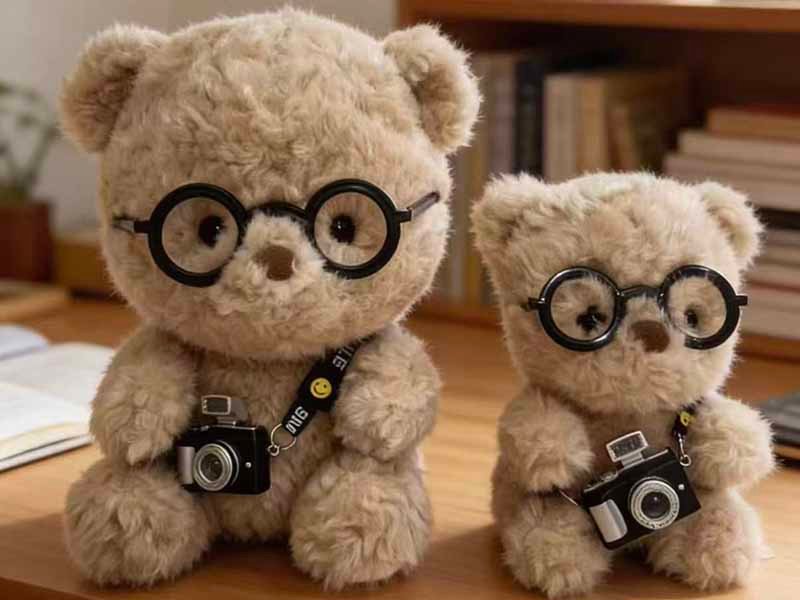
Size is one of the first questions in a custom plush project, but it is rarely a simple number. A 4-inch plush keychain may look cute in a drawing, but the eyes, mouth, ears, clothing, and logo may become too small for clean embroidery. A 10-inch character plush may look perfect for online sales, but the head-body ratio must be adjusted so the toy feels balanced in real life. A 24-inch plush can bring strong shelf impact, yet it changes carton size, freight cost, filling volume, seam strength, and storage planning. For brands, retailers, IP owners, gift companies, museums, event teams, and e-commerce sellers, plush size affects much more than appearance. It affects price, MOQ, packaging, safety, shelf display, photo performance, shipping, and customer reviews.
Custom plush toy sizes usually range from 3–5 inch mini plush keychains to 6–8 inch small gifts, 8–12 inch core retail plush, 14–18 inch premium plush, 20–24 inch large plush, and 28–48 inch jumbo display plush. Most plush toys can be made in different sizes, but every size needs adjusted patterns, embroidery, filling, structure, packaging, and sample review.
The best size depends on where the plush will be sold and how customers will use it. A mini plush is suitable for checkout counters, event giveaways, blind bags, and bag charms. An 8-inch plush works well for corporate gifts, retail shelves, and online bundles. A 10–12 inch plush often becomes the main product for IP characters and gift lines. A 20-inch plush may be better for premium gifts or retail displays. One character can also be developed into a size series, such as 4-inch keychain, 8-inch mini gift, 12-inch core product, and 30-inch display plush. Delsney helps customers plan these size decisions through design review, three-view drawing, 3D effect preview, pattern making, 5–7 day fast sampling, and sample adjustment before bulk production.
What Are Common Plush Toy Sizes?

Common plush toy sizes include mini plush, small plush, standard plush, large plush, and jumbo plush. Each size has a different job. Mini plush works for keychains and impulse sales. Standard plush works for gifts and online products. Large plush supports premium retail value. Jumbo plush is mainly used for displays, events, photo zones, and high-impact brand campaigns.
What Are Mini Plush Sizes?
Mini plush toys usually measure around 3–5 inches, or about 8–12 cm. Some micro plush products can be smaller than 3 inches, especially when used for blind bags, charms, ornaments, or small accessories. Mini plush is popular because it is easy to carry, easy to display, easy to ship, and suitable for low-price add-on sales.
Mini plush is often used for:
- Plush keychains
- Bag charms
- Backpack charms
- Blind bag plush
- Mini mascot plush
- Small event gifts
- Checkout counter items
- Plush ornaments
- Small souvenir gifts
- Capsule collections
- Promotional plush
- Mini character sets
- Toy vending products
- Theme park small gifts
- Museum shop charms
Mini plush may look simple, but it can be harder to develop than a medium plush. Small size leaves very little room for mistakes. If the eyes are too close, the face looks strange. If embroidery is too thin, it may disappear into the fabric. If ears, tails, wings, or clothing parts are too small, sewing becomes difficult and durability becomes weaker.
| Mini Plush Type | Common Size | Best Use | Main Design Concern |
|---|---|---|---|
| Micro plush charm | 1.5–2.5 inch / 4–6 cm | Blind bags, tiny charms | Very limited detail space |
| Mini plush keychain | 3–5 inch / 8–12 cm | Counter sales, souvenirs | Hardware strength and face clarity |
| Mini mascot plush | 4–6 inch / 10–15 cm | Brand events, giveaways | Shape recognition |
| Plush ornament | 3–5 inch / 8–12 cm | Christmas, seasonal retail | Hanging loop and light weight |
| Mini collectible plush | 3–6 inch / 8–15 cm | Fan sets, capsule series | Consistent size across SKUs |
Mini plush design should focus on clear shape and strong recognition. A simple body, clean face, bold color, and one or two key details usually work better than copying every detail from a large character. If the original IP has complicated clothing, tiny fingers, small accessories, or many color blocks, the factory may need to simplify some parts while keeping the main identity.
Important mini plush development points:
- Use a clear silhouette.
- Keep facial embroidery large enough to read.
- Avoid too many tiny accessories.
- Use short-pile fabric for better face clarity.
- Reinforce keychain loops and hardware.
- Keep filling soft but not overstuffed.
- Use simple hangtags or display trays.
- Test whether the plush still looks recognizable from 1 meter away.
- Check if small parts meet the target market’s safety requirements.
- Keep SKU colors easy to separate for retail display.
Mini plush is also useful for testing new characters. A brand may start with 4–5 inch plush keychains before developing a larger 10–12 inch plush. This reduces first-order pressure and helps test whether customers like the character. For retail shops, mini plush can sit near the checkout counter, inside gift baskets, or on rotating display racks.
Delsney can help customers redesign artwork for mini plush scale. The factory can adjust embroidery thickness, fabric choice, hardware, body shape, filling, labels, and packaging so small plush remains cute, durable, and suitable for retail, e-commerce, events, and private label programs.
What Are Standard Plush Sizes?
Standard plush sizes usually range from 6–14 inches, or about 15–35 cm. This range is widely used for retail stuffed animals, custom character plush, IP plush toys, brand mascot plush, seasonal plush, gift plush, baby plush, and online plush products. Many brands choose 8, 10, or 12 inches as the first launch size because the product has enough visual detail without becoming too expensive to pack and ship.
Standard plush is popular because it gives a strong balance between appearance, cost, and usability. A 6-inch plush can work as a small gift or promotional item. An 8-inch plush is easy to hold, easy to pack, and useful for corporate gifts or small retail shelves. A 10-inch plush often works well for mascot plush and online sales. A 12-inch plush feels more valuable for gifts. A 14-inch plush begins to enter the premium gift range.
| Standard Plush Size | Approx. CM | Common Use | Product Role |
|---|---|---|---|
| 6 inch | 15 cm | Small gifts, event items, children’s baskets | Affordable entry size |
| 8 inch | 20 cm | Retail shelves, corporate gifts, small mascot plush | Balanced cost and visibility |
| 10 inch | 25 cm | IP plush, e-commerce plush, mascot plush | Strong core product size |
| 12 inch | 30 cm | Gift plush, character plush, retail collections | Higher perceived value |
| 14 inch | 35 cm | Premium plush, boutique gifts | Larger shelf presence |
Standard plush sizes are suitable for most commercial projects because they allow enough room for:
- Clean face embroidery
- Accurate body proportion
- Small accessories
- Clothing details
- Woven labels
- Care labels
- Hangtags
- Gift packaging
- Barcode labels
- Product photography
- Retail shelf display
For IP brands, 10–12 inches is often easier to work with than 4–5 inches because character details can be shown more clearly. For gift companies, 6–8 inches may be more practical when quantity, budget, and shipping matter. For premium brands, 12–14 inches can make the product feel more valuable without entering the high shipping cost of very large plush.
Standard plush also works well for multi-SKU collections. A retailer can build a 6-SKU Christmas plush collection in 8 inches. An IP owner can launch 3 character plush toys in 10 inches. A museum shop can sell dinosaur plush in 8 and 12 inches. A gift company can use 6-inch mascot plush for events and 10-inch plush for VIP gifts.
Standard size planning by channel:
| Sales Channel | Recommended Size | Reason |
|---|---|---|
| Amazon / Shopify | 8–12 inch | Good product photos and manageable shipping |
| Gift shops | 6–12 inch | Easy to display and gift |
| Toy stores | 8–14 inch | Strong shelf presence |
| Corporate gifts | 6–10 inch | Easy packing and logo placement |
| Museum shops | 6–12 inch | Portable for tourists |
| IP merchandise | 10–14 inch | Better detail and collectible value |
| Baby gift stores | 6–10 inch | Soft, manageable, giftable |
| Seasonal retail | 6–12 inch | Works for holiday shelves and gift tables |
Delsney can help customers choose a standard size by reviewing artwork, target sales channel, price range, packaging, and quantity. During sampling, the team can adjust head size, body curve, embroidery scale, filling amount, fabric pile length, and label placement so the plush looks balanced at the chosen size.
What Are Large Plush Sizes?
Large plush toys usually measure 16–24 inches, or about 40–60 cm. These sizes are used for premium gifts, fan merchandise, retail displays, holiday products, room decor, event gifts, mascot plush, and high-value plush collections. Large plush has stronger visual impact than standard plush and gives more space for soft fabric, accurate details, accessories, and expressive body shape.
Large plush is useful when the product needs to feel more valuable. A 20-inch bear can feel like a main gift. A 24-inch mascot plush can stand out in a store display. A large dinosaur plush can become a museum gift shop hero product. A big holiday plush can help decorate a retail entrance or gift table.
Common large plush uses include:
- Premium holiday gifts
- Valentine’s Day plush
- Christmas plush
- Large teddy bears
- IP fan merchandise
- Store display plush
- Event photo props
- Mascot plush
- Theme park merchandise
- Bedroom decor
- Limited-edition plush
- Retail window display pieces
| Large Plush Size | Approx. CM | Best Use | Production Concern |
|---|---|---|---|
| 16 inch | 40 cm | Premium gifts, larger retail plush | Filling balance |
| 18 inch | 45 cm | Fan merchandise, character plush | Carton volume |
| 20 inch | 50 cm | Mascot plush, holiday plush | Seam strength and head weight |
| 24 inch | 60 cm | Display plush, large gifts | Shipping cost and shape control |
Large plush cannot simply be enlarged from a small pattern. When plush size increases, the body may become too bulky, the head may become heavy, the limbs may sag, and the original cute proportion may change. A professional factory needs to adjust the pattern, seam line, fabric selection, filling amount, and internal balance.
Large plush development should check:
- Whether the head is too heavy
- Whether the plush can sit or stand as planned
- Whether limbs keep their shape
- Whether seams can handle pressure
- Whether filling is even
- Whether fabric wrinkles on large surfaces
- Whether accessories are strong enough
- Whether packaging protects the shape
- Whether shipping volume is acceptable
- Whether the retail price supports the cost
Large plush also affects storage and freight. A 24-inch plush uses more carton space than several standard plush toys. If shipped by air, volume weight may make freight expensive. If vacuum packing is used, recovery testing is needed. Some long-pile fabrics, structured faces, hats, or accessories may not recover well after heavy compression.
Packaging choices for large plush:
| Packaging Option | Suitable Use | Notes |
|---|---|---|
| Large polybag | Basic protection | Cost-effective but less premium |
| Display carton | Retail or warehouse handling | Protects shape better |
| Gift bag | Premium retail | Good for large holiday plush |
| Vacuum pack | Some soft plush styles | Needs recovery testing |
| Window box | Premium display | Higher cost and carton volume |
| Custom carton | Jumbo or structured plush | Useful for shape protection |
Delsney can support large plush development with adjusted pattern making, filling tests, seam reinforcement, fabric selection, and packaging planning. For large plush, sample review should include real touch, sitting test, shape recovery test, carton test, and photo review before bulk production.
Are Jumbo Plush Toys Practical?
Jumbo plush toys usually measure 28–48 inches, or around 70–120 cm. Some oversized plush can reach 60 inches, 80 inches, or larger for exhibitions, retail displays, theme parks, photo zones, malls, store windows, and brand events. Jumbo plush is practical when the goal is attention, display value, social media photos, or premium gift impact. It is less practical when low shipping cost and small storage space are the main concerns.
Jumbo plush is suitable for:
- Store window displays
- Mall holiday setups
- Theme park merchandise
- Brand mascot displays
- Exhibition booths
- Event photo zones
- Limited-edition gifts
- Premium fan merchandise
- Large room decoration
- Retail entrance displays
- Social media campaign props
- Product launch installations
Jumbo plush creates strong impact, but it also brings higher production and logistics pressure. A large plush needs more fabric, more filling, longer sewing time, larger inspection space, larger cartons, higher freight cost, and better packing control. For huge plush, structure becomes important because the product may collapse, lean, or lose shape if the pattern and filling are not planned correctly.
| Jumbo Plush Size | Approx. CM | Best Use | Main Challenge |
|---|---|---|---|
| 28–32 inch | 70–80 cm | Premium gifts, small displays | Carton size |
| 36–40 inch | 90–100 cm | Store displays, photo props | Filling and shipping |
| 48 inch | 120 cm | Event display, mascot plush | Structure and freight |
| 60 inch+ | 150 cm+ | Large installations | Special packing and handling |
| 80 inch+ | 200 cm+ | Exhibition or custom display | Engineering and logistics planning |
Jumbo plush often needs a different development mindset. A face that looks cute at 10 inches may look too empty at 40 inches if embroidery is not scaled correctly. A small accessory may look strange when enlarged. A thin limb may not support its shape. A large head may need more filling control. In some cases, inner support or special structural planning may be needed.
Important jumbo plush planning points:
- Confirm whether the plush is for display or regular sale.
- Check if customers need to hug, sit near, carry, or install it.
- Confirm carton size before production.
- Estimate volume weight for shipping.
- Test shape recovery after packing.
- Check whether accessories are safe and secure.
- Use stronger stitching at stress points.
- Review the product from a distance, not only close-up.
- Plan warehouse and store handling.
- Confirm whether retail packaging is needed or only transport packing.
Jumbo plush can be a smart investment when visual effect matters. A giant mascot can attract people at a trade show. A large Christmas plush can become a store photo spot. A jumbo IP character can become a collector product or event centerpiece. For normal e-commerce, however, jumbo plush may create higher storage, shipping, and return risk.
Delsney can support jumbo plush projects when the target size, usage scene, quantity, packaging method, and shipping destination are clear. The factory can review feasibility, adjust structure, recommend fabric and filling, make samples, and plan packaging before production.
How Are Plush Sizes Measured?
Plush sizes can be measured by height, sitting height, body length, width, depth, or full hanging length, depending on the product shape. Clear measurement is very important because “10-inch plush” can mean different things for different toy styles. A sitting bear, standing doll, long dinosaur, plush pillow, and keychain plush all need different measuring methods.
For a standing plush doll, height is usually measured from the top of the head to the bottom of the feet. For a sitting teddy bear, the main size is often sitting height. For a long animal plush, such as a crocodile, dog, snake, or dinosaur, length from nose to tail may be more useful. For a plush pillow, width × height × thickness should be measured. For a plush keychain, the plush body and the full hanging length should be measured separately.
| Plush Type | Main Measurement | What to Confirm |
|---|---|---|
| Standing plush | Head-to-foot height | Whether ears or hats are included |
| Sitting plush | Sitting height | Whether legs extend forward |
| Long animal plush | Nose-to-tail length | Whether tail curve is included |
| Plush pillow | Width × height × thickness | Final stuffed thickness |
| Plush keychain | Body size + hardware length | Whether ring length is included |
| Plush ornament | Body size + hanging loop | Total display height |
| Jumbo plush | Height × width × depth | Carton and storage planning |
| Character doll | Full height + head width | Proportion and clothing fit |
Size tolerance should also be discussed. Plush toys are soft products, so a small difference may happen due to fabric stretch, filling amount, sewing tension, and manual finishing. A 1 cm difference may not matter for a 24-inch plush, but it can be very noticeable on a 4-inch keychain.
Useful size information to send to a factory:
- Target height
- Target width
- Target depth
- Sitting or standing position
- Whether ears, horns, hats, or hair are included in height
- Whether tail length is included
- Whether keychain hardware is included
- Desired product weight
- Packaging size limit
- Shelf or display space limit
- Carton packing requirement
- Size tolerance requirement
Clear measurement notes reduce misunderstanding during sampling. They also help the factory estimate fabric use, filling amount, carton size, shipping cost, and packaging design. Delsney can help customers confirm measurement standards before sample making, especially for IP plush, mascot plush, keychains, long animal plush, and jumbo plush projects.
Which Plush Size Should You Choose?

The best plush size depends on product purpose, sales channel, target price, customer age, packaging style, shipping method, and design detail. Mini plush works for keychains and add-on sales. Standard plush fits retail and online products. Large plush suits premium gifts. Jumbo plush is better for displays, events, and high-impact brand campaigns.
Which Size Fits Retail Stores?
Retail stores need plush sizes that fit shelf space, price points, shopping behavior, and display style. A small gift shop does not have the same space as a toy chain. A supermarket seasonal aisle does not sell plush the same way as a boutique store. Before choosing size, retailers should think about where the plush will sit: checkout counter, small shelf, main plush wall, window display, seasonal table, or gift section.
A balanced retail plush line often uses several sizes. Mini plush can sit near checkout counters. 6–8 inch plush can fill small gift shelves. 8–12 inch plush can become the main sales item. 14–20 inch plush can create premium shelf impact. Jumbo plush can be used as display pieces rather than daily sales items.
Retail size planning table:
| Retail Area | Recommended Size | Product Example | Selling Purpose |
|---|---|---|---|
| Checkout counter | 3–5 inch | Plush keychains, mini charms | Low-price impulse sale |
| Small gift shelf | 6–8 inch | Small animals, holiday plush | Easy gift purchase |
| Main plush shelf | 8–12 inch | Standard bears, mascot plush | Core sales item |
| Seasonal table | 8–16 inch | Easter bunny, Christmas bear | Holiday gift focus |
| Feature display | 14–20 inch | Premium plush, large mascot | Higher perceived value |
| Window display | 20–40 inch | Large animal, jumbo character | Attracts attention |
| Store entrance | 30 inch+ | Jumbo mascot plush | Photo and campaign value |
Retail stores should avoid choosing size only by cuteness. Shelf efficiency matters. A 16-inch plush may look great, but if only 6 pieces fit on a shelf, the store may prefer 10-inch plush with stronger turnover. For checkout counters, 4-inch keychains may sell better than 8-inch plush because customers can grab them quickly without thinking too much.
Retailers should consider:
- Shelf width and depth
- Display height
- Product price range
- Number of SKUs
- Carton storage space
- Staff restocking time
- Whether products need hangtags or display trays
- Whether customers buy for children, gifts, or souvenirs
- Whether product should be touched, hung, stacked, or boxed
For gift shops and boutique stores, packaging can make small plush feel more valuable. A 6-inch plush with a custom hangtag and story card may look better than an 8-inch plush in plain packaging. For supermarkets, barcode labels, PDQ trays, and easy shelf setup may matter more than premium boxes.
Delsney can help retailers choose size based on shelf display, price point, SKU plan, packaging, and order quantity. The factory can also develop multi-size assortments, such as 4-inch keychain + 8-inch gift plush + 14-inch premium plush, to support different retail price levels.
Which Size Works for Online Sales?
Online plush sales need sizes that photograph well, ship safely, and match customer expectations. Many negative reviews come from size misunderstanding. Customers may think a plush looks large in a close-up photo, then feel disappointed when the product arrives smaller than expected. Clear size planning and clear product images reduce this risk.
For online selling, 8–12 inches is often a strong main size range. The plush is big enough to show details in product photos, but not too large for regular packing and shipping. Mini plush and keychains work well as add-on products, bundles, fan merch, or low-price items. Large plush can sell as premium gifts, but shipping, storage, returns, and packaging must be planned carefully.
Online plush size guide:
| Online Product Type | Recommended Size | Advantage | Risk |
|---|---|---|---|
| Plush keychain | 3–5 inch | Low shipping cost, add-on sale | Details may be limited |
| Small gift plush | 6–8 inch | Easy to pack and bundle | May look smaller in customer hands |
| Standard plush | 8–12 inch | Good photo presence and value | Needs accurate size photos |
| Premium plush | 14–18 inch | Higher gift value | More carton volume |
| Oversized plush | 24 inch+ | Strong visual impact | Higher shipping and return cost |
Online listings should show size clearly. A single studio photo is not enough. Customers should see the plush next to a hand, desk, chair, backpack, child-safe prop, or common object. If the plush is 10 inches, the listing should show height in inches and centimeters. If vacuum packing is used, recovery instructions should be included.
Online product page size details should include:
- Height in inches and centimeters
- Width and depth
- Product weight
- Package size
- Photo with scale reference
- Whether size includes ears, horns, or hat
- Whether keychain hardware is included
- Whether plush is vacuum-packed
- How long shape recovery may take after opening
- Recommended age and care information
Packaging also changes by size. Small plush may ship in mailer bags or small cartons. Standard plush often uses polybag plus carton. Premium plush may need gift boxes or protective inserts. Oversized plush may need custom cartons, vacuum packing tests, or special handling.
For online sales, size affects reviews. If customers understand the size before buying, they are more likely to be satisfied. If photos exaggerate size, returns and complaints may increase. Delsney can support e-commerce plush projects with size planning, packaging advice, barcode labels, SKU labels, carton marks, and production samples that can be used for product photography.
Which Size Is Best for Gifts?
Gift plush usually works best between 6 and 16 inches. Smaller sizes fit baskets, small gifts, and event giveaways. 8–12 inches is often the strongest range for standard gifts because it feels complete but remains easy to pack and ship. 14–16 inches feels more premium and works well for holidays, birthdays, Valentine’s Day, Christmas, graduation, and special campaigns.
Gift size should match the emotional value of the occasion. A 4-inch plush keychain may be a sweet add-on, but it may not feel like the main gift. A 10-inch plush feels more complete. A 12-inch plush works well for gift shops and online gift sets. A 16-inch plush creates stronger impact but also needs higher retail price and larger packaging.
Gift plush size table:
| Gift Type | Recommended Size | Best Scene | Packaging Suggestion |
|---|---|---|---|
| Basket filler | 4–6 inch | Easter, baby gift baskets | Hangtag or small sleeve |
| Small gift | 6–8 inch | Events, corporate gifts | Polybag, swing tag |
| Standard gift | 8–12 inch | Birthday, holiday, retail gifts | Hangtag, story card, ribbon |
| Premium gift | 12–16 inch | Valentine, Christmas, graduation | Gift box or fabric bag |
| Display gift | 18–24 inch | Store display, high-value gifts | Large gift bag or carton |
| Keepsake plush | 8–14 inch | Mascot, character, memory gift | Story card, custom tag |
Gift value is not only about size. Fabric softness, face expression, filling balance, packaging, tag design, and story can make a medium plush feel more premium than a larger but poorly finished plush. A 10-inch plush with high-quality minky fabric, clean embroidery, and a custom gift box may feel more valuable than a plain 16-inch plush with rough sewing.
Gift-focused plush should consider:
- Soft hand feel
- Attractive face
- Clean seam finishing
- Suitable size for holding
- Gift-ready packaging
- Custom message card
- Logo label
- Care label
- Barcode label
- Safety and age grade
- Carton protection for shipping
Seasonal gift plush often benefits from a size range. For Valentine’s Day, a 6-inch mini bear can be sold with flowers, while a 12-inch heart bear can be sold as the main gift. For Christmas, 4-inch ornament plush can be stocking stuffers, 8-inch reindeer can be shelf gifts, and 16-inch Santa bears can be premium gifts.
Delsney can help customers design gift plush in suitable sizes with custom fabric, embroidery, hangtags, story cards, care labels, barcode labels, gift boxes, display trays, and private label packaging. For gift products, size should match the price point, occasion, and packaging style.
Which Size Fits IP Characters?
IP character plush needs enough size to show personality. Very small plush may lose facial details, clothing, hair, accessories, color blocks, or expression. For a first IP plush launch, 8–12 inches is often a practical range because the character can show enough detail while remaining manageable for packaging and shipping.
A simple round mascot can work well at 4–6 inches. A detailed anime-style doll may need 10–16 inches. A game character with clothing, horns, wings, shoes, weapons, or printed elements may need a larger size to keep details clear. A museum mascot or cartoon animal may work well at 8–12 inches for retail and souvenir shops.
IP plush size planning table:
| Character Type | Recommended First Size | Reason |
|---|---|---|
| Simple round mascot | 6–10 inch | Clear shape, easy production |
| Cute animal character | 8–12 inch | Good face and body proportion |
| Game character | 10–14 inch | More room for detail |
| Anime-style doll | 10–16 inch | Hair and clothing need space |
| Museum mascot | 8–12 inch | Good souvenir size |
| Mini fan item | 3–5 inch | Keychain or charm version |
| Jumbo mascot | 24 inch+ | Display, event, photo use |
IP characters can also be developed into multiple sizes:
| Version | Size | Use |
|---|---|---|
| Keychain version | 3–5 inch | Fan add-on, event gift |
| Mini version | 6 inch | Low-price collectible |
| Core version | 8–12 inch | Main retail product |
| Premium version | 14–18 inch | Gift or collector product |
| Display version | 24–40 inch+ | Store, booth, event display |
Multi-size IP plush cannot be made by simple scaling. Each size may need a different embroidery file, different pattern adjustment, different filling plan, and different accessory thickness. Small versions may remove some details. Larger versions may add more detail but need stronger seam control and better posture balance.
IP size decisions should consider:
- Character complexity
- Face detail
- Clothing and accessories
- Target selling price
- Fan expectations
- Packaging style
- Shipping cost
- Photography needs
- Display purpose
- Safety requirements
Delsney can support IP plush size development with three-view artwork, 3D effect preview, pattern making, embroidery testing, sample revision, and multi-size production planning. Under confirmed specifications, Delsney can help finished plush match approved design artwork up to 98%, which is valuable for IP owners, character brands, game companies, and premium plush projects.
Which Size Works for Events?
Event plush size depends on quantity, budget, carrying convenience, deadline, and brand visibility. Small plush and keychains work well for high-volume giveaways. Medium plush works for VIP gifts, fan merchandise, school mascots, and corporate campaigns. Large and jumbo plush work for booth displays, photo zones, product launches, and mascot installations.
Event plush often has fixed deadlines, so size should be chosen early. A trade show, sports event, school ceremony, brand launch, or holiday campaign will not wait for repeated sample changes. A 4-inch keychain may be easier to produce and ship in large quantities than a 12-inch plush. A 30-inch display plush may be perfect for a booth but not suitable as a giveaway.
Event plush size guide:
| Event Use | Recommended Size | Best Product |
|---|---|---|
| Mass giveaway | 3–5 inch | Plush keychain, mini mascot |
| School or club gift | 6–8 inch | Mascot plush |
| Corporate gift | 6–10 inch | Logo plush, boxed plush |
| Fan event merchandise | 8–12 inch | Character plush |
| VIP gift | 12–16 inch | Premium plush with packaging |
| Booth display | 24–48 inch | Jumbo mascot plush |
| Photo prop | 30 inch+ | Oversized plush |
Event plush must be easy to carry. If visitors travel by plane, a large plush may become inconvenient. For conferences or trade shows, plush keychains, mini mascot plush, or 6-inch logo plush may be more practical. For VIP gifts, a 10–12 inch plush with a custom box can feel more valuable. For display, jumbo plush can create stronger visual impact.
Event project planning should include:
- Event date
- Required arrival date
- Quantity
- Target size
- Logo placement
- Packaging method
- Whether products are given away or sold
- Whether plush must fit tote bags or boxes
- Shipping destination
- Safety and label requirements
- Whether display plush is needed separately
Delsney can support event plush through 5–7 day fast sampling, flexible MOQ, logo customization, private label tags, display packaging, bulk production, and quality inspection. For event projects with strict dates, early confirmation of size, artwork, and packaging helps protect delivery time and reduce last-minute changes.
How Are Plush Toys Made in Any Size?

Plush toys can be made in many sizes, but size change is not simple enlargement or reduction. A professional factory must adjust pattern pieces, embroidery scale, fabric choice, filling amount, seam strength, accessories, packaging, and safety details. Small plush needs simplified details. Large plush needs better structure. Multi-size plush needs separate sample review for each size.
How Do Factories Resize Plush Designs?
Factories resize plush designs by studying the original artwork, deciding the target size, adjusting proportions, redrawing or modifying the pattern, scaling embroidery, selecting suitable fabric, and making a physical sample. A plush toy is soft and three-dimensional, so resizing is different from resizing a flat image on a computer.
When a design is made smaller, many details may need simplification. Thin arms, tiny fingers, small accessories, complex clothing, facial lines, and color blocks can become difficult to sew or embroider. A 12-inch character may have a detailed jacket, shoes, tail, and embroidered eyes, but a 4-inch keychain version may only keep the main body shape, simple face, and one signature accessory.
When a design is made larger, the opposite problem appears. Details that looked fine at 8 inches may look empty at 30 inches. The face may need larger embroidery. The fabric surface may show more wrinkles. The body may need stronger filling. The head, ears, arms, legs, wings, or tail may need extra structure to hold shape.
A factory usually checks these points when resizing:
- Target height, width, and depth
- Sitting or standing position
- Head-body proportion
- Eye size and distance
- Mouth curve
- Limb thickness
- Tail, wing, or ear size
- Fabric pile length
- Embroidery scale
- Accessory thickness
- Filling firmness
- Seam placement
- Label position
- Packaging size
- Shipping volume
| Resizing Direction | Main Challenge | Factory Adjustment |
|---|---|---|
| Large to mini | Details become too small | Simplify embroidery, reduce accessories, thicken limbs |
| Mini to large | Shape may look empty | Add detail, improve filling, strengthen seams |
| Standard to jumbo | Structure may collapse | Adjust pattern, filling, support, carton planning |
| One size to multi-size | Consistency across sizes | Separate patterns and embroidery files |
| Artwork to plush | Flat image becomes 3D | Create three-view drawing and sample |
For IP plush, resizing must protect the character’s identity. A mini version should still look like the same character, even if some details are simplified. A jumbo version should not look like a distorted costume or pillow. Good resizing keeps the important features: face expression, color, silhouette, body proportion, and one or two signature details.
Delsney can support resizing through three-view artwork, 3D effect preview, pattern adjustment, embroidery testing, and physical samples. Customers can send artwork, target sizes, and product use, then Delsney can recommend which details should stay, which should be simplified, and which need structural adjustment.
How Does Pattern Making Change?
Pattern making changes significantly when plush size changes. A plush pattern is not just a scaled drawing. It is a set of fabric pieces that decide the head shape, body curve, limb angle, sitting posture, filling space, seam direction, and final softness. When size changes, the pattern often needs to be rebuilt or corrected.
Small plush patterns must be simplified. Tiny pieces are hard to cut, sew, turn, and fill. If the pattern has too many small curves, the final product may look uneven. A 4-inch plush keychain often needs fewer fabric pieces than a 12-inch plush. The factory may combine some panels, remove tiny clothing parts, or change small details into embroidery.
Large plush patterns need more shape control. A 24-inch plush may need extra panels to keep a smooth round head. A jumbo plush may need better seam placement to prevent fabric wrinkles. Limbs may need larger seam allowances. The bottom may need a flatter structure if the plush must sit. A standing plush may need balance control.
Pattern differences by size:
| Plush Size | Pattern Focus | Common Adjustment |
|---|---|---|
| 3–5 inch | Simplicity and clean sewing | Fewer panels, thicker limbs, larger facial details |
| 6–8 inch | Basic shape and cost control | Simple panels, clear embroidery |
| 10–12 inch | Character accuracy | Better head-body ratio and detail placement |
| 14–18 inch | Gift value and posture | More filling control and smoother seams |
| 20–24 inch | Shape stability | Reinforced seams and balanced stuffing |
| 28 inch+ | Structure and handling | Larger panels, support planning, special packing |
Pattern making affects many visible details:
- Whether the head looks round or flat
- Whether the plush can sit properly
- Whether arms and legs hang naturally
- Whether the face area stays smooth
- Whether ears stand, flop, or twist
- Whether a tail stays in the right position
- Whether clothing fits the body
- Whether filling creates lumps or wrinkles
A common mistake is using the same pattern ratio for every size. This can make mini plush look too crowded and large plush look too bulky. For a multi-size character series, each size should be reviewed as its own product. The 4-inch, 8-inch, 12-inch, and 24-inch versions may share the same visual identity, but their patterns should not be identical.
Delsney’s pattern-making support helps customers avoid shape problems before bulk production. The team can work from technical files, reference images, physical samples, or hand drawings. For custom plush in different sizes, Delsney can create separate patterns and samples to keep the final product cute, balanced, and manufacturable.
How Does Sampling Check Size?
Sampling checks whether the planned size works in real plush form. A size written on paper does not always create the expected result. Fabric thickness, seam allowance, filling volume, embroidery placement, and accessory size can all change how the final plush looks and feels. A physical sample lets the customer check appearance, size accuracy, softness, posture, packaging fit, and retail presentation before bulk production.
A size sample should be checked from all angles:
- Front view
- Side view
- Back view
- Top view
- Bottom view
- Sitting or standing position
- Hand-held scale
- Packaging fit
- Carton packing
- Product photo appearance
Size sampling should confirm:
| Check Point | Why It Matters |
|---|---|
| Final height | Confirms product matches target size |
| Width and depth | Affects shelf space and packing |
| Head-body ratio | Controls cuteness and character accuracy |
| Face size | Affects embroidery visibility |
| Limb thickness | Affects sewing and durability |
| Filling amount | Affects softness and posture |
| Weight | Affects shipping and customer feel |
| Packaging fit | Prevents crushing or wasted box space |
| Sitting stability | Important for shelf display |
| Shape recovery | Important after shipping or compression |
For small plush, sampling often reveals whether the design is too detailed. If the face looks crowded, embroidery lines may need to be simplified. If ears or arms are too thin, they may need to be widened. If a keychain loop pulls badly, the attachment point needs reinforcement.
For large plush, sampling reveals balance and structure issues. The head may lean forward. The body may feel too soft. The legs may not support the sitting posture. The plush may not fit the planned carton. These issues must be corrected before production because large plush mistakes can become expensive.
Sample size tolerance should be discussed clearly. Plush toys are soft goods, so slight variation may happen during sewing and filling. A ±0.5 cm tolerance may be strict for a 4-inch plush, while ±1–2 cm may be acceptable for a larger plush depending on project standards.
Delsney offers 5–7 day fast sampling for many clear custom projects. For multi-size plush, the factory can make samples in different sizes so customers can compare cost, shape, packaging, and retail effect before choosing final production sizes.
Can One Character Have Many Sizes?
One character can have many plush sizes, and this is a smart strategy for IP brands, retailers, gift companies, museums, resorts, game brands, and e-commerce sellers. A multi-size series allows one character to serve different price points and sales channels. The same mascot can become a keychain, standard plush, premium gift, and jumbo display item.
A common multi-size structure looks like this:
| Version | Size | Best Use |
|---|---|---|
| Keychain version | 3–5 inch | Fan add-on, event giveaway, souvenir |
| Mini version | 6 inch | Low-price gift, small retail item |
| Core version | 8–12 inch | Main product for retail and online sales |
| Premium version | 14–18 inch | Gift line, collector product |
| Display version | 24–40 inch+ | Store display, event booth, photo prop |
Multi-size plush helps brands build a full product line without creating unrelated characters. Customers who cannot afford the large version may buy the keychain. Fans who love the character may collect multiple sizes. Retailers can place different sizes in different store areas. Online sellers can create bundles.
However, one character in many sizes requires careful development. The mini version may need simplified details. The core version should show the character most accurately. The premium version may use better fabric or packaging. The jumbo version may need structural support and special carton planning.
Multi-size planning should decide:
- Which size will be the main product
- Which size will be the low-price add-on
- Which size will use premium packaging
- Which size needs display-only structure
- Which details must stay across all sizes
- Which details can be simplified in mini versions
- Whether each size needs its own embroidery file
- Whether the same fabric can be used across all sizes
- How carton packing changes by size
- How MOQ will be managed across SKUs
Multi-size character development example:
| Product | Size | Custom Detail |
|---|---|---|
| Mascot keychain | 4 inch | Simplified face, lobster clasp, mini tag |
| Small mascot | 6 inch | Basic body, woven label |
| Main mascot plush | 10 inch | Accurate face, custom hangtag |
| Premium mascot plush | 16 inch | Softer fabric, story card, gift box |
| Display mascot | 32 inch | Stronger filling, reinforced seams |
Delsney can support multi-size plush series with separate pattern making, embroidery scaling, fabric selection, sample comparison, and SKU planning. For IP owners and private label brands, this makes it easier to build a complete product family around one strong character.
Do Small Plush Toys Lose Details?
Small plush toys can lose details if the design is not adjusted properly. A plush toy is made from fabric, embroidery, sewing, and filling, not printed paper. Details that look clear on a large drawing may become too tiny on a 3-inch or 4-inch product. This is why small plush design should focus on the most recognizable features.
Details often lost on small plush include:
- Thin eyebrows
- Tiny mouth lines
- Small fingers
- Thin tails
- Complex clothing seams
- Printed patterns
- Small buttons
- Narrow shoes
- Tiny wings
- Multi-layer accessories
- Small text logos
- Thin color lines
Instead of forcing every detail into a small size, a better approach is to keep the strongest identity points. For example, a mini cat plush may keep the ear shape, eye style, tail, and main color, but remove tiny clothing buttons. A mini game character may keep the hair shape and face, but simplify shoes and accessories. A mini mascot may keep the logo on the hangtag instead of the body.
Small plush detail planning:
| Detail Type | Mini Plush Risk | Better Solution |
|---|---|---|
| Small logo | May become unreadable | Use hangtag or woven label |
| Thin embroidery | May disappear | Make lines thicker |
| Tiny fingers | Hard to sew | Simplify into mitten shape |
| Detailed clothing | Too crowded | Use one main clothing feature |
| Small accessories | Safety and durability risk | Use embroidery or fabric appliqué |
| Printed patterns | May blur | Reduce pattern or enlarge key elements |
| Long text | Not readable | Move to packaging |
Small plush does not need to show everything. It needs to be recognizable, cute, and durable. A clean 4-inch plush often sells better than an over-detailed one that looks messy. The best mini plush feels intentionally simplified, not poorly reduced.
Delsney can help customers review which details to keep, simplify, or move to packaging. With embroidery testing, fabric choice, and sample adjustment, the factory can make mini plush products that still carry strong character identity at small size.
How Does Size Affect Cost?

Plush size affects cost through fabric use, filling amount, sewing time, embroidery size, accessories, packaging, carton volume, shipping method, and MOQ. Larger plush often costs more because it uses more materials and space. Very small plush can also be costly if the design has many tiny details. The best size balances product value, cost, display, and logistics.
How Does Fabric Use Change?
Fabric use increases as plush size grows, but the relationship is not always linear. A plush that doubles in height can use much more than double the fabric because width, depth, limbs, head volume, seam allowance, and accessories also increase. Large plush also creates bigger cutting pieces and may need more fabric planning to reduce waste.
Fabric use depends on:
- Final height
- Body width and depth
- Head size
- Limb thickness
- Tail, ears, wings, or horns
- Fabric pile direction
- Number of colors
- Pattern piece count
- Cutting efficiency
- Defect allowance
- Fabric width
- Whether fabric is custom-dyed
A simple size comparison:
| Plush Size | Fabric Use Level | Cost Effect |
|---|---|---|
| 3–5 inch | Low fabric use | Detail labor may still be high |
| 6–8 inch | Moderate-low | Good for cost-controlled gifts |
| 10–12 inch | Balanced | Strong retail value |
| 14–18 inch | Higher | Better gift value, higher material cost |
| 20–24 inch | High | More fabric and carton space |
| 28 inch+ | Very high | Requires careful costing and cutting |
Fabric type also changes cost. Standard short plush is usually more cost-efficient than premium minky, faux fur, or custom-dyed material. Long-pile fabric may create more cutting waste because pile direction must be controlled. Multi-color characters may need several fabrics, increasing sourcing complexity and cutting time.
Cost-sensitive projects can control fabric use by:
- Choosing practical size
- Reducing unnecessary oversized parts
- Using available fabric colors
- Limiting too many fabric types
- Avoiding overly complex tails, wings, or clothing
- Using embroidery or appliqué instead of separate tiny fabric pieces
- Keeping SKU designs in similar fabric groups
- Confirming fabric before sample revision goes too far
Delsney can help customers estimate fabric impact during the design and sampling stage. For brands with target price limits, the factory can suggest size or material adjustments before bulk production.
How Does Filling Affect Price?
Filling affects price because larger plush toys need more stuffing, and different filling types have different costs and performance. Filling also changes shape, softness, weight, and recovery. A plush with too little filling may look flat. A plush with too much filling may feel hard and lose its huggable feel.
Common filling options include:
| Filling Type | Feel | Suitable Use |
|---|---|---|
| Standard PP cotton | Soft and light | Most plush toys |
| High-resilience PP cotton | Fuller and better recovery | Premium plush and gift plush |
| Recycled filling | Eco-focused | Sustainability lines |
| Weighted beads | Heavier and calming | Sensory plush, premium gifts |
| Foam parts | Shape support | Structured mascot parts |
| Mixed filling | Balanced shape and touch | Character plush and seated plush |
Filling cost increases with size. A 20-inch plush may require far more filling than a 10-inch plush. Jumbo plush may need staged stuffing to avoid lumps, collapse, or uneven shape. Large plush also needs careful filling distribution around the head, belly, legs, and bottom.
Filling affects quality in these ways:
- Softness
- Shape fullness
- Sitting stability
- Hug feel
- Weight
- Recovery after packing
- Head support
- Surface smoothness
- Long-term shape retention
Size and filling relationship:
| Plush Size | Filling Focus | Common Issue |
|---|---|---|
| 3–5 inch | Light filling | Overstuffing makes it stiff |
| 6–8 inch | Soft but full | Shape may look flat if underfilled |
| 10–12 inch | Balanced fullness | Needs good hand feel |
| 14–18 inch | Shape support | Head and body balance |
| 20–24 inch | Even distribution | Lumps and sagging |
| 28 inch+ | Structural filling control | Collapse or high shipping weight |
For seated plush, filling at the bottom matters. For standing plush, weight balance matters. For hugging plush, softness matters. For display plush, shape stability matters. Filling should match product use, not only size.
Delsney can adjust filling amount during sampling. If the sample looks flat, more filling or pattern adjustment may be needed. If the plush feels too hard, filling density can be reduced. If the head leans, pattern and stuffing balance should be reviewed together.
How Does Packaging Change Cost?
Packaging cost changes by plush size because larger products need bigger bags, boxes, trays, cartons, inserts, labels, and storage space. Packaging also affects retail presentation and shipping safety. A small plush keychain may only need a hangtag and display tray. A 12-inch gift plush may need a story card and box. A 30-inch jumbo plush may need a custom transport carton.
Packaging options by plush size:
| Plush Size | Common Packaging | Cost Level |
|---|---|---|
| 3–5 inch | Hangtag, header card, display tray | Low to medium |
| 6–8 inch | Polybag, swing tag, barcode label | Low to medium |
| 8–12 inch | Hangtag, story card, gift sleeve | Medium |
| 12–16 inch | Gift box, window box, fabric bag | Medium to high |
| 18–24 inch | Large polybag, display carton | High |
| 28 inch+ | Custom carton, vacuum test, special packing | High |
Packaging should match the sales channel. Retail stores need shelf presentation. Online stores need protection during shipping. Gift shops need a finished look. Supermarkets need barcode labels and display-ready cartons. Premium brands may need custom boxes, paper sleeves, or fabric bags.
Packaging cost factors include:
- Packaging size
- Material thickness
- Printing colors
- Window box structure
- Insert cards
- Barcode labels
- Care labels
- Custom hangtags
- Display trays
- Carton strength
- Packing labor
- Whether product is compressed
Larger packaging increases freight volume. A gift box may improve retail value but can also increase carton size. For e-commerce, too much empty space inside packaging may increase shipping cost and damage risk. For large plush, vacuum packing can reduce volume, but recovery must be tested.
Packaging should be discussed during sampling, not after bulk production. If the plush size changes, the packaging may need to change too. Delsney can help customers plan hangtags, care labels, story cards, barcode labels, display trays, gift boxes, PDQ boxes, polybags, cartons, and retail-ready packing based on plush size and sales channel.
How Does Shipping Change by Size?
Shipping changes greatly by plush size because plush toys are light but bulky. Freight cost often depends on volume weight, not only actual weight. A large plush may not weigh much, but it can occupy a lot of carton space. This affects air freight, express delivery, warehouse storage, and e-commerce fulfillment.
Shipping considerations by size:
| Plush Size | Shipping Concern | Best Planning Point |
|---|---|---|
| 3–5 inch | Small cartons, easy packing | SKU separation and display trays |
| 6–8 inch | Efficient carton packing | Good for gifts and online sales |
| 10–12 inch | Balanced shipping volume | Common e-commerce size |
| 14–18 inch | Carton size increases | Check freight cost early |
| 20–24 inch | Bulky packing | Consider compression test |
| 28 inch+ | High volume weight | Plan carton and shipping method carefully |
Plush shipping costs can be affected by:
- Product size
- Product shape
- Filling volume
- Whether plush can be compressed
- Fabric recovery after compression
- Packaging type
- Carton dimensions
- Quantity per carton
- Shipping method
- Destination country
- Warehouse requirements
- Retail packaging protection
Compression can help reduce shipping volume, but it is not suitable for every plush. Short plush with simple shapes may recover better. Long fur, structured faces, hats, wings, or premium gift boxes may suffer after compression. Testing is important before choosing vacuum packing.
For e-commerce sellers, product size also affects fulfillment cost. Oversized plush may require larger cartons and higher delivery fees. For retail chains, larger cartons affect warehouse handling and shelf replenishment. For event projects, bulky plush may increase air shipping cost if timing is tight.
Delsney can help estimate packing options during sample development. By checking size, shape, filling, and packaging early, customers can avoid surprises after production. Good size planning should include both unit cost and landed cost.
How Can Brands Control MOQ?
Brands can control MOQ by choosing practical sizes, available fabrics, simple logo methods, efficient packaging, and focused SKU plans. MOQ is affected by fabric sourcing, custom colors, embroidery setup, cutting efficiency, accessory production, packaging printing, and production labor. Size also affects MOQ because larger plush uses more material and storage space.
Factors that influence MOQ:
| Factor | MOQ Impact | Reason |
|---|---|---|
| Available fabric | Lower MOQ possible | Material already exists |
| Custom-dyed fabric | Higher MOQ | Dyeing requires minimum quantity |
| Small plush | Easier to test | Less material per unit |
| Jumbo plush | More planning needed | High material and space use |
| Many sizes | Higher total MOQ | Each size needs setup |
| Complex embroidery | Medium to high MOQ | Setup and labor cost |
| Custom gift box | Higher MOQ | Printing and packaging minimums |
| Multi-SKU collection | Higher planning need | Fabric, labels, and packing split |
| Simple hangtag | Easier MOQ control | Lower setup burden |
A brand does not need to start with every size at once. A better first launch may include one core size and one smaller add-on. After market feedback, more sizes can be added.
Lower-risk size launch plan:
| Stage | Size | Purpose |
|---|---|---|
| First sample | 8–10 inch | Test main look and character accuracy |
| Add-on product | 3–5 inch | Keychain or small fan item |
| Gift product | 12–14 inch | Higher value retail item |
| Display product | 24 inch+ | Store or event use after demand is clear |
Ways to control MOQ and risk:
- Start with one core size.
- Use available fabric colors.
- Avoid custom-dyed fabric for early testing.
- Keep packaging simple at first.
- Use hangtags before custom gift boxes if budget is tight.
- Limit the number of sizes in the first order.
- Use the same fabric across related SKUs.
- Confirm logo method early.
- Choose flexible MOQ production when testing a new character.
- Expand sizes after sales data is clearer.
Delsney supports flexible MOQ for custom plush projects, which helps brands test mini, standard, large, or multi-size plush lines without committing to unnecessary inventory. With 5–7 day fast sampling and free design support, customers can compare size options before deciding the best production plan.
What Size Details Affect Quality?

Plush toy size affects face detail, safety, sitting posture, durability, display effect, packaging, and customer experience. A small plush needs simplified embroidery and strong attachment points. A large plush needs better filling control, seam strength, and shape balance. Good quality comes from matching size with design, fabric, structure, and use.
How Does Size Affect Face Details?
Face details are one of the first things customers notice on a plush toy. Size affects whether the eyes, mouth, nose, eyebrows, cheeks, whiskers, eyelashes, and expression lines can be made clearly. A cute plush face in artwork may not work at every size. The smaller the plush, the more the face needs to be simplified.
On a 3–5 inch plush, facial details must be bold and clean. Thin embroidery lines can disappear into the fabric. Small eyes may look uneven. Tiny mouth curves may lose their shape after sewing and filling. For mini plush keychains, the face often needs larger eyes, thicker embroidery, and fewer small decorative lines.
On an 8–12 inch plush, face details have more space. This range works well for character plush, IP plush, mascot plush, and gift plush because embroidery can show more personality. Eye distance, mouth angle, cheek position, and nose size can be adjusted more accurately.
On a 16-inch or larger plush, facial details need careful scaling. If the same embroidery ratio is enlarged without adjustment, the face may look too empty, too heavy, or too cartoonish. Large plush sometimes needs more surface detail to avoid looking plain.
| Plush Size | Face Detail Risk | Better Solution |
|---|---|---|
| 3–5 inch | Embroidery too tiny, face looks crowded | Use simple eyes, thicker lines, fewer details |
| 6–8 inch | Small expression details may still be limited | Focus on eyes, mouth, nose, cheeks |
| 10–12 inch | Good detail space | Suitable for IP and mascot expression |
| 14–18 inch | Face can show more personality | Adjust embroidery scale carefully |
| 20 inch+ | Face may look empty if under-designed | Add shading, appliqué, cheek detail, larger embroidery |
Face accuracy is especially important for IP characters. A 2–3 mm change in eye position can change the character’s mood. A mouth that is slightly too low may make the plush look sad. A nose that is too large can make a character look less refined. For high-standard projects, face embroidery should be tested on the actual fabric before final sample approval.
Delsney can help control face details through three-view artwork, embroidery file adjustment, fabric testing, first sample review, and sample revision. For multi-size plush, each size may need its own embroidery file rather than one file scaled up or down automatically.
How Does Size Affect Safety?
Size affects plush toy safety because small toys, large toys, accessories, hardware, filling, seams, and packaging all carry different safety concerns. A mini plush keychain may include metal hardware, small loops, or tiny accessories. A large plush may have more seam pressure, heavier filling, or larger detachable parts. Safety planning should match the intended age group and sales market.
For baby plush or toys intended for younger children, smaller hard parts should be avoided. Embroidered eyes are often safer than plastic eyes. Small buttons, beads, bells, bows, removable parts, or loose accessories need careful review. For plush keychains, metal rings and chains may not be suitable for very young children.
For large plush, safety concerns are different. The product may be heavier. Seams must hold more filling pressure. Accessories such as hats, scarves, bags, horns, or wings must be attached securely. Large polybags and packaging also need proper warnings where required.
| Size Range | Safety Concern | Design Suggestion |
|---|---|---|
| 3–5 inch | Small parts, keychain hardware, choking risk | Use secure stitching, review age grade |
| 6–8 inch | Buttons, plastic eyes, accessories | Use embroidered details for younger children |
| 10–12 inch | Standard toy safety | Check seams, filling, labels, fabric |
| 14–18 inch | Stronger attachment points | Reinforce accessories and limbs |
| 20 inch+ | Seam pressure, product weight | Strengthen seams and filling control |
| Jumbo plush | Packaging, handling, large accessory safety | Review structure, carton, installation use |
Common safety details to check by size:
- Eye and nose attachment
- Accessory pull strength
- Seam strength
- Fabric shedding
- Filling cleanliness
- Metal hardware
- Long cords or loops
- Small removable parts
- Plastic bag warnings
- Age label
- Care label
- Chemical and flammability requirements
- Market-specific testing needs
Safety requirements may vary by market. Products sold in the United States, European Union, United Kingdom, Canada, Australia, and other regions may need different testing or documentation. Children’s plush toys usually require more careful planning than decorative adult collectibles.
Delsney can support plush projects that meet European and American safety compliance needs. The factory can help customers choose safer materials, embroidered features, secure accessories, proper labels, and stronger seam structures according to the target market and age group.
How Does Size Affect Sitting?
Size affects whether a plush toy can sit, stand, lean, hang, or lie correctly. Plush toys are soft products, so posture depends on pattern shape, filling distribution, body depth, bottom structure, leg position, fabric thickness, and total weight. A plush that looks good in artwork may not sit properly after it is sewn and filled.
Sitting plush needs a stable bottom. Bears, rabbits, cats, dogs, and character dolls often sit on shelves, gift tables, beds, desks, or photo sets. If the bottom is too narrow, the plush may fall backward. If the head is too heavy, it may lean forward. If the legs are too long or too stiff, the plush may not sit naturally.
Standing plush needs balance. A standing doll or mascot may need wider feet, firmer filling, or a more stable body pattern. Very soft filling may feel nice but may not support standing. For large standing plush, inner support may be needed depending on shape and use.
Hanging plush, such as keychains and ornaments, needs another type of balance. The hanging loop must be placed correctly so the plush does not tilt awkwardly. A mini plush with a large head may hang face-down if the loop position is wrong.
| Plush Type | Size Concern | What to Test |
|---|---|---|
| Sitting plush | Bottom stability | Can it sit without support? |
| Standing plush | Weight balance | Does it fall forward or sideways? |
| Long animal plush | Body support | Does it twist or sag? |
| Plush keychain | Hanging angle | Does the face stay visible? |
| Jumbo plush | Structural balance | Does the head or body collapse? |
| Plush pillow | Shape fullness | Does it stay smooth after pressure? |
Posture should be checked during sampling, not after bulk production. A plush may look acceptable when held by hand but fail when placed on a shelf. Retail products need to sit neatly because shelf presentation affects sales. Online products need good posture because product photos must look attractive.
Ways to improve plush posture:
- Adjust the bottom pattern.
- Increase or reduce filling in key areas.
- Widen sitting base.
- Change leg angle.
- Add support to large heads.
- Use firmer filling in structural zones.
- Move hanging loop position.
- Adjust fabric thickness.
- Review side-view shape before final sample.
- Test the plush on a flat shelf surface.
Delsney checks plush posture through sample review, pattern adjustment, filling control, and three-view development. For seated, standing, hanging, and jumbo plush, physical samples are important because posture cannot be fully judged from drawings alone.
How Does Size Affect Durability?
Size affects durability because different plush sizes face different stress points. Mini plush keychains are pulled, clipped, tossed into bags, and handled often. Standard plush is hugged, squeezed, washed, packed, and displayed. Large plush carries more filling pressure at seams. Jumbo plush needs stronger structure because weight and size increase stress.
Durability is not only about fabric strength. It also depends on seam type, stitching density, accessory attachment, filling pressure, label placement, hardware quality, and packaging. A large plush with weak seams may split under pressure. A mini keychain with poor loop attachment may break during daily use. A character plush with loose accessories may fail customer review quickly.
Durability points by size:
| Size | Main Stress Point | Quality Control Focus |
|---|---|---|
| 3–5 inch | Keychain loop, tiny limbs, embroidery | Pull test, hardware attachment |
| 6–8 inch | Seams, accessories, filling | Basic seam and face checks |
| 10–12 inch | Body seams, labels, limbs | Stitching consistency |
| 14–18 inch | Head and limb connection | Reinforced stitching |
| 20–24 inch | Large seams and filling pressure | Strong seam allowance |
| Jumbo plush | Structure, weight, handling | Reinforcement and packing test |
Durability also depends on user group. Children may hug, throw, drag, or squeeze plush toys. Collectors may handle plush gently but expect perfect appearance. Event plush may be handled by many people in a short time. Retail display plush may be touched repeatedly by customers. Each use case needs different quality control.
Common durability checks include:
- Seam pull check
- Accessory pull check
- Embroidery inspection
- Filling leakage check
- Fabric shedding review
- Keychain hardware test
- Label attachment check
- Compression recovery test
- Shape stability check
- Packing and unpacking review
Large plush and jumbo plush need extra attention because their seams carry more pressure. The body may look fine at first but weaken after packing, shipping, or repeated handling. Reinforced seams, proper filling amount, and stronger fabric choices can reduce risk.
Delsney applies quality control across pattern making, material selection, sewing, filling, trimming, labeling, packaging, and final inspection. For custom size projects, size-related durability issues are checked during sampling so the final product can stay closer to the approved standard during bulk production.
How Does Size Affect Display?
Size affects display because plush toys must fit shelves, counters, hooks, baskets, windows, gift tables, online photos, and event spaces. A plush that looks good alone may not work well in a real retail environment. Display value depends on height, width, depth, posture, color, packaging, and how many pieces fit in one area.
Mini plush works well in counter trays, hanging cards, baskets, and small display boxes. Standard plush works well on shelves, gift tables, and online product pages. Large plush works well as a feature item. Jumbo plush works best as a visual anchor, photo prop, or display centerpiece.
Display planning by size:
| Display Area | Best Size | Display Method |
|---|---|---|
| Checkout counter | 3–5 inch | Tray, counter box, hook card |
| Gift basket | 4–6 inch | Basket filler, sleeve card |
| Small shelf | 6–8 inch | Rows or stacked display |
| Main shelf | 8–12 inch | Forward-facing display |
| Gift table | 8–16 inch | Mixed seasonal arrangement |
| Window display | 18–30 inch | Large plush with props |
| Event booth | 24–48 inch | Mascot display or photo prop |
| Online product page | 8–14 inch | Clean scale photos |
Retailers should consider shelf depth. A 12-inch plush may fit the height of a shelf but may be too deep if the body is bulky. A long animal plush may need horizontal display. A sitting bear may need a stable base. A keychain plush may need hanging hooks or tray packaging. A boxed plush may require more space than an unpacked plush.
Display questions to answer before production:
- Will the plush sit, hang, stand, or lie flat?
- How many units should fit on one shelf?
- Does the product need a display tray?
- Will it be sold in a gift box?
- Does the face remain visible when displayed?
- Does the plush fall forward or backward?
- Is the size suitable for window display?
- Is the product easy for store staff to restock?
- Can the same size work for online photos?
- Does packaging support the display style?
Delsney can help customers plan plush size based on shelf use, display method, packaging, and sales channel. For multi-SKU collections, the factory can help keep size relationships consistent so the full set looks neat and professional in retail displays.
How to Start a Custom Size Project?
A custom plush size project should start with clear product goals, artwork, target size, usage scene, quantity, packaging needs, and market requirements. A factory can make many sizes, but better information leads to faster sampling, more accurate pricing, fewer revisions, and stronger production results. Delsney can help from early size planning to bulk production.
What Files Should You Send?
To start a custom size plush project, customers should send artwork, reference images, size requirements, logo files, quantity, fabric preference, packaging needs, and target market. If a physical sample exists, sending photos or the actual sample can help the factory understand shape and construction.
Useful files and information include:
| File or Detail | Why It Helps |
|---|---|
| Front artwork | Shows face and main shape |
| Side artwork | Shows body depth and posture |
| Back artwork | Shows tail, wings, hair, or clothing back |
| 3D file or rendering | Helps understand full volume |
| Physical sample | Gives real size, fabric, sewing reference |
| Target size | Allows pattern and cost planning |
| Desired size series | Helps plan mini, core, premium, display versions |
| Logo file | Supports label, embroidery, packaging design |
| Pantone color | Helps fabric and embroidery matching |
| Fabric preference | Guides softness and cost |
| Quantity estimate | Helps MOQ and pricing |
| Packaging reference | Helps box, hangtag, or tray planning |
| Target market | Supports safety and label planning |
| Deadline | Helps schedule sampling and production |
The more specific the size request, the faster the factory can respond. Instead of saying “make it medium,” it is better to say “we need a 10-inch sitting plush, measured from the top of the ears to the bottom, with width under 18 cm so it fits our retail shelf.” Clear wording saves time.
Size instructions should mention:
- Height
- Width
- Depth
- Sitting or standing position
- Whether ears or hats are included
- Whether tail length is included
- Whether hardware is included
- Target product weight
- Packaging size limit
- Shelf display requirement
- Safety market
- Quantity range
If the customer wants several sizes, each size should have a clear purpose. A 4-inch keychain, 10-inch core plush, and 24-inch display plush do not need the same level of detail. Delsney can help decide which details should stay or change across sizes.
How Long Does Size Sampling Take?
Size sampling time depends on design complexity, fabric availability, embroidery detail, size, accessories, and packaging. Delsney can support 5–7 day fast sampling for many clear custom projects. Complex IP plush, jumbo plush, special fabrics, detailed clothing, sound modules, or custom boxes may need more time.
General sampling time reference:
| Project Type | Common Sampling Time | Notes |
|---|---|---|
| Mini plush keychain | 5–7 days | Simple shape, basic hardware |
| Small animal plush | 5–10 days | Standard structure |
| Standard mascot plush | 7–12 days | Face and proportion review |
| IP character plush | 10–15 days | Detail and embroidery control |
| Multi-size series | 12–25 days | Separate samples by size |
| Large plush | 10–20 days | Filling and structure review |
| Jumbo plush | 15–30 days | Pattern, filling, packing, support |
| Plush with custom box | Add 7–20 days | Packaging proof and production |
Sampling should not be rushed only for speed. A fast but inaccurate sample wastes time later. The goal is to get a sample close enough for useful review. For complex plush, one or two rounds of revision are normal.
Size sample review should check:
- Final size
- Size tolerance
- Face proportion
- Fabric softness
- Embroidery clarity
- Filling amount
- Sitting or standing posture
- Hardware or accessory strength
- Label placement
- Packaging fit
- Shape recovery after packing
- Photo appearance
- Safety concerns
For multi-size projects, each size should be reviewed separately. A 4-inch keychain may need simplified embroidery. A 10-inch core plush may need accurate character details. A 24-inch display plush may need stronger filling and seam structure. Reviewing only one size and assuming the rest will scale correctly can create problems later.
Delsney’s fast sampling, three-view drawing, 3D effect preview, pattern making, and sample revision process can help customers compare size options before bulk production. For seasonal launches, event projects, and IP product releases, early sample approval protects delivery schedules.
Can Delsney Make Any Plush Size?
Delsney can support a wide range of custom plush sizes, from mini plush keychains to standard stuffed animals, premium gift plush, large display plush, and jumbo plush projects. Most size requests can be developed when the design, target use, structure, packaging, and production quantity are clear.
Delsney can customize:
- 2–3 inch micro plush charms
- 3–5 inch plush keychains
- 4–6 inch mini plush toys
- 6–8 inch small gift plush
- 8–12 inch standard plush toys
- 10–14 inch IP character plush
- 14–18 inch premium plush
- 20–24 inch large plush
- 28–48 inch jumbo plush
- Larger display plush for events or retail installations
Not every size should be made the same way. A mini plush needs simplification. A standard plush needs balanced detail. A large plush needs filling control. A jumbo plush needs structure and packaging planning. Delsney reviews each project based on real use rather than only target height.
Delsney size development support includes:
| Support Area | What Delsney Provides |
|---|---|
| Size consultation | Helps choose size based on product use |
| Three-view drawing | Clarifies front, side, and back structure |
| 3D effect preview | Shows volume before sampling |
| Pattern making | Builds correct shape for each size |
| Embroidery scaling | Adjusts face details by size |
| Fabric selection | Matches softness, pile, and cost |
| Filling control | Improves posture and hand feel |
| Sample making | Tests real product size |
| Multi-size planning | Develops keychain, core, gift, display versions |
| Packaging planning | Matches size with carton, box, or tray |
| Quality inspection | Checks bulk goods against approved sample |
Delsney has more than 18 years of experience in plush product R&D, design, pattern making, manufacturing, and sales. The company supports custom, private label, OEM, and ODM plush projects for overseas medium-to-large customers and high-end brands. With free design support, free sample options, flexible MOQ, and 5–7 day fast sampling for many clear projects, Delsney can help customers move from size idea to finished plush more efficiently.
Why Choose Delsney for Custom Sizes?
Delsney is a strong choice for custom plush sizes because size development requires more than sewing. It requires pattern making, proportion adjustment, embroidery scaling, filling control, packaging planning, and quality inspection. A factory that understands size can help customers avoid products that look too small, too bulky, too weak, too expensive to ship, or too different from the original artwork.
Delsney’s advantages for custom size plush include:
- Over 18 years of plush product development and manufacturing experience
- Support for mini, standard, large, and jumbo plush sizes
- End-to-end OEM/ODM custom service
- Technical-file sampling, image-based sampling, and sample-based development
- Free design support
- Free sample options
- Flexible MOQ for size testing
- 5–7 day fast sampling for many clear designs
- Three-view artwork and 3D effect preview
- Pattern making for different sizes
- Finished plush matching approved artwork up to 98% under confirmed specifications
- Custom fabric, color, logo, label, and packaging support
- Production for European and American safety compliance needs
- Short bulk lead time depending on project complexity
- 100% quality assurance
Delsney can help with many custom size plush projects:
| Project Type | Size Direction |
|---|---|
| Mini plush keychains | 3–5 inch |
| Event mascot plush | 4–8 inch |
| Corporate gift plush | 6–10 inch |
| IP character plush | 8–14 inch |
| Premium gift plush | 12–18 inch |
| Retail display plush | 20–30 inch |
| Jumbo mascot plush | 30–48 inch+ |
| Multi-size character series | Keychain + core + premium + display |
| Seasonal plush collection | Multiple sizes for different price points |
| Museum or resort souvenirs | Mini and standard sizes |
Customers can contact Delsney with a sketch, character drawing, reference image, sample, technical file, or only a product idea. The Delsney team can help choose the right size, simplify or improve details, make samples, review cost, plan packaging, and prepare bulk production.
Start Your Custom Plush Size Project with Delsney
A custom plush size is not just a number on a specification sheet. It decides how the toy looks, feels, sells, ships, sits on shelves, appears in photos, and performs in customer hands. A 4-inch keychain, 10-inch mascot plush, 16-inch gift plush, and 36-inch display plush may come from the same character, but each one needs its own pattern, detail control, filling plan, packaging method, and quality check.
Delsney helps brands, retailers, IP owners, gift companies, museums, resorts, event teams, and online sellers create plush toys in the size that fits their real business needs. Whether you need a mini plush keychain, a standard stuffed animal, a premium gift plush, a jumbo mascot, or a full multi-size character collection, Delsney can support design, sampling, pattern making, production, packaging, and quality control.
To get a custom size quote, send Delsney:
- Product idea or character concept
- Reference image, artwork, sample, or technical file
- Target size or size series
- Plush use scene
- Fabric preference
- Logo file
- Quantity range
- Target market
- Safety requirements
- Packaging needs
- Delivery deadline
- Sales channel
Delsney can review the design, recommend practical sizes, prepare samples, adjust structure, plan packaging, and produce custom plush toys for your brand. For customers who need accurate shape, flexible MOQ, fast sampling, custom fabrics, and reliable OEM/ODM plush production, Delsney is ready to help turn any plush size idea into a real product.