Skip to content
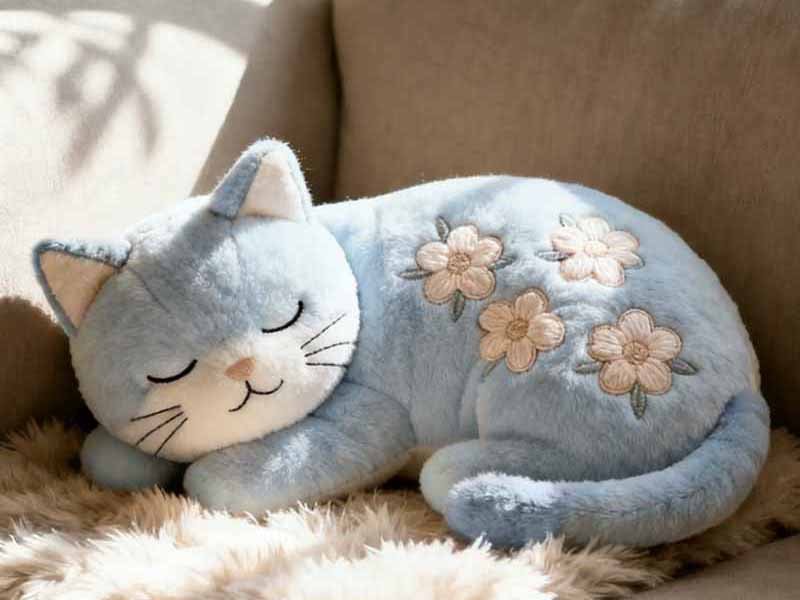
A stuffed animal wins attention through softness, yet wins affection through its face. A small change in eye curve, mouth angle, brow shape, or nose detail can turn a plush character from “almost right” into “I want to keep it.” For brands developing mascots, baby plush, IP characters, retail gifts, animation merchandise, or collectible animal toys, embroidery often decides whether the final product feels safe, expressive, and worth paying for.
Embroidery in custom stuffed animal designs adds stitched eyes, mouths, logos, names, paw pads, clothing lines, and character marks directly onto plush fabric. It improves durability, reduces loose-part risk, supports safer baby plush, creates clearer emotions, and helps bulk products stay closer to approved artwork after sampling and mass production.
Delsney has over 18 years of experience in plush product development, design, pattern making, sampling, manufacturing, and sales. The factory supports OEM/ODM customization, free design, flexible MOQ, 5–7 day fast sampling, reference file sampling, artwork sampling, sample-based development, 3-view drawings, 3D previews, and high artwork-to-product accuracy up to 98%. A plush toy may begin as a drawing, but embroidery often gives it the final spark people remember.
What Is Plush Embroidery?

Plush embroidery is a stitching process used to create soft, durable details on stuffed animals, including eyes, noses, mouths, logos, names, paw pads, clothing marks, and character symbols. It helps improve safety, appearance, texture, artwork accuracy, and repeatability during bulk production.
Plush embroidery is not only a decoration method. It is a production decision that affects safety, cost, softness, facial expression, sewing sequence, sample approval, and final quality. In most custom stuffed animal projects, embroidery is completed on flat fabric panels before the toy is sewn and filled. The artwork is converted into an embroidery file, the thread colors are selected, the stitch density is adjusted, and the stitched panel is checked before assembly.
A plush face may look simple, but embroidery planning can be complex. The factory needs to consider pile length, fabric stretch, stuffing pressure, seam position, panel curve, and final 3D shape. An eye placed 3 mm too high may make a character look surprised. A mouth stitched too low may make a bear look sad. A logo stitched on long-pile fabric may disappear unless thread thickness, stitch direction, or fabric trimming is adjusted.
For brands, embroidery is valuable because it gives controlled detail without hard attachments. Soft stitched features are widely used for baby plush, toddler toys, comfort plush, mascot plush, IP character plush, corporate gifts, and premium retail toys. Embroidery can also improve long-term appearance because the thread becomes part of the fabric surface rather than sitting as a weak surface layer.
A strong embroidery plan usually answers several project questions before sampling:
Can the eye shape be stitched clearly at the selected plush size?
Will the thread color stand out against the fabric?
Is the fabric pile too long for small text or thin lines?
Will dense embroidery make the face feel stiff?
Should the logo be embroidered, printed, patched, or woven?
Can the same embroidery effect be repeated across 500, 2,000, or 10,000 pieces?
Will the embroidered details meet the target age range and safety direction?
Delsney reviews embroidery together with pattern design, fabric selection, stuffing level, and sample structure. For high-requirement plush projects, the team can use 3-view drawings and 3D preview support before physical sampling, helping clients check facial proportion, logo location, and character detail earlier in development.
| Embroidery Area | Common Use | Recommended Detail Level | Client Concern |
|---|---|---|---|
| Eyes | Round eyes, sleepy eyes, anime eyes, animal eyes | Medium to high | Facial expression and safety |
| Nose | Soft animal nose, character nose, baby plush nose | Medium | No hard part, soft touch |
| Mouth | Smile, tongue, whisker line, expression curve | Low to medium | Character emotion |
| Eyebrows | Angry, shy, confident, funny expression | Low | Personality accuracy |
| Paw pads | Claws, toe lines, heart marks, animal pads | Low to medium | Added value and texture |
| Belly logo | Company mark, mascot logo, campaign icon | Medium | Long-term brand visibility |
| Foot logo | Retail mark, brand name, date, message | Medium | Gift value and recognition |
| Clothing mark | Uniform lines, badge, buttons, patches | Medium to high | Character similarity |
| Name embroidery | Personalized name, event name, memorial text | Medium | Custom gift quality |
| IP symbol | Chest mark, face mark, tail mark, ear mark | High | Official character accuracy |
What Is It?
Plush embroidery is a machine stitching method used to place thread-based details onto fabric panels before final sewing and stuffing. The process begins with artwork digitizing. Curves, lines, fills, color blocks, and small elements are converted into stitches. The machine then creates the detail using selected thread colors and preset stitch directions.
For custom stuffed animals, embroidery is most useful when a detail must remain soft, clear, and durable. Eyes, noses, mouths, eyebrows, paw marks, logos, names, clothing symbols, and mascot icons are common areas. It can create a flat line, raised texture, satin edge, filled shape, or layered expression. Unlike plastic parts, stitched features remain soft. Unlike weak surface printing, well-made embroidery can better resist rubbing and regular handling.
Where Is It Used?
Embroidery works best on fabric areas that are stable enough to hold clean stitches. Face panels, belly panels, foot pads, ear interiors, clothing pieces, scarves, cap panels, and flat accessory panels are common choices. Curved areas can also work, but pattern planning becomes more important because stuffing may stretch or round the surface.
For baby plush, embroidery is often used for eyes, noses, and mouths to avoid hard facial attachments. For mascot plush, embroidery can show eyebrows, chest marks, uniform badges, and character symbols. For retail gift plush, embroidery can add brand logos, product names, anniversary messages, or personalized text. For IP plush, embroidery can capture signature face marks and small details that make the character instantly recognizable.
Why Use It?
Embroidery is used because it adds durability, texture, safer soft details, and cleaner identity to custom stuffed animals. Many plush products are hugged, squeezed, packed, shipped, displayed, and sometimes washed. Features must stay visible and stable under repeated touch. Embroidery gives thread-based structure to details that need to remain clear after use.
For brands, embroidery also supports repeatability. Once a stitch file is approved, the same eye shape, logo size, thread color, and position can be repeated during bulk production. That matters when a project needs 500 pieces for a launch, 5,000 pieces for retail, or repeat orders across several seasons. Delsney controls embroidery through artwork review, sample testing, color matching, panel positioning, and final inspection before shipment.
What Can It Add?
Embroidery can add emotion, safety, texture, personalization, and commercial value. A plush bear with stitched sleepy eyes feels gentle. A cartoon animal with arched eyebrows feels playful. A mascot with an embroidered logo on the belly feels official. A baby plush with soft stitched features feels more suitable for younger users.
Embroidery can also add small details without making the plush uncomfortable. Paw lines, cheek marks, eyelashes, ear patterns, belly icons, clothing buttons, and character symbols can be stitched softly into the surface. For premium plush collections, details like these help the product feel developed rather than generic. For Delsney clients, embroidery can be combined with appliqué, printed fabric, woven labels, special fabric textures, and custom packaging to build a stronger product identity.
| Embroidery Benefit | Practical Value | Best Project Fit |
|---|---|---|
| Soft facial details | Avoids hard eyes, noses, and buttons | Baby plush, toddler plush, comfort toys |
| Higher durability | Resists peeling better than weak surface decoration | Retail plush, mascot plush, gift plush |
| Better expression | Controls eyes, mouth, brows, and character emotion | IP plush, cartoon plush, animal plush |
| Logo permanence | Keeps brand marks attached to the product | Corporate gifts, private label plush |
| Added texture | Creates raised details and tactile quality | Premium plush, collectible plush |
| Bulk repeatability | Approved stitch file supports consistency | Large orders and repeat production |
| Personalization | Names, dates, event text, limited editions | Gift programs and campaign plush |
Why Does Embroidery Matter?

Embroidery matters because stuffed animals depend on small soft details to create emotion, safety, identity, and trust. In custom plush design, embroidery improves facial expression, character accuracy, logo durability, baby plush safety, tactile value, and bulk production consistency.
A stuffed animal is rarely judged by fabric alone. Softness matters, but the face creates connection. Customers look at the eyes first. Then they notice the mouth, nose, cheeks, eyebrows, paws, clothing details, and logo. If the face feels slightly wrong, the whole toy feels wrong. Embroidery gives designers and factories more control over these details.
For IP owners, gift companies, retail brands, animation studios, mascot projects, and plush product teams, embroidery can protect design value. Many characters have signature features: a curved eye, a small cheek mark, a unique mouth line, a logo badge, a special eyebrow, or a paw symbol. If those details are blurred, misplaced, or simplified too much, the plush loses recognition. A strong embroidery plan helps the final toy match the original artwork more closely.
Embroidery also matters because safety expectations are rising in many plush categories. Baby plush, toddler plush, nursery toys, soft comfort animals, and educational plush products often avoid hard small parts. Embroidered eyes and noses can reduce loose-part concerns while keeping the face soft. For projects aiming at EN71, ASTM, CPSIA, CE, or other market requirements, material choice, part attachment, seam strength, and embroidery quality should be considered early.
Another important point is durability. Stuffed animals face repeated friction from hands, clothing, bedding, retail handling, storage, and transport. Weak printed details on fuzzy surfaces may fade, blur, or crack. Plastic parts may scratch or loosen if poorly engineered. Embroidery offers a stitched-in solution with longer-lasting detail when thread, density, fabric, and placement are correctly controlled.
Delsney’s embroidery planning is connected with the whole plush development process. The team supports free design, 3-view drawings, 3D previews, 5–7 day fast sampling, flexible MOQ, and artwork-to-product matching up to 98%. During sampling, embroidery can be adjusted for size, color, density, placement, softness, and expression before bulk production begins.
| Design Need | Embroidery Role | Risk Without Proper Planning |
|---|---|---|
| Cute face | Shapes eyes, mouth, cheeks, and brows | Face looks flat or strange |
| Safety direction | Replaces hard small parts where suitable | More small-part attachment concerns |
| IP recognition | Repeats signature marks and expressions | Character looks off-model |
| Logo visibility | Creates permanent product-level branding | Logo looks temporary or low-value |
| Premium touch | Adds texture and raised detail | Plush feels generic |
| Bulk stability | Approved stitch file supports repeated output | Units vary in expression |
| Long-term use | Stitched detail resists rubbing | Details fade or peel early |
| Retail quality | Clear details improve perceived value | Product looks unfinished |
Better Faces
Embroidery helps build better plush faces by giving control over eye size, mouth curve, nose shape, eyebrow angle, eyelash direction, cheek marks, and small expression lines. For a stuffed animal, a difference of only a few millimeters can change the entire mood. A round eye may feel innocent. A half-closed eye may feel sleepy. A curved smile may feel warm. A short eyebrow may add confidence or humor.
Face embroidery should be planned together with pattern shape and stuffing volume. A flat drawing becomes a curved plush head after sewing and filling. If the factory places embroidery without considering final 3D shape, the eyes may spread too wide, the mouth may curve incorrectly, or the nose may sit too low. Delsney can review facial placement during artwork development, pattern making, sample sewing, and 3D preview work to improve final expression.
Clearer Emotion
Embroidery gives plush characters clearer emotion because stitch lines can define subtle expressions. A character does not need many details to feel alive. A small stitched highlight in the eye, a tiny mouth curve, or a short brow line can create a strong emotional signal. For children, collectors, and fans, these details make the plush easier to love.
For mascot plush or IP plush, emotion must match the original character. A playful mascot should not look tired. A gentle animal should not look angry. A shy character should not look blank. Embroidery helps control repeated emotional cues across the sample and bulk order. During Delsney’s sample stage, thread colors, stitch size, eye spacing, and mouth shape can be refined before production approval.
Stronger Details
Embroidery creates stronger details because thread is stitched into the fabric rather than printed only on the surface. A plush toy may be handled thousands of times during its life: squeezed by children, displayed in stores, packed in cartons, shipped internationally, used in campaigns, or kept as a collectible. Details need to survive.
Stronger embroidered details are useful for logos, names, paw lines, belly marks, facial features, clothing badges, and character symbols. For example, an embroidered logo on a plush foot can stay attached and visible through regular handling. A stitched nose can keep a soft raised shape without hard plastic. A stitched mouth can hold its curve after stuffing pressure. Delsney checks thread quality, stitch density, fabric pile, trimming, placement, and final surface feel before approving embroidery for bulk production.
Closer Artwork Match
Embroidery can help the finished stuffed animal match the original artwork more closely, especially when the design depends on small lines and fixed shapes. Character plush often needs accurate eye shape, face markings, logo size, paw symbols, belly icons, and clothing details. If these elements drift during production, the plush loses its identity.
Delsney supports artwork-based sampling, reference technical file sampling, physical sample development, 3-view drawing creation, and 3D preview support. These steps allow embroidery details to be checked before and during sample making. If a line is too thin for thread, it can be adjusted. If an eye shape looks too stiff, stitch direction can be changed. If a logo becomes unclear on plush fabric, appliqué or woven patch can be considered. Better artwork matching comes from early correction, not late repair.
Better IP Value
Embroidery improves IP value because it protects character recognition, visual consistency, and perceived quality. Fans notice details quickly. They remember the eye shape, face mark, costume badge, paw detail, logo, or expression that makes a character unique. If the plush misses these points, even soft fabric cannot save the product.
For licensed characters, animation merchandise, game mascots, museum plush, retail gift lines, and social media characters, embroidery can make the toy feel more official. A stitched chest mark, accurate eyebrow, clean mouth line, or stable logo helps separate a serious custom plush from a generic toy. Delsney can combine embroidery with fabric selection, appliqué, printing, accessories, and packaging to create a complete plush product that feels ready for launch, not only ready for a sample photo.
Is Embroidery Safer?

Embroidery can make stuffed animals safer by replacing hard plastic eyes, noses, buttons, and loose decorative parts with soft stitched details. For baby plush, toddler plush, nursery toys, comfort animals, and plush gifts, embroidered features reduce small-part concerns while keeping the toy soft, washable, and easier to inspect during production.
Safety is one of the main reasons many plush brands choose embroidery. A cute plastic eye may look bright, but it adds an attachment point. A molded nose may create character, but it also needs strong fixing, pull testing, and age-grade review. A button, bead, bell, or small accessory may look charming, yet young children may pull, chew, twist, or bite it. Embroidery gives product teams a softer path when facial features or decorative marks do not need hard dimension.
For plush products aimed at younger children, risk often comes from parts that can detach. A soft embroidered eye cannot fall off like a poorly attached plastic eye. A stitched nose cannot crack like a hard component. A thread mouth cannot create the same concern as a small glued accessory. Of course, embroidery still needs proper quality control. Loose threads, skipped stitches, exposed backing, scratchy thread ends, or overly dense stitching can affect comfort and appearance. Good safety comes from both the method and the execution.
Embroidery also supports softer play. A plush toy may be hugged against the face, slept with, carried in a stroller, packed into a nursery bag, or used as a comfort object. Hard eyes and noses can feel cold or rigid. Stitched facial features feel integrated into the plush surface. For baby plush and comfort toys, softness matters as much as appearance.
Age range should guide embroidery choices. A collector plush for teens or adults may use plastic eyes, embroidery, appliqué, printed fabric, or mixed techniques. A toddler plush often benefits from embroidered features, stronger seams, short-pile fabrics, and washable surfaces. A premium mascot plush may use embroidery for the face but still use fabric accessories or sewn appliqué for uniform details. Delsney reviews intended age range, material selection, decorative parts, sewing method, and compliance direction before sample development.
For projects serving Europe, North America, Japan, Korea, Australia, and other strict markets, safety planning should begin before the first sample. Delsney supports plush development with safety-conscious material choices and can help clients plan around common requirements such as EN71, ASTM, CPSIA, and CE-related expectations. Good embroidery planning reduces risk, supports cleaner inspection, and helps plush products feel safer in real use.
| Safety Concern | Hard Part Risk | Embroidery Advantage | Recommended Plush Type |
|---|---|---|---|
| Plastic eyes | Pull-off risk if poorly attached | Soft stitched eyes stay integrated | Baby plush, toddler plush, comfort toys |
| Plastic nose | Hard touch and attachment concern | Soft stitched nose improves comfort | Animal plush, baby animals, dolls |
| Buttons | Small loose part concern | Button shape can be stitched | Baby dolls, mascot clothing |
| Beads | Small detachable decoration | Dotted thread details can replace beads | Gift plush, animal plush |
| Glued patches | Peeling or edge lifting | Thread detail stays sewn into fabric | Retail plush, logo plush |
| Printed face | May fade or crack on poor surface | Thread detail adds lasting structure | Long-use plush, washable plush |
| Loose threads | Can affect inspection | Controlled trimming prevents defects | All embroidered plush products |
No Loose Eyes
Embroidered eyes reduce loose-part concerns because the eye is stitched into the fabric panel rather than attached as a separate component. For baby plush, toddler toys, nursery plush, and comfort animals, the benefit is clear: the face stays soft, and there is no plastic eye stem, washer, or separate hard part to inspect after assembly.
Eye embroidery can still look expressive. Round eyes, sleepy eyes, smiling eyes, anime-style eyes, dot eyes, animal pupils, eyelash details, and eye highlights can be created with thread. The main challenge is size. Very tiny eyes may lose detail if thread density is too high or fabric pile is too long. Delsney adjusts stitch file size, thread direction, and fabric trimming to keep eyes clear without making the face stiff.
Softer Features
Soft features improve comfort, especially for plush products made for hugging, sleeping, travel, baby rooms, and emotional support use. A stitched nose, mouth, or cheek mark sits closer to the fabric surface and feels gentler against skin than a molded plastic part. For younger age groups, soft detail also makes the toy easier to squeeze and sleep with.
Softer features also help avoid a mixed-quality feeling. A plush may use premium fabric, but a hard low-grade eye or poorly glued part can make the whole product feel cheaper. Embroidery keeps the face unified with the fabric body. Delsney can combine soft embroidery with short plush, minky, velboa, sherpa, fleece, or recycled plush depending on the target product style.
Baby Plush Use
Baby plush products need careful design because end users may hug, chew, pull, rub, and sleep near the toy. Embroidered eyes, noses, mouths, and simple symbols are often preferred for baby plush because they reduce hard attachments while keeping the character friendly. Short-pile fabrics, smooth seams, secure stuffing, and soft embroidered features can work together for a safer product direction.
For baby plush design, embroidery should avoid rough backings, heavy density, sharp thread edges, or large stiff patches near the face. A baby comfort toy may need simple eyes and a gentle mouth instead of complex multi-layer embroidery. Delsney reviews baby plush artwork, fabric, filling, stitching, embroidery position, and sample softness before moving toward bulk production.
Safer Brand Gifts
Plush brand gifts are often distributed at events, stores, theme parks, schools, hospitals, museums, and family-focused campaigns. Safety matters because the final user may not match the original target. A corporate mascot plush may end up in a child’s room. A retail giveaway may be handled by children. A festival plush may be carried around all day.
Embroidery helps make gift plush more reliable. Company logos, mascot faces, event names, and campaign marks can be stitched without adding loose labels or hard badges. For large gift programs, Delsney can help create simple, repeatable embroidery files and inspect logo placement during production. The result is a cleaner gift item with fewer detachable detail concerns.
Which Is Better: Embroidery or Printing?
Embroidery is better for small durable details, soft facial features, logos, names, and premium texture. Printing is better for large color areas, gradients, complex graphics, and lower-cost visual effects. Many custom stuffed animals use both methods, depending on fabric type, design size, safety needs, and target price.
Choosing between embroidery and printing should not become a simple “which one is better” debate. The smarter question is: what job does the detail need to do? A plush eye needs emotion and durability. A belly graphic may need bright color. A mascot logo may need long-term visibility. A clothing pattern may need full-surface artwork. Different details need different methods.
Embroidery gives depth, thread texture, and long wear. It works well for eyes, mouths, noses, paw pads, short text, simple logos, chest icons, foot marks, and character symbols. It feels more permanent than many surface prints and often supports safer plush design when replacing hard parts. Yet embroidery has limits. Fine gradients, photo-like artwork, tiny text, extremely thin lines, and very large filled areas can become costly, stiff, or unclear.
Printing is strong when artwork needs color variety, large coverage, gradients, patterns, or flat graphics. Sublimation printing can work well on suitable light-color polyester-based fabrics. Screen printing can create clear shapes and logos. Heat transfer can be useful for certain smooth surfaces or clothing pieces. However, printing on long-pile plush can lose sharpness. Surface prints may crack, fade, or feel less premium when poorly matched with fabric.
Appliqué also deserves attention. Appliqué uses cut fabric pieces sewn onto the plush surface. It works well for larger shapes, clothing panels, belly patches, ears, numbers, badges, and character areas where embroidery alone would be too dense or expensive. Many premium plush designs combine appliqué with embroidery: fabric appliqué creates the shape, embroidery adds the outline or small details.
Cost depends on method, size, color count, machine time, labor, defect rate, and sample revisions. Small embroidery can be cost-efficient. Large dense embroidery can raise cost quickly. Printing may be cheaper for wide areas, but setup, color matching, fabric compatibility, and durability must be checked. Delsney helps clients compare embroidery, printing, appliqué, woven labels, fabric patches, and mixed techniques before sampling.
A good custom plush design often uses each technique only where it makes sense. Embroidered eyes, printed clothing patterns, appliqué belly patches, woven labels, and soft accessories can appear in one product. The best method is the one that protects design accuracy, safety, softness, cost, and production stability.
| Method | Best Use | Strength | Limitation | Cost Direction |
|---|---|---|---|---|
| Embroidery | Eyes, mouth, logo, name, paw detail | Durable, textured, premium, soft | Large filled areas may feel stiff | Medium to high by stitch count |
| Screen printing | Simple logos, flat graphics | Clean color blocks, cost-friendly | Weak on long pile or rough fabric | Low to medium |
| Sublimation | Full-color patterns on suitable fabric | Rich color, all-over effects | Works best on light polyester fabrics | Medium |
| Heat transfer | Smooth panels, clothing pieces | Sharp graphics, quick visual effect | May peel if fabric match is poor | Low to medium |
| Appliqué | Large shapes, patches, belly details | Soft area coverage, strong visual shape | Needs cutting and sewing accuracy | Medium |
| Woven label | Small brand marks, tags | Clean logo and text | Not suitable for facial expression | Low to medium |
| Rubber patch | Premium logo detail | Strong 3D identity | Adds separate part and higher cost | Medium to high |
When to Embroider
Embroidery is the right choice when the detail must stay soft, durable, and clear through regular handling. Eyes, noses, mouths, brows, paw lines, belly marks, logos, names, and mascot symbols are strong embroidery uses. It works especially well on short-pile plush, minky, velboa, fleece, and fabric panels with stable surfaces.
Embroidery should also be chosen when safety direction matters. For baby plush, embroidered eyes and noses can reduce hard-part concerns. For mascot plush, embroidery can keep facial expression stable across production. For private label plush, embroidered logos on feet, belly, clothing, or accessories can make the product feel more permanent. Delsney checks stitch size, density, thread color, and placement during sampling to avoid stiff or distorted details.
When to Print
Printing works better when the artwork needs larger color coverage, gradient effects, repeated patterns, complex illustrations, or lower-cost decoration. A plush character with printed fabric clothing, patterned ears, colorful wings, or all-over surface graphics may need printing rather than dense embroidery. Printing can also reduce stiffness when a large area needs visual detail.
The challenge is fabric compatibility. Printing on long-pile plush can lose sharpness because the pile moves and hides ink edges. Smooth short-pile fabrics and certain polyester fabrics usually perform better. Delsney can review artwork and fabric direction before sample making, then recommend screen printing, sublimation, heat transfer, or mixed decoration based on the design goal and expected quantity.
When to Use Appliqué
Appliqué works well when a design needs a larger soft shape without dense thread coverage. A belly patch, ear interior, costume badge, number, clothing panel, heart mark, or animal marking can be made from cut fabric and sewn onto the plush. The result can feel softer than large embroidery while still giving strong visual contrast.
Appliqué is especially useful for plush products with bold design areas. For example, a mascot plush may need a large chest symbol. An animal plush may need a different-colored belly. A doll plush may need clothing details. Delsney can combine appliqué with embroidery by sewing fabric shapes first, then adding stitched outlines, names, or small facial details for a cleaner finished look.
Cost Differences
Embroidery cost is mainly affected by stitch count, number of colors, embroidery area, machine time, thread type, fabric handling, and defect rate. Small eye embroidery may be efficient. A large dense logo across the belly can cost more and may affect softness. More colors usually add thread changes and production time.
Printing cost depends on setup method, color layers, fabric type, artwork area, and order quantity. Screen printing may be cost-friendly for simple graphics. Sublimation can be efficient for colorful patterns on suitable fabrics. Heat transfer can work for smaller panels but needs durability review. Appliqué cost depends on fabric cutting, sewing time, shape complexity, and alignment accuracy. Delsney helps clients compare these costs early so the sample does not become too expensive after design approval.
| Detail Type | Best Method | Reason | Cost Note |
|---|---|---|---|
| Baby plush eyes | Embroidery | Soft, no hard eye part | Medium cost, high safety value |
| Large belly color block | Appliqué | Softer than dense fill stitching | Medium cost |
| Full-color clothing print | Printing | Better for graphics and patterns | Cost depends on print method |
| Small logo on foot | Embroidery or woven label | Clean and long-lasting | Embroidery cost depends on stitches |
| Complex gradient artwork | Sublimation or print | Embroidery cannot show gradients well | Requires suitable fabric |
| Mascot eyebrow | Embroidery | Clear emotion control | Low to medium cost |
| Chest badge | Appliqué + embroidery | Strong shape with clean outline | Medium to high cost |
| Personalized name | Embroidery | Permanent gift value | Cost rises by text length |
Best Method Choice
The best method is the one that fits the detail, fabric, safety goal, cost range, and final plush feel. Embroidery is not always the answer. Printing is not always cheaper after revisions. Appliqué is not always softer if poorly placed. A good plush project compares all options before sample making.
Delsney usually reviews artwork by separating details into groups: facial features, logos, clothing graphics, large color areas, small lines, personal text, and safety-sensitive parts. Each group may use a different method. For example, a mascot plush may use embroidered eyes, appliqué belly, printed clothing, woven side label, and embroidered foot logo. Mixed techniques can improve design quality while keeping cost and softness under control.
How Does Embroidery Affect Quality?

Embroidery affects stuffed animal quality through stitch density, thread color, fabric match, softness, positioning, trimming, backing, and bulk consistency. Good embroidery improves detail and durability, while poor embroidery can make a plush face stiff, uneven, distorted, scratchy, or inaccurate compared with approved artwork.
Quality embroidery starts before the machine runs. The artwork must be simplified or adjusted for thread. Lines need enough thickness. Small text needs enough height. Color blocks need clean borders. The fabric must be suitable for the design. Long-pile plush may hide thin stitches. Stretchy fabric may pull or wave. Very soft plush may need stabilizer. A curved face panel may distort after stuffing if placement is not planned.
Stitch density is one of the most important controls. Low density can make a logo look thin, broken, or weak. High density can make the surface hard, stiff, puckered, or heavy. For a plush face, comfort matters. Dense stitching near the eyes or mouth may change the way the plush feels when pressed against skin. Delsney adjusts density based on fabric, design size, safety direction, and sample feedback.
Thread color also affects final appearance. A thread may look correct on a chart but different on plush fabric due to pile direction, lighting, and surface texture. For IP plush, close color control is important because fans notice wrong eye color or logo shade. For soft pastel plush, thread contrast should be gentle enough to look natural but clear enough to avoid disappearing.
Bulk consistency depends on embroidery file control, panel placement, operator setup, fabric cutting, machine maintenance, trimming, and final inspection. A sample may look perfect, but the real challenge is repeating it across the full order. Delsney checks embroidery during sample approval and bulk production, helping reduce issues such as shifted eyes, loose threads, uneven logos, wrong colors, puckering, and surface marks.
Quality embroidery also needs balance. The most detailed design is not always the best design. A plush face must be readable at real size. A 12 cm plush cannot carry the same embroidered detail as a 35 cm plush. A tiny mascot face may need simplified lines. A large plush may allow layered eye highlights, blush marks, eyebrow stitching, and more complex logos. Good production advice prevents over-design.
| Quality Factor | Good Result | Poor Result | Control Point |
|---|---|---|---|
| Stitch density | Clear, stable, soft enough | Stiff, puckered, or weak | Adjust by fabric and design size |
| Thread color | Close to artwork | Too bright, dull, or invisible | Match under real fabric lighting |
| Line thickness | Clean readable shape | Broken or unclear detail | Enlarge thin lines before digitizing |
| Fabric pile | Detail remains visible | Stitches disappear in fur | Choose shorter pile or trim area |
| Positioning | Face looks balanced | Eyes or mouth look misplaced | Check panel marks and sample shape |
| Backing | Smooth and stable | Scratchy or bulky | Select proper stabilizer |
| Trimming | Clean surface | Loose thread ends | Final manual inspection |
| Bulk repeatability | Consistent units | Different expressions | Lock approved file and placement |
Stitch Density
Stitch density controls how full, soft, and stable the embroidery feels. High-density stitching may look rich, but it can make plush fabric stiff, especially on small faces or baby products. Low-density stitching may feel soft, but lines can look weak or uneven. The right density depends on fabric pile, thread size, design area, and intended use.
For eyes and logos, density must be high enough to keep the shape clean. For mouth lines or brows, lighter stitching may create a softer expression. For baby plush, extra stiffness should be avoided near the face. Delsney adjusts stitch density during sample development, then uses the approved file for bulk production to keep each unit consistent.
Thread Colors
Thread color can change the entire personality of a stuffed animal. Black eyes create a classic plush look. Brown eyes feel softer. Pastel thread can make a baby plush gentler. Metallic or glossy thread can add a premium accent, but may not suit all age groups or fabric types. Color choice should match artwork, fabric tone, lighting, and final market positioning.
Color accuracy is especially important for IP plush and mascot projects. A logo or eye shade that looks slightly wrong may reduce recognition. Delsney reviews thread cards, fabric swatches, sample photos, and physical samples before approval. For large orders, approved thread colors should be recorded clearly so repeat production stays aligned.
Fabric Match
Fabric match decides whether embroidery looks sharp or hidden. Short-pile fabrics such as minky, velboa, fleece, and low-pile plush usually hold embroidery well. Long-pile plush and faux fur can swallow thin details unless the embroidery area is trimmed, backed, or redesigned. Stretchy fabrics may need special tension control to prevent waves.
Fabric thickness also matters. Thin fabric may need stabilizer. Thick plush may need stronger needle settings. Sherpa or boucle-like surfaces can create a handmade look but may not support tiny embroidery well. Delsney reviews fabric and embroidery together during material selection so clients do not approve a beautiful fabric that later hides the face.
Softness Control
Softness control is crucial for stuffed animals because users touch the product directly. Embroidery should not make the plush uncomfortable. Large filled embroidery areas can create stiffness. Rough backing can be felt through thin fabric. Dense thread around the face may feel hard when hugged.
Delsney controls softness by adjusting design size, stitch type, density, backing, placement, and fabric choice. For baby plush, smaller and softer embroidered features often work better than heavy decorative panels. For collectible plush, more complex embroidery may be acceptable if it improves character value. Each project needs a balance between visual detail and touch comfort.
Bulk Consistency
Bulk consistency means each plush in the order should have the same expression, logo quality, color, and embroidery position as the approved sample. Small differences in eye spacing or mouth angle can make toys look different from one another. For retail and licensed projects, consistency is a major quality requirement.
Delsney controls bulk embroidery by locking the approved stitch file, marking fabric panels, checking thread color, reviewing first production pieces, and inspecting finished goods. During mass production, operators need clear placement guides and quality checkpoints. Consistent embroidery helps preserve character identity, reduce rejection risk, and support repeat orders.
How Should Artwork Be Prepared?
Artwork for plush embroidery should be prepared with clear lines, readable shapes, limited thread colors, correct file formats, and realistic detail size. Good artwork preparation helps the factory create cleaner embroidery, faster samples, better facial accuracy, stronger logos, and more stable bulk production.
Many custom stuffed animal projects start with beautiful artwork. The challenge begins when a flat drawing must become a soft 3D plush. A digital character can have tiny eyelashes, gradient eyes, thin mouth lines, soft blush, complex fur texture, and small clothing details. Embroidery can capture many of these details, but thread has physical limits. A line that looks perfect on a screen may be too thin for stitching. A color gradient may need simplification. A logo with tiny text may need resizing or conversion into a woven label or patch.
Good artwork preparation saves time during sampling. When artwork is unclear, the first sample may require major correction: wrong eye size, poor expression, unreadable logo, heavy stitching, or color mismatch. Clear embroidery files help reduce avoidable revisions. For high-value plush programs, the best workflow is to review embroidery details before pattern cutting. Delsney can support free design communication, 3-view drawing creation, and 3D effect preview, allowing clients to check major facial details, embroidered logo placement, and character proportion before sample sewing.
Artwork preparation should also consider plush size. A 10 cm keychain plush cannot carry the same embroidery detail as a 30 cm mascot plush. Tiny toys need simpler eyes and fewer line details. Larger toys allow layered eye highlights, cheek marks, paw pads, clothing symbols, and brand logos. Size affects every embroidery decision: stitch count, thread thickness, color separation, density, and cost.
Fabric also changes embroidery planning. Short-pile plush, minky, velboa, fleece, and smooth fabric panels usually hold embroidery better. Long-pile plush, faux fur, sherpa, curly plush, and boucle-like surfaces may hide fine lines. For these surfaces, Delsney may suggest trimming the embroidery area, enlarging lines, using appliqué, choosing a woven patch, or changing fabric placement.
Before sample making, brands should prepare:
Clear front, side, and back artwork if available.
Close-up view of eyes, nose, mouth, logo, paw details, and special marks.
Vector logo file for brand marks.
Pantone or thread color reference if strict color matching is needed.
Target plush size and age range.
Preferred fabric type or softness direction.
Notes on safety, washing, packaging, and market requirements.
Reference sample or photo if the product already exists.
The clearer the artwork package, the faster the factory can judge which details should be embroidered, printed, patched, appliquéd, or simplified. Delsney can help turn early drawings into workable embroidery and plush production specifications.
| Artwork Element | Good Preparation | Common Risk | Better Factory Solution |
|---|---|---|---|
| Eyes | Large enough shape, clear color blocks | Tiny highlights disappear | Enlarge eye detail or simplify layers |
| Mouth | Smooth curve, enough line width | Thin line breaks after stitching | Use thicker satin line or adjusted curve |
| Nose | Clear shape and thread color | Dense fill feels hard | Adjust fill density or use soft raised stitching |
| Logo | Vector file, readable text | Small letters become unclear | Use embroidery, patch, or woven label |
| Paw detail | Simple line or fill shape | Toe lines too close | Increase spacing and reduce detail |
| Clothing mark | Separate detail layer | Pattern hidden by fabric pile | Use appliqué plus embroidery outline |
| Face mark | Fixed position on artwork | Distorts after stuffing | Check on 3D sample or preview |
| Text name | Font size and letter spacing | Letters close together | Use larger text or simpler font |
File Types
Good embroidery artwork usually starts with clean digital files. Vector files such as AI, EPS, PDF, or SVG are preferred for logos, symbols, text, and sharp shapes because they allow clean scaling. High-resolution PNG or PSD files can also help for character artwork, color references, and visual direction. Low-resolution screenshots should only be used as references, not final embroidery files.
For custom stuffed animals, Delsney can work from technical files, character drawings, physical samples, product photos, and early concept sketches. When clients send a logo, vector format is best because small curves and letters remain clean during digitizing. For character faces, front-view artwork is especially important. Side and back views help when embroidery extends across ears, tails, clothing, feet, or body markings.
A strong file package usually includes:
Front-view character artwork.
Side-view and back-view artwork if available.
Close-up face artwork.
Logo file in AI, EPS, PDF, or SVG.
Pantone color references or thread color direction.
Notes for embroidered, printed, or appliqué areas.
Target plush size and fabric preference.
Delsney can help review artwork and point out which details need adjustment before sample making.
Line Thickness
Line thickness plays a major role in embroidery quality. Thin lines that look clean on a screen may break, disappear, or look uneven when converted into thread. Embroidery needs enough width for thread to form a stable shape. For very small plush toys, some details may need to be enlarged, simplified, or moved to a larger area.
Facial lines deserve special care. A thin smile, tiny eyebrow, or small eyelash may change the character’s mood if stitching becomes too thick or too faint. Delsney reviews line thickness against toy size, fabric pile, and stitch direction. If a line cannot be stitched cleanly, the team may recommend a wider satin stitch, simplified curve, shorter line, or adjusted placement.
Practical review points:
Avoid extremely thin mouth lines on long-pile plush.
Keep small text large enough to read after stitching.
Leave enough spacing between eye highlights.
Simplify complex lashes for small plush.
Enlarge logo strokes when stitched on soft fabric.
Use appliqué for large shapes instead of dense embroidery.
Line adjustment is not a downgrade. It helps preserve the character in soft form.
Color Count
Embroidery color count affects appearance, cost, machine time, and production consistency. More colors can create richer details, but each extra color requires thread changes, setup control, and inspection. For small plush faces, too many colors may also make the design look crowded or stiff.
A simple baby plush face may use 1–3 thread colors. A mascot face may use 3–6 colors. A detailed anime-style plush eye may use 5–9 colors depending on size. A logo may need exact brand colors, but tiny letters may still need simplification. Delsney helps clients decide where more colors are worth keeping and where simplification improves the final plush.
Color planning should consider:
Thread contrast against fabric.
Character accuracy.
Target age range.
Plush size.
Cost level.
Bulk production repeatability.
Washing and rubbing expectations.
For strict character or logo projects, approved thread colors should be recorded after sample approval. Delsney can use the approved sample as a physical reference for bulk production.
| Plush Type | Suggested Embroidery Color Range | Best Use |
|---|---|---|
| Baby comfort plush | 1–3 colors | Soft eyes, nose, mouth |
| Simple animal plush | 2–4 colors | Face and paw details |
| Mascot plush | 3–6 colors | Face, logo, uniform mark |
| IP character plush | 4–8 colors | Accurate eyes and symbols |
| Anime plush | 5–9 colors | Eye highlights and expression |
| Corporate gift plush | 1–4 colors | Logo and simple face |
| Premium collectible plush | 5–10 colors | Layered detail and texture |
3D Preview
A 3D preview helps clients understand how embroidered details may look after the flat artwork becomes a stuffed plush shape. A face drawn on paper does not behave like a filled plush head. Stuffing creates curve, pressure, and volume. Eyes may shift visually. A mouth line may bend. A logo on the belly may stretch. A paw mark may rotate slightly after sewing.
Delsney can support 3-view drawings and 3D effect communication for custom plush projects. These tools help review face proportion, body shape, embroidery location, fabric color, and logo placement before physical sampling. For high-requirement brand projects, 3D preview work can reduce miscommunication and help teams approve direction faster.
3D review is useful for:
Mascot plush with strong facial expression.
IP plush needing artwork accuracy.
Baby plush requiring soft simple faces.
Plush dolls with clothing embroidery.
Corporate logo plush needing precise logo position.
Multi-SKU plush collections with consistent style.
A 3D preview does not replace a physical sample, but it helps catch obvious proportion and placement problems earlier.
Sample Approval
Sample approval is the final checkpoint before bulk embroidery and production. A plush sample should not be approved only from front-view photos. The client should check the face from several angles, touch the embroidered area, compare thread colors with artwork, review logo clarity, inspect backings if accessible, and confirm whether the expression matches the intended character.
Delsney’s fast sampling, usually around 5–7 days for many standard plush projects, helps clients move from artwork to physical review efficiently. Sample review should focus on:
Eye spacing and expression.
Mouth curve and nose size.
Logo size and readability.
Thread color accuracy.
Stitch density and softness.
Fabric pile around embroidery.
Placement after stuffing.
Loose threads or surface marks.
Overall similarity to approved design.
If embroidery needs adjustment, changes should be made before bulk production. Correcting stitch files at sample stage is far easier than solving inconsistent expressions after thousands of pieces are sewn.
How Can Delsney Help?
Delsney helps custom stuffed animal projects by reviewing artwork, selecting suitable embroidery methods, creating 3-view drawings, supporting 3D previews, making fast samples, improving artwork match, controlling bulk embroidery quality, and producing OEM/ODM plush products for overseas brands and larger commercial programs.
Embroidery is only one part of custom plush development. A strong factory needs to connect embroidery with fabric selection, pattern making, stuffing, sewing, safety direction, sample approval, and final inspection. Delsney’s value comes from handling the full process rather than treating embroidery as a separate add-on.
With over 18 years of experience, Delsney supports many custom plush directions: animal plush, mascot plush, baby plush, character plush, IP plush, gift plush, weighted plush, blind-box plush, plush keychains, plush pillows, plush dolls, and private label plush collections. The team can develop from reference technical files, artwork, product photos, or physical samples. Free design support and sample assistance help clients with early product decisions, especially when the artwork has not yet been converted into a production-ready plush structure.
Delsney’s 98% artwork-to-product matching capability is especially important for embroidery-heavy plush designs. Matching depends on many small controls: face panel shape, stitch file, thread color, fabric pile, embroidery placement, stuffing pressure, seam position, and final trimming. When these details work together, the finished plush feels close to the approved artwork rather than a loose interpretation.
For safety-focused markets, Delsney can support projects aligned with common international requirements such as EN71, ASTM, CPSIA, CE, and other requested compliance directions. Embroidery can help reduce hard facial parts, but full plush safety still needs material review, seam control, filling control, needle inspection, labeling, and final quality checks. Delsney’s process covers design, sampling, production, and inspection to help reduce risk.
For brands seeking custom plush with embroidered faces, logos, or details, Delsney can help answer practical questions:
Can the artwork be embroidered clearly?
Which details should be stitched, printed, patched, or appliquéd?
Will the embroidery remain soft enough?
How should the logo be placed?
Can the plush meet the target age range?
How long will sampling take?
Can bulk production match the approved sample?
Which packaging supports retail or e-commerce use?
Delsney’s goal is to make custom plush development smoother, faster, and more predictable.
| Delsney Support Area | What Clients Receive | Project Value |
|---|---|---|
| Artwork review | Embroidery feasibility and detail adjustment | Fewer sample mistakes |
| Free design support | Design refinement before sampling | Better structure and expression |
| 3-view drawings | Front, side, back review | Clearer communication |
| 3D preview | Visual check before physical sample | Earlier proportion control |
| Fast sampling | 5–7 day sample support for many projects | Faster project testing |
| Pattern making | Plush shape and sewing structure | Better face and body accuracy |
| Embroidery planning | Stitch, thread, density, position | Cleaner detail execution |
| Bulk quality control | Inspection against approved sample | More stable production |
| Compliance support | Material and safety direction | Easier market preparation |
| OEM/ODM production | Full custom manufacturing | Scalable plush launch |
Design Review
Delsney starts by reviewing the design from both creative and manufacturing angles. A beautiful character drawing must become a safe, soft, sewable, repeatable plush product. During design review, the team checks facial embroidery, body proportion, fabric choice, seam placement, filling style, accessory risk, logo position, and packaging direction.
For embroidery, Delsney reviews whether the eyes, mouth, nose, logo, and small marks can be stitched clearly at the target plush size. If details are too thin, too small, too dense, or unsuitable for the selected fabric, the team can suggest practical changes. These changes may include enlarging line width, reducing color count, switching to appliqué, using a woven patch, trimming fabric pile, or changing the embroidery position.
A strong design review helps clients avoid costly sample revisions and improves the chance of a clean first sample.
Fast Sampling
Delsney supports 5–7 day fast sampling for many standard custom plush projects, depending on design complexity, material availability, embroidery detail, and accessory requirements. Fast sampling is useful for product launches, campaign schedules, retailer presentations, licensing reviews, and seasonal development.
Sampling includes more than sewing a plush body. Embroidery files need to be prepared, thread colors checked, fabric cut, panels embroidered, toy assembled, filled, shaped, trimmed, and inspected. For complex IP plush or multi-process designs, sampling may need more time because expression accuracy and construction details require careful adjustment.
Delsney can support sample development from:
Technical files.
Character artwork.
Reference photos.
Physical plush samples.
Logo files.
3-view sketches.
Early concept drawings.
Fast sampling helps clients see real fabric, real embroidery, real shape, and real softness before making production decisions.
98% Match
Delsney’s high artwork-to-product matching, up to 98%, gives clients stronger confidence when developing character plush, mascot plush, baby plush, and branded gift plush. Matching accuracy is especially important when embroidery defines the face or logo. Small errors in eyes, mouth, brows, or marks can change the entire product.
Better matching comes from linked controls:
Accurate pattern making.
Correct fabric choice.
Proper embroidery digitizing.
Thread color control.
Face panel placement.
Stuffing level control.
Sample correction.
3-view and 3D review.
Final production inspection.
For IP plush, matching is not only about appearance. It affects fan trust, licensing approval, retail acceptance, and repeat orders. Delsney’s process helps keep the approved sample as the production standard, reducing variation between design, sample, and bulk goods.
Quality Control
Delsney controls embroidery quality through material inspection, embroidery file confirmation, thread color review, panel placement, first-piece checking, in-line production review, final inspection, and packing control. Every stage helps prevent different problems.
Common embroidery quality checks include:
Correct stitch file used.
Thread color matches approved sample.
Eye and mouth placement stays balanced.
Logo size and position are correct.
Stitch density does not make the plush too stiff.
No loose thread ends remain.
No skipped stitches or broken lines appear.
Fabric around embroidery is not puckered.
Back side does not create discomfort.
Finished plush matches sample expression.
For bulk orders, Delsney uses the approved sample as the main reference. Inspectors compare finished products against the approved sample for shape, embroidery, fabric, size, sewing, stuffing, accessories, labels, and packaging. The factory’s 100% quality assurance approach helps support more reliable shipment quality for overseas projects.
| Quality Issue | What It Looks Like | Main Cause | Delsney Control |
|---|---|---|---|
| Uneven eyes | Face looks unbalanced | Panel placement error | Placement marks and sample reference |
| Stiff face | Hard embroidery area | Density too high | Density adjustment and softness check |
| Loose thread | Thread ends visible | Poor trimming | Manual finishing inspection |
| Blurred logo | Text not readable | Logo too small | Artwork enlargement or patch option |
| Fabric puckering | Wrinkled surface | Tension or density issue | Tension control and stabilizer review |
| Wrong color | Face or logo differs | Thread mismatch | Thread card and approved sample lock |
| Hidden detail | Embroidery disappears in pile | Fabric too long | Trim area or change method |
| Expression drift | Units look different | Poor bulk control | First-piece review and in-line checks |
Start Custom Order
Starting a custom plush embroidery project with Delsney is straightforward. Clients can send artwork, reference photos, technical files, logo files, size requirements, target quantity, age range, fabric preference, and packaging ideas. The team can review the project and suggest embroidery, printing, appliqué, woven labels, patches, or mixed methods based on product goals.
A good inquiry should include:
Product type: animal plush, mascot plush, baby plush, IP plush, doll plush, plush keychain, pillow, or gift plush.
Target size: height, width, or reference item.
Artwork: front view, side view, back view, or character sheet.
Embroidery areas: eyes, nose, mouth, logo, paws, clothing, name, or symbol.
Fabric direction: minky, short plush, long plush, fleece, sherpa, recycled plush, or open to recommendation.
Quantity plan: small test order, flexible MOQ, retail launch, or large program.
Safety direction: baby use, children’s toy, gift item, collector item, or general retail.
Packaging: polybag, hangtag, insert card, color box, display box, or custom packaging.
Delsney can then guide sampling, cost review, embroidery planning, and production preparation.
Start Your Custom Embroidered Plush Project
Embroidery gives custom stuffed animals more than decoration. It gives a plush toy expression, softness, safety direction, identity, durability, and production stability. The right stitch line can make eyes warmer, a logo more permanent, a mascot more recognizable, and a baby plush safer to hold. Poor embroidery, on the other hand, can make even premium fabric feel unfinished.
For brands building custom stuffed animals, the best results come from early planning. Decide which details need embroidery. Check whether the plush size can hold the required detail. Match thread colors with fabric. Avoid tiny text on fuzzy surfaces. Use appliqué or printing when a large area needs softer coverage. Review samples carefully before bulk approval. Keep the approved sample as the standard for production.
Delsney supports custom plush development from idea to finished goods, including design review, pattern making, free design assistance, fast sampling, embroidery planning, 3-view drawings, 3D previews, OEM/ODM production, flexible MOQ, quality control, and safety-compliant manufacturing for overseas markets.
If you are developing a custom stuffed animal with embroidered eyes, logos, names, mascot details, baby-safe features, or character marks, Delsney can help review your artwork, recommend the right process, create a sample, and prepare bulk production with clearer quality control.
Send your artwork, logo file, reference plush photo, or product idea to Delsney and start a custom embroidered plush project built around your design, your market, and your quality standard.