Skip to content
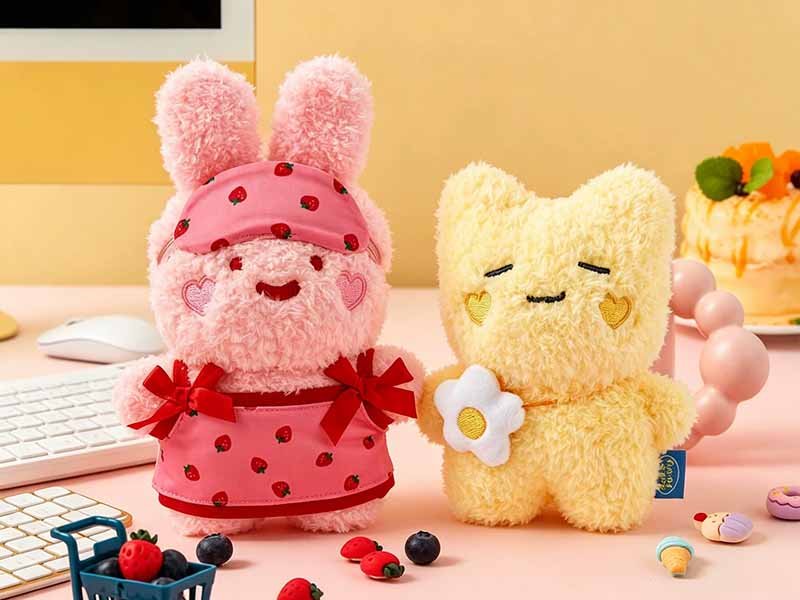
A collector may notice a three-millimeter change in eye position long before noticing the fabric specification. The face creates the emotional connection, but the value of a high-end stuffed animal reaches far beyond facial expression. Body balance, fur direction, joint movement, filling density, accessory scale, edition records, and packaging all influence whether the finished product feels like an artistic collectible or an ordinary soft toy with a higher price.
High-end stuffed animals for collectors are manufactured through accurate artwork conversion, advanced pattern development, premium material selection, controlled facial detailing, measured filling, repeated prototype revisions, stable bulk production, individual inspection, numbered edition management, and protective display packaging. Every production standard must be built around the approved master sample so appearance, posture, touch, and character remain consistent.
A fox project once reached the sample room with beautiful artwork and complete color references. The first prototype matched nearly every measurement, yet the artist rejected it immediately. The muzzle projected four millimeters too far forward, making a cautious forest character look aggressive. One small pattern correction restored the intended personality. Collector plush development often succeeds or fails through details too small to appear on a quotation sheet.
What Makes Stuffed Animals High-End?

High-end stuffed animals combine a recognizable character, carefully engineered proportions, premium tactile materials, controlled facial expression, stable posture, refined hand finishing, and a credible collector identity. Expensive fabric alone does not create premium value. Pattern accuracy, material behavior, filling control, workmanship, edition management, packaging, and production consistency must work together.
A collector-grade product is usually viewed from closer range and kept for longer than a promotional plush toy. Owners may compare several units, photograph fine details, display the product under lighting, move its joints, remove clothing, or check edition records. Small inconsistencies become easier to notice.
Product development should therefore begin with a clear quality position. A company planning a USD 25 retail plush does not need the same material, pattern, accessory, or packaging structure as a USD 150 limited-edition animal. Building the specification around the expected retail level prevents money from being spent on features that do not improve perceived value.
The table below shows how requirements often change across three product levels.
| Development Area | Standard Retail Plush | Premium Character Plush | Collector Edition Plush |
|---|---|---|---|
| Retail position | USD 15–35 | USD 35–80 | USD 80–300+ |
| Main purpose | Gift and everyday use | Branded or artist-led release | Display, collection, limited ownership |
| Pattern complexity | 8–18 main panels | 15–30 main panels | 20–45+ panels where sculpting requires it |
| Fabric selection | Minky, velboa, short pile | Dense minky, faux fur, mixed textiles | Mohair, specialty faux fur, custom textiles |
| Facial detail | Basic embroidery | Multi-layer embroidery and trimming | Sculpted muzzle, hand finishing, custom eyes |
| Internal structure | Fiberfill | Zoned filling or partial weighting | Jointing, weighting, supports, pose control |
| Sample revisions | 1–2 rounds | 2–3 rounds | 2–5 rounds depending on complexity |
| Production inspection | Workmanship checks | Appearance and workmanship | Individual face, posture, finish, numbering |
| Packaging | Polybag or printed box | Branded retail box | Display box, certificate, edition record |
| Reorder model | Open production | Seasonal or campaign-based | Fixed edition, numbered rerun, or retired design |
Retail prices vary by market, brand position, licensing, size, and distribution. The ranges above help establish development priorities rather than predict a final selling price.
What Defines Collector Quality?
Collector quality is created when the finished animal remains visually convincing from the front, side, back, and three-quarter view. It should also feel balanced when lifted, posed, or displayed.
A strong collector plush usually meets several standards:
- The silhouette remains recognizable without relying on printed graphics.
- Facial expression matches the original artwork.
- Left and right features feel balanced without looking mechanically lifeless.
- Fur direction follows the body form.
- Color breaks meet cleanly at seams.
- Filling supports the planned posture.
- Clothing fits without pulling the body out of shape.
- Accessories appear proportional to the character.
- Closing seams remain discreet.
- Labels and edition marks look intentional.
- Packaging protects the display condition.
The approved master sample sets the visual standard. Measurements alone cannot define expression. Two heads can share the same width and height while looking completely different because of eye angle, muzzle filling, ear position, or fur trimming.
Collector quality also includes repeatability. A beautiful handmade sample has limited commercial value when production units cannot reproduce its appearance. Every important detail must be converted into patterns, embroidery files, placement templates, filling weights, photographs, and operator instructions.
Which Details Increase Value?
Details increase value when they strengthen the character, improve the tactile experience, or establish a credible edition identity. Added parts without a clear purpose can make a product feel busy and raise the defect rate.
Details with strong collector appeal may include:
- Custom-dyed mohair or specialty faux fur
- Mixed pile lengths across the face and body
- Individually shaped muzzle construction
- Hand-stitched nose and mouth
- Five-way jointed head, arms, and legs
- Weighted body, paws, or seated base
- Sculpted toe lines
- Faux suede, wool felt, or embroidered paw pads
- Custom-woven clothing fabric
- Tailored removable garments
- Miniature props linked to the character story
- Artist signature embroidery
- Serialized woven labels
- Metal edition badges
- Certificates of authenticity
- Illustrated collector cards
- Fitted presentation boxes
Every added feature changes development and production.
For example, five-way jointing requires joint size selection, internal reinforcement, movement testing, and careful filling around hardware. Tailored clothing creates additional patterns, material purchasing, sewing operations, fit checks, and packing steps. Serialized labels require number tracking and reconciliation.
A useful decision rule is simple: remove any feature that does not improve identity, handling, display, or provenance.
How Do Collectors Judge Craftsmanship?
Collectors often evaluate the face first, then move to shape, materials, seams, accessories, labels, and packaging. They may compare photos online, place several pieces side by side, and notice variations that would be ignored in low-cost plush products.
Facial review usually includes:
- Eye spacing
- Eye height
- Eye angle
- Brow position
- Muzzle width
- Muzzle projection
- Nose size
- Mouth curvature
- Ear angle
- Left-right balance
- Fur trimming around features
For a 20–30 centimeter character, a 1–2 millimeter eye-position difference may become visible when the design uses simple features or a quiet expression. Larger tolerances may be acceptable on long-pile or intentionally handmade products. The approved master sample remains the final reference.
Body craftsmanship is judged through:
- Equal limb length
- Consistent paw size
- Balanced filling
- Smooth seam curves
- Stable sitting or standing posture
- Clean color-panel alignment
- Secure tail and ear attachment
- Natural clothing fit
- No exposed closing seam
- No trapped fur along seams
Collectors may accept small handmade differences when variation forms part of the product story. Random leaning, uneven eyes, twisted clothing, or mismatched paws feel like production mistakes rather than craftsmanship.
Are Limited Editions More Valuable?
Limited editions can support higher perceived value when scarcity is genuine and the product already offers strong design, materials, craftsmanship, and provenance. Numbering an ordinary plush toy does not automatically make it collectible.
Edition planning should define:
- Total sellable quantity
- Number sequence
- Artist proofs
- Display samples
- Factory master samples
- Photography samples
- Test samples
- Replacement units
- Damaged numbered units
- Reorder policy
- Certificate matching
- Record retention
A 500-piece release might use the following structure:
| Unit Type | Quantity | Identification |
|---|---|---|
| Sellable edition | 500 | 001/500 to 500/500 |
| Artist proofs | 5 | AP 1/5 to AP 5/5 |
| Master samples | 2 | MASTER SAMPLE |
| Photography samples | 3 | PHOTO SAMPLE |
| Test samples | 5–15 | TEST, not for sale |
| Replacement reserve | 5–10 | Unnumbered until approved |
Sellable edition numbers should not be assigned to failed or test units. When a numbered item is damaged, the record should show whether it was destroyed, repaired, or replaced.
Numbering methods include:
- Embroidered foot numbering
- Printed satin label
- Serialized woven label
- Engraved metal plate
- Numbered hangtag
- Printed box label
- Certificate of authenticity
- QR-based digital record
Using the same number on the product, certificate, and outer packaging provides stronger traceability. Records should also identify production batch and packing date where required.
How Are Collector Plush Designs Built?

Collector plush designs are built by converting artwork into a controlled three-dimensional structure. Development includes reference review, three-view drawing, proportion planning, material mapping, pattern engineering, embroidery placement, accessory construction, filling strategy, sample sewing, and physical correction. Every decision must account for how soft fabric, seams, fur, and filling alter the original artwork.
A two-dimensional character can hide many manufacturing questions. The artwork may show only the front. The tail attachment may be invisible. A large head may require neck support. An embroidered mouth may disappear under 20-millimeter fur. A seated pose may fall backward after weighting.
Before pattern cutting, the development team should resolve:
- Finished size
- Main pose
- Head-to-body ratio
- Front, side, and back appearance
- Fabric placement
- Pile direction
- Color-panel boundaries
- Facial construction
- Internal support
- Filling firmness
- Joint locations
- Accessory attachment
- Label placement
- Packaging position
Delsney can develop projects from technical files, artwork, sketches, three-view drawings, sculptures, or physical samples. Free design support, three-view preparation, and 3D visual previews help clarify structure before sample sewing. Standard samples can often be completed within 5–7 days after requirements and materials are confirmed. Complex designs may require 7–15 days.
What Design Files Are Needed?
A complete development package reduces interpretation and helps the first sample move closer to the intended design. The most useful files describe appearance, dimensions, materials, and commercial requirements.
Recommended design information includes:
- Front view
- Left or right side view
- Back view
- Three-quarter view
- Facial close-up
- Color references
- Finished height
- Finished sitting height
- Head width
- Body width
- Limb length
- Tail dimensions
- Clothing drawings
- Accessory drawings
- Embroidery artwork
- Logo artwork
- Label artwork
- Packaging references
- Intended age group
- Destination countries
- Order quantity
- Target launch date
Preferred file formats include:
| File Purpose | Recommended Format |
|---|---|
| Character artwork | AI, PSD, PDF, high-resolution PNG |
| Logo and embroidery | AI, EPS, SVG, editable PDF |
| Color references | Pantone number or physical swatch |
| Technical drawing | AI, PDF, CAD export |
| 3D reference | OBJ, FBX, STL, rendered views |
| Packaging artwork | AI, PDF with dieline |
| Reference photos | High-resolution JPG or PNG |
A full technical pack is valuable, but it is not always necessary for the first discussion. A clear illustration and written requirements can be enough for a factory to prepare an initial development plan.
When only one front image exists, the factory must interpret the unseen areas. Three-view approval should happen before pattern making so the brand controls the back shape, side profile, tail, and body depth.
How Do Three Views Help?
Three-view drawings show how the character occupies space. The front view controls width, eye spacing, facial balance, and limb position. The side view controls muzzle projection, forehead slope, belly depth, leg angle, and tail shape. The back view controls rear color panels, seam routes, tail attachment, and clothing closures.
Three views are particularly important for:
- Oversized heads
- Short muzzles
- Long noses
- Folded ears
- Curled tails
- Sitting animals
- Standing mascots
- Wings
- Antlers or horns
- Asymmetrical hairstyles
- Multi-color body markings
- Fitted clothing
Measurements should remain consistent across all drawings. A head shown as 160 millimeters wide in the front view must have a believable side depth. A tail shown behind the body should still be visible or hidden according to the planned viewing angle.
Three-view drawings also help plan seam locations. A facial color patch may look smooth in artwork but require several fabric pieces to wrap around a curved muzzle. Mapping the patch before pattern cutting prevents distorted markings.
Delsney can prepare three-view drawings when a project begins with a single illustration or incomplete artwork. The brand reviews the views before sample development, reducing avoidable pattern changes.
Is a 3D Preview Useful?
A 3D preview helps review silhouette, scale, pose, and accessory relationships before fabric is cut. It is especially valuable when several decision-makers work in different locations or when the character contains complex forms.
A useful 3D review can answer:
- Is the head large enough?
- Does the muzzle project too far?
- Can the animal sit without the tail interfering?
- Are the ears visible from the front?
- Does the costume fit the body proportions?
- Are props large enough to manufacture?
- Does the character remain recognizable from the back?
- Will the product fit the planned box?
3D visuals should not be treated as an exact simulation of sewn fabric. Plush textiles stretch, collapse, compress, and gain volume after filling. Long fur changes the apparent outline. Seam tension can alter curves. A digitally perfect shape may require pattern adjustments before it works in cloth.
The best workflow uses 3D review for structural alignment, followed by a physical sample for final judgment.
For highly sculpted characters, teams may compare:
- Artwork silhouette
- 3D silhouette
- Empty sewn shell
- Filled sample
- Final groomed sample
Each stage reveals different risks.
How Are Plush Patterns Made?
Plush patterns divide the character into fabric panels that can be cut, sewn, turned, filled, and shaped. Panel count depends on geometry rather than product price alone.
A simple rounded body may use two main panels. A collector-grade head may require separate pieces for:
- Forehead
- Side head
- Cheeks
- Muzzle top
- Muzzle sides
- Chin
- Eye patches
- Ears
- Neck transition
- Hair or mane
More panels allow deeper shaping but increase sewing time and alignment risk. Pattern makers should use only the pieces needed to achieve the approved form.
Pattern development must consider:
- Fabric stretch direction
- Fur pile direction
- Seam allowance
- Embroidery position
- Color matching points
- Joint placement
- Turning openings
- Filling access
- Internal supports
- Clothing fit
- Hand-closing position
Common seam allowances for sewn plush may fall around 5–10 millimeters, depending on fabric backing, product size, seam load, sewing method, and pattern shape. The final value should be confirmed through sample testing.
Long-pile fabric requires mirrored part marking and clear pile arrows. A reversed panel can make one leg appear darker or change the fur flow across the face.
Pattern accuracy should be checked through:
- Printed pattern dimensions
- Notch alignment
- Left-right matching
- Trial sewing
- Empty-shell comparison
- Filled-shape review
- Measurement recording
- Revision history
Delsney’s pattern makers work with designers, embroidery technicians, and sample sewers to correct shape during development. Finished products can achieve up to 98% matching with approved artwork when the design remains technically achievable and requirements are confirmed clearly.
How Are Facial Patterns Controlled?
The face often requires its own development system because expression depends on several interacting elements. Eye position alone cannot correct a muzzle with the wrong depth. Ear angle cannot compensate for an overly wide forehead.
Facial pattern control may include:
- Eye-center coordinates
- Embroidery placement marks
- Nose width and height
- Muzzle circumference
- Muzzle fill weight
- Mouth stitch curve
- Brow angle
- Ear insertion angle
- Cheek panel width
- Fur-trimming area
A transparent overlay can compare sample photos with approved artwork. The image should be taken from a fixed distance and camera height so changes can be measured accurately.
A facial control sheet may record:
| Facial Item | Approved Target | Working Control |
|---|---|---|
| Eye center distance | 38 mm | ±1 mm |
| Eye height from chin | 42 mm | ±1.5 mm |
| Nose width | 18 mm | ±1 mm |
| Muzzle projection | 22 mm | ±2 mm |
| Left-right ear height | Equal visually | Within 2 mm |
| Mouth center | On facial centerline | ±1 mm |
Control values depend on character size, fabric pile, and design style. Long-pile animals may need wider working allowances than short-pile embroidered characters.
Production control should combine measurements with visual approval. A mathematically centered face can still feel emotionally wrong.
How Are Pose and Balance Planned?
A collector animal should hold its intended pose without constant adjustment. Sitting animals need a stable lower body. Standing animals need controlled foot shape, leg position, and internal support. Jointed products need enough friction to hold a pose without becoming difficult to move.
Pose planning considers:
- Center of gravity
- Head weight
- Tail position
- Leg angle
- Foot surface
- Filling firmness
- Internal weighting
- Joint resistance
- Clothing weight
- Accessory weight
A large head creates forward pull. A heavy costume may rotate the torso. A long tail can act as a support or push the body sideways. Weight placed low in the torso can stabilize a seated product, but excessive weight increases seam load and freight cost.
During sample review, the animal should be tested on:
- Flat tabletop
- Retail shelf
- Smooth box insert
- Fabric surface
- Display stand, when included
The sample should remain stable after gentle movement. Any required support should be built into the planned display system rather than hidden through careful photography.
A collector receives the real product, not the camera angle.
Which Materials Create a Premium Feel?

Premium stuffed animals rely on a carefully planned material system rather than one expensive outer fabric. Surface texture, pile length, backing strength, filling density, paw-pad material, embroidery thread, joint hardware, internal weighting, clothing fabric, and trims all influence how the finished animal looks and feels. Material selection must support the character’s scale, shape, pose, retail position, safety plan, and production quantity.
A material may look beautiful as a flat swatch but perform poorly after cutting and filling. Long fur can hide facial embroidery. Thin minky can reveal every uneven area in the filling. Heavy woven fabric may resist the rounded curves required for a soft animal. Mohair creates a traditional collector appearance, but it can increase cutting loss, sewing difficulty, hand finishing, and care requirements.
Material approval should therefore include more than color confirmation. A complete review should examine:
- Surface softness
- Pile length
- Pile direction
- Fiber density
- Fabric backing
- Stretch direction
- Color stability
- Shedding
- Seam recovery
- Embroidery compatibility
- Print compatibility
- Cleaning method
- Reorder availability
- Compliance requirements
- Bulk-lot consistency
Material price should also be reviewed against finished product size. A small increase in fabric cost may have little effect on a 15-centimeter plush but a much larger effect on a 60-centimeter animal with long limbs and a large tail.
The table below compares common premium materials.
| Material | Surface Character | Suitable Products | Main Production Concern |
|---|---|---|---|
| Mohair | Textured, heritage, natural-looking | Collector bears and heirloom animals | Cost, cutting loss, pile variation |
| Alpaca-style faux fur | Soft, long, luxurious | Fantasy animals and premium wildlife | Fur control around the face |
| High-density faux fur | Full, sculptural, realistic | Wolves, foxes, cats, bears | Seam trapping and trimming |
| Minky | Smooth, soft, clean | Character plush and modern designs | Low pile may reveal filling unevenness |
| Velboa | Short pile, clear surface | Printed and detailed characters | Less depth than long fur |
| Velvet | Smooth, rich sheen | Fashion, decorative, and art plush | Pressure marks and nap direction |
| Organic cotton plush | Soft, natural positioning | Baby-inspired and eco-led collections | Shrinkage and color consistency |
| Recycled polyester plush | Soft with recycled content | Modern branded collections | Certification and batch consistency |
| Faux suede | Fine texture and shape | Paw pads, noses, horns, clothing | Edge finish and abrasion |
| Wool felt | Dense, matte, structured | Claws, leaves, ears, accessories | Thickness variation |
| Sherpa | Curly, warm, casual | Sheep, bears, winter characters | High visual volume |
| Corduroy | Ribbed, tactile, structured | Artist plush and retro designs | Directional cutting |
Which Plush Fabrics Work Best?
No single plush fabric is best for every collector product. The strongest material choice supports the artistic direction and preserves important details after sewing and filling.
Mohair is often selected for heritage-style teddy bears. Its woven backing, natural surface variation, and distinctive pile create a handcrafted appearance. Short mohair gives a neat, aged look, while longer mohair creates a fuller and more dramatic silhouette.
High-density synthetic fur works well for realistic wildlife and fantasy animals. It offers broad color options, several pile lengths, and more consistent supply than many natural materials. Long-pile faux fur can produce a luxurious result, but facial areas may need trimming so eyes, brows, nose, and mouth remain visible.
Minky is well suited to smooth character plush. The short pile allows embroidery to remain clean and readable. It also works well for products with many color panels because seam lines remain easier to control.
Velboa supports fine printed graphics and accurate panel shapes. It is useful for characters with complex skin patterns, scales, tattoos, or illustrated markings.
Fabric selection should answer several practical questions:
- Will the face be embroidered or use inserted eyes?
- Does the character need sharp panel boundaries?
- Should the surface look realistic or illustrated?
- Will the animal wear fitted clothing?
- Is the product meant for display or regular handling?
- Does the fabric need to support repeat orders?
- Will the same material be available across several colors?
- Can the material pass the required safety tests?
A collector release with several characters should also consider collection consistency. One SKU made from dense fur and another made from thin velboa may feel unrelated unless the difference supports the story.
How Does Pile Length Affect Shape?
Pile length changes the apparent size, color, and facial expression of a stuffed animal. A pattern developed in short-pile fabric can look completely different when made in 20-millimeter fur.
Long fur adds visual volume. A narrow leg may appear thicker. Small ears may disappear. A carefully designed cheek curve may look wider after grooming. Color can also appear darker or lighter depending on pile direction and lighting.
Pile length should be selected together with pattern dimensions. Useful starting categories include:
| Pile Type | Approximate Length | Visual Effect | Suitable Areas |
|---|---|---|---|
| Very short | 1–3 mm | Clean and graphic | Face, paws, printed panels |
| Short | 3–6 mm | Soft but controlled | Character plush and small animals |
| Medium | 6–15 mm | Fuller and more premium | Bears, cats, dogs, fantasy animals |
| Long | 15–30 mm | Dramatic and realistic | Manes, tails, wolves, foxes |
| Extra-long | 30 mm+ | Highly expressive | Specialty characters and costume fur |
Exact pile length should be confirmed from a physical swatch because suppliers may measure differently.
Long fur requires extra operations:
- Directional marker planning
- Careful cutting from the backing
- Fur release from sewn seams
- Facial trimming
- Grooming after stuffing
- Final brushing before packing
More hand work means more labor and a wider possibility of visual variation. A clear trimming guide and approved photos help production teams maintain a consistent face.
How Is Fabric Direction Controlled?
Fabric direction controls sheen, color depth, softness, and movement. Many plush fabrics look different when brushed upward, downward, left, or right.
Pattern pieces need pile arrows. Without directional marking, one arm may appear darker than the other even when both pieces come from the same fabric roll.
Common direction rules include:
- Head fur usually follows the natural flow from forehead toward the neck.
- Muzzle fur may follow downward or outward contours.
- Body fur commonly runs from shoulder toward the lower torso.
- Limb fur generally follows from the body toward the paw.
- Tail fur should follow the visible tail flow.
- Ear fabric may use opposite directions for visual contrast.
- Manes and hair pieces may require several planned directions.
Directional cutting increases material consumption because pattern pieces cannot always be rotated to save space. A non-directional short-pile fabric may achieve efficient marker use, while long directional fur can create higher cutting loss.
Fabric consumption should be estimated after the pattern is approved. A rough estimate based only on finished height may be inaccurate for characters with large heads, wings, wide tails, clothing, or long fur.
What Fillings Hold Shape?
Filling material controls softness, weight, recovery, posture, and long-term appearance. High-loft polyester fiberfill is widely used because it is light, resilient, clean, and available in several grades.
Collector products often need different filling densities in different areas.
A structured filling plan may include:
- Firm filling in the head
- Medium filling in the torso
- Softer filling in the arms
- Firm filling in standing legs
- Light filling in ears and tails
- Additional support around the neck
- Weighted pouches in the lower body
- Foam or batting around internal frames
Head filling is especially important. Too little fiber creates dents around the eyes and muzzle. Too much fiber widens the face, shortens the neck, and stresses the seams.
A useful control method records fill weight from the approved sample.
| Filling Zone | Example Target | Working Tolerance |
|---|---|---|
| Head | 85 g | ±3 g |
| Torso | 120 g | ±5 g |
| Left arm | 22 g | ±2 g |
| Right arm | 22 g | ±2 g |
| Left leg | 35 g | ±2 g |
| Right leg | 35 g | ±2 g |
| Tail | 15 g | ±2 g |
| Weighted pouch | 180 g | ±5 g |
Figures above are project examples rather than universal standards. Final values depend on character size, fabric stretch, and desired firmness.
Weight control should be combined with hand-feel and appearance checks. Two units can have identical filling weight but feel different when fiber distribution is uneven.
Which Fiberfill Grades Are Suitable?
Polyester fiberfill is available in different fiber lengths, crimp levels, slickness, and resilience. Selection affects both production handling and finished touch.
Common options include:
- Standard hollow conjugated fiber
- Siliconized fiber
- High-loft fiber
- Recycled polyester fiber
- Cluster fiber
- Fine-denier soft fiber
- Blended firmness fiber
Siliconized fiber has a smooth surface and moves easily during stuffing. It can create a soft, even feel and reduce clumping.
High-loft fiber expands well and provides volume with less weight. It works well in large bodies but may compress during long-term packaging if packed too tightly.
Cluster fiber produces a rounded, springy feel. It is useful for soft bodies but may not fill narrow fingers or pointed ears evenly.
Recycled polyester fill supports environmental positioning when documentation and supply consistency are available. Its recovery and color should be reviewed against the selected outer fabric.
A collector animal should not contain visible lumps, empty corners, or hard compressed knots. Filling should extend evenly into paws, fingertips, ear bases, cheeks, and tail ends.
Are Foam Inserts Suitable?
Foam can support flat surfaces, shaped parts, and internal structure. It may be used in foot soles, wings, horns, hats, armor, bags, and display elements.
Common foam choices include:
- Thin EVA sheets
- PU foam
- High-density foam
- Laminated foam and fabric
- Molded foam parts
Foam should not create sharp or uncomfortable edges. Cut edges may need wrapping or covering. Thickness should match product scale.
Foam is useful for:
- Maintaining a wide ear shape
- Supporting standing feet
- Preventing wing collapse
- Giving structure to a hat
- Keeping a bag or prop open
- Creating a smooth flat display area
Foam also adds cost and can affect washability. Materials must be reviewed for odor, resilience, color transfer, and applicable chemical requirements.
A product intended for repeated hugging may feel less comfortable when large rigid inserts are used. Display-focused products can accept more internal structure when the outer surface remains visually smooth.
Are Weighted Bodies Suitable?
Weighted bodies can improve posture and create a grounded, substantial hand feel. Weight is often placed in the lower torso, paws, tail base, or seated area.
Common weighting materials include:
- Glass beads
- Plastic pellets
- Steel pellets
- Mineral-filled pouches
- Other tested inert materials
Material selection should consider density, sound, movement, safety, cost, and market requirements.
Glass beads provide high density in a compact space. Plastic pellets are lighter and may create more movement. Metal pellets are heavy but can affect inspection, corrosion review, and transport planning.
Weighted material should be enclosed in a separate inner pouch. The pouch may use two layers of tightly woven fabric with reinforced seams.
Recommended controls include:
- Defined pouch dimensions
- Defined fill material
- Target pouch weight
- Reinforced stitch pattern
- Drop testing
- Seam pulling
- Movement check
- Final placement confirmation
- Metal detection planning
- Age and compliance review
A weighted base should sit low and centered. A pouch positioned too far forward can make the animal lean. One positioned too far back may push the head upward.
How Does Weight Affect Shipping?
Weighted plush has a major effect on freight cost. A design decision that feels minor at sample stage can become significant across a full production run.
For example:
| Added Weight Per Unit | Order Quantity | Added Product Weight |
|---|---|---|
| 150 g | 500 pcs | 75 kg |
| 250 g | 1,000 pcs | 250 kg |
| 400 g | 2,000 pcs | 800 kg |
| 600 g | 3,000 pcs | 1,800 kg |
Packaging weight and cartons add further volume and mass.
Before confirming a weighted design, teams should compare:
- Tactile improvement
- Sitting stability
- Target retail price
- Airfreight impact
- Sea freight impact
- Carton strength
- Warehouse handling
- Final parcel weight
Weight can increase perceived value, but excessive weight may reduce profitability in online sales where shipping is charged by unit.
Which Details Add Luxury?
Luxury comes from control, restraint, and consistency. A clean hand-stitched nose may appear more refined than several decorative components. A perfectly fitted coat can add more value than a large metal badge.
Premium details can be divided into five groups.
Facial details:
- Hand-stitched nose
- Sculpted mouth
- Layered eyelids
- Airbrushed shading
- Trimmed eye areas
- Custom iris printing
- Embroidered lashes
- Thread-sculpted cheeks
Body details:
- Jointed limbs
- Weighted paws
- Sculpted toes
- Layered ears
- Shaped paw pads
- Internal posture support
- Decorative hand stitching
Textile details:
- Custom jacquard
- Embroidered clothing
- Velvet ribbon
- Linen garments
- Satin lining
- Faux leather belts
- Knitted accessories
Identity details:
- Artist signature
- Numbered foot
- Woven edition label
- Metal medallion
- Character nameplate
- QR authentication
- Collector card
Packaging details:
- Rigid display box
- Magnetic closure
- Custom tissue
- Dust bag
- Certificate envelope
- Molded pulp support
- Printed story booklet
Each feature should be tested for durability and production consistency. A luxury detail that repeatedly detaches or shifts during shipping becomes a quality problem.
How Are Jointed Plush Animals Built?
Jointed animals use internal hardware to allow movement at the head, arms, legs, or other body areas. Five-way jointing commonly refers to one head joint, two arm joints, and two leg joints.
Joint systems may include:
- Plastic disc joints
- Metal disc joints
- Cotter-pin joints
- Lock-nut joints
- Safety joints
- Internal wire or poseable armature
Joint size should match product scale and fabric strength. A joint that is too small may feel loose. A joint that is too large may create a hard lump.
Jointed construction requires reinforcement around the attachment area. Strong backing fabric or reinforcement patches help distribute force.
Inspection should check:
- Joint movement
- Joint tightness
- Left-right consistency
- Internal noise
- Fabric stress
- Range of motion
- Holding position
- Hardware security
A collector bear may need smooth movement with enough resistance to hold a pose. A child-oriented plush may require a different construction and safety plan.
Joint hardware also affects weight, cost, testing, and shipping. Product classification must be confirmed before selecting components.
How Are Clothing and Accessories Developed?
Clothing should be developed on the approved body sample rather than from flat dimensions alone. A soft body compresses differently from a rigid mannequin.
Clothing development includes:
- Garment pattern
- Neck opening
- Armhole position
- Closure type
- Hem construction
- Fabric thickness
- Seam allowance
- Decoration
- Attachment method
- Removal method
A coat may look correct when the animal stands but bunch around the belly when seated. A hat may fit the head but cover important facial features. A shoulder bag may pull the body sideways.
Clothing should be tested in the product’s intended display pose.
Useful fit checks include:
- Garment remains centered.
- Closure does not strain.
- Sleeves do not twist the arms.
- Collar does not hide the face.
- Fabric does not transfer color.
- Metal trims do not scratch the plush.
- Removable parts can be replaced easily.
- Accessories remain secure during shipping.
Very small garments need simplified construction. Buttons, pockets, lapels, and hems that work at human scale may become thick and clumsy on a 15-centimeter character.
How Are Collector Samples Refined?
Collector samples are refined through measured review of shape, face, materials, pose, filling, clothing, accessories, labels, and packaging. Each sample round should solve a defined group of problems. Written dimensions, comparison photos, physical swatches, and specific revision notes help the development team improve the product without losing already approved features.
A sample should not be approved because a launch date is approaching. Problems left unresolved at sample stage become far harder to manage in bulk production.
Delsney can prepare standard plush samples in approximately 5–7 days after requirements and materials are confirmed. Designs involving specialty fabrics, molded parts, electronics, complicated clothing, or new construction may require around 7–15 days.
Two sample revisions can be supported under suitable project arrangements. Clear feedback helps each round produce meaningful progress.
The table below shows a controlled sampling sequence.
| Sample Stage | Main Goal | Main Questions |
|---|---|---|
| Artwork review | Confirm concept | Are all views, colors, and details clear? |
| Pattern sample | Confirm shape | Does the silhouette match the artwork? |
| Material sample | Confirm surface | Does fabric support the intended look? |
| Facial revision | Correct expression | Are eyes, muzzle, ears, and mouth accurate? |
| Structure revision | Correct pose | Does the product sit, stand, or move properly? |
| Accessory sample | Confirm clothing and props | Do parts fit and remain secure? |
| Final sample | Freeze product | Are all design details approved? |
| Pre-production sample | Confirm bulk materials | Does production material match approval? |
| Packaging sample | Confirm protection | Does the product arrive in display condition? |
How Is the First Sample Made?
The first physical sample begins after the factory receives enough information to define size, structure, materials, and appearance.
Main steps include:
- Design review
- Missing-view development
- Finished-size confirmation
- Material selection
- Pattern drawing
- Embroidery file preparation
- Trial cutting
- Sewing
- Internal component installation
- Filling
- Hand closing
- Facial grooming
- Accessory fitting
- Photography
- Measurement recording
The first sample should answer structural questions rather than prove perfection.
Review points include:
- Overall silhouette
- Head-to-body ratio
- Sitting or standing balance
- Limb length
- Tail position
- Fabric suitability
- Facial visibility
- Clothing fit
- Accessory scale
- Packaging compatibility
A first sample may reveal that the selected long fur hides the face or that the body needs more depth to sit correctly. Such findings are useful because they appear before bulk material is purchased.
What Should Be Reviewed First?
Sample review should follow a fixed order. Correcting small details before the main shape is approved wastes time.
Recommended review order:
- Overall silhouette
- Product size
- Head and body proportions
- Pose and balance
- Facial expression
- Material and color
- Filling firmness
- Clothing fit
- Accessories
- Logo and labels
- Packaging
A face should not be finalized while the head shape is still changing. Eye position may need to move after the forehead or muzzle is corrected.
Likewise, clothing should not be fitted before body dimensions are stable.
Each review round should separate approved areas from open issues. For example:
- Body shape approved
- Head width approved
- Muzzle depth needs reduction
- Ear angle needs adjustment
- Fur color approved
- Eye embroidery needs repositioning
- Jacket fit pending
Such a list prevents already approved areas from being changed unintentionally.
How Should Sample Feedback Be Written?
Sample feedback should use measurable instructions supported by marked photos.
Weak feedback:
- Make it cuter.
- The face feels wrong.
- The body should look more premium.
- The ears are strange.
Useful feedback:
- Move both eyes inward by 1.5 millimeters.
- Reduce muzzle projection by 3 millimeters.
- Increase cheek width by 4 millimeters on each side.
- Rotate ears outward by approximately 8 degrees.
- Add 12 grams of filling to the lower torso.
- Shorten both arms by 5 millimeters.
- Raise the jacket hem by 8 millimeters.
- Change paw fabric from velvet to faux suede.
Marked photos should use arrows, measurements, and clear labels. Front and side images help explain three-dimensional changes.
When several team members provide comments, one final consolidated document should be sent. Contradictory instructions delay development and create avoidable sample rounds.
How Is Facial Accuracy Improved?
Facial accuracy comes from the interaction of pattern shape, embroidery placement, filling, fur direction, eye construction, muzzle shaping, ear angle, and final grooming.
A face may appear wrong even when embroidery is positioned correctly. The underlying head shape may be too wide or the muzzle too firmly filled.
Facial refinement should examine:
- Forehead width
- Eye spacing
- Eye height
- Eye angle
- Brow angle
- Muzzle width
- Muzzle projection
- Nose position
- Mouth curve
- Chin depth
- Cheek volume
- Ear position
- Fur trimming
A transparent overlay can compare the sample photograph with the approved artwork. The camera should remain centered and level.
Example control table:
| Facial Area | Approved Measurement | Working Tolerance |
|---|---|---|
| Eye-center distance | 36 mm | ±1 mm |
| Eye height from chin | 40 mm | ±1.5 mm |
| Nose width | 17 mm | ±1 mm |
| Muzzle depth | 21 mm | ±2 mm |
| Ear height difference | 0 mm target | Maximum 2 mm |
| Mouth center shift | 0 mm target | ±1 mm |
Measurements should guide production, while visual judgment confirms character.
How Is Embroidery Refined?
Embroidery can define eyes, brows, noses, mouths, markings, paw details, and signatures. A small change in stitch direction can alter the appearance of light and shadow.
Embroidery review should cover:
- Finished size
- Thread color
- Stitch density
- Stitch direction
- Outline width
- Underlay
- Fabric stabilization
- Position
- Symmetry
- Puckering
- Thread trimming
Dense embroidery on thin fabric may cause wrinkles. Low-density embroidery may expose the fabric backing.
Long-pile fabric may require trimming before embroidery or a temporary topping layer to keep fibers below the stitches.
Fine facial lines should not be designed thinner than the embroidery process can reproduce. Tiny gaps may close during sewing. Very small text may lose readability.
An embroidery sample on the selected production fabric should be reviewed before final approval. A digital simulation cannot show how thread, pile, stretch, and stabilizer interact.
How Is Filling Refined?
Filling review should consider shape, touch, balance, and recovery.
A sample may need more fiber in one area and less in another. General instructions such as “make it firmer” can create an overfilled product.
Useful filling comments include:
- Add 8 grams to the back of the head.
- Remove 5 grams from the muzzle.
- Increase lower torso weight by 20 grams.
- Soften the arms by reducing fill by 3 grams each.
- Add support around the neck.
- Distribute fiber more evenly into the paw tips.
After revisions, filling weights should be recorded.
A product should be handled in several ways:
- Held by the torso
- Lifted by one arm
- Seated on a table
- Placed inside packaging
- Gently compressed
- Allowed to recover
- Displayed for several hours
Such checks reveal whether filling shifts, limbs droop, or the head angle changes.
How Are Clothing Samples Reviewed?
Clothing should be reviewed on the final body shape. Fit can change after filling adjustments.
Review points include:
- Shoulder position
- Neck opening
- Sleeve length
- Arm movement
- Closure alignment
- Hem height
- Fabric drape
- Decoration position
- Color transfer
- Ease of dressing
- Ease of removal
- Packaging wrinkles
A garment should not pull the arms into an unnatural position. A tight collar should not compress neck fur or change the head angle.
Removable clothing may require hook-and-loop tape, snaps, buttons, zippers, ties, or elastic. Closure type should suit product scale and intended age.
Small decorative parts need attachment review. Loose buttons, beads, buckles, or charms can create safety and quality concerns.
How Are Accessories Reviewed?
Accessories should match the character’s scale and remain stable during display and shipping.
Accessory checks include:
- Size relative to the body
- Attachment position
- Attachment strength
- Surface finish
- Sharp edges
- Color transfer
- Weight
- Movement
- Removability
- Packaging protection
A heavy prop can pull an arm downward. A metal accessory may scratch an eye. A painted resin item may transfer color onto pale fabric.
Accessories can be:
- Permanently sewn
- Attached with elastic
- Secured by snaps
- Held with magnets
- Placed in a separate box compartment
- Packaged as optional display parts
Magnets and small parts require careful product assessment. Suitable warnings, testing, and market compliance should be planned before production.
When Is the Master Sample Approved?
The master sample should be approved after all product-defining elements are complete and stable.
Approval should include:
- Overall shape
- Finished dimensions
- Materials
- Colors
- Facial expression
- Embroidery files
- Filling weights
- Weighted components
- Joint hardware
- Clothing
- Accessories
- Logo position
- Sewn labels
- Edition marking
- Packaging
- Care instructions
A master-sample package should contain:
| Approval Record | Required Information |
|---|---|
| Physical sample | Signed or sealed production reference |
| Dimension sheet | Finished measurements and tolerances |
| Material list | Supplier, specification, color, and placement |
| Filling record | Fiber type and weight by body area |
| Embroidery file | Approved size, density, colors, and position |
| Pattern revision | Final pattern version |
| Accessory sheet | Material, size, finish, and attachment |
| Label sheet | Artwork, position, and wording |
| Packaging file | Dieline, materials, inserts, and markings |
| Photo record | Front, side, back, and close-up images |
| Quality limits | Acceptable and unacceptable examples |
One master sample should remain at the factory. Another can be retained by the brand when required.
Production should not begin from an unapproved photo sample or incomplete list of comments.
What Is a Pre-Production Sample?
A pre-production sample is made using bulk production materials and components. It confirms that purchased fabric, thread, eyes, joints, clothing, labels, and packaging match the approved master.
Differences can appear because sample-room materials may come from small stock quantities, while bulk production uses a new fabric lot.
Pre-production review should check:
- Fabric shade
- Pile density
- Backing strength
- Embroidery thread color
- Eye and nose components
- Joint movement
- Filling feel
- Clothing fabric
- Label print
- Packaging color
- Final unit weight
A pre-production sample is especially important for:
- Custom-dyed fabric
- Custom-printed fabric
- Mohair
- Long-pile faux fur
- Complex embroidery
- Custom molded parts
- Metal accessories
- Limited-edition packaging
Bulk cutting should begin only after major material differences are resolved.
How Are Sample Costs Controlled?
Sample costs rise when a project uses rare fabrics, custom dyeing, several accessories, complex clothing, molded parts, electronics, or repeated design changes.
Cost control begins with clear priorities.
A useful development sequence is:
- Confirm shape using available close-match material.
- Correct the pattern and pose.
- Confirm final fabric.
- Refine the face.
- Develop clothing and accessories.
- Approve packaging after product dimensions are stable.
Ordering custom fabric before the pattern is approved can create waste. Developing a rigid gift box before the final pose is confirmed may lead to incorrect internal dimensions.
Delsney provides free design assistance and suitable sample support according to project conditions. Standard and complex sample schedules should be discussed after the development files are reviewed.
A detailed first brief often saves more money than negotiating a small reduction in sample cost.
How Is Sample Accuracy Measured?
Sample accuracy should combine measurable dimensions with visual comparison.
Measured controls may include:
- Finished height
- Sitting height
- Head width
- Body width
- Arm length
- Leg length
- Eye spacing
- Ear height
- Tail length
- Clothing dimensions
- Final weight
Visual controls may include:
- Silhouette match
- Expression
- Color balance
- Fur flow
- Pose
- Accessory scale
- Clothing drape
- Overall character identity
Delsney can achieve up to 98% matching between approved design artwork and finished products when the design is technically achievable, materials behave as expected, and requirements remain clearly documented.
The final two percent often involves the natural behavior of soft materials, pile movement, handmade shaping, and acceptable production variation. Good development defines which differences are acceptable and which ones change the character.
How Are High-End Stuffed Animals Produced?

High-end stuffed animals are produced through controlled material inspection, directional cutting, precision embroidery, panel sewing, internal assembly, measured filling, hand shaping, grooming, in-line checks, needle detection where required, final inspection, and protective packing. Bulk production must preserve the approved master sample across every unit, including facial expression, body balance, material appearance, joint movement, clothing fit, edition details, and packaging condition.
A collector plush project becomes more demanding once production moves from one carefully prepared prototype to hundreds or thousands of units. A sample technician may spend several days refining one face. A production system must repeat the same result across different operators, workstations, fabric rolls, and production dates.
Reliable production depends on documented controls rather than memory. The factory needs final patterns, approved embroidery files, material specifications, filling weights, joint details, clothing patterns, accessory positions, label artwork, edition records, packaging files, and clear acceptance limits.
Delsney combines design, pattern making, sampling, production, quality control, and packaging coordination within one manufacturing system. More than 500 employees, 18 production lines, 25+ engineers, 10+ designers, and 20+ quality personnel support projects ranging from single-character releases to multi-SKU collector series.
The table below shows the main production stages and their control points.
| Production Stage | Main Work | Key Control |
|---|---|---|
| Incoming inspection | Check fabrics, fills, trims, joints, and packaging | Material, shade, quantity, surface quality |
| Cutting | Cut all pattern panels | Pile direction, pattern version, part accuracy |
| Embroidery | Sew facial and decorative details | Position, density, color, symmetry |
| Panel preparation | Add labels, pockets, reinforcements, and inserts | Placement and attachment strength |
| Sewing | Join body, head, limbs, and accessories | Seam allowance, shape, matching marks |
| Internal assembly | Install joints, weight pouches, frames, or electronics | Position, movement, safety |
| Stuffing | Fill each body area | Weight, firmness, balance, posture |
| Closing | Seal turning openings | Hidden seam, strength, surface finish |
| Shaping | Adjust face, body, ears, limbs, and pose | Match with master sample |
| Grooming | Release trapped fur and trim facial areas | Pile direction and clean expression |
| Final inspection | Check every completed unit | Appearance, function, labels, packaging |
| Packing | Protect product and match edition records | Numbering, accessories, certificate, carton |
How Are Materials Inspected?
Material inspection begins before cutting. Premium fabric can vary between rolls in shade, pile density, backing strength, softness, stretch, and surface sheen. Even small differences may become obvious when finished units are displayed side by side.
Incoming fabric checks should include:
- Fabric name and specification
- Roll quantity
- Color against approved swatch
- Pile length
- Pile direction
- Surface density
- Backing strength
- Stretch direction
- Visible lines or creases
- Holes or stains
- Shedding
- Odor
- Width
- Lot number
Mohair and long-pile faux fur need especially careful review. Natural-looking variation can support the intended collector character, but obvious shade changes across one edition may create complaints.
Different fabric lots should be separated and recorded. When one production run requires several rolls, body panels from one unit should preferably come from compatible lots.
Other incoming components also need inspection:
- Embroidery thread
- Plastic or glass eyes
- Nose parts
- Joint hardware
- Plastic pellets or glass beads
- Metal charms
- Clothing fabric
- Zippers
- Buttons
- Woven labels
- Printed certificates
- Display boxes
- Internal supports
Rejected materials should be removed from the production area to prevent accidental use.
How Are Fabrics Cut and Sewn?
Cutting accuracy directly affects shape, symmetry, and material consumption. Pattern pieces must use the final approved revision. Old or trial patterns should be removed from the cutting area.
Long-pile materials require clear pile arrows. A reversed leg, cheek, or ear can reflect light differently and make the product look mismatched.
Cutting methods may include:
- Hand cutting
- Steel-rule die cutting
- Automated knife cutting
- Laser cutting for suitable materials
- Backing-only cutting for long fur
For long fur, the cutting tool should separate the backing without removing excessive pile. Rough cutting can create visible bald seams after sewing.
Cut parts should be grouped by size, color, and SKU. Bundle labels can identify:
- Product code
- Colorway
- Pattern revision
- Quantity
- Material lot
- Cutting date
Sewing operators follow matching notches and alignment points. Consistent seam allowance is essential because a few millimeters of variation across several seams can noticeably change head width, limb length, or body volume.
Common controls include:
- Seam allowance around 5–10 millimeters where suitable
- Reinforcement at ears, tails, joints, and accessories
- Double stitching at high-stress points
- Backstitching at seam ends
- Controlled stitch length
- Suitable needle and thread
- Clean turning openings
- No skipped stitches
- No trapped loose threads
The correct seam allowance depends on fabric backing, product size, curve, load, and sewing method. The final approved pattern should define the actual value.
How Are Faces and Features Made?
Faces may use embroidery, appliqué, inserted eyes, hand stitching, printing, airbrushing, sculpted fabric, or several methods combined.
Embroidery is widely used because it supports detailed expression and stable production. The embroidery process should control:
- File version
- Finished size
- Thread colors
- Stitch density
- Stitch direction
- Underlay
- Fabric stabilizer
- Placement marks
- Mirror symmetry
- Trimming
Embroidery should be completed before major body sewing whenever panel access is needed. Operators must confirm orientation before placing the fabric into the embroidery frame.
Inserted eyes and noses require consistent placement holes and secure attachment. Component selection must match product classification and destination requirements.
Facial grooming often happens after stuffing. Long pile around the eyes, nose, or mouth may need controlled trimming. A facial trimming guide can show:
- Area to trim
- Final pile height
- Direction of trimming
- Areas that must remain untouched
- Approved front and side appearance
Hand finishing can improve expression through:
- Muzzle shaping
- Cheek adjustment
- Ear positioning
- Nose stitching
- Mouth stitching
- Brow shaping
- Fur brushing
- Small airbrushed accents
Operators should work from close-up master-sample photographs. Facial shaping should not depend only on personal judgment.
How Is Stuffing Density Controlled?
Stuffing determines volume, softness, posture, weight, and long-term appearance. High-end stuffed animals often use several filling zones rather than one uniform firmness.
A structured filling plan may specify:
- Head filling weight
- Muzzle filling weight
- Torso filling weight
- Arm filling weight
- Leg filling weight
- Tail filling weight
- Weighted pouch location
- Weighted pouch weight
- Neck-support material
- Ear or horn support
The master sample should be weighed during development so production targets can be recorded.
A production filling record may look like the following:
| Body Area | Target Weight | Working Range |
|---|---|---|
| Head | 92 g | 89–95 g |
| Muzzle | 18 g | 17–19 g |
| Torso | 145 g | 140–150 g |
| Left arm | 26 g | 24–28 g |
| Right arm | 26 g | 24–28 g |
| Left leg | 42 g | 40–44 g |
| Right leg | 42 g | 40–44 g |
| Tail | 21 g | 19–23 g |
| Weighted pouch | 220 g | 214–226 g |
Values above are project examples. Final limits depend on size, pattern volume, fabric stretch, and desired hand feel.
Weight alone cannot guarantee quality. Fiber must also be distributed evenly. Inspectors should check:
- No empty corners
- No hard lumps
- Equal left and right limbs
- Correct head angle
- Stable sitting or standing
- Smooth cheek shape
- Filled paw tips
- No excessive seam pressure
- No collapsed body areas
Overstuffing can widen the head and alter expression. Understuffing can create wrinkles, weak posture, and an unfinished feel.
How Are Joints and Internal Parts Installed?
Jointed collector plush requires careful hardware selection, reinforcement, installation, and movement testing.
Common joint systems include:
- Plastic safety joints
- Plastic disc joints
- Metal disc joints
- Cotter-pin joints
- Lock-nut joints
- Internal wire armatures
- Flexible poseable frames
Joint size should match body scale and fabric strength. Large joints can create visible hard areas, while undersized joints may loosen or fail to hold a pose.
Installation controls should include:
- Correct joint size
- Correct disc order
- Reinforcement patch
- Secure fastening
- Equal left and right position
- Smooth movement
- Suitable resistance
- No internal rattling
- No fabric tearing around the joint
Weighted pouches, sound modules, lights, magnets, frames, and other internal parts also require fixed placement. Movement inside the body can change posture and create wear.
Internal components should be installed before final stuffing when possible. The sewing and filling teams need clear instructions showing exact positions.
How Are Clothing and Accessories Produced?
Collector clothing often functions like miniature garment manufacturing. Each garment needs its own patterns, cutting plan, sewing sequence, decoration, fit standard, and inspection points.
Production should control:
- Fabric direction
- Color
- Print placement
- Embroidery placement
- Button position
- Closure alignment
- Sleeve length
- Hem height
- Collar shape
- Garment symmetry
- Fit on the finished plush
The same garment may fit differently when body stuffing changes. Clothing inspection should therefore happen on fully finished units.
Accessories such as bags, hats, scarves, glasses, badges, weapons, tools, books, or musical instruments need separate checks.
Accessory controls include:
- Correct size
- Correct color
- Surface finish
- Secure attachment
- No sharp edges
- No loose paint
- No staining
- Correct orientation
- Suitable movement
- Correct packaging position
Removable accessories should have a defined packing location so they do not scratch or compress the main product.
How Is Production Consistency Checked?
Consistency is controlled through first-piece approval, in-line inspection, recorded measurements, visual comparison, and final inspection.
Before full production begins, the first finished unit should be compared with the master sample. Production should pause when the first piece shows major differences.
First-piece approval should cover:
- Finished height
- Head width
- Body width
- Limb length
- Eye position
- Ear angle
- Muzzle shape
- Filling feel
- Sitting balance
- Clothing fit
- Label position
- Final weight
In-line inspection catches problems before too many units are completed. Quality staff can inspect after:
- Cutting
- Embroidery
- Head sewing
- Body sewing
- Joint installation
- Stuffing
- Closing
- Clothing
- Final grooming
Useful production sampling frequencies may include:
| Control Item | Suggested Check |
|---|---|
| Embroidery placement | First piece, then random checks by batch |
| Head dimensions | First piece and every production group |
| Filling weight | Regular random checks during stuffing |
| Joint movement | Every jointed unit |
| Edition numbering | Every numbered unit |
| Clothing fit | Every dressed unit |
| Final appearance | Every finished unit |
| Packaging match | Every packed unit |
Delsney carries out 100% pre-shipment inspection. Collector projects may also use 100% appearance review before packing because facial and posture differences can affect perceived value even when construction remains sound.
How Are Defects Classified?
Defect classification helps production and inspection teams make consistent decisions.
Critical defects may include:
- Exposed sharp part
- Foreign metal
- Unsafe loose component
- Wrong product
- Missing compliance label
- Wrong edition number
- Severe contamination
- Major mechanical failure
Major defects may include:
- Incorrect face
- Uneven eyes
- Open seam
- Loose joint
- Missing accessory
- Wrong fabric
- Wrong color
- Severe leaning
- Damaged clothing
- Incorrect logo
- Crushed packaging
Minor defects may include:
- Small loose thread
- Slight surface mark
- Minor fur grooming issue
- Small packaging wrinkle
- Limited handmade variation within approval
Collector projects may treat appearance defects more strictly than ordinary plush production. A face that looks emotionally different can be classified as major even when measurements remain close.
How Are Needles Controlled?
Needle control reduces the risk of broken metal fragments remaining inside finished products.
A factory needle-control system may include:
- Numbered needle issue records
- Broken-needle reporting
- Recovery of all broken pieces
- Search of the workstation
- Isolation of affected production
- Metal detection
- Final record approval
When a sewing needle breaks, production around the affected station should be stopped. Every fragment must be recovered and compared with a complete replacement needle. If all parts cannot be found, affected units need further inspection and isolation.
Needle detection may be required according to product type, market, client standard, and internal procedure. Products with intentional metal components require a suitable detection plan because joints, charms, wires, or electronics can affect the process.
Which Safety Tests Are Needed?
Safety and compliance depend on intended age, product features, materials, destination market, packaging, and marketing claims.
Common market requirements may include:
- EN71 for the European market
- ASTM F963 for the United States
- CPSIA requirements for applicable children’s products
- CE-related conformity for applicable EU toys
- Chemical restrictions
- Flammability testing
- Mechanical and physical testing
- Small-parts assessment
- Labeling and traceability
- Packaging warnings
Common plush test areas include:
- Seam strength
- Eye and nose attachment
- Access to filling
- Small-part release
- Sharp points
- Sharp edges
- Flammability
- Restricted substances
- Colorfastness
- Cord and loop length
- Sound level
- Magnet security
- Battery access
- Label durability
A product marketed only to adults still needs proper assessment. “For collectors” or “14+” does not automatically remove legal obligations. Appearance, play value, marketing, distribution, and local rules all influence classification.
Testing plans should be discussed before bulk production. Late testing can create major delays when a material, accessory, label, or construction needs revision.
Delsney supports North American and European compliance programs and can coordinate production around EN71, ASTM, CPSIA, and CE-related requirements. The company also has BSCI, Sedex, and ISO9001 audit experience, along with Disney audit experience.
How Is Final Inspection Completed?
Final inspection should compare each unit against the approved sample and written specification.
Inspection areas include:
- Overall appearance
- Facial expression
- Product dimensions
- Finished weight
- Fabric quality
- Color
- Fur direction
- Embroidery
- Seams
- Joints
- Filling
- Clothing
- Accessories
- Logo
- Labels
- Edition number
- Certificate
- Packaging
- Carton information
A collector unit should be inspected from several angles:
- Front
- Left side
- Right side
- Back
- Top
- Sitting or standing position
- Close-up face
- Clothing close-up
- Numbering close-up
The unit should also be handled. Joints should move, clothing should fit, accessories should remain secure, and the product should hold its intended pose.
Rejected units should be separated from accepted stock. Reworking should follow a documented procedure. Repaired units need another complete inspection before packing.
How Long Does Bulk Production Take?
Standard Delsney plush production commonly takes around 20–30 days after sample approval, material confirmation, and deposit arrangements. Complex projects may require a longer schedule.
Production time depends on:
- Order quantity
- Number of SKUs
- Fabric availability
- Custom dyeing
- Embroidery complexity
- Jointed structure
- Weighted components
- Clothing
- Accessories
- Electronics
- Numbering
- Packaging
- Safety testing
- Inspection requirements
A realistic schedule may include:
| Stage | Estimated Working Time |
|---|---|
| Bulk material preparation | 5–15 days |
| Printing and embroidery preparation | 3–7 days |
| Cutting and panel preparation | 2–5 days |
| Sewing and assembly | 7–15 days |
| Stuffing and shaping | 3–7 days |
| Clothing and accessories | 3–10 days |
| Final inspection | 2–5 days |
| Packing | 2–5 days |
Several stages may run at the same time. Custom fabrics, new molded parts, complex boxes, or laboratory testing can extend the overall schedule.
Brands should reserve time for sample approval, pre-production review, testing, shipping, customs clearance, and launch preparation.
How Do Brands Launch Collector Plush?
A collector plush launch should align edition quantity, MOQ, production cost, retail price, materials, packaging, certificates, sales channel, shipping, and reorder policy. A strong launch gives collectors a clear reason to care while keeping the manufacturing plan manageable. Edition size, SKU count, packaging volume, and component complexity should be confirmed before bulk materials are ordered.
Creative decisions have commercial consequences. Five colorways require more material management than one. A rigid gift box occupies more freight space than a polybag. A metal charm adds tooling, attachment checks, and packaging protection. A numbered certificate adds data control and packing verification.
The launch plan should connect product design with inventory and margin.
What MOQ Fits a Collector Series?
Delsney’s standard MOQ for fully custom plush projects is commonly around 500 pieces per design. Flexible solutions may be reviewed according to materials, size, construction, logo, packaging, and order structure.
MOQ depends on several factors:
- Fabric purchase minimum
- Custom dyeing minimum
- Printing setup
- Embroidery setup
- Molded component quantity
- Joint purchase quantity
- Clothing fabric minimum
- Label minimum
- Packaging minimum
- Testing cost
- Production line efficiency
An order of 1,000 pieces in one design is easier to manage than 1,000 pieces divided into ten designs of 100 pieces.
A controlled first collector series may use:
- One body pattern
- Two or three colorways
- Shared clothing construction
- Shared box size
- Shared care label
- Separate character cards
- Separate edition numbers
Such a structure keeps development and production efficient while still giving collectors variety.
The table below shows how SKU count can affect production complexity.
| Total Quantity | Number of SKUs | Quantity per SKU | Production Complexity |
|---|---|---|---|
| 1,000 | 1 | 1,000 | Low |
| 1,000 | 2 | 500 | Moderate |
| 1,000 | 5 | 200 | High |
| 1,000 | 10 | 100 | Very high |
Smaller quantities per SKU increase setup time, material separation, label management, inspection, packing, and edition control.
How Is Pricing Planned?
Collector plush cost depends on more than finished size.
Main price drivers include:
- Fabric type
- Fabric consumption
- Pattern-piece count
- Embroidery stitch count
- Number of colors
- Joint hardware
- Weighting
- Clothing
- Accessories
- Hand finishing
- Edition numbering
- Certificate
- Packaging
- Testing
- Order quantity
- SKU count
A 25-centimeter animal with short minky and simple embroidery may cost less than a 20-centimeter mohair bear with five-way joints, hand-stitched facial details, clothing, and a rigid display box.
Product teams should separate costs into four groups:
| Cost Group | Main Items |
|---|---|
| Product | Fabric, filling, sewing, embroidery, joints, weighting |
| Decoration | Clothing, accessories, labels, logo, hand finishing |
| Presentation | Certificate, card, dust bag, display box |
| Compliance and logistics | Testing, inspection, cartons, freight |
Retail margin should be calculated after freight, duties, warehousing, payment fees, marketing, damaged stock, and platform charges.
Reducing cost should protect the features collectors notice most. Simplifying an unseen internal panel may be safer than reducing facial embroidery quality or replacing the selected main fabric.
How Are Limited Editions Planned?
Limited editions need clear quantity rules and traceable records.
Before production, confirm:
- Total sellable quantity
- Number format
- Number location
- Certificate format
- Artist proofs
- Display samples
- Factory samples
- Test samples
- Replacement reserve
- Rejected-unit treatment
- Reorder policy
- Record owner
A 1,000-piece edition might use:
- 001/1000 to 1000/1000 for sellable units
- AP 1/10 to AP 10/10 for artist proofs
- MASTER SAMPLE for approved references
- TEST SAMPLE for non-sellable test units
- PHOTO SAMPLE for marketing units
Edition numbers can be added through:
- Foot embroidery
- Woven label
- Printed satin label
- Metal plate
- Hangtag
- Certificate
- Box sticker
- QR code
The product, certificate, and packaging should carry matching identifiers when stronger traceability is needed.
Edition control should include a packing record. For example:
| Product Number | Certificate Number | Box Number | Inspection Result | Packing Date |
|---|---|---|---|---|
| 001/500 | 001/500 | 001/500 | Pass | 2026-07-12 |
| 002/500 | 002/500 | 002/500 | Pass | 2026-07-12 |
| 003/500 | 003/500 | 003/500 | Rework | Pending |
Such records reduce duplicate numbers and mismatched certificates.
Which Packaging Protects Value?
Collector packaging must protect the product, preserve shape, support display, and communicate the story.
Common options include:
- Printed folding carton
- Window box
- Rigid gift box
- Magnetic book box
- Drawer box
- Fabric dust bag
- Molded pulp insert
- Card support
- Tissue wrap
- Certificate envelope
- Character booklet
- Tamper seal
- Serialized sticker
Packaging design should consider:
- Product dimensions
- Fur compression
- Ear position
- Tail position
- Clothing wrinkles
- Accessory movement
- Moisture control
- Color transfer
- Box strength
- Shelf display
- Shipping volume
- Unboxing order
A plush should be packed for several days during sample review, then removed and checked.
Review points include:
- Does the fur recover?
- Are ears bent?
- Does clothing wrinkle?
- Do metal accessories leave marks?
- Does the box transfer color?
- Can the collector remove the product easily?
- Can the product be returned to the box?
- Is the certificate protected?
Rigid packaging adds perceived value but also increases freight volume. A display box may double or triple the packed volume compared with a compressed polybag.
Carton planning should compare:
- Units per carton
- Carton dimensions
- Gross weight
- Dimensional weight
- Sea freight
- Air freight
- Parcel shipping cost
- Warehouse space
How Is Shipping Planned?
Delsney can support express, air, sea, and combined shipping arrangements. Available trade terms may include EXW, FOB, DAP, and DDP according to destination and project conditions.
Shipping method depends on:
- Order quantity
- Carton volume
- Product weight
- Launch date
- Destination
- Customs requirements
- Budget
- Warehouse arrangement
Express works for urgent samples and small shipments. Air freight supports faster commercial delivery but becomes expensive for large display boxes. Sea freight is usually more economical for bulk collector releases.
Weighted plush and rigid boxes need early freight review. A product can remain profitable at the factory price yet become expensive after dimensional shipping is added.
Shipping samples in final packaging before bulk packing can reveal:
- Box crushing
- Fur compression
- Accessory movement
- Label damage
- Moisture exposure
- Carton weakness
How Do You Choose a Manufacturer?
A collector plush manufacturer should be evaluated by development capability, pattern skill, facial accuracy, material access, sample speed, bulk consistency, compliance support, edition management, packaging ability, and communication.
Useful questions include:
- Does the factory have in-house designers?
- Who creates the patterns?
- Can the team prepare three-view drawings?
- Is 3D visualization available?
- How are facial revisions measured?
- Can the factory source specialty fur and mohair?
- Are weighted and jointed products supported?
- How are filling weights recorded?
- How are edition numbers controlled?
- Is every unit inspected?
- Can the factory develop clothing and accessories?
- Can the team coordinate retail packaging?
- Which safety markets are supported?
- How are artwork and IP files protected?
- What is the sample timeline?
- What is the bulk lead time?
A reliable manufacturer should also explain limitations honestly. Some artwork requires simplification. Some accessories may be too small to manufacture safely. Some materials may not support the target budget or reorder plan.
Clear technical advice at the beginning is more valuable than a low quotation followed by repeated problems.
Why Work with Delsney?
Delsney is a China-based plush product development and manufacturing factory with more than 18 years of experience in design, pattern making, sampling, production, private labeling, packaging, and quality control.
A high-end stuffed animal should feel considered from the first glance to the final unboxing. The face should carry the intended emotion. The body should hold its pose. Materials should support the character. Clothing should fit naturally. Edition records should remain accurate. Packaging should protect the product without flattening its personality.
Contact Delsney for free design support, three-view development, material recommendations, rapid sampling, and a detailed OEM/ODM quotation for collector stuffed animals.