Skip to content
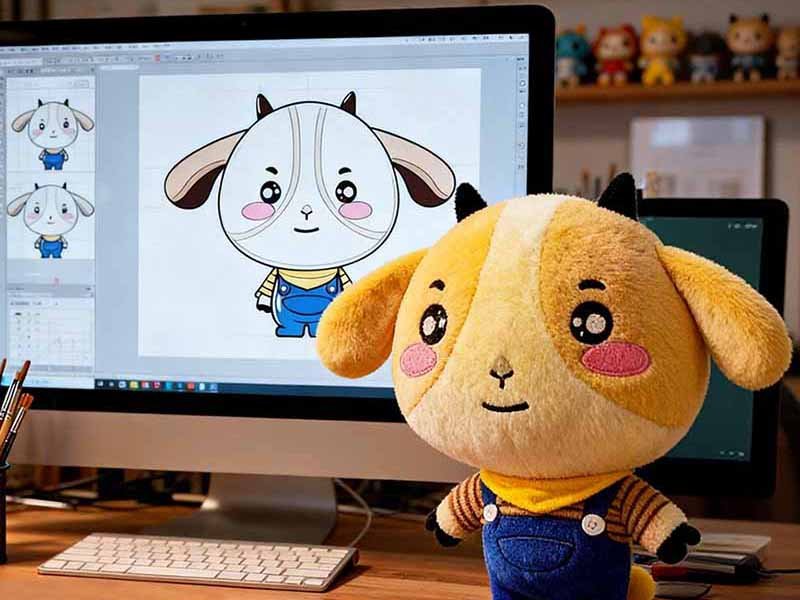
A plush toy may appear simple when placed on a retail shelf, yet every finished piece depends on dozens of decisions made long before sewing begins. Head proportions, eye spacing, fabric stretch, pile direction, embroidery density, filling weight, seam strength, accessory attachment, age grading, packaging, and shipping pressure can all change the final result.
A low quotation does not show whether a factory can protect those details across 500, 5,000, or 50,000 pieces. A beautiful sample does not always prove stable bulk production either. Many failed projects begin with a supplier selected mainly for price, a fast promise, or a polished website.
Choosing a plush toy manufacturer with proven expertise requires checking relevant product experience, design and pattern-making ability, sample accuracy, material knowledge, safety support, production control, capacity, communication, and evidence from similar orders. A capable factory should explain how a concept will move from artwork to an approved sample, then into repeatable bulk production.
One product manager learned the difference after approving a mascot sample from a low-cost supplier. The sample looked acceptable, but the production order arrived with uneven eyes, weak neck seams, inconsistent filling, and three shades of blue. The problem was not one bad sewing operator. The real problem was a factory without a controlled development and production system.
What Shows Real Expertise?

Real plush expertise comes from relevant project experience, skilled development staff, controlled pattern and sample processes, material knowledge, quality records, and reliable bulk reproduction. Years in business are valuable only when the factory can prove experience with products similar in structure, detail, market, safety level, and production volume.
How Long Have They Worked?
Operating history can reveal stability, technical accumulation, and the ability to handle changes in materials, safety expectations, retail packaging, and international delivery. However, the number of years should never stand alone.
A factory with 15 years of basic promotional toy production may still struggle with a licensed character requiring precise facial embroidery, removable clothing, custom-dyed fabric, and multiple accessories. Another factory with fewer years may have a strong team focused on complex character development. Relevant experience matters more than a large anniversary number.
Ask how the factory has developed over time:
- Which plush categories have been produced regularly?
- Has the company worked with retail collections, mascots, baby products, weighted plush, or interactive items?
- Are design, pattern making, sampling, sewing, filling, finishing, and inspection handled within one system?
- How are approved patterns, embroidery files, material codes, and packaging files stored?
- Can the factory support repeat orders one or two years later?
- How are production problems recorded and prevented from happening again?
Delsney has more than 18 years of experience in plush product research, design, pattern development, sampling, manufacturing, and international sales. The factory operates with more than 500 employees, 18 production lines, over 25 engineers, more than 10 designers, and over 20 quality-control staff.
Those figures matter because a demanding plush project needs more than sewing capacity. A mature operation should have enough technical and production resources to review artwork, create patterns, develop samples, arrange materials, manage several SKUs, inspect production, and support international delivery.
Experience becomes most valuable when it reduces uncertainty. An experienced factory should identify risks earlier, offer more suitable material choices, estimate development time more accurately, and prevent avoidable corrections during production.
What Have They Made?
A product portfolio should be evaluated by technical similarity, not only visual variety. Fifty different teddy bears do not prove experience with a weighted sensory toy, a detailed sports mascot, or a baby comforter.
Ask for products sharing the main challenges of your project:
- Similar finished size
- Similar head-to-body ratio
- Similar fabric pile
- Similar embroidery detail
- Similar clothing or accessories
- Similar filling structure
- Similar safety level
- Similar packaging
- Similar order quantity
- Similar destination market
For a mascot plush, examine face shape, expression, posture, color separation, logo placement, clothing fit, and stability when sitting or standing. For a baby plush, examine embroidered facial features, soft construction, accessible seams, labels, and age-related material choices. For a weighted plush item, examine internal compartment design, weight distribution, reinforcement, and finished balance.
Delsney can manufacture a wide range of custom plush products, including:
- Character plush toys
- Mascot plush products
- Stuffed animals
- Baby plush items
- Weighted plush toys
- Plush keychains
- Promotional plush gifts
- Private-label collections
- Multi-SKU character series
- Scented plush products
- Sound and light plush
- Plush pillows
- Holiday plush products
- Custom fabric dolls
- Retail gift sets
A broad range is useful, but depth is more important. The factory should explain how each product type changes development and quality control.
| Product Type | Main Manufacturing Challenge | Evidence to Request |
|---|---|---|
| Mascot plush | Facial likeness and proportion | Similar character projects and sample revisions |
| Baby plush | Softness, secure details, age suitability | Material records and safety preparation |
| Weighted plush | Internal weight placement and seam strength | Compartment construction and weight checks |
| Plush keychain | Small-scale detail and attachment strength | Close-up photos and pull-test method |
| Multi-SKU series | Consistency across several characters | Collection samples and assortment records |
| Interactive plush | Component placement and accessibility | Internal structure and assembly process |
| Retail plush | Appearance, labels, packaging and repeatability | Bulk photos, packaging files and inspection records |
A strong manufacturer will not only show finished photographs. It should explain what was difficult, how the difficulty was solved, and how the approved result was maintained during bulk production.
Do They Know Your Category?
Category expertise determines whether the factory understands how the product will be used, handled, tested, displayed, packed, and shipped.
A children’s toy requires different decisions from an adult collectible. A promotional giveaway has different cost and delivery priorities from a licensed retail mascot. A 10-centimeter plush keychain cannot use the same facial construction as a 40-centimeter stuffed animal. Small embroidery becomes difficult to read, narrow limbs become harder to fill, and tiny accessories become harder to secure.
A knowledgeable manufacturer should identify technical risks before sample making. Useful comments may include:
- The eye artwork is too small for stable embroidery.
- Long-pile fur may cover the mouth line.
- The neck needs additional support because the head is oversized.
- A standing pose may require a wider foot pattern.
- A plastic accessory may not suit the intended age group.
- A narrow tail may become uneven after filling.
- Removable clothing may increase sewing time and safety review.
- Custom fabric dyeing may affect MOQ and development time.
- A compressed shipping method may distort the face.
Those comments are not resistance. They show the factory is studying the product rather than agreeing blindly.
Delsney supports project development from technical files, artwork, reference images, and physical samples. Three-view drawings and 3D visual effects can be prepared when more shape information is needed before pattern making.
For high-requirement projects, category knowledge should be visible in the questions asked by the factory. A capable team will want to know:
- Who will use the product?
- Where will it be sold?
- What age range is intended?
- Which features must remain unchanged?
- Which areas allow technical adjustment?
- Does the product need to sit, stand, hang, light up, make sound, or carry weight?
- Will the order include several designs or sizes?
- Which packaging and labeling requirements apply?
A factory asking no technical questions may be preparing a generic quotation rather than a reliable manufacturing plan.
Can They Show Similar Work?
Similar work is one of the strongest forms of proof. A claim such as “we can make any plush toy” carries little value without supporting examples.
Request evidence based on the most important risks in your design. For a character with a complex face, request examples showing close embroidery placement and stable facial structure. For a product with clothing, request examples showing garment fit, seam finishing, and logo accuracy. For a large order, ask for bulk production photographs, inspection records, and packaging arrangements.
Confidential projects may not be available for public display. A professional factory can still provide useful evidence without revealing protected names or artwork. Suitable proof may include anonymous case information, unbranded production photographs, material cards, pattern-development screenshots, quality forms, and product close-ups.
Use the following evidence list during factory evaluation:
| Evidence | What It Proves | What to Check |
|---|---|---|
| Similar finished samples | Relevant technical experience | Shape, details, balance and finishing |
| Sample revision records | Ability to solve problems | Clear comments and accurate changes |
| Three-view drawings | Proportion planning | Front, side and back consistency |
| 3D visual references | Early shape communication | Head depth, posture and accessory position |
| Material cards | Fabric control | Code, color, pile and approved source |
| Embroidery files | Detail preparation | Size, density, thread and position |
| Bulk production photos | Production capability | Consistency across many units |
| Inspection forms | Quality system | Measured items, defect records and actions |
| Packaging files | Retail preparation | Labels, barcodes, boxes and carton marks |
| Repeat-order records | Long-term reliability | Stored files and stable reproduction |
Do not evaluate only the best sample shown by the sales team. Ask how many revision rounds were needed, which materials were selected, what order quantity was produced, and whether the production order matched the approved sample.
Delsney’s design-to-product match can reach up to 98% for projects supported by clear references, approved materials, controlled patterns, and recorded sample revisions. The percentage should be understood as a result of process control rather than a decorative marketing number.
Who Handles Development?
Plush development involves several roles. One salesperson cannot replace a designer, pattern engineer, sample technician, production manager, and quality inspector.
Ask for a simple responsibility map before starting:
| Development Task | Responsible Role |
|---|---|
| Artwork review | Product designer or development engineer |
| Three-view preparation | Designer |
| Material recommendation | Sourcing and development team |
| Pattern creation | Pattern engineer |
| Embroidery preparation | Artwork and embroidery technician |
| First sample | Sample-room technician |
| Revision control | Project coordinator and pattern engineer |
| Cost confirmation | Sales and production costing team |
| Pre-production approval | Production, quality and project teams |
| Bulk inspection | Quality-control team |
Clear ownership reduces lost information. Without clear responsibility, a facial correction may remain only in a chat message, while the old pattern continues into production.
Delsney integrates research, design, pattern making, sample development, manufacturing, quality control, and sales support. More than 25 engineers, over 10 designers, and more than 20 quality staff support the development and production process.
Before placing an order, ask several technical questions directly:
- Why was a certain fabric recommended?
- Which part of the design is hardest to reproduce?
- How will eye spacing be controlled?
- How will the approved filling firmness be repeated?
- Which seam areas need reinforcement?
- How will color differences between fabric and embroidery be managed?
- Which dimensions will be checked in production?
- How will the final sample be transferred to the sewing line?
A technically capable team should answer in plain language and explain trade-offs. Vague replies such as “no problem,” “we can do everything,” or “quality is guaranteed” offer little protection.
What Should You Prepare?
A strong project brief should include product purpose, design files, finished size, materials, colors, features, target market, age group, quantity, packaging, budget, and delivery date. Clear information helps the factory identify risks, quote accurately, choose suitable processes, and develop a closer first sample.
What Is Your Product Type?
Start by defining the product’s role. A plush product intended for children, collectors, promotions, retail shelves, online sales, or corporate gifts may look similar in a drawing but require different construction and packaging.
Describe the product in one clear sentence. Examples include:
- A 25-centimeter retail mascot for sports stores
- A 12-centimeter plush keychain for an event campaign
- A soft baby comfort toy with embroidered facial features
- A 35-centimeter weighted animal for adult relaxation
- A five-character collectible plush series for online retail
- A promotional plush gift packed with another product
- A private-label stuffed animal for a seasonal collection
The product purpose influences:
- Fabric softness and durability
- Eye and nose construction
- Filling density
- Accessory attachment
- Label content
- Packaging format
- Safety planning
- Carton arrangement
- Expected retail appearance
- Production cost
A company ordering a promotional mascot may prioritize delivery date and carton efficiency. A retail company may prioritize facial accuracy, packaging presentation, barcode labels, and repeat-order consistency. A baby product program may place greater emphasis on soft construction, embroidered details, secure seams, and material documentation.
Delsney can adapt development around different commercial uses rather than forcing every design into one standard plush construction.
Which Files Are Ready?
More complete files lead to fewer assumptions. Fewer assumptions usually mean a more accurate first sample.
Useful files include:
- Front artwork
- Side artwork
- Back artwork
- Three-view drawing
- Vector logo
- Pantone references
- Character guide
- Technical drawing
- Finished dimensions
- Embroidery artwork
- Clothing artwork
- Packaging artwork
- Label information
- Reference photographs
- Physical reference sample
A front image alone leaves many unanswered questions. The factory must decide head depth, body thickness, ear angle, back shape, tail structure, clothing construction, seam placement, and the appearance from above.
When full technical documents are unavailable, mark the features carrying the greatest identity value. For a mascot, the most important points may be:
- Eye shape
- Eye spacing
- Muzzle length
- Mouth angle
- Head width
- Ear position
- Body proportion
- Logo location
- Main color boundaries
- Signature accessory
Delsney can start from drawings, technical files, reference images, or physical samples. Free design assistance, three-view preparation, and 3D effects can help organize incomplete concepts.
Use a priority system when sending references:
| Priority | Meaning | Example |
|---|---|---|
| A | Must match closely | Face, logo, character colors |
| B | Can be adjusted for production | Hidden seams, internal structure |
| C | Open to factory recommendation | Fabric alternative, packaging method |
A priority system prevents unnecessary discussion around minor details while protecting the features carrying the strongest visual identity.
What Features Are Required?
Every feature should be listed before quotation and sample development. Small additions often change material cost, labor time, safety review, packaging size, and production schedule.
Common features include:
- Embroidered eyes and mouth
- Printed facial panels
- Appliqué details
- Removable clothing
- Sewn-on clothing
- Plastic eyes or noses
- Sound modules
- LED lights
- Scented filling
- Weighted beads
- Rattles or squeakers
- Magnets
- Keyrings
- Suction cups
- Internal wire
- Custom woven labels
- Care labels
- Hangtags
- Display boxes
- Individual polybags
Ask the factory to define how each feature will be made. A logo may use embroidery, printing, woven fabric, rubber patches, or a sewn label. Each method produces a different texture, cost, minimum quantity, and visual effect.
Feature planning should also include quantity and placement. “Add embroidery” is not enough. State the number of embroidered areas, approximate size, colors, and location.
A better instruction would read:
“Two embroidered eyes, each 22 millimeters wide, dark brown thread with one white highlight, placed symmetrically according to the approved front view.”
Detailed instructions reduce quotation gaps. They also allow factories to compare the same product scope. A low price may exclude custom labels, dense embroidery, reinforced accessories, special filling, testing preparation, or retail packaging.
Where Will You Sell?
Destination market and intended age group should be confirmed before materials and accessories are approved.
Tell the factory:
- Country or region
- Sales channel
- Intended age range
- Product classification
- Retail or promotional use
- Required labels
- Required packaging warnings
- Testing responsibility
- Documentation needs
Delsney supports projects developed for European and North American safety expectations, including products prepared around EN71, ASTM, CPSIA, and CE-related requirements where applicable. Factory management systems and audit experience may also include BSCI, Sedex, ISO9001, and experience with demanding international programs.
Product compliance remains connected to the final design. A general factory certificate does not automatically cover every new item. Fabric coatings, plastic accessories, cords, sound components, magnets, fillings, printing inks, age grading, and packaging can affect the test plan.
Discuss testing at four stages:
| Stage | Main Compliance Question |
|---|---|
| Design review | Are any features unsuitable for the intended age group? |
| Material selection | Do materials and components support the target market? |
| Sample approval | Is the test sample identical to the planned production item? |
| Bulk production | Are approved materials and construction being maintained? |
A common mistake is arranging testing after production. A failed test at the end may require material replacement, accessory redesign, label changes, or complete rework.
What Is Your Order Size?
State quantity by design, color, size, and packaging version. A total order of 5,000 pieces may sound large, but five characters with two colors each can create ten separate production combinations.
A useful quantity breakdown may look like:
| SKU | Design | Color | Size | Quantity |
|---|---|---|---|---|
| 01 | Bear mascot | Blue | 25 cm | 1,000 |
| 02 | Bear mascot | Pink | 25 cm | 1,000 |
| 03 | Rabbit mascot | White | 25 cm | 1,500 |
| 04 | Fox mascot | Orange | 25 cm | 1,500 |
MOQ may apply per design, per color, per size, or per material. Packaging can carry a separate minimum order. Custom-dyed fabric, printed boxes, woven labels, and molded accessories may also require supplier minimums.
Delsney offers flexible MOQ arrangements based on product structure, materials, process, packaging, and commercial plan. Many professional custom projects begin around 500 pieces per design. Exact requirements depend on the combination of materials and manufacturing methods.
Also provide an expected annual volume when possible. A first order of 500 pieces with a repeat plan of 5,000 pieces can be developed differently from a one-time order of 500 pieces.
Quantity affects:
- Fabric purchasing
- Color consistency
- Cutting efficiency
- Embroidery setup
- Printing setup
- Production scheduling
- Unit cost
- Packaging MOQ
- Testing allocation
- Freight cost
- Carton planning
A reliable factory should explain how quantity changes price. A single unit price without a quantity structure gives purchasing teams little information for planning.
Before sending an inquiry, prepare the following project sheet:
| Project Item | Information Needed |
|---|---|
| Product name | Clear internal project name |
| Product use | Retail, promotion, gift, baby, collectible |
| Design files | Artwork, three views, technical pack or sample |
| Finished size | Height, width and depth |
| Quantity | Units per design, color and size |
| Materials | Preferred fabric, filling and accessories |
| Key details | Face, logo, clothing, sound, weight or scent |
| Target market | Country, age range and sales channel |
| Packaging | Polybag, hangtag, box, barcode and carton |
| Sample date | Required approval date |
| Delivery date | Required warehouse or launch date |
| Budget | Target range and required inclusions |
| Shipping term | EXW, FOB, DAP, DDP or another arrangement |
A complete project sheet allows Delsney to review feasibility, identify technical risks, recommend materials, estimate sampling time, prepare a clearer quotation, and plan production around the required launch date.
How Strong Is Their Design Team?

A strong plush design team should convert artwork into a manufacturable three-dimensional product without losing the character’s identity. Evaluate how the team reads reference files, builds proportions, develops patterns, selects processes, records revisions, and transfers the approved sample into production standards.
Can They Work From Artwork?
Artwork is only the starting point. A flat illustration does not explain body depth, head angle, seam placement, filling pressure, fabric stretch, or how the toy should look from the side and back.
An experienced team should study the artwork before quoting or cutting fabric. The review should identify:
- Main character recognition points
- Required front, side, and back proportions
- Areas needing embroidery, printing, or appliqué
- Fabric transitions and color boundaries
- Narrow parts that may be difficult to turn or fill
- Large heads requiring stronger neck support
- Accessories needing reinforcement
- Poses that may be unstable after filling
- Details too small for reliable production
For example, an illustrated eye may look clear at 40 millimeters wide but lose definition when reduced to 12 millimeters for a small plush keychain. A curved mouth may appear balanced in a drawing but shift after the face panel is filled. A skilled designer should identify those risks before the first sample.
Delsney can develop plush products from sketches, character artwork, technical files, reference images, and physical samples. The development team can also help organize incomplete concepts into clearer production references.
The artwork review should end with a written list of decisions rather than a general statement such as “the design is workable.”
| Artwork Area | Development Question | Possible Production Method |
|---|---|---|
| Eyes | Are size and spacing suitable? | Embroidery, print, plastic part |
| Mouth | Will the curve remain visible? | Embroidery or appliqué |
| Color blocks | Are boundaries easy to sew? | Separate panels or printing |
| Logo | Is the detail large enough? | Embroidery, print, woven label |
| Clothing | Is it removable or fixed? | Separate garment or sewn-on piece |
| Tail | Will it hold its shape? | Fiberfill, foam, wire, flat construction |
| Small accessory | Can it be secured safely? | Stitching, reinforced loop, molded part |
Good design support does not mean changing the character freely. It means protecting the most important visual features while adjusting hidden construction details for accuracy, durability, and repeatability.
Can They Copy a Sample?
A physical sample gives the factory valuable information about size, softness, weight, hand feel, seam placement, and construction. However, copying a sample still requires careful engineering.
The factory should first document:
- Finished height, width, and depth
- Sitting or standing dimensions
- Product weight
- Fabric type and pile length
- Filling density
- Panel and seam layout
- Embroidery size and position
- Accessory attachment
- Label placement
- Packaging method
An older sample may have changed through use, washing, compression, or long-term storage. A stretched neck, flattened filling, or faded color should not automatically become the production standard.
Ask the factory to prepare a measurement sheet before development. Important dimensions may include:
| Measurement Point | Why It Matters |
|---|---|
| Overall height | Controls product size and packaging |
| Head width | Strongly affects character likeness |
| Eye distance | Controls facial expression |
| Muzzle projection | Affects side profile |
| Shoulder width | Controls body proportion |
| Arm and leg length | Affects pose and balance |
| Sitting height | Important for retail display |
| Tail length | Affects appearance and carton space |
| Finished weight | Helps control filling consistency |
When a sample contains another company’s protected artwork, confirm that reproduction rights are available. Construction ideas can be studied, but logos, characters, prints, and distinctive designs should only be reproduced with proper authorization.
Delsney supports physical-sample development and can rebuild products around approved dimensions, materials, and construction requirements. The client should clearly identify which features require close matching and which areas may be improved.
Do They Create 3D Views?
Three-view drawings and 3D visual effects help teams evaluate shape before pattern cutting begins. They are especially useful when the original artwork only shows one angle.
A useful three-view set should include:
- Front view
- Side view
- Back view
- Key dimensions
- Color placement
- Accessory location
- Logo position
- Clothing boundaries
- Tail and ear angles
- Sitting or standing posture
The side view often reveals problems hidden in the front view. A head may be too deep, a muzzle may project too far, or a tail may sit at the wrong angle. The back view can expose unclear clothing construction, color transitions, or seam locations.
A 3D visual can also help internal teams approve proportions before paying for repeated physical samples. However, fabric behavior cannot be judged fully on screen. Long-pile fur, minky, fleece, and stretch fabrics all respond differently after sewing and filling.
Use digital views to confirm:
- Overall silhouette
- Relative size of body parts
- Position of major features
- Color-block arrangement
- Accessory placement
- Pose and balance direction
Use the physical sample to confirm:
- Hand feel
- Fabric texture
- Filling firmness
- Seam behavior
- Embroidery quality
- Actual color
- Weight
- Touch and balance
Delsney can prepare three-view drawings and 3D effects before physical sampling. For complicated mascots or multi-SKU collections, the extra visual step can reduce misunderstanding and improve first-sample accuracy.
How Are Patterns Made?
Pattern making is one of the most important stages in plush manufacturing. The pattern controls shape, proportion, seam position, and how the product reacts after filling.
A plush pattern is not a simple outline. The pattern engineer must account for:
- Seam allowance
- Fabric stretch
- Pile direction
- Curved surfaces
- Filling pressure
- Embroidery position
- Panel connection
- Turning openings
- Closing seams
- Internal support
- Product balance
- Cutting efficiency
For example, a round head may require six or more fabric panels. Changing one panel by only a few millimeters can alter eye spacing, forehead shape, cheek width, and muzzle angle.
Pattern development should follow a controlled version system:
- Initial pattern created from approved references
- First sample sewn and filled
- Shape compared with artwork
- Corrections marked by measurement
- Pattern file revised
- Second sample produced
- Final pattern locked after approval
- Production copy released to cutting
Ask whether patterns are created and stored inside the factory. In-house pattern control supports faster revisions and better repeat orders. Outsourced patterns can create delays when changes are needed.
Delsney integrates design, pattern development, sampling, and manufacturing. The approved pattern can therefore move directly into production preparation without being rebuilt by an unrelated factory.
A professional pattern record should include:
| Pattern Record | Required Information |
|---|---|
| Product code | Unique project identification |
| Version number | Prevents outdated files from being used |
| Finished size | Approved final dimensions |
| Fabric direction | Controls pile and stretch |
| Panel name | Head, body, ear, arm, leg, tail |
| Embroidery location | Coordinates before sewing |
| Seam allowance | Keeps size and strength consistent |
| Revision date | Tracks approved changes |
| Approval status | Sample, revised, or bulk approved |
How Are Revisions Managed?
Sample revisions should be precise, recorded, and measurable. Vague feedback often leads to repeated rounds and unnecessary delay.
Avoid comments such as:
- Make it cuter
- The head feels wrong
- The face is not close enough
- The body needs improvement
- The color looks strange
Use instructions that can be measured or clearly compared:
- Reduce the head width by 8 millimeters
- Move both eyes 3 millimeters downward
- Increase the eye spacing by 4 millimeters
- Shorten the muzzle by 5 millimeters
- Add filling to the neck
- Reduce the body depth by 10 millimeters
- Change the ear angle according to the marked image
- Replace fabric code A16 with approved swatch B08
- Increase logo embroidery width from 22 to 28 millimeters
- Move the woven label to the left side seam
Photographs should be taken from the same angles and distance during every review. A consistent photo set usually includes:
- Straight front view
- Left side
- Right side
- Back
- Top
- Bottom
- Face close-up
- Logo close-up
- Accessory close-up
- Packaging view
A sample revision sheet can prevent missing instructions:
| Revision No. | Area | Current Issue | Required Change | Approval |
|---|---|---|---|---|
| 1 | Eyes | Too close together | Move outward 2 mm each | Pending |
| 2 | Head | Too wide | Reduce side panels 5 mm | Pending |
| 3 | Neck | Too soft | Increase filling support | Pending |
| 4 | Logo | Too small | Increase width to 30 mm | Pending |
| 5 | Tail | Angle too low | Raise attachment by 8 mm | Pending |
Delsney can complete many standard plush samples within 5–7 days after design, size, materials, and major features are confirmed. More complex projects may require additional time for special fabrics, electronics, molded parts, custom dyeing, or several accessories.
Before approval, record:
- Finished dimensions
- Finished weight
- Fabric codes
- Thread colors
- Embroidery files
- Filling level
- Accessory materials
- Label position
- Packaging format
- Approved sample date
A signed sample without recorded data is difficult to reproduce. A signed sample supported by controlled files gives production teams a clear standard.
Which Materials Matter Most?

Plush materials should be selected as a complete system. Outer fabric, backing, pile direction, filling, embroidery thread, printing, trims, accessories, labels, and packaging all affect appearance, safety, durability, cost, and bulk consistency.
Which Fabric Fits Best?
Fabric selection affects shape, softness, detail clarity, sewing difficulty, and final cost. The softest fabric is not always the best option.
Common plush fabrics include:
| Fabric | Main Character | Suitable Applications | Main Concern |
|---|---|---|---|
| Short-pile plush | Clean surface and clear details | Mascots, character toys, logos | May show seam shape clearly |
| Minky | Very soft and smooth | Baby plush, comfort toys | Stretch can affect dimensions |
| Long-pile faux fur | Voluminous and realistic | Animals, luxury plush | Hides small embroidery and seams |
| Velboa | Short, dense pile | General stuffed toys | Hand feel varies by quality |
| Fleece | Soft and easy to sew | Simple dolls, clothing, pillows | Less premium surface appearance |
| Sherpa | Textured and warm | Lambs, bears, seasonal products | Fine details may disappear |
| Recycled plush fabric | Sustainability positioning | Retail and promotional programs | Documentation and color range |
| Organic cotton fabric | Natural appearance | Baby and lifestyle products | Higher cost and limited stretch |
| Felt | Firm and flat | Small appliqué and accessories | Not suitable for soft main bodies |
| Tricot | Smooth and thin | Inner parts, lining, simple dolls | Lower volume and limited softness |
The factory should recommend fabric based on:
- Character shape
- Product size
- Age range
- Required softness
- Embroidery detail
- Printing method
- Washing expectation
- Target price
- Sales market
- Order quantity
- Color requirements
- Packaging method
Long-pile fur may suit a realistic animal but cover facial embroidery. Stretchy minky may create a soft product but require pattern adjustment. Firm fabric may preserve shape well but feel less cuddly.
Request swatches before sample production. Compare them under daylight and indoor lighting. Check:
- Color
- Pile length
- Pile direction
- Stretch
- Thickness
- Backing strength
- Shedding
- Surface shine
- Recovery after compression
- Hand feel
Delsney can customize plush products using many fabric types and recommend alternatives according to appearance, touch, price, and production feasibility.
What Filling Should You Use?
Filling determines softness, shape, rebound, weight, and long-term appearance. Polyester fiberfill is widely used, but the final feel depends heavily on filling density and distribution.
A plush toy can use different filling levels in different areas:
- Firm head for stable facial shape
- Medium body for comfortable holding
- Softer arms and legs for movement
- Extra neck support for an oversized head
- Dense lower body for seated balance
- Controlled tail filling for shape retention
Finished weight should be measured during sample approval. A 25-centimeter product may vary greatly depending on fabric, body shape, and desired firmness, so one standard weight cannot apply to every design.
For bulk control, define an approved weight range. An example may look like:
| Product | Approved Weight | Production Range |
|---|---|---|
| 20 cm keychain plush | 85 g | 82–88 g |
| 25 cm mascot plush | 210 g | 203–217 g |
| 35 cm stuffed animal | 420 g | 407–433 g |
| 45 cm weighted plush | 1,500 g | According to approved weight specification |
The figures above are examples only. The correct range should be confirmed from the approved sample and project requirements.
Weighted plush products require more detailed control. Important points include:
- Type of weighted material
- Total target weight
- Location of weighted compartments
- Number of compartments
- Internal bag material
- Double-stitch reinforcement
- Leak prevention
- Weight distribution
- External seam protection
- Finished balance
A weighted filling should not move freely through the whole body unless the design specifically requires it. Separate internal compartments can improve balance and reduce pressure on outer seams.
Delsney can develop products with standard fiberfill, weighted pellets, aroma-related fillings, and other approved materials. Material safety and final construction should be reviewed according to the intended market and product use.
How Are Colors Matched?
Color control should rely on approved physical references, not only screen images. Monitor settings, camera exposure, room lighting, and fabric pile can all change color appearance.
Use several references together:
- Pantone code
- Physical fabric swatch
- Approved embroidery thread
- Printed color proof
- Packaging proof
- Final approved sample
Pantone references help communication, but fabric suppliers may not match every Pantone color exactly. A physical swatch remains important because plush surface texture affects visible color.
Ask whether the chosen fabric is:
- Available as stock material
- Made to order
- Custom dyed
- Printed
- Brushed after dyeing
- Produced from recycled fibers
- Purchased from several suppliers
Stock colors may support shorter sampling and lower quantity requirements. Custom dyeing may provide a closer match but usually affects MOQ, lead time, and cost.
Color control should continue during bulk production:
- Supplier sends material lot
- Factory compares lot with approved swatch
- Fabric checked under consistent lighting
- Shade differences recorded
- Non-matching rolls separated
- Approved material released for cutting
- Finished products compared with approved sample
A multi-SKU series needs extra attention. Characters may share one logo color, clothing color, or skin tone. Small shade differences can make a collection look inconsistent when displayed together.
Use a color approval table:
| Component | Reference | Approval Method |
|---|---|---|
| Main body fabric | Pantone and swatch | Physical swatch approval |
| Secondary fabric | Fabric code | Side-by-side comparison |
| Eye embroidery | Thread code | Embroidery sample |
| Logo | Vector file and Pantone | Embroidered or printed proof |
| Clothing | Fabric swatch | Garment sample |
| Packaging | CMYK proof | Printed sample or digital proof |
Are Details Well Finished?
Details create perceived quality. A plush toy can have the correct overall shape and still look weak because of uneven embroidery, trapped fur, rough appliqué edges, loose threads, or inconsistent logo placement.
Key finishing areas include:
- Facial embroidery
- Eye symmetry
- Mouth shape
- Nose position
- Appliqué edges
- Printed panel alignment
- Clothing seams
- Logo size
- Label placement
- Tail and ear attachment
- Closing seam
- Fur cleaning
- Final shaping
Embroidery should be reviewed for:
- Thread color
- Stitch density
- Edge definition
- Surface distortion
- Backing visibility
- Position
- Symmetry
- Loose threads
- Small-text readability
Very dense embroidery can make soft fabric stiff or create puckering. Low density can leave visible gaps. Tiny letters may need to be enlarged, simplified, or moved to a woven label.
A useful logo review may include:
| Check | Requirement |
|---|---|
| Width and height | Match approved dimensions |
| Position | Measured from fixed seam points |
| Thread color | Match approved thread code |
| Orientation | Correct direction |
| Edge quality | No gaps or loose threads |
| Fabric distortion | Within acceptable appearance |
| Readability | Clear at normal viewing distance |
Printed details require checks for color, edge sharpness, adhesion, cracking, and alignment. Appliqué requires clean cutting, secure stitching, and consistent placement.
Delsney’s finished-product review compares visual details against the approved sample and design files. Close-up photographs can also be provided before shipment for important logos, faces, and accessories.
Are Accessories Secure?
Accessories often carry the highest failure risk because they are attached after the main plush body is assembled.
Common accessories include:
- Plastic eyes and noses
- Buttons
- Bows
- Ribbons
- Clothing
- Hats
- Glasses
- Keyrings
- Chains
- Suction cups
- Magnets
- Sound modules
- LED parts
- Battery compartments
- Decorative badges
- Rubber patches
- Small fabric props
Each accessory should have a defined attachment method. Examples include:
| Accessory | Possible Attachment | Main Check |
|---|---|---|
| Plastic eye | Lock washer inside head | Pull strength and alignment |
| Hat | Hidden stitching | Position and seam strength |
| Bow | Reinforced hand or machine stitch | Pull resistance |
| Keyring | Webbing loop inside seam | Load and repeated pulling |
| Clothing | Fixed stitch or removable design | Fit and loose-part risk |
| Sound module | Internal pocket | Accessibility and sound function |
| Magnet | Sealed internal compartment | Position and containment |
| Rubber logo | Sewn or molded attachment | Edge security |
| Battery box | Secured compartment | Access control and function |
Attachment decisions depend on age grading and product use. A decorative part suitable for an adult collectible may not suit a young child’s toy.
Ask the manufacturer:
- Is the accessory sewn, glued, locked, or molded?
- Is reinforcement added behind the attachment?
- Can the part rotate or twist?
- Does repeated movement weaken the seam?
- Can the internal part be reached if the outer seam opens?
- Is the accessory included in sample and testing plans?
- Will the same supplier and part code be used for bulk production?
Accessories should be finalized before testing and mass production. Replacing an eye, magnet, keychain, or sound module after approval can change safety, appearance, and cost.
Delsney can integrate clothing, labels, embroidery, printed details, sound components, lights, weighted materials, keychains, and custom accessories during sample development. The attachment method can be reviewed before production rather than added as an afterthought.
How Is Quality Controlled?
Reliable quality control begins before fabric is cut and continues through materials, embroidery, sewing, filling, assembly, finishing, packaging, and shipment. The approved sample must become a measurable production standard covering dimensions, weight, colors, workmanship, attachments, labels, packaging, and carton details.
Which Standards Apply?
Safety requirements depend on the destination market, intended age group, product function, materials, accessories, and labeling. A general factory certificate cannot prove that every new plush design will meet the required standard.
A manufacturer should ask where the product will be sold before approving fabrics, eyes, cords, magnets, electronics, weighted materials, or decorative attachments.
Common market requirements may include:
- EN71 for European toy projects
- ASTM F963 for the United States
- CPSIA-related requirements for children’s products in the United States
- CE-related documentation for applicable European products
- Product-specific labeling and traceability
- Chemical restrictions for fabrics, coatings, prints, and accessories
- Mechanical and physical testing
- Flammability review
- Small-parts evaluation
- Age-grade warnings
- Packaging and instruction requirements
Delsney supports plush products developed for European and North American markets and can coordinate production around EN71, ASTM, CPSIA, and CE-related requirements where applicable.
Compliance planning should start during product development. A failed test after bulk production may require new materials, accessory changes, label corrections, or complete rework.
Use a four-stage compliance plan:
| Stage | Main Review | Required Result |
|---|---|---|
| Design review | Age group, accessories, cords, removable parts | High-risk features identified |
| Material review | Fabric, filling, print, thread, components | Approved material direction |
| Sample review | Finished structure and labels | Test-ready production sample |
| Bulk control | Same materials and construction | Production remains consistent |
Testing samples should match the planned bulk product. Changing fabric, eyes, filling, accessories, or printing after testing may reduce the value of the test result.
How Are Materials Checked?
Incoming material control protects the production line from wrong colors, weak fabric, damaged labels, incorrect packaging, and unapproved components.
The inspection team should compare every important material against the approved sample or confirmed reference.
Main checks may include:
- Fabric color
- Pile length
- Pile direction
- Fabric width
- Surface defects
- Stretch
- Backing strength
- Shedding
- Odor
- Filling cleanliness
- Embroidery thread color
- Printed panel accuracy
- Accessory size
- Label wording
- Barcode accuracy
- Packaging dimensions
- Carton strength
Fabric shade control deserves special attention. Rolls from different dye lots may appear similar in storage but look noticeably different after products are placed side by side.
A clear material-control process follows several steps:
- Materials arrive at the factory.
- Quantity and supplier information are recorded.
- Samples are compared with approved references.
- Defects and shade differences are marked.
- Rejected materials are separated.
- Approved materials receive release identification.
- Cutting begins only after approval.
A production material board can include:
| Material | Reference Method | Bulk Check |
|---|---|---|
| Main plush fabric | Approved swatch and fabric code | Color, pile, width, defects |
| Secondary fabric | Swatch and panel position | Shade and texture |
| Filling | Approved type and sample feel | Cleanliness and consistency |
| Embroidery thread | Thread code | Color and strength |
| Plastic accessories | Approved sample | Size, color and surface |
| Woven label | Final artwork | Text, size and placement |
| Hangtag | Printed proof | Color, barcode and wording |
| Polybag | Approved size | Thickness and warning text |
| Color box | Approved sample | Print, size and structure |
For multi-SKU programs, shared materials should be controlled across every design. A different logo thread or slightly different blue fabric can make a collection look disorganized on a retail shelf.
How Is Sewing Inspected?

Sewing inspection should occur during production, not only after the toy has been filled and packed.
Plush fabric can hide weak seams, skipped stitches, trapped pile, and inaccurate panel alignment. Problems may become visible only after filling pressure pushes against the seams.
Key sewing checks include:
- Correct pattern version
- Accurate panel matching
- Consistent seam allowance
- Even stitch length
- No skipped stitches
- No broken thread
- No open seams
- Correct pile direction
- Symmetrical part placement
- Reinforced stress points
- Secure closing seams
- Clean clothing construction
- Correct label position
High-risk areas usually include:
- Neck connections
- Ear bases
- Arm and leg joints
- Tail attachments
- Keychain loops
- Clothing connections
- Large head seams
- Narrow body parts
- Stuffing openings
- Accessory attachment points
The factory should compare measurements against the approved sample during sewing and after filling.
A mascot plush may require checks such as:
| Measurement | Control Purpose |
|---|---|
| Head width | Protects character likeness |
| Eye spacing | Controls expression |
| Ear distance | Maintains symmetry |
| Body height | Controls finished size |
| Arm position | Protects posture |
| Logo position | Keeps branding consistent |
| Tail height | Maintains side profile |
| Sitting height | Supports retail presentation |
Delsney uses an integrated development and production system, allowing approved patterns, embroidery files, and sample details to move directly into manufacturing control.
The finished product can reach up to a 98% match with the approved design direction when the project includes clear artwork, confirmed materials, controlled pattern files, and complete revision records.
Are Small Parts Tested?
Small parts and accessories require special attention because they may detach, crack, open, or become accessible during use.
Relevant components include:
- Plastic eyes
- Plastic noses
- Buttons
- Bells
- Magnets
- Beads
- Keyrings
- Chains
- Zippers
- Sound modules
- Battery compartments
- Decorative badges
- Rubber patches
- Removable clothing
- Weighted pellets
- Internal electronic units
The factory should define how every component is attached and how the attachment is checked.
Possible verification methods include:
- Pull testing
- Torque testing
- Seam-strength checks
- Repeated movement
- Visual inspection
- Function testing
- Accessibility review
- Internal compartment inspection
- Closure inspection
- Metal detection where required
A keychain loop may need to be inserted into a reinforced seam rather than stitched only onto the outer surface. A magnet may require a sealed internal pocket. Weighted pellets may require a double-layer compartment to reduce leakage risk.
Accessory control can be organized as follows:
| Component | Main Risk | Required Control |
|---|---|---|
| Plastic eye | Detachment | Locking part and pull check |
| Keyring loop | Seam failure | Internal reinforcement |
| Magnet | Accessibility | Sealed inner compartment |
| Sound module | Movement or failure | Fixed pocket and function check |
| Weighted filling | Leakage | Reinforced internal bag |
| Removable clothing | Loose part | Age review and attachment check |
| Decorative bow | Detachment | Reinforced stitching |
| Battery box | Access and function | Secure closure and operation check |
Parts approved during sampling should remain unchanged during bulk production unless a new review is completed.
Is Every Order Inspected?
Final inspection should confirm that finished goods match approved requirements before shipment. Inspection should include appearance, dimensions, weight, workmanship, function, labels, packaging, quantity, assortment, and carton information.
Delsney provides 100% pre-shipment inspection for custom plush orders. Inspection coverage should still be supported by in-process controls, because final inspection alone cannot efficiently correct a widespread production error.
A complete inspection plan may include:
- Incoming material inspection
- First-piece inspection
- In-line sewing inspection
- Embroidery inspection
- Filling-weight control
- Accessory inspection
- Final appearance inspection
- Needle detection where required
- Packaging inspection
- Carton and quantity verification
- Pre-shipment reporting
Final product checks should cover:
- Correct SKU
- Correct color
- Correct size
- Approved shape
- Balanced facial features
- Clean embroidery
- Secure seams
- Consistent filling
- Firm accessories
- Correct label
- Correct hangtag
- Correct packaging
- No stains
- No loose threads
- No trapped fur
- No foreign material
- Correct barcode
- Correct carton mark
A practical defect record separates problems by severity:
| Defect Level | Example | Action |
|---|---|---|
| Critical | Unsafe exposed part or wrong compliance label | Product rejected |
| Major | Open seam, wrong logo, missing accessory | Repair or replace |
| Minor | Loose thread or small shaping issue | Correct before packing |
Clients may also arrange third-party inspection for large programs, licensed projects, or orders requiring independent confirmation.
How Do You Compare Factories?
Compare factories with the same project file, quantity, materials, features, packaging, quality expectations, and delivery terms. A useful comparison should cover relevant experience, design support, sample quality, compliance knowledge, production control, MOQ, pricing, capacity, communication, and delivery reliability.
Is Pricing Clear?
A professional quotation should explain what the unit price includes. A number without a clear scope cannot support an accurate comparison.
Ask whether the quotation covers:
- Main fabric
- Secondary fabric
- Filling
- Embroidery
- Printing
- Appliqué
- Clothing
- Plastic accessories
- Sound or light components
- Weighted materials
- Woven labels
- Care labels
- Hangtags
- Polybags
- Color boxes
- Master cartons
- Sample cost
- Mold or tooling cost
- Testing support
- Inspection
- Freight
- Duties
- Taxes
Two factories may quote the same design at very different prices because one includes dense embroidery, custom labels, reinforced accessories, and retail packaging while another includes only a basic plush body.
Request quantity-based pricing:
| Quantity | Unit Price | Main Cost Effect |
|---|---|---|
| 500 pieces | Project quotation | Higher setup cost per unit |
| 1,000 pieces | Project quotation | Better fabric and labor allocation |
| 3,000 pieces | Project quotation | Improved production efficiency |
| 5,000 pieces | Project quotation | Stronger purchasing leverage |
| 10,000 pieces | Project quotation | Longer production run efficiency |
Actual pricing depends on size, material consumption, embroidery area, number of panels, labor, accessories, packaging, and testing.
Avoid comparing price before construction is aligned. A 25-centimeter plush made with short-pile fabric, light filling, and simple embroidery cannot be compared fairly with a 25-centimeter plush using custom-dyed minky, removable clothing, dense embroidery, and a printed box.
Ask the factory to identify which cost items change when price is reduced. A lower price may involve:
- Stock fabric instead of custom-dyed fabric
- Smaller embroidery area
- Printed detail instead of embroidery
- Simplified clothing
- Fewer fabric panels
- Standard packaging
- Lower filling weight
- Larger order quantity
A responsible manufacturer should explain trade-offs before altering the product.
Is the MOQ Suitable?
MOQ should match the commercial plan without damaging product quality or production stability.
Ask whether MOQ applies to:
- Each design
- Each color
- Each size
- Each fabric
- Each embroidery version
- Each packaging version
- The whole collection
A five-character order may require 500 pieces per character rather than 500 pieces across all characters. Custom-dyed fabric may carry a higher minimum than stock fabric. Printed boxes may also have a separate minimum from plush production.
Delsney offers flexible MOQ arrangements according to design complexity, materials, processes, packaging, and order structure. Many custom projects begin around 500 pieces per design.
A useful MOQ discussion should cover:
| Item | MOQ Question |
|---|---|
| Plush design | Minimum per character |
| Fabric color | Minimum per custom color |
| Size | Minimum per size |
| Embroidery | Minimum per artwork version |
| Woven label | Supplier production minimum |
| Printed box | Packaging supplier minimum |
| Custom accessory | Mold and material minimum |
A very low MOQ may require stock colors, standard packaging, limited accessories, or a higher unit cost. Those conditions are not automatically negative, but they should be stated clearly.
For a multi-SKU launch, ask whether shared fabrics, labels, and packaging can reduce minimums. A coordinated collection may use common materials while preserving different characters.
Can They Handle Your Volume?
Capacity should be evaluated by project fit, not only by the factory’s largest possible output.
A factory may have enough sewing machines but still lack the pattern engineers, embroidery capacity, inspection staff, or packaging space needed for a complex order.
Delsney operates with more than 500 employees and 18 production lines. The company also has over 25 engineers, more than 10 designers, and over 20 quality-control staff.
For a large order, ask the factory to provide a production plan covering:
- Material purchasing
- Fabric arrival
- Cutting
- Embroidery
- Printing
- Sewing
- Filling
- Assembly
- Finishing
- Inspection
- Packaging
- Carton preparation
- Shipment date
A multi-SKU program needs additional controls for assortment and packaging.
Example production planning:
| SKU | Quantity | Planned Line | Daily Output | Estimated Production Days |
|---|---|---|---|---|
| Character A | 2,000 | Line 1 | 400 | 5 |
| Character B | 1,500 | Line 2 | 300 | 5 |
| Character C | 1,500 | Line 3 | 300 | 5 |
| Total | 5,000 | 3 lines | 1,000 | 5 production days plus finishing and inspection |
Figures above illustrate planning logic only. Actual output depends on product complexity, labor content, accessories, packaging, and inspection requirements.
Ask whether any part of the order will be subcontracted. External work should be disclosed and controlled under the same approved standards.
Capacity questions should include:
- How many lines will handle the order?
- Will all SKUs run at the same time?
- Which process may become a bottleneck?
- How much time is reserved for inspection?
- How is peak-season demand managed?
- Can repeat orders use the same materials?
- How are urgent corrections handled?
Are Lead Times Reliable?
Lead time should be divided into separate stages. A promise such as “30 days” is not useful unless the starting point and included work are clear.
A complete project schedule may include:
| Stage | Common Time Requirement |
|---|---|
| Artwork review | 1–3 working days |
| Three-view or 3D preparation | Based on design complexity |
| Material selection | Based on stock or custom sourcing |
| Standard sample | About 5–7 days after confirmation |
| Complex sample | Often 7–15 days |
| Sample shipping | Based on destination |
| Revision | Based on requested changes |
| Testing | Based on market and laboratory |
| Bulk production | Often 20–30 days after approval |
| Inspection and packing | Included in production planning |
| International shipping | Based on express, air, rail, or sea |
Delsney can complete standard plush samples in approximately 5–7 days. Complex products with electronic components, custom-molded parts, special filling, custom-dyed fabric, or several accessories may require 7–15 days.
Bulk production can often be completed within 20–30 days after sample approval, material confirmation, packaging approval, and deposit arrangements. Large quantities, several SKUs, custom materials, or peak-season schedules may require additional planning.
Confirm when production lead time begins. Possible starting points include:
- Deposit received
- Final sample approved
- Testing completed
- Packaging artwork approved
- All materials available
- Purchase order confirmed
A reliable schedule should identify client responsibilities as well. Delayed artwork, slow sample approval, late barcode files, and packaging changes can move the delivery date.
Build several days of safety time before the launch date, especially for international shipping.
What Red Flags Matter?
Warning signs often appear during the first communication.
Pay attention when a factory:
- Quotes without asking size, quantity, material, or market
- Claims every design is easy
- Refuses to show similar work
- Cannot explain pattern development
- Offers an unrealistically short lead time
- Changes pricing without explanation
- Avoids questions about material codes
- Gives vague compliance answers
- Pushes for bulk production before sample approval
- Cannot name the responsible development staff
- Refuses inspection
- Does not record revisions
- Uses inconsistent company information
- Cannot explain whether production is subcontracted
- Promises exact color from a screen image
- Claims one certificate covers every product
- Offers unlimited free changes without conditions
- Cannot provide a full quotation scope
A supplier should also be evaluated by response quality.
Strong communication includes:
- Clear answers
- Measured suggestions
- Written records
- Honest limitations
- Alternative solutions
- Updated schedules
- Confirmation before changes
- Technical explanations
Weak communication includes:
- Repeated “no problem” replies
- Missing answers
- Conflicting information
- Unrecorded changes
- Delayed technical feedback
- Pressure to approve quickly
Use a weighted factory scorecard:
| Evaluation Area | Weight | Scoring Focus |
|---|---|---|
| Similar project experience | 15 | Relevant products and markets |
| Design ability | 12 | Artwork review, three views, 3D |
| Pattern and sample skill | 15 | Shape accuracy and revision control |
| Material knowledge | 10 | Fabric, filling, color and accessories |
| Quality control | 15 | Incoming, in-line and final checks |
| Compliance support | 10 | Market planning and testing preparation |
| Production capacity | 8 | Lines, staff and order planning |
| Lead-time reliability | 5 | Clear schedule and dependencies |
| Pricing transparency | 5 | Complete quotation scope |
| Communication | 5 | Clear and technical response |
| Total | 100 | Overall factory suitability |
A factory scoring 80 or above may deserve sample development. A factory scoring below 60 should require further verification before payment.
Why Choose Delsney?
Delsney combines more than 18 years of plush development experience with design, pattern making, sampling, production, quality control, private labeling, and international project support. The factory is suitable for companies requiring accurate design translation, stable bulk quality, fast sampling, flexible customization, and compliance support.
What Can Delsney Make?
Delsney can manufacture a broad range of custom plush products using different fabrics, structures, fillings, accessories, logo methods, and packaging formats.
Product categories may include:
- Character plush toys
- Mascot plush products
- Stuffed animals
- Baby plush products
- Weighted plush toys
- Plush keychains
- Plush pillows
- Plush dolls
- Holiday plush
- Promotional plush gifts
- Corporate mascots
- Sports mascots
- School mascots
- Retail collectible series
- Multi-SKU character collections
- Scented plush products
- Sound plush toys
- Light-up plush products
- Private-label plush
- Custom fabric soft goods
Development can begin from:
- Technical files
- Character artwork
- Front-view drawings
- Three-view drawings
- Reference images
- Physical samples
- Packaging concepts
- Existing brand guidelines
Delsney can also support:
- Fabric recommendations
- Custom colors
- Embroidery
- Printing
- Appliqué
- Clothing
- Woven labels
- Care labels
- Hangtags
- Polybags
- Color boxes
- Display packaging
- Shipping cartons
The factory is not limited to a fixed catalog. Each project can be developed according to the required size, appearance, market, quantity, and price target.
How Fast Is Sampling?
Delsney can complete many standard plush samples within 5–7 days after the main development details are confirmed.
A standard sample schedule may include:
| Day | Development Work |
|---|---|
| 1 | Artwork and technical review |
| 1–2 | Material confirmation and pattern planning |
| 2–3 | Pattern creation and embroidery setup |
| 3–5 | Cutting, sewing and filling |
| 5–6 | Finishing and internal review |
| 6–7 | Final adjustment and sample preparation |
Complex products may require 7–15 days. Extra time may be needed for:
- Custom-dyed fabric
- Molded accessories
- Electronic modules
- Weighted structures
- Several clothing pieces
- Complicated embroidery
- Special printing
- Multiple characters
- Unusual packaging
- Several internal approvals
Fast sampling should not mean skipped review. Delsney combines development speed with internal evaluation before sending the sample.
Clients can improve sampling speed by providing:
- Clear artwork
- Finished size
- Color references
- Required materials
- Logo files
- Feature list
- Target market
- Order quantity
- Required approval date
Free design and sampling support may be available according to the cooperation plan and project requirements. Shipping, special molds, uncommon materials, or complex components may create additional cost.
How Accurate Are Samples?
Delsney focuses on preserving the character’s identity from design through physical production.
Design-to-product match can reach up to 98% when the project includes:
- Clear artwork
- Front, side, and back references
- Confirmed dimensions
- Approved fabrics
- Approved colors
- Controlled pattern files
- Clear revision notes
- Final sample approval
Accuracy should be judged through measurable and visual points:
| Area | Evaluation Method |
|---|---|
| Silhouette | Compare front, side and back views |
| Head proportion | Measure width, height and depth |
| Face | Check eyes, nose, mouth and expression |
| Body ratio | Compare head, torso, arms and legs |
| Colors | Compare approved physical references |
| Embroidery | Measure size and position |
| Clothing | Check fit and alignment |
| Accessories | Check position and attachment |
| Finished size | Measure approved dimensions |
| Finished weight | Compare approved range |
Soft products involve fabric movement, filling pressure, and manual assembly. Exact reproduction depends on both development quality and production control.
Delsney uses three-view drawings, 3D effects, pattern development, physical samples, revision records, and production inspection to improve consistency.
Which Custom Services Are Included?
Delsney provides end-to-end OEM and ODM support.
Services may cover:
- Concept review
- Free design support
- Three-view drawing
- 3D visual effect
- Material recommendation
- Fabric sourcing
- Pattern making
- Embroidery setup
- Sample production
- Sample revisions
- Cost confirmation
- Compliance preparation
- Bulk manufacturing
- Private labeling
- Custom packaging
- Quality inspection
- Needle detection where required
- Export packing
- Shipping coordination
Custom logo methods may include:
- Embroidery
- Screen printing
- Heat transfer
- Sublimation
- Woven labels
- Printed labels
- Rubber patches
- Clothing logos
- Hangtags
- Custom boxes
Delsney can support EXW, FOB, DAP, and DDP arrangements according to destination and project requirements. Shipping options may include express, air, sea, or combined logistics.
How Does Delsney Support Brands?
Delsney works with overseas medium-sized and large companies, established labels, retailers, promotional programs, licensed projects, and companies building private-label plush collections.
Project support begins with a product review.
Clients can send:
- Artwork
- Technical files
- Reference photos
- Physical samples
- Size requirements
- Order quantity
- Target market
- Packaging needs
- Delivery date
- Budget range
Delsney then reviews:
- Product feasibility
- Material options
- Pattern difficulty
- Main visual risks
- Safety considerations
- Sample schedule
- MOQ
- Production schedule
- Packaging
- Shipping
A clear inquiry may look like:
“Please quote a 28-centimeter seated mascot plush. The order includes three characters, 1,000 pieces per character. The face requires embroidery, the logo is placed on the chest, and each product needs a woven label, hangtag, and individual polybag. The products will be sold in the United States. Sample approval is required within three weeks, and bulk delivery is needed before September.”
Detailed inquiries allow Delsney to provide a more accurate development plan and quotation.
Start Your Custom Plush Project
Choosing a plush manufacturer should reduce risk before the first order is placed. Relevant experience, technical design support, controlled sampling, suitable materials, clear compliance planning, measurable quality standards, stable capacity, and transparent pricing are more valuable than a low quotation alone.
Delsney provides more than 18 years of plush development and manufacturing experience, supported by over 500 employees, 18 production lines, more than 25 engineers, over 10 designers, and more than 20 quality-control staff.
Standard plush samples can be completed in approximately 5–7 days. Complex samples may require 7–15 days. Bulk production can often be arranged within 20–30 days after final approval. Finished products can achieve up to a 98% match with the approved design direction, supported by 100% pre-shipment inspection.
Delsney can evaluate the concept, identify production risks, recommend materials, prepare three-view or 3D references, develop the sample, confirm MOQ and lead time, and provide a quotation for OEM, ODM, private-label, or custom-logo production.