Skip to content
A stuffed animal may begin as an illustration, but customers do not experience the finished product as a drawing. They see how the surface catches light, feel how the pile moves under their fingers, notice whether the body springs back after being squeezed, and decide within seconds whether the product feels worth its price. Two plush toys with nearly identical shapes can therefore produce very different reactions in retail stores, online listings, licensed collections, gift programs, and social media campaigns.
Fabric and material trends affect stuffed animal sales by changing softness, appearance, perceived value, durability, environmental credibility, photography performance, customer reviews, and price acceptance. A material succeeds commercially when it fits the intended user, product category, retail position, safety requirements, and production scale – not simply because it is fashionable or expensive.
Consider a character that looks charming in the artwork but flat in the first sample. The proportions are correct, yet the long pile hides the embroidered expression, the filling pulls the head forward, and the body does not recover after carton compression. Nothing is wrong with the concept. The materials are working against it. Change the pile height, filling distribution, embroidery backing, and packing method, and the same character can suddenly look clearer, photograph better, and feel more valuable. That difference often separates a product that earns repeat orders from one that quietly disappears from the catalog.
What Material Trends Are Shaping Plush Demand?

Plush demand is moving toward materials that offer a clear benefit: softer touch, stronger visual texture, better durability, verified recycled content, or a distinct sensory experience. Short-pile fabrics remain essential for precise character work, while sherpa, faux fur, weighted fillings, and recycled polyester are creating new product categories and stronger points of differentiation.
Fabrics Gaining Attention
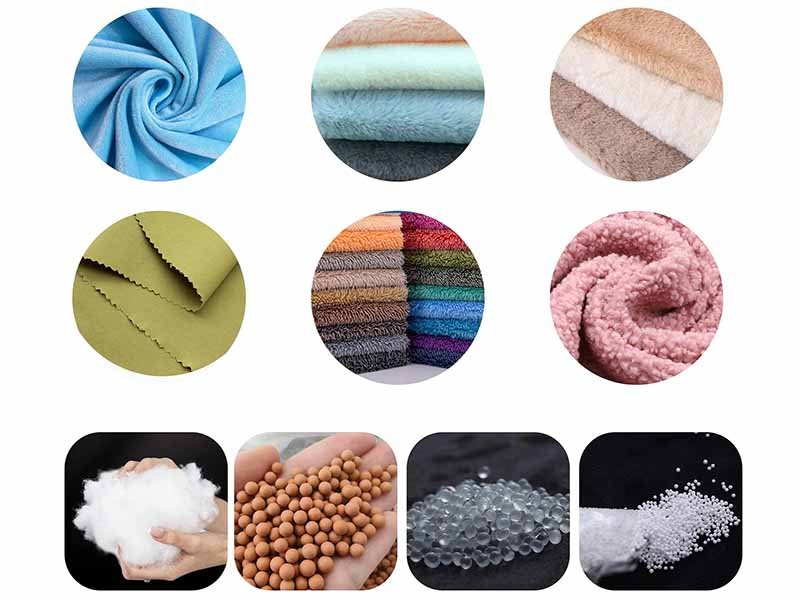
Minky, velboa, short plush, sherpa, coral fleece, faux fur, and velvet-like fabrics continue to appear across successful plush collections, but they serve different purposes. Short-pile fabrics are preferred when a design depends on clean embroidery, small facial details, precise color blocking, or compact dimensions. They give pattern makers more control over seam placement and help the finished character remain recognizable in product photography.
Sherpa and curled fabrics create a warmer, more tactile appearance. They work especially well for plush pillows, winter collections, simple animal shapes, and comfort-focused products. Long-pile faux fur provides movement and depth, making it useful for realistic animals, fantasy creatures, premium mascots, and collector products.
The practical trend is not simply toward softer fabric. It is toward fabric that strengthens the product concept. A 7 cm plush keychain usually needs a lower pile than a 40 cm animal. The same long fur that looks luxurious on a large bear may hide the eyes, mouth, or embroidered markings of a miniature character.
| Material Type | Common Visual Effect | Best-Fit Products | Main Production Concern |
|---|---|---|---|
| Minky | Smooth, soft, clean color | Character plush, baby plush, pillows | Stretch and embroidery stability |
| Velboa | Short, controlled surface | Small plush, printed animals, mascots | Backing visibility on curved areas |
| Sherpa | Warm, textured, casual | Comfort plush, seasonal lines, cushions | Matting and seam visibility |
| Faux fur | Deep, realistic, premium | Animals, fantasy characters, collectibles | Trimming, pile direction, shedding |
| Velvet-like plush | Rich highlights, refined surface | Gift products, decorative plush | Pressure marks and shade changes |
| Printed plush | Detailed patterns and markings | Food plush, licensed graphics, realistic animals | Print alignment and color consistency |
Weighted and Sensory Materials
Weighted plush has become more visible because it creates a different physical experience from a standard fiber-filled toy. The product feels more grounded in the hands and rests more securely on the body. This makes it suitable for comfort-focused, tactile, and sensory-friendly product positioning.
The internal engineering matters more than the total weight. Beads or pellets should normally be enclosed in a separate inner pouch rather than distributed loosely through the body. The pouch must be positioned so that the toy sits correctly and does not pull excessively on one seam. Reinforcement may be needed around the belly, paws, or lower torso, depending on the design.
A product that feels balanced at 25 cm may become awkward when enlarged to 45 cm. Weight distribution, seam stress, filling density, and shipping weight all change with scale. Weighted plush should therefore be evaluated as a complete structure rather than as a normal plush with extra material added at the end. Claims should focus on comfort, tactile engagement, and holding experience rather than unsupported medical benefits.
Specialized Filling Systems
Polyester fiber remains the most widely used filling because it is lightweight, adjustable, and suitable for many shapes. More products now use mixed internal systems. A seated mascot may combine soft fiber in the arms, denser fiber in the torso, and a small weighted pouch in the base. A long-necked animal may require an internal support to prevent the head from leaning forward. A plush pillow may need lower-density filling to preserve a relaxed feel.
Filling affects posture, volume, compression recovery, carton size, and customer perception. Overfilling can distort the face and create hard seams. Underfilling can make the product look inexpensive or arrive flat after shipping. Recycled filling can support an environmental program, but loft, cleanliness, recovery, and batch consistency still need to be checked.
A useful production specification records filling weight, placement, firmness, and recovery instead of relying only on words such as soft or firm. Those words mean different things to different people and are difficult to control across hundreds or thousands of units. A retained approved sample and a documented filling standard together provide a more dependable production reference.
Textures for Adult Collectors
Adult collectors often notice details that are less important in promotional plush. They examine fabric density, color consistency, symmetry, embroidery depth, grooming, posture, and how well the product displays on a shelf. Smooth minky can create a neat, graphic appearance; curled sherpa adds warmth and personality; long pile creates movement and drama.
Texture can give each character in a collection a separate personality. One figure may use smooth short plush, another a curled surface, and another selective faux fur, creating variety without breaking the collection’s overall visual language. Packaging must protect these textures, especially when pile can be flattened by a tight tray or compression bag.
The strongest collector products do not use texture everywhere. They use it where it helps tell the character’s story. Too many fabrics can make a design visually confused and increase cutting waste, sewing difficulty, and material variation. A controlled combination of two or three surfaces is often more effective than using every available texture in one product.
How Does Fabric Affect Purchase Decisions?

Fabric affects purchasing at three moments: when the plush first appears in a photograph or display, when it is touched or held, and when it is used over time. Strong material choices support all three moments by creating visual attraction, a satisfying hand feel, and reliable performance that matches the product price.
Softness and First Impressions
Softness is one of the quickest quality signals in the plush category. In a retail environment, customers often squeeze, stroke, or hold the product before looking closely at the label. Online, they rely on close-up images, videos, reviews, and material descriptions to imagine the same experience.
Softness comes from more than the outer fiber. Fabric density, pile height, backing stiffness, surface finishing, filling pressure, and seam construction all contribute. A soft fabric can feel hard when the toy is overfilled. A moderate-cost short plush can feel excellent when the filling is even and the pattern creates rounded, relaxed forms.
The desired hand feel should match the intended product. A decorative collectible may need a stable structure and crisp shape. A sleeping companion or plush pillow may need more compression and slower recovery. Development teams should define the target with reference samples, filling weights, and practical handling comments rather than vague requests to make the product softer.
Texture and Visual Appeal
Texture changes how light reflects across a plush product. Smooth surfaces create clean areas of color and make embroidery easier to read. Curled or uneven surfaces create small shadows that make a simple shape appear warmer and more dimensional. Long fur adds movement but can reduce the clarity of facial details.
This is particularly important in e-commerce, where the first product image may be viewed at a small size. A face that looks clear on a 30 cm sample may become difficult to understand in a mobile thumbnail if the pile is too long or the thread color lacks contrast. Dark long-pile fabrics can also create eye-area shadows that change the expression.
Before approving a fabric, the sample should be viewed under natural light, studio light, and ordinary phone-camera conditions. It should be photographed from the front, side, and three-quarter angle. A material that performs well only under carefully controlled lighting may create inconsistent catalog images and unrealistic customer expectations.
Pile Height and Density
Pile height affects silhouette, apparent softness, embroidery visibility, and trimming requirements. Short pile gives better control over small features and narrow pattern pieces. Long pile can create premium depth, but it makes cutting direction, grooming, and symmetry more important.
Density determines how easily the fabric backing becomes visible. This is most noticeable around ears, paws, facial curves, and tightly stuffed areas. Low-density fabric may look acceptable when flat but open noticeably when stretched over a rounded form. A bend-and-stretch check on the actual sample geometry is more useful than judging a loose swatch alone.
Shade direction should also be reviewed. Brushing the pile in opposite directions can make two panels appear to be different colors even when they came from the same roll. Cutting markers, pattern orientation, and operator instructions help prevent mismatched limbs, ears, and face panels in bulk production.
| Evaluation Point | What to Check | Why It Matters |
|---|---|---|
| Pile height | Whether facial details remain visible | Long pile can cover embroidery and small applique |
| Fabric density | Backing visibility when stretched | Exposed backing reduces perceived quality |
| Stretch direction | Shape change across length and width | Uneven stretch can distort faces and limbs |
| Shade direction | Light and dark appearance when brushed | Mismatched panels may look like different colors |
| Compression recovery | Shape after carton pressure | Weak recovery can cause flat delivery |
| Surface loss | Loose fibers after rubbing and grooming | Persistent shedding can lead to complaints |
| Embroidery performance | Thread clarity and fabric sinking | Dense pile can hide expressions and logos |
| Color stability | Shade consistency between rolls | Lot variation can affect repeat orders |
Fabric in Product Photography
A fabric should be tested as a selling surface, not only as a sewing material. High-shine polyester may produce strong reflections under studio lighting. Dark faux fur can create shadows around the eyes. Sherpa can look rich in close-ups but lose definition in distant images. Printed plush may appear clear in person yet show color shifts on different screens.
The photography review should include several finished samples rather than one carefully selected unit. This reveals whether the material creates consistent shapes and highlights across production. Photographs should also be checked at mobile-screen size, where small differences in expression and texture become more commercially important.
Packaging affects photography after delivery. Vacuum compression or tight carton packing may leave the pile flat or create pressure marks. The recovery time should be known before products are photographed by retailers, influencers, or customers. In some cases, simple brushing and reshaping instructions are needed at the warehouse or fulfillment stage.
Which Materials Support Higher Retail Prices?

Materials support higher retail prices when customers can recognize a visible, tactile, functional, or documented benefit. Dense fabric, distinctive texture, realistic fur, precise printing, verified recycled content, and specialized internal structures can add value, but premium pricing fails when stitching, filling, proportions, finishing, or packaging remain inconsistent.
What Creates a Premium Feel?
Premium quality is usually the result of several small details working together. Customers may not identify each detail separately, but they recognize when the complete product feels balanced and carefully made. Dense fabric, even filling, clean curves, consistent pile direction, precise embroidery, stable posture, secure accessories, low shedding, and protective packaging all contribute.
A premium product does not have to be heavy or long-haired. A deliberately floppy character can feel premium when its softness is even and its shape is intentional. A small collectible can feel premium through accurate proportions, dense short plush, and fine embroidery. The product must deliver the intended experience without accidental weaknesses.
Consistency is the deciding factor. One beautiful development sample cannot support premium positioning if the bulk order varies in facial expression, filling level, seam shape, or color. The approved sample, material card, embroidery file, filling standard, and inspection criteria need to describe the same quality target.
Fabrics That Can Justify Higher Prices
High-density minky, specialty faux fur, velvet-like plush, jacquard fabrics, custom-printed materials, organic-cotton blends, and documented recycled polyester can support a higher selling price when they serve a clear design purpose.
Faux fur can create realistic movement and depth. Custom printing can reproduce complex markings, gradients, or branded artwork that would be difficult to achieve through solid fabrics. Dense minky can make simple characters look cleaner and more substantial. Recycled materials can add value when the sourcing evidence and product communication are credible.
The material benefit should be visible or explainable. Paying more for a fabric that looks almost identical to a lower-cost alternative may not improve customer acceptance. In contrast, a targeted upgrade on the face, belly, ears, or other high-touch areas may noticeably improve the experience without increasing the cost of every panel.
Material and Market Positioning
Material choice communicates where the product belongs. A simple short-plush mascot in basic packaging may be suitable for a corporate event. A detailed minky character with embroidery, woven labels, and a window box may fit licensed retail. A groomed faux-fur animal with realistic coloring and an information card may work for museums, zoos, nature brands, or collector shops.
The material should match the sales channel. Products displayed in open retail environments require surfaces that tolerate frequent handling. E-commerce products need strong photography and reliable recovery after shipping. Subscription boxes and blind-box collections require strict consistency between multiple characters and repeat production lots.
Price positioning should be defined before the sample is developed. The team should understand the expected retail price, target customer, packaging format, intended lifespan, and required margin. Without these inputs, material selection becomes a technical exercise instead of a commercial decision.
Balancing Cost and Value
The lowest fabric price is not always the lowest project cost. A cheaper fabric may create more shedding, visible backing, inconsistent color lots, difficult sewing, or additional inspection work. A premium fabric may increase cutting waste, grooming time, carton volume, and freight cost.
A realistic cost review includes fabric price, consumption, cutting waste, sewing difficulty, finishing labor, defect exposure, packaging volume, and freight impact. Long faux fur, for example, often requires directional cutting and more spacing between pattern pieces. It may also need facial trimming and grooming before packing.
Useful cost-control decisions include placing higher-grade fabric only on the face and high-touch areas, simplifying hidden panels, adjusting product size before reducing quality, and selecting a pile height that supports both appearance and production efficiency. The aim is not to remove value; it is to spend money where customers can see, feel, and remember it.
Do Sustainable Materials Increase Sales?

Sustainable materials can strengthen product appeal, retailer acceptance, and brand credibility when the claim is relevant, specific, and documented. They do not guarantee higher sales on their own. Customers still expect softness, durability, attractive design, safe construction, accurate labeling, and a commercially sensible price.
Demand for Recycled Materials
Recycled polyester fabric and filling are increasingly requested for retail programs, corporate gifts, licensed products, and brands with formal sourcing goals. In many projects, the demand comes not only from end consumers but also from retailer questionnaires, internal environmental policies, and supply-chain reporting.
RPET plush can provide a hand feel and appearance similar to conventional polyester, but performance varies by construction, finishing, density, and supplier. A recycled label alone does not confirm that the fabric will sew, stretch, recover, or hold color in the same way as the material used in a previous collection.
Brands should confirm exactly which component contains recycled material. The outer fabric, filling, labels, thread, and packaging may all have different compositions. A clear statement such as outer fabric made with recycled polyester is more useful than a broad claim that suggests the entire product is recycled.
Materials That Fit Plush Production
Common environmental options include recycled polyester plush, recycled fiber filling, organic-cotton blends, reduced-plastic packaging, recycled paper tags, and reusable retail boxes. Each option creates technical trade-offs.
Cotton-rich materials may have less stretch and different recovery than polyester plush. Recycled filling may need closer evaluation for loft, cleanliness, and consistency. Paper packaging may reduce plastic use but offer less protection against moisture, dust, and compression. A material decision is only responsible when it protects product performance as well as the environmental objective.
A hybrid approach is often more practical than changing every component at once. A product may use RPET outer fabric and recycled filling while retaining a protective bag needed for clean warehouse handling. Another collection may focus on reducing packaging volume or replacing a rigid plastic tray. Measurable improvement is more credible than an all-or-nothing claim.
Certification and Documentation
Material documentation can build trust with retail and compliance teams because it provides something more substantial than an environmental slogan. Useful records may include fiber-composition declarations, supplier certificates, batch references, invoices, transaction documents, chemical test reports, and approved claim wording.
The scope of each document should be checked carefully. A certificate for a yarn supplier may not automatically cover the finished fabric. A certificate for one batch may not apply to future color lots. The company name, material description, percentage, date, and product scope should match the actual order.
Material certification is separate from toy-safety compliance. A fabric can contain verified recycled fibers and still require testing as part of the finished toy. Physical construction, seams, accessories, chemical restrictions, labels, and age grading remain separate responsibilities.
Verifying Environmental Claims
Environmental wording should be specific enough to prove. Statements such as made with recycled polyester fabric or filled with recycled polyester fiber are easier to support than broad phrases such as completely green or fully sustainable.
Before packaging is printed, the team should confirm the component described, the claimed percentage, the supporting document, the batch or supplier covered, whether trims and filling are included, the wording allowed in the destination market, and how documents will be retained for repeat orders.
The same wording should appear on the product page, hangtag, carton, and sales presentation. Inconsistent claims create confusion and weaken trust. Durability also belongs in the sustainability discussion: a well-made plush product that keeps its shape, color, and seams for years may deliver more lasting value than a poorly constructed product made from a fashionable environmental material.
How Do Materials Affect Reviews and Repeat Sales?

Materials affect reviews and repeat sales through surface feel, shedding, pilling, color stability, odor, washability, filling recovery, shape retention, and consistency between orders. Customers often describe these issues as general quality failures, even when the root cause is a specific fabric, filling, finishing, packaging, or storage decision.
Defects That Trigger Complaints
The most damaging complaints are usually easy to see, feel, or photograph. Customers notice loose fur, rough surfaces, visible fabric backing, flat bodies, hard filling lumps, uneven limbs, faded colors, strong odors, and products that look different from online images.
Several causes may combine in one complaint. A flat product may result from low-recovery filling, tight packaging, long storage, or insufficient reshaping. Shedding may come from the fabric itself, loose fibers after cutting, or incomplete cleaning before packing. A face that looks wrong may be caused by embroidery position, pile direction, filling pressure, or seam tension rather than the artwork.
Customer language should be translated into technical controls. It feels cheap may point to low density, hard backing, uneven filling, or poor finishing. It looks different from the photo may point to lighting, color-lot variation, compression, or inconsistent grooming. The goal is to prevent the experience that caused the complaint, not simply to remove visible defects at final inspection.
| Customer Complaint | Likely Technical Cause | Prevention Before Production |
|---|---|---|
| The fur comes off | Loose fibers, weak pile anchoring, poor cleaning | Rub checks, grooming trial, material approval |
| It feels thin | Low density or backing exposure | Stretch and curve evaluation |
| The body is lumpy | Uneven filling or narrow internal channels | Filling-weight standards and distribution checks |
| It arrived flat | Compression, weak recovery, poor carton planning | Packing simulation and recovery review |
| The color is different | Dye-lot variation or lighting mismatch | Lot approval and retained swatches |
| The face looks wrong | Pile hiding embroidery or inconsistent placement | Embroidery trial and approved positioning |
| The seam opened | High stress, weak reinforcement, poor seam allowance | Seam-strength review and inspection |
| It looks old quickly | Pilling, matting, surface abrasion | Handling and rubbing evaluation |
Washability and Durability
Washability depends on the complete product, not only the outer fabric. Embroidery thread, applique, printed surfaces, weighted pouches, sound modules, foam supports, accessories, labels, and filling all affect the permitted cleaning method.
A fabric may tolerate machine washing while the finished toy requires surface cleaning because an internal component cannot be submerged. Care instructions should therefore be confirmed after the full sample is reviewed and before labels or packaging are printed.
Durability checks should consider seam strength, surface abrasion, filling migration, shape recovery, accessory attachment, colorfastness, embroidery stability, and drying behavior. The review should reflect realistic use. A keychain attached to a backpack experiences friction that a shelf collectible does not. A large sleeping plush may be compressed every night. Material evaluation is most useful when it matches how customers will actually handle the product.
Shedding and Pilling
Shedding and pilling quickly affect ratings because customers can easily show them in photos or videos. Persistent shedding can make a new product appear dirty or poorly made. Pilling can make a frequently handled surface look old long before the seams or filling fail.
Initial loose fibers from cutting should be removed during finishing. Persistent fiber loss may indicate that the material is unsuitable for the product. Long-pile fabrics often require more brushing, trimming, and cleaning than short plush. A simple rub and grooming comparison between several swatches can reveal meaningful differences before bulk material is ordered.
Pilling is influenced by fiber length, surface construction, friction, and use conditions. It is usually most visible on the belly, paws, cheeks, and sides. Finishing standards should be written down so brushing direction, trimming points, thread removal, and surface cleaning do not depend only on an individual operator’s judgment.
Batch Consistency
Repeat customers expect the second order to look and feel like the first. A slightly different shade, shorter pile, firmer body, or changed embroidery position may be noticed immediately when old and new stock are displayed together.
Consistency is easier to protect when the production file includes approved fabric swatches, supplier and material codes, color-lot references, pile and density specifications, filling-weight records, approved production samples, embroidery thread codes, packaging methods, and retained samples from previous orders.
A physical approved sample is important, but it should not be the only reference. Samples age, compress, and change through handling. Written specifications and sealed material cards provide a more stable comparison for future orders. If the original fabric is discontinued, the replacement should be sampled and approved rather than treated as an automatic equivalent.
How Should Brands Select Materials for New Plush Lines?

Brands should select materials by working backward from the customer, product function, age group, price, sales channel, target market, and design details. Approval should include completed samples, photography review, handling checks, packaging recovery, compliance planning, and confirmation that the fabric can be sourced consistently for the intended production volume.
Fabric by Product Category
Character plush usually benefits from minky, short plush, or velboa because these fabrics support clean facial embroidery, controlled color blocking, and small pattern pieces. Realistic animals may require faux fur, printed markings, different pile lengths, and facial trimming. Small keychains generally need low-pile fabric so their features remain visible.
Baby plush often uses soft, controlled surfaces with embroidered details and limited hard components. Plush pillows can use sherpa, coral fleece, minky, or velvet-like materials, with particular attention to compression recovery and edge seams. Blind-box collections need strict consistency because several characters must look like one coordinated series.
Interactive plush requires internal space for speakers, switches, sensors, batteries, or light modules. Weighted plush needs secure inner pouches and reinforced construction. These internal requirements may limit how soft, thin, or stretchy the outer fabric can be. The best fabric is the one that works with the entire structure, not simply the swatch that feels best when held flat.
Age Group and Intended Use
Age grading affects material, accessories, seams, labels, testing, and care instructions. Products intended for babies or young children require close attention to fiber loss, seam access, small parts, attachment methods, chemical requirements, and foreseeable handling.
Embroidered eyes are often selected for young-age products because they avoid separate hard components, but the embroidery still requires control. Dense stitching, thread ends, backing material, and the strength of the surrounding fabric all matter.
Older-child products may include more detailed accessories, printing, or interactive functions. Adult collectibles may use delicate textures or display-focused construction, but they still require reliable labeling and production quality. Age and use should be decided before sampling because repositioning a product later can require new materials, accessories, packaging, labels, and testing plans.
Target Market and Compliance
The destination market influences chemical requirements, physical testing, age warnings, traceability, labels, and packaging. Projects sold in the United States, European Union, United Kingdom, Canada, Australia, Japan, or other regions may require different documentation and test planning.
Common areas of review include ASTM F963, CPSIA, EN71, CE-related documentation, chemical restrictions, small parts, flammability where applicable, tracking labels, care labels, and warning language. No fabric should be treated as automatically compliant simply because it has been used in another toy.
The finished product includes thread, filling, embroidery, print, accessories, labels, coatings, and packaging. Compliance evaluation applies to the complete construction. The intended market should be disclosed before quotation and sampling; discovering a new testing or labeling requirement after packaging is printed can create expensive delays.
Sampling and Pre-Production Checks
Sampling converts material assumptions into physical evidence. A swatch may look soft and dense, but only a completed sample shows how it stretches across the face, holds embroidery, bends at seams, responds to filling, and recovers after packaging.
The sample stage should compare realistic alternatives where the decision matters: short pile versus medium pile for facial clarity, standard versus recycled filling for recovery, printed detail versus applique, loose versus structured filling, or folded packaging versus compression packaging. The approved version should use materials and finishing methods that can be repeated in bulk production.
| Approval Area | Practical Check | Decision Before Bulk Production |
|---|---|---|
| Appearance | Proportions, expression, symmetry, color placement | Confirm approved visual standard |
| Hand feel | Softness, firmness, filling distribution | Record filling weight and tactile target |
| Fabric behavior | Stretch, shedding, pile direction, backing exposure | Approve final fabric and cutting direction |
| Embroidery | Alignment, thread color, sinking, backing | Seal embroidery file and position |
| Construction | Seam stress, narrow parts, closure, reinforcement | Confirm sewing method and inspection points |
| Packaging | Compression, recovery, moisture and dust protection | Approve packing quantity and method |
| Compliance | Age group, market, labels, testing plan | Confirm requirements before production |
| Supply continuity | Material availability, color lots, reorder potential | Reserve or approve production material |
For commercial projects, sampling should also confirm that the chosen materials can be reproduced at scale. A hand-finished prototype may look excellent but require trimming, stitching, or material handling that is too slow or variable for bulk production. Standard plush samples often take 5-7 days, while products with complex structures, multiple accessories, electronics, or weighted systems may require 7-15 days. The few extra days spent resolving material issues at sample stage are usually far less costly than correcting hundreds of finished units.
Turn Material Trends Into Sellable Plush Products
Fabric trends can create new opportunities, but following a trend without engineering control can also create expensive problems. A successful material should make the product easier to understand, more enjoyable to touch, more attractive in photographs, appropriate for its audience, and reliable after repeated handling.
Delsney is a custom plush manufacturer in Guangdong, China, supporting brands, IP owners, retailers, gift companies, and e-commerce teams from design review and material selection through sampling, bulk production, quality inspection, packaging, and global delivery. The company has 18+ years of plush manufacturing experience, 500+ staff, 18 production lines, 25+ engineers, 10+ designers, and 20+ QC personnel. Standard MOQ starts at 500 pieces, standard samples generally take 5-7 days, complex samples 7-15 days, and standard bulk production typically takes 20-30 days after sample approval, depending on materials, quantity, packaging, testing, and production complexity.
For a practical material review, send the team your artwork or reference sample, target size, order quantity, age group, destination market, preferred hand feel, fabric or sustainability requirements, filling structure, branding, packaging format, and delivery deadline. The development team can evaluate fabric options, filling balance, embroidery performance, compliance preparation, production feasibility, and cost-control opportunities before bulk manufacturing begins.