Skip to content
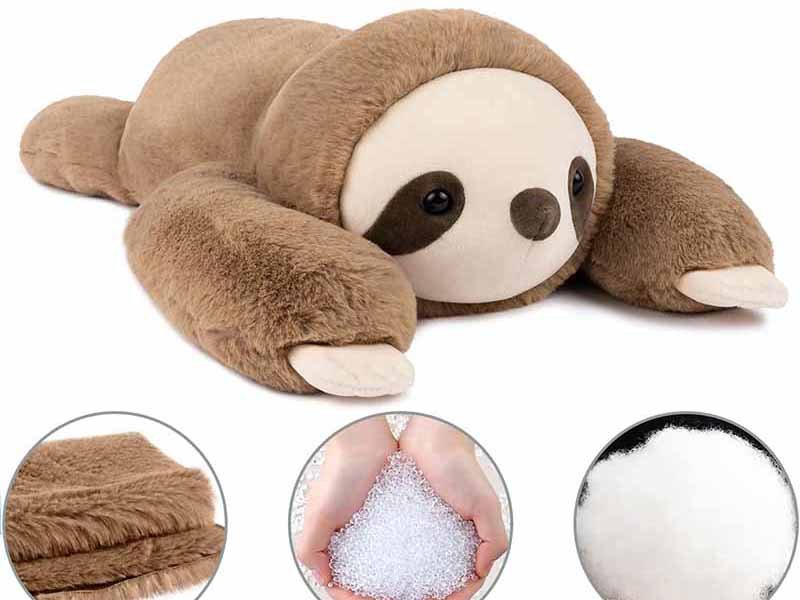
A stuffed animal can lose its market appeal before anyone notices a problem with its pattern. The fabric may look flat in product photography, feel rough after customers open the package, shed during handling, hide embroidered details, or remain creased after weeks inside a shipping carton. A fashionable material can create the opposite problem: strong early attention but unstable supply, unpredictable dye lots, longer lead times, or a construction that cannot be repeated across thousands of units. For product teams, staying ahead is therefore less about chasing the newest textile and more about recognizing useful signals early enough to test them properly.
Brands stay ahead of stuffed animal material trends by tracking consumer behavior, social platforms, retail formats, licensing, sustainability expectations, and supplier innovation. They then compare promising fabrics by hand feel, pile height, GSM, stretch, shedding, colorfastness, embroidery performance, safety needs, cost, availability, and repeatability before approving them for production.
The reason is simple: plush is no longer purchased only as a traditional children’s toy. Collectible characters, blind boxes, bag charms, comfort products, licensed properties, weighted plush, and adult-oriented designs now influence how materials are chosen. The brand that wins is not always the first to discover an unusual fabric. It is often the brand that discovers it early, understands what it changes, and turns it into a reliable product before the market becomes crowded. A small fabric swatch may look harmless on a sourcing desk, yet that same swatch can decide whether a character feels premium, photographs well, passes production review, and arrives in stores looking like the approved sample.
What Is Driving Plush Material Trends?
Plush material trends are shaped by changing consumer groups, social media, licensed entertainment, collectible formats, comfort-focused products, sustainability expectations, and new retail occasions. The most reliable trend is not a fabric appearing once online; it is repeated evidence that customers value a specific texture, function, scale, appearance, or material story across several channels.
Changing Consumer Groups
Stuffed animals are no longer developed only for young children. Teenagers and adults now buy plush products as collectibles, desk accessories, room decor, travel companions, bag charms, gifts, and expressions of fandom. This wider audience has changed the material brief. A product may need to feel comforting in the hand, look sophisticated on a shelf, photograph clearly for social commerce, or remain visually consistent across a character series.
A children’s bedtime toy may prioritize washable surfaces, secure embroidered features, soft seams, and filling that recovers after repeated compression. An adult collectible may place greater importance on color precision, surface richness, facial definition, limited-edition finishes, and long-term display quality. A promotional mascot may prioritize logo clarity, controlled cost, and a fixed campaign deadline. The same fabric rarely performs equally well in all three situations.
Before selecting a material, define who will use the product, how it will be handled, where it will be sold, and what customers should notice first. Material selection becomes more accurate once the team knows whether the priority is comfort, realism, collectibility, washability, photography, or long-term display.
Social and Retail Signals
Social media has shortened the time between an unusual design appearing and customers asking for something similar. Textures that move well on video, compressed products that expand after unpacking, miniature charms, oversized rounded forms, and unusual animal characters can gain attention quickly. However, online attention is only one signal. A product may perform well in short videos because of filters, lighting, or a handmade sample that would be difficult to reproduce in volume.
Product teams should compare social engagement with repeated marketplace reviews, retail shelf expansion, licensing calendars, trade-show introductions, supplier sample books, and requests from existing customers. A trend becomes commercially useful when it appears in more than one place. A temporary spike may justify a prototype. A repeated signal across retail, search, social content, and supplier demand may justify a collection.
Collectibles and Character Accuracy
Collectible formats have made material consistency more important. A series may contain six, twelve, or more characters that must look different while still feeling like one product family. If every character uses a different fabric weight, stretch level, or filling density, the collection can feel uneven. One character may sit correctly while another leans; one face may look sharp while another loses detail inside the pile.
For small collectibles, short-pile fabrics usually give better control over eye and mouth placement, embroidered lines, small limbs, printed details, clothing edges, and finished dimensions. Long pile can still be effective as an accent on ears, tails, manes, collars, or selected body sections. Shared standards for pile direction, filling weight, embroidery density, seam allowance, and measurement points keep variation intentional rather than accidental.
Comfort and Sensory Demand
Comfort-oriented plush places greater emphasis on touch, weight, compression, warmth, and body contact. Smooth minky can create a soft, familiar feel. Sherpa can communicate warmth and coziness. Dense short plush may feel premium without losing shape definition. Longer fur can feel immersive but may require more grooming and cleaning during production.
Filling decisions are equally important. A comfort plush may need a softer body, a more supportive head, or a deliberately weighted base. Weighted components should normally be contained in a separate internal pouch and positioned so that beads or pellets do not place unnecessary pressure on the outer seams. Total weight, pouch location, seam strength, age grading, and labeling should be reviewed as one system. It is appropriate to describe measurable characteristics such as softness, weight, warmth, and hugability; medical or therapeutic promises require a different level of evidence.
| Market Signal | Likely Material Impact | Practical Question |
|---|---|---|
| Growth in bag charms | Short pile, reinforced loops and low bulk | Will the product survive movement, friction and repeated attachment? |
| Blind-box collections | Compact detail, controlled GSM and consistent filling | Can every SKU maintain the same visual and tactile standard? |
| Comfort-focused products | Soft surfaces, balanced compression and recovery | Does the product regain shape after storage and shipping? |
| Adult collectibles | Premium hand feel, refined color and display finish | Will the surface remain attractive after long-term handling? |
| Licensed characters | Accurate color and visible facial details | Can the pile support precise embroidery and printing? |
| Sustainable collections | Traceable fibers and documented claims | Can the supplier prove content and chain of custody? |
Which Plush Fabrics Are Gaining Demand?

Minky, velboa, short plush, faux fur, sherpa, printed plush, velvet-like surfaces, and recycled-polyester textiles remain commercially important because they solve different product problems. Demand is moving toward deliberate combinations: short pile for accuracy, long pile for character, textured surfaces for comfort, printing for complex graphics, and traceable fibers for sustainability-led collections.
Minky and Smooth Plush
Minky remains one of the most versatile materials for custom stuffed animals. It offers a soft hand feel, broad color availability, a relatively clean surface, and good compatibility with embroidery. It works well for character plush, baby-oriented products, mascots, pillows, weighted companions, and products with embroidered faces or logos.
The term “minky” covers many constructions. Two fabrics sold under the same name may differ in density, stretch, backing stability, sheen, pile length, and recovery. A low-density fabric may feel soft as a swatch but reveal its backing when stretched over a firmly filled head. A highly elastic version may create attractive rounded forms but distort narrow limbs or facial spacing.
A useful approval records the supplier code and measurable characteristics rather than accepting “minky” as a generic description. Composition, usable width, GSM, color reference, stretch direction, pile direction, and relevant documentation should be part of the material file. Embroidery should also be tested on the production fabric because fine stitches can sink into even a short pile.
Velboa and Short Plush
Velboa and short plush are often selected when the product needs clean outlines, controlled dimensions, clear printing, or compact embroidered details. Their lower pile helps the pattern shape remain visible after filling, making them practical for miniature plush, blind-box products, keychains, food and plant shapes, promotional toys, printed animals, and graphic character designs.
Velboa can carry spots, scales, gradients, decorative motifs, and animal patterns without requiring many separate fabric panels. Short plush often suits stylized characters because it remains soft without hiding the face. Potential drawbacks include visible backing, excessive surface shine, and a less substantial hand feel in lower-density grades.
On a small product, a few millimeters of additional pile can change the apparent eye distance, hide a narrow mouth, or make a tiny arm disappear into the body. For this reason, short pile is often an engineering choice rather than merely an economical one.
Faux Fur and Sherpa
Faux fur is useful when the product depends on realism, dramatic volume, movement, or a strong surface personality. It is common in realistic animals, fantasy creatures, pet replicas, premium mascots, manes, tails, ears, hair, and decorative accents. The main control points are pile length, density, direction, undercoat, shine, color mixture, trimming behavior, and seam brushing.
Long fur can make correctly sewn units appear different because the fibers settle in different directions. Cutting should avoid slicing through the pile unnecessarily, while finishing may require trapped fibers to be released from seams and selected areas to be trimmed around the face. Sherpa has a different role: its curled surface suggests warmth and coziness, but it can conceal fine embroidery and attract visible lint.
Mixed-material construction is often the strongest solution. A short-pile face protects expression and embroidery, while faux fur or sherpa on the ears, hair, tail, or body creates a richer tactile identity.
Printed and Specialty Fabrics
Printed plush fabrics allow brands to reproduce gradients, fantasy markings, tattoos, food textures, branded motifs, and complex character graphics without creating excessive seam lines. Random-repeat printing distributes a pattern across the roll and is usually easier to scale. Positioned printing aligns artwork with specific pattern pieces and offers greater accuracy, but it requires careful registration between printing and cutting.
The final print should be reviewed on the actual base fabric. Pile direction, surface whiteness, density, and sheen can change the apparent color. Artwork that looks correct on paper may become darker, softer, or less detailed on plush. The sample should be rubbed, bent, compressed, brushed, and viewed from multiple directions before approval.
Specialty surfaces such as velvet-like plush, ribbed plush, embossed patterns, metallic finishes, and two-tone fibers can create distinction, but each adds a control point. The more the appearance depends on direction or light, the more important it becomes to define cutting orientation, packing method, and inspection lighting.
| Fabric Type | Common Working Range | Suitable Uses | Main Risk |
|---|---|---|---|
| Smooth minky | About 220-350 GSM | Characters, baby plush, pillows | Stretch and visible backing |
| Velboa | About 180-300 GSM | Printed animals, promotions | Shine and lower surface depth |
| Short plush | About 200-380 GSM | Keychains, blind boxes, characters | Detail loss if pile is too dense |
| Sherpa | About 280-500 GSM | Comfort products, seasonal plush | Hidden embroidery and lint |
| Medium faux fur | About 300-600 GSM | Animals, mascots, fantasy products | Pile direction and trimming |
| Long faux fur | Often 10-50+ mm pile | Manes, tails, realistic effects | High variation on small products |
| Printed plush | Base-dependent; confirm by supplier | Food, fantasy and graphic IP designs | Registration and abrasion |
How Are Sustainable Materials Changing Plush?

Sustainable materials are changing fiber selection, filling, dyeing, packaging, documentation, and product claims. Recycled polyester and organic fibers can support credible collections, but they must still meet softness, durability, color, safety, availability, and production requirements. Clear component-level evidence is more valuable than broad environmental language that cannot be verified.
Recycled Polyester in Practice
Recycled polyester can be used in outer plush fabric, filling, sewing thread, labels, and selected packaging components. It can provide a familiar polyester hand feel while supporting a recycled-content strategy. The commercial question is not whether recycled polyester can be soft; many grades can. The important question is whether the selected construction can deliver stable quality at the required quantity.
A development team should compare recycled and conventional options for hand feel, shedding, surface density, stretch, colorfastness, embroidery behavior, compression recovery, minimum quantity, lead time, and reorder availability. A fabric may perform well in the approved sample but still create supply risk if the supplier cannot reproduce the same shade several months later.
Which Material Properties Matter Most
Claims should be specific. “Outer fabric made with recycled polyester” is clearer than implying that the entire product is recycled when the filling, thread, labels, or accessories use conventional materials. Certification scope, transaction records, and the wording on packaging should describe the same reality.
Organic and Natural Fibers
Organic cotton and organic-fiber blends can suit nursery, baby, lifestyle, gift, and natural-looking collections. They often create a matte appearance and a hand feel that differs from conventional polyester plush. Their behavior also differs. Cotton-containing fabrics may react differently to moisture, washing, abrasion, drying, shrinkage, and long-term storage.
A product described as organic may still contain polyester embroidery thread, conventional filling, plastic eyes, woven labels, sound modules, polybags, or coated packaging. The claim should identify which component is organic and what documentation supports it. A certified fabric supplier does not automatically make the finished stuffed animal certified.
Natural-looking fabrics can introduce slight visual variation. That may be acceptable in a lifestyle collection but problematic for a licensed character with a strict color standard. Sustainability and character accuracy sometimes pull in different directions, so the product brief should state which factor has priority.
Claims and Documentation
Recycled, organic, biodegradable, compostable, bio-based, non-toxic, and eco-friendly do not mean the same thing. Each claim requires different evidence, and some are too broad to be useful without qualification. A practical material file may include fiber composition, supplier declarations, certification scope, chain-of-custody records, transaction documents where applicable, restricted-substance information, test reports, packaging composition, and approved product wording.
The strongest claim is usually the most specific one: “contains recycled polyester filling,” “outer fabric made with certified recycled polyester,” or “organic-cotton blend used on the main body panels.” These statements are easier for customers, retailers, and compliance teams to understand than vague descriptions such as “planet-friendly plush.”
A bio-based fiber is not automatically biodegradable. A biodegradable material may require industrial conditions that consumers cannot access. A coated or blended fabric may be difficult to recycle even when one ingredient is renewable. Claims should describe what is known rather than what the marketing team hopes customers will assume.
Dyes and Material Longevity
Fiber content is only one part of environmental performance. Dyeing, finishing, production waste, defect rates, packaging, and product life also matter. A fabric that fades, transfers color, or fails during use can create rejected goods, replacements, returns, and unsold inventory. Durability is therefore part of sustainability.
Color development should use a physical approved standard. A digital code or Pantone reference helps communication, but pile direction, lighting, fiber type, and surface finish change the final appearance. Deep reds, dark blues, neon shades, printed gradients, and products that combine light and dark fabrics deserve extra review for rubbing, migration, and batch consistency.
The same blue may appear different on minky, embroidery thread, printed velboa, plastic accessories, and packaging. The finished product should be reviewed as a complete color system rather than a collection of separately approved components.
Which Material Properties Matter Most?

The most important material properties are hand feel, GSM, pile height, pile direction, stretch, shedding, colorfastness, seam behavior, embroidery compatibility, shape retention, and compression recovery. Their priority changes by product. A baby plush, miniature collectible, weighted companion, realistic animal, and promotional mascot should not be evaluated with one universal checklist.
Softness and Durability
Softness creates the first impression, but durability determines how the product looks after repeated use. A surface can feel exceptionally soft in a showroom and still flatten, pill, shed, or reveal its backing after several weeks. Another fabric may feel slightly firmer but remain attractive for years.
The correct balance depends on the product life cycle. A display collectible may be handled occasionally and judged mainly by appearance. A bedtime plush may be hugged, washed, compressed, and carried every day. A bag charm may rub against clothing, zippers, and other objects. A promotional mascot may need reliable appearance at a controlled cost for a shorter campaign.
Evaluation should include rubbing the surface in several directions, compressing and releasing it repeatedly, pulling gently at the pile, bending it around curves, examining it under strong light, and checking high-friction areas. A slightly firmer material that stays attractive can create a better customer experience than a very soft fabric that degrades quickly.
Stretch and Shape Control
Stretch determines how a flat pattern becomes a three-dimensional form. It can help create smooth rounded shapes, but it can also widen a head, lengthen a body, twist a seam, or change the distance between facial features. Stretch direction matters as much as the percentage of stretch.
Two mirrored pieces cut in different orientations may expand differently after filling. The pattern layout should therefore mark both pile direction and stretch direction. A highly elastic fabric filled by feel instead of a controlled weight can vary noticeably between operators.
For character products, fabric stretch, pattern dimensions, seam allowance, embroidery placement, filling weight, and filling distribution operate as one system. Substituting a “similar” fabric after sample approval may still change the face and should normally trigger a revised sample review.
Color, Shedding and Surface Stability
Loose fibers from cutting are normal in some long-pile materials, but they should be removed during finishing. Continued shedding after brushing and cleaning is different and can damage the perceived quality of the product. The finished sample should be checked because seam construction, trimming, and brushing affect fiber release.
Colorfastness should reflect intended use. Possible evaluations include dry rubbing, wet rubbing, washing, moisture, saliva exposure where relevant, light exposure, and transfer between adjacent materials. A dark fabric next to a white belly panel creates a different risk from a single-color design. Printed facial features can also change if the surface wears or the pile moves.
These problems are not always reasons to cancel a material. They may be solved through another dye lot, a different base fabric, reduced color depth, modified printing, or a new supplier. The serious warning sign is a supplier that cannot explain the variation or reproduce the approved result.
Compression and Filling Behavior
Compression recovery describes how well fabric and filling return to their intended form after pressure. It matters because plush products are packed in bags, stacked in cartons, stored for weeks, and transported through changing temperature and humidity. A product can look excellent at the factory and arrive with a flat face, folded ears, creased fur, or uneven filling.
Recovery depends on outer fabric, filling fiber, filling density, internal structure, product size, packaging method, carton loading, storage time, temperature, and humidity. Long-pile surfaces may look damaged when the fibers are simply trapped in one direction. Packing trials should use the intended bag, box, carton quantity, and compression level, followed by a defined recovery period.
The result should match the sales channel. A retailer may accept minor reshaping before display. A direct-to-consumer product usually needs to look presentable as soon as the customer opens the package.
| Property | Practical Reference | Why It Matters | Control Method |
|---|---|---|---|
| GSM | Confirm supplier tolerance, often +/-5% to +/-10% | Affects density, cost and opacity | Incoming fabric record |
| Pile height | Match to product scale | Changes facial detail and outline | Measure and approve swatch |
| Stretch | Check lengthwise and crosswise | Alters dimensions after filling | Fabric-specific pattern |
| Filling weight | Set by product and body section | Controls shape and hand feel | Weight reference by unit |
| Finished dimensions | Use defined measurement points | Protects consistency | Approved tolerance sheet |
| Color lot | Avoid visible mixing where possible | Prevents shade variation | Lot separation and light-box review |
| Compression recovery | Test in final packaging | Protects post-shipping appearance | Pack-and-recovery trial |
| Embroidery visibility | Test on production fabric | Preserves expression and logos | Approved stitch sample |
How Can Brands Validate New Materials?

New materials should be validated through specification review, swatch comparison, prototype sampling, construction testing, safety planning, packing trials, pilot production, and documented approval. A material is ready only when it creates the intended customer experience and can be reproduced consistently with acceptable quality, cost, lead time, supply, and documentation.
Swatch Screening
A fabric swatch is the starting point, not proof of finished-product performance. It helps eliminate unsuitable options before time is spent on full prototypes. Each swatch should be recorded with supplier code, composition, GSM, pile height, usable width, stretch direction, backing, color, minimum quantity, lead time, price range, and available documentation.
Swatches should be compared side by side under the same lighting. Human memory for softness and color is unreliable, especially when options are reviewed days apart. Simple physical checks can reveal early risks: stretch the fabric to see whether the backing becomes visible, rub it against a light cloth, compress it in the hand, brush the pile in opposite directions, and place an embroidery sample over the surface.
The best swatch is not always the softest. It is the one that supports the design, expected handling, production method, and target price without introducing unnecessary risk.
Prototype Testing
A finished prototype exposes issues that cannot be seen in flat fabric. It shows whether the material changes the head shape, hides embroidery, traps pile in seams, stretches around curves, or requires more filling than expected. When comparing materials, two prototypes made from the same initial pattern can help isolate the effect of fabric behavior.
A complete sample review should cover front, side, back, top, and bottom appearance; finished measurement points; net weight; filling distribution; facial symmetry; embroidery clarity; seam condition; surface cleaning; accessory attachment; sitting or standing balance; and packaging recovery.
Feedback should use measurable language. “Move each eye inward by 2 mm, lower the mouth by 3 mm, reduce cheek filling, and trim the facial pile” is more actionable than “make the face better.” The final approved sample must use materials that are actually available for production.
Safety and Market Fit
Material approval should begin with the destination market and intended age group. Requirements differ by country, construction, accessories, functions, and use conditions. The complete product may need assessment for mechanical and physical hazards, flammability, chemical substances, small parts, seam access to filling, cords, weighted inserts, batteries, stuffing cleanliness, labels, and warnings.
A fabric described as “safe” or “toy grade” does not replace assessment of the final stuffed animal. The same material may be acceptable in one design and unsuitable in another if the age grade, attachment method, or intended use changes.
Testing samples should use final materials, final accessories, final embroidery, and production-equivalent construction. Testing an early prototype and then changing the fabric, coating, filling, or attachment method can make the original result less useful. Compliance planning also needs time for document review, laboratory testing, corrections, and possible retesting.
Pilot and Scale Approval
A pilot order is useful when the material is new, custom dyed, heavily printed, long piled, recycled, weighted, or used across several SKUs. It reveals variation that a few handmade samples cannot show. The pilot should follow the intended production process; temporary embroidery, substitute packaging, or hand-selected fabric weakens the value of the data.
Useful records include fabric consumption, cutting waste, color variation, sewing difficulty, embroidery rejection, filling-weight variation, measurement variation, rework time, packaging recovery, and final defect rate. A material is ready for larger production when the technical file is complete and the supplier has confirmed repeat availability.
Before scale, the file should contain an approved physical sample, bulk fabric code, GSM and pile specifications, color reference, composition documents, pattern version, embroidery or print files, filling type and weight, inspection criteria, packaging method, and confirmed replenishment lead time.
| Validation Stage | Typical Evidence | Decision |
|---|---|---|
| Specification review | Composition, GSM, pile, lead time, documentation | Is the material worth sampling? |
| Swatch comparison | Touch, stretch, color, shedding and backing | Which options move forward? |
| First prototype | Shape, seam behavior, embroidery and filling | Does the material suit the design? |
| Revised sample | Corrected pattern, expression and hand feel | Is the product visually approved? |
| Safety sample | Final materials and construction | Is market-specific testing ready? |
| Packing trial | Final bag, box, carton and compression | Will the product arrive presentable? |
| Pilot production | Line data, variation and rework | Can the process be controlled? |
| Scale approval | Approved sample and complete specification | Is bulk production authorized? |
How Do You Build a Trend-Ready Supply Chain?
A trend-ready supply chain combines market monitoring, material intelligence, rapid sampling, alternative sourcing, engineering review, documented approvals, and reliable production control. The objective is not to stock every fashionable textile. It is to identify useful signals early, test them quickly, and scale only the materials that meet product, safety, cost, supply, and delivery requirements.
Track More Than Social Media
A serious monitoring system uses several sources. Social media provides speed, while retail data and customer feedback provide commercial context. Useful signals include marketplace reviews, return comments, search behavior, retail assortment changes, licensing calendars, trade fairs, supplier sample books, competitor launches, customer requests, and repeat-order data.
Signals should be recorded over time and grouped into themes such as surface texture, product size, character type, filling behavior, sustainability claim, packaging format, sales channel, and user age. This helps the team distinguish a short-lived character trend from a broader material direction. A viral animal may disappear quickly, while demand for compact bag charms, tactile comfort, soft neutral colors, or collectible series can continue across many characters.
A monthly review is usually more useful than reacting to every spike. Trends should guide experiments, not replace product strategy.
Build Supplier Alternatives
Trend-driven materials often create supply pressure. When several brands request the same texture or color, lead times increase and popular lots can sell out. A resilient sourcing plan identifies the primary fabric, an approved alternative, custom-dye lead time, minimum dye quantity, reorder availability, documentation, color-lot tolerance, and the substitution approval process.
The alternative should be tested before an emergency occurs. Waiting until the primary material is unavailable can force approval under schedule pressure. A slightly lower GSM may require a filling or pattern adjustment. A stretchier backing can alter the face. A different pile direction may change the apparent shade.
Long-term products benefit from material reservation and forecast sharing. A supplier can plan more effectively when it understands that the first order may be followed by seasonal replenishment, regional versions, or several related SKUs.
Protect the Approved Standard
An approved sample is valuable only when the production team can translate it into measurable instructions. The control package should contain the fabric code, physical color reference, pattern version, pile direction, stretch direction, embroidery file, thread colors, measurement points, filling weight, accessory position, seam notes, packaging method, and acceptable tolerances.
Changes should be documented. An unavailable fabric, revised eye position, new filling, or different package can affect the product. The revised version should be reviewed rather than treated as a minor verbal update. For character products, small changes in eye spacing, mouth height, eyebrow angle, cheek fullness, and facial pile can alter the personality even when general dimensions remain within tolerance.
The approved sample, technical file, and inspection criteria should work together. None is strong enough alone.
Ask Better Manufacturing Questions
Price matters, but it is not the best first question when evaluating a plush manufacturing partner. Better questions reveal whether the supplier understands material behavior and scale risk. Ask which fabric suits the product size, what GSM and pile height are proposed, how much the material stretches, whether the bulk lot is available, whether the color can be reordered, and how embroidery will remain visible.
Also ask how pile direction, filling weight, color lots, measurements, packaging recovery, in-line inspection, and substitutions will be controlled. For sustainable materials, ask which documents support the claim and which parts of the finished product are covered. For global sales, provide the target market and intended age group before the final material is approved.
A capable manufacturer should not simply approve every requested fabric. It should explain the trade-offs. Longer pile may improve realism but reduce facial clarity. A softer stretch fabric may improve hugability but weaken dimension control. A custom recycled color may strengthen the brand story but extend lead time. Reliable partnerships are built around informed decisions, documented standards, and early risk discussion.
Turn Material Trends Into Production-Ready Plush Products
Staying ahead of stuffed animal fabric and material trends is not a race to use the newest textile. It is a disciplined process of observing the market, understanding the user, comparing material behavior, validating claims, building prototypes, confirming safety needs, and protecting consistency during production.
The most commercially useful material supports five outcomes at the same time: it looks right for the character and sales channel, feels right for the intended customer, can be sewn and filled reliably, supports the target market’s documentation needs, and remains available when the order scales.
Delsney is a custom plush manufacturer in Guangdong, China, supporting global brands, IP owners, retailers, e-commerce companies, gift programs, and character projects. Its documented capabilities include 18+ years of plush manufacturing experience, 500+ staff, 18 production lines, 25+ engineers, 10+ designers, 20+ QC personnel, standard sampling in about 5-7 days, complex sampling in about 7-15 days, and standard bulk production commonly planned around 20-30 days after approval, depending on materials, quantity, packaging, testing, and schedule.
For a material recommendation or quotation, provide your artwork or reference sample, target size, estimated quantity, destination market, user age group, preferred texture, filling requirements, packaging plan, and launch date. The project team can compare suitable fabrics, identify production risks, and prepare a sampling plan before bulk materials are committed.