Skip to content
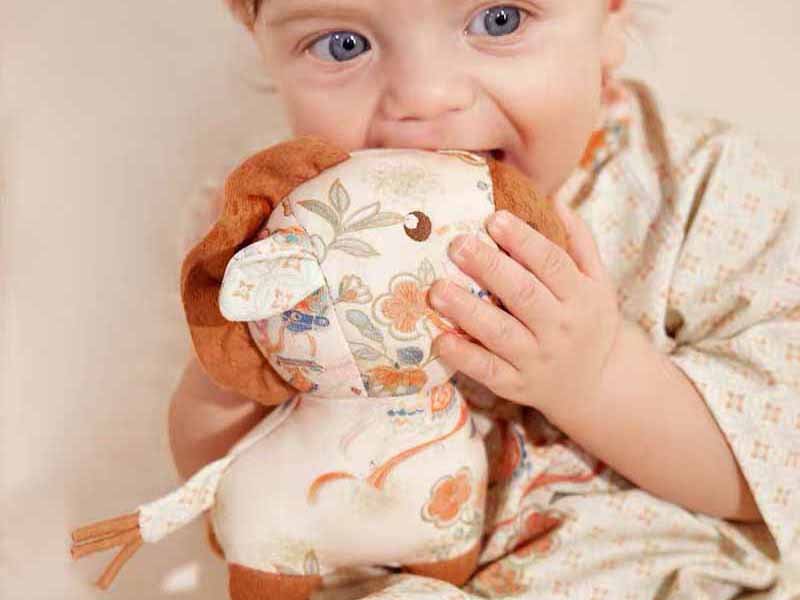
A plush toy looks harmless. It is soft, lightweight, and often designed to become a child’s closest companion. Yet the word “soft” does not automatically mean “safe.” A plush product can combine fabric, fiberfill, thread, embroidery, printing ink, plastic eyes, metal accessories, adhesives, sound modules, labels, and packaging. Every component introduces a different question, and the answer depends on how the toy is designed, manufactured, tested, labeled, and used.
Most properly designed and compliant plush toys are not considered toxic. However, a plush toy may become unsafe when it contains restricted chemicals, poorly controlled dyes or coatings, detachable small parts, contaminated filling, weak seams, unsuitable accessories, or materials that have not been assessed for the intended age group and destination market. Safety must be verified through product-specific risk assessment and applicable testing.
That distinction matters. “Are plush toys toxic?” is not really a yes-or-no question about polyester or cotton. It is a question about the complete product system. Imagine a brand approving a beautifully shaped mascot, only to discover shortly before launch that the plastic nose can detach, the printed fabric has not been chemically assessed, or the care label lacks traceability information. The visual design may be finished, but the commercial product is not. The safest plush projects begin asking safety questions before the first sample is sewn—not after thousands of units have been packed.
Are Plush Toys Toxic?

Most plush toys are not inherently toxic. Safety depends on the complete product: fabric, filling, dyes, prints, plastic parts, accessories, workmanship, age grading, and the rules of the destination market. A controlled polyester plush can be safer than a poorly made “natural” toy. The right question is whether the finished product has been properly designed, tested, documented, and manufactured.
Safety Is Product-Specific
A plush toy may look simple, but even a basic stuffed animal can contain more than ten separate materials. The outer fabric, embroidery thread, sewing thread, filling, plastic eyes, care label, woven label, printed patch, internal reinforcement, hangtag, and packaging may all come from different suppliers. That is why safety cannot be judged by touching the toy or reading a single fiber-content label. Two products marked “100% polyester” can have completely different risk profiles. One may use stable short-pile fabric, embroidered features, controlled filling, reinforced seams, and traceable materials. Another may contain loose fur, poorly attached plastic parts, unknown printing ink, inconsistent filling, and weak stitching.
A useful safety review asks what the user can touch, mouth, pull, or remove; what may happen after repeated handling, washing, dropping, or squeezing; whether the age grade matches the foreseeable user; and whether the tested sample matches mass-production materials. In the United States, ASTM F963 is a mandatory toy safety standard, but the applicable clauses depend on the product’s actual construction and features. A sound plush, a weighted plush, and a simple embroidered baby toy may therefore require different assessments.
Toxicity and Other Hazards
People often use the word “toxic” to describe anything that feels unsafe. In professional product development, chemical toxicity is only one part of the safety picture. A plush toy can meet relevant chemical limits and still present a serious hazard if an eye detaches, a seam opens, a wire becomes exposed, or a weighted insert leaks. On the other hand, a visible manufacturing odor may cause concern without proving that the toy contains a restricted substance.
The main risk categories include chemical risks from plastics, coatings, inks, fabrics, adhesives, and metal parts; mechanical risks from loose accessories or broken components; construction risks from open seams and poorly sealed inserts; flammability risks; hygiene risks caused by moisture or contamination; and labeling risks such as incorrect age grading or missing traceability. A product should therefore be reviewed as a complete system. Replacing a plastic eye with embroidery may reduce a small-part risk, but it does not answer questions about fabric chemistry, seam strength, filling containment, or required labeling.
Age and Intended Use
The same character can require very different construction depending on who will use it. A plush intended for a baby may be mouthed, pulled, slept with, washed frequently, and handled without supervision. That usually favors short stable pile, embroidered facial features, simple construction, washable materials, and minimal rigid accessories. A collectible plush aimed at adults may use metal chains, removable clothing, decorative beads, complex printing, or rigid details. Those features may suit the intended audience, but a “14+” label should not be used merely to avoid stricter design decisions when the toy clearly appeals to young children.
For products intended for children under three, small parts deserve particular attention. Age grading should be decided before sampling because it affects eye and nose construction, accessory size, cord and loop length, warning language, packaging, test selection, marketing images, and retail positioning. A collector product photographed in a toddler’s nursery creates a conflicting message. Regulators, retailers, and consumers look at the whole presentation, not only the printed age mark.
Reading Safety Claims
Words such as “non-toxic,” “eco-friendly,” “baby-safe,” and “chemical-free” sound reassuring, but they are not substitutes for technical evidence. A useful claim should answer specific questions: which materials were evaluated, which legal requirements were considered, which product version was tested, and whether the report covers the same colors, accessories, printing method, and filling used in production.
“The fabric supplier provided a report,” “the finished toy was tested,” and “the product was evaluated against applicable toy requirements” do not mean the same thing. A report should be checked for product description, colors, materials, age grade, test method, laboratory, date, and tested components. A generic document for polyester fabric does not automatically cover a complete finished toy. The most credible manufacturers avoid blanket promises that every future design will pass. They review the actual SKU, define the test plan, and control the production materials that support the final claim.
What Can Make Plush Toys Unsafe?

Plush toys usually become unsafe because of a specific material, component, or process failure. Common problems include restricted chemicals, detachable accessories, weak seams, leaking filling, unsuitable printing, uncontrolled material substitutions, poor storage, and incorrect age grading. These risks can often be reduced when the design is reviewed before sampling and controlled throughout production.
Chemical Sources
Chemical concerns usually come from particular accessible materials rather than from the general category of “plush.” Soft plastic accessories may require attention because some phthalates are used as plasticizers. In the United States, regulated phthalates in covered children’s toys and child-care articles are limited to 0.1%, equal to 1,000 ppm. Other areas that may require review include surface coatings, printing inks, synthetic leather, rubber patches, adhesives, metallic finishes, dyed fabrics, and internal plastic parts that may become accessible after foreseeable use.
The correct test plan depends on the destination country, product classification, intended age, accessible materials, number of colors, printing or coating processes, plasticized components, and electronic functions. Testing every material with an unfocused list can waste time and money; testing too little can leave a serious gap. A better method is to prepare a complete bill of materials, identify accessible components, and have a qualified laboratory confirm the applicable scope.
| Component | Possible concern | Practical control |
|---|---|---|
| Dyed plush fabric | Restricted colorants, formaldehyde, poor colorfastness | Approved mill, shade record, applicable chemical testing |
| Printed surface | Ink composition, cracking, migration, rubbing | Printing specification, cured sample, rub and chemical review |
| Plastic eyes or noses | Regulated phthalates, lead, detachment | Approved resin, supplier record, attachment testing |
| Artificial leather | Plasticizers, coating chemistry, peeling | Composition declaration, test report, flex and adhesion review |
| Adhesive-backed patch | Residual chemicals, bond failure | Named adhesive, application record, sewing backup where practical |
| Metal accessory | Restricted metals, sharp edges, corrosion | Material declaration, edge inspection, attachment control |
| Filling | Contamination, foreign matter, unknown composition | Sealed storage, supplier traceability, incoming inspection |
Mechanical Failures
In day-to-day factory work, mechanical problems are often more visible than chemical problems. A toy may look excellent in a photograph but fail when a child pulls an ear, twists a button, or squeezes the body repeatedly. Frequent failure points include plastic eyes and noses, narrow arms and tails, keychain loops, decorative bows, appliqué corners, battery covers, sound-module switches, weighted inner bags, zipper ends, and seams hidden under long fur.
A strong component can still fail if the surrounding fabric or pattern is poorly designed. A plastic eye may remain intact while the fabric tears around its washer. A keychain loop may use strong webbing but pull out because it was inserted into a short seam without reinforcement. Good engineering spreads force over a larger area through wider seam allowance, backing fabric, reinforced stitch paths, internal tapes, locked stitch ends, and smoother pattern transitions. The approved sample should be handled as a user would handle it—not only displayed on a table. Pulling, squeezing, twisting, dropping, and repeatedly operating functional parts can reveal weaknesses before laboratory testing or mass production.
Odor, Hygiene, and Storage
A strong odor deserves investigation, but it does not provide a reliable diagnosis. New plush toys may smell because of sealed packaging, printing, adhesives, synthetic leather, foam, plastic accessories, or recently produced cartons. Some odors reduce after ventilation. Others indicate excessive residual chemicals, moisture, contamination, or poor storage.
A responsible investigation separates the materials: compare the unpacked toy with its packaging, inspect unprinted and printed fabric separately, check plastic and rubber components, review glue or heat-transfer processes, inspect cartons for moisture, and compare the affected batch with retained material samples. Hygiene problems can develop when fabric or filling is stored in damp areas, cartons sit directly on wet floors, or finished goods are packed before materials have fully dried. Practical controls include clean shelving, protected filling, closed material containers, pest control, clean packing stations, and carton inspection. Spraying fragrance over an unexplained odor is not corrective action. The source should be identified, recorded, and prevented from recurring.
Polyester and Microfibers
Polyester is widely used in plush production because it can provide consistent color, softness, shape recovery, washability, and reliable supply. Its presence does not prove that a toy is toxic. Concerns about synthetic microfibers are valid environmental questions. Research has shown that polyester textiles can release fibers during washing and abrasion, and the amount varies with fabric construction, processing, detergent use, and washing conditions. Those findings do not support the claim that every polyester plush toy causes poisoning during normal handling. Microfiber shedding, chemical compliance, and acute toxicity are different subjects.
From a manufacturing perspective, brands can reduce avoidable shedding by reviewing pile stability, fabric density, brushing and finishing quality, cut-edge behavior, loose surface fibers, abrasion resistance, and care instructions. A dense, stable short-pile fabric may perform very differently from loosely knitted faux fur. Even two fabrics of the same weight can shed differently because yarn construction, knitting tension, surface brushing, and finishing methods are not the same. Polyester should therefore be assessed through actual fabric performance and relevant finished-product testing, not accepted or rejected solely because of its fiber name.
Which Plush Materials Are Safer?

There is no single safest material for every plush toy. A suitable material must match the intended age, product size, surface texture, washing method, construction, and market requirements. Polyester, cotton, recycled fibers, faux fur, and blended fabrics can all be appropriate when their origin, performance, finishes, and production consistency are properly controlled.
Choosing Outer Fabrics
Outer fabric determines much of the toy’s appearance and hand feel, but it also affects cutting accuracy, seam strength, shedding, embroidery quality, and shape stability. Short-pile minky is commonly chosen for character plush because facial embroidery remains visible and surface direction is relatively easy to control. Velboa is useful for short-haired animals and printed products. Faux fur creates a more realistic or premium look but can hide sewing defects and requires additional control of pile direction and loose fibers.
Cotton fabrics support certain natural or lifestyle concepts, yet they may wrinkle, shrink, absorb moisture, or provide less shape recovery than polyester plush. They also need appropriate dye and finish control. Fabric approval should cover more than color. A useful specification records composition, weight, width, pile height, stretch direction, shrinkage, surface finish, supplier, lot, and approved shade. The safest choice is not the fabric with the most attractive marketing description. It is the fabric that performs predictably in the approved product construction and can be repeated in bulk orders.
| Fabric type | Common weight range | Common pile range | Best suited to | Points to inspect |
|---|---|---|---|---|
| Minky plush | 180–320 gsm | 1–5 mm | Character plush, baby plush, pillows | Stretch, shade, embroidery stability |
| Velboa | 180–260 gsm | 1–3 mm | Printed animals, short-pile characters | Print clarity, pile direction, seam slippage |
| Short plush | 180–300 gsm | 2–6 mm | General stuffed animals and mascots | Shedding, density, color consistency |
| Faux fur | 250–600 gsm | 10–80 mm | Realistic animals, premium characters | Loose fibers, pile recovery, hidden seams |
| Sherpa | 220–450 gsm | Textured loop | Lambs, bears, warm lifestyle products | Lint, matting, seam bulk |
| Cotton knit or woven | 140–280 gsm | No pile | Natural-look dolls and nursery products | Shrinkage, wrinkles, colorfastness |
Selecting Filling
Polyester fiberfill remains common because its softness and firmness can be adjusted through fiber type, blend, filling weight, and packing density. It can also recover shape well when the right grade is used. The term “PP cotton” is widely used in commercial discussions, although the filling is often polyester staple fiber rather than cotton. Brands should ask for actual composition instead of relying on a trade nickname.
Filling decisions affect overall product weight, firmness, sitting stability, facial shape, wash recovery, shipping volume, seam pressure, and unit-to-unit consistency. A 20 cm soft character may use a modest amount of loose fiberfill, while a tightly packed mascot may need substantially more filling to hold its profile. The correct target should be established during sampling and recorded as a practical weight range. Weighted plush requires a separate approach: pellets or beads should normally be contained in a durable inner pouch rather than poured loose into the body. During production, filling control should include unit weighing, hand-feel comparison, shape checking, and inspection for lumps or empty zones.
Natural and Recycled Materials
Natural does not automatically mean safer, and recycled does not automatically mean riskier. Cotton, wool, bamboo-derived fibers, and other naturally positioned materials may still be dyed, bleached, printed, coated, or combined with synthetic thread, labels, filling, and accessories. An organic-fiber certificate may support a sourcing claim, but it does not replace finished-toy safety assessment.
Recycled polyester can be suitable for plush fabrics and filling when the supply chain is controlled. The manufacturer should verify claimed recycled content, supplier identity, composition, shade consistency, pile and hand-feel stability, lot traceability, applicable chemical documentation, and performance during cutting and sewing. Recycled-content certification and toy compliance serve different purposes. One supports the material-origin claim; the other addresses whether the finished product meets applicable safety obligations. Brands should also consider repeatability. A beautiful recycled fabric that cannot be reproduced six months later may create problems for a continuing product line. The strongest sustainability claim is specific, documented, and connected to the actual product.
Accessories and Internal Parts
Small decorative components often deserve more attention than the fabric itself. For baby and toddler products, embroidered eyes and noses can remove the need for detachable rigid parts. Embroidery still requires control of thread color, stitch density, backing, surface smoothness, and placement. Poor embroidery can distort the face or leave uncomfortable backing exposed.
Plastic eyes may be suitable for some age groups, but the stem, washer, plastic type, size, and attachment area should be evaluated. Other high-attention components include bells, rattles, magnets, sound modules, battery boxes, metal keychains, zippers, hook-and-loop tape, wire frames, internal supports, scented inserts, weighted pouches, and removable clothing. Each component changes the bill of materials and may change the testing scope. A basic plush that passed previous testing cannot automatically cover a later version with electronics or metal hardware. The most reliable approach is to freeze every part number before testing and mass production. If an accessory must be replaced, the change should be reviewed for dimensions, material, function, attachment, and compliance impact.
What Safety Tests Do Plush Toys Need?

Plush toys may require mechanical, physical, chemical, flammability, labeling, and product-specific testing. The exact test plan depends on the destination market, intended age, materials, accessories, and functions. Brands should not purchase a generic “toy test.” The laboratory should review the final construction and identify which requirements apply to the specific product.
United States Requirements
ASTM F963 is the mandatory U.S. toy safety standard incorporated into federal requirements. It covers numerous known toy hazards, although not every section applies to every product. For plush toys, the review may include stuffing materials, seam and component security, small parts, sharp points and edges, cords and loops, plastic film, sound levels, battery-operated functions, labeling, and instructional information.
CPSIA adds important obligations relating to lead, regulated phthalates, third-party testing, certification, and tracking information. Manufacturers and importers of covered children’s products generally need appropriate evidence and a Children’s Product Certificate based on the requirements that apply. A material report from a supplier may help, but it does not always replace finished-product testing. The responsible company must confirm that the report applies to the exact component, color, supplier, and production version. Test planning should begin before mass production. Waiting until finished goods are packed can turn a manageable component change into a delayed shipment or complete remake.
European Requirements
For the European Union, plush toys operate within the EU toy-safety framework, including applicable harmonized standards such as relevant parts of EN 71 and chemical obligations under REACH. Commonly discussed areas include EN 71-1 for mechanical and physical properties, EN 71-2 for flammability, EN 71-3 for migration of certain elements, other applicable EN 71 parts, REACH restrictions, safety assessment, technical documentation, warnings, instructions, and CE conformity responsibilities.
Regulation (EU) 2025/2509 entered into force on January 1, 2026 and is scheduled to apply from August 1, 2030 after the transition period. It introduces stronger chemical controls and a Digital Product Passport framework. Brands developing long-life products should monitor this transition rather than relying indefinitely on an old checklist. A report described simply as “EN 71 passed” is incomplete. Buyers should ask which parts were tested, which colors and materials were covered, which age group was used, and whether the report matches the actual bulk construction.
| Market or rule | Main product focus | Useful data point | Typical evidence |
|---|---|---|---|
| ASTM F963 | Mechanical, physical, flammability and product-specific toy hazards | Applicable sections depend on design | CPSC-accepted laboratory report where required |
| CPSIA phthalates | Regulated phthalates in covered toys and child-care articles | 0.1% or 1,000 ppm limit for regulated phthalates | Test evidence and CPC where applicable |
| U.S. small-parts rule | Choking hazards for young children | Critical for products intended for children under 3 | Use-and-abuse and small-parts assessment |
| EN 71-1 | Mechanical and physical safety | Product and age dependent | Laboratory report |
| EN 71-2 | Flammability | Material and construction dependent | Laboratory report |
| EN 71-3 | Migration of specified elements | Component and material dependent | Chemical test report |
| REACH | Restricted substances in EU articles | Substance-specific limits and conditions | Supplier records and applicable test evidence |
| EU Toy Safety Regulation | Future EU conformity and chemical controls | Applies from August 1, 2030 | Technical file and Digital Product Passport framework |
Mechanical and Chemical Testing
Mechanical testing is designed to simulate normal use and reasonably foreseeable abuse. A laboratory may pull, twist, drop, compress, or impact a toy depending on its age grade and construction. The goal is not merely to see whether the toy remains attractive. Testing looks for released small parts, sharp points, sharp edges, exposed wires, loose filling, damaged battery compartments, and other hazards.
Chemical testing begins with a material map. A laboratory may separate different fabric colors, printed areas, embroidery thread, plastic eyes, artificial leather, rubber patches, metal parts, coatings, filling, and accessible labels. This separation matters because a passing result for the blue body fabric does not cover a red PVC patch or black painted eye. The strongest sequence is to finalize the bill of materials, confirm suppliers, create representative samples, and submit the same construction intended for production. If materials are changed after testing, the responsible team should determine whether the evidence remains valid. A report proves the performance of the submitted sample under stated methods; it does not certify every future order regardless of component changes.
Testing at the Right Time
Safety testing is most effective when it is integrated into development rather than treated as the final step. Before sampling, the team should identify obvious design concerns such as small accessories, long loops, sharp internal components, electronics, removable parts, and materials with uncertain documentation. During sampling, construction should be refined. This is the best stage to replace a plastic eye with embroidery, reinforce a narrow limb, redesign a weighted pouch, or change a printing process.
Before mass production, the team should freeze the approved sample, bill of materials, color references, accessory part numbers, filling target, label artwork, packaging, and test scope. Representative testing can then use controlled samples. Before shipment, inspection should verify that bulk goods still match the approved and tested version. Testing and factory inspection serve different purposes. Testing evaluates defined hazards; inspection checks whether thousands of units were made consistently. A product can pass laboratory testing and still have production defects. It can also be beautifully manufactured but fail an applicable chemical requirement. Both controls are necessary.
How Can Brands Control Safety Risks?
Brands control plush-toy risk by making safety decisions before production: define the age group and market, approve every material, freeze the bill of materials, test representative samples, inspect critical operations, and retain traceable records. Safety is not created by a certificate alone. It comes from consistent decisions across design, sampling, sourcing, manufacturing, labeling, packaging, and shipment.
Start with Age and Market
The first production discussion should cover where the toy will be sold and who will use it. A U.S. toddler plush, an EU collector item, a Japanese arcade mascot, and a promotional keychain may share the same artwork but require different construction, labels, and documentation. Before quotation, the brand should define destination countries, intended age, product category, expected use, retail or e-commerce channel, accessories and functions, washing method, packaging type, and required launch date.
These details affect both cost and development time. Changing from embroidered eyes to plastic eyes introduces a separate component and attachment method. Adding a sound module affects pattern space, internal placement, user access, battery control, functional testing, packaging, and shipping considerations. The safest development path is usually the simplest construction that still achieves the required character appearance and commercial goal. Age labeling should not be chosen after design approval merely to preserve a risky component. It should guide the product from the first feasibility review.
Freeze Materials and Samples
An approved sample is useful only when the factory knows exactly what it contains. The production file should identify fabric codes, colors, filling grade, thread references, embroidery files, plastic parts, labels, printing method, internal supports, and packaging materials. Material substitutions are a common source of hidden risk. A factory may face a shortage and find a replacement with similar color and hand feel, but the substitute may have different composition, coating, shedding behavior, stretch, or documentation.
A controlled change process should require written notice, new material details, side-by-side comparison, engineering review, customer approval, and additional testing where necessary. Sample comments should also be measurable. “Make the body fuller” is subjective. “Increase filling from 118 g to 128–132 g and retain the approved seated height” gives production teams a repeatable target. The final sample should include approved labels and packaging whenever possible. A toy is not fully approved if the character is correct but warnings, care information, and traceability details remain unresolved.
Control Production Stages
Final inspection alone cannot fix a process that has been unstable for three weeks. Quality should be checked where defects are created. Incoming fabric should be reviewed for shade, weight, pile, stains, and lot identity. Cutting should confirm pattern accuracy and pile direction. Embroidery and printing should be checked against approved artwork. Sewing should control seam allowance, skipped stitches, and reinforced stress points. Filling should use target weights and hand-feel references. Labels and packaging should be verified before cartons are sealed.
The first finished production units deserve close attention because they reveal whether fabric stretch, embroidery position, filling, and sewing methods behave as expected outside the sample room. Critical defects should be separated from minor appearance issues. An open seam releasing filling, missing warning, exposed wire, or loose small part is not equivalent to slightly uneven pile direction. A professional QC plan defines defect types, inspection points, responsible personnel, and corrective action before shipment pressure begins.
| Production stage | Key control | Useful measurable record |
|---|---|---|
| Incoming fabric | Shade, weight, width, pile, stains, hand feel | Roll number, supplier lot, shade approval |
| Cutting | Pattern accuracy, pile direction, panel count | First-cut check and bundle record |
| Embroidery or printing | Position, color, density, curing, appearance | Approved artwork and first-piece sample |
| Sewing | Seam allowance, stitch condition, reinforcement | In-line inspection by operation |
| Filling | Unit weight, firmness, distribution | Target weight and tolerance range |
| Closing and finishing | Open seams, symmetry, loose thread, shape | Finishing checklist |
| Functional assembly | Sound, light, switch, battery access | 100% function check where applicable |
| Labeling | Age grade, warnings, care and traceability | Approved label artwork |
| Packing | Bag, box, barcode, assortment, carton marks | Packing specification |
| Pre-shipment | Quantity, workmanship and packaging | Final inspection report |
Keep Traceable Records
Traceability becomes valuable when something goes wrong. A brand should be able to identify which materials were used, when the product was made, which production line handled it, which test report applies, and which customers received the affected batch. Useful records include the product specification, bill of materials, approved sample, supplier and lot information, test reports, certificates, label files, inspection records, production date, batch or run number, packaging records, and corrective-action reports.
For U.S. children’s products, applicable tracking-label requirements are intended to help identify the manufacturer or private labeler, production location and date, and batch or run information to the extent practicable. Records should not exist only in separate email threads. The strongest system connects the design file, material list, approved sample, test evidence, purchase order, production batch, and inspection result. This also improves repeat orders. When a brand reorders after six months, the team can reproduce the approved construction instead of rebuilding the product from memory.
How Can Brands Source Safer Plush Toys?
Brands should choose a manufacturer that can explain how it controls materials, patterns, attachments, age grading, testing preparation, production consistency, and traceability. A low quotation does not reveal whether a factory understands product risk. Strong sourcing begins with detailed questions, verifiable records, representative samples, and a clear process for approving changes before mass production.
Evaluate More Than Price
Price matters, but the lowest unit price can hide costs that appear later through repeated sampling, failed testing, late delivery, rework, returns, or damaged retail relationships. A capable plush manufacturer should be able to explain how artwork becomes a production pattern, how intended age affects design, how fabrics and accessories are approved, how narrow body parts are reinforced, how filling weight is controlled, how production matches the approved sample, how testing samples are prepared, how substitutions are handled, and how batch records are maintained.
Listen carefully to the quality of the answers. “No problem” is not a process. “We always pass” is not evidence. An experienced team may raise questions that make the project appear more complicated at first, but those questions often prevent expensive problems later. Factories serving brand-level programs should be comfortable discussing target markets, age grading, compliance preparation, packaging, labels, and inspection—not only fabric color and unit price.
Review Real Documents
Before approving a supplier, ask to see examples of the documents used to manage production. Confidential customer information can be removed. Useful examples include material specification sheets, sample approval forms, bills of materials, in-line inspection records, final inspection reports, corrective-action records, test-report formats, packaging specifications, and traceability labels. Check whether the documents are product-specific or generic templates filled with vague statements.
When reviewing a test report, confirm the product name or reference, photographs, tested colors, material descriptions, age grade, standard and test method, result, laboratory, report date, applicant, and sample receipt date. A supplier’s old report can demonstrate experience, but it does not automatically prove that a new design is compliant. Each project should be assessed using its actual construction. Documentation is strongest when it forms an evidence chain: artwork leads to a specification, the specification leads to a bill of materials, the bill of materials leads to representative test samples, and production inspection confirms that bulk goods follow the approved construction.
Provide a Complete Brief
A clear inquiry helps the manufacturer identify technical and safety questions before quoting. Brands should provide artwork, 3D files or reference photos; target size; intended age; destination market; expected quantity; fabric preference; filling and weight requirements; accessories or electronics; logo and label needs; packaging type; required testing; and delivery deadline.
Order quantity matters because materials, printing, embroidery, components, and packaging may each have different minimums. It also affects cutting efficiency, material purchasing, testing allocation, and inspection planning. The destination market should never be omitted. A factory cannot prepare an accurate compliance plan when it does not know whether the toy is intended for the United States, European Union, United Kingdom, Australia, Japan, or multiple regions. A complete brief does not slow quotation. It reduces rounds of correction and makes the quotation more meaningful. For Delsney projects, the standard MOQ is 500 pieces, with standard samples generally taking 5–7 days and more complex samples generally taking 7–15 days.
Build Safety into Development
A reliable manufacturing partner should help turn the design into a product that can be repeated at scale, not merely produce a visually attractive prototype. The development sequence should include project review, feasibility assessment, pattern engineering, material selection, sample construction, revision, sample approval, testing preparation, controlled production, inspection, packaging, and delivery.
Delsney supports custom plush development for global brands, IP owners, retailers, and e-commerce companies. Its documented resources include 18+ years of plush manufacturing and development experience, 500+ skilled staff, 18 production lines, 25+ engineers, 10+ designers, and 20+ QC staff. Standard bulk production is generally 20–30 days after sample approval, subject to materials, quantity, packaging, and testing arrangements. The company supports compliance preparation for EN 71, ASTM F963, CPSIA, CE, and third-party testing, while avoiding the unrealistic promise that every design will automatically pass every test. The goal is to create a product whose design, materials, evidence, and production records support the way it will actually be sold and used.
REQUEST A CUSTOM PLUSH QUOTE
Send your artwork or reference sample, target size, quantity, intended age group, destination market, preferred materials, accessories, packaging requirements, and required delivery date. Delsney can review the concept, recommend practical material and construction options, develop a sample, support testing preparation, manage bulk production, inspect finished goods, and arrange retail or e-commerce packaging.