Skip to content
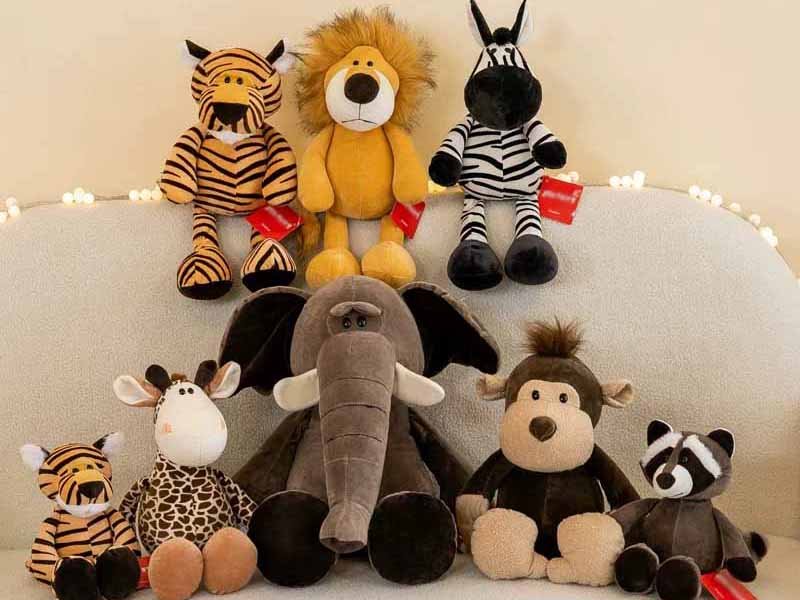
A teddy bear may be the first image that comes to mind when someone says “stuffed animal,” but the modern plush market extends far beyond bears, rabbits, and puppies. An aquarium may need an anatomically recognizable sea turtle. A children’s brand may want a washable elephant with embroidered eyes. A game studio may need an original creature translated from digital artwork into a production-ready collectible. All are plush products, yet their design, materials, safety requirements, packaging, and commercial purpose can be completely different.
A list of stuffed animals includes pets, farm animals, woodland wildlife, safari animals, marine species, birds, insects, reptiles, dinosaurs, fantasy creatures, mascots, and character-based designs. They may be classic, realistic, cartoon, kawaii, miniature, oversized, weighted, interactive, educational, collectible, or developed for babies, retailers, attractions, and licensed merchandise programs.
The useful question is not simply how many animals can be named. It is why one design works as a baby comfort toy while another belongs in a blind-box collection, zoo gift shop, museum program, or licensed character line. A fox can become a realistic wildlife model, a rounded kawaii collectible, a 7-centimeter keychain, or a sophisticated brand mascot. The animal is only the starting point; the real product emerges from the choices made afterward.
What Are Stuffed Animals Called?

Stuffed animals are soft, filled textile products shaped as animals, characters, creatures, or objects. Common names include plush toys, plushies, stuffies, soft toys, cuddly toys, and stuffed toys. The wording changes by region and audience, but commercial descriptions are usually more specific, such as animal plush, mascot plush, weighted plush, or plush keychain.
Common Terms
“Stuffed animal” remains the clearest term for a soft toy representing a recognizable animal. Bears, rabbits, dogs, cats, elephants, and dinosaurs all fit comfortably within that description. “Plush toy” covers a wider range because the product may represent a person, food, plant, logo, fantasy creature, or fictional character rather than a real animal.
“Plushie” and “stuffie” are informal terms widely used by collectors, families, artists, gaming communities, and online stores. “Soft toy” is common in the United Kingdom, Australia, and many international markets. “Cuddly toy” appears more often in consumer language than in manufacturing specifications.
Commercial teams benefit from using a precise product name. “Custom plush toy” only identifies a broad category. “Twenty-centimeter seated fox plush with embroidered eyes, short-pile fabric, and retail packaging” gives designers, engineers, and manufacturers a much clearer starting point.
Accurate naming also improves online search visibility. A page about realistic wildlife plush serves a different audience from a page about miniature kawaii keychains, even when both products represent the same animal.
Plushies and Stuffed Animals
Plushies and stuffed animals overlap, but the terms are not identical. A stuffed animal traditionally has an animal form, a sewn outer shell, and soft filling. A plushie may take almost any shape, including a mushroom, smiling cloud, coffee cup, game character, mascot, or abstract logo.
Construction often matters more than subject matter. Most products in both groups use fabric panels joined by sewing, turned right-side out, filled, shaped, closed, and finished. Facial details may be embroidered, printed, appliquéd, or formed with securely attached components where appropriate.
The word “plush” originally described a fabric with a raised pile. Modern usage is broader. A product made from minky, velboa, fleece, sherpa, faux fur, or printed polyester may still be sold as a plush toy.
For product development, broad labels should quickly give way to measurable specifications. Finished size, posture, fabric, filling, age group, target market, decoration method, packaging, and quantity all affect how a soft product must be engineered.
Regional Language
Regional wording can influence product pages, packaging, retailer listings, and search behavior. North American customers frequently search for “stuffed animals,” while “soft toys” is more familiar in many Commonwealth markets. “Plush toys” works well across manufacturing, wholesale, licensing, and international sourcing contexts.
Informal wording is useful for lifestyle content, but regulated labels and commercial documentation need greater precision. A legal product name, age grade, material description, care instruction, manufacturer information, and traceability details may be required depending on the destination market.
Search language also changes according to use. A zoo gift shop may search for “realistic animal plush.” A game studio may search for “custom character plush.” A company developing a promotional mascot may search for “custom mascot stuffed toy.” A retailer planning a collectible range may use “blind-box plush series.”
Using the language of the intended customer makes content easier to discover while helping readers identify whether a product matches their actual project.
Beyond Real Animals
Modern plush collections extend well beyond zoological subjects. Popular non-animal categories include food, plants, vehicles, planets, fantasy creatures, monsters, company logos, and licensed characters. Many are produced with the same core processes used for animal plush: pattern development, fabric cutting, embroidery, sewing, filling, shaping, inspection, and packaging.
Non-animal products can be harder to engineer because illustrations often ignore gravity, seam placement, and material behavior. A floating ribbon may require an internal support. A narrow horn may need to be enlarged. A perfectly circular character may flatten after filling unless the pattern includes enough shaping panels.
Good development protects the visual identity while adapting impossible artwork into a stable physical product. Important features may be converted into embroidery, appliqué, separate padded parts, printed details, or structured accessories.
The broad category therefore depends less on whether the subject is a real animal and more on whether a soft, filled textile construction can reproduce the intended shape reliably.
Which Animal Categories Are Most Common?

Common stuffed-animal categories include pets, farm animals, woodland wildlife, safari animals, ocean species, birds, insects, reptiles, amphibians, dinosaurs, polar animals, and fantasy creatures. Familiar animals support broad retail demand, while unusual species help museums, zoos, attractions, education programs, and specialty collections create stronger product differentiation.
Pets and Farm Animals
Dogs, cats, rabbits, horses, hamsters, guinea pigs, turtles, and parrots remain highly recognizable choices. Their familiarity makes them suitable for gifts, children’s ranges, pet-related promotions, memorial products, and breed-specific collections.
Breed details can turn a generic animal into a more distinctive product. Ear shape, muzzle length, tail position, coat pattern, leg proportion, and color placement all influence whether a dog resembles a corgi, dachshund, husky, or golden retriever. Small changes can have a large effect because customers already know how familiar pets should look.
Farm collections commonly include cows, pigs, sheep, goats, ducks, chickens, donkeys, llamas, and alpacas. A coordinated farm range can share one facial style, fabric family, embroidery language, and size system while still giving each animal a recognizable silhouette.
Commercial collections work best when animals relate to one another. A farm set may include six species in one height range. A pet range may be organized by dog breed. A spring collection may combine rabbits, lambs, chicks, and ducks. Product families usually create more merchandising opportunities than unrelated single items.
Woodland and Safari Animals
Woodland animals include bears, foxes, wolves, deer, moose, raccoons, squirrels, hedgehogs, badgers, and owls. Such species work well for outdoor brands, national parks, camping programs, conservation groups, nature education, and seasonal retail.
Safari and grassland ranges often feature lions, elephants, giraffes, zebras, rhinos, hippos, cheetahs, leopards, monkeys, and gorillas. Their strong shapes make them easy to recognize from a distance, which helps on crowded retail shelves.
Realism can vary greatly. A preschool elephant may have an oversized head, short legs, and a rounded trunk. A museum version may require more accurate ear shape, foot structure, body proportions, and color. Neither approach is automatically better. Suitability depends on audience and purpose.
Long necks, trunks, horns, antlers, and tails introduce production challenges. Narrow parts must allow enough seam allowance and filling space. Antlers may need felt, foam, embroidery, or layered fabric rather than heavily filled tubes. Product appearance should always be balanced against durability and production consistency.
Ocean, Birds, and Reptiles
Marine plush collections can include whales, dolphins, sharks, rays, octopuses, jellyfish, sea turtles, seals, crabs, starfish, seahorses, and penguins. Ocean animals are especially relevant to aquariums, coastal attractions, marine education, and environmental campaigns.
Body structures vary considerably. A shark needs stable fins and a streamlined profile. An octopus needs controlled tentacle length and attachment strength. A sea turtle requires a recognizable shell, flipper placement, and suitable top-to-bottom proportions.
Birds often depend on color placement, beak shape, wing structure, and posture. Owls, flamingos, parrots, ducks, swans, eagles, and peacocks may be developed as simplified characters or species-inspired products. Printed fabric and embroidery can reproduce feather patterns without creating too many small fabric panels.
Reptiles and amphibians include snakes, crocodiles, alligators, lizards, chameleons, frogs, toads, and salamanders. Printed surfaces work well for complex markings, while appliqué and embroidery can add scales, eyes, nostrils, and body segmentation without making the product overly rigid.
Dinosaurs and Fantasy Creatures
Dinosaurs remain popular because they combine education, adventure, and visual drama. Tyrannosaurus rex, Triceratops, Stegosaurus, Brachiosaurus, Ankylosaurus, and Velociraptor are widely recognized, while less familiar species support specialist museum and collector ranges.
Each dinosaur presents different structural issues. A T. rex may need tail weight to balance a large head. A Stegosaurus needs plates that stay upright. A Triceratops requires horns that remain visible without becoming uncomfortable or fragile. Simplification is often necessary at smaller sizes.
Fantasy creatures provide more design freedom. Unicorns, dragons, griffins, phoenixes, monsters, mermaids, and invented hybrids can combine unusual colors, metallic fabrics, wings, horns, scales, and embroidered details.
Creative freedom still needs manufacturing discipline. Wings that look elegant in artwork may droop after sewing. Very thin horns may twist. Several layers of clothing and accessories can hide the body shape. Early engineering review helps preserve the character while preventing avoidable problems during sampling and production.
| Animal category | Common examples | Often-seen size range | Common commercial use |
|---|---|---|---|
| Mini animals | Bears, rabbits, cats, bees | 3-10 cm | Keychains, blind boxes, bag charms |
| Standard animals | Dogs, foxes, elephants, dinosaurs | 15-30 cm | Retail, gifts, education |
| Medium display plush | Lions, sharks, mascots | 30-50 cm | Attractions, promotions, premium gifts |
| Large plush | Bears, whales, pillow animals | 50-100+ cm | Display, décor, event products |
| Species collections | Farm, safari, marine animals | One coordinated scale | Zoos, museums, themed retail |
| Fantasy collections | Dragons, unicorns, monsters | 10-40 cm | Gaming, animation, collectibles |
Size ranges are commercial examples rather than fixed standards. Proportion, packaging, freight, and intended use can make a smaller or larger format more appropriate.
What Plush Styles Are Available?

Plush styles include classic, cartoon, kawaii, realistic, miniature, keychain, oversized, pillow, weighted, interactive, educational, and collectible formats. Style affects pattern count, fabric choice, facial detail, filling density, stability, packaging, production time, and unit cost. The same animal can become several completely different products through changes in proportion, posture, texture, and function.
Classic and Cartoon Styles
Classic animal plush usually keeps enough natural anatomy to remain immediately recognizable. A bear may have a defined muzzle, separate ears, shaped limbs, and a sitting or standing posture. Proportions are softened, but the animal still looks familiar.
Cartoon styling exaggerates selected features. Heads become larger, legs become shorter, eyes become wider, and expressions become more dramatic. Such changes help a product stand out, but they also affect balance. A very large head may pull a seated product forward. Short legs may disappear beneath long fur. Wide smiles may distort after filling.
Pattern engineering controls those issues. Head gussets create width and forehead shape. Darts and curved seams control cheeks and muzzles. Body panels determine whether a toy sits upright or rolls to one side.
Cartoon products should be judged from several angles. A front view may look correct while the side profile appears flat. A good sample keeps the desired expression, silhouette, and posture from the front, side, back, and three-quarter view.
Kawaii and Mini Plush
Kawaii plush relies on rounded forms, compact bodies, simple expressions, and carefully controlled spacing. Small eyes, short mouths, soft colors, and limited detail create an approachable look.
Simple designs are often less forgiving than complex ones. When a face contains only two eyes and one mouth, a placement difference of 2-4 millimeters may noticeably change the expression on a small product. Embroidery registration, panel alignment, seam position, and filling pressure all require careful control.
Mini plush and keychains often range from about 3 to 10 centimeters. Their limited surface area restricts how much detail can be sewn. Tiny fingers, narrow ears, layered clothing, and complex facial markings may need to become embroidery or printed details.
Small size does not always mean low production difficulty. Miniature products can require tight sewing tolerances and more manual handling per square centimeter than larger items. Hardware also matters. Key rings, lobster clasps, cords, and attachment loops must be positioned securely without distorting the body.
Realistic and Collectible Styles
Realistic plush aims to preserve species identity through posture, body ratio, coat texture, fur direction, and natural markings. Realism does not require exact anatomical replication, but the defining characteristics should be recognizable.
Material choice carries much of the visual work. Long-pile faux fur may suit wolves, bears, or lions. Short plush can support cleaner markings for dolphins, reptiles, or farm animals. Printed fabric may reproduce spots, stripes, gradients, and complex patterns more efficiently than many separate panels.
Collectible plush prioritizes series consistency. Characters may differ in species or costume while sharing one head scale, eye style, fabric family, packaging structure, and overall visual language. Blind-box programs often use compact sizes, usually around 5-15 centimeters, so each design must remain readable at a small scale.
A collectible range also requires disciplined SKU management. Fabric colors, embroidery files, accessories, secret editions, packaging artwork, and carton assortments must be clearly separated. One incorrect accessory or color label can affect an entire set.
Weighted and Interactive Styles
Weighted plush contains controlled mass, often held in internal compartments. Weight distribution should support the intended position rather than collect in one corner. Internal bags need secure seams, suitable materials, and enough restraint to prevent shifting.
The outer pattern must account for the load. A lightly filled pillow-style body behaves differently from a compact animal carrying substantial internal weight. Stress is often highest around the belly, lower seams, and attachment points.
Interactive plush may include sound, light, vibration, movement, recording, pressure sensors, or removable modules. Electronics affect the whole design. Battery access, wiring, heat, washable parts, module placement, and hard-component contact all need review before the outer sample is finalized.
Washability must be stated honestly. A removable sound box can allow surface washing or separate cleaning, while a sealed electronic product may have stricter care limits. Clear instructions reduce misuse and returns.
| Plush style | Common size | Key material choice | Main production concern |
|---|---|---|---|
| Kawaii plush | 8-25 cm | Minky, short plush | Facial placement and symmetry |
| Mini keychain | 3-10 cm | Short-pile fabric | Small seams and hardware attachment |
| Realistic plush | 15-50 cm | Faux fur, printed velboa | Fur direction and species accuracy |
| Pillow plush | 30-80 cm | Minky, stretch plush | Even filling and panel distortion |
| Weighted plush | 20-50 cm | Durable soft fabric | Internal compartment security |
| Interactive plush | 15-40 cm | Mixed textiles | Module access and hard-part placement |
| Blind-box plush | 5-15 cm | Short plush, embroidery | Multi-SKU consistency |
| Giant plush | 60-150+ cm | Medium-pile fabric | Shipping volume and shape recovery |
Which Stuffed Animals Fit Each Use?

The best stuffed animal depends on age, environment, sales channel, handling, and emotional purpose. Baby products favor simple construction and secure details. Children’s products need durability and recognition. Adult collections may prioritize design, nostalgia, realism, or display value. Museums, retailers, attractions, brands, and licensed projects each require different levels of accuracy, packaging, and documentation.
Babies and Young Children
Products intended for babies need early decisions about age grading, materials, pile length, components, care instructions, and destination market. A product should never be considered suitable for infants merely because it feels soft.
Embroidered eyes and noses are commonly chosen to avoid separate hard facial parts. Ears, tails, wings, and clothing need broad, secure attachment areas. Filling should remain enclosed, and construction openings need reliable closure. Decorative cords, long loops, and loose accessories deserve careful review.
Washability is another practical concern. Parents may expect frequent cleaning, so fabric colorfastness, embroidery stability, filling recovery, and care-label accuracy matter. A beautiful sample that loses shape after washing can create complaints and returns.
Young children also use toys more aggressively than adults expect. Products are pulled by the ears, carried by one arm, dropped, compressed, and twisted. Good design accounts for real handling rather than display-only use.
The intended age and market should be confirmed before the sample is approved because later changes can affect facial details, seams, labels, packaging, and testing.
Older Children and Adults
Older children often respond to recognizable characters, animals with strong personalities, interactive functions, educational themes, and collectible sets. Durability remains important, but designs may include more complex embroidery, clothing, and accessories where appropriate.
Adults purchase plush for many reasons: collection, fandom, home décor, nostalgia, gifting, comfort, travel, or connection to a brand or story. Adult-focused designs can use subtler colors, premium textures, detailed costumes, display packaging, and more sophisticated expressions.
A product marketed to adults may still enter homes with children, so construction quality should not be treated casually. Collector labeling does not automatically eliminate every product-safety responsibility.
Adult collections often perform better when the product has a clear reason to exist. Limited editions, artist collaborations, licensed characters, unusual species, premium materials, or strong packaging can create perceived value. A generic animal with no story may struggle even when workmanship is good.
Education and Tourism
Museums, zoos, aquariums, national parks, farms, and visitor attractions often need animals connected to a specific place or educational subject. Species recognition matters more in such environments than in purely decorative collections.
A sea turtle should have a recognizable shell and flipper arrangement. A bee should show key visual features such as stripes, wings, antennae, and segmented body shapes. A dinosaur may need enough anatomical character to support an exhibit or learning program.
Accuracy should be matched to the audience. A preschool range may use simplified forms, while a museum store may prefer natural colors, printed markings, and informative hangtags. Educational value can also come from packaging that identifies species, habitat, conservation status, or behavior.
Tourism products gain strength through local relevance. A wildlife species native to the region, a city mascot, or an attraction-exclusive character creates a stronger souvenir than a generic animal available everywhere.
Retail and Licensed Programs
Retail programs require more than an appealing sample. Shelf dimensions, hanging options, display visibility, price tiers, barcode placement, carton quantities, packaging depth, and replenishment planning all affect commercial success.
One character may be offered in several sizes to create entry, standard, and premium price levels. A group of six animals may encourage repeat purchases. Seasonal colors can refresh a successful form without developing an entirely new pattern.
Licensed projects require tighter control of artwork, color references, proportions, expressions, costumes, logos, and packaging. Approval often involves several rounds and several stakeholders. Confidential files should be handled carefully, and production should follow the approved sample and specification set.
Multi-SKU programs need disciplined document control. Each character should have its own pattern, embroidery file, material list, measurement sheet, packaging artwork, and final reference photographs. Clear separation reduces the risk of mixing accessories, colors, or labels across the collection.
| Intended use | Common size band | Priority features | Main risk to control |
|---|---|---|---|
| Baby comfort toy | 15-30 cm | Soft fabric, embroidered details, washable design | Loose parts and unsuitable age grading |
| Children’s play plush | 15-40 cm | Durable seams, clear character, easy handling | Weak appendages and poor shape recovery |
| Adult collectible | 8-30 cm | Detailed design, packaging, series consistency | Inconsistent color or facial placement |
| Zoo or museum retail | 15-35 cm | Species recognition, educational labeling | Excessive simplification |
| Corporate mascot | 15-30 cm | Logo accuracy, brand colors, repeatability | Color mismatch and schedule delay |
| Event giveaway | 8-20 cm | Compact size, clear branding | Late artwork or hardware approval |
| Licensed character | 10-40 cm | High visual accuracy, controlled approvals | Unauthorized changes during production |
| Pillow or décor plush | 35-80+ cm | Softness, broad shape, filling uniformity | Shipping volume and deformation |
How Are Custom Stuffed Animals Made?
Custom stuffed animals are made by translating artwork or a reference object into three-dimensional sewing patterns, selecting suitable fabrics and fillings, creating embroidery or print files, developing a sample, revising proportions and details, approving a final reference, and controlling materials, sewing, filling, inspection, packaging, and shipment during production.
Artwork Review
Development may begin with a character sheet, hand drawing, digital illustration, 3D model, photograph, or physical sample. The quality of the starting information affects the speed and accuracy of the first sample.
Front, side, and back views are especially useful. A single front image may not reveal body depth, tail position, side profile, clothing construction, or the relationship between the head and torso. Engineers must otherwise make assumptions.
Important visual features should be identified early. Eye spacing, muzzle shape, ear angle, body posture, signature colors, accessories, markings, and logos may carry more character identity than small decorative details.
Artwork also needs a feasibility review. Floating shapes, extremely thin limbs, sharp corners, and layered accessories may not translate directly into sewn construction. Some elements may need enlargement, embroidery, appliqué, internal support, or simplified geometry.
A good engineering review does not remove personality. It decides which features must remain exact and which can be adapted so the product can be sewn, filled, handled, packaged, and reproduced consistently.
Pattern and Material Development
Patterns convert a flat design into fabric panels that create volume after sewing and filling. A round head may use a center gusset, side panels, chin panels, darts, or several curved sections. Small adjustments to those pieces can change forehead height, cheek width, muzzle projection, or eye position.
Fabric stretch must be considered. A pattern that works in stable velboa may become wider or softer in highly elastic minky. Long-pile fur can hide seams and create realism, but it may also cover embroidery and make small forms appear less defined.
Pile direction should be marked before cutting. Reversed pieces may reflect light differently and make a product look patchy even when the fabric color matches.
Decoration methods are chosen according to artwork and use. Embroidery gives clean, durable detail. Appliqué adds texture and color blocking. Printing handles gradients and complex markings. Separate fabric panels create structural color changes but increase pattern count and sewing operations.
Material choice should support appearance, hand feel, durability, cost, care requirements, and production repeatability at the same time.
Sampling and Revision
The first sample is a physical test of the pattern, materials, filling, decoration, and structure. It should be reviewed from several angles, not only through one front-facing photograph.
Key checks include overall silhouette, head-to-body ratio, posture, facial placement, fabric color, pile direction, embroidery density, accessory position, filling firmness, seam smoothness, and finished dimensions.
Feedback becomes more useful when it is measurable. “Make the face sweeter” leaves room for interpretation. “Move the eyes 3 millimeters lower, widen the muzzle by 5 millimeters, reduce forehead height, and rotate the ears outward” creates a clearer revision path.
Standard plush samples at Delsney generally require 5-7 days, while designs with complex structures, accessories, or functions may require 7-15 days. Final timing depends on material availability and revision scope.
Sampling should continue until the product is both visually acceptable and suitable for repeat production. A beautiful sample that relies on unusual hand adjustments may create inconsistency during larger runs.
Bulk Production Control
After approval, the final sample becomes the main physical reference. Supporting records may include pattern files, embroidery files, fabric codes, color references, measurements, filling requirements, accessory placement, packaging artwork, and inspection criteria.
Production generally moves through material preparation, cutting, embroidery or printing, sewing, turning, filling, shaping, hand finishing, inspection, labeling, and packaging.
Sample-to-production consistency depends on controls at each stage. Cutting errors change shape before sewing begins. Embroidery shifts affect expression. Uneven filling changes posture. Incorrect labels can make otherwise acceptable goods unusable for the intended market.
Delsney’s documented resources include 18+ years of plush manufacturing experience, 500+ skilled staff, 18 production lines, 25+ engineers, 10+ designers, and 20+ quality-control personnel. Standard bulk production is generally 20-30 days after sample approval, subject to materials, quantity, packaging, testing, and production scheduling.
The production scale matters only when supported by clear specifications and inspection discipline. Capacity without control does not guarantee repeatability.
What Should Brands Check Before Production?

Before production, brands should confirm product ownership, target age, destination market, size, materials, filling, components, functions, quantity, safety requirements, packaging, labels, inspection standards, shipping terms, and launch deadline. A fully approved sample and documented specifications reduce the risk of inconsistent goods, repeated changes, failed packaging, and avoidable delivery delays.
Product Specifications
A reliable quotation requires more than an image. Finished size, posture, quantity, target market, target age, fabric preference, filling, decoration, accessories, packaging, and deadline all influence cost and feasibility.
Size must be defined carefully. A “20-centimeter plush” may refer to standing height, sitting height, body length, or total length including ears or tail. The measurement method should be written and shown on a drawing where possible.
Quantity affects material purchasing, embroidery setup, printing, packaging, labor planning, and unit cost. Multi-SKU orders also need the quantity per design and per color.
Color references should use physical swatches, standardized color systems, or approved digital references followed by material confirmation. Screen colors alone are unreliable because monitors, lighting, and fabric texture change visual appearance.
Brands should also identify which features are essential. When cost adjustment becomes necessary, a clear priority list helps preserve character identity while simplifying less important details.
Safety and Compliance
Safety planning starts with the sales market and intended age group. Products for the United States may require assessment under applicable CPSIA and ASTM F963 requirements. European-market products may need evaluation against relevant EN 71 requirements and related conformity obligations. Other regions may have additional chemical, labeling, language, or importer requirements.
Testing should be planned for the actual design. Material declarations alone cannot prove that a finished product meets every applicable requirement. Construction, component access, seam strength, cords, batteries, magnets, coatings, fillings, and packaging warnings can all affect assessment.
A manufacturer may support material review, sample preparation, technical files, label planning, and coordination with independent laboratories. Final responsibilities should be confirmed between the brand, importer, laboratory, and supplier.
Compliance discussions should happen before sample approval. Replacing plastic eyes with embroidery, changing a battery compartment, removing a cord, or revising a care label after production has begun can create major delays and rework.
Cost and Quality
Custom plush cost is influenced by size, fabric consumption, pattern complexity, number of colors, embroidery area, printing, clothing, accessories, filling weight, functions, packaging, testing, quantity, inspection, and freight.
A small item is not always cheaper than a larger one. A 12-centimeter character with many tiny panels, detailed clothing, and dense embroidery may require more labor than a simple 25-centimeter pillow animal.
Quality planning should identify measurable checkpoints:
- Finished dimensions and tolerances
- Fabric color and pile direction
- Embroidery size and position
- Seam condition and attachment strength
- Filling weight and distribution
- Facial symmetry and posture
- Function performance
- Label, barcode, and packaging accuracy
- Carton count and shipping marks
Final inspection is more reliable when inspectors have an approved sample, written specification, measurement sheet, packaging reference, and acceptance criteria. Delsney records 100% pre-shipment inspection as part of its standard quality process.
Inquiry Checklist
A complete inquiry allows engineering, costing, sampling, compliance, and scheduling teams to review the same project information. Missing details usually lead to provisional pricing, repeated clarification, or changes after sampling begins.
| Information | Practical detail to provide | Why it matters |
|---|---|---|
| Artwork | Front, side, back, colors, close-up details | Reduces assumptions during pattern development |
| Finished size | Exact measurement method in centimeters | Affects cost, pattern, packaging, and freight |
| Quantity | Total quantity and units per design | Supports material and production planning |
| Target market | Country or region of sale | Guides testing, labels, and documentation |
| Target age | Baby, child, teen, adult collector | Influences construction and safety review |
| Fabric | Minky, velboa, faux fur, sherpa, or open choice | Controls appearance, texture, and cost |
| Filling | Standard fiber, weighted filling, special structure | Affects softness, balance, and shipping weight |
| Decoration | Embroidery, print, appliqué, clothing, accessories | Determines tooling and labor |
| Packaging | Polybag, hangtag, gift box, window box, blind box | Affects presentation, cost, and carton planning |
| Deadline | Launch date and required arrival date | Determines sample, production, and shipping schedule |
| Compliance | Known test or documentation requirements | Prevents late redesign |
| Shipping | Destination, trade term, warehouse requirements | Supports landed-cost planning |
For the fastest technical review, provide front, side, and back views where available. Mark important colors, materials, logos, expressions, and accessories. State whether dimensions refer to sitting height, standing height, body length, or total length including ears or tail. Small wording differences can create large sample differences.
Turn Your Animal or Character Into a Production-Ready Plush Product
Delsney is a custom plush manufacturer in Guangdong, China, supporting animal plush, character plush, mascot plush, baby plush, realistic stuffed animals, weighted products, interactive designs, collectible series, keychains, pillows, private-label packaging, and global delivery. Send your artwork, target size, quantity, sales market, age group, materials, functions, packaging requirements, compliance needs, and delivery date for a project review. The standard minimum order quantity is 500 pieces.