Skip to content
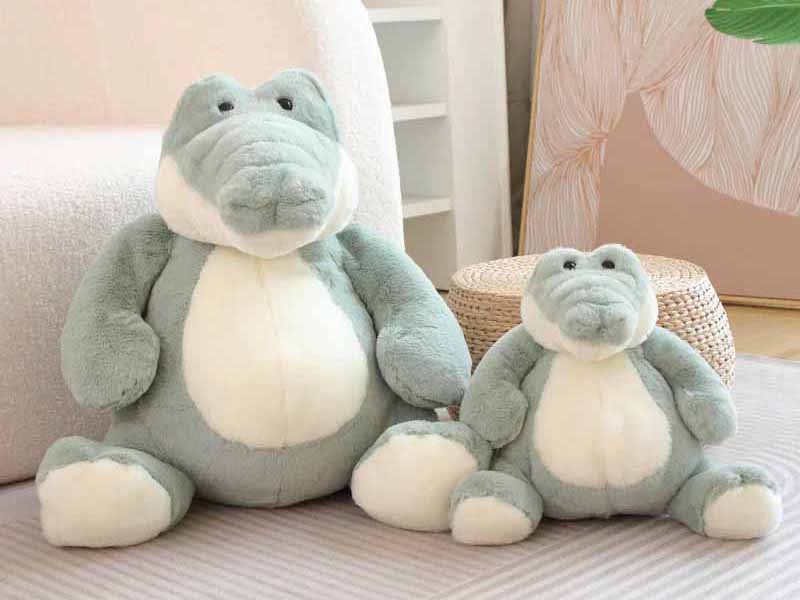
Plush toy pricing looks simple until two products with the same height receive completely different quotations. One may be a rounded animal made from a stock fabric with three embroidered details and a protective bag. The other may be a licensed character with layered facial panels, custom colors, removable clothing, a window box, market-specific labels, and a fixed retail launch date. The dimensions are similar, but the engineering, labor, compliance, packaging, and delivery risks are not.
A plush toy has no universal price. Retail prices reflect branding, distribution, and seller margins, while custom factory prices depend on size, materials, filling, design complexity, quantity, packaging, testing, and delivery terms. An accurate custom price is possible only after the manufacturer reviews a defined specification and quotation scope.
For a commercial team, the most important number is rarely the first unit price shown in a spreadsheet. It is the cost of receiving a sellable product that matches the approved sample, meets the intended market requirements, arrives in the correct packaging, and reaches the warehouse on schedule. Imagine approving the lowest offer for 10,000 mascot plush toys, then learning that facial embroidery, barcode labels, testing, and destination delivery were excluded. A price that looked attractive can become the most expensive decision in the project. The sections below explain how to compare prices on equal terms, where costs really come from, and what information produces a dependable quotation.
What Is the Average Plush Toy Price?

There is no single average plush toy price. Retail prices include distribution, marketing, platform fees, and seller margins, while custom factory prices depend on dimensions, materials, filling, design complexity, order volume, packaging, testing, and delivery terms. A useful comparison begins with a defined product specification and an identical quotation scope.
Retail and Factory Prices
A retail price answers a consumer question: how much must be paid to take a finished product home? A factory quotation answers a different question: how much will it cost to manufacture the agreed product under stated commercial terms? Retail prices may contain importer margins, distributor margins, retailer markup, marketplace commissions, warehousing, fulfillment, advertising, licensing royalties, returns, taxes, and promotional discounts. Those layers do not reveal the actual manufacturing cost.
A factory price may cover fabric, filling, cutting, embroidery, sewing, assembly, shaping, inspection, and basic packing. Premium boxes, laboratory testing, export charges, international freight, customs duty, and destination delivery may be separate. Two numbers can therefore look far apart while both remain reasonable within their own scope.
The safest comparison is a normalized comparison. Every supplier should quote the same dimensions, construction, material basis, quantity per design, packaging format, testing scope, destination, and Incoterm. An EXW figure should never be compared directly with a DDP delivered figure as though they represented the same service.
| Price Level | Main Coverage | Questions to Confirm |
|---|---|---|
| Retail price | Finished product, distribution, selling costs, and margin | Is it discounted, licensed, or promotion-driven? |
| EXW factory price | Finished goods available at the factory | Who pays pickup, export handling, and freight? |
| FOB price | Production and agreed origin-port responsibilities | Which port and origin charges are included? |
| DAP price | Delivery to the named destination | Are duties and import taxes excluded? |
| DDP price | Broader door-delivery scope under agreed terms | Which customs and local charges are covered? |
| Landed cost | Product, packaging, freight, import, and delivery expenses | What is the cost per sellable unit at the warehouse? |
Size and Construction
Larger plush toys generally use more fabric and filling, but price does not increase in a perfectly straight line. A 40-centimeter plush is not automatically twice the manufacturing cost of a 20-centimeter version. Pattern efficiency, shape, thickness, limb design, fabric width, filling density, and carton volume all change the calculation.
A round pillow-style plush may use only a few broad panels. A smaller character can include a separate muzzle, layered ears, fingers, shoes, clothing, wings, horns, and a long tail. The smaller item may consume less fabric while requiring much more cutting, alignment, sewing, turning, shaping, and inspection labor.
Finished dimensions also affect logistics. Plush products are often light in actual weight but bulky in shipping space. Express and air services commonly charge according to the higher of actual weight and dimensional weight. A modest increase in factory cost can therefore create a much larger freight increase if the product or retail box occupies substantially more volume.
Dimensions should be stated precisely: standing height, seated height, width, depth, body length, tail length, and whether ears, hats, or accessories are included. Terms such as small, medium, and large are not measurable enough for engineering, material planning, or carton calculations.
Product Type and Positioning
Animal plush, character plush, keychain plush, baby plush, blind-box collectibles, weighted plush, and interactive plush all use different cost structures. A basic animal may need one or two fabrics, standard polyester filling, embroidered eyes, and simple packing. A detailed character may need precise expression control, multiple colors, clothing, appliqué, denser embroidery, and tighter approval tolerances.
A plush keychain uses less material, but small scale creates its own production difficulty. Narrow seam allowances, tiny facial details, metal attachments, and tight alignment tolerances can make a 7-centimeter character harder to reproduce consistently than a 20-centimeter rounded animal. Weighted products need secure internal compartments and controlled filling weights. Interactive products may include sound modules, lights, sensors, battery access, function checks, and additional safety planning.
The right benchmark is therefore not a universal average. It is a comparable product with similar size, construction, market position, order quantity, packaging, and compliance scope. A promotional giveaway, licensed collectible, infant comfort toy, and premium mascot should not share one target price simply because all four are made from soft fabric.
Branded and Licensed Products
Branded and licensed plush products often cost more to develop because greater commercial value and greater approval risk are attached to the final appearance. The product may require controlled colors, repeated artwork reviews, approved embroidery files, legal notices, packaging approval, territory-specific labels, and formal confirmation samples.
Small visual differences can matter. An eye placed only a few millimeters too high may make a friendly character look surprised. A muzzle with the wrong projection can change the entire silhouette. In an authorized IP project, these are not cosmetic opinions; they are approval issues that may stop production or delay a launch.
The higher retail price of a branded plush does not mean the factory receives the entire premium. Licensing, marketing, distribution, platform costs, and retail margins may account for much of the difference. For manufacturing purposes, the real questions are how accurately the design must be reproduced, how many approval stages are required, and whether the approved appearance can be maintained across the bulk order.
Which Factors Affect Plush Toy Cost?

Plush toy cost is driven by the complete specification rather than one visible feature. Dimensions, pattern count, fabric, pile direction, filling, embroidery, printing, accessories, packaging, quantity, testing, and delivery requirements all contribute. A small design detail can become expensive when its material and labor must be repeated across thousands of units.
Fabric and Filling
Fabric affects appearance, softness, cutting efficiency, sewing behavior, durability, supply stability, and price. Short plush, minky, velboa, faux fur, sherpa, stretch fabric, and printed textiles behave differently in production. Long-pile fabric may look premium, but it commonly requires directional cutting so that all pattern pieces face the same way. This reduces cutting yield and can add grooming work around the eyes, mouth, seams, and embroidery.
Stretch fabric can produce smooth rounded forms, yet it may distort during sewing if pattern design and seam control are weak. Thick-backed material can support structure but become difficult to turn through narrow limbs. Printed fabric may replace separate appliqué operations, although print minimums, color consistency, and repeat-order availability must be considered.
Filling changes both touch and shape. A lightly filled product feels soft and relaxed. A denser product appears more structured but uses more material, places more pressure on seams, and may occupy more carton space. Weighted pellets, bean bags, shaped foam, recycled filling, and internal supports require different handling and construction.
The least expensive fabric per meter does not always produce the lowest finished-product cost. Poor cutting yield, shedding, slow sewing, unstable stretch, or inconsistent batches can remove the original saving. Material selection should balance appearance, hand feel, sewing stability, market suitability, supply continuity, cutting yield, and repeat-order availability.
| Cost Driver | Lower-Complexity Option | Higher-Complexity Option | Main Cost Effect |
|---|---|---|---|
| Fabric pile | Short plush or velboa | Long faux fur or mixed pile | Material cost, cutting waste, grooming labor |
| Fabric color | Available stock color | Custom-dyed or printed color | Minimum purchase, sampling, lead time |
| Filling | Standard polyester fiber | Weighted, recycled, shaped, or mixed filling | Material handling and construction |
| Pattern structure | Few broad panels | Many small curved panels | Cutting, sewing, alignment, inspection |
| Face details | Simple embroidery | Dense multicolor embroidery and appliqué | Programming, stitch time, positioning |
| Accessories | Fixed soft components | Metal, plastic, electronic, or removable parts | Purchasing, assembly, testing |
| Packaging | Protective individual bag | Printed box, insert, or blind-box system | Printing, assembly, volume, minimums |
Pattern and Sewing Complexity
Pattern engineering determines how a flat design becomes a three-dimensional product. The number of pattern pieces, seam shapes, turning openings, fabric combinations, and attachment points all influence labor. A rounded body with four or six broad panels is generally easier to manage than a character with separate cheeks, muzzle sections, eyelids, ears, horns, fingers, shoes, and layered clothing.
Every piece must be cut, sorted, aligned, sewn, turned, filled, shaped, and inspected. A small operation becomes meaningful at scale. An additional 30 seconds repeated across 10,000 units equals more than 83 production hours. Five extra operations of similar duration add more than 400 labor hours to one production program.
Complex designs also create more variation points. Narrow limbs can twist during sewing. Striped fabrics need alignment. Symmetrical ears can sit at different angles. Clothing can pull a body out of shape. The manufacturer may need templates, positioning marks, fixtures, in-line checks, or tighter operator training to keep production consistent.
Good cost engineering does not simply delete visible features. It looks for hidden complexity that customers do not value. Internal panels may be combined, a difficult layered component may become embroidery, or a removable garment may be attached without changing the intended look. Any simplification should be confirmed on a physical sample because a cheaper construction is not useful when it changes the expression, posture, softness, or identity.
Embroidery and Accessories
Embroidery pricing depends on stitch count, density, thread changes, number of placements, backing material, and machine time. A small eye filled with dense stitching can take longer than a larger open-line design. Large embroidered areas may stiffen soft fabric, while excessive density can cause puckering on stretchy or high-pile materials.
Facial placement is as important as stitch count. Embroidery is commonly completed on flat fabric panels before sewing because that is efficient and repeatable. The final expression, however, still depends on how those panels are joined, filled, and shaped. A technically accurate file can look wrong when the surrounding pattern is not controlled.
Accessories create both direct and indirect cost. Metal rings, plastic eyes, magnets, sound modules, batteries, zippers, ribbons, molded parts, removable clothes, and weighted inserts must be sourced, checked, assembled, and inspected. A component costing only a few cents may require reinforcement, manual installation, function testing, special packing, or an additional compliance review.
The commercial question is whether each accessory improves recognition, play value, display value, or selling price. Decorative parts with little customer value are often better optimization targets than core facial features. For products intended for young children, accessory decisions should be reviewed early because age grading can change construction, testing, and labeling requirements.
Packaging, Testing, and Delivery
Packaging is part of the product system. An individual protective bag, printed hang tag, woven label, care label, barcode, gift box, window box, blind-box carton, insert, display tray, and master carton each add material and handling. Printed packaging may have its own minimum production quantity. A six-character collection with six boxes can cost more than six characters using a shared box structure with variable labels.
Testing depends on the intended market, user age, materials, design, and accessories. A basic embroidered plush and an electronic sound toy do not follow the same evaluation plan. Laboratory charges may apply to the product or test program rather than to each unit, so the effective cost per piece usually falls as the order quantity rises.
Target markets can also change label content, warning text, tracking information, importer details, and language requirements. Late changes are expensive because labels, packaging, accessories, or construction may need to be revised after sampling. The manufacturer should support compliance preparation and third-party testing, but should not promise that every unreviewed design will automatically pass every test.
Delivery can materially change total cost. Plush toys are soft and lightweight, yet they may occupy substantial space. The most useful review separates factory cost, packaging cost, testing, origin charges, international freight, import costs, and destination delivery. A low factory price can become a high landed cost when the product uses inefficient packaging or requires urgent air shipment.
How Does Quantity Affect Unit Price?

Higher quantities usually reduce unit price because development, setup, sourcing, embroidery programming, production preparation, and documentation are spread across more pieces. Material purchasing and line efficiency may also improve. Savings are not unlimited because fabric, filling, labor, packaging, inspection, freight, and compliance remain real costs at every volume.
Fixed and Variable Costs
Custom plush manufacturing includes fixed, semi-fixed, and variable costs. Fixed or semi-fixed work may include design review, pattern development, prototype engineering, embroidery digitizing, material searches, color approval, packaging preparation, line setup, and production documentation. Many of those activities take place whether the order contains 500 pieces or 5,000 pieces.
Variable costs increase with each unit. Fabric, filling, thread, labels, accessories, sewing labor, packaging, inspection, and freight remain tied to production quantity. As volume grows, shared preparation costs are divided across more sellable units, which is one reason unit price normally decreases.
The table below is an illustration of cost allocation, not a standard industry fee. If a project carried $1,500 in shared development and preparation work, that amount would add $3.00 per unit at 500 pieces, $1.50 at 1,000 pieces, and $0.30 at 5,000 pieces. The manufacturing materials and labor for each unit would still remain.
| Order Quantity | Illustrative Shared Cost | Shared Cost per Unit | Commercial Meaning |
|---|---|---|---|
| 500 pieces | $1,500 | $3.00 | Lower inventory commitment, higher setup allocation |
| 1,000 pieces | $1,500 | $1.50 | Better absorption of preparation work |
| 2,500 pieces | $1,500 | $0.60 | Stronger unit economics |
| 5,000 pieces | $1,500 | $0.30 | Efficient allocation when demand is proven |
| 10,000 pieces | $1,500 | $0.15 | Low shared-cost impact, high inventory exposure |
Volume savings should always be compared with inventory risk. Saving a few cents per unit does not create value when thousands of products remain unsold, become outdated, or require discounting and storage.
MOQ and Material Minimums
MOQ is the minimum quantity at which a factory can source materials, organize production, control quality, and complete the project at a workable commercial level. It is not only a sales rule. It reflects setup time, supplier minimums, cutting waste, line changeovers, packaging preparation, and inspection resources.
The factory’s finished-product MOQ is only one part of the equation. Fabric mills, printers, box suppliers, woven-label producers, electronic-module suppliers, and hardware vendors can each have separate minimums. A project may require 500 finished toys but enough custom-dyed fabric for a larger theoretical quantity. The unused balance still has a cost and must be stored, allocated, or avoided through an alternative material choice.
Multi-color collections create additional minimums. Four characters using four custom fabric colors may require four separate material programs rather than one combined purchase. The total order may appear large while the quantity per color remains small.
Delsney’s standard MOQ begins at 500 pieces per design. That volume can be practical for a new character, seasonal concept, event mascot, crowdfunding launch, or commercial online test. It should not be expected to carry the same unit economics as a stable 10,000-piece reorder, particularly when the project uses custom colors, special parts, or premium packaging.
Multi-SKU Programs
A collection containing several characters should be priced by SKU, not only by total quantity. An order of 6,000 pieces may contain one character at 6,000 units or twelve characters at 500 units each. The second program requires far more patterns, samples, embroidery programs, color controls, packaging versions, production changeovers, inspection records, and carton labels.
Shared components can improve economics. A collection may use the same filling, base fabric, care label, keyring, box structure, and master carton. Shared elements reduce sourcing complexity and approval work. Other elements remain unique: facial embroidery, clothing, character colors, dimensions, printed artwork, and accessories usually need separate control.
Blind-box programs add assortment management. The manufacturer must control quantity by character, hidden-edition ratios where applicable, inserts, sealed individual boxes, display cartons, and case assortments. A correct overall quantity is not sufficient when the assortment inside each display is wrong.
A practical quotation should show units per SKU, shared and unique materials, packaging versions, sample count, assortment ratio, and any supplier minimums. Collection-level engineering can reduce cost without making every character visually identical.
Repeat Orders and Forecasts
Repeat orders may be more efficient when the approved sample, patterns, embroidery programs, material references, packaging files, and inspection standards remain unchanged. The development team already understands the design, the sewing team knows the difficult operations, and quality staff have established critical checkpoints.
A repeat order does not guarantee the same price indefinitely. Fabric, labor, currency, packaging materials, accessories, freight, and order volume can change. A second order for 1,000 pieces will not necessarily match the unit economics of an original 10,000-piece run.
Forecasts help with material and capacity planning, but they should be realistic. Inflated projections can lead to unnecessary material commitments. Late volume increases can create shortages, supplier delays, or rushed production. The confirmed order quantity should determine the commercial quote, while forecasts inform long-term planning.
Reliable repeat production depends on controlled records: the approved reference sample, pattern files, embroidery programs, fabric codes, color references, filling requirements, labels, packaging specifications, and inspection criteria. A repeat order should reproduce an approved standard rather than rely on memory or a few old photographs.
What Does a Custom Plush Quote Include?

A complete custom plush quotation should identify the product, dimensions, quantity per SKU, materials, filling, workmanship, accessories, packaging, sample fee, lead times, testing scope, shipping basis, trade term, payment terms, and validity period. A unit price without these details is difficult to compare and likely to change after development begins.
Product and Manufacturing Scope
The quotation should describe the exact product being priced. ‘Custom plush toy, 20 cm’ is not enough. A useful scope identifies the product type, measurement method, body proportions, fabric types, colors, filling density, embroidery areas, printed details, accessories, clothing, labels, and individual packaging.
The quote should also state whether pricing is based on customer artwork, a physical reference, an early concept, or an approved prototype. A preliminary figure based on one front-view image contains more uncertainty than a quotation based on a confirmed sample.
Workmanship details matter. Embroidered eyes and plastic safety eyes do not carry the same material, labor, or age suitability. An attached scarf and a removable scarf require different sewing and inspection. A printed mouth and a dense embroidered mouth create different machine time and visual results.
Soft products naturally have some variation, but key dimensions, embroidery placement, filling weight, accessory position, and label location should still be controlled. A clear scope protects both parties: the brand knows what it is purchasing, and the factory knows which construction and quality level the price must support.
Samples and Development
Sample fees are commonly separated from bulk unit pricing because prototype work does not benefit from mass-production efficiency. A sample maker may interpret artwork, create the first pattern, search for several fabrics, prepare embroidery files, cut components manually, sew one unit, adjust filling, photograph the result, and revise construction.
The first sample is often both a product and an engineering experiment. A flat drawing does not show how far a muzzle should project, how the head balances on the body, how a tail supports posture, or how much filling creates the intended expression. Those decisions must be tested physically.
A sample quotation should state the number of prototypes, revision policy, material basis, packaging scope, courier cost, and expected schedule. Standard sample development at Delsney generally takes 5-7 days. Products with complex structures, electronics, molded parts, or difficult accessories commonly require 7-15 days. Standard bulk production generally takes 20-30 days after sample approval, subject to material readiness, quantity, packaging, testing, and scheduling.
The bulk unit price should be reconfirmed after the final sample when the approved construction differs from the early artwork-based estimate. Sample development is therefore not the price of one retail toy; it is an investment in design confirmation, production feasibility, and risk control.
Packaging, Testing, and Logistics
A quotation should clearly separate included and excluded packaging. Basic packing may mean one toy in a protective bag inside a master carton. A retail-ready program may require a hang tag, woven label, care label, barcode, printed box, insert card, tamper seal, display tray, inner carton, master carton markings, and pallet labels.
Testing should be described as included, excluded, estimated, or pending laboratory confirmation. The required scope depends on sales country, intended age group, product category, materials, and accessories. Delsney supports compliance preparation for requirements such as EN71, ASTM F963, CPSIA, and CE, and can coordinate third-party testing according to the agreed project plan. Passing results should never be guaranteed before the actual design and production-representative samples are assessed.
Shipping terms require the same clarity. EXW, FOB, DAP, and DDP cover different responsibilities, and the named location is essential. Early freight estimates should state whether they are based on projected cartons or confirmed packed cartons. The final shipment volume may change after filling density and retail packaging are approved.
A transparent quotation separates product cost, packaging, sample development, testing, origin charges, international freight, duties where included, and destination delivery. This makes supplier comparisons, budget approvals, and repeat orders much easier.
Terms and Assumptions
Every quotation rests on assumptions. Important terms include currency, price validity, payment schedule, MOQ, quantity per SKU, sample approval, lead-time starting point, production tolerance, inspection basis, shipping term, and responsibility for customs documentation.
Lead time commonly begins only after several conditions are met: the final sample is approved, the deposit is received, artwork and packaging files are confirmed, and key materials are available. Counting production time from the date of the first inquiry creates an unrealistic schedule.
Price validity matters because materials, labor, exchange rates, packaging, and freight can change. Design revisions also require requotation. Increasing a product from 20 to 25 centimeters, adding clothing, changing the fabric, increasing embroidery coverage, changing a box, or reducing the quantity alters the cost model.
A good quotation does not need to be unnecessarily complicated. It does need to make the commercial boundaries clear enough that no one later asks whether the retail box, safety testing, origin charges, or door delivery were included.
How Can Buyers Reduce Plush Toy Costs?
Plush toy costs can be reduced through simpler hidden construction, practical materials, controlled embroidery, shared components, efficient packaging, and better freight planning. The safest savings protect character identity, seam strength, safety, and production consistency. Cutting essential quality controls may lower an early quote while increasing rework, delays, returns, and compliance risk.
Simplify Without Losing Character
The best cost-reduction work begins before the final sample is approved. A manufacturing engineer can separate high-value details from low-value complexity. The eyes, mouth, silhouette, signature colors, and recognizable accessories may be essential. An extra hidden seam, layered internal panel, or difficult removable part may contribute little to customer appeal.
Practical changes can reduce repeated labor. Hidden pattern pieces may be combined. Separate fabric layers may become embroidery or appliqué. A removable garment may be securely attached. Very small fingers may become a mitten-style shape. Several nearly identical colors may be consolidated into one approved shade.
No change should be made only because it is cheaper. Combining facial panels may flatten the cheeks. Removing support may make the toy lean. Replacing a textured fabric part with embroidery may alter the hand feel. A cost-saving prototype should be compared with the original for recognition, expression, softness, balance, durability, and retail presentation.
A product that costs less but no longer looks or feels like the intended character is not optimized. It is simply a weaker product. The goal is to remove cost customers do not value while preserving the features that drive recognition and purchase.
Control Materials and Embroidery
Material savings often come from better allocation rather than choosing the cheapest fabric everywhere. Premium faux fur may be reserved for a mane, tail, or outer ears, while a stable short plush is used across larger body panels. Available stock colors may replace a custom-dyed shade when the visual difference is acceptable. Several characters may share the same base fabric and filling.
Fabric width and cutting yield should be reviewed. A slightly higher-priced fabric with better usable yield can cost less per finished toy than a cheaper material that creates significant directional waste. Stable supply can also be more valuable than a low initial price when the product is expected to reorder.
Embroidery should concentrate on details customers notice. Eye shape, eyebrow angle, mouth position, and signature markings deserve precision. Large hidden fills, excessive layering, minor color shades, and unnecessarily dense backgrounds are better optimization targets. An experienced embroidery technician may reduce thread changes, overlapping stitches, and invisible underlayers without weakening the expression.
Material and embroidery choices should be confirmed on a physical sample because pile height, stretch, backing thickness, thread tension, and filling pressure affect the final appearance. Spreadsheet savings are not real savings until the approved sample still meets the visual and tactile target.
Standardize Packaging and Components
Standardization can create meaningful savings across a multi-SKU collection. Several characters may share the same box dimensions, inner tray, care label, metal attachment, master carton, and general packaging layout. Variable character names, barcodes, or colors can be managed through labels or small artwork panels rather than entirely separate packaging structures.
A shared box format reduces printing setups, packaging minimums, storage locations, and packing instructions. It also makes carton planning more predictable. Special finishes such as foil, embossing, spot coating, windows, ribbons, and magnetic closures should be selected according to actual sales value because every feature adds material, assembly, inspection, and freight volume.
Component standardization can extend beyond packaging. Shared keyrings, sound modules, stuffing specifications, internal weights, care labels, and fabric bases simplify sourcing and reduce replacement risk. The visible artwork, face, color story, and character identity can remain unique while hidden systems stay consistent.
Packaging should protect the toy without unnecessary empty space. Oversized boxes increase freight and allow movement during transit. Boxes that are too tight can crush the product or distort the face. A packaging prototype should be checked with the final filled sample, not only with an early soft prototype.
Optimize Landed Cost
The lowest factory price is not always the lowest delivered cost. A cheaper filling may require a larger carton because the toy cannot compress safely. A low-cost box may use inefficient dimensions. One supplier may quote EXW while another includes origin handling and export preparation.
Landed-cost planning should examine product price, packaging volume, carton utilization, freight method, import costs, warehousing, and damage risk together. Compression can reduce volume for suitable products, but it must be tested. Long-pile fabric, structured faces, internal supports, dense embroidery, and premium retail presentation may not recover well after heavy vacuum packing.
A carton trial should record pieces per carton, carton dimensions, net weight, gross weight, and product condition after unpacking. Small adjustments in folding position, stuffing density, bag size, or box dimensions can create substantial savings across hundreds of cartons.
Delivery planning matters. Sea freight normally suits larger programs with adequate lead time. Air freight can be justified for a fixed launch or high-margin product. Split shipping can move a small urgent quantity by air and the balance by sea. Cost control is strongest when manufacturing and logistics decisions are made together rather than after the goods are finished.
What Is Needed for an Accurate Quote?
An accurate quotation requires clear artwork, measurable dimensions, quantity per SKU, target market, intended age group, materials, filling, embroidery, accessories, packaging, testing needs, delivery deadline, destination, and preferred trade term. Missing details force the manufacturer to make assumptions, and every incorrect assumption can lead to a later price revision.
Artwork and Product Details
Useful artwork shows more than a front view. Front, side, and back views help the engineer understand body depth, ear angle, tail position, clothing, rear markings, and how the character should sit or stand. A three-quarter view can clarify facial projection and the relationship between the muzzle, cheeks, eyes, and head.
Color references should be supplied when visual consistency matters. Pantone references, approved swatches, digital color codes, and previous product samples can all help, although fabric color should ultimately be confirmed physically because screens do not reproduce pile, texture, and dye behavior accurately.
The design package should identify features that cannot change: a signature eye shape, head-to-body ratio, logo position, accessory, or color block. Other details may remain open to engineering adjustment. Useful files can include AI, PDF, PNG, JPG, 3D models, technical drawings, hand sketches, photographs, or a physical reference sample. Vector artwork is especially helpful for logos and embroidery.
The product category should be stated clearly. A mascot plush, infant comfort toy, collectible keychain, weighted animal, and sound-enabled character require different development decisions. The buyer should also confirm that it owns or controls the rights needed to manufacture protected artwork or characters.
Measurements and Quantity
Measurements should be specific enough to reproduce and inspect. For a standing character, provide overall height and state whether ears, hats, or hair are included. For a seated plush, provide seated height. For a pillow, provide length, width, and thickness. For a keychain, identify body height separately from the chain and ring.
Width and depth are important because two products with the same height can use very different amounts of fabric and filling. If a character has an oversized head, long tail, wide wings, or a thick seated body, those features should be included in the measurement sheet.
Quantity should be stated per SKU. A request for 5,000 pieces is incomplete when the order contains ten characters. A useful breakdown might show Character A at 1,000 pieces, Character B at 1,000, Character C at 500, and so on. This allows the manufacturer to assess separate patterns, fabrics, embroidery, packaging, and material minimums.
Forecasts may be provided separately from committed quantities. A planned reorder helps with capacity and material discussions, but the actual confirmed volume should determine the commercial quotation. The standard MOQ of 500 pieces per design should be considered when planning character count and packaging versions.
Market, Age, and Compliance
The intended market and age group should be disclosed before sampling. A product intended for infants requires different decisions from an adult collectible. Plastic eyes, buttons, magnets, long cords, accessible filling, batteries, and detachable accessories may create different design, testing, and labeling considerations.
The manufacturer needs the sales country or region because label language, warning text, tracking information, importer details, documentation, and test planning can vary. Retail channels matter as well. Amazon programs may need FNSKU labels and carton rules. Chain retailers may request specific barcodes, carton markings, inspection procedures, or delivery appointments. Licensed programs can require legal notices and packaging approval.
Calling a product a collectible does not automatically remove every safety or labeling obligation. Product design, presentation, intended use, age grading, and local rules all influence the applicable requirements. The safest approach is to identify the intended user, market, and sales channel at the start.
Late compliance changes can force new materials, revised accessories, packaging updates, another prototype, or additional testing. Early disclosure allows engineering and compliance planning to happen together instead of treating testing as a final administrative step.
Quote Checklist
A complete inquiry allows the manufacturer to review feasibility and price the real project instead of a generic concept. It also creates the opportunity to identify risky details, suggest practical materials, reduce avoidable complexity, and estimate packaging and delivery more accurately.
| Required Information | Useful Specification | Why It Affects Price |
|---|---|---|
| Product type | Character, mascot, keychain, baby, weighted, or interactive | Determines construction and testing approach |
| Artwork | Front, side, back, colors, logo files, key details | Reduces assumptions and sample revisions |
| Finished dimensions | Height, width, depth, seated or standing method | Determines fabric, filling, and carton volume |
| Quantity | Units per SKU and total units | Affects setup allocation and material purchasing |
| Target market | US, EU, UK, Australia, Japan, or other region | Influences labels, testing, and documentation |
| Intended age | Infant, child, teen, or adult collectible | Influences materials and accessory choices |
| Materials | Fabric, filling, internal support, weighted elements | Changes material cost and sewing behavior |
| Decoration | Embroidery, printing, appliqué, clothing, accessories | Changes machine time and manual labor |
| Branding | Hang tag, woven label, care label, barcode | Adds artwork, sourcing, and application |
| Packaging | Bag, gift box, window box, blind box, FBA prep | Changes unit cost and shipping volume |
| Compliance | Standards, laboratory, retailer protocol | Determines preparation and test scope |
| Delivery | Deadline, destination, freight method, Incoterm | Affects planning and landed cost |
For an accurate project review, send the artwork or reference sample, final dimensions, quantity per design, intended market, age group, material preferences, packaging requirements, testing needs, destination, and required arrival date. The resulting quotation can then be based on a production-ready specification rather than a broad price range.
Request a Project-Specific Plush Toy Quote
A useful plush toy price is not a number copied from a retail listing or a generic factory range. It is a price tied to a measurable design, an approved construction, a defined quantity, a realistic compliance plan, suitable packaging, and an agreed delivery point. When those elements are clear, a brand can compare suppliers on equal terms and make decisions based on total project value rather than the lowest visible unit price.
Delsney is a custom plush manufacturer in Guangdong, China, serving brands, IP owners, retailers, e-commerce companies, gift programs, and commercial product teams. The factory’s capabilities include design review, material recommendations, pattern engineering, sampling, sample revision, bulk production, quality inspection, packaging, and global delivery. Its standard MOQ begins at 500 pieces per design. Standard samples generally take 5-7 days, complex samples usually take 7-15 days, and standard bulk production commonly takes 20-30 days after approval, subject to the project scope.
The manufacturing team includes 500+ staff, 18 production lines, 25+ engineers, 10+ designers, and 20+ QC personnel. Quality procedures include approved-sample control and 100% pre-shipment inspection. Compliance support is available for requirements such as EN71, ASTM F963, CPSIA, and CE, with third-party testing arranged according to the product and destination market.
To receive a project-specific quotation, provide your artwork or physical reference, target size, quantity per design, sales market, intended age group, preferred materials, logo and label requirements, packaging, testing scope, destination, and delivery deadline. The team can then review production feasibility, identify avoidable cost, recommend practical construction, and prepare a transparent quotation for the actual commercial program.