 Skip to content
Delsney Plush Factory Tour | Inside a Modern Plush Manufacturing Facility
# Explore How Characters, Materials and Engineering Come Together at Delsney
Delsney opens its manufacturing environment for partners who want to understand real plush development. The factory integrates research labs, pattern engineering rooms, automated tools, specialized sewing lines, foam-cutting stations, stuffing systems, embroidery equipment, and QC laboratories.
The tour demonstrates how a plush design evolves from a sketch into a finished product, highlighting the processes that control shape accuracy, fabric behavior, safety compliance, and large-scale production reliability.
Key facility facts:
- 18+ years of plush production experience
- 13,000 m² multi-building compound
- 300+ employees across R&D, sewing, stuffing & QC
- 30+ sewing lines configured for different plush categories
- Monthly output exceeding 800,000+ units
- Dedicated accessory, apparel, and bundle assembly zones
R&D and Concept Development Area
Where Characters Begin—Sketching, Pattern Logic & Proportion Mapping
The R&D department is the birthplace of every plush product.
Concept designers, illustrators, pattern engineers, and sample technicians collaborate to turn client ideas into manufacturable shapes.
Core Activities in This Area:
- character proportion studies
- 2D concept art creation
- color palette planning using Delsney’s fabric library
- fabric and trim selection
- accessory coordination
- silhouette refinement based on stuffing behavior
- embroidery digitizing for facial features
- seam mapping to ensure clean shapes
Pattern Engineering Involves:
- building 2D pattern pieces
- testing curve compatibility for plush volumes
- adjusting toe, head, and limb sizes based on stuffing density
- designing internal stabilizers (EVA, foam, cardboard)
Real Data from R&D:
- 30–50 new concepts developed monthly
- up to 7 iterations per complex character
- average R&D cycle: 7–14 days
- 1,200+ ready-to-use patterns archived
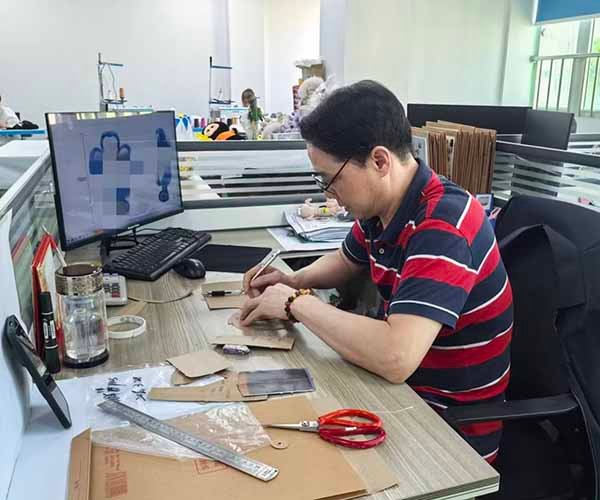
Pattern-Making & Precision Cutting Department
Translating Shapes Into Accurate Templates and High-Consistency Pieces
Pattern-making is one of the most critical steps in plush manufacturing.
It determines how the plush will look once filled and sewn, dictating silhouette stability, softness, seam placement, and character accuracy.

How Delsney Controls Pattern Precision:
- detailed pattern drafting based on character silhouette
- use of digital template files for consistency
- seam allowance planning for curved seams
- symmetry checks for head, ear, and limb pieces
- operational guidance notes added to patterns for sewing technicians
Fabric Cutting Process Includes:
- manual cutting for prototypes
- high-precision digital cutting for mass production
- color-bundle organization (e.g., head, limbs, body sorted separately)
- grainline control for directional plush fabrics
- label tagging for each pattern segment
Delsney Data:
- digital cutters accurate within ±1 mm
- manual cutting teams handle 3,500+ sets/day
- 8 experienced pattern engineers averaging 5–12 years in plush design
Sewing Lines Built for Different Plush Categories
Specialized Stations for Heads, Bodies, Ears, Apparel & Accessories
Delsney organizes sewing lines based on plush size, material, and complexity.
Each line is optimized for sewing stability, curved control, and precision stitching necessary for clean silhouettes.
Types of Sewing Stations:
- head & facial component line
- limb and paw line
- apparel & accessory line
- small MOQs / sampling line
- heavyweight plush line
- embroidery integration line
Production Techniques Include:
- stitching curved seams for cheeks and heads
- precise control for tiny ear edges
- hidden stitch lines for accessory attachments
- reinforced seams for high-stress points
- stitching on short-pile and long-pile fabrics
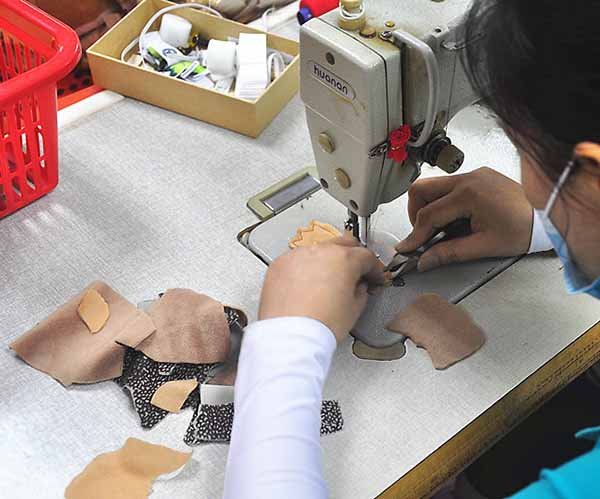
Embroidery & Detail Creation Department
Precision Facial Expressions, Logos & Character Markings
Character expression defines the emotional value of a plush toy.
To guarantee clean, symmetrical facial features, Delsney maintains a fully equipped embroidery department with digitizing specialists and technicians trained to manage thread tension, color coordination, and exact placement.
Capabilities in the Embroidery Room:
- eye and mouth embroidery
- eyebrow and nose stitching
- decorative motifs
- logos for licensed collections
- accessory embroidery (hats, coats, capes)
- appliqué stitching for complex shapes
Digitizing Workflow:
- Artwork received from R&D
- Digitizing team maps stitch paths and edge densities
- Test runs conducted on matching fabrics
- Adjustments made for curves, elasticity, and pile height
- Production files locked after QC approval
Engineering & Precision Data:
- stitch density: 0.35–0.40 mm spacing
- thread color library: 280+ shades
- machine frame accuracy: ±0.5 mm
- max embroidery area per machine: 20×30 cm
- 20+ embroidery stations running in parallel
How Delsney Ensures Clean Outcomes:
- pre-tension calibration
- fabric stabilizer layers for thin materials
- pile-direction checks
- multi-needle test before full run
- colorfast thread selection (grade 4–5)
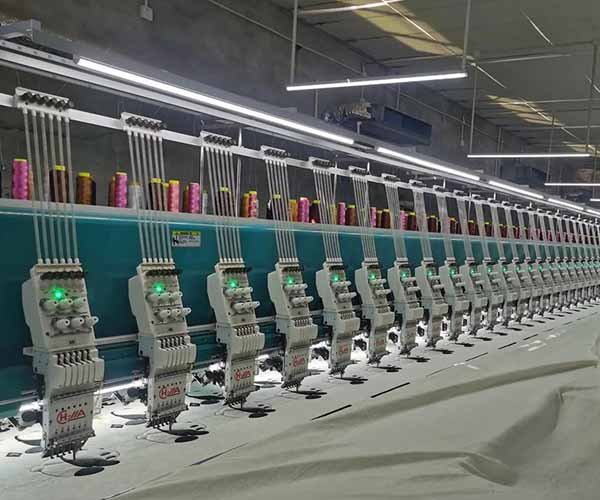
Stuffing, Shaping & Internal Assembly Area
Building the Plush Form Through Controlled Filling and Structure Placement
Stuffing is responsible for the plush toy’s silhouette, firmness, and overall feel.
Delsney combines machine filling with hand shaping to ensure each plush has the correct proportions—particularly around the head, limbs, and stomach.
Polyfill & Material Control:
- 100% premium polyester polyfill
- anti-clumping quality
- consistent fiber thickness
- storage in temperature-stable rooms
Internal Components Used:
- EVA stabilizers for head or torso firmness
- foam inserts for ears or wings
- cardboard panels (fully sealed)
- flexible wire skeletons (double safety layer)

Stuffing Process:
Machine Filling
- main body filling
- firmness adjustable through air-pressure settings
Hand Shaping
- cheeks
- head top
- limbs
- tail and small parts
Balancing & Symmetry Checks
- both halves aligned
- thickness measured by hand and caliper
- silhouette compared to approved sample

Quality Control Laboratory
Multi-Stage Testing for Shape, Strength, Colorfastness & Safety Compliance
Quality control is treated as a separate engineering discipline at Delsney.
QC teams are trained to identify early deformities, stitching inconsistencies, fabric defects, and structural weaknesses before packaging.
Each plush undergoes multiple inspections across the production flow.
QC Touchpoints:
- raw fabric inspection
- pre-sewing pattern verification
- mid-line stitching checks
- stuffing density assessment
- final silhouette inspection
- hardware tensile testing
- colorfastness testing
- embroidery alignment verification
Mechanical Tests Performed:
- limb tensile strength test (8–12 N)
- seam reinforcement test
- foam and EVA compression test
- rub test for pile fabrics
- washing simulation for color stability
Visual & Proportion Testing:
- head-to-body ratio check
- limb alignment check
- ear angle & symmetry check
- shape comparison to master sample
Packaging, Metal Detection & Final Preparation Zone
Before shipment, every plush product enters a final preparation stage designed to meet export requirements for major markets such as Japan, Europe, and North America.
Key Steps in This Area:
Surface Cleaning & Finishing
- brushing to align fur direction
- lint removal
- heat steaming to smooth fabric
- minor shape corrections
Safety Checks
- metal detection for needle fragments
- hardware attachment confirmation
- seam inspection
Packaging
- individual polybags or custom printed bags
- hangtag attachment
- barcode labeling
- carton arrangement with anti-deformation spacing
Export Documentation Support
- carton breakdown lists
- gross/net weight verification
- packing list alignment
- label-and-mark compliance
End-to-End Production Flow
A Seamless Manufacturing System Built for Stability, Scale & Character Accuracy
Delsney’s plush facility operates as a tightly coordinated production ecosystem, where each department is linked through synchronized schedules, shared digital checkpoints, and fixed engineering standards. This integrated setup ensures that the plush silhouette, character identity, and safety integrity remain consistent from sample creation to final shipment.
How Delsney’s Workflow Connects Seamlessly
1. Digital creation → Pattern Room Design, proportion model, pattern grading, and spec sheets flow automatically into the cutting system.
2. Cutting → Sewing Preparation Pre-cut pieces are matched, labeled, and confirmed for pile direction alignment.
3. Embroidery/Detailing → Sewing Lines All facial details and decorative components are finished before entering assembly.
4. Sewing → Stuffing/Shaping Limb seams reinforced; sewing tension calibrated; then stuffed to density standards.
5. Stuffing → QC Laboratory QC teams perform shape, tension, proportion, and safety checks before packaging.
6. Packaging → Warehouse Dispatch Each carton includes compliant labeling, moisture control, and pallet reinforcement.

Request a Factory Tour (Virtual or On-Site)
Explore Delsney’s Production Strength in Real Time
Delsney welcomes brand teams, distributors, licensors, and product developers to visit its factory—either physically or through a live virtual walk-through.
A tour allows teams to evaluate stitching precision, embroidery clarity, stuffing consistency, safety processes, and the overall operational environment.
What Visitors Commonly Inspect:
- sample room displays (fabric swatches, prototypes, color cards)
- embroidery calibration and digitizing stations
- precision cutting equipment
- sewing lines with tension-controlled workstations
- stuffing and shaping area
- QC laboratory and testing tools
- packaging line and metal detection process
Visit Options:
On-site Tour
- Shenzhen factory access
- interactive demonstrations
- production data review
Virtual Tour
- live video streaming
- department-by-department walkthrough
- close-up inspections on request

Many clients appreciate seeing how Delsney controls every detail—from the way fabric is handled to how proportions are corrected during shaping. Most report that transparency builds confidence before moving into new character development or high-volume orders.
Frequently Asked Questions
Q1: Can Delsney support complex or licensed plush characters?
Yes. The factory already handles plush models with multi-panel structures, gradient embroidery, large accessories, and brand-specific silhouette accuracy. Detailed control over pattern engineering, embroidery digitizing, and color standards ensures character precision suitable for licensed programs.
Q2: What safety standards do Delsney plush toys comply with?
Products are engineered to satisfy global test requirements, including EN71, ASTM F963, CPSIA, ISO 8124, and metal detection standards. Limb pull tests, seam robustness checks, colorfastness tests, fabric rub tests, and filling-density tests are routinely performed.
Q3: How does Delsney ensure each plush maintains consistent proportions?
Proportions are controlled through digital pattern systems, fixed panel tolerances (≤3 mm deviation), mid-line sewing inspections, head-to-body ratio checks, and silhouette comparison against the approved golden sample to ensure identical appearance across batches.
Q4: What types of fabrics does Delsney commonly use for plush manufacturing?
The factory stocks more than 120+ regularly used fabrics, including minky, velboa, sherpa, tricot, felt, high-pile plush, faux fur, and custom-dyed piles. All fabrics undergo shade control, shrinkage testing, tensile testing, and hand-feel calibration before production.
Q5: How long does a typical plush production cycle take?
Standard projects require 12–25 days, factoring in fabric readiness, embroidery complexity, assembly difficulty, QC checks, and packaging requirements. More complex characters with accessories or gradient stitching undergo additional engineering steps.
Q6: Can clients request modifications during the production process?
Yes. Minor adjustments—stuffing firmness, embroidery thickness, accessory positioning—can be modified during the pre-production stage. Once mass production starts, changes are aligned with efficiency and QC protocols to avoid inconsistencies.
Q7: What value does a factory tour provide for new clients?
A tour offers full transparency over stitching precision, fabric handling, equipment quality, QC practices, and operational workflow. Teams gain confidence when they see how Delsney maintains color accuracy, silhouette stability, and safety compliance.

Partner With a Plush Factory You Can Trust
Every plush project begins with clear communication, accurate engineering, and the right production partner.
Delsney offers a complete, transparent manufacturing system—from pattern creation to packaging—supported by stable equipment, experienced technicians, international compliance, and a development team skilled in turning characters into market-ready plush products.
If your next plush line requires consistent quality, detailed craftsmanship, and a dependable long-term partner, Delsney’s team is ready to collaborate.
