Skip to content

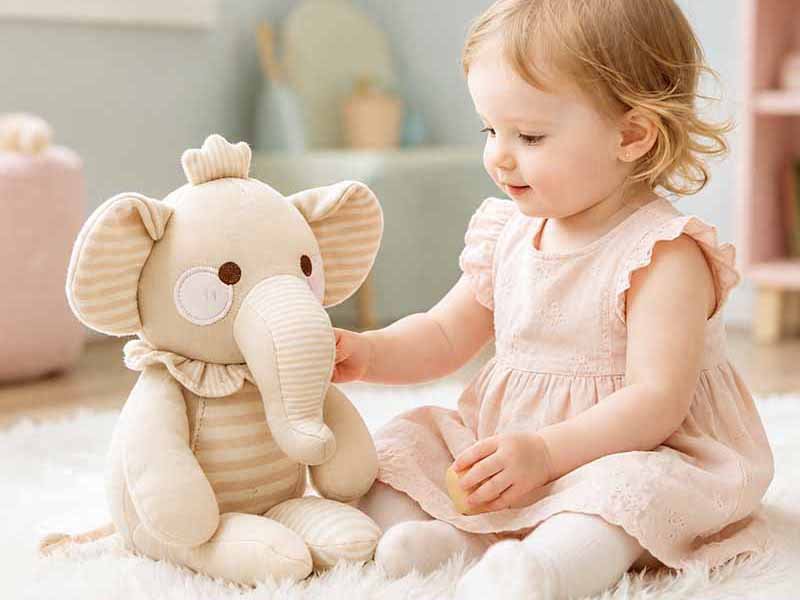
A baby plush toy can look remarkably simple when it is sitting on a retail shelf. The customer sees soft fabric, a friendly face, light filling, perhaps a woven label, and a neatly packed box. Behind that finished product, however, sits a surprisingly demanding manufacturing process. A plush intended for babies or toddlers may be pulled repeatedly by its ears, mouthed, squeezed at its seams, washed many times, carried outdoors, slept with every night, and examined carefully by parents. Those conditions make product engineering, material control, construction quality, testing preparation, and production consistency much more important than they may appear from the outside.
The best baby plush manufacturers combine age-appropriate product development, suitable materials, secure construction, controlled sampling, safety-compliance preparation, reliable quality inspection, and repeatable mass production. The right manufacturer depends on the plush type, intended age, destination market, order volume, branding requirements, testing needs, packaging format, and how much engineering support is required before the product becomes ready for scalable production.
This is also why a beautiful prototype should never be the only reason a supplier wins an order. A soft fabric can behave differently after repeated washing. A tiny plastic detail can change the small-parts risk of an under-three product. A carefully hand-adjusted sample may be difficult to reproduce across 20,000 pieces. The real value of a strong manufacturing partner becomes visible when the same product can move from artwork to an approved sample, from that approved sample to stable production, and from production to the market without losing its appearance, feel, safety logic, packaging accuracy, or delivery schedule.
Which Are the 25 Best Baby Plush Manufacturers?
The best baby plush manufacturers are not simply factories that can sew soft toys. They are manufacturers that can translate a design into a production-ready product while controlling fabrics, seams, filling, embroidery, components, labels, testing preparation, packaging, and bulk consistency. The strongest choice depends on the exact project rather than on a universal ranking or the lowest quotation.
The list below should therefore be used as a professional sourcing shortlist rather than a fixed one-to-twenty-five league table. A manufacturer that performs very well on a 50,000-piece retail program may not be the most suitable choice for a highly engineered organic-cotton lovey with unusual construction and frequent sample revisions. The reverse can also be true: a development-focused factory may produce excellent prototypes yet be less efficient when a retailer needs several SKUs shipped in tightly controlled seasonal windows.
| Manufacturer | Main Publicly Visible Strength | Potential Best Fit | Important Points to Verify |
|---|---|---|---|
| Delsney | Baby plush, OEM/ODM, engineering, sampling, private label, QC, packaging | Engineering-led baby plush, branded collections, multi-stage development | Final material specifications, product-specific testing scope, approved-sample controls |
| Kinwin | Dedicated baby plush development, OEM/ODM, organic cotton and RPET options | Baby stuffed animals, branded collections, custom characters | Current lab reports, material documentation, exact baby-project references |
| Bobo’s Toys | Baby soft toys, larger production infrastructure, broad material options | Retail baby toys and larger-volume programs | Current factory audits, actual available capacity, product-level safety records |
| Jolly Toy | Baby soft toys, comfort products, custom plush manufacturing | Retail baby plush and diversified collections | Infant-product experience, testing process, seam and filling controls |
| Yortoob | Custom plush, stuffed animals, OEM/ODM production | Conventional baby-animal plush and branded soft toys | Whether the assigned production line routinely makes infant-oriented products |
| FunEnjoy Toys | OEM/ODM, prototyping, bulk production, stated 100,000+ monthly capacity | Scalable custom plush programs | Available seasonal capacity, baby-project experience, production inspection system |
| CustomPlushMaker | Prototype-to-production custom plush, low-volume development capability | Character-focused baby plush and custom designs | Baby construction controls and finished-product testing evidence |
| The Plush Maker | OEM/ODM, prototype development and structured custom programs | Defined custom projects with moderate order volumes | Factory audit, baby experience, current safety documentation |
| Plushies 4U | OEM, private label, hangtags, labels and retail packaging | Branded retail collections | Age-specific construction, material testing and small-part controls |
| Szoneier | Broad custom plush development, packaging and global fulfillment support | Customized branded programs | Baby-project references, laboratory arrangements and material traceability |
| Rongtuo Toys | Design-heavy custom plush and stated medium-to-large capacity | Complex designs and multi-SKU collections | Production consistency, claimed capacity and infant-specific experience |
| Wehao Toys | OEM/ODM design, sampling, production and export support | General private-label plush programs | Baby-plush portfolio, material control and current test reports |
| CustomPlush | Long custom-plush development history and commercial project management | Established brands seeking managed product development | Actual manufacturing location, compliance responsibility and infant specialization |
| Custom Plush Toys | Managed custom manufacturing and international project experience | Commercial plush programs and product-development projects | Current factory route, baby category references and test responsibility |
| Adorable World | Wholesale plush plus customization and private-label options | Retailers combining existing styles with customization | Direct manufacturing structure, baby expertise and product testing |
| Joyus Toyus | U.S., China and hybrid manufacturing routes | North American brands comparing sourcing models | Production origin, exact manufacturing steps, landed-cost structure |
| Jin Sheu | Artwork-based stuffed-animal development and branded merchandise | Character-driven and licensed product programs | Infant expertise, production route, sample and testing processes |
| Miyan Toys | Artwork-to-prototype OEM plush development | Straightforward branded animals and character toys | Baby-specific construction, material documentation and testing support |
| Jiaoyang Plush Toys | Baby plush and conventional stuffed-animal manufacturing | Traditional baby stuffed animals | Current audits, quality-control records and component-safety controls |
| Rayiwell | Plush toys, baby products and textile accessories | Baby-oriented soft-product collections | Current social audits, applicable standards and exact factory scope |
| King Kong Toys | Custom plush development from concept through production | Commercial stuffed animals and branded programs | Baby-product history, detachable-part controls and testing evidence |
| Plushtoysmfg | Custom plush design, production and quality inspection | Conventional custom baby soft toys | Certification scope, actual QC system and baby-product records |
| Heyzizi | Baby-oriented custom plush, embroidered details and sample development | Infant-focused plush programs | Current reports, exact fabric specifications and physical testing |
| Jundong | OEM/ODM plush and private-label manufacturing | Custom baby plush and branded production | Baby production records, fabric controls and testing process |
| Hansightoy | Long-established custom plush and larger production projects | Established animal and character plush programs | Infant specialization, current audits and finished-product test reports |
Delsney is relevant to this list because its documented capabilities cover more than general plush sewing. The company records 18+ years of plush manufacturing and product-development experience, more than 500 staff, 18 production lines, 25+ engineers, 10+ designers, and 20+ quality-control personnel. Standard plush samples are documented at approximately 5–7 days, while more complex products generally require around 7–15 days, depending on structure, accessories and other development requirements.
Its documented product scope also specifically includes baby plush alongside custom character plush, mascot plush, blind-box plush, plush keychains, interactive plush, weighted plush and other categories. The same source records OEM manufacturing from customer designs, ODM development from product concepts, private-label branding, product development, packaging and shipping capabilities. These capabilities are particularly relevant when a baby-plush project needs to move from artwork through engineering decisions rather than simply reproducing an existing finished sample.
Baby Specialists vs General Plush Factories
A manufacturer does not need to produce only baby products to be capable of making a good baby plush. What matters more is whether the intended age group actually changes the factory’s product-development decisions. A team experienced with infant-oriented products should think differently about detachable components, long loops, decorative accessories, face construction, seam strength, filling containment, washability, fabric behavior and the testing plan before production is released.
That difference becomes obvious during sample review. A manufacturer with relevant experience may question whether a hard plastic nose is necessary, whether a decorative ribbon can be shortened or removed, whether high-pile fabric obscures embroidery, whether a narrow limb creates a difficult stuffing point, or whether an attached accessory adds an avoidable small-part concern. Those questions are useful because they show that the supplier is evaluating the product rather than simply reproducing the original drawing.
Some manufacturers publicly identify baby plush as a dedicated category, while others have much broader custom-plush ranges. Both structures can work. The practical sourcing approach is to ask for recent baby-product examples and request an explanation of how those products were developed differently from promotional mascots, collectibles, keychains or adult-oriented character plush. The quality of that explanation often reveals more than the number of photographs displayed on a supplier’s website.
Development Capability Matters More Than a Pretty Sample
A first prototype is important, but it can also create false confidence. An experienced sample technician may spend several hours manually adjusting one toy until its ears, head shape and expression look excellent. Mass production cannot depend on the same person manually correcting every unit. The critical question is whether the final sample has been translated into pattern files, measurable dimensions, embroidery programs, fabric references, filling standards and production instructions that other workers can reproduce consistently.
This becomes particularly important with baby characters because small proportion changes can alter the appearance noticeably. Moving an embroidered eye only a few millimeters may change the expression. Increasing the fabric pile can visually enlarge a head after stuffing. Adding more filling to the muzzle can transform a soft expression into a harder one. These details are not merely artistic preferences once bulk production begins; they are controllable manufacturing variables that should be resolved and documented before cutting starts.
A mature development process generally includes project review, feasibility assessment, sample production, revision, final approval, material preparation, bulk production and inspection. Delsney’s documented manufacturing workflow follows that sequence and treats the final approved sample as the standard against which the production run is compared.
Different Programs Need Different Factories
A 15-centimeter embroidered bunny sold through specialty baby stores and a premium lovey using multiple certified textile materials may both fall under the same broad “baby plush” label, yet they can require very different manufacturing systems. The first may depend heavily on repeatability, carton efficiency and stable production across several orders. The second may require more material sourcing, pattern refinement, texture evaluation and prototype revision before the final design is approved.
The same difference appears when comparing a licensed character with a generic animal design. Licensed projects can require much tighter control over facial proportions, embroidery position, approved colors and visual consistency because even small changes may affect character approval. A private-label retailer, by contrast, may be more concerned with product range consistency, barcode accuracy, packaging dimensions and reliable delivery across several SKUs.
For this reason, the best sourcing shortlist usually includes more than one factory profile. The goal is not to find a supplier that says it can manufacture every possible type of plush. The better approach is to identify manufacturers whose existing systems closely match the product, order scale, destination market and development complexity, and then use physical sampling and documentation review to determine which one deserves to move forward.
How Were These Manufacturers Selected?

These manufacturers were selected using visible evidence of baby or soft-toy manufacturing, custom product development, OEM/ODM capability, material knowledge, compliance awareness, sampling, quality control, private labeling, packaging and production scale. Website claims were treated as screening information rather than final proof, because supplier qualification should ultimately depend on current documents, physical samples and evidence connected to the exact product being developed.
Which Criteria Matter Most?
The most useful manufacturer criteria are operational rather than promotional. Statements such as “high quality,” “safe,” “professional” and “experienced” appear throughout the toy industry, but they have little meaning until the manufacturer explains how those qualities are controlled. A stronger evaluation looks at age-grade thinking, pattern engineering, materials, sample accuracy, seam construction, filling control, testing preparation, quality inspection, production capacity, packaging and repeat-order management.
Baby-product experience deserves particular attention because a factory should recognize when design choices affect risk. The team should know when a component may create an unnecessary small-part issue, when fabric behavior may complicate embroidery, and when an apparently cosmetic change can affect washability, seam stress or production repeatability. A manufacturer that can identify these risks before the first sample is usually more valuable than one that waits for a laboratory or final inspection to reveal them.
Capacity numbers should also be interpreted carefully. A supplier may publicly state monthly or annual output figures, but that does not mean the entire capacity is available to one project. Production availability changes with seasonality, existing customer commitments, material lead times and the number of SKUs being produced. A more useful question is how much capacity can actually be allocated during the required production window and how the manufacturer handles several styles at the same time.
How Is Manufacturer Evidence Verified?
Supplier evidence becomes stronger as it moves closer to the exact product and factory involved in the project. A sentence on a marketing page is useful for initial discovery, but it is weaker than a recent factory audit, product-specific laboratory report, approved material record or finished sample. A photograph of machinery helps demonstrate capability, yet it does not by itself prove capacity, quality consistency or whether the photographed facility will manufacture the order.
Testing documents should be examined with the same discipline. A report created for a previous teddy bear does not automatically prove that a new baby plush with a different fabric, rattle insert or decorative component meets the same requirements. Product design, intended age and destination market determine which safety provisions need to be considered. The test sample should therefore represent the product configuration that will actually be produced.
An effective evidence chain links the final sample, material specification, testing sample, production documents and finished shipment. When those items are clearly connected, it becomes much easier to determine whether the factory is manufacturing the product that was approved. When that connection is missing, large folders of certificates can look impressive while doing relatively little to control the risks of the specific order.
Factory, Trading Company or Brand?
Search results for baby plush frequently mix factories, retail brands, sourcing companies and trading businesses. These organizations can all perform useful roles, but they are not interchangeable. A retail brand primarily develops and sells products under its own name. A trading company may coordinate several factories and simplify sourcing. A manufacturer controls at least part of the physical production process. Some companies combine development, sourcing, quality control and manufacturing across several facilities.
The issue is not that one structure is automatically better than another. The important point is transparency. A company that uses partner factories can still provide excellent service if it clearly explains where production occurs, who controls the facility, who performs quality inspection, and which company appears on factory audits and test documentation. Problems are more likely when the actual production chain is different from what the customer believes it to be.
Three practical questions can clarify the structure quickly: where will the product be cut and sewn, who owns or manages that production site, and which company name and address appear on the relevant audit and testing documents? For higher-volume infant programs, knowing where sewing, stuffing, final inspection and packing take place also creates a clearer accountability trail if problems occur later.
What Can a “Best Manufacturers” List Miss?
No manufacturer list can replace due diligence. Companies with sophisticated English websites naturally appear more visible in international searches, while technically capable factories with weak marketing may be overlooked. The opposite problem can also occur: polished content and impressive photography can create a stronger impression than the underlying factory systems deserve. That is why rankings should narrow the research field rather than make the final purchasing decision.
Order size can also change which supplier is most suitable. A very large factory may have little interest in a technically complex 1,000-piece project, while a development-focused manufacturer may handle the same order carefully but struggle to support a seasonal 100,000-piece rollout. Neither company is universally better; each has a production model that fits certain projects more naturally than others.
The phrase “baby plush” itself covers multiple structures, including stuffed animals, cloth dolls, loveys, comforters, rattles, plush-and-blanket combinations, sensory products and character items. Adding rattles, teethers, ribbons, electronic modules or mixed materials can change the manufacturing and testing path substantially. Physical sampling and product-specific review remain essential because those stages reveal issues that no online manufacturer comparison can fully predict.
What Makes Baby Plush Manufacturing Different?

Baby plush manufacturing differs from ordinary plush production because the product is intended for very young users who may mouth, pull, squeeze, sleep with and repeatedly wash it. Fabric shedding, seam integrity, stuffing containment, detachable components, embroidery, loops, labels, cleaning behavior and age grading all deserve attention before mass production. Safety is most effective when it influences the product from the design stage rather than being checked only at the end.
Which Fabrics Work Best?
There is no single fabric that is automatically best for every baby plush product. Minky, short plush, velboa, fleece, organic cotton textiles and recycled-polyester fabrics can each be appropriate depending on the intended hand feel, appearance, construction and market positioning. Fabric selection should begin with the desired sensory experience, but it should eventually be converted into measurable manufacturing requirements involving pile height, density, color, seam behavior and washing performance.
High-pile fabrics can create an especially soft and premium impression, yet they can also cover small embroidered details and make seam lines harder to inspect. Shorter-pile materials often allow cleaner facial definition and more predictable dimensions. Cotton-based textiles may support a natural-material positioning, while polyester materials can provide durable softness, resilience and broad sourcing availability. Neither material category should be treated as automatically compliant simply because of its fiber name.
Consistency becomes just as important as initial softness once production scales. Two materials sold under the same generic description can feel different because pile height, finishing, density or dyeing varies between lots. Retaining an approved fabric sample, material code, supplier reference and color standard helps prevent a situation where the bulk order looks correct but feels noticeably different from the prototype.
Delsney’s documented project-intake process treats fabric preference, filling requirements, age group and target market as information that should be clarified early in development. That approach reflects a practical manufacturing reality: the fabric cannot be chosen independently from the product’s intended use, construction and compliance requirements.
Are Embroidered Features Better?
Embroidery is commonly used for eyes, noses and facial details on baby-oriented plush because it can eliminate separate hard components from the face. This can simplify the physical construction of the toy and remove one obvious detachable-part concern. Embroidery is not automatically risk-free, however, and the design still needs to be developed with suitable thread, backing, stitch density, fabric behavior and placement.
Very dense embroidery can create a hard patch on a thin textile. Poor stabilizer choice can make the surface pucker. Tiny eyelashes, highlights or multi-color details may look excellent in artwork but reproduce poorly after the head panels are sewn and stuffed. Embroidery placement must therefore be evaluated on the finished three-dimensional sample rather than only on a flat fabric panel.
For production, the embroidery file should be controlled along with thread colors, stitch settings, placement references and nearby seam lines. This becomes particularly important for character products because slight left-to-right position changes can alter the expression. A strong sample-development team will often recommend enlarging, simplifying or repositioning small details so the face remains attractive, soft and repeatable across the production run.
For products intended for younger children, avoiding unnecessary hard or detachable decoration can also reduce the number of potential failure points that must be controlled during manufacturing and testing. The goal is not to remove design personality, but to achieve the desired expression using a construction suitable for the intended age group.
How Do Seams and Filling Affect Safety?
A plush toy is fundamentally a textile shell containing filling, which makes seam construction central to both durability and filling containment. Stress is not distributed evenly across the product. Ear roots, necks, narrow limbs, tails, gussets and the final closing seam after stuffing can experience higher loads than broad body panels. These areas deserve particular attention during pattern design, sewing and inspection.
Filling level also changes how the seams behave. Too much filling can increase internal pressure and create a hard product, while too little can make the shape collapse and reduce visual consistency. For higher-volume production, relying only on an operator’s sense of softness can create variation from one batch to another. Some projects benefit from a recorded filling weight or clearly defined tactile standard linked to the final approved sample.
The final sample should therefore establish more than appearance. It should show the approved fabric, seam shape, filling distribution, hand feel and overall dimensions. Delsney’s documented production process places sample approval before material preparation and bulk manufacturing, followed by quality checks covering dimensions, seams, filling, labels and packaging.
This type of control becomes especially valuable for repeat orders because manufacturing staff can compare new production against an established reference rather than reconstructing the product from photographs or informal instructions.
Is Washability Important?
Washability matters because baby plush products tend to encounter more frequent cleaning than collectibles or decorative plush. Saliva, food, spills and ordinary household use make cleaning performance a practical part of the product experience. Even when an item is not marketed as machine washable, the cleaning instructions need to reflect what the fabric, filling, embroidery, labels and overall structure can realistically tolerate.
A useful wash evaluation looks beyond whether the toy remains intact. The team should examine whether fabric mats, colors transfer, embroidery puckers, the shape becomes asymmetrical, filling develops lumps, seams twist or labels curl. A product can technically survive washing yet still become unattractive enough that customers feel disappointed with its quality.
Packaging can also affect appearance. Aggressive compression may reduce freight volume, but some highly structured or longer-pile products recover poorly after prolonged compression. Testing the product with the actual packaging method before approving mass production is therefore more reliable than reviewing the plush and packaging as two unrelated components.
When washability is part of the product promise, it should be considered during material selection and sample development instead of being added as a marketing claim afterward. This is one reason baby-plush projects benefit from coordination among design, materials, engineering, compliance, quality and packaging teams from the beginning.
Which Safety Standards Matter?

Baby plush safety requirements depend on where the product is sold, how it is constructed and which age group it is intended for. United States programs commonly involve ASTM F963, CPSIA-related obligations and applicable CPSC rules, while the European Union, Great Britain and Australia use different legal frameworks. A factory’s general compliance statement should therefore never replace a product-specific review of the finished design.
What Does ASTM F963 Cover?
ASTM F963 forms an important part of the United States toy-safety framework and contains a broad range of general and product-specific requirements. It should not be treated as one universal laboratory test that applies identically to every plush toy. Different product constructions and age grades can bring different provisions into the compliance assessment, which is why product classification should occur before the testing plan is finalized.
Children’s products may also be subject to applicable third-party testing and certification requirements. For a baby-plush project, the practical question is not simply whether the factory has previously produced an ASTM-tested toy. The more useful questions are which requirements apply to the exact SKU, which laboratory will perform the relevant testing, whether the submitted sample represents the production configuration, and what documentation is required by the responsible company placing the product on the market.
Changes after testing need careful attention. Replacing embroidered features with plastic parts, adding a rattle insert, changing a coating, using different decorative materials or introducing a cord can alter the risk profile. Testing should therefore be integrated with the product-development process rather than treated as a final administrative step once manufacturing decisions have already been fixed.
Do Under-Three Toys Need Small-Part Controls?
Products intended or reasonably considered suitable for children under three require particularly careful attention to detachable pieces and accessible components. Eyes, noses, buttons, pom-poms, bows, bells, decorative charms, cords and other accessories may look harmless during design review, yet each one introduces an attachment point that has to remain secure during foreseeable use and abuse.
The same concern applies to components that are not initially separate. A poorly secured seam can open and expose filling. A decorative element may tear away only after repeated pulling. A label attachment or narrow loop may behave differently after washing. These are reasons to evaluate the full construction rather than focusing only on the visible components that appear detachable when the toy is new.
The manufacturing implication is straightforward: risk is easiest to reduce during design development. Replacing an unnecessary plastic feature with embroidery or simplifying a decorative attachment during the prototype stage may require only one new sample. Making the same change after bulk materials have been purchased or after thousands of pieces have been sewn can create expensive rework and delays.
This is also why intended age should be confirmed early. It influences not only testing but also the product decisions that occur long before the laboratory receives a finished sample.
Which EU and UK Rules Apply?
Products sold as toys in the European Union must meet the applicable toy-safety framework and follow the relevant conformity procedures. CE marking forms part of that system, but the mark should not be understood as a generic factory certification. Compliance depends on the actual product, its technical documentation, risk assessment and the standards or conformity route used to demonstrate that the toy meets applicable requirements.
The EU regulatory framework is also moving through a transition. Regulation (EU) 2025/2509 entered into force in January 2027 and is scheduled to become applicable after its transition period in August 2030. Brands developing long-lived product ranges should therefore distinguish between rules affecting products placed on the market today and requirements that may influence future production and repeat orders later in the decade.
Great Britain continues to operate under its own Toys (Safety) Regulations framework. The exact conformity-marking and documentation route should be checked for the market and timing of the launch rather than assuming that “European compliance” covers every destination in the same way.
A practical sourcing team begins with the actual countries where the product will be sold. That market list then guides the testing plan, labeling, documentation and other compliance work instead of asking the manufacturer to apply a single generic standard to every destination.
| Market | Main Framework to Review | Baby-Plush Concerns | Useful Evidence |
|---|---|---|---|
| United States | ASTM F963, CPSIA and applicable CPSC requirements | Small parts, physical hazards, materials, labeling, age grading | Product-specific test reports, final sample reference, certification inputs |
| European Union | EU toy-safety legislation and applicable standards | Mechanical safety, chemicals, technical documentation, warnings | Test reports, risk assessment, conformity documentation |
| Great Britain | Toys (Safety) Regulations 2011 and current conformity arrangements | Product safety, technical file, applicable marking | Technical records, declarations and relevant test reports |
| Australia | Mandatory standards applicable to toys for young children | Detachable components, construction, age suitability | Specialist laboratory evidence for the relevant product |
How Should Testing Be Verified?
Testing evidence should be connected directly to the product that will be sold. Check the laboratory name, report date, product description, product photograph where available, tested materials, intended age and the exact standard or requirement referenced. A report covering a different product may still provide useful background information, but it should not automatically be treated as proof for a new SKU.
The production specification and laboratory sample should also match each other. If a manufacturer tests one fabric and later substitutes another because of availability or cost, the brand should determine whether the change affects the testing or documentation. The same principle applies to accessories, embroidery coatings, printing, filling, internal modules and packaging claims.
A capable manufacturer can support compliance preparation, supply product and material information, prepare test samples and coordinate with third-party laboratories. It should not promise that every possible design will automatically pass every safety standard. Delsney’s internal documentation explicitly reflects this distinction by instructing that compliance be presented as preparation and third-party testing support rather than as an unconditional promise of passing all tests.
This distinction is useful for any supplier relationship because it keeps responsibility, documentation and product decisions grounded in the actual project rather than in broad marketing claims.
How Do These Manufacturers Compare?

Baby plush manufacturers are best compared by development capability, infant-product experience, materials, safety awareness, private-label support, factory scale, quality-control systems and repeat-order consistency. OEM/ODM labels are useful starting points but do not reveal how much engineering work the supplier actually performs. The strongest comparison looks at what happens between the original artwork and the final shipment.
Which Manufacturers Support OEM/ODM?
OEM and ODM are often used broadly in the plush industry, so the practical difference is best understood by examining how much product definition exists before the factory becomes involved. A relatively mature OEM project may already include artwork, dimensions, fabric references, embroidery files, packaging requirements and technical specifications. The factory still needs to convert those inputs into stable production, but the brand controls most major design decisions.
A more development-heavy ODM project may begin with a character concept, rough sketch, reference photograph or market idea. The manufacturer helps refine proportions, recommend materials, create patterns, develop embroidery, determine construction, prepare prototypes and convert the concept into something that can be manufactured repeatedly.
A manufacturer that simply advertises “OEM/ODM available” without explaining these steps has not provided enough information to evaluate the service. A more revealing question is what the engineering and sample teams actually do between receipt of the artwork and approval of the final production sample.
Delsney’s documented service model covers project review, feasibility evaluation, product development, pattern engineering, sampling, revisions, fabric selection, embroidery, private labeling, packaging, safety preparation, quality inspection and shipping. That sequence illustrates the type of detail worth looking for when comparing different manufacturer’s development claims.
Which Offer Private Label?
Private-label support becomes important when the manufacturer is expected to deliver a complete commercial product rather than an unbranded stuffed animal. Typical requirements can include woven labels, care labels, hangtags, embroidered branding, printed story cards, barcode labels, retail boxes, gift packaging and master-carton markings.
For baby plush, these elements need to be coordinated with product construction and compliance rather than treated as decorations added at the last moment. A woven label has dimensions and seam placement. A hangtag has an attachment method. Packaging must protect the product without causing excessive compression, and retail information needs to match the market requirements.
The entire packaged product should therefore be included in the final approval process. Artwork, barcode placement, label location, care information, product orientation and carton configuration should be checked before printing large quantities of packaging materials.
Delsney’s documented capabilities include hangtags, woven labels, care labels, barcode labels, OPP bags, gift boxes, window boxes and retail packaging alongside multiple shipping options. Those services are useful when a project needs the factory to deliver a retail-ready item instead of only the sewn plush itself.
Which Support Sustainable Materials?
Sustainable-material sourcing should begin with clear specifications rather than broad terms such as “eco-friendly.” A project may prioritize organic cotton, recycled polyester, recycled filling, reduced-plastic packaging or a recognized certification system, and each of those goals requires different sourcing evidence.
Recycled polyester can offer familiar plush softness while incorporating recycled feedstock, but the exact claim should match the supporting documentation. Organic-cotton programs may require more attention to fiber certification, available fabric constructions, dyeing, minimum quantities and lead times. Recycled filling can provide another sustainability option, yet it must still meet the product’s softness, resilience and safety requirements.
Brands should also distinguish the sustainability of one component from the sustainability claim of the entire product. A toy made with recycled outer fabric may still contain conventional filling, polyester thread, plastic accessories and traditional packaging. Marketing language should reflect the actual specification rather than implying a broader environmental claim than the evidence supports.
Sustainable options can also affect commercial planning. Certain certified or custom-dyed fabrics may have higher material minimums or longer lead times than commonly stocked textiles. Those constraints should be discussed before the final sample is approved so the product does not have to be redesigned after launch dates or retail prices have already been set.
Which Fit Large Programs?
A large retail or multi-SKU program tests a very different set of capabilities from prototype development. One skilled technician can manually perfect a single sample, but thousands of units require pattern control, line planning, material consistency, operator training, inspection and packaging accuracy. The manufacturing system must reproduce the approved product even when several workers and production lines are involved.
Delsney’s documented company facts list more than 500 staff and 18 production lines, along with 25+ engineers and 20+ QC personnel. The same documentation states that 18 production lines support multi-SKU collections, seasonal programs and repeat orders, while the QC team supports inspection from sampling through pre-shipment.
Capacity figures alone are not enough, however. The more useful question is how much capacity is available during the exact delivery window. A manufacturer may have substantial annual capacity yet still face heavy commitments during holiday production. For multi-SKU projects, ask whether all styles will run at the same time, how fabric lots are controlled, how approved samples are distributed to production teams, and how outsourced processes such as embroidery or printing are managed.
Repeat orders provide another test of manufacturing maturity. Factories that retain pattern files, embroidery programs, material codes, filling standards, packaging files and approved samples can reproduce a previous design more reliably than suppliers that attempt to reconstruct it from photographs months later.
How Do You Choose the Right Manufacturer?
Choose a baby plush manufacturer by defining the product and market requirements first, then comparing qualified factories using the same RFQ information and the same sample-review criteria. Verify the relevant materials, compliance evidence, production controls and packaging before issuing a major order. The strongest supplier should make the project increasingly clear and measurable as development progresses, rather than simply offering the fastest or cheapest quotation.
What Should You Ask Before RFQ?
An accurate custom-plush quotation requires more information than a reference photograph. Two toys of the same approximate size can have very different costs because fabric, embroidery density, number of pattern pieces, filling level, accessories, packaging and testing requirements differ. Providing better project information at the beginning reduces unnecessary quotation changes later.
A useful RFQ should include artwork or reference samples, target dimensions, expected quantity, intended age group, destination markets, desired fabric or tactile direction, filling requirements, embroidery details, accessories, branding, packaging and delivery deadline. For character products, front, side and back views help the factory understand proportions that cannot be seen from a single illustration.
The questions asked in return can be equally valuable. Ask what parts of the design are difficult to reproduce, which features might be unsuitable for the intended age, which materials create sourcing risk, how many sample revisions are likely, which testing is expected for the target market, and what documents become the final production reference after approval.
Delsney’s documented project-intake system requests the same core information, including product type, artwork, size, quantity, target market, age group, fabric, filling, branding, packaging, compliance requirements and delivery date.
A manufacturer willing to identify problems before sampling usually provides more useful information than one that responds to every design request by saying that everything is possible.
How Do You Verify a Sample?
Sample review should begin with appearance and continue into measurable construction. Check silhouette, proportions, facial expression, embroidery, symmetry, dimensions, seam shape, fabric, filling, labels and finishing. Turn the toy over, inspect the closing seam, feel the ear and limb attachment points, compare left and right sides, and check whether the filling creates hard or uneven areas.
Revision comments should be as specific as possible. “Make the face cuter” is difficult for a sample room to reproduce objectively. A note such as “increase head width by 8 millimeters, move both eyes 3 millimeters outward and reduce muzzle filling” gives the factory measurable instructions that can be recorded and repeated.
The sample should also be evaluated under realistic use conditions when relevant. If the product is expected to be washed, test the recommended cleaning method. If it will be compressed for fulfillment, evaluate recovery after unpacking. If several fabric colors will be used, compare whether the material behavior remains sufficiently consistent across the collection.
Once the final sample is approved, the associated production records should also be locked. Pattern files, embroidery programs, measurements, fabric codes, filling standards, accessories, labels and packaging should correspond to that approved version. The sample then becomes part of the manufacturing-control system rather than simply a visual reference.
How Do You Compare Quotations?
Quotation comparison becomes misleading when only the unit price is considered. One supplier may include retail packaging, testing coordination and detailed quality inspection, while another may quote only the sewn toy in a basic bag. Two prices that look comparable in a spreadsheet may therefore represent quite different project scopes.
Custom plush cost is influenced by size, structure, fabric, filling, embroidery, printing, accessories, packaging, quantity, testing, inspection, shipping method and commercial terms. Delsney’s documented quotation logic lists those variables explicitly and describes its pricing as project-based rather than a fixed unit cost determined only from a photograph.
A practical evaluation can give greater weight to the areas most closely connected to product risk instead of allowing the lowest price to decide the project automatically.
| Evaluation Area | Example Weight | What to Review |
|---|---|---|
| Baby-product engineering | 20% | Age-grade thinking, construction, small-part awareness, feasibility |
| Sample quality | 20% | Shape, embroidery, seams, filling, material feel, finishing |
| Compliance support | 15% | Market knowledge, test preparation, documentation |
| Quality-control system | 15% | Incoming, in-process, final inspection, approved-sample management |
| Production capacity | 10% | Available capacity, multi-SKU planning, seasonal scheduling |
| Material control | 8% | Fabric traceability, color consistency, substitution approval |
| Packaging readiness | 5% | Labels, barcodes, retail packs, carton planning |
| Communication and project control | 7% | Revision records, response quality, timeline management |
| Total | 100% | Adjust the weighting to match the project |
The percentages above are not an industry regulation. They are a practical procurement framework that can be changed according to the project. A large retailer may increase the weight given to production capacity and compliance management, while a design-led infant brand may place greater emphasis on sampling, material control and product engineering.
How Do You Reduce Production Risk?
The cost of correcting a plush-product problem usually increases as the project moves closer to shipment. A proportion issue found during artwork review may take only minutes to adjust. The same problem found during sampling requires new work. Found after fabric cutting, it can affect hundreds of components. Found after thousands of finished units are packed, it becomes a serious commercial and scheduling problem.
A lower-risk process uses clear approval gates. Begin with feasibility review, then develop and revise the prototype. Approve the final sample and materials before releasing bulk production. Confirm the testing plan and supporting documentation, perform in-process inspection rather than waiting until the final day, and complete pre-shipment inspection together with packaging verification.
Sample revision should therefore be understood as risk control rather than wasted time. Delsney’s documented process uses revision to adjust proportion, expression, fabric, filling, embroidery and packaging before final approval and material preparation.
Repeat orders benefit from the same discipline. Archived approved samples, revision records, patterns, measurements, embroidery files, material records, filling standards, accessory specifications, packaging files, photographs and quality checklists help a factory reproduce the product without rebuilding the specification from memory. The documented knowledge base specifically identifies these records as part of maintaining consistency after sample revision.
Conclusion
Choosing among the best baby plush manufacturers is ultimately less about finding a company with the largest website, the longest certificate list or the lowest unit price and more about finding a manufacturing system that matches the product. Baby plush sits at the intersection of textile engineering, character design, infant-product safety, materials, quality control, packaging and commercial production. A strong manufacturer should be able to explain those connections clearly and show how each one is controlled from sample development through shipment.
The most reliable selection process begins with a well-defined product and target market, narrows the field to manufacturers with relevant experience, compares samples under measurable criteria, verifies compliance evidence and confirms how the approved sample becomes a repeatable production standard. When those pieces are in place, the first order becomes more than a one-time manufacturing project. It creates patterns, material references, inspection standards and documentation that make future colors, additional characters, multi-SKU collections and repeat orders easier to manage.
For brands still working from artwork, character concepts, physical references or early product specifications, it can be useful to involve an experienced plush engineering team before every detail is locked. Delsney’s documented service model covers design review, feasibility evaluation, material recommendation, sampling, revisions, production, quality inspection, private-label packaging and global delivery, allowing a project to be reviewed as a complete manufacturing program rather than as a simple request for a unit price.
Frequently Asked Questions
What is the best material for baby plush toys?
There is no single material that is best for every baby plush design. Minky, short plush, velboa, fleece, cotton-based textiles and recycled polyester can all be appropriate depending on softness, pile length, washability, embroidery, construction and market positioning. The more important decision is whether the exact material performs consistently in the finished product and whether its specifications, color, fabric lot and relevant testing can be controlled through production.
Are embroidered eyes better for baby plush toys?
Embroidered eyes are commonly used on baby-oriented plush because they can create facial features without adding separate hard components. They still need proper stitch density, backing, thread selection and placement to remain soft and visually consistent. For products intended for very young children, manufacturers should evaluate the complete design for detachable or accessible components rather than assuming that one construction method alone automatically makes the product suitable.
What safety standards apply to baby plush toys?
The applicable requirements depend on the destination market, product construction and intended age. U.S. products may involve ASTM F963, CPSIA and other applicable CPSC requirements, while the European Union, Great Britain and Australia use different frameworks. Manufacturers and brands should identify the exact markets before testing, because product-specific laboratory evidence and technical documentation are more meaningful than a factory’s general statement that its products are “certified.”
How long does custom baby plush sampling usually take?
Sampling time depends heavily on design complexity, materials, embroidery, accessories and the number of revisions required. As one documented manufacturing example, Delsney lists standard plush sampling at approximately 5–7 days and complex samples at roughly 7–15 days. More complicated baby plush involving special fabrics, unusual structures, mixed materials or several approval rounds can reasonably take longer before the final production sample is ready.
What information should I send a baby plush manufacturer for a quotation?
A useful quotation request should include artwork or reference photographs, target size, estimated quantity, intended age group, sales markets, fabric direction, filling preference, embroidery or printing details, accessories, branding, packaging, expected testing requirements and delivery deadline. Better information allows the manufacturer to identify material, engineering and compliance issues earlier and makes competing quotations easier to compare on a genuinely equivalent scope.
How can I check whether a baby plush manufacturer is reliable?
Start by checking whether the supplier can provide evidence connected to the exact product rather than only general marketing claims. Review physical samples, current factory or social audits where relevant, product-specific test records, material specifications, quality procedures and the way the approved sample is transferred into production. A reliable manufacturer should also be willing to explain difficult parts of the design, possible risks, material limitations and how those issues will be controlled before mass production.
Should I choose the manufacturer with the lowest price?
The lowest quotation is not necessarily the lowest-cost project once testing, sample revisions, packaging, quality problems, late delivery or rework are considered. A better comparison looks at product engineering, sample accuracy, materials, compliance support, quality control, production capacity, packaging and communication alongside the unit price. For baby products especially, a slightly higher manufacturing cost can be commercially reasonable when it reduces the risk of inconsistent production, failed testing or costly corrections after launch.