Skip to content

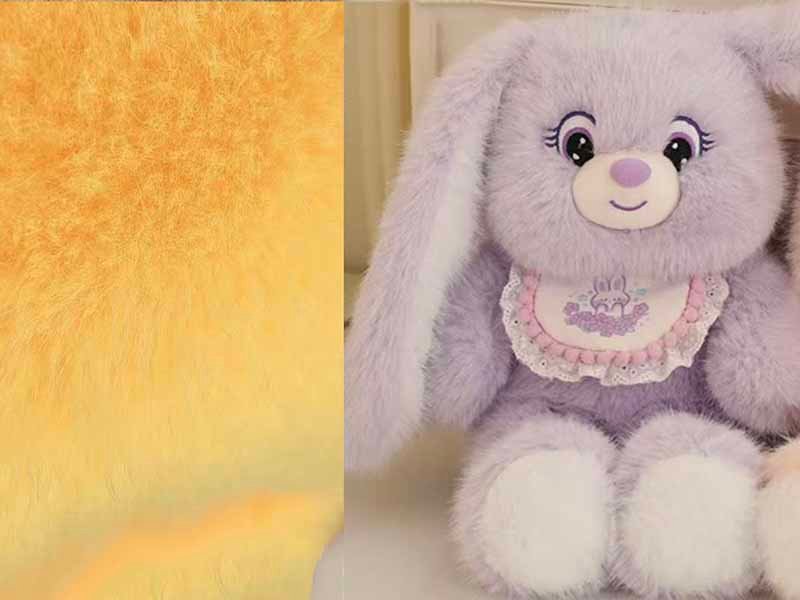
A plush design can look convincing on a screen and still lose much of its character when the wrong surface fabric is chosen. A wolf can become too round, a shaggy mascot can lose the outline that makes it recognizable, and a carefully embroidered face can disappear under fibers that looked beautiful on a swatch. That is why the choice between faux fur and long-pile plush is not simply about which one feels softer. It affects character accuracy, cutting layout, sewing difficulty, embroidery visibility, finishing time, durability, packaging, cost, and the consistency of the final production run. For a commercial plush project, material selection is part of product engineering rather than a decorative decision made at the end.
For custom plush toys, neither faux fur nor long-pile plush is universally better. Faux fur is usually stronger when realistic animal texture, directional hair, and visual depth are essential, while long-pile plush often works better when the design needs a softer, fuller, more toy-like surface. The right choice depends on pile height, density, backing, shedding, embroidery visibility, sewing behavior, target use, and total production cost.
Imagine approving two samples of the same character. The first has dramatic flowing fur, but the eyes look smaller and the muzzle is hard to read. The second uses slightly shorter pile around the face, so the expression is clear even from several meters away while longer fibers remain on the chest and tail. The second sample may use more than one fabric, yet it often looks more intentional. That is the central lesson of this comparison: the best material is not the one with the longest fibers or the highest price. It is the one that protects the design while remaining practical to reproduce at scale.
Are Faux Fur and Long-Pile Plush the Same?

Faux fur and long-pile plush overlap, but they are not always the same material. Faux fur is generally designed to imitate animal hair, while long-pile plush mainly describes a plush surface with extended fibers. A fabric can therefore be both faux fur and long-pile plush. For product development, pile height, density, backing, direction, GSM, stretch, and shedding matter more than the label alone.
What Is Faux Fur?
Faux fur is better understood as a family of synthetic fur-effect fabrics than as one fixed specification. Its surface is designed to create the depth, direction, movement, and sometimes color variation associated with animal hair. Depending on the construction, the fibers may be straight, wavy, curly, shaggy, tipped, mixed in length, or arranged so the face of the fabric changes when brushed in different directions. This makes faux fur especially useful for realistic animals, pet-inspired plush, premium bears, fantasy creatures, manes, tails, ear edges, cheek hair, and other areas where the hair itself forms part of the character design. Two materials sold under the same name can still behave very differently once they are cut, sewn, stuffed, brushed, and packed, so the category name should never replace a proper material specification.
The main strength of faux fur is visual realism, but that strength creates a trade-off. Long, dense fibers soften seam transitions and can hide construction lines beautifully, yet they can also cover small embroidery, reduce the apparent size of the eyes, and make narrow features look less defined. The backing matters just as much as the surface. A flexible knitted backing may work around curved cheeks and paws, while a heavier backing can resist turning and create angular shapes on small parts. For that reason, a development team should review the fur together with the pattern, embroidery, filling level, and finished size instead of treating the material as an isolated choice.
What Is Long-Pile Plush?
Long-pile plush is usually described by the length and visual volume of its surface fibers rather than by an attempt to reproduce a specific animal coat. It often has a more uniform, soft, toy-like appearance than realistic faux fur, although there is considerable overlap between the two categories. Supplier terminology is not standardized, so the same material might be described as long plush, long-pile plush, shaggy plush, or long-pile faux fur depending on the mill or sales channel. As a practical development reference, teams may treat approximately 1-5 mm as short pile, 5-12 mm as medium pile, 12-30 mm as long pile, and more than 30 mm as shaggy or fur-like. These ranges are working references rather than universal standards, so the supplier’s measured specification should always control the project.
Long-pile plush works well when the character is meant to feel fluffy, soft, oversized, or visually warm. Bears, sheep, monsters, fantasy animals, and decorative mascots can benefit because longer fibers add apparent volume without requiring a much larger internal pattern. However, the same volume can blur small ears, narrow limbs, facial seams, or color-block edges. A 25 mm uniform polyester pile may look beautifully fluffy while still reading as a toy surface, whereas a mixed-length faux fur of similar height may look much more like an animal coat. That distinction is important when the design goal is realism rather than simply softness.
Which Specifications Matter More Than the Name?
For sourcing and sampling, the fabric name should be treated as a category label, not a complete technical description. A useful specification records the properties that will actually influence appearance and production, including pile height, density, GSM, backing construction, stretch behavior, pile direction, shedding, embroidery compatibility, shape retention, compression recovery, and color lot. Delsney’s internal material framework tracks these variables because each one can change the finished result. The company also maintains more than 600 plush fabric options across different textures, pile heights, and hand feels, which allows teams to compare materials against the product rather than choosing from a generic fabric name alone.
| Fabric Variable | Practical Development Check | Why It Matters |
|---|---|---|
| Pile height | Record supplier measurement and approved swatch | Changes silhouette, realism, and detail visibility |
| GSM | Record approved supplier value | Influences thickness, hand feel, cost, and durability |
| Pile direction | One-way or multi-directional | Affects shading, color appearance, and cutting layout |
| Backing | Record construction and flexibility | Changes stretch, sewing behavior, and shape control |
| Density | Compare against approved swatch | Controls coverage and whether backing becomes visible |
| Stretch | Measure against approved material | Can change stuffed dimensions and pattern behavior |
| Shedding | Check raw, cut, sewn, and brushed samples | Affects quality perception and safety review |
| Embroidery performance | Test actual face or logo | Long fibers may hide narrow stitches |
| Compression recovery | Test after packaging simulation | Important for boxed and compressed products |
| Color lot | Record bulk lot against approved standard | Helps control visible variation in repeat production |
A swatch that feels excellent in the hand may still be unsuitable for the actual product. The most reliable approach is to compare at least two or three candidate materials on the intended size and shape, especially when the design includes small facial details, mixed textures, or tight curves. Once stuffing is added, the backing stretches and the fibers stand differently, so the visual result can change from what the flat swatch suggested. Material approval should therefore happen together with sample development, not before it.
Which Fabric Creates a More Realistic Plush?

Faux fur normally creates the stronger realistic effect because fiber length, direction, density, and color variation can imitate an animal coat. Long-pile plush is often better when the goal is fluffy volume rather than anatomical realism. In either case, the most convincing result usually comes from matching pile length to specific body zones instead of covering the entire plush with one material.
Which Fabric Creates More Volume?
Long fibers increase apparent size even when the underlying paper pattern does not change. A 25 cm plush covered in dense 20-30 mm pile can look noticeably larger and rounder than the same pattern made in 3-5 mm short plush. That effect can be useful for a fantasy creature that needs a soft body, a bear with a fuller chest, or a mascot that should feel warm and approachable. The problem appears when the character depends on narrow shapes. Small ears can seem shorter because fur extends beyond their edges, thin legs can lose definition, and a carefully shaped muzzle can visually merge into the cheeks. The fabric therefore changes how the pattern is perceived, which is why pattern dimensions should not be treated as final before the material is selected.
A useful evaluation method is to look at the sample from several distances. At close range, the pile may feel rich and luxurious, but the character also needs to read at normal handling distance and from several meters away in a retail or event setting. If the silhouette becomes unclear unless someone physically pushes the fur aside, the pile is probably too dominant. Experienced development teams often adjust the paper pattern, reduce pile in selected zones, or change the filling level so the surface adds volume without erasing the structure underneath. In other words, volume is useful only when it supports recognition rather than competing with it.
Which Fabric Looks More Like Animal Fur?
Faux fur generally has the advantage when the product needs to resemble a specific species or coat type. Real animals rarely have one uniform hair length across the entire body. A dog may have shorter hair around the muzzle and paws, more volume around the chest, and longer fibers on the tail. A lion has a very different relationship between the face, body, and mane. Realistic plush development benefits from the same zoning logic, using shorter material around the eyes and muzzle, medium pile on the body, and longer fur on the chest, tail, cheeks, or mane. Printed surfaces or a second fur color can reproduce markings that would be difficult to achieve with one material alone.
Delsney’s realistic stuffed-animal material guidance includes faux fur, long plush, short plush, suede-like materials, and printed fabrics because realism usually depends on combining texture with proportion, posture, and color placement. A 40 mm mane can look convincing partly because it sits next to a much shorter face; if the entire product uses the same long pile, the contrast disappears and the animal can become visually shapeless. This is why simply asking for the longest or most expensive fur rarely produces the most realistic result. Realism comes from controlled transitions, not maximum hair length.
Do Longer Fibers Hide Design Details?
Long fibers can hide embroidery, seam transitions, appliqué, printed details, and even the apparent shape of small facial features. The risk increases when the embroidered line is narrow, the pile grows across the embroidery area, the face is small, or several color blocks meet within a limited space. An embroidered mouth can be technically correct while still appearing faint because 15-20 mm fibers fall across it after brushing. The same problem can affect eyebrows, eye outlines, lettering, thin logos, and small noses. Increasing stitch density alone is not always the answer because heavy embroidery can stiffen or distort the panel.
Material zoning is often the cleaner solution. Longer fabric can remain on the body, ears, crown, cheeks, mane, or tail while a shorter surface is used around the face and branding. Localized trimming can also expose embroidery without changing the entire material. Delsney’s material guidance treats faux fur as strong for realistic and premium fur effects but less suitable for very small, highly detailed embroidered faces. A practical rule is simple: the smaller and more expression-dependent the face, the more conservative the pile should be around it. The goal is not to remove texture, but to place texture where it adds character rather than where it hides character.
How Do Faux Fur and Long-Pile Plush Affect Production?
Faux fur and long-pile plush usually require more production control than short plush because longer fibers affect cutting direction, marker efficiency, seam visibility, embroidery, trimming, brushing, and inspection. The difficulty rarely comes from one operation alone. It comes from several small handling requirements that accumulate across the process, so material selection should consider manufacturability, repeatability, labor, and appearance together from the sampling stage onward.
How Does Pile Length Affect Cutting?
Long-pile material cannot be treated like a flat fabric if the goal is a clean finished surface. Cutting directly through the face fibers can create blunt, uneven hair edges that later appear as visible lines around seams. The cutter should focus on separating the backing while disturbing the surface pile as little as possible. Nap direction creates a second constraint. Turning a panel by 180 degrees may appear efficient on the cutting marker, but the fibers can reflect light differently and make two pieces from the same roll look like different shades. On a symmetrical face or body, that difference can become obvious after assembly even when the color standard itself is correct.
Directional planning also affects material yield. With a non-directional short plush, some pieces can often be rotated to reduce waste. With directional faux fur, visible body panels may all need to face the same way, which reduces layout flexibility. That does not mean long pile is automatically uneconomical, but it does mean fabric usage should be estimated from the actual marker rather than from the total two-dimensional pattern area alone. For multi-SKU programs, nap direction should be standardized before bulk cutting so different characters or repeat orders do not develop inconsistent surface shading.
How Does Long Pile Affect Sewing?
Long fibers tend to move into the seam allowance. If they remain trapped after stitching, the seam can look like a groove or bald line even when the stitch itself is strong. Operators often need to control the fibers before sewing and then pull or brush the pile back out after the seam is complete. Backing thickness also changes the difficulty. A long pile on a flexible knit base may turn cleanly around curved cheeks or paws, while the same pile on a heavy backing can resist tight curves and make small parts look angular. A fabric can therefore feel soft on the surface while still being difficult to engineer into a small three-dimensional form.
| Pile Condition | Cutting Impact | Sewing Impact | Detail Impact | Common Finishing Need |
|---|---|---|---|---|
| 1-5 mm short pile | Easy to control | Relatively straightforward | High embroidery visibility | Light brushing |
| 5-12 mm medium pile | Nap direction matters more | Moderate fiber control | Usually manageable | Brushing around seams |
| 12-30 mm long pile | Directional marker planning important | More trapped fibers and seam grooming | Fine details may become obscured | Brushing and selective trimming |
| 30 mm+ shaggy fur | Lower layout flexibility | Higher handling difficulty | Small embroidery often needs treatment | Trimming, brushing, shaping |
| Mixed-length faux fur | Must protect directional effect | Surface changes can expose seam differences | Depends strongly on zoning | Careful grooming and localized trimming |
These ranges are practical development categories rather than universal standards, but they help teams anticipate where handling time will increase. For commercial production, the approved sample should show not only the sewn shape but also the intended grooming, because two production teams can sew the same paper pattern and still create visibly different results if the fur is brushed, trimmed, or shaped differently at the end.
Is Embroidery Harder on Long Pile?
Embroidery on long pile is possible, but the process usually needs more engineering than embroidery on minky or short plush. Fibers can rise around the stitches and partially cover eyes, mouths, lettering, or logos. Increasing stitch density does not always solve the problem because excessive density can stiffen the surface, distort the panel, or change the softness of the face. Development teams often combine several solutions: local pile trimming, a shorter facial insert, adjusted embroidery artwork, revised stitch structure, or larger feature proportions. The correct choice depends on whether the design priority is realism, graphic clarity, or a balance between the two.
Expression control deserves special attention because a difference of only a few millimeters in eye height, eye spacing, mouth position, or eyebrow angle can change the perceived emotion of a character. Long fibers make that relationship even more sensitive because part of the stitched feature may disappear after the pile is brushed. Delsney treats embroidery position, density, thread color, facial proportions, and sample revision as connected development controls. Finishing is therefore part of the design itself. Brushing, trimming, pulling trapped fur from seams, removing loose fibers, and reshaping the silhouette should all be evaluated on the approved sample before bulk production begins.
Which Fabric Performs Better Over Time?

Neither faux fur nor long-pile plush is automatically more durable. Long-term performance depends on fiber anchoring, backing quality, pile density, finishing, seam construction, packaging, and how the product will be used. Longer fibers are generally more vulnerable to matting, tangling, and compression, while poorly constructed fabrics of any pile length can shed. Durability should be judged on the actual approved material.
Do Faux Fur and Long-Pile Plush Shed?
Both materials can shed, but not all shedding has the same meaning. Loose fibers created during cutting are common around raw edges and should largely be removed during finishing. Continued fiber loss after repeated rubbing or normal handling is more concerning because it can change the surface appearance and lower the perceived quality of the product. A practical review should inspect the material at several stages: raw roll, cut pieces, sewn shell, stuffed prototype, brushed sample, and packed sample. Particular attention should be paid to tails, seam lines, hands, cheeks, and other areas that receive repeated contact during normal use.
The backing and fiber anchoring matter as much as pile length. A dense long-pile fabric with strong anchoring can outperform a cheaper short-pile material with weak construction, so it is risky to assume that long fur always sheds more. Delsney’s material framework treats shedding as a parameter that affects both quality perception and product safety review, alongside colorfastness, shape retention, embroidery performance, and compression recovery. For a commercial order, a material should be reassessed if obvious fiber loss remains after normal production cleaning and sample handling, especially when the target product will be used frequently rather than kept primarily as a display item.
How Do They Handle Matting and Compression?
Longer fibers have more opportunity to bend, twist, flatten, and lock together, so matting can become more visible on high-contact areas such as the belly, arms, cheeks, or tail. A freshly brushed prototype may look excellent while the same surface appears very different after several weeks in a carton. This matters because plush products rarely travel in the same condition in which they are photographed. They may be packed tightly, stacked in cartons, compressed for freight efficiency, stored in a warehouse, and handled several times before reaching a retail shelf or final customer.
A realistic packaging simulation should therefore be part of material approval. The team should check whether the fibers recover after unpacking, whether tips tangle, whether backing becomes visible, whether the tail or mane loses shape, and whether light grooming restores the intended appearance. Packaging strategy should reflect the product’s positioning. A low-cost promotional plush may tolerate more compression than a premium realistic animal whose perceived value depends heavily on the fur surface. Some fabrics recover quickly with light brushing, while others remain flat, so this difference should be known before carton dimensions and packing density are finalized.
Which Quality Checks Matter?
Long-pile projects need both measurable material records and visual reference standards. A fabric can technically match the correct color and GSM while still looking wrong because the nap direction, trimming, or grooming differs from the approved sample. Useful controls include the approved fabric swatch, pile-height record, pile direction, GSM, color lot, embroidery file, pattern version, trimming reference, stuffing-weight reference, finished grooming reference, and packaging specification. The approved sample should show how the surface is meant to look after brushing and shaping, not merely how the sewn shell looks before finishing.
This becomes increasingly important as production moves from one prototype to hundreds or thousands of pieces. A single attractive sample proves that the design is possible, but commercial quality control has a harder job: proving that the same look can be repeated. Delsney uses approved samples, digital patterns, fabric GSM records, color-lot records, embroidery files, filling references, in-line QC, and final inspection as part of sample-to-production consistency control. The underlying principle is simple: what is not clearly recorded is difficult to reproduce, especially when the final surface depends on manual grooming and visual judgement.
Which Fabric Costs More in Bulk Production?
Faux fur and long-pile plush often cost more to use than basic short plush, but fabric price is only one part of the total unit cost. Directional cutting, lower marker efficiency, slower sewing, trimming, brushing, quality inspection, packaging volume, and material waste can all add cost. The most economical choice is the fabric that delivers the required appearance with reliable production, not simply the lowest price per meter.
What Drives Material Cost?
Pile height is only one price variable. Two fabrics with the same nominal 25 mm pile can differ considerably in price because of density, fiber quality, backing construction, dyeing method, color complexity, finishing, and order volume. Mixed-tone fur, tipped fibers, specialized textures, or custom colors may also involve different minimums and lead times compared with standard solid colors. A premium realistic animal can justify a more expensive surface when coat texture is a major part of the product’s value, while a high-volume promotional mascot may achieve a better commercial balance with a controlled medium pile that keeps the face, logo, and silhouette clear.
The best way to think about cost is to connect material spend to the role the surface plays in the product. If the fur is essential to recognition, it may be worth paying more. If it adds softness but hides important design information, the extra spend may not create extra value. Delsney’s quotation logic therefore considers the complete project, including size, material, embroidery, printing, accessories, packaging, testing, and quantity. This broader view is useful because a small saving on fabric can become expensive if the substitute causes additional sample revisions, lower cutting efficiency, rework, or inconsistent bulk results.
How Does Long Pile Change Labor and Fabric Yield?
Directional fabrics can reduce cutting flexibility because visible pieces often need to follow the same nap. With short, non-directional materials, some pattern pieces may be rotated to fit the fabric width more efficiently. With directional fur, that freedom may disappear, leaving larger unused areas between pieces. Labor can also increase because operators need more time for nap alignment, careful cutting, fiber control before stitching, seam brushing, local trimming, loose-fiber cleaning, and final appearance inspection. There is no responsible universal percentage for how much these factors add because toy size, number of pattern pieces, fabric width, backing stiffness, operator skill, and finishing level all change the result.
The commercial effect becomes more visible as order quantity rises. A modest difference in material usage or handling time per unit can create a meaningful budget difference across 1,000, 5,000, or 10,000 pieces. Packaging can add another layer. A long-pile product may look physically larger after grooming and may need more protective space to prevent the fur from arriving crushed, which can increase carton volume even if the stuffed body is unchanged. For this reason, the finished prototype should be used to estimate commercial cost. A fabric swatch reveals price per meter, while a completed sample reveals the real cost of turning that fabric into a sellable product.
When Is a Higher Material Cost Worth It?
Higher material cost makes sense when the surface contributes directly to recognition, perceived quality, or retail differentiation. A lion without a convincing mane may save money but lose its strongest visual feature. A realistic pet plush made entirely in short plush may preserve facial clarity but fail to reproduce the coat that makes the animal recognizable. In those cases, the more expensive material is carrying part of the design identity rather than merely adding softness. The question is whether the difference is visible to the end user and whether it supports the intended selling position.
A useful commercial test is to ask whether the material improves character recognition, whether the difference can be noticed without explanation, whether the surface supports the intended retail price, whether it survives packaging and handling, and whether the effect can be repeated reliably. The last question is especially important. Many successful products use a hybrid construction in which premium long fur appears only on the mane, chest, cheeks, ears, or tail while shorter plush handles the face, paws, belly, and embroidered areas. This approach often creates a better balance of realism, cost, and manufacturability than covering the entire product with the most expensive fur available.
How Do You Choose the Right Fabric for a Custom Plush Project?

Start with the character and commercial use rather than the fabric name. Define the required realism, silhouette, pile length, embroidery detail, target use, durability, selling position, packaging, and order quantity, then compare physical samples. For many complex characters, combining faux fur with shorter plush in different zones gives better results than forcing one material to perform every function across the entire product surface.
Which Fabric Fits Different Plush Categories?
The right surface changes with product scale and design language. A 10 cm keychain does not have enough surface area to carry the same fur treatment as a 40 cm realistic wolf, and a small face may depend on tiny embroidery while a larger animal can support longer fibers without losing its expression. A collector item can justify more complicated grooming and premium fur more easily than a high-volume promotional piece. The selection process becomes clearer when the team identifies the feature that must remain recognizable, such as the animal coat, facial expression, logo, mane, tail, or body silhouette, and then assigns the most suitable material to that area.
| Product Type | Practical First Choice | Typical Surface Direction | Main Development Priority |
|---|---|---|---|
| Realistic dog or cat | Faux fur plus shorter facial fabric | Medium to long | Coat realism and facial clarity |
| Wildlife plush | Zoned faux fur | Medium to long | Species recognition and color transitions |
| Lion or horse mane | Long-pile faux fur | Long to very long | Mane movement and visual volume |
| Fluffy fantasy creature | Long-pile plush | Medium to long | Softness and exaggerated volume |
| Cartoon character plush | Short or medium plush | Short to medium | Clean silhouette and expression |
| Plush keychain | Short plush, minky, or velboa | Short | Small-detail accuracy |
| Mascot with logo | Short to medium plush | Short to medium | Brand and logo visibility |
| Premium teddy bear | Dense faux fur or long pile | Medium to long | Hand feel and perceived value |
| Pet-inspired plush | Faux fur with material zoning | Mixed | Fur color and emotional resemblance |
| Baby-focused plush | Soft shorter-pile material | Short | Soft hand feel and controlled construction |
Delsney’s material library follows a similar product-to-material logic, matching faux fur particularly with realistic animals, pet plush, and premium fur-effect products, while short plush, minky, and velboa are commonly used where shape and embroidery need tighter control. A product developer should still avoid selecting from a table alone. The strongest decision comes from combining the category logic with the actual artwork, size, target market, and physical sample because those factors determine how much pile the design can tolerate.
How Should You Evaluate Samples Before Bulk Production?
A digital image cannot tell you whether the backing is too stiff, whether embroidery disappears in the pile, or whether the surface recovers after carton compression. Physical approval should happen in stages. First, review the fabric swatch for pile height, direction, density, color, backing, hand feel, and shedding. Second, review a sewn shell or early prototype to expose pattern and seam problems. Third, evaluate the stuffed final sample because stuffing stretches the backing, changes proportions, opens seams, alters pile direction, and changes how the face reads. Each stage answers a different question, so skipping one often moves a problem into a later and more expensive part of development.
Before final approval, examine the front, side, rear, and top silhouette; face visibility; embroidery position; pile direction; seam exposure; fur transitions; trimming; hand feel; shedding; stuffing firmness; compression recovery; and packaging appearance. Material changes after approval should be controlled carefully because a new fabric can affect pattern dimensions, embroidery, cutting yield, sewing difficulty, packaging, and cost at the same time. For Delsney projects, standard plush samples are generally developed in 5-7 days, while more complex structures and accessories commonly require 7-15 days before approval and subsequent production planning. Those timelines are useful only when the project brief and material requirements are clear enough to support a focused first sample.
What Should You Send a Manufacturer?
A useful material recommendation requires context. Sending one reference image and asking for the best faux fur leaves too many decisions open, especially when the character includes a mane, tail, mixed textures, small embroidery, or different fur lengths. A stronger brief should include artwork or multi-angle character references, target finished size, expected order quantity, target market, intended age group, realistic or cartoon styling, required fur zones, color references, embroidery details, logo requirements, desired hand feel, packaging format, and target launch date. Marking special texture zones directly on the artwork can prevent several rounds of misunderstanding later.
The manufacturer should then evaluate not only appearance but also structure, sewing difficulty, material behavior, accessories, safety considerations, and production feasibility. Delsney can develop from artwork, common design files, 3D references, photographs, or physical samples and asks for information such as target size, quantity, market, age group, fabric preference, filling, branding, and packaging. The minimum order quantity starts from 500 pieces. The development system is supported by more than 18 years of plush manufacturing experience, 25+ engineers, and 18 production lines, which is most useful when those resources are applied to a clear product brief rather than a vague request for a fabric recommendation.
The final fabric decision should answer one practical question: does this material help the character look right, feel right, and remain manufacturable at the required scale? Faux fur is usually stronger for realistic coat effects, while long-pile plush is excellent for soft volume and deliberately fluffy styling. In demanding custom plush projects, the strongest result is often a controlled combination of long and short surfaces rather than choosing one fabric for the entire product. The two-sample comparison from the beginning illustrates the point well: the sample with the most dramatic fur is not always the one people recognize first. The better sample is the one where material, pattern, expression, and finishing work together.
Frequently Asked Questions
Is faux fur the same as long-pile plush?
Not exactly. Faux fur is normally selected for a fur-like visual effect and may use mixed fiber lengths, directional fibers, or color variation to imitate an animal coat. Long-pile plush mainly describes a plush surface with relatively long fibers and may look more uniform and toy-like. Some fabrics belong to both categories, which is why product developers should compare pile height, density, backing, direction, stretch, shedding, and hand feel rather than relying only on the supplier’s product name.
What pile length is best for realistic stuffed animals?
There is no single pile length that works for every realistic animal because different body zones need different levels of definition. Shorter pile is usually easier around the eyes, muzzle, paws, and embroidered details, while medium or long pile can add realism to the chest, cheeks, ears, tail, or mane. A mixed-material design often looks more natural than one pile length used everywhere because real animal coats also change in length and density across the body.
Is long-pile plush harder to sew than short plush?
Usually, yes. Longer fibers are more likely to enter the seam allowance, hide stitch lines, and require brushing or trimming after sewing. Directional pile also reduces cutting flexibility because pattern pieces often need to follow the same nap. The difficulty depends on backing thickness, fiber density, product size, and pattern complexity, so a flexible 15 mm pile on a large simple body may be easier than a dense 10 mm material used on a small face with many curved seams.
Can you embroider a face directly onto faux fur?
Yes, but the result depends on pile height and density. Long fibers can cover narrow stitches and make eyes, mouths, lettering, or logos look smaller or less clear than they did in the embroidery file. Common solutions include local pile trimming, a shorter-pile facial panel, adjusted stitch structure, or slightly larger facial features. The embroidery should be judged after sewing, stuffing, brushing, and normal handling because the surrounding fibers can move back over the stitched area after production.
Does faux fur shed more than long-pile plush?
Not necessarily. Shedding depends on fiber anchoring, backing quality, cutting, finishing, and the specific construction of the fabric rather than the label alone. Some long-pile materials remain stable after repeated handling, while a lower-quality short material may continue to lose fibers. A commercial development process should check the raw material, cut edges, sewn sample, finished prototype, and packed sample so temporary loose fibers from cutting can be separated from ongoing shedding during normal use.
Which fabric is better for pet plush and realistic animal plush?
Faux fur is usually the stronger starting point because pet and realistic animal products often depend on coat direction, color transitions, and visible hair texture. However, using faux fur over the entire product can hide the eyes, muzzle, or other identifying details. A better solution is often to combine faux fur on the body, chest, ears, or tail with shorter plush or trimmed zones around the face and paws. This preserves the realistic coat effect while keeping the expression recognizable.
How should I choose between faux fur and long-pile plush before sampling?
Start with the features the finished product cannot afford to lose. If coat realism and directional hair are central to the design, begin with faux fur. If softness, fullness, and a deliberately fluffy toy appearance are more important, long-pile plush may be the better first option. Then compare actual swatches and prototypes for pile height, density, embroidery visibility, seam behavior, shedding, compression recovery, packaging, and cost. A physical sample is far more reliable than choosing from online photos alone.