Skip to content

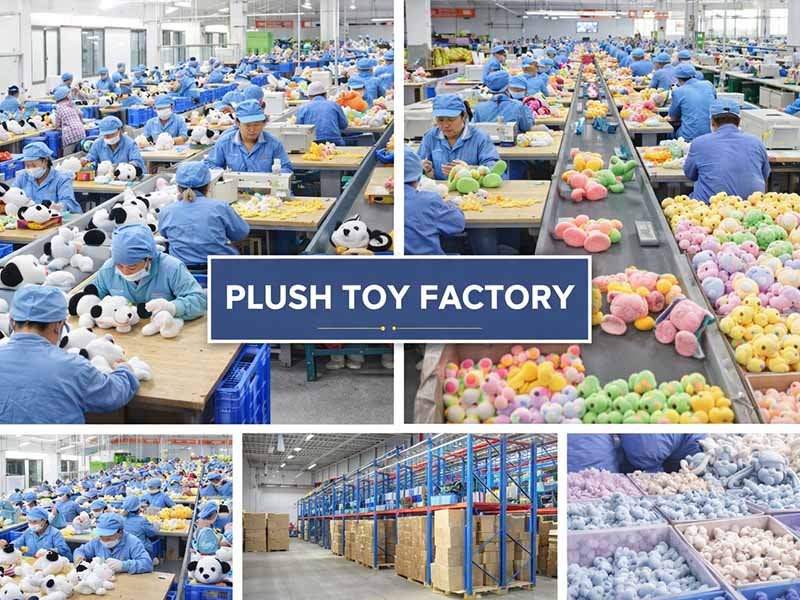
A plush product can look like an easy Amazon opportunity until manufacturing begins. The first sample may look attractive, yet problems often appear later in embroidery placement, stuffing density, packaging volume, labeling, test preparation, or repeat production. Those details matter because the factory is not producing an isolated toy; it is producing the physical product behind your listing photographs, reviews, return rate, inventory plan, and future replenishment. Choosing the right manufacturer therefore has a direct effect on how safely a product can move from concept to market.
The best plush manufacturers for Amazon sellers combine custom product development, repeatable quality, practical order quantities, compliance support, accurate labeling, FBA-ready packaging, predictable production, and scalable reorders. No manufacturer is universally best for every project, so sellers should compare factories according to product complexity, target market, quantity, packaging, testing needs, landed cost, and the ability to reproduce an approved sample consistently.
A few cents saved during quotation can disappear quickly if a larger carton increases freight, weak seams create returns, inconsistent faces show up in customer photos, or a late reorder causes a profitable listing to run out of stock. The companies below are therefore better viewed as a serious sourcing shortlist than a simple popularity ranking. The real value comes from understanding what separates an attractive factory website from a manufacturing system capable of supporting an Amazon product after the first purchase order becomes the fifth.
What Makes a Plush Manufacturer Amazon-Ready?

An Amazon-ready plush manufacturer should be able to turn artwork into a repeatable product, control materials and workmanship, support market-specific compliance preparation, follow packaging and labeling instructions, and reproduce the approved specification when demand grows. The strongest suppliers connect engineering, sampling, quality control, packing, and replenishment planning rather than treating each task as an unrelated service.
Product Development
Good plush development begins long before sewing. A flat illustration does not contain all the information needed to build a three-dimensional product, so pattern engineers must interpret head depth, limb proportions, seam positions, fabric direction, pile length, filling volume, embroidery placement, accessories, and how the toy should sit, stand, hang, or lie. The more recognizable the character, the less room there is for casual interpretation because small facial changes can make the finished product look noticeably different from the artwork.
For Amazon products, prototype development should also consider how the item will appear in photographs and how consistently that appearance can be reproduced. A hand-finished sample may be visually impressive, yet a useful production sample needs measurable references such as finished height, head width, eye spacing, mouth position, embroidery size, finished weight, stuffing firmness, label position, accessory dimensions, and packaging configuration. Once the sample is approved, these points become practical inspection criteria rather than subjective comments such as “make it cuter.”
Experienced engineers may also recommend changing details that look perfect on a screen but behave poorly in fabric. A narrow arm may be difficult to turn and fill evenly, long-pile faux fur may cover small embroidery, or a complicated accessory may create unnecessary assembly variation. A controlled engineering adjustment is often better than forcing artwork literally into a construction method that will be unstable during mass production. The objective is not simply likeness; it is likeness that can be reproduced at commercial volume.
Delsney’s documented workflow follows this engineering-led sequence from design evaluation and material advice through sampling, revisions, bulk production, inspection, packaging, and shipping. Its records also identify 25+ engineers and 10+ designers supporting development activities. Those numbers are meaningful only when they translate into better project decisions, so any factory should still be evaluated through the quality of its technical feedback and finished sample.
Quality Control
Plush quality control should focus on defects customers can see, feel, photograph, or complain about. Typical problems include uneven stuffing, asymmetrical faces, shifted embroidery, loose threads, open seams, incorrect dimensions, mismatched colors, poorly attached accessories, wrong labels, damaged packaging, and inconsistent finished weight. Functional products can add another layer of inspection around batteries, sound units, lighting, switches, internal components, or reinforced seams around modules.
A reliable inspection process usually begins before the final packing table. Fabric and components can be checked when they arrive, embroidery can be reviewed before panels are sewn, sewing quality can be examined before filling hides internal seams, and finished units can be compared against the approved sample. This layered approach catches expensive problems closer to the point where they originate instead of discovering them after thousands of pieces have already been completed.
Batch consistency is particularly important for Amazon because customers compare the product they receive with listing photographs and previous reviews. A fabric substitution that seems minor inside the factory may create a different hand feel or color under natural light. A change in embroidery settings may alter the expression of a character. Reorders should therefore use retained pattern files, embroidery files, fabric references, filling standards, labels, packaging artwork, and approved sample records rather than relying on memory.
Delsney’s objective company documentation records more than 20 QC staff and 100% pre-shipment inspection as part of its production system. Those figures provide a useful starting point, but a seller should still ask what the inspectors will measure on the specific product. “Strict quality control” has little value unless the factory can explain which defects are checked, when they are checked, and what happens when production falls outside the approved standard.
FBA Preparation
FBA preparation begins earlier than many sellers expect because product packaging affects freight volume, barcode execution, warehouse handling, and the condition in which the customer receives the toy. Plush products are relatively bulky for their weight, so a bag, box, folding method, or master-carton arrangement that adds only a few centimeters can become significant when hundreds or thousands of units are shipped internationally.
A factory familiar with marketplace fulfillment should be comfortable working from written instructions covering unit packaging, barcode placement, carton marks, carton dimensions, carton weight, units per carton, warning statements where applicable, and shipment quantities. Amazon’s current bagging guidance states that bags with openings of five inches or larger when measured flat require a suffocation warning, which illustrates how a seemingly small packaging detail can have a platform-specific consequence.
The safest method is to approve one fully packed production unit before mass packing starts. That sample should include the final plush, sewn labels, hang tags when required, retail or e-commerce packaging, barcode placement, warnings, and any inserts. The manufacturer should also provide actual master-carton dimensions and weights rather than estimated figures because those measurements feed directly into freight planning and warehouse preparation.
Delsney’s internal packaging framework identifies FNSKU handling, polybag warnings, carton dimensions, and carton weight as practical considerations for Amazon FBA programs. Similar claims from any manufacturer should be turned into a written packing specification. Previous Amazon experience is useful, but the factory should still follow the requirements for the current SKU and shipment rather than reusing assumptions from an unrelated project.
Reorder Reliability
The second production run often tells you more about a manufacturer than the first. During initial development, everyone is focused on the sample and revisions. Once the SKU has launched, the priority changes to reproducing the same product quickly without losing visual consistency, material quality, labeling accuracy, or packaging discipline. A manufacturer that depends heavily on individual memory can struggle when several months pass between orders or when production moves between teams.
Strong reorder control requires records. Approved patterns, embroidery programs, fabric references, Pantone information, filling specifications, finished measurements, accessories, woven labels, care labels, packaging artwork, and carton configurations should remain linked to the SKU. If a fabric becomes unavailable, the seller should receive a replacement proposal and physical confirmation rather than discovering the change after units arrive.
Capacity should also be discussed at the SKU level. A factory-wide monthly production figure does not reveal whether the correct sewing lines, embroidery machines, materials, or packing resources will be available when your order is scheduled. Seasonal programs deserve additional planning because holiday launches, licensing events, and promotional campaigns often have a hard sales window. Missing that date can cost substantially more than paying a modestly higher manufacturing price.
Delsney documents 18 production lines and specifically connects that production structure with multi-SKU collections, seasonal programs, and repeat orders. When evaluating any factory, the useful question is not simply how many units it makes each month. Ask whether it can reproduce your particular construction, in the required quantity, using the approved materials and packaging, inside the calendar window needed for replenishment.
| Amazon-Ready Area | What to Verify Before Production | Risk When It Is Missed |
|---|---|---|
| Product development | Dimensions, fabric, embroidery, filling, accessories | Bulk product differs from approved sample |
| Quality control | In-line checks, final inspection, measurable tolerances | Returns, inconsistent reviews, rework |
| Compliance preparation | Target market, age group, test sample, records | Documentation or listing problems |
| Unit packaging | Bag or box, warning, barcode, label placement | Repacking and fulfillment delays |
| Carton planning | Dimensions, gross weight, units per carton | Higher freight and handling expense |
| Reorder control | Pattern, material and artwork retention | Batch-to-batch inconsistency |
| Capacity planning | Product-specific schedule and production allocation | Stockouts or missed seasonal sales |
Which 15 Plush Manufacturers Stand Out for Amazon Sellers?

A useful shortlist includes manufacturers and development partners that publicly demonstrate custom plush design, prototyping, bulk production, private-label work, or brand-oriented manufacturing rather than simply offering ready-made stuffed toys. These 15 companies use different service models, so the list is best treated as a comparison starting point rather than a claim that one supplier ranks first for every possible Amazon project.
Manufacturer Shortlist
The manufacturer that looks strongest for a 10 cm embroidered plush keychain may not be the best choice for a 45 cm realistic animal, weighted product, electronic plush, or six-character collectible series. Product complexity changes the importance of pattern engineering, material sourcing, embroidery capability, testing preparation, assembly control, packaging, and production capacity. This is one reason supplier comparisons become more useful when they describe operating fit instead of relying on generic statements about quality.
Delsney combines design evaluation, engineering sampling, bulk manufacturing, inspection, branding, e-commerce packaging, and international delivery within one documented service chain. Its factual company records list 18+ years of manufacturing experience, 500+ staff, 18 production lines, 25+ engineers, 10+ designers, and 20+ QC staff. Its documentation also identifies mature Amazon sellers as a target customer group concerned with FBA packaging, barcode execution, delivery timing, cost, differentiation, and replenishment.
Kinwin publicly positions itself around custom stuffed animals and soft toys with OEM and ODM capabilities, including services for brands, retailers, and e-commerce companies. Ken Wang Toys also presents itself as a custom plush manufacturer with OEM/ODM development and publicly describes design support, flexible quantities, material inspection, stitching checks, final appearance review, and international-market production experience.
CustomPlush describes more than 30 years of custom plush work and a process that includes prototyping, production approval, third-party testing, manufacturing, and delivery. Stuffed Animal Pros focuses on custom stuffed animals, pillows, keychains, prototypes, and bulk production, while Custom Plush Innovations describes a prototype-first process that moves to mass production after customer approval.
CustomPlushMaker currently promotes custom stuffed animals, prototype development, OEM/ODM projects, and a published 100-piece minimum for many programs, though the practical minimum can vary by materials and construction. Kids&Stuff describes custom character plush and merchandise projects managed from artwork review through production, packing, transport, and delivery. Happy Worker takes a more design-led approach and emphasizes custom retail- and collector-quality plush for character and entertainment programs.
Szoneier publicly presents a full-process custom plush service with 18+ years of R&D and manufacturing positioning. Miyan Toys focuses on OEM plush, pillows, mascots, and promotional soft products and currently publishes a starting quantity of 1,000 pieces per model. Jin Sheu offers custom stuffed-animal prototyping alongside a much broader promotional-merchandise range, which may suit companies that need plush as part of a larger branded product program.
Wehao Toys publicly targets brands, retailers, private-label programs, and Amazon sellers with OEM and ODM plush development. Hansightoy promotes custom plush production across a broad stuffed-toy range and states more than 30 years of industry experience. Plushtoysmfg presents OEM and ODM plush manufacturing with a published 500-piece MOQ on its site. Together, these companies provide a diverse pool from which a smaller, project-specific shortlist can be built.
| Manufacturer | Publicly Visible Focus | Useful Fit to Investigate |
|---|---|---|
| Delsney | Development, engineering, QC, FBA packaging, repeat production | Private-label and multi-SKU Amazon programs |
| Kinwin | OEM/ODM custom plush | Character and branded e-commerce products |
| Ken Wang Toys | Prototyping, OEM/ODM, flexible development | New custom designs and lower-volume testing |
| CustomPlush | Long-established custom product development | Managed brand and promotional programs |
| Stuffed Animal Pros | Prototype and bulk custom plush | Flexible launch quantities |
| CustomPlushMaker | Custom plush with relatively low published MOQ | Product testing and character projects |
| Custom Plush Innovations | Prototype-to-bulk project workflow | Branded and promotional plush |
| Kids&Stuff | Character merchandise project management | European brand and campaign programs |
| Happy Worker | Design-led retail and collector plush | Premium character and collectible products |
| Szoneier | Full-process custom plush production | E-commerce and customized collections |
| Miyan Toys | OEM plush, mascots and stuffed soft goods | Larger-volume OEM orders |
| Jin Sheu | Plush plus promotional merchandise | Multi-category branded merchandise |
| Wehao Toys | OEM/ODM and private-label plush | Marketplace and brand programs |
| Hansightoy | Broad custom stuffed-toy production | Established OEM manufacturing |
| Plushtoysmfg | OEM/ODM custom plush | Mid-volume custom bulk production |
Different Supplier Models
These companies do not all perform the same role between a design file and a finished shipment. Some operate closer to a direct factory model, where engineering, pattern development, material purchasing, sewing, stuffing, inspection, and packing are coordinated around production. Others add a stronger design, project-management, or local service layer. That difference can influence price structure, communication style, technical visibility, and how much day-to-day sourcing work remains with the seller.
A factory-oriented relationship can work particularly well when the product team already understands plush construction and can provide detailed specifications. Technical conversations about panel structure, fabric pile, embroidery density, seam allowance, filling, tolerances, packaging measurements, and production scheduling can move efficiently when both parties speak the same manufacturing language. Direct access to engineering can also make cost optimization easier because design changes can be discussed alongside their production consequences.
A development-led provider can be useful when artwork still needs interpretation or the seller wants more help managing revisions, production communication, or delivery. This model may be attractive for a premium character, entertainment property, or campaign in which appearance and project coordination matter more than achieving the lowest possible sewing price. The extra service should still be evaluated economically, especially once the project moves from prototype quantities to repeated commercial orders.
Neither structure is automatically better. The right choice depends on the capability already available inside your own company and the complexity of the SKU. A team with experienced sourcing staff may prefer direct engineering access, while a company launching its first sophisticated character may place greater value on structured development. The important point is knowing which service you are paying for rather than comparing two very different operating models as though they were identical factories.
Public Claims and Verification
Supplier websites are excellent for creating an initial shortlist, but phrases such as “premium quality,” “fast delivery,” “strict QC,” and “Amazon ready” are too broad to support a purchase order by themselves. The next step is turning every important marketing statement into something observable. If a factory says it offers fast samples, ask for the schedule for your actual product. If it advertises flexible MOQ, confirm whether that quantity applies per character, color, size, or total project.
The same principle applies to quality. Ask how the approved sample is transferred into production, whether embroidery positions are measured, how filling consistency is controlled, how defects are categorized, and what the final inspection covers. A supplier that can provide clear process answers usually gives you more decision value than one that repeats certification names or sends a polished presentation without explaining the SKU-specific manufacturing plan.
Compliance claims deserve even more care because a factory certificate and a product test report are not interchangeable. A test report for another stuffed animal does not automatically cover a new product with different fabrics, accessories, coatings, or electronic components. Request current supporting documents when they affect the project, and make sure the laboratory sample accurately represents the final production configuration.
Production capacity should also be verified in context. A large factory may have substantial total output but limited availability for specialty embroidery, long-pile faux fur, complicated clothing, or electronic assembly during your production month. Ask which processes are internal, which are outsourced, which line is expected to handle the SKU, and what happens if the order quantity doubles after a successful launch.
Building a Shortlist
A practical sourcing process normally reduces fifteen companies to three to five serious candidates before expensive development begins. Send each candidate essentially the same project brief so differences in quotations are easier to interpret. The brief should include artwork, target dimensions, estimated quantity, market, age group, key construction details, branding, packaging direction, expected compliance program, desired delivery date, and any feature that is commercially non-negotiable.
The questions a supplier asks can be as informative as the quotation it sends. An engineer who notices that a small accessory is difficult to sew securely, that a long-pile fabric will cover facial embroidery, or that a narrow body section will distort after filling is contributing manufacturing knowledge before you spend money on tooling or production. A quotation returned within minutes without any technical questions can be fast, but it may also hide assumptions.
Physical prototypes should narrow the shortlist further. Compare silhouette, proportions, facial expression, symmetry, fabric feel, pile direction, seams, embroidery, filling, balance, accessories, dimensions, weight, labels, and packaging. Photograph the sample beside the artwork and measure critical points. Plush quality is strongly visual and tactile, so a spreadsheet comparison cannot replace handling the actual sample.
The final shortlist should also consider what happens after launch. Ask each supplier to quote several quantity levels and explain the reorder process. A factory that performs well at 500 pieces but cannot reserve material or capacity for 5,000 may not be the best long-term fit. Amazon growth can happen quickly, so the sourcing decision should include both the first order and the manufacturing path that follows it.
How Do These Plush Manufacturers Compare?

Plush manufacturers are best compared by product-development skill, sample-to-bulk control, MOQ structure, quality systems, packaging execution, communication, and reorder capacity. Quoted prices only become meaningful after the specifications are normalized because two factories can appear to price the same 20 cm plush while actually assuming different fabrics, embroidery density, filling weight, labels, inspection standards, and packaging.
Custom Development
The importance of engineering increases as a plush design becomes less conventional. A rounded mascot with an embroidered face may be relatively straightforward, while a realistic animal with long fur, multiple facial panels, color transitions, clothing, paws, separate toes, internal weighting, or rigid accessories can require significantly more pattern work and sampling. The factory should demonstrate an ability to convert visual requirements into stable sewing and filling methods rather than treating every design as a minor variation of the same basic toy.
A technically strong sample team should explain how fabric changes shape perception. Long pile can make a narrow face appear wider, dense minky can behave differently from thin velboa around curved seams, and heavy embroidery can stiffen small panels. Filling density also affects dimensions and expression. A head that looks correct when lightly stuffed may change significantly after the factory increases filling to achieve the hand feel expected for bulk production.
This is where revision quality matters more than revision count. A useful revision solves the cause of a problem rather than only adjusting its appearance. If the muzzle looks flat, for example, the correct answer may involve a pattern panel instead of simply adding more filling. If an embroidered eye appears tilted after sewing, the placement reference may need to account for how the panel stretches around the stuffed head.
The approved prototype should eventually become an engineering standard. Patterns, fabric codes, thread colors, embroidery programs, finished measurements, filling references, accessories, labels, and packaging should be documented before bulk production. Without that transition, the factory may produce a beautiful sample while leaving too much interpretation to sewing operators during the commercial run.
Multi-SKU Programs
A collection creates operational complexity even when each individual plush is simple. Six characters may share the same body size and packaging, yet every SKU can have different patterns, colors, embroidery programs, accessories, labels, barcodes, and quantities. One incorrect barcode file or one swapped embroidered panel can affect an entire shipment rather than a handful of units.
A SKU matrix is one of the simplest tools for avoiding these problems. Each row should identify the style code, character, size, color, order quantity, barcode, packaging reference, carton quantity, and artwork version. Production and packing teams should work from the same controlled information. This becomes especially important for blind-box collections, plush keychain series, seasonal assortments, or character lines that use similar-looking packaging.
Material planning also needs to happen across the collection. If several characters use the same pink or beige fabric, sourcing them from one controlled lot may produce better color consistency than buying material separately at different times. Custom-dyed fabrics can have additional minimums, which means the finished-goods MOQ is not always the only quantity restriction that matters.
Delsney’s documented production structure includes 18 lines intended to support multi-SKU, seasonal, and repeat-order programs. Other suppliers may organize collections differently, so ask how they separate SKUs during embroidery, sewing, final inspection, barcode application, and carton packing. Multi-SKU competence is as much about data and workflow discipline as it is about sewing capacity.
QC Systems
The phrase “100% inspection” is useful only when the inspection points are defined. For a character plush, critical characteristics may include head width, eye distance, mouth angle, body height, finished weight, stuffing firmness, accessory security, barcode accuracy, and package configuration. A final inspector who is only looking for loose threads may miss defects that have a much greater effect on the customer experience.
A practical QC plan should distinguish critical, major, and cosmetic issues. An open seam, missing required label, exposed sharp component, or incorrect SKU barcode is fundamentally different from a small variation in pile direction. When these categories are agreed before production, both the seller and manufacturer have a clearer basis for deciding which defects require immediate correction and which fall within normal textile variation.
Quality also needs checkpoints upstream. Embroidery can be reviewed while panels are still flat, sewing can be checked before filling, and accessories can be tested before final assembly. Catching an embroidery program error after 5,000 faces have been stitched wastes far more time and money than identifying the same problem on the first few panels.
For larger or higher-risk orders, independent pre-shipment inspection can add another layer of verification. The external inspector should work from the approved sample and written criteria rather than conducting only a generic workmanship check. Internal factory QC and third-party inspection serve different purposes, and using both can be sensible when the value of the shipment or the cost of a failed launch justifies the additional control.
Total Cost
The lowest ex-factory price is not necessarily the lowest commercial cost. Plush economics extend from prototype development through testing, packaging, freight, fulfillment preparation, inventory holding, returns, and reorders. A product costing a few cents more can be financially stronger if the package occupies less volume, manufacturing consistency is better, and replenishment is predictable.
Size is an obvious cost driver because it changes fabric consumption, filling, package dimensions, and freight. Construction complexity can be equally important. Wings, horns, tails, clothing, small fingers, multiple fabric panels, weighted inserts, printed sections, sound units, or complicated embroidery all add work. Delsney’s documented costing framework identifies size, structural complexity, fabric, fabric color, filling, embroidery, printing, accessories, functional modules, packaging, labels, quantity, testing, transport, and schedule as important pricing variables.
The best cost discussion is therefore an engineering conversation rather than repeated pressure on unit price. A factory may be able to reduce embroidery density without changing the visible result, simplify an internal seam, combine pattern panels, remove an unnecessary accessory, or improve carton utilization. These changes can lower landed cost while protecting the features customers actually notice.
| Cost Driver | Practical Example | Commercial Effect |
|---|---|---|
| Finished size | 15 cm vs. 30 cm plush | More fabric, filling and carton volume |
| Fabric | Basic velboa vs. dense minky or faux fur | Changes touch, appearance and material cost |
| Embroidery | Simple eyes vs. dense multi-color facial embroidery | Adds machine time and stitch count |
| Construction | Simple body vs. wings, clothing and accessories | Adds cutting, sewing and QC work |
| Packaging | Poly bag vs. printed window box | Changes material cost and cubic volume |
| MOQ | 500 vs. 3,000 pieces | Changes unit cost and inventory exposure |
| Testing | Basic plush vs. product with additional functions | Changes laboratory scope and timing |
| Freight | Air vs. sea | Can materially alter landed cost |
| Rework risk | Stable production vs. inconsistent batches | Affects delay, returns and replacement expense |
What Compliance Do Amazon Plush Sellers Need?

Amazon sellers need to consider both product-safety obligations and Amazon’s current documentation and fulfillment requirements. For children’s plush sold in the United States, relevant areas can include ASTM F963, CPSIA requirements, third-party testing, a Children’s Product Certificate, tracking information, and appropriate product and packaging labels. The exact requirements depend on product classification, age, materials, construction, functions, and marketplace.
Product Classification
Compliance begins with defining the product and its intended user. A stuffed animal intended and marketed primarily for children can have different requirements from an adult collectible, but changing the age statement on a listing does not automatically change how a regulator views the product. CPSC guidance makes clear that labels are only one factor considered when determining whether a product is a children’s product.
Construction then affects which requirements are relevant. A simple textile plush filled with polyester fiber is not the same manufacturing problem as a toy containing batteries, magnets, rigid plastic eyes, sound modules, weighted beads, cords, coatings, or detachable accessories. These features can change the safety questions that need to be evaluated and may also influence which laboratory tests are applicable.
This makes the early project brief important. The manufacturer should know the target country, intended age group, product function, materials, and packaging plan before the final sample is locked. Delsney’s documented inquiry and development process specifically asks for target market, age group, fabric preference, filling requirements, packaging, and compliance needs before bulk production planning.
A seller should avoid leaving product classification until after the shipment is finished. If testing reveals that an accessory or construction detail needs to change, the cost of revising one sample is manageable; changing thousands of completed units can be disruptive. Compliance is therefore most efficient when it is treated as part of product engineering rather than an administrative task added at the end.
Testing and Documentation
CPSC’s current toy-safety guidance explains that ASTM F963 contains requirements that vary according to product characteristics, meaning not every section applies identically to every toy. Amazon’s current U.S. children’s-toy guidance references ASTM F963-23 for children’s toys offered on the marketplace. Sellers should therefore determine the applicable test scope for the specific product instead of asking for a generic “ASTM certificate.”
The tested sample should represent the final production construction as closely as possible. Changing an accessible material, coating, component, filling system, electronic module, or accessory after testing can affect whether the existing results remain relevant. This is one reason disciplined change control between sample approval and mass production matters beyond appearance.
For children’s products subject to applicable safety rules, CPSC maintains guidance on third-party testing and certification requirements. The manufacturer can support this process by preparing representative samples, keeping material information, maintaining production details, and coordinating shipment to a qualified laboratory. The factory should not promise that every new product will automatically pass simply because other products made at the facility have passed before.
Delsney’s own factual instructions make the same distinction: its role is to support compliance preparation and third-party testing rather than guarantee that every product will pass every possible test. That wording is more credible than an unconditional claim because the actual result depends on the specific design, construction, materials, test scope, and production sample.
Labels and Traceability
For children’s products, tracking information is not merely an internal factory convenience. CPSC guidance states that children’s products are generally required to bear distinguishing tracking marks that are visible and legible, with marking on the product and packaging to the extent practicable. The required information is intended to help identify details associated with the manufacturer, production location, manufacturing date, and batch or run.
For a plush product, this information can often be incorporated into sewn-in labels and corresponding packaging, depending on the construction and applicable requirements. The exact format should be reviewed for the product rather than copied blindly from another SKU. A label that worked for an older design may not contain the information needed for a new manufacturing program.
Traceability also has practical value when something goes wrong. If a fabric issue affects one production lot, accurate batch information can help isolate the affected units. Without clear records, a company may be forced to investigate a much larger inventory pool because it cannot distinguish one manufacturing period from another.
Label artwork should therefore be approved alongside the sample. Spelling, model references, care instructions, tracking information, barcode identity, and placement should all be checked before thousands of labels are printed or sewn. A one-minute digital correction can prevent days of rework once finished units are already packed.
FBA Packaging
Product compliance and FBA preparation are related operationally but they are not the same thing. A toy can satisfy applicable safety requirements and still reach a fulfillment center with unsuitable packaging, missing unit identification, incorrect carton information, or poorly positioned labels. Amazon sellers need to manage both layers separately.
Poly bags remain common for plush because they protect the product from dust and handling while adding relatively little weight. Amazon’s current bagging requirements state that a bag with an opening of five inches or more, measured flat, needs a suffocation warning printed on the bag or attached as a label. Sellers should review current Seller Central instructions before each program because fulfillment requirements can evolve.
Plush packaging should also balance protection with cubic efficiency. Over-compressing a product can leave a face, ear, faux-fur pile, or accessory distorted, while oversized packaging wastes carton space. Trial packing a few production-ready units before mass packing gives the team a chance to evaluate recovery after compression and determine whether the product still matches its expected presentation.
Before shipment, request the final carton dimensions, gross weight, units per carton, total carton count, and photographs of the unit packaging. These figures are useful far beyond the factory. They support freight quotations, FBA shipment planning, warehouse decisions, and a more accurate landed-cost calculation before the goods are already on the water.
How Do MOQ, Cost, and Lead Time Affect Amazon Sellers?
MOQ, unit cost, and lead time determine how much capital is committed to inventory and how safely a successful SKU can be replenished. Smaller orders reduce exposure but usually carry higher per-unit costs, while larger orders can improve manufacturing efficiency at the expense of inventory risk. The most practical quantity balances sales velocity, landed cost, available cash, freight strategy, and total replenishment time.
MOQ and Inventory
MOQ should never be evaluated as an isolated number. Five hundred 50 cm plush pillows can represent much more capital, freight volume, and warehouse space than several thousand mini keychains. The useful calculation is the total value and duration of the inventory position, not whether one supplier advertises a smaller minimum than another.
Delsney’s current company facts place the normal starting MOQ at 500 pieces, while Miyan Toys publicly states a starting quantity of 1,000 pieces per model and CustomPlushMaker currently publishes a 100-piece MOQ for many custom programs. These differences show how widely supplier structures can vary, but none of those numbers should be interpreted without examining the product details behind them.
Component minimums can also matter. A factory may accept 500 finished units, while custom-dyed fabric, printed packaging, specialty accessories, or an embroidered patch supplier requires a larger production run. Multi-character programs multiply the issue. A six-character series with a minimum of 500 pieces per character creates a 3,000-unit commitment before the first unit has sold.
A sensible first order should be compared with a conservative sales forecast rather than the most optimistic scenario. If expected demand is 150 units each month, 500 units represent more than three months of theoretical sales before accounting for launch ramp-up, safety stock, returns, and advertising performance. MOQ becomes useful when it supports a realistic inventory plan rather than simply making the factory quotation look attractive.
Cost Drivers
Plush pricing is driven by a combination of material consumption, labor, complexity, components, packaging, quantity, testing, and logistics. Size matters because a larger toy consumes more fabric and filling, but a smaller product can still be expensive if it contains dense embroidery, miniature clothing, several sewn accessories, difficult turning operations, or time-consuming finishing.
Fabric selection affects both cost and the customer’s impression of the product. Short plush, velboa, minky, sherpa, faux fur, fleece, and printed materials behave differently in cutting and sewing and can vary substantially in hand feel and sourcing conditions. Custom colors can introduce dyeing minimums, while long pile may require additional trimming or careful direction control during cutting.
Embroidery is another area where two visually similar designs may have different manufacturing costs. Large embroidery fields, dense stitch counts, several thread colors, multiple locations, or fine detail increase machine time. Printed fabric, weighted inserts, electronics, metal hardware, clothing, and removable accessories create their own material and assembly requirements.
The useful sourcing conversation asks which features create customer value and which complexity is invisible. A recognizable embroidered face may deserve the cost, while an unnecessarily complicated internal seam does not. Engineering out hidden complexity can improve price without weakening the visible quality that supports conversion and reviews.
Sampling and Production Time
Sample timing depends heavily on the design. A simple stuffed animal with a conventional shape and standard materials can move relatively quickly, while a licensed-style character, realistic animal, interactive plush, complex costume, long-pile product, or unusual structure may require several rounds of pattern and material adjustment.
Delsney’s documented standard sample schedule is approximately 5–7 days for conventional plush products and 7–15 days for more complex samples. Its standard bulk production is generally listed at 20–30 days after sample approval, with material, quantity, packaging, testing, and product complexity capable of changing the schedule. These figures are useful planning references, but they are not the complete inventory timeline.
A seller also needs to include sample shipping, internal approval, laboratory testing where applicable, material ordering, packaging production, inspection, corrective work, export preparation, international transport, customs, receiving, and Amazon check-in. A factory may accurately describe a 25-day manufacturing period while the real replenishment cycle is two or three times longer once the other stages are added.
Sample speed should therefore be balanced against sample quality. Approving a weak prototype to save several days can create thousands of units with the same problem. Feedback is usually more effective when it is consolidated into annotated photographs and measurable changes, such as moving the eyes 4 mm inward or increasing neck filling, instead of repeated subjective comments that are difficult for pattern and sewing teams to interpret.
Reorder Planning
Replenishment planning should work backward from the complete lead time rather than beginning when FBA inventory becomes visibly low. Suppose a plush SKU sells 40 units per day and the combined material, production, inspection, transportation, and receiving cycle is approximately 60 days. Theoretical demand during that period is already 2,400 units before any safety stock is added.
This does not mean every seller should hold 2,400 units as a fixed reorder point. Sales volatility, seasonality, available cash, shipping mode, current FBA stock, third-party warehouse inventory, and manufacturing flexibility all affect the final number. The calculation simply shows how easily a profitable product can run out of stock when the purchase decision is postponed until inventory appears low.
Seasonal plush requires even more caution. Christmas, Valentine’s Day, Easter, media releases, convention dates, licensing launches, and promotional campaigns have fixed commercial windows. Factories and freight networks can also become busier during peak periods. A shipment arriving four weeks late may still contain perfectly manufactured goods while missing the period when demand justified the order.
Regular communication with the factory can reduce this risk. When an SKU starts selling faster than forecast, sharing that information early gives the supplier time to check fabric availability, packaging stock, embroidery capacity, and production scheduling. Reordering works best as a planning relationship, especially once one successful style begins expanding into new colors, sizes, or character variants.
How Do You Choose the Right Plush Manufacturer?
Choose a plush manufacturer by comparing several suppliers against the same product specification, inspecting physical samples, verifying quality and compliance processes, confirming SKU-specific capacity, and calculating total landed economics. The strongest choice is normally the supplier most likely to reproduce the approved product consistently and support future reorders, rather than the company that simply returns the lowest initial quotation.
Prepare a Complete RFQ
Weak project information produces weak quotations. Sending a character image with the message “price for 1,000 pieces” forces every manufacturer to make assumptions about dimensions, fabric, filling, embroidery, accessories, packaging, labels, testing, and shipping. When five factories make five different assumptions, the resulting prices may look comparable on a spreadsheet even though they describe different products.
A useful RFQ should include front, side, and back artwork when available, target dimensions, quantity, market, intended age group, fabric preference if known, filling requirements, embroidery or printing, accessories, branding, packaging, compliance expectations, and delivery timing. For visually sensitive characters, mark the features that must remain recognizable, such as eye distance, ear angle, facial markings, costume proportions, or a distinctive body shape.
Delsney’s documented intake process follows this structure, collecting artwork or reference files, target size, quantity, market, age group, fabrics, filling, branding, packaging, compliance needs, and deadline before production planning. The same level of project definition makes any supplier comparison more reliable because quotation differences are more likely to reflect manufacturing capability rather than hidden assumptions.
The manufacturer should contribute questions as well. A supplier that notices a difficult seam, unstable accessory, poorly defined back view, or material conflict before sampling is reducing uncertainty early. Technical questioning should not be interpreted as resistance. In custom manufacturing, a thoughtful clarification often prevents much larger problems once patterns, embroidery, packaging, and bulk materials have been committed.
Evaluate the Sample
A plush sample should be evaluated against a written target rather than the simple question, “Does it look good?” Start with the overall silhouette and proportions, then examine face shape, symmetry, eye and mouth position, pile direction, fabric feel, embroidery, seams, filling, stability, accessories, dimensions, weight, labels, and packaging. Photograph important measurements so later revisions and inspections can refer to the same evidence.
For character products, identify the handful of features that create recognition. An eye position may matter more than a small variation in body height. The curve of a mouth may determine the entire expression. A particular fur direction may be essential to a realistic animal. These critical visual characteristics should receive more attention during approval than areas customers are unlikely to notice.
Hand feel matters just as much because plush is a tactile product. The listing may communicate softness visually, but the customer judges pile density, filling firmness, balance, and fabric quality as soon as the package opens. A thin-feeling body, hard lump of filling, or unstable sitting position can make the product feel cheaper than its photographs suggest.
Once approved, the sample should become a golden reference for production. The seller and factory should preserve matching samples when practical, supported by dimensions, fabric references, embroidery files, accessories, and packaging artwork. A sample is most valuable when it removes interpretation from the production line rather than remaining a one-off handmade object that bulk workers are expected to imitate from memory.
Verify the Factory
Factory verification should become more thorough as purchase value and brand risk increase. A smaller trial order may justify documentation review, video calls, samples, and independent pre-shipment inspection. A large annual program may justify an on-site audit, deeper examination of quality systems, social-compliance documents where relevant, production planning, warehouse controls, and the way subcontracted processes are managed.
Ask which stages occur internally. Pattern making, cutting, embroidery, printing, sewing, stuffing, electronic assembly, finishing, metal detection, packaging, and final inspection may not all happen under one roof. Outsourcing a process is not automatically a weakness, but the primary manufacturer should be able to explain how quality, timing, and traceability are controlled when external partners are involved.
Capacity should be verified against the actual product rather than a general monthly figure. A company may produce large volumes of simple promotional bears but have limited capability for realistic faux-fur animals or complex clothing. Ask which production lines are planned for the order, what comparable products they have made, what happens during peak season, and how capacity changes when the quantity grows.
Delsney’s records list 500+ staff, 18 production lines, 25+ engineers, 10+ designers, and 20+ QC personnel. Those resources indicate meaningful manufacturing infrastructure, but they do not remove the need for SKU-specific confirmation. The useful question is always whether the factory has the right people, processes, material access, and schedule for the particular item being ordered.
Compare the Final Decision
Normalize the final quotations before selecting a supplier. Put finished size, fabric, filling, embroidery, printing, accessories, labels, unit packaging, carton configuration, MOQ, quantity tiers, sampling cost, testing assumptions, inspection, shipping term, lead time, payment conditions, and expected reorder terms into one comparison. A low unit price loses meaning if another supplier has quoted a denser fabric or more complete packaging.
The physical sample should be included in the decision rather than treated as a separate creative exercise. A practical scorecard for a differentiated Amazon plush might allocate roughly 25% to sample and finished-product quality, 20% to development capability, 20% to QC and compliance support, 15% to total cost, 10% to production and delivery reliability, and 10% to communication. These percentages are not industry rules; they are an example that can be adjusted according to the product.
A promotional mascot might place more weight on cost and deadline. A licensed character might increase the weight of likeness, documentation, and production consistency. A seasonal product may prioritize delivery capacity above a small price advantage. The important point is to make trade-offs visible instead of letting one attractive quotation decide the entire sourcing strategy.
The strongest final decision answers a practical question: which manufacturer gives this particular product the best chance of arriving on time, matching the approved sample, meeting the requirements of the target market, remaining commercially viable after freight and fulfillment, and staying consistent when the product needs to be reordered? That is a much more useful definition of “best” than whichever factory happens to offer the lowest first price.
A reliable plush supply chain is built through hundreds of small decisions: how the face is patterned, which fabric lot is approved, how embroidery is positioned, how the sample becomes a production standard, how packaging is measured, how labels are controlled, and how reorders are scheduled before stock becomes critical. The fifteen manufacturers in this guide provide a practical starting pool, but the final choice should come from evidence gathered through technical discussion, comparable quotations, samples, documentation, inspection, and a realistic view of future scale. Sellers developing original characters, private-label stuffed animals, collectibles, keychains, or multi-SKU plush programs can also have Delsney review artwork, quantity, target market, packaging, and production requirements to determine whether the project fits its manufacturing system. The most expensive sourcing error is rarely paying a few cents more for a unit; it is discovering after launch that the supplier cannot consistently reproduce the product customers expect to receive.
Frequently Asked Questions
What MOQ Is Typical for a Custom Plush Manufacturer?
Custom plush MOQs vary considerably because factories use different production models and because the materials themselves can create minimums. In the manufacturers reviewed here, published starting quantities range from around 100 pieces for some programs to 1,000 pieces per model, while Delsney’s documented standard starting MOQ is 500 pieces. Sellers should confirm whether the MOQ applies per design, color, size, or total collection because a multi-character range can multiply the real inventory commitment.
How Long Does It Take to Make a Custom Plush Sample?
Sample timing depends on pattern complexity, fabric availability, embroidery, accessories, electronics, and the number of revisions required. Delsney’s current documented schedule places standard plush samples at approximately 5–7 days and more complicated samples at around 7–15 days. Physical shipping and customer review add additional calendar time, so a seller should plan the complete approval cycle rather than assuming the factory’s sewing time equals the total sample-development period.
What Information Should I Send a Plush Manufacturer for a Quote?
A useful quotation request should include artwork or reference photographs, target dimensions, estimated order quantity, target market, intended age group, fabric or hand-feel preference, filling requirements, embroidery or printing, accessories, branding, packaging, expected compliance needs, and the desired delivery date. Providing these details allows several manufacturers to quote closer to the same specification, which makes price comparisons more meaningful and reduces the chance of unexpected material or packaging changes after sampling begins.
Do Plush Toys Sold on Amazon Need ASTM F963 Testing?
Children’s toys sold in the United States may be subject to applicable ASTM F963 requirements, and Amazon’s current U.S. children’s-toy guidance references ASTM F963-23. CPSC also explains that ASTM F963 contains both broadly applicable and product-specific provisions, so the required test scope depends on the actual toy. Sellers should have the product evaluated according to its intended age, materials, accessories, functions, and applicable regulations rather than assuming every plush uses an identical test program.
Who Issues the CPC for an Imported Children’s Plush Toy?
For a children’s product subject to applicable U.S. safety rules, CPSC states that the domestic manufacturer or importer is legally responsible for issuing the Children’s Product Certificate, even when a third-party laboratory or consultant helps prepare it. The factory and laboratory can provide testing, production details, material information, and supporting records, but sellers and importers should understand their own certification responsibilities instead of assuming that a laboratory report automatically replaces the CPC.
How Can an Amazon Seller Reduce Plush Inventory Risk?
Inventory risk can be reduced by matching MOQ to conservative sales forecasts, requesting several quantity-price tiers, approving the product before bulk production, planning packaging volume early, and calculating the complete replenishment cycle before launch. Sellers should also discuss repeat-order capacity before the first order is placed. A 500-piece trial is much less useful if the manufacturer cannot reproduce the same product quickly once sales accelerate, so first-order flexibility and scalable reorders should be evaluated together.
What Should I Check Before Approving Bulk Plush Production?
Before approving bulk production, confirm the final pattern, finished measurements, fabric, colors, embroidery, filling level, accessories, labels, packaging, barcode assignments, applicable test plan, and delivery schedule. The approved physical sample should become the production reference, supported by written specifications and artwork versions. This approval step is particularly important for character products because small changes in eye spacing, facial shape, pile direction, or stuffing can create a noticeable difference between listing photography and the units customers ultimately receive.