Skip to content

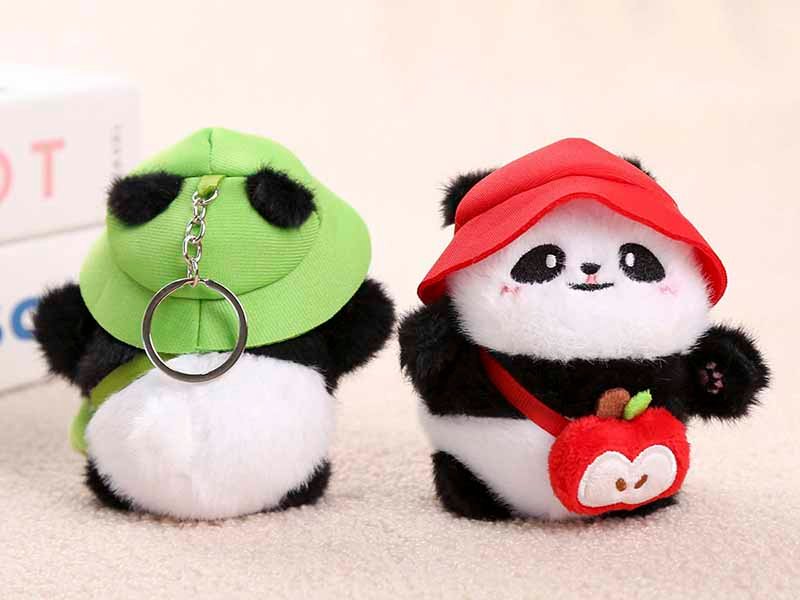
A plush character can look perfect on screen and still lose its personality once a small hat collapses, a backpack stretches out of shape, or a pair of miniature boots becomes too soft to hold the intended silhouette. That is the point where fabric selection stops being a cosmetic decision and becomes a product-development decision. Soft pile fabrics are excellent for warmth and touch, but they are not automatically the best choice for every component attached to a plush product. Structured accessories need a careful balance of stiffness, thickness, seam control, surface appearance, durability, and scale.
Canvas is a strong choice for structured plush accessories when the design needs clearer edges, better shape retention, and less stretching than minky, velboa, fleece, or faux fur normally provide. It works especially well for miniature bags, hats, shoes, straps, costume panels, and props, provided that fabric weight, reinforcement, seam engineering, accessory scale, packaging pressure, and target-market safety requirements are evaluated together during sampling.
The most useful way to think about canvas is not as a replacement for plush fabric but as a structural tool. Imagine a mascot with a tiny canvas backpack: the body should still feel soft, while the backpack should read instantly as a bag instead of disappearing into the character’s back. That contrast between softness and structure is where canvas earns its place. The rest of the development work is making sure that the same clean shape survives sewing, stuffing, packing, bulk production, and real-world handling.
What Is Canvas Fabric for Plush Accessories?

Canvas used in plush accessories is a stable woven material selected for components that need more body, cleaner outlines, or better resistance to stretching than conventional pile fabrics can provide. Its main value is controlled structure rather than softness. In well-developed plush products, canvas is usually applied selectively to bags, hats, footwear, straps, panels, or props while softer fabrics remain on the main huggable surfaces.
Structure and Surface
Canvas is usually a plain-woven fabric with a relatively stable relationship between warp and weft yarns. Compared with minky, velboa, short plush, fleece, or faux fur, it normally has little or no pile, so its cut edges, seam lines, printed graphics, and panel geometry remain easier to read. That stability is useful when the accessory needs a square corner, a visible gusset, a crisp flap, or an opening that should not stretch wider after stuffing. The benefit is functional: canvas gives the pattern a more predictable surface to work with.
The fabric name alone is not enough to specify performance. Plush development teams should look at GSM or ounce weight, actual thickness, weave density, stretch behavior, fraying, surface finish, colorfastness, embroidery performance, shape retention, and compression recovery. Delsney’s material-development framework uses the same functional approach, including thickness, stretch behavior, embroidery compatibility, shape retention, compression recovery, and color-lot consistency as practical selection factors. A lighter dense canvas can sometimes hold shape better than a heavier but loosely woven fabric, so the swatch should always be tested in the finished accessory construction.
Canvas and Plush Roles
Soft plush fabrics and canvas solve different problems. Minky offers a smooth, soft hand; velboa and short plush can preserve small facial or graphic details while maintaining softness; faux fur creates visible texture and realistic animal effects; fleece is flexible and forgiving. Canvas contributes surface stability, resistance to uncontrolled stretch, and cleaner geometry. A product that uses both groups intelligently can feel soft where people naturally touch it while still keeping structured accessories visually distinct and dimensionally controlled.
| Material | Approximate Role in Plush Development | Typical Accessory Use | Common Risk to Control |
|---|---|---|---|
| Canvas | Structure, edge definition, dimensional stability | Bags, hats, shoes, straps, panels | Excess stiffness or seam bulk |
| Minky | Soft hand and smooth pile | Soft clothing, body surfaces, linings | Stretch and shape distortion |
| Velboa / short plush | Low pile with clean visual detail | Small characters, soft panels, trims | Limited structural support |
| Faux fur | Texture and realistic hair effect | Fur trims, tails, animal details | Bulk and hidden seam lines |
| Fleece | Soft flexibility and simple handling | Soft apparel, linings, casual accessories | Relaxed shape and edge curl |
The strongest designs often use mixed-material construction rather than forcing one fabric to perform every task. A minky character can wear a canvas backpack with a short-plush flap, or a canvas hat can use a softer lining around the head opening. These combinations keep the tactile character of the plush while adding structure exactly where the design needs it. They also create more options for color blocking, embroidery, printing, and brand details without making the whole toy feel hard or over-engineered.
When Canvas Is Not the Answer
A collapsing accessory does not automatically mean the fabric is too soft. The underlying problem may be an oversized pattern panel, insufficient gusset depth, a seam placed in the wrong direction, too much body filling pushing against the accessory, or a weak attachment point that pulls the component out of shape. Simply moving to a heavier canvas can hide one problem while creating another, such as thick corners, difficult turning, visible ridges, or a scale mismatch between the accessory and the character.
Before increasing fabric weight, examine the full construction. Check whether reinforcement is needed only at the brim, flap, toe, or strap anchor; whether the accessory needs a revised paper pattern; whether the plush body should be less firmly filled around the attachment zone; and whether the finished component must flex during normal use. Delsney treats complex elements such as clothing, wings, horns, tails, and accessories as pattern-engineering issues as well as material issues. That approach is important because a stable fabric cannot compensate for a pattern that does not create the intended three-dimensional form.
Which Plush Accessories Suit Canvas?

Canvas suits plush accessories that need visible geometry, controlled edges, moderate stiffness, or stronger attachment areas. The most common applications are miniature hats, shoes, backpacks, pouches, straps, uniform pieces, tool holders, costume panels, and selected props. The smaller the accessory becomes, the more carefully fabric thickness must be controlled because seam allowance, lining, embroidery, and folded layers occupy a larger share of the finished shape.
Hats and Headwear
Miniature hats are a good canvas application because a brim or crown can lose its identity quickly when made entirely from stretch plush. Canvas helps a baseball-style cap, workwear hat, explorer hat, uniform cap, or bucket shape keep a recognizable outline after sewing and handling. The key is scale. A full-size cap can accommodate multiple heavy seams and a substantial brim, while a hat only 40-60 mm wide may become bulky if the same construction logic is miniaturized without adjustment.
Developers should check finished opening circumference, crown height, brim projection, seam convergence at the top, reinforcement thickness, and whether the hat is removable or permanently attached. Differences of only 2-4 mm can be obvious on a 15 cm character. A brim that is 4 mm too long can change the expression by covering the eyes, while a crown that is only slightly too deep can make the character look smaller-headed. The sample therefore needs to be judged on the stuffed character, not on the sewing table alone.
Bags and Pouches
Backpacks, shoulder bags, satchels, pouches, and utility pockets are among the clearest uses for canvas because these designs rely on a readable outer silhouette. A soft bag made from high-stretch plush may widen after filling, flatten against the character, or lose its gusset. Canvas can help preserve width, depth, flap shape, and opening geometry, especially when the accessory also carries printed graphics, patches, or embroidery that need a stable surface.
The bag pattern matters just as much as the cloth. A 60 mm wide backpack with a 12 mm gusset requires a different construction from a flat 60 mm decorative pouch. Strap width, strap anchor depth, flap length, lining, and top opening should be defined as finished measurements. Narrow straps are a frequent problem: heavy canvas folded into multiple layers can become too thick to turn cleanly, so a lighter woven strip, tape, or localized reinforcement may give a neater and stronger result than simply using the same heavy cloth everywhere.
Shoes and Costume Parts
Miniature shoes benefit from selective structure rather than uniform stiffness. The toe and side panels may need canvas to maintain form, while the ankle opening needs enough flexibility to fit around a stuffed foot without creating a hard ring. Designers should evaluate toe profile, sole thickness, heel shape, opening circumference, the number of layers meeting at the front seam, and whether the footwear is removable. A shoe that looks impressive off the toy can still fail if it distorts the leg or is difficult to position consistently during assembly.
The same principle applies to aprons, chest panels, belts, tool pouches, uniform tabs, small armor-inspired textile pieces, and other costume details. The goal is not to make these parts rigid; it is to give them enough definition that the character design reads correctly from normal viewing distance. When only one edge or panel needs support, reinforcement can often be localized. That reduces material thickness, keeps the toy comfortable to handle, and simplifies bulk sewing while preserving the intended visual structure.
Accessory Scale
Scale changes the meaning of fabric weight. A canvas that feels pleasantly medium-weight in a full-size tote can behave like board in a 30 mm pouch once it is doubled, lined, folded, and topstitched. Conversely, an extremely light woven fabric may be appropriate for a 35 mm hat when the brim receives a narrow internal stabilizer. These are development decisions, not rules that can be settled by a fabric catalog alone.
A useful screening method is to compare finished dimensions against the number of material layers at the thickest point. Under roughly 40 mm, seam bulk often dominates the form, so lightweight woven options deserve priority. Between about 40 and 80 mm, light-to-medium canvas becomes easier to manage. Larger accessories can accept more body, but even then, the correct choice should be confirmed through a real sample because coating, weave density, lining, embroidery, and reinforcement can change how the material behaves.
Which Canvas Type Should You Choose?
Choose canvas according to finished accessory size, required stiffness, sewing complexity, surface decoration, expected handling, and packaging pressure. Fiber content matters, but weight, weave density, finish, thickness, lining, and reinforcement usually have a stronger influence on the result. The best construction is rarely the heaviest available canvas; it is the lightest practical structure that repeatedly holds the approved shape without creating bulky seams.
Cotton or Polyester
Cotton canvas is often selected when the design calls for a natural textile appearance, softer visual character, or workwear and lifestyle references. It can suit miniature totes, aprons, casual hats, uniform details, and shoes. However, cotton-based materials should be checked for dimensional change, shade variation, and behavior after finishing or washing. A pattern approved with one fabric lot should not be assumed to behave identically if the next lot has a different finish, weave density, or shrinkage profile.
Polyester or polyester-rich canvas can be useful when dimensional stability, color consistency, moisture resistance, or specific print processes are important. It may recover differently after compression and can behave differently under heat-transfer decoration. Blends offer another option when the project needs a balance of natural appearance and dimensional control. Fiber content should therefore be recorded together with weight, finish, fabric code, and approved hand feel. Describing a material only as “100% cotton canvas” is too broad for reliable production because many very different constructions fit that description.
Weight and Thickness
Canvas is commonly sold by ounces per square yard or by GSM. One ounce per square yard is approximately 33.9 GSM, which makes it possible to compare suppliers using different systems. For plush accessories, weight ranges are best treated as screening bands rather than fixed specifications. A dense 300 GSM fabric may sew more firmly than a looser 350 GSM fabric, and a coating can make two materials with similar weight feel completely different in the finished product.
| Approx. Canvas Weight | Approx. GSM | Plush Accessory Direction | Main Issue to Check |
|---|---|---|---|
| 6-8 oz/yd² | 203-271 GSM | Small hats, light pouches, decorative panels | May need local reinforcement |
| 8-12 oz/yd² | 271-407 GSM | Bags, larger hats, straps, costume panels | Seam bulk on small parts |
| 12-16 oz/yd² | 407-542 GSM | Larger structured accessories | Difficult curves and thick junctions |
| 16 oz/yd²+ | 542 GSM+ | Specialized large accessories | Often excessive for miniature parts |
Flat swatches can be misleading because accessory construction multiplies thickness. A 300 GSM canvas may feel moderate as one layer but become much firmer after two layers, lining, embroidery backing, folded seam allowance, and topstitching are combined. For a 50 mm bag, that stack can consume valuable internal space and make the corners difficult to turn. The reliable method is to build the actual accessory with the proposed production fabric and inspect both the exterior and the internal seam stack before approval.
Coatings and Finishes
Coatings can change canvas performance more than many product teams expect. Water-resistant treatments, resin finishes, surface laminations, or wax-like treatments may increase stiffness, reduce flexibility, create visible needle marks, change friction under the presser foot, or alter how a printed or embroidered decoration sits on the surface. A finish that is helpful for a full-size outdoor bag may be unnecessary or uncomfortable on a small character accessory that is mainly decorative.
Before approval, bend and fold the finished fabric at the same radius used in the accessory. Check whether the finish cracks, whitens, or stays permanently creased. Run the proposed embroidery or print because decoration can change local stiffness. Also look at fraying and turning behavior after the fabric is cut. The goal is to understand the finished construction, not to select a material because a coating sounds technically advanced. If the accessory does not need water resistance or extra surface protection, an uncoated option may be simpler and more reliable.
Color, Print and Embroidery
Structured accessories often carry high-visibility brand details. A miniature backpack may include a logo, woven patch, printed pattern, or embroidered emblem, and those elements occupy a much larger share of the visible surface than they would on full-size apparel. On a 50 mm wide panel, a 2 mm logo shift equals 4% of the total width, so placement errors that look tiny on a ruler can appear obvious when the finished character is photographed for retail or e-commerce use.
Print scale should be checked on the actual weave because small lettering and thin graphic lines can lose clarity. Dense embroidery should also be sampled because it can pull the panel inward, cause puckering, or make the center of a small bag significantly stiffer than the surrounding cloth. For repeat production, the material specification should include fabric code, composition, weight, finish, approved color reference, decoration method, reinforcement, and lining. That level of detail gives production teams a much better chance of reproducing the appearance of the approved sample.
How Do You Sew Canvas With Plush Fabric?

Canvas and plush can be sewn together successfully when their different behaviors are controlled through pattern design, sewing sequence, reinforcement, and attachment planning. Canvas stays relatively stable during stitching, while plush may stretch, compress, or shift under the presser foot. Clean production depends on controlling that transition so the structured accessory keeps its geometry without pulling the soft body out of shape.
Lining and Reinforcement
Lining should be added when it solves a clear problem. It can hide raw seams inside a miniature bag, cover embroidery backing, create a cleaner opening, reduce friction against the plush body, or improve the appearance of a removable accessory. At small scale, however, every added layer matters. A 40 mm pouch made from two canvas layers, a lining, and full interfacing can become too thick to turn properly even when each material feels reasonable when handled separately.
Selective reinforcement is often more effective than reinforcing the whole component. A hat may need support only in the brim; a backpack may need extra stability around strap anchors and the top opening; a shoe may need support in the toe and sole while remaining flexible around the ankle. Depending on the product, developers may evaluate thin woven or nonwoven interfacing, felt, foam, EVA, additional fabric layers, or localized patches. Reinforcement should also be considered in relation to target age group and safety because internal materials must remain securely enclosed throughout use.
Seam Engineering
Miniature construction magnifies seam problems because seam allowance occupies a large percentage of the panel. If a 35 mm wide piece uses 5 mm seam allowance on both sides, 10 mm of the original width is consumed by seam allowance before the piece is turned. That is nearly 29% of the panel width, which helps explain how a design that looks slender in artwork can become thick and rounded after sewing.
Corners, narrow straps, and multi-layer junctions need particular attention. A sharp 90-degree corner may look attractive on a drawing but become difficult to turn cleanly in dense canvas. A slightly larger corner radius can improve appearance and production consistency. Where several seams converge, excessive layer stacking can create a hard lump or push decorative stitching away from its intended location. Stitch length should also suit the material: extremely short stitching can perforate dense cloth, while very long stitching may look rough and provide poor control on a small edge.
Canvas-to-Plush Attachment
The attachment between a stable woven accessory and a soft stuffed body is often the most sensitive construction point. Consider a backpack attached to a mascot. The bag may be perfectly square on its own, yet the strap anchors can move outward if the plush body stretches during sewing. After filling, the backpack may tilt, pull the shoulders inward, or sit too low. These problems are created by the interaction between materials rather than by the canvas alone.
Attachment planning should define exact anchor coordinates, seam length, plush stretch direction, pile direction, local reinforcement, assembly order, and the filling level around the attachment area. Whenever practical, major attachment points should be engineered into the sewing sequence before the body is fully stuffed. Delsney’s development process treats material selection, pattern engineering, sewing, stuffing, accessory integration, and production consistency as linked controls rather than separate tasks. That approach is especially useful for structured accessories because a change in one area can easily alter the others.
How Do You Test Canvas Accessories?

Canvas accessories should be tested as part of the completed plush product rather than only as flat fabric. Useful checks include shape retention, seam and attachment strength, surface abrasion, decoration stability, color transfer risk, and recovery after packaging compression. When the item is intended for children, materials, straps, internal supports, decorative components, and attachment methods must also be reviewed against the applicable requirements for the target market and age group.
Shape Retention
“Hold its shape” should be translated into visible or measurable acceptance points. A backpack might require a flat front, consistent gusset depth, square lower corners, and a top opening that stays visible. A shoe may need a rounded toe that does not collapse inward. A hat may need a defined brim angle. Without those criteria, one inspector may accept a level of collapse that another inspector rejects, which makes bulk quality difficult to control.
A practical sample evaluation can begin with fixed front, side, rear, and three-quarter photographs, followed by critical measurements such as width, height, gusset depth, brim projection, opening circumference, and strap length. The product can then be compressed in the proposed packaging configuration and rechecked after release. A structured accessory that only looks correct after someone spends time reshaping every unit is not fully production-ready. Compression recovery matters commercially because the customer often sees the product immediately after opening the package.
Seam and Attachment Tests
Fabric strength does not guarantee assembly strength. Failures usually concentrate at narrow straps, corners, flap hinges, shoe openings, topstitch lines, or the seam where a canvas component meets a stretch plush body. During development, the team should reproduce realistic handling by pulling straps, flexing openings, bending brims, compressing bags, and repeating ordinary movements enough times to expose weak construction before bulk approval.
The purpose of these checks is not to replace formal laboratory testing. It is to find engineering weaknesses while the pattern and sewing method can still be changed. Inspect both the accessory and the surrounding plush after handling. A strap may remain intact but distort the body panel around its anchor, which is still a product failure. Delsney’s documented quality process covers incoming material, cutting, embroidery, printing, sewing, filling, accessories, appearance, labels, packaging, and cartons, with pre-shipment inspection included as a final control layer.
Surface Performance
Canvas often has a clean, graphic appearance, so surface defects are easy to notice. Fraying, crooked topstitching, print distortion, abrasion, coating damage, and color transfer may stand out more than similar defects on a high-pile fabric. Dark canvas placed next to pale plush deserves particular attention because any rubbing transfer can become highly visible around attachment zones. Printed components should also be checked along fold lines and seam edges, where repeated bending may expose cracking or uneven coverage depending on the decoration process.
Embroidery changes both appearance and mechanics. A dense logo can make one area of a small canvas panel much stiffer, creating puckering or causing the surrounding fabric to bow. Surface evaluation should therefore happen after the real print, embroidery, patch, or label has been applied. For larger production programs, approved decoration placement should be supported by defined measurements or templates rather than visual judgment alone, especially when a movement of only a few millimeters is obvious at miniature scale.
Safety and Market Requirements
If the finished item is a toy, the structured accessory forms part of that toy’s safety assessment. Straps, cords, buckles, buttons, coatings, internal reinforcement, printed surfaces, and removable parts can all influence the applicable requirements. The target age group is especially important because a construction acceptable for an adult collectible may not be appropriate for a product intended for young children. Safety planning should therefore start during design review rather than after bulk production has already begun.
For projects entering major international markets, the relevant test plan depends on the finished product, age grade, materials, and destination. Delsney supports compliance preparation for requirements including EN71, ASTM F963, CPSIA, and CE-related market needs, while actual third-party testing should be defined for the specific product. Early review reduces the risk of redesigning a strap, buckle, seam, label, or internal support after tooling, materials, and production schedules have already been committed.
How Do You Prepare Canvas Accessories for Production?
Preparing a canvas accessory for production means converting the approved sample into a repeatable specification. Fabric code, weight, color, finish, reinforcement, pattern version, seam construction, attachment position, decoration, packaging behavior, and inspection points should be confirmed before bulk cutting. The aim is to remove unnecessary judgment from the production floor so later units reproduce the approved appearance instead of relying on individual sewing habits.
Project Review
The most useful opening question is not “Which canvas is available?” but “What must the accessory do after it is attached to the finished plush?” A brand may describe a backpack as structured, but that could mean a firm front panel, a clearly visible gusset, a crisp flap, or simply enough body that the bag does not disappear into the character. Those expectations should be converted into dimensions, construction details, and sample checks before material selection is finalized.
A thorough project review normally covers overall plush size, finished accessory dimensions, fixed or removable construction, target stiffness, proposed fabric composition, lining, reinforcement, print or embroidery, attachment method, target age group, destination market, packaging format, order quantity, and launch timing. Delsney supports product development from artwork and concepts through material review, pattern engineering, prototyping, revision, bulk production, quality control, packaging, and shipment. That integrated workflow helps resolve material and construction questions before they become expensive production changes.
First-Sample Review
The first sample should be treated as a development checkpoint rather than a simple pass-or-fail event. Review the accessory on the completed stuffed character and compare it with the artwork from multiple angles. Check whether the fabric looks too heavy for the character, whether a hat affects the face, whether straps pull the body inward, whether the shoe changes leg posture, and whether the structure survives ordinary handling and packaging pressure.
Measurement-based feedback makes revisions easier to reproduce. Comments such as “make the bag a little smaller” can be interpreted differently by different teams, while “reduce finished width from 70 mm to 65 mm” creates a clear target. A 5 mm change on a 50 mm accessory equals 10% of its size, so small adjustments can have a large visual effect. Delsney’s documented sampling process includes feasibility evaluation, sample development, revision, approval, and then material preparation. Standard plush samples are typically listed at 5-7 days, while complex structures are generally listed at 7-15 days.
Specification Lock
Once the sample is approved, the accessory should be translated into a production record that can be checked repeatedly. “Use the same canvas as the sample” is too vague for stable repeat production. The specification should identify the actual fabric code, fiber content, approximate weight, finish, approved color, reinforcement type and location, lining, decoration file, pattern version, seam allowance, stitch details, and attachment coordinates where those variables affect the finished shape.
| Control Item | What to Lock Before Bulk | Risk if It Changes |
|---|---|---|
| Canvas | Fabric code, composition, weight, finish | Different stiffness, hand feel, or appearance |
| Color | Approved shade and lot reference | Visible color mismatch across units |
| Pattern | Approved version and finished dimensions | Shape drift or poor accessory fit |
| Reinforcement | Material, thickness, exact location | Uneven structure or excessive bulk |
| Branding | Artwork, size, placement, technique | Misaligned logo, print, or embroidery |
| Attachment | Coordinates, seam method, sewing sequence | Tilted accessory or distorted plush body |
| Packaging | Folding and compression method | Permanent crushing before delivery |
| QC Reference | Approved sample and key measurements | Subjective inspection between operators |
The physical approved sample remains important because measurements cannot fully describe hand feel, curvature, or visual balance. Material lot changes should also trigger review when they alter stiffness, shade, thickness, decoration response, or sewing behavior. Two fabrics with the same fiber percentage and nominal GSM can still behave differently if their weave density or finish changes, so production control should focus on actual performance as well as written specifications.
Bulk Consistency
Bulk consistency depends on stopping variation early. Incoming canvas should be checked before large-scale cutting. Critical accessory measurements should be verified during sewing rather than waiting for final inspection. Decoration placement can be controlled with templates or coordinates, and attachment points should be standardized so straps, hats, pockets, or footwear sit in the same location from unit to unit. These controls become even more important in collections with multiple characters, colors, and accessory combinations.
Delsney’s documented manufacturing resources include 18+ years of plush product development experience, 500+ skilled staff, 18 production lines, 25+ engineers, 10+ designers, and 20+ QC staff. Standard bulk production is generally listed at about 20-30 days after sample approval, subject to material, quantity, packaging, testing, and project complexity. The material system also covers 600+ plush fabric options, which is useful when canvas must be matched with minky, velboa, faux fur, short plush, or other surfaces in one product. The practical target is simple: the 500th or 5,000th unit should still look and function like the approved sample.
Canvas can be an excellent material for structured plush accessories when it is treated as part of the complete product system rather than chosen only because it feels strong in the hand. The most successful results come from balancing scale, fabric weight, pattern geometry, reinforcement, seam construction, attachment, decoration, packaging, safety, and repeat-production control. A tiny hat, backpack, shoe, or prop may represent only a small percentage of the finished toy, but it can carry a large percentage of the character’s identity. When that detail holds its shape naturally and survives production without losing softness around it, the material choice has done its job.
For brands developing a structured plush concept, useful project information includes artwork, overall plush size, accessory dimensions, expected quantity, target market, age group, decoration requirements, and packaging direction. Sharing those details early gives Delsney’s development team enough context to assess whether canvas is appropriate, whether a lighter woven fabric with local reinforcement would perform better, and which construction should be validated during sampling before the project moves into bulk production.
Frequently Asked Questions
Is canvas fabric good for making an entire plush toy?
Canvas can be used across large areas of a stuffed product, but it is usually not the first choice when the main goal is a soft, huggable hand feel. In most character plush projects, canvas performs better as a selective structural material for bags, shoes, hats, panels, or props, while minky, velboa, short plush, fleece, or faux fur cover the main body. The correct choice depends on product concept, age group, tactile expectation, and required structure.
What canvas weight is best for miniature plush accessories?
There is no single best weight because finished size, weave density, coating, lining, and reinforcement change how the fabric behaves. As a practical screening range, approximately 203-271 GSM can be evaluated for small lightweight parts, while roughly 271-407 GSM may suit larger bags, straps, or panels. Heavier options can become bulky quickly at miniature scale, so a real sample should be built before the material is locked for production.
Is cotton canvas better than polyester canvas for plush accessories?
Neither fiber is automatically better. Cotton canvas can provide a natural appearance and familiar textile hand, while polyester-rich canvas can offer useful dimensional stability, moisture resistance, and consistent color performance depending on the specific construction. The decision should also consider shrinkage, coating, printing, embroidery, thickness, and the way the fabric behaves after sewing. Production teams should approve an exact fabric code rather than specifying only cotton or polyester by name.
Can canvas be combined with minky or velboa in one plush product?
Yes. Combining canvas with minky, velboa, short plush, or faux fur is often more effective than trying to make one material perform every function. Canvas can provide structure for a backpack, brim, shoe, strap, or costume panel while the surrounding plush preserves softness and character. The joining seam needs careful engineering because canvas is relatively stable while plush can stretch or compress, so attachment coordinates, seam length, filling level, and sewing sequence should be checked during sampling.
Does a canvas plush accessory always need interfacing or foam?
No. Reinforcement should be used only where the accessory needs additional support. A suitable canvas may hold a small bag or panel without any internal stabilizer, while a light canvas hat may need support only inside the brim. Full reinforcement can create excessive stiffness, thick seams, difficult turning, and a hard feel against the plush body. Local reinforcement around strap anchors, openings, toes, or flaps is often a cleaner solution than adding the same support to every panel.
How should a structured plush accessory be checked before bulk production?
The approved sample should be reviewed for finished dimensions, shape retention, attachment position, seam quality, decoration placement, compression recovery, and interaction with the stuffed body. The production record should then lock the fabric code, pattern version, reinforcement, lining, branding, seam construction, attachment coordinates, packaging method, and critical QC points. When the product is intended for children, target-market and age-related safety requirements should also be confirmed before materials and bulk production are finalized.