Skip to content

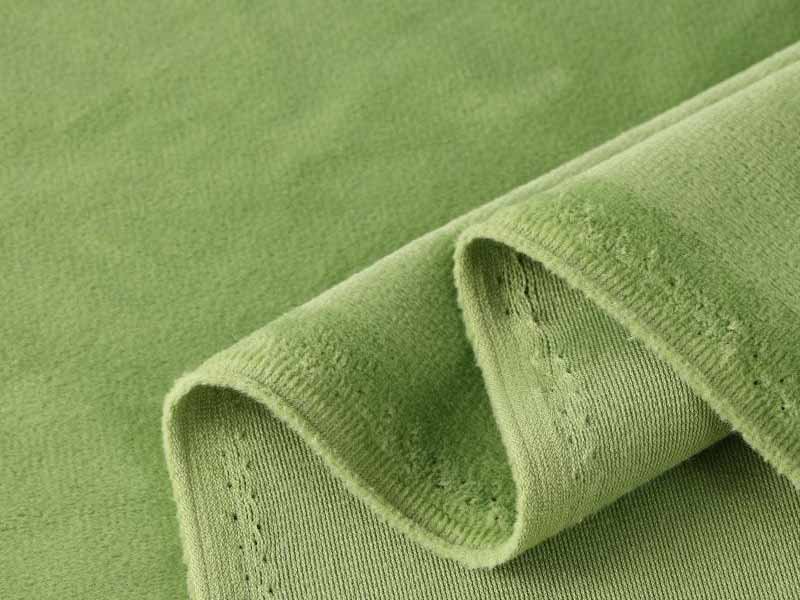
A plush product can have the right color palette, accurate embroidery, and a carefully developed silhouette, yet still feel wrong the moment someone picks it up. Fabric is not a decorative choice made after the design is finished. It influences how the face reads after stuffing, whether small seams disappear into the surface, how much the body expands under filling pressure, how the product photographs, and whether the finished toy feels like a low-cost giveaway or a product customers want to keep touching. That is why experienced plush developers rarely approve minky or short-pile plush from a supplier name alone; they look at the entire fabric-and-construction system.
For most custom plush projects, minky is the stronger choice when softness, skin contact, and a smooth premium hand feel lead the product brief, while short-pile plush is often stronger when embroidery clarity, compact shape, small details, and production control matter more. Neither is universally better. The decision should be based on pile height, GSM, stretch, density, product scale, artwork detail, filling, target use, and performance on the approved sample.
The surprising part is how often the wrong decision begins with the words, “we want minky” or “we want short plush” before anyone has defined what those names actually mean for the product. Two fabrics carrying the same commercial label can behave very differently once they are cut, embroidered, sewn around a curved head, filled, compressed for shipping, and photographed under retail lighting. A useful comparison therefore starts with terminology, but it quickly moves into pattern engineering, embroidery, filling, cost, and repeatability. That is where the choice becomes much more practical – and much more interesting.
What Is the Difference Between Minky and Short-Pile Plush?

Minky is generally selected for a smoother, softer, comfort-focused surface, while short-pile plush is often selected for stronger shape definition, visible embroidery, and compact details. The categories can overlap, so the safest comparison is not the fabric name alone. Compare the actual GSM, pile height, stretch, density, backing, hand feel, embroidery performance, shape retention, and color consistency of the production material.
Material Definitions
Minky is commonly used as a soft-touch plush material when hand feel is part of the product’s value. It works especially well for baby plush, comfort-led characters, pillows, and gift products that are expected to be held or hugged frequently. In Delsney’s material system, minky is grouped with softer baby and higher-hand-feel applications, while still being considered for characters, keychains, and embroidered areas when the selected construction is stable enough. The important point is that minky is not one fixed specification. A light, stretchier minky and a dense, stable minky can behave like very different materials even when both look similar on a flat swatch.
Short-pile plush is more useful to think of as a broad construction family. Its low surface fibers keep outlines cleaner, make panel transitions easier to see, and reduce the chance that small embroidered features disappear into the pile. That makes it a practical starting point for animal plush, character plush, keychains, and compact mascots. The trade-off is that some short plush grades can feel slightly more structured than a very soft minky. For a product developer, that is not automatically a disadvantage; structure can be valuable when a face, logo, or silhouette must stay visually precise after filling.
Where the Categories Overlap
The two names are not perfectly separated in the textile market. Some fabrics sold as minky are already very short-pile, and some suppliers use descriptions such as low-pile minky or short-pile minky. Short plush may also sit close to velboa or other micro-plush constructions depending on how a mill or supplier organizes its catalog. This is why a purchase order that says only “minky” is incomplete. A production-ready specification should identify the approved material through measurable properties and a retained reference swatch, not through a generic category name that different suppliers may interpret differently.
A practical approval record should include GSM, pile height, pile direction, stretch behavior, thickness, hand feel, embroidery compatibility, shape retention, compression recovery, and color lot. These variables connect directly to real product outcomes. Pile height affects whether a small mouth remains visible. Stretch changes the dimensions of a stuffed head. Thickness affects seam bulk. Compression recovery determines whether the toy looks acceptable after transport. Color-lot control reduces visible shade changes between production batches. When those variables are recorded, the material discussion becomes specific enough for design, sourcing, and production teams to make the same decision.
What Matters More Than the Name
The most useful question is not “Which fabric is better?” but “Which performance matters most in this product?” A 10 cm character with narrow embroidered eyes, a small mouth, several color blocks, and a fitted jacket needs surface clarity. A 40 cm cuddle character has much more physical room for a softer pile without losing facial definition. A baby comfort product may place skin feel above sharp seam visibility. A corporate mascot may need a logo to remain crisp from several feet away. The fabric should serve the design and selling proposition rather than forcing the design to fit a preselected textile name.
That principle also explains why serious sampling teams keep fabric records after approval. The final standard should not read simply “blue minky.” It should identify the approved color, surface, GSM or equivalent specification, pile behavior, and physical reference that produced the accepted sample. When repeat production starts months later, those records matter far more than the catalog name. They reduce the risk of receiving a visually similar fabric that stretches differently, reflects light differently, or changes the finished proportions enough to make the product feel unlike the approved version.
| Specification | Minky – typical priority | Short-pile plush – typical priority | What to verify |
| Hand feel | Smooth, soft, comfort-led | Soft but often more structured | Approve on finished sample |
| Pile | Fine, usually short | Low and controlled | Measure actual pile height |
| Stretch | Varies by construction | Often selected for stronger control | Check lengthwise and crosswise behavior |
| Embroidery | Good with suitable pile and setup | Often very clear | Test final DST on production fabric |
| Shape | Can be soft and rounded | Often easier to keep crisp | Compare after stuffing |
| Small products | Works when density and pile are controlled | Strong fit for mini details | Review at actual scale |
| Best-known use | Comfort, baby, premium touch | Characters, animals, keychains | Match to product brief |
Which Fabric Feels Softer?

Minky usually gives the smoother and more immediately luxurious hand feel, especially in baby, comfort, and premium gift plush. However, softness is not created by the fabric name alone. Yarn fineness, pile density, GSM, backing flexibility, finishing, filling pressure, and product size all change the final touch. A dense short-pile plush can feel excellent, while a thin or poorly finished minky may feel less substantial.
Hand Feel Is a System
Customers do not touch a fabric swatch when they buy a plush toy; they touch a three-dimensional object made from fabric, seams, filling, embroidery, and internal structure. The same minky can feel extremely soft on a lightly filled pillow and noticeably firmer when stretched tightly over a compact character head. Short plush can feel relatively structured on a small mascot yet pleasantly soft on a larger animal with lower filling pressure. That is why a swatch comparison is only the first filter. The finished sample is the stage where the intended softness can actually be judged.
Minky is often chosen when touch is part of the emotional promise of the product. Baby comfort toys, cuddle characters, plush pillows, and soft gifts benefit when the first physical impression is smooth and gentle. Short-pile plush is often selected when the visual surface needs more control, but a well-made grade can still feel soft enough for a premium retail product. The correct target is not maximum softness. It is a hand feel that matches the product’s role while allowing the face, body, filling, and seams to remain stable.
GSM and Density
GSM, or grams per square meter, is helpful because it gives teams a measurable reference, but it should never be treated as a stand-alone quality score. A heavier fabric may carry more yarn in the pile, a heavier backing, or both. Two materials with similar GSM can therefore have different density, thickness, stretch, and hand feel. One may look dense when flat but open visibly over a filled curve; another may have better surface coverage at a similar weight. This is why an experienced review connects GSM to how the fabric behaves when it is stretched, sewn, and filled rather than treating the number as a shortcut for quality.
Density is especially important around rounded heads and bodies. If the pile is sparse, stuffing pressure can separate the fibers enough to expose more of the base, which may make the surface look less refined. A denser construction can hide the backing better, but excessive thickness can create bulky seams on miniature products. The practical test is simple: compare the fabric flat, under moderate stretch, across a curved seam, and on a stuffed sample. If the surface still looks consistent and the seams remain manageable, the material is much closer to being production-ready.
Softness Versus Structure
Very soft materials sometimes introduce a cost that is not visible on the swatch: they can allow the finished shape to become rounder or less controlled. A flexible fabric may widen cheeks, soften corners, allow small ears to roll backward, or make a narrow torso look fuller after stuffing. None of those outcomes mean the fabric is defective. They simply show that softness and geometric control are different objectives, and a product can need one more strongly than the other depending on its design language.
A useful way to handle that trade-off is material zoning. The face, embroidered belly, paw pads, or logo panel can use a more stable low-pile material while the back and body use softer minky. The result can feel better than a single-fabric solution because each area is optimized for what the customer actually notices there. Softness should also be checked after packaging. A plush that feels excellent before shipping may arrive compressed, so recovery after unpacking is part of real-world hand feel and appearance, not merely a logistics detail.
How Do Pile and Stretch Affect Shape?

Pile controls how clearly contours, seams, and small features remain visible, while stretch controls how the fabric changes under sewing and stuffing pressure. Shorter pile usually gives sharper visual definition. Greater stretch can create a softer, rounder result, but it can also widen faces, alter limb thickness, move seam lines, and change symmetry if the pattern was developed for a more stable fabric.
Pile Height and Product Scale
Pile height only makes sense in relation to product size. A 4 mm pile represents just 1% of the height of a 40 cm plush, but it represents 4% of the height of a 10 cm keychain. The same surface therefore reads very differently at the two scales. On the larger product, a 4 mm pile may feel neat and balanced. On the smaller one, it can crowd narrow embroidery, soften the edge between color panels, and make small hands, shoes, or facial features look less defined. This simple proportional relationship is one reason miniature plush often benefits from shorter surface fibers.
The effect becomes more important as the design grows more detailed. A simple 10 cm round animal can tolerate more surface softness than a 10 cm anime-style character with eyelashes, eyebrows, clothing seams, and tiny accessories. Larger 30 cm or 50 cm characters give the developer more room because the same pile occupies a smaller proportion of the visible form. When a brand develops several sizes of one character, it is worth reviewing each scale rather than assuming one fabric construction will behave equally well across the entire size range.
Stretch and Pattern Shape
A plush pattern is not a rigid mold. The finished shape is produced by the interaction between panel geometry, seam allowance, fabric stretch, and filling pressure. When a material stretches more across the width, a stuffed head may become broader than the same pattern made in a stable short plush. Eye spacing can appear wider, the cheeks can round out, and the ears can rotate slightly. On the body, stretch can affect torso width, limb thickness, sitting posture, and the position of color-blocked seams. The sewing can be technically accurate while the final character still looks different from the approved artwork.
This is why switching fabric after sample approval should never be treated as a harmless substitution. A minky with a noticeably different stretch profile can require pattern or filling adjustments even when the color and pile look almost identical. In a disciplined development process, material behavior is reviewed together with pattern engineering, embroidery placement, and stuffing. The goal is not to make the pattern identical on paper. The goal is to make the finished three-dimensional product match the approved appearance when the actual production material is used.
Filling and Recovery
Filling acts like internal pressure, so it magnifies differences between materials. Underfilling can make a head collapse, flatten a belly, or leave limbs looking empty. Overfilling can widen the face, pull seams away from their intended position, make a soft design feel rigid, and expose more of the fabric backing. Uneven distribution can create asymmetrical cheeks or an unstable sitting posture. For this reason, material selection should be approved with a filling reference rather than allowing operators to judge firmness entirely by hand during bulk production.
Compression adds another real-world test. Plush products are frequently packed tightly to control carton volume, so the material and filling must recover after pressure is released. A surface that stays crushed or a body that does not regain its intended shape can look disappointing when unpacked even if it passed inspection before packing. Evaluating head support, body support, stuffing balance, and shape recovery on the sample gives teams a more realistic picture of how minky or short-pile plush will perform after manufacturing, packing, transport, and final presentation.
| Variable | Common effect on finished plush | Sample check |
| Higher pile | Softer visual edges; detail can become less distinct | Are eyes, mouth, seams, and color blocks still clear? |
| Shorter pile | Cleaner contour and embroidery visibility | Does the product still feel soft enough? |
| Greater stretch | Rounder form; dimensions can grow under filling | Has face width, limb thickness, or seam position changed? |
| Stable backing | More predictable geometry | Do curves remain natural rather than rigid? |
| Higher filling pressure | More support but more fabric expansion | Are proportions or seams distorted? |
| Lower filling pressure | Softer touch but less structure | Does the head or body collapse? |
| Compression | Temporary deformation during packing | Does the plush recover after unpacking? |
Which Fabric Gives Cleaner Embroidery?

Short-pile plush generally gives embroidery the clearest visual background because low fibers interfere less with thread edges and narrow details. Minky can also produce excellent embroidery when its pile, density, backing, and stitch settings are well matched. For either fabric, the real approval should be made on the exact production material using the final DST file, thread colors, embroidery size, density, and placement.
Embroidery Visibility
Embroidery on plush behaves differently from embroidery on a flat woven textile because the stitches sit on a textured surface. The fibers can partly surround or cover thin lines, so the smaller the embroidered feature, the more sensitive it becomes to pile height and density. A large cartoon eye usually survives a soft surface easily. A 3-4 mm logo stroke, narrow eyebrow, eyelash, whisker, or mouth corner can lose clarity quickly if the fibers rise around it. This is one reason short-pile plush is a reliable starting point for products where the face or branding contains fine information.
Minky remains highly usable for embroidery, especially when the pile is fine, dense, and well controlled. The best result depends on the combination of fabric and embroidery settings rather than the fabric name alone. Stitch density, stabilizer, thread thickness, and local pile management can all influence how clean the finished line appears. The embroidery should be reviewed at actual product size because a detail that looks clear in a magnified digital file can become visually weak once it is only a few millimeters wide on the finished plush.
Nap and Facial Balance
Pile direction changes the way light reflects from the surface. Two panels cut from the same roll can look slightly different if their nap runs in opposite directions, even when the dye lot is identical. On a large body panel that difference may be subtle. On a face, one cheek can appear darker or shinier than the other, creating an impression of color mismatch or asymmetry. The effect becomes even more noticeable in product photography because studio lights can exaggerate directional reflections that were less obvious in the sample room.
For consistent production, pattern pieces should include pile-direction marks and cutting should follow the approved orientation. This is particularly important when the character uses several similar shades, because nap changes can increase the apparent contrast between adjacent panels. A useful approval process photographs the sample from the front and at slight angles under ordinary and retail-style lighting. If the face changes dramatically as the light moves, the team can decide whether the material is appropriate or whether the cutting direction needs tighter control in production.
Embroidery Production Control
A successful embroidery sample is only useful if the same result can be reproduced across the order. That requires more than visual approval. The production record should preserve the DST file, thread color, stitch density, embroidery dimensions, placement reference, thread thickness, and any logo simplification required at small scale. Fabric compatibility should be included because the same file can look different on two materials with different pile heights or backing stability. Edge cleanliness and batch consistency should also be checked, especially when a character’s expression depends on several small embroidered elements aligning correctly.
Reviewing embroidery on the finished three-dimensional sample is essential. Curvature changes apparent spacing, and stuffing can stretch the embroidered area enough to alter the face. An eye pair that looks perfectly aligned on a flat panel may look farther apart after the head is filled. The mouth angle may also appear different once the cheek curves outward. For baby products, embroidered eyes or noses may also replace hard components, making embroidery part of the construction strategy rather than a decorative detail. In all of these cases, the final stuffed sample is the meaningful approval reference.
Which Fabric Fits Different Plush Products?
Minky is a strong starting point for baby plush, cuddle products, pillows, and soft premium gifts. Short-pile plush is especially practical for detailed characters, animals, keychains, and compact products where embroidery and shape control matter. Mascots and collectibles often work with either material. Many commercial designs achieve a better balance by combining fabrics in different areas instead of forcing one fabric to meet every requirement.
Baby Plush
Baby plush places a high value on softness, but material selection has to sit inside a broader construction and age-appropriateness review. Minky is attractive because its surface naturally supports a comfort-focused hand feel, while a suitable short plush can offer a softer touch with slightly stronger shape control. In Delsney’s product framework, common baby-plush sizes include 15 cm, 20 cm, 25 cm, and 30 cm, and the material set can include minky, short plush, organic cotton, and soft fleece. Embroidered facial features, secure seams, and suitable filling are considered alongside the outer fabric rather than after it.
It is important not to describe a fabric as baby-safe simply because it feels soft. The complete product must consider attachment security, filling containment, small parts, seam strength, labels, target age, and the requirements of the destination market. Minky can be an excellent starting point when comfort and touch lead the brief, but the final choice should still be proven on the actual sample. A slightly more stable short-pile plush may be a better choice if the baby character uses tiny facial embroidery or must hold a particular seated shape consistently.
Character Plush
Character plush is less forgiving because recognition is part of the commercial value. A licensed or original character can be technically well sewn and still feel wrong if the face becomes too wide, the eyes sink into the pile, or the head-to-body proportion changes. Short plush, minky, and velboa are all workable materials, but the selection should protect the character’s most recognizable features first. At a small size, that often means clearer surface definition. At a larger size, the designer has more room to emphasize a soft premium touch without sacrificing the expression.
Scale should influence the choice. Character plush commonly appears at 10 cm, 15 cm, 20 cm, 30 cm, 40 cm, and 50 cm sizes in Delsney’s development range. A fabric that is excellent at 30 cm may look too deep at 10 cm, while a very low pile that performs beautifully on a keychain can feel visually flat on a 50 cm cuddle character. Instead of selecting the textile from a catalog first, it is more reliable to identify the features that drive recognition – eyes, mouth, face contour, hairstyle, clothing, signature accessories – and choose the material that protects them.
Keychains and Mascots
Plush keychains look simple because they are small, but they can be some of the most demanding products to engineer. A 10 cm keychain may carry nearly the same facial features, logo, clothing, and color blocking as a 20 cm or 30 cm plush, yet all of those details must remain readable in a much smaller area. Short-pile plush is therefore a logical starting point because it gives embroidery and seams more visual space. Minky can still work well when the selected grade is fine enough and stable enough to keep the small design from becoming visually soft or oversized.
Mascots have a wider range of possible sizes and uses, from small bag charms and desktop products to 30 cm retail plush, 50 cm gifts, and large display pieces. Minky and short plush can both be suitable depending on whether the brand prioritizes tactile softness, clean logo execution, or a particular silhouette. A corporate mascot with embroidered lettering may favor a cleaner low-pile surface, while a lifestyle mascot intended as a cuddle product may benefit from minky. The choice becomes more effective when the brand defines the primary user experience before comparing fabric cards.
Mixed Materials
There is no rule that a plush toy must use one outer fabric everywhere. Mixed-material construction often gives a better result because different areas have different jobs. A character can use minky on the body and back for softness while using short-pile plush on the face for embroidery clarity. A mascot may use stable short plush on the main silhouette and softer minky on the belly or paw pads. Printed fabric can also be introduced for clothing or graphic areas that would be difficult to reproduce cleanly through embroidery alone.
Material zoning can also improve cost efficiency. Instead of upgrading the entire product to a more expensive fabric, the design team can concentrate tactile value where people are most likely to touch the product and use a more economical, stable material where structure matters more. The objective is not to create obvious cost cutting. It is to spend the material budget where it improves what the customer can see and feel. When the transitions are designed intentionally, a mixed-fabric product often looks more considered than a single-fabric construction.
| Product type | Example sizes | Strong starting material | Main decision factor |
| Baby plush | 15-30 cm | Minky or suitable short plush | Softness, secure construction, age suitability |
| Character plush | 10-50 cm | Short plush or minky | Expression, proportion, tactile target |
| Mascot plush | 10 cm keychain to 100 cm display | Minky or short plush | Logo, silhouette, brand feel |
| Plush keychain | Small format | Short plush, minky, or velboa | Small-detail visibility |
| Blind-box plush | Small collectible scale | Short plush or minky | Multi-SKU consistency |
| Plush pillow | 20-80 cm common range | Minky | Hand feel, filling comfort, recovery |
How Should Brands Choose the Right Fabric?
Choose the fabric by testing the actual product requirements rather than relying on a catalog name or flat swatch. Define the target hand feel, size, pile, GSM, stretch, embroidery, shape retention, color, age group, packaging, and market requirements, then build the product in the intended material. The final approved sample should lock the fabric, pattern, filling, embroidery, dimensions, and quality reference for bulk production.
Build the Specification
A useful sampling brief removes as much ambiguity as possible before the first pattern is cut. It should include the artwork, finished size, expected quantity, target market, intended age group, desired hand feel, critical embroidered features, key colors, packaging format, and launch timing. The design team should also identify the elements that cannot drift. For one character that may be eye spacing and cheek width; for another it may be a narrow waist, a distinctive ear shape, a logo, or a specific tail angle. Those priorities help the factory evaluate minky and short plush against the real success criteria rather than offering a generic favorite fabric.
The fabric specification should then record the variables that can change the finished product: GSM, pile height, pile direction, stretch, thickness, color fastness, shedding, hand feel, embroidery performance, shape retention, compression recovery, and color lot. Delsney maintains access to more than 600 plush fabric options across different textures, pile heights, and hand-feel directions, so the useful task is not finding more choices; it is narrowing those choices through a structured brief. A clear specification also makes later reorders safer because the approved material is defined by evidence rather than memory.
Consider Total Product Cost
Fabric price is only one part of the commercial decision. Final cost is also affected by product size, pattern complexity, filling, embroidery, printing, accessories, functional components, packaging, quantity, testing, inspection, shipping method, and trade terms. A lower-cost fabric can become an expensive decision if it creates poor surface coverage, difficult sewing, high trimming labor, extra revisions, or more defects. The opposite is also true: using a more expensive minky across every panel can add cost without improving what customers actually value if the design is mainly sold on graphic accuracy or brand identity.
A more useful cost review asks which features drive purchase. If customers will pick the product up because it feels exceptionally soft, investing in tactile material may be justified. If a promotional mascot is primarily a brand vehicle, a stable short plush that reproduces the logo and silhouette consistently may create more value. If a collectible character depends on tiny facial details, spending the budget on embroidery and pattern accuracy may be smarter than upgrading every body panel. Cost control is strongest when it protects the design’s most visible and touch-sensitive features rather than treating every material component equally.
Prove It in the Sample
A flat swatch cannot show how a fabric behaves around a curved cheek, a narrow arm, a stuffed belly, or a heavily embroidered face. The physical sample should therefore be reviewed for finished dimensions, proportions, symmetry, seam position, pile direction, color, hand feel, embroidery clarity, stuffing balance, support, and recovery after compression. If the product is photographed for e-commerce, it is also useful to review the material under the lighting used for content production because pile direction and surface shine can look different on camera than they do under factory lighting.
Sampling is also where acceptable compromises become visible. Perhaps the softer minky makes the character feel excellent but widens the cheeks slightly; a small pattern adjustment may solve the problem. Perhaps short plush holds the face perfectly but feels too flat on the body; a mixed-material construction may be better. Delsney’s standard sample timing is typically around 5-7 days for regular plush and 7-15 days for more complex structures, allowing fabric, pattern, embroidery, and filling decisions to be evaluated on a real object before production quantities are committed.
Lock the Approved Sample
Once the material and construction are accepted, the approved sample should become a controlled production reference rather than simply a piece for photography. A robust record can include the final sample, revision notes, digital pattern files, measurement points, embroidery files, fabric records, filling standards, accessory specifications, packaging files, multi-angle photographs, and a QC checklist. These records create a bridge between what the development team approved and what the production team must reproduce, which is especially important when the order contains several colors, several characters, or future repeat runs.
This is ultimately how the minky-versus-short-pile decision should be closed. Choose minky when its softer tactile character creates meaningful value for the intended user. Choose short-pile plush when detail visibility, silhouette, embroidery clarity, or controlled production is more important. Use both when different areas need different behavior. Then preserve the decision through the approved sample and material records. A good fabric choice is not the fabric that wins a swatch comparison; it is the one that still looks right, feels right, and can be reproduced consistently in bulk.
Conclusion
Minky and short-pile plush are both proven materials for custom plush development, but they solve different problems. Minky tends to bring more tactile softness and comfort value, while short-pile plush tends to give designers more visual control over outlines, embroidery, and small-scale detail. The strongest material decision is made by matching those characteristics to the actual product, testing the fabric at the intended scale, and locking the result through an approved sample. When a project is still uncertain, Delsney can review the artwork, target size, quantity, market, and intended hand feel to narrow the material options before sampling. That approach keeps the fabric discussion connected to the finished product rather than turning it into a simple preference between two names.
Frequently Asked Questions
Is minky the same as short-pile plush?
Not exactly. Minky is commonly used as a commercial name for a family of very soft plush fabrics, while short-pile plush describes a broader low-pile surface category. Some minky is short-pile, so the categories can overlap. For manufacturing, the safest approach is to compare the actual GSM, pile, stretch, density, backing, and finished sample instead of assuming that two supplier names describe identical material.
Is minky better for baby plush toys?
Minky is often a strong choice for baby and comfort-focused plush because of its smooth, soft hand feel, but the outer fabric is only one part of the product decision. The complete plush should also be reviewed for seam strength, filling containment, small parts, embroidered features, labels, intended age, and relevant market requirements. A suitable short plush can also work well when it provides the required softness and better shape control.
Is short-pile plush better for embroidery?
Short-pile plush often gives embroidery a cleaner visual background because the fibers are less likely to cover narrow stitch lines or small lettering. That advantage is especially useful for eyes, mouths, eyebrows, logos, and miniature characters. Minky can still embroider very well when the pile is fine and the stitch settings are matched to the material. The final decision should be based on an embroidery test using the exact production fabric.
What pile height is best for small plush toys?
There is no single pile height that works for every small plush because the answer depends on character scale, embroidery size, surface density, and the amount of visual detail. The useful rule is proportional: as the product becomes smaller, pile occupies more of the visible design. A 4 mm pile equals 4% of a 100 mm toy’s height, so detailed keychains and mini characters often benefit from a lower, controlled pile.
Can minky and short-pile plush be used in the same toy?
Yes. Mixed-material construction is often one of the best ways to balance softness and detail. A product can use minky on the body or back for a softer touch and short-pile plush on the face, belly, paws, or logo area for stronger definition. The transition should be intentional, and both fabrics should be tested together because differences in stretch and thickness can affect seam behavior and the final three-dimensional shape.
Does minky cost more than short-pile plush?
Minky often sits above basic short plush or velboa in material cost, but there is no universal price gap because density, GSM, color, finish, order quantity, and supplier all matter. The fabric price should also be viewed within total product cost. Pattern complexity, embroidery, filling, accessories, packaging, testing, and shipping can outweigh a small fabric difference, so the better commercial choice is the material that delivers the required product value with stable production.