 Skip to content
Custom Infant Plush Toys Designed for Safety, Comfort, and Brand Appeal
From concept to production, engineered for safe materials, soft touch, and consistent quality
- Sampling: 5–7 days
- Free sample development with 2 revisions
- MOQ: 500 units
- Production: 15–25 days

Common Problems in Infant Plush Production
Typical issues observed in development and bulk production, addressed through structured engineering and quality control systems
Inconsistent Quality Between Sample and Bulk Production
Many infant plush projects achieve a good-looking sample, but fail to maintain the same softness, shape, and detailing in bulk production. This usually happens when material selection, filling standards, and production processes are not fully defined during development. Delsney addresses this by aligning sampling and production systems, using standardized materials, engineering-defined structure, and QC monitoring across all stages. With 3 specialized factories and 20+ QC staff, the approved sample is used as a controlled reference to ensure consistent output across batches.
Plush Too Soft or Too Rigid
Infant plush products often fail to balance softness and structure. Too soft leads to loss of shape, while too rigid creates discomfort and safety concerns. This issue is typically caused by improper filling density and lack of structural planning. Delsney uses zoned filling engineering and panel-based structure design to balance softness and support. With 25+ engineers involved in development and sampling completed within 5–7 days, filling and structure are optimized before production begins.
Deformation After Packaging or Shipping
Loose Stitching or Durability Issues
Fabric Shedding or Surface Wear
Delays in Sampling and Production
Why Infant Plush Toys Require a Different Manufacturing Standard
Safety, material control, and structural design are fundamentally different from general plush products In standard plush manufacturing, the focus is often on appearance and cost. In infant plush manufacturing, the priorities shift completely. The biggest differences are not visible at first glance, but they define product success.
Material Safety Is the First Constraint
- harsh dyes
- rough fabrics
- unstable fibers
- components that may detach
No Hard Structure Allowed
- precise filling balance
- structural shaping through fabric and stitching
- stable form without internal frames
Softness vs Shape Control
- controlled filling density
- multi-zone filling distribution
- engineered panel structure
Stitching Must Withstand Repeated Use
- pulled
- washed
- chewed
Consistency Across Production Is Critical
- filling
- stitching
- fabric
Sampling Must Solve Problems Early
- shape
- softness
- safety
Communication Must Be Precise
- unsafe products
- production delays
- rework
Production Must Be Predictable
- stable quality
- repeatable specifications
- controlled lead times
Branding Still Matters
- clean logo execution
- soft-safe labeling
- retail-ready packaging
Custom Infant Plush Toys Across Safety-Focused Designs and Commercial Applications
A full range of infant plush products developed with soft materials, safe construction, and scalable production systems

Security Blanket Plush
Security blankets combine plush toys with soft fabric panels for continuous contact and comfort.
Development Focus:
- ultra-soft fabrics and breathable structure
- reinforced stitching for durability
- lightweight construction
- 5–7 day sampling with structure validation
- stable production from 500 units

Infant Animal Plush Toys
Animal plush toys are redesigned for infants with rounded shapes and no detachable components.
Development Focus:
- simplified structure without sharp edges
- balanced filling for soft shape retention
- embroidery-based facial features
- engineering-led structure optimization
- QC-controlled batch consistency

Baby Character Plush
Infant-Safe Versions of Branded Characters
Character plush toys are adapted to remove hard elements while maintaining visual identity.
Development Focus:
- design simplification for safety
- embroidery replacing plastic details
- proportion adjustment for softness
Production Support:
- up to 98% design accuracy after sampling
- 2 revision rounds for refinement
Result: Safe character plush suitable for licensed infant products.

Plush Rattle Toys
Rattle plush toys combine soft materials with internal sound elements.
Development Focus:
- fully enclosed rattle components
- soft-touch outer fabric
- durable stitching under repeated use
- controlled internal structure design
- sampling validation within 5–7 days

Teething Plush Toys
Teething plush combines soft fabrics with chew-friendly surfaces.
Development Focus:
- safe fabric combinations
- reinforced stitching in high-use areas
- controlled softness and durability
- material selection aligned with infant safety
- QC monitoring during production

Sensory Plush Toys
Sensory plush toys use textures, shapes, and colors to stimulate infant interaction.
Development Focus:
- mixed fabric textures
- lightweight structure
- safe stitching and assembly
- design + engineering coordination
- consistent material sourcing

Educational Plush Products
Educational plush includes shapes, letters, and soft learning elements.
Development Focus:
- clear visual elements
- durable structure for repeated use
- soft and safe materials
- structured pattern design
- multi-SKU production capability

Plush Pillow for Infants
Infant pillows are designed for comfort while maintaining safe structure.
Development Focus:
- balanced filling density
- breathable materials
- stable shape retention
- filling engineering by 25+ engineers
- QC checks for consistency

Crib Hanging Plush Toys
Crib toys are designed for safe attachment and visual stimulation.
Development Focus:
- lightweight structure
- secure attachment design
- soft detailing without hard parts
- controlled stitching and assembly
- batch consistency monitoring

Stroller Plush Accessories
Stroller toys are designed for mobility and durability.
Development Focus:
- secure attachment points
- reinforced stitching
- lightweight and compact design
- production aligned with usage requirements
- QC checks for durability

Baby Gift Plush Sets
Gift sets combine plush toys with packaging for retail and promotional use.
Development Focus:
- product and packaging integration
- consistent branding elements
- safe materials across all items
- 10+ designers for packaging development
- coordinated production across factories

Sleep Companion Plush
Sleep plush toys are used for calming and routine support.
Development Focus:
- ultra-soft fabrics
- safe structure for overnight use
- stable shape over time
- controlled filling system
- consistent batch production

Lightweight Travel Plush
Travel plush toys are designed for portability and convenience.
Development Focus:
- lightweight construction
- compact size
- durable stitching
- efficient production process
- stable material supply

Seasonal Infant Plush
Holiday and Campaign-Based Baby Products
Seasonal plush toys are developed for specific sales periods.
Development Focus:
- fast development cycle
- simplified structure for quick production
- consistent visual design
Production Support:
- 5–7 day sampling
- 15–25 day production timeline
Result: Reliable delivery for seasonal campaigns.

Fully Custom Infant Plush Projects
Tailored Development from Concept to Production
Custom projects start from sketches, images, or samples.
Development Focus:
- full design-to-structure conversion
- material and safety optimization
- iterative sampling process
Production Support:
- 25+ engineers and 10+ designers
- MOQ from 500 units
- integrated factory system
Result: Flexible development with controlled production outcomes.
Infant Plush Development System Built for Safety, Structure, and Scalable Production
A structured development process combining design, engineering, material control, and rapid sampling
Multi-Source Design Input
Flexible Project Start from Different Formats
Projects can begin from sketches, digital artwork, reference images, or physical samples.
Development Approach:
- convert input into structured design files
- align concept with production feasibility
Delsney Support:
- 10+ designers handling product input
- fast evaluation before sampling
Infant Safety Design Conversion
Adapt Concepts to Infant-Safe Standards
Original designs are adjusted to remove potential safety risks.
Development Approach:
- eliminate detachable small parts
- simplify shapes and edges
- replace hard components with soft alternatives
Delsney Support:
- engineering + design collaboration
- safety-first structure planning
3D Structure Engineering
Create Shape Without Internal Hard Support
Infant plush relies on fabric and filling instead of rigid structures.
Development Approach:
- panel segmentation
- seam positioning
- filling structure design
Delsney Support:
- 25+ engineers optimizing structure
- validation during sampling
Proportion Optimization
Balance Visual Accuracy and Soft Form
2D designs are adjusted for plush volume and softness.
Development Approach:
- head/body ratio correction
- volume expansion for softness
- simplified geometry
Delsney Support:
- iterative refinement through sampling
- design-engineering coordination
Panel Pattern Engineering
Define Sewing Structure for Stability
Each product is divided into multiple fabric panels.
Development Approach:
- optimize panel shapes
- define seam directions
- improve assembly efficiency
Delsney Support:
- internal pattern development
- production-aligned design
Result:
Efficient manufacturing with consistent structure.
Material Selection System
Choose Fabrics Based on Infant Use
Material selection focuses on softness and durability.
Development Approach:
- evaluate fabric types and textures
- match materials with product function
Delsney Support:
- integrated fabric supply system
- stable sourcing across orders
Filling Engineering
Control Internal Structure Through Filling
Filling defines softness and shape retention.
Development Approach:
- adjust density by zones
- balance softness and support
Delsney Support:
- engineering input during development
- validation in sampling stage
Detail & Feature Execution
Replace Hard Elements with Safe Alternatives
Infant plush avoids rigid decorative parts.
Development Approach:
- embroidery for facial features
- stitched details instead of plastic
Delsney Support:
- dedicated embroidery production
- controlled detail placement
Structural Durability Design
Ensure Long-Term Use Without Failure
Infant products require durability under repeated use.
Development Approach:
- reinforce stress areas
- optimize seam strength
Delsney Support:
- QC feedback integrated into development
- testing during sampling
Rapid Sampling Execution
Validate Design Within Short Timeframes
Sampling is executed in a controlled environment.
Development Approach:
- internal sample room production
- structured workflow
Delsney Support:
- 5–7 day sampling cycle
- experienced sampling team
Iterative Sample Refinement
Improve Accuracy Through Controlled Revisions
Initial samples are refined to meet requirements.
Development Approach:
- adjust shape, structure, and details
- refine materials and proportions
Delsney Support:
- up to 2 revision rounds included
- direct communication with team
Pre-Production Evaluation
Verify Product Readiness Before Scaling
Samples are reviewed before bulk production.
Development Approach:
- check structure stability
- confirm material performance
- verify safety aspects
Delsney Support:
- engineering and QC collaboration
- structured evaluation process
Production Feasibility Optimization
Align Design with Manufacturing Efficiency
Designs are adjusted to match production capabilities.
Development Approach:
- simplify complex structures
- optimize sewing steps
- improve material usage
Delsney Support:
- factory integration across 3 facilities
- production-aware development
Technical Specification Output
Provide Clear Instructions for Manufacturing
Final development generates production-ready documentation.
Development Approach:
- define structure and dimensions
- specify materials and processes
Delsney Support:
- internal coordination between teams
- standardized production references
Development-to-Production Integration
Ensure Smooth Transition into Manufacturing
Development is directly connected to production.
Development Approach:
- align sample and production processes
- coordinate across departments
Delsney Support:
- 3 specialized factories
- 20+ QC staff monitoring output
Sampling Process for Infant Plush
A 6-step sampling workflow ensuring infant plush products are safe, accurate, and ready for bulk production
Step 1 — Design & Safety Evaluation
The process begins with a detailed review of the design concept, focusing on safety and manufacturability.
Key Actions:
- evaluate shape, proportions, and structure
- identify potential safety risks (small parts, sharp edges)
- define initial development direction
- design + engineering collaboration
- early-stage feasibility analysis
A clear development plan aligned with infant safety requirements.
Step 2 — Structure & Pattern Development
The approved concept is translated into a structured plush design.
Key Actions:
- create panel segmentation and sewing layout
- define seam directions and structure balance
- adjust proportions for soft construction
- 25+ engineers working on structure optimization
- internal pattern-making capability
A production-ready pattern system for sample creation.
Step 3 — Material & Filling Selection
Select Safe and Suitable Materials for Infant Products
Materials are chosen based on softness, durability, and structural needs.
Key Actions:
- select plush fabric type and texture
- define filling material and density
- determine embroidery or printing methods
Delsney Support:
- integrated fabric and embroidery resources
- material validation during development
Output:
Confirmed material and component specification for sampling.
Step 4 — Sample Production (5–7 Days)
The sample is created in an internal sample room to ensure speed and control.
Key Actions:
- cut fabrics based on pattern
- sew and assemble structure
- fill and finish product
- dedicated sampling team
- controlled workflow with 5–7 day turnaround
First physical sample for evaluation.
Step 5 — Evaluation & Iteration (Up to 2 Revisions)
The sample is evaluated and improved based on feedback.
Key Actions:
- check shape accuracy and proportions
- evaluate softness and filling balance
- refine stitching and detailing
- up to 2 revision rounds included
- direct communication with development team
Approved sample with high design accuracy and stable structure.
Step 6 — Pre-Production Confirmation
Before production, the approved sample is validated for consistency and scalability.
Key Actions:
- confirm structure and materials
- verify production feasibility
- align with factory processes
- coordination across 3 specialized factories
- QC input before mass production
Production-ready sample ensuring consistent bulk output.
Materials, Filling & Safety System
Fabric choice, filling structure, detailing method, and production control all work together to shape softness, safety, durability, and repeat consistency
Infant Plush Fabric Selection
Choose Surface Materials Based on Touch, Appearance, and Daily Use
Infant plush products require fabrics that feel soft on delicate skin while remaining stable during sampling, production, packing, and repeated use.
Common Options:
- Short plush / velboa for smooth touch, clean surface, and strong production consistency
- Ultra-soft plush for comfort-focused infant toys and blankets
- Long pile plush for fluffy visual effect, used selectively where fiber length will not affect infant usability
- Velvet-touch plush for premium baby gift programs and higher-end retail lines
Delsney Support:
With one specialized factory focused on plush fabric and a product team that evaluates design, structure, and manufacturing together, fabric selection is matched to both infant use and scalable production.
Result:
A softer product surface with more stable material performance across bulk orders.
Fabric Performance for Infant Use
Softness Alone Is Not Enough for Baby-Focused Products
A fabric that feels soft in hand may still perform poorly in real production if it sheds, pills easily, or loses visual consistency after handling.
Key Evaluation Points:
- hand feel and skin-contact comfort
- lint level and fiber stability
- surface consistency across dye lots
- appearance retention after sewing and stuffing
Delsney Support:
Because Delsney handles sampling, production, and QC in one coordinated system, fabrics are assessed not only by feel, but by how they behave in sampling, stitching, filling, and final inspection.
Result:
Better fabric decisions at the start, reducing risk later in production.
Fabric Weight and Density Planning
Balance Soft Hand Feel with Shape Retention
Infant plush products must stay soft, but they cannot look empty, loose, or structurally weak after filling.
Typical Weight Logic:
- lighter fabrics for blanket plush and comfort items
- medium-weight fabrics for most infant plush bodies
- denser fabrics for shaped products needing cleaner outlines
How It Is Applied:
Fabric density is selected according to product size, structure complexity, and filling plan, rather than by appearance alone.
Delsney Support:
With 25+ engineers and an internal product development workflow, Delsney can align fabric density with pattern design and filling structure before the first sample is approved.
Result:
A product that feels soft in use while still holding a clear and consistent form.
Breathability and Everyday Comfort
Infant Products Need a More Careful Comfort Standard
Products made for babies are often held for long periods, used during rest time, or kept close to the face, so comfort goes beyond texture.
Key Considerations:
- breathable fabric structure
- moderate pile length
- filling that does not create excessive bulk or heat retention
- soft seam finishing that avoids rough contact areas
Delsney Support:
During development and sampling, materials are selected not only for appearance, but for how the final product will feel in real infant-use scenarios such as cuddling, sleeping, stroller use, and nursery placement.
Result:
Infant plush products that feel more comfortable in actual daily use, not only on display.
Filling Material Types
Internal Filling Determines Shape, Feel, and Structural Behavior
In infant plush manufacturing, filling is one of the most important hidden decisions. It affects how the product feels in the hand, how it keeps shape, and how consistent it remains from one unit to the next.
Common Filling Options:
- PP cotton for soft standard plush filling
- high-resilience polyester fiber for better rebound and shape recovery
- mixed filling systems for balancing softness and support in different product zones
- localized support inserts only when the product concept requires extra structure and the construction remains infant-appropriate
Delsney Support:
Delsney’s product engineering and sampling team evaluates filling not as a generic commodity choice, but as part of the overall product structure and infant-use requirement.
Result:
More controlled softness and more predictable product form.
Zoned Filling Distribution
Different Areas of One Plush Product Need Different Filling Logic
Infant plush should not be filled the same way everywhere. A blanket plush, rattle plush, or shaped animal toy all need different density distribution.
Typical Zoning Method:
- slightly firmer filling in heads or base sections for shape definition
- medium filling in body areas for balanced form
- softer filling in limbs or comfort-contact zones for tactile softness
Why It Matters: Uniform filling often causes one of two problems: the product becomes too soft and loses shape, or too dense and loses infant-friendly comfort.
Delsney Support: With 25+ engineers and sampling completed in 5–7 days, Delsney can test and refine filling balance quickly before production starts.
Result: A better balance between visual form, softness, and long-term usability.
Embroidery for Infant-Safe Details
Replace Hard Decorative Parts with Soft Visual Construction
Infant plush products require safer alternatives to hard decorative components. Eyes, mouths, logos, and pattern details are better executed through stitching or embroidery rather than rigid attachments.
Typical Embroidery Uses:
- facial features
- brand marks
- decorative lines
- soft character details
Why It Works: Embroidery improves durability, supports cleaner detail placement, and avoids the risks associated with separate hard decorative pieces.
Delsney Support: Delsney has a dedicated logo embroidery factory, which gives stronger control over thread consistency, detail clarity, and repeat positioning across production runs.
Result: Safer infant products with stronger visual consistency and better batch control.
Printing and Surface Decoration Options
Use Printing Only Where It Supports Infant Product Logic
Not every design detail should be embroidered. Some infant plush concepts require printed graphics, especially when softer visual transitions or broader decorative areas are needed.
Suitable Decoration Methods:
- soft surface printing for simple graphics
- printed plush fabric for repeat patterns
- carefully controlled graphic placement where embroidery is not ideal
Selection Principle: The decoration method must support softness, appearance, and production repeatability at the same time.
Delsney Support: Because Delsney provides both embroidery and print-related craft development in the broader plush product workflow, the team can recommend the better method based on detail level, usage, and production efficiency.
Result: Better-looking infant plush details without forcing one decoration method onto every product.
Stitching Strength and Seam Safety
Infant Products Need Soft Seams with Strong Construction
Seam design in infant plush cannot focus only on appearance. The construction must remain neat, soft to the touch, and durable under repeated handling.
Main Stitching Goals:
- clean seam lines for a polished finish
- reinforced stitching in stress areas
- reduced seam distortion after filling
- soft exterior feel without harsh construction points
Delsney Support: Delsney’s sample room, engineering support, and QC team work together to refine seam placement and sewing logic before mass production moves forward.
Result: Infant plush products that feel softer externally while staying stronger structurally.
Pattern Engineering for Infant Plush
Shape Is Built Through Panels, Not Through Filling Alone
Many infant plush products look simple, but the final shape depends heavily on how the pattern is segmented and assembled.
Pattern Design Priorities:
- correct body volume with fewer distortions
- smoother curves for infant-friendly form
- simplified panel complexity where needed for consistency
- sewing logic that supports stable large-scale production
Delsney Support: Delsney supports design-from-artwork, design-from-technical-file, and sample-based redevelopment, so infant plush can be engineered from multiple starting points and refined into production-ready structure.
Result: Cleaner shapes, smoother assembly, and better agreement between sample and production units.
Material Safety Alternatives
Safer Substitutions Are Part of Product Development
Not every original concept is ideal for infant use. In many cases, the product becomes stronger after replacing a risky or impractical material choice with a softer, safer, or more production-stable alternative.
Common Adjustment Areas:
- replacing hard decorative parts with embroidery
- replacing unstable surface materials with cleaner plush options
- simplifying mixed materials that create inconsistency
- adjusting structure to reduce risk during use and washing
Delsney Support: Material and craft development is already part of Delsney’s service system, including safety-compliant material solutions and engineering-oriented plush development.
Result: A safer infant plush product that is easier to manufacture consistently.
Sampling-Based Material Validation
The Right Material Decision Must Be Proven in Sample Form
Material choice should not be confirmed only from swatches or verbal descriptions. In infant plush development, the sample is where softness, structure, shape, and detailing are truly verified together.
What Gets Validated in Sampling:
- hand feel after sewing and filling
- shape retention under real assembly conditions
- embroidery or print appearance
- overall softness vs structure balance
Delsney Support: With free sampling, a 5–7 day sample cycle, and up to 2 free revisions, Delsney can help refine material and filling decisions quickly before bulk production begins.
Result: Fewer wrong material choices reaching the production stage.
Production Consistency for Materials and Filling
A Good Sample Is Not Enough If Production Cannot Repeat It
Many infant plush projects fail after sample approval because the same feel, shape, or surface quality is not maintained during bulk production.
Consistency Requirements:
- stable fabric sourcing
- repeatable filling standards
- controlled embroidery placement
- QC checks during production and before shipment
Delsney Support: Delsney operates with 3 specialized factories and 20+ QC staff, which supports stronger coordination between fabric supply, product manufacturing, embroidery, and final inspection.
Result: More dependable consistency between approved sample and finished order.
Cost, Quality, and Product Positioning Balance
Material Decisions Should Match the Commercial Goal of the Product
A retail infant plush line, a boutique gift product, and a promotional baby item should not use exactly the same material and craft strategy. The right choice depends on price target, brand positioning, order volume, and expected user experience.
Decision Factors:
- softness expectation
- visual finish level
- quantity and replenishment potential
- packaging and retail presentation level
Delsney Support: Because Delsney combines product development, packaging design, and manufacturing support, material choices can be aligned with both the product concept and the final market plan.
Result: A better balance between product quality, brand image, and production efficiency.
Quality Control System Built for Infant Safety, Consistency, and Long-Term Reliability
A multi-stage inspection and monitoring system ensuring every infant plush product meets strict softness, structure, and durability expectations
Incoming Material Inspection
All materials are checked before entering production to ensure they meet product requirements.
Control Focus:
- fabric texture and softness consistency
- filling quality and density
- color uniformity across batches
- coordinated material sourcing through 3 specialized factories
- QC team reviewing incoming materials
Fabric Safety and Surface Control
Fabric surfaces are evaluated for softness, cleanliness, and stability.
Control Focus:
- smooth surface without irritation
- low lint and fiber shedding
- consistent dye appearance
- material evaluation during development and sampling
- QC monitoring before cutting stage
Cutting Accuracy Control
Fabric cutting affects final product shape and assembly accuracy.
Control Focus:
- pattern alignment
- dimensional accuracy
- consistency across pieces
- internal pattern system developed by engineering team
- QC checks during cutting stage
Stitching Quality Monitoring
Stitching is critical for durability and product safety.
Control Focus:
- seam alignment and uniformity
- reinforcement in stress areas
- clean finishing without loose threads
- structured production workflow
- continuous QC inspection during sewing
Filling Consistency Control
Filling determines both feel and structural performance.
Control Focus:
- filling weight consistency
- density distribution across zones
- uniform softness
- engineering-defined filling standards
- QC checks during stuffing process
Structural Integrity Verification
Each product is evaluated for its final structure.
Control Focus:
- symmetry and proportion
- overall shape consistency
- alignment with approved sample
- comparison with approved sample reference
- QC validation during production
Embroidery & Detail Inspection
Details such as facial features and logos must remain consistent.
Control Focus:
- embroidery clarity and positioning
- thread consistency
- alignment with design specifications
- dedicated embroidery factory
- integrated production and QC monitoring
Final Product Inspection
Finished products are inspected before leaving the factory.
Control Focus:
- appearance and finishing
- structure and softness
- overall product consistency
- 20+ QC staff performing inspections
- full or random inspection based on order requirements
Batch Consistency & Production Monitoring
Consistency across batches is critical for infant product programs.
Control Focus:
- material consistency across orders
- process standardization
- repeatable production results
- integrated factory system
- QC team monitoring throughout production
Infant Safety Standards and Compliance Integrated into Product Development and Production
Safety is addressed from material selection and structural design to final inspection, aligned with international infant product expectations
Infant plush products are developed with safety as a core requirement rather than an additional step. From the earliest stage, each design is evaluated and adjusted to ensure it meets the expectations of infant use across global markets. The focus is not only on compliance standards such as CPSIA and EN71, but on how those requirements are applied in real product development.
Key safety principles include:
- selection of soft, skin-friendly fabrics with stable color and low lint performance
- avoidance of hard components and detachable small parts in all product areas
- replacement of plastic details with embroidery-based features
- structural design based on panel engineering and controlled filling instead of rigid supports
- early-stage validation through 5–7 day sampling to test softness, shape, and material behavior
These measures ensure that safety is built into the product during design and development, rather than checked only after production.
Factory & Production Capacity
Integrated facilities, engineering support, and controlled timelines ensuring consistent quality from sample to bulk production
Integrated 3-Factory Production System
Production is supported by three specialized facilities covering:
- plush fabric manufacturing
- plush toy assembly and production
- embroidery and logo application
Delsney Data Support:
- 3 specialized factories
- integrated workflow from material to final product
Engineering-Supported Manufacturing
Infant plush products require precise structure control to maintain safety and shape without rigid components.
Execution Approach:
- engineers oversee structure implementation
- pattern and filling design are aligned with production
- issues are corrected before scaling
- 25+ engineers involved in development and production
Structured Production Workflow
Production follows a defined sequence:
- fabric preparation and cutting
- sewing and structural assembly
- filling and shaping
- finishing and inspection
Delsney Data Support:
- coordinated production system across facilities
- QC integration at multiple stages
Flexible MOQ and Multi-SKU Capability
Production systems are designed to handle both small and large orders efficiently.
Execution Approach:
- MOQ starting from 500 units
- multiple designs produced in parallel
- size and variation flexibility within one order
- MOQ: 500 units
- multi-SKU production capability
Controlled Lead Time and Production Planning
Timelines are structured to support planning and inventory management.
Standard Timeline:
- sampling: 5–7 days
- production: 15–25 days
Delsney Data Support:
- fast sampling cycle
- stable production lead time
Quality-Integrated Production System
Quality control is embedded into production rather than applied only at the end.
Execution Approach:
- material checks before production
- in-process inspections during manufacturing
- final inspection before shipment
- 20+ QC staff monitoring production
- multi-stage inspection system
Branding and Packaging System Designed for Infant Products and Retail Presentation
Soft-safe branding methods and coordinated packaging solutions aligned with product positioning and large-scale production
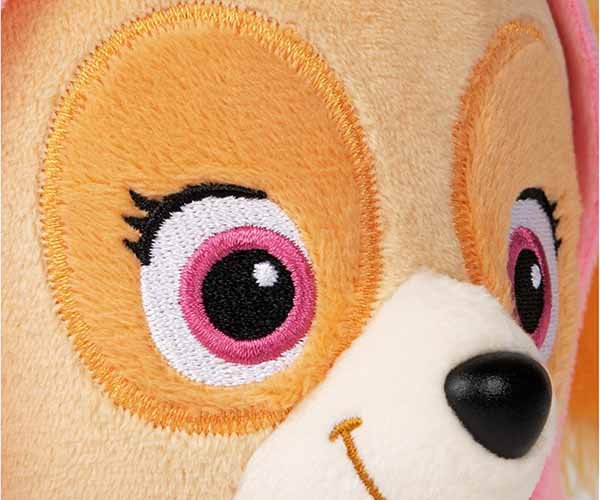
Embroidery-Based Branding
Branding for infant plush products is primarily executed through embroidery to ensure safety and durability. Logos, facial features, and decorative elements are stitched directly into the fabric surface without adding separate components. Typical execution includes:
- flat embroidery for clean logo presentation
- satin stitch for smooth and dense finishes
- multi-color embroidery for character-based designs
With a dedicated embroidery factory integrated into the production system, stitching consistency, thread quality, and placement accuracy are maintained across large orders. Delsney coordinates embroidery with pattern and structure design during development, ensuring that branding elements remain aligned after filling and shaping.

Soft-Surface Printing Options
Certain infant plush designs require visual effects that embroidery cannot achieve, especially for gradients, patterns, or larger graphic areas. Printing solutions are selected based on softness and production efficiency:
- heat transfer printing for detailed graphics
- direct fabric printing for repeat patterns
- controlled surface printing for soft-touch applications
Printing methods are evaluated during sampling to ensure they do not affect the softness, flexibility, or durability of the product. Delsney integrates printing decisions with fabric selection and sampling, reducing inconsistencies between design intent and final output.

Woven Labels and Care Tags
Brand identification and product information are applied through sewn-in labels that remain soft and unobtrusive. Common applications include:
- woven brand labels inserted into seams
- printed care labels for washing and product information
- folded labels for a cleaner and more premium look
Placement is carefully planned to avoid areas that may cause discomfort during infant use. With coordinated production and QC inspection, label positioning and stitching consistency are maintained across batches.

Hang Tags and Retail Information Cards
Hang tags provide additional branding space and are commonly used for retail display and product communication. Customization options include:
- size and shape adjustments
- matte or coated finishes
- printed product details and branding visuals
- QR codes or product traceability information
Delsney’s design team supports the development of tag layout and structure, ensuring alignment with overall product presentation. Tags are produced alongside plush products to maintain consistent color, branding, and finishing across the full product set.

Retail Packaging Development
Retail packaging is designed to enhance shelf visibility while protecting the product. Common packaging formats include:
- color boxes with custom graphics
- window boxes allowing product visibility
- structured display packaging for store presentation
Packaging design is aligned with:
- product size and shape
- retail display requirements
- brand positioning
With 10+ designers supporting product and packaging development, Delsney ensures that packaging structure and visual identity match the plush product.

E-commerce and Protective Packaging
Packaging for e-commerce focuses on protection, cost efficiency, and shipping performance. Key considerations include:
- compact packaging to reduce shipping volume
- protective inner layers to prevent deformation
- simplified structures for efficient packing
Packaging is tested together with product samples to ensure that plush shape and softness are maintained after transport. Delsney coordinates packaging production with plush manufacturing, allowing consistent delivery timelines within the standard 15–25 day production cycle.
Infant Plush Solutions for Different Industries and Product Development Scenarios
Development and production strategies adjusted based on safety standards, product positioning, and sales channels
Baby Product Brands
Infant-focused brands require plush products that align with strict expectations for softness, safety, and long-term product consistency. These products are often part of broader baby care collections and must maintain stable quality across multiple SKUs and repeat orders. Development typically involves:
- selecting soft and stable fabrics suitable for infant use
- engineering structure without rigid internal components
- aligning filling density with product positioning
Delsney supports these projects through a coordinated system including 25+ engineers, 10+ designers, and 3 specialized factories, allowing consistent execution from sampling (5–7 days) to production (15–25 days) with MOQ starting from 500 units.
Retail Chains and Baby Stores
- standardized material and structure for repeat production
- packaging aligned with retail display requirements
- consistent embroidery and labeling across SKUs
E-commerce and DTC Brands
Online brands focus on speed, flexibility, and cost efficiency when launching infant plush products. Short development cycles and controlled order quantities are essential to reduce inventory risk. Typical workflow includes:
- rapid sampling within 5–7 days
- development adjustments based on feedback
- compact packaging for shipping efficiency
Delsney supports fast product launches through an integrated development system and low MOQ (500 units), allowing brands to test and scale products with reduced risk.
IP and Character Licensing Brands
- converting 2D characters into safe 3D plush structure
- replacing hard components with embroidery
- adjusting proportions for softness and durability
Corporate and Promotional Projects
- aligning production schedules with campaign timelines
- integrating branding into product and packaging
- managing bulk production with consistent output
Distributors and Wholesalers
- standardized materials and filling systems
- coordinated production across 3 factories
- QC monitoring at each stage
Private Label and Store Brands
- custom embroidery, labels, and packaging design
- consistent material and structure specifications
- coordinated production for multiple SKUs
Creative Studios and Product Designers
Design teams and studios often begin with concept sketches or visual references rather than technical specifications. They require support to convert ideas into manufacturable infant-safe products. Development workflow includes:
- design-to-structure conversion by engineering team
- iterative sampling with up to 2 revisions
- refinement of materials and proportions
With 25+ engineers and a structured sampling system, Delsney helps transform creative concepts into production-ready plush products.
Seasonal and Campaign-Based Products
Seasonal infant plush products require fast turnaround, simplified development, and reliable delivery within fixed timelines. These products are often linked to holidays, events, or limited-time sales. Execution includes:
- simplified structure for faster production
- rapid sampling within 5–7 days
- coordinated logistics planning
With production lead times of 15–25 days and integrated factory coordination, Delsney supports on-time delivery for time-sensitive product launches.
Why Brands Switch to Delsney
Improved development accuracy, faster timelines, and more consistent production compared to conventional suppliers
More Accurate Design Execution
Many suppliers struggle to translate 2D designs into stable 3D plush products, especially for infant-safe structures without rigid components. Design inconsistencies often lead to multiple revisions and delays. Delsney approaches development through engineering-supported design conversion, aligning pattern, structure, and filling from the beginning. With 25+ engineers and a structured sampling system, projects can reach up to 98% design accuracy after refinement.
Faster Sampling and Development Cycles
Long sampling timelines slow down product launches and increase development costs. Repeated delays in sample revisions often disrupt planning. Delsney operates an internal sample room with a controlled workflow, delivering samples within 5–7 days and including up to 2 revision rounds. This allows faster validation of structure, materials, and appearance before moving into production.
Reduced Development Risk for Infant Products
Infant plush products require higher safety considerations, and many issues only appear during sampling or production if not addressed early. Delsney integrates safety-focused design adjustments, material selection, and structure validation into the development stage. This reduces the risk of redesign, production errors, or product inconsistency later in the process.
More Consistent Production Quality
Integrated Manufacturing System
Flexible MOQ for Product Development
Clear and Efficient Communication
Predictable Production and Delivery Timeline
Long-Term Supply Stability
Many suppliers perform well for initial orders but struggle to maintain consistency over repeat production runs. Delsney’s system is built for repeatability, with standardized materials, controlled processes, and coordinated QC monitoring. This allows brands to scale infant plush product lines with consistent quality and stable supply.
Logistics, Communication, and Delivery System Built for Reliable Infant Product Fulfillment
Structured coordination from sampling to shipment ensuring clear communication, controlled timelines, and smooth global delivery
Multi-Mode Shipping Options
Shipping solutions are selected based on order urgency, volume, and cost considerations, allowing flexible planning for different project types.
Available methods include:
- air freight for urgent orders
- sea freight for large-volume shipments
- express delivery for samples and small batches
Delsney coordinates shipping selection during production planning to align cost, timing, and product requirements within the 15–25 day production cycle.
Production and Delivery Alignment
Production schedules are planned together with shipping timelines to reduce delays between manufacturing completion and dispatch.
Execution includes:
- confirming production lead time before order confirmation
- aligning packing schedules with shipping bookings
- preparing goods for immediate dispatch after inspection
With sampling completed in 5–7 days and production in 15–25 days, delivery planning becomes more predictable and easier to manage.
Split Shipment and Batch Delivery
For large orders or staged inventory planning, shipments can be divided into multiple batches.
This approach allows:
- early delivery of part of the order
- better inventory control
- reduced pressure on storage and cash flow
Delsney supports batch production and phased delivery through coordinated scheduling across its 3 specialized factories.
Multi-Destination Shipping Support
Projects involving multiple warehouses, distribution centers, or retail locations require flexible delivery arrangements.
Execution includes:
- splitting shipments by destination
- preparing packaging and labeling per location
- coordinating delivery timelines for each shipment
This is especially useful for retail chains, distributors, and e-commerce fulfillment networks.
Packaging and Shipping Coordination
Packaging is developed not only for presentation but also for transport protection and logistics efficiency.
Key considerations include:
- carton size optimization for shipping cost control
- internal protection to prevent deformation
- alignment between product shape and packaging structure
With 10+ designers and integrated production, Delsney ensures packaging and product are developed together to improve shipping performance.
Real-Time Communication and Updates
Clear communication reduces delays and avoids misunderstandings during development and production.
Communication includes:
- direct contact with project team
- updates during sampling and production
- fast response to design or order adjustments
Visual updates such as photos and videos are shared at key stages to provide transparency throughout the process.
Time-Zone Friendly Project Coordination
Delsney supports global clients by:
- maintaining flexible communication schedules
- coordinating responses across time zones
- ensuring continuity between development and production stages
Export Documentation and Compliance
Support includes:
- preparation of commercial invoices and packing lists
- coordination with shipping partners
- documentation aligned with destination requirements
End-to-End Delivery Control
From initial sampling to final shipment, the entire process is coordinated within one system.
Execution includes:
- tracking progress from development to production
- integrating QC inspection before shipment
- aligning production completion with logistics scheduling
Supported by 3 specialized factories, 25+ engineers, and 20+ QC staff, Delsney ensures that delivery timelines remain consistent across orders.
Safety, Compliance & International Certification for Infant Plush Toys

Material & Chemical Safety
Infant plush toys require non-toxic, hypoallergenic, and safe materials that comply with international regulations. Delsney carefully selects and tests all fabrics, fillings, and dyes to prevent any chemical hazards.
Key Measures:
- Certified non-toxic plush fabrics and hypoallergenic polyester fiber
- Safe dyes and printing processes free from heavy metals and harmful chemicals
- Avoidance of small detachable parts that could cause choking hazards
- Consistent material quality from sample to bulk production
Delsney Advantage:
- Integrated sourcing and production ensures compliance from early design through mass production
- Materials tested for softness and durability suitable for infants
- Continuous monitoring ensures infant-specific material standards are maintained

Structural & Production Safety
Structural integrity is crucial for infant toys because even soft materials can pose risks if sewn or weighted improperly.
Key Measures:
- Reinforced stitching at all stress points (limbs, seams)
- Secure attachment of eyes, noses, or accessories using infant-safe methods
- Balanced stuffing and weighted inserts to avoid uneven pressure or deformation
- Multi-stage QC inspections covering materials, in-process, and final products
Delsney Advantage:
- 25+ engineers and 20+ QC staff ensure structural stability and repeatable quality
- Stress and durability tests tailored for infant handling
- Standardized production across 3 specialized factories for consistent results

International Certification Standards
Infant plush toys must comply with global toy safety regulations to enter regulated markets like the US, EU, and Canada. Delsney ensures all products meet or exceed these standards.
Key Certifications & Compliance:
- ASTM F963 (USA) — Comprehensive toy safety including mechanical and chemical requirements
- CPSIA (USA) — Limits on lead, phthalates, and other harmful chemicals
- EN71 (Europe) — Safety requirements including flammability, mechanical, and chemical testing
- ISO 8124 / Global Toy Safety Standards — Additional international compliance references
- Labeling and packaging adherence to country-specific requirements
Delsney Advantage:
- Pre-production design and material review aligned with international standards
- Support for testing and documentation for third-party labs
- Products designed to pass certification consistently before bulk production
Production Process
Structured Production Process for Infant Plush Manufacturing from Material to Final Shipment
Step 1 : Design Confirmation and Production Planning
Step 2 : Material Preparation and Inspection
Step 3 : Fabric Cutting and Panel Preparation
Step 4 : Embroidery and Surface Detailing
Step 5 : Sewing and Structural Assembly
Step 6 : Filling and Shape Formation
Step 7 : Finishing and Cleaning
Step 8 : Final Inspection and Quality Control
Step 9 : Packaging and Shipment Preparation
Infant Plush Projects Delivered with Controlled Development and Stable Production

Infant Character Plush Development
Project Type: Infant-safe character plush
Client Profile: Brand developing baby-friendly IP products
Challenge:
- Complex character design
- Need for safe structure (no hard parts)
- High visual accuracy required
Execution:
- design simplified for infant use
- embroidery used instead of plastic components
- sampling completed within 7 days with 2 revisions
Result:
- up to 98% design accuracy achieved
- approved without additional modification
- stable production across batch orders

Retail Infant Plush Collection
Project Type: Multi-SKU infant plush series
Client Profile: Retail brand launching baby product line
Challenge:
- multiple designs produced together
- consistent softness and shape required
- stable supply for retail distribution
Execution:
- standardized material and filling system
- production coordinated across 3 factories
- QC team (20+ staff) monitored output
Result:
- consistent product quality across SKUs
- stable supply for retail channels
- reduced defect rate during production

Time-Sensitive Baby Gift Project
Project Type: Promotional infant plush gift
Client Profile: Campaign-based order
Challenge:
- strict deadline
- large order quantity
- consistent branding required
Execution:
- sampling completed within 5–7 days
- production scheduled within 15–25 days
- packaging integrated with product production
Result:
- on-time delivery achieved
- consistent quality across units
- successful campaign execution
Frequently Asked Questions About Custom Infant Plush Toys Manufacturing
The standard minimum order quantity starts from 500 units, which allows brands to test new infant plush designs without committing to large production volumes. This MOQ is structured to balance cost efficiency and production stability, making it suitable for both early-stage product validation and long-term scaling. With Delsney’s integrated system across 3 specialized factories, even smaller orders can maintain consistent material quality, structure accuracy, and branding execution.
Development typically begins with a sampling phase completed within 5–7 days, followed by up to 2 revision rounds to refine structure, softness, and detailing. Once the sample is approved, bulk production is usually completed within 15–25 days depending on order size and complexity. This structured timeline allows brands to plan product launches more accurately while reducing delays commonly seen in less coordinated manufacturing systems.
Infant plush products are developed with safety-focused design adjustments, including the removal of hard components, the use of embroidery instead of plastic parts, and controlled material selection for softness and durability. Structure is engineered using fabric panels and filling rather than rigid support, and all products go through multi-stage QC inspection. With 25+ engineers and 20+ QC staff involved across development and production, safety is addressed from concept through final shipment.
Custom designs can typically achieve up to 98% accuracy after the sampling and refinement process. Initial artwork or reference images are converted into plush structure through pattern engineering, proportion adjustment, and material selection. Sampling within 5–7 days allows visual and structural corrections, and up to 2 revision rounds are included to improve accuracy before production. This process ensures that the final product closely matches the original concept while remaining suitable for infant use.
Material selection focuses on softness, durability, and consistency in production. Common options include short plush, ultra-soft plush, and velvet-touch fabrics, combined with PP cotton or high-resilience fiber filling. Materials are evaluated not only for touch but also for performance during sewing, filling, and long-term use. With an integrated fabric supply system and internal sampling validation, Delsney ensures that selected materials remain consistent across production batches.
Consistency is controlled through a multi-stage production and inspection system covering materials, cutting, sewing, filling, and final assembly. Standardized processes are applied across all production runs, and each stage is monitored by a QC team of more than 20 inspectors. With 3 specialized factories working in coordination and engineering support throughout production, the approved sample is used as a reference to maintain uniformity across all units.
Branding and packaging are developed together with the product to ensure alignment in appearance and structure. Options include embroidery-based logos, woven labels, hang tags, retail boxes, and e-commerce packaging. With a team of 10+ designers and integrated production capabilities, packaging is planned alongside product development to ensure consistent branding, efficient packing, and compatibility with shipping requirements within the 15–25 day production timeline.

Start Your Custom Infant Plush Project with a Structured Development Plan
What to Prepare
- design sketches or reference images
- target size and quantity
- preferred materials (if available)
- usage scenario (retail, baby gift, etc.)
