Skip to content
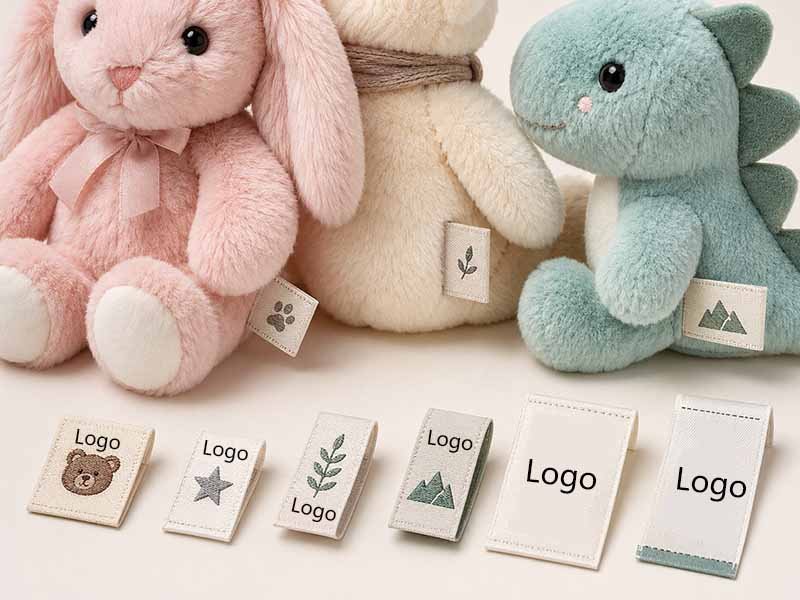
A logo can look tiny on a plush toy, yet it often carries the entire value of a custom project. For a retail plush line, the logo tells customers where the product comes from. For a mascot, it connects the toy with a company, club, school, museum, game, or event. For a gift project, it turns a cute item into a memory people can connect with a name. Poor logo placement can make even a well-made plush look awkward. A logo that is too large can damage the character’s charm. A logo that is too small may disappear after embroidery. A label that feels rough can reduce the soft touch customers expect from plush products.
Adding brand logos to plush toys can be done through embroidery, woven labels, printed fabric, heat transfer, sewn patches, hang tags, care labels, story cards, and custom packaging. The right choice depends on plush fabric, logo size, color count, age range, safety needs, order quantity, retail price, and how visible the brand mark needs to be.
Delsney treats logo customization as part of plush product development, not a small decoration added at the end. A logo needs to work with the toy’s shape, fabric pile, stuffing volume, sewing line, packaging, and safety standard. Some logos belong on the foot. Some belong on clothing. Some should stay on a woven label or hang tag. The real skill is knowing where the logo improves the product — and where it quietly gets in the way.
What Logo Options Work Best?

The best logo option depends on how the plush toy will be sold, used, touched, and displayed. Embroidery gives a durable and premium look. Woven labels suit private label plush lines. Printing works well on plush clothing and flat fabric panels. Hang tags and packaging add strong branding without changing the soft plush body.
Logo choice should begin with one question: should the logo stay permanently on the toy, or should it appear through labels and packaging? A permanent logo gives long-term brand exposure after purchase. External branding gives more room for story, barcode, care notes, collection names, and retail display, while keeping the plush body clean and soft.
For many custom plush projects, the strongest result comes from combining two or three branding layers. A mascot plush may use embroidery on clothing, a woven side label, and a printed hang tag. A baby plush may use a soft woven label, care label, and box branding instead of hard patches. A premium collectible may use a small embroidered mark, a story card, and a display box. One logo method rarely solves every need.
Cost also changes by method. Embroidery cost rises with stitch area, thread colors, and design complexity. Woven labels require label production and sewing time, but they are stable for repeat orders. Printing can be efficient for larger logo areas, especially on T-shirts or scarves. Custom boxes raise total cost but increase shelf value and gift appeal. A good factory should explain these trade-offs before sampling begins.
Delsney can review artwork, fabric type, target age range, and product use before recommending a logo plan. With 18+ years of plush product development and manufacturing experience, Delsney can support embroidery, woven labels, printed logos, care labels, hang tags, story cards, custom packaging, and full OEM/ODM plush branding.
| Logo Method | Best Area | Good For | Main Risk | Cost Impact |
|---|---|---|---|---|
| Embroidery | Foot, clothing, short-pile panels | Premium look, durable logo | Small text may blur | Medium to high |
| Woven Label | Side seam, ear, clothing edge | Private label, retail plush | Limited logo size | Low to medium |
| Printed Logo | T-shirt, scarf, flat fabric | Promotional plush, event toys | Poor print may crack | Low to medium |
| Heat Transfer | Smooth fabric clothing | Clear graphics, small runs | Not ideal on long plush | Medium |
| Sewn Patch | Hoodie, bag, accessory | Strong visual identity | Adds stiffness | Medium to high |
| Hang Tag | Retail display, brand story | Logo, barcode, product name | Removed after purchase | Low to medium |
| Care Label | Compliance and material info | Safety, care, market entry | Too much text looks crowded | Low |
| Custom Box | Gift, retail shelf, collector item | Premium presentation | Higher packaging cost | Medium to high |
What Is Embroidery?
Embroidery gives plush toys a stitched logo that feels permanent and high value. It works especially well on short-pile plush, felt, cotton clothing, mini T-shirts, scarves, hats, foot pads, and smooth fabric panels. For simple logos with clear lines, embroidery can look clean, durable, and more refined than printing.
Not every logo should be embroidered. Thin lettering, gradients, tiny icons, and complex color details often lose clarity after stitching. Long-pile plush can cover thread edges, making the logo look uneven. High stitch density can also make a soft area feel hard. For baby plush or toddler plush, thread ends, needlework strength, and surface smoothness need extra attention.
Practical embroidery checks for custom plush toys:
| Check Point | Recommended Control |
|---|---|
| Minimum text size | Avoid tiny letters under 5–6 mm height |
| Color count | Keep logo colors simple for cleaner stitching |
| Fabric pile | Use short-pile or flat fabric areas for sharper results |
| Logo area | Avoid heavily curved or stuffed areas |
| Thread finish | Check loose threads and back-side roughness |
| Sample test | Review logo clarity after stuffing, not only on flat fabric |
Delsney can adjust embroidery size, stitch density, thread color, and placement during sampling. A simplified logo often looks better on plush than a full corporate artwork file.
Which Labels Work?
Labels are one of the most practical ways to add brand identity to plush toys. A label can carry a logo, care instruction, material content, age information, safety warning, batch code, importer information, or collection name. Woven labels, satin labels, cotton labels, printed labels, loop labels, and folded side labels are common choices for plush products.
A woven label works well for private label plush because it looks clean and does not disturb the main character design. A care label helps meet market requirements and gives customers washing and safety information. A small logo label on the side seam or ear can make a plush toy feel like a finished retail product instead of a generic item.
Label planning should consider size and touch. A label that is too large may look cheap. A label that is too stiff may feel uncomfortable. A label with too much text becomes hard to read. For toys intended for young children, label placement and sewing strength need careful inspection.
Useful label types for plush customization:
| Label Type | Best Use | Common Position |
|---|---|---|
| Woven Logo Label | Brand identity | Side seam, ear, clothing seam |
| Care Label | Washing and safety information | Bottom seam or side seam |
| Satin Label | Softer product feel | Baby plush, premium plush |
| Printed Cotton Label | Natural look | Eco-style plush lines |
| Loop Label | Visible brand mark | Side seam or accessory edge |
| Hangable Label | Retail display support | Neck, ear, or packaging area |
Delsney can help match label material, folding style, sewing position, and text layout to the plush design. For export projects, labels can also be planned together with EN71, ASTM, CPSIA, CE, and client-specific compliance needs.
How Does Printing Work?
Printing works best when the logo is placed on plush clothing, scarves, capes, bags, flat fabric panels, or accessories. A plush bear wearing a printed T-shirt can show a company logo clearly without affecting the soft body. A mascot plush can carry team names, event graphics, slogans, or campaign artwork through printed clothing.
Common logo printing methods include screen printing, heat transfer, digital printing on selected fabrics, and sublimation for suitable materials. Printing can show more colors and larger graphics than embroidery in many cases. It is useful for promotional plush toys, sports mascots, school gifts, museum souvenirs, event plush, and e-commerce product lines.
Printing still needs material testing. Some fabrics absorb ink poorly. Some prints crack when stretched. Some heat transfer films feel stiff. Some colors shift after heat pressing. A flat fabric sample does not always show how the print will look after the garment is sewn onto a stuffed plush body.
Key print testing points:
| Test Area | What to Check |
|---|---|
| Color match | Compare with Pantone or approved artwork |
| Surface feel | Avoid rough or plastic-like touch if softness matters |
| Stretch | Check cracking on curved plush clothing |
| Wash resistance | Test if product is meant for washable clothing |
| Edge clarity | Review small text and thin lines |
| Safety | Confirm ink or film meets target market standards |
Delsney can make print trials during sampling so clients can compare color, texture, adhesion, and final appearance before bulk production. For many logo plush projects, printed clothing offers a strong balance between visibility and cost.
Are Hang Tags Useful?
Hang tags are useful because they add clear branding without changing the plush body. A hang tag can show the logo, product name, character story, barcode, SKU, care tips, website, social handle, safety icons, age mark, collection name, and gift message. For retail plush toys, hang tags help customers understand the product before purchase.
Hang tags also give brands flexibility. A plush toy can use different tags for different countries, languages, seasons, or sales channels. A Halloween plush, Christmas plush, museum plush, or influencer plush can share the same body pattern but use a different tag and package design. For first orders, hang tags are often easier to manage than changing complex plush body details.
The weak point is long-term exposure. Most customers remove hang tags after purchase. For stronger brand memory, hang tags should work with a sewn label, care label, or small logo on clothing. A good hang tag should not be too heavy, too sharp, or attached in a way that damages the plush fabric.
Hang tag planning details:
| Detail | Recommendation |
|---|---|
| Paper thickness | 300–400 gsm for better retail feel |
| Shape | Rectangle, die-cut, round, character-shaped |
| Finish | Matte, gloss, soft-touch, spot UV |
| Attachment | String, plastic loop, safety pin alternative |
| Content | Logo, SKU, barcode, age mark, care note |
| Retail use | Add hole position and display requirement early |
Delsney can support hang tag layout, material selection, barcode area, string choice, and packaging coordination. For gift and retail plush projects, a well-designed tag can raise product value with limited cost increase.
Is Packaging Part of Branding?
Packaging plays a large role in plush toy branding, especially for gifts, retail shelves, online bundles, collectibles, and holiday products. A plush toy without packaging may still be cute, but packaging gives it a clearer identity. It tells the customer the product name, collection story, care method, age range, and brand value before the toy is opened.
Common packaging choices include polybags, printed polybags, kraft boxes, window boxes, color boxes, paper sleeves, belly bands, cotton drawstring bags, display trays, and gift boxes. Entry-level promotional plush may only need a polybag and hang tag. Premium plush may need a window box, story card, care label, and protective carton structure.
Packaging also affects shipping. Plush toys can deform if compressed too tightly. Accessories, ears, hats, wings, or embroidered areas may need better protection. Window boxes help display the toy but increase carton volume. Polybags save cost and space but offer less retail value. Brands need to balance freight cost, shelf impact, and product protection.
Packaging options by project type:
| Project Type | Suitable Packaging | Reason |
|---|---|---|
| Corporate Gift | Polybag + hang tag | Cost control and simple distribution |
| Retail Plush | Window box or color box | Better shelf display |
| Baby Plush | Soft bag + care label | Gentle presentation and safety info |
| Collectible Plush | Display box + story card | Higher perceived value |
| Museum Gift | Kraft box + illustrated card | Strong story and souvenir value |
| E-commerce Plush | Polybag + insert card + strong carton | Lower shipping cost and better unboxing |
Delsney can coordinate plush design, hang tags, care labels, story cards, and packaging as one system. For brand projects, packaging should be planned during sampling rather than after production, because size, folding method, carton layout, and freight cost all affect final profitability.
Where Should Logos Go?

Logo placement should protect the character first. Good placement makes a plush toy look more complete; poor placement makes it look like an advertisement. Common positions include the foot, ear, clothing, side seam, accessory, hang tag, care label, and box. The best choice depends on visibility, softness, safety, and product purpose.
The face should usually stay clean unless the logo is part of the character design. Eyes, mouth, nose, and expression create emotional value. If the brand mark competes with the face, the toy may feel less warm. Foot pads, clothing, side labels, and packaging usually give safer branding space.
Logo placement also changes by sales channel. Promotional gifts often need clear front-facing exposure. Licensed IP plush may need subtle branding because design approval matters. Baby plush may need soft labels and safety-friendly packaging. Retail plush may need a mix of small sewn logo, hang tag, care label, and box branding.
For production, placement must be checked after stuffing. A logo centered on flat fabric may shift after filling, sewing, and shaping. Curved body parts can distort logos. Long fur can hide details. Seams can pull labels out of position. Delsney can review placement through pattern making, three-view drawings, 3D effects, and real sample checking before bulk production.
| Logo Position | Best Use | Visibility | Production Note |
|---|---|---|---|
| Foot Pad | Teddy bear, mascot, gift plush | High | Needs flat short-pile area |
| Ear | Boutique plush, small logo | Medium | Works better with small labels |
| Clothing | Corporate, sports, event plush | High | Requires accurate garment fit |
| Side Seam | Private label and care info | Low to medium | Safe and clean |
| Belly | Strong logo display | Very high | Can damage character appeal |
| Accessory | Scarf, bag, cap, cape | Medium to high | Adds pattern and sewing steps |
| Hang Tag | Retail and story display | High before purchase | Usually removed later |
| Box | Gift and shelf display | Very high | Raises packaging and freight cost |
Is the Foot a Good Place?
The foot is a strong logo position for teddy bears, mascots, corporate plush, commemorative plush, school plush, and event plush. It gives the logo clear visibility when the toy sits down, while keeping the face clean and emotional. Embroidery, printing, woven patches, or short-pile fabric panels can all work on the foot.
Foot branding works best when the plush has enough pad area. Very small toys may not support readable text. Long-pile foot fabric may hide embroidery, so a short-pile pad or fabric insert is often better. For simple logo marks, embroidery on the foot can look durable and premium. For full-color artwork, printing on a flat foot pad may work better.
Foot logo checklist:
| Item | Better Choice |
|---|---|
| Logo type | Simple mark or short brand name |
| Fabric | Short plush, felt, cotton, smooth fabric |
| Placement | Centered after stuffing, not only before sewing |
| Size | Large enough for reading from 30–50 cm distance |
| Method | Embroidery for premium feel, print for color graphics |
Delsney can adjust foot pad shape, fabric, and logo size during sample development. For high-end plush projects, the foot can become a tasteful signature area.
Can Logos Go on Ears?
Logos can go on ears when brands want subtle recognition. Ear labels feel soft, cute, and less commercial. They work well for rabbits, bears, cats, dogs, animal plush, baby plush, boutique plush, and collectible characters. A tiny woven label or small embroidery on the ear can create a gentle brand mark without overwhelming the toy.
Ear placement has limits. Ears are often curved, narrow, or softly stuffed, so complex logos may not read well. Large logos can make the toy look unbalanced. For long ears, label position needs to be checked when the toy hangs, sits, or lies down. For baby products, the label must be soft, secure, and free from sharp edges.
Good ear branding usually follows three rules:
Use a small and simple logo.
Keep label material soft.
Place the logo where it does not affect the character’s expression.
Delsney can test folded woven labels, satin labels, small printed marks, or light embroidery on ear samples. For many plush lines, ear branding works best as a quiet detail paired with stronger packaging or hang tag branding.
How About Plush Clothing?
Plush clothing is one of the most flexible places for logo customization. A toy can wear a T-shirt, hoodie, jersey, apron, scarf, vest, cape, hat, backpack, or uniform. The logo can be printed, embroidered, patched, or heat transferred onto the clothing. The plush body stays soft, while the brand gets a clean display area.
Clothing works especially well for:
Corporate gift plush
Sports team mascots
University plush
Museum souvenir plush
Retail campaign plush
Holiday plush
Influencer merchandise
Brand mascot plush
The main production challenge is fit. A tiny T-shirt must match the plush body shape, arm angle, stuffing volume, and sitting posture. Loose clothing looks sloppy. Tight clothing can deform the toy. Printing may also shift if fabric is stretched during dressing.
Delsney can create clothing patterns during plush development and check logo position after the clothing is placed on the final stuffed sample. For projects needing several versions, one plush body can wear different outfits, helping brands create seasonal or campaign variations without changing the core toy pattern.
Do Side Labels Look Better?
Side labels often look more professional than large body logos for retail plush. They give the product a clean private label feel and keep the character design untouched. A side seam label can carry the brand logo, product line name, material content, washing information, safety warning, batch code, or importer details.
Side labels are especially useful for plush toys sold in stores, online shops, gift boxes, and licensed collections. Customers are used to seeing labels on plush products, so the branding feels natural. For young children’s products, soft sewn labels may also be safer than detachable hard logo pieces.
Side label planning should avoid three problems:
Too much text on a small label
Stiff material that scratches the skin
Weak sewing that pulls out after use
Delsney can help choose woven, satin, cotton, or printed labels based on market and age grade. For export plush toys, side labels can be combined with compliance information required by different countries or clients.
Are Boxes Better for Retail?
Boxes are often better for retail projects where shelf display, gift value, and brand story matter. A custom box gives enough space for logo, artwork, product name, character story, barcode, QR code, age marking, safety warning, certification icons, and care information. It also makes the plush feel more like a finished retail product.
A window box allows customers to see the plush face while keeping the product clean. A color box can show strong brand identity. A kraft box works well for natural or eco-style collections. A gift box adds value for holiday, museum, boutique, influencer, and limited-edition plush lines.
Box decisions should consider cost and shipping volume. Plush toys are soft and bulky. A box can protect shape and improve presentation, but it may increase carton size and freight cost. For e-commerce sellers, packaging must also survive courier handling.
Retail packaging decision table:
| Sales Channel | Better Packaging Choice | Main Reason |
|---|---|---|
| Amazon / Shopify | Polybag + insert card + shipping carton | Cost and logistics control |
| Boutique Store | Window box or kraft box | Shelf display and gift value |
| Museum Shop | Illustrated box + story card | Strong story and souvenir appeal |
| Corporate Gift | Polybag or simple box | Budget and distribution efficiency |
| Premium Plush Line | Color box + care card | Higher perceived value |
| Collectible Plush | Display box + numbered card | Collection and repeat purchase appeal |
Delsney can develop plush packaging together with the toy sample, helping clients control size, artwork, carton packing, and final presentation before mass production begins.
Which Method Fits Your Plush Toy?
The right logo method depends on plush fabric, logo detail, toy size, age range, safety needs, retail price, and order quantity. Short-pile fabrics suit embroidery better. Long-pile plush often needs labels, clothing, or packaging logos. Baby plush should avoid hard parts. Premium plush can combine subtle sewn labels, refined embroidery, and custom packaging.
Choosing a logo method is not only a design decision. It affects production cost, sample time, sewing difficulty, safety review, bulk consistency, and final customer experience. A logo that works on a cotton T-shirt may not work on rabbit fur. A logo that looks sharp on a flat patch may look distorted on a rounded plush belly. A detailed mascot logo may need simplification before embroidery. A full-color logo may look better on a hang tag or printed clothing than directly on the plush body.
For plush toys, softness always matters. If the logo area becomes stiff, rough, heavy, or awkwardly placed, customers may feel the product has lost part of its charm. A plush toy is held, hugged, displayed, gifted, and photographed. Logo work should support the emotional value of the toy, not fight against it.
Order quantity also changes the decision. For small trial orders, simple woven labels, hang tags, and printed clothing may be easier to manage. For larger orders, custom woven labels, special patches, custom zipper bags, retail boxes, and more refined embroidery can be planned with better cost control. If the same logo will be used across many plush styles, investing in a cleaner label system or packaging system may be smarter than redesigning every toy body.
Delsney can help clients choose logo methods based on product type, material, plush size, market, and budget. The factory can review artwork files, suggest logo simplification, create samples, adjust placement, and check bulk production quality before shipment.
| Product Situation | Better Logo Method | Reason |
|---|---|---|
| Long-pile animal plush | Woven label, hang tag, packaging | Fur may hide embroidery or printing |
| Short-pile mascot plush | Embroidery, printed clothing, patch | Clearer surface for logo detail |
| Baby plush | Soft label, care label, packaging | Safer and softer touch |
| Corporate gift plush | Clothing logo, foot embroidery, hang tag | Clear exposure for events |
| Retail plush line | Side label, story card, box | More complete product presentation |
| Collectible plush | Small embroidery, numbered card, display box | Better premium feeling |
| Sports mascot plush | Jersey printing, scarf embroidery | Natural logo area |
| Licensed IP plush | Packaging, care label, subtle sewn logo | Protects character design |
What Fabric Are You Using?
Fabric is the first thing to check before choosing a logo method. Plush fabric is not a flat canvas. It has pile height, direction, density, stretch, shine, and softness. These details change how a logo looks after sewing, stuffing, brushing, and packing. A logo method that works well on one fabric may fail on another.
Short-pile plush, minky, felt, cotton, and smooth fabric panels usually support embroidery and printing better. Long-pile plush, faux fur, shaggy plush, sherpa-style fabric, and high-pile materials are harder for detailed logos because the fibers can cover stitches or distort printed edges. For long-pile toys, a short-pile foot pad, clothing piece, woven label, or hang tag often gives a cleaner result.
Fabric direction also matters. Plush pile can reflect light differently from different angles. A logo embroidered on one direction may look darker or lighter when the toy is turned. Stretch fabrics may pull the logo out of shape after stuffing. Thick fabric may need stronger needles and adjusted stitch density. Thin fabric may pucker around embroidery.
Logo method by fabric type:
| Fabric Type | Better Logo Choice | Notes |
|---|---|---|
| Short Plush | Embroidery, woven label, print on panels | Good clarity for simple logos |
| Minky | Embroidery, small labels, printed clothing | Soft surface, careful stitch control needed |
| Long Plush | Label, clothing, hang tag, packaging | Direct logo may be hidden |
| Faux Fur | Hang tag, side label, accessory logo | Avoid detailed body embroidery |
| Felt | Embroidery, print, patch | Good for eyes, accessories, badges |
| Cotton Clothing | Printing, embroidery, heat transfer | Strong area for brand exposure |
| Fleece | Embroidery, woven label | Avoid tiny text |
| Sherpa Fabric | Label, packaging, accessory logo | Uneven surface limits detail |
Delsney can check logo artwork against selected plush fabrics before sampling. If the fabric is not suitable for direct logo application, the factory can suggest an added clothing panel, fabric patch, foot pad, or label solution. This saves time because logo problems are easier to solve before the first sample than after the pattern is finished.
For high-end brand projects, fabric and logo should be selected together. A premium plush with beautiful fabric can look worse if the logo is forced into the wrong area. A simple logo on the right fabric often looks more expensive than a complicated logo on the wrong surface.
Is the Logo Simple?
Simple logos usually work better on plush toys. Plush surfaces are soft, curved, and sometimes furry, so small details are easy to lose. A logo with clean shapes, limited colors, and strong contrast is easier to embroider, print, weave, or patch. A logo with gradients, thin lines, tiny letters, shadow effects, or complex illustrations may need simplification.
For embroidery, simple artwork is especially important. Every line becomes thread. If the line is too thin, it may disappear. If the text is too small, it may turn into a rough block. If too many colors are used, embroidery cost and production complexity increase. For woven labels, small text can also become hard to read because thread weaving has limits. For printing, detailed artwork is easier, but the fabric surface still affects clarity.
A useful approach is to prepare two logo versions:
Main logo for packaging, hang tags, catalog images, and story cards.
Simplified logo for embroidery, woven labels, patches, and small product details.
For example, a full logo may include an icon, brand name, slogan, and color gradient. The simplified version may only use the icon or short brand name. This gives the plush toy a cleaner look while keeping the full brand story in the packaging.
Logo simplification checklist:
| Logo Issue | Suggested Fix |
|---|---|
| Too many colors | Reduce to 1–3 key colors for embroidery |
| Tiny slogan | Move slogan to hang tag or packaging |
| Thin lines | Thicken lines before stitching |
| Gradient effect | Use solid colors or printed tag |
| Detailed mascot icon | Use simplified outline or patch |
| Long brand name | Use initials, icon, or woven label |
| Low contrast | Adjust thread or label background color |
Delsney can help review logo files before sample production. If the original logo is not suitable for plush application, the design team can help create a cleaner version for embroidery, label, or print testing. This is especially useful for clients developing mascot plush, company gift plush, sports plush, museum plush, and private label toy lines.
How Big Is the Logo?
Logo size has a direct impact on clarity, cost, comfort, and appearance. A logo that is too small may not be readable. A logo that is too large may overpower the toy. On plush products, the best logo size is usually decided by placement, fabric surface, viewing distance, and logo method.
For embroidery, larger areas need more stitches, more production time, and sometimes higher cost. A dense embroidered logo can also make the area feel stiff. For woven labels, the label must be large enough to show the logo clearly, but not so large that it scratches, folds badly, or looks cheap. For printing on clothing, the logo should fit the garment pattern without being cut by seams or distorted by stuffing.
A plush toy is usually viewed from 30–80 cm away when held, displayed, or photographed. A logo does not need to be huge to be noticed. It needs to be clear, balanced, and placed where the customer naturally looks. On a plush foot, a logo may only need a few centimeters. On a T-shirt, it can be larger. On a box, it can carry full brand identity.
General logo size planning:
| Plush Size | Suggested Logo Style | Notes |
|---|---|---|
| 8–12 cm Mini Plush | Tiny woven label, hang tag, packaging logo | Avoid detailed embroidery |
| 15–20 cm Small Plush | Foot logo, small clothing logo, side label | Keep logo simple |
| 25–35 cm Standard Plush | Embroidery, printed clothing, label, tag | Most flexible size range |
| 40–60 cm Large Plush | Larger embroidery or clothing logo | Check cost and stiffness |
| 60 cm+ Jumbo Plush | Bigger patches, clothing, packaging | Extra reinforcement may be needed |
For logo readability, product teams should test actual size during sampling instead of judging only from digital mockups. A logo that looks good on a computer screen may become too small after sewing. A logo placed on a curved belly may stretch. A logo on a foot may rotate slightly after stuffing.
Delsney can use three-view drawings and sample checks to help clients confirm logo proportion before bulk production. Logo size should be approved on a finished stuffed sample, not only on an embroidery test swatch.
Are Baby Toys Different?
Baby plush toys need stricter logo decisions because safety, softness, and washing matter more. Logos for baby plush should avoid hard, sharp, detachable, or rough parts. Small buttons, loose patches, metal plates, stiff labels, and poorly secured decorations may create risk. For this category, soft embroidery, sewn-in labels, care labels, and packaging logos are usually safer choices.
Embroidery on baby plush should be smooth, secure, and positioned away from areas where the child may chew or rub often. Thread ends must be controlled. Backing material should not feel sharp or stiff. Labels should be soft and firmly sewn. Printing must use suitable materials for the target market and age group. Any logo method should be reviewed together with the full toy safety standard.
Baby plush branding is often more subtle. Parents do not usually want a large advertising-style logo on a baby comfort toy. They look for trust, softness, clean design, and safety information. A small woven label, a gentle embroidered logo on a foot, and a clear care label may feel more appropriate than a large front logo.
Baby plush logo planning:
| Logo Area | Suitable? | Notes |
|---|---|---|
| Soft embroidery | Yes | Keep smooth and secure |
| Woven side label | Yes | Use soft label material |
| Care label | Yes | Include required care and safety information |
| Hard rubber patch | Usually not ideal | Needs strict safety review |
| Metal logo plate | Not recommended | Hard part risk |
| Long loose tag | Needs caution | Attachment should be safe |
| Packaging logo | Yes | Strong branding without touching toy |
Delsney supports plush products for European and American markets and can help clients consider EN71, ASTM, CPSIA, CE, and related safety expectations during product development. For baby plush or toddler plush, logo planning should be discussed early, not after the sample is finished.
Do Premium Brands Need More Detail?
Premium plush brands usually need more detail, but not always more visible logos. The difference is often in finish quality, material matching, label softness, packaging, color accuracy, and small design choices. A premium plush may use a small logo, but every part around it should feel considered.
High-end plush projects often combine several subtle branding elements:
A small embroidered mark on the foot
A soft woven side label
A printed care label with clean layout
A story card with brand artwork
A custom box or drawstring bag
Color-matched hang tag string
Branded tissue paper or inner card
These details work together to make the plush feel complete. The customer may not notice each part separately, but the total product feels more valuable. This is important for boutique toy brands, museum gift shops, IP products, luxury gift sets, influencer merchandise, limited editions, and premium retail collections.
Premium projects also require better control. Logo color should match brand standards. Embroidery should not show loose threads. Labels should not tilt. Box color should match approved artwork. Materials should feel consistent across repeat orders. If the first production batch looks different from the sample, customer trust can suffer.
Premium plush branding control:
| Detail | Control Standard |
|---|---|
| Logo color | Pantone or approved sample match |
| Embroidery | Clean edges, no loose threads, smooth backing |
| Label | Soft touch, straight sewing, correct fold |
| Packaging | Correct print, clean corners, stable shape |
| Story card | Clear artwork, no spelling errors |
| Batch consistency | Compare bulk goods with approved sample |
| Inspection | Check logo position and finish before shipment |
Delsney is suitable for higher-requirement plush projects because the team can support free design, free sampling support, pattern development, three-view drawings, 3D effect creation, 5–7 day fast sampling for many standard projects, and up to 98% design-to-product matching. For premium brand projects, these early development steps help reduce risk before mass production.
What Should Brands Prepare?

Brands should prepare logo files, Pantone colors, product size, plush design, target age group, label text, packaging ideas, order quantity, and market requirements before starting logo plush sampling. Clear information helps the factory recommend the right logo method, control cost, shorten sample time, and avoid mistakes during bulk production.
A custom logo plush project moves faster when the factory does not need to guess. Many delays happen because the artwork file is low resolution, the logo color is unclear, the label text is missing, the plush size is not confirmed, or the packaging plan changes after sampling. Small missing details can affect quotation, sample accuracy, material purchase, and production timeline.
A good preparation file does not need to be complicated. It can include one logo file, one plush sketch or reference photo, target size, fabric preference, logo position idea, quantity, packaging type, and destination market. If the client does not know the best method yet, Delsney can help review options. But the clearer the starting information, the more accurate the first sample will be.
Logo customization also touches safety and legal information. A plush sold as a toy may need care labels, material information, age grading, warning text, tracking details, importer information, or compliance markings depending on market and client requirements. These should be planned before bulk production, not added at the last minute.
Preparation checklist:
| Item | Why It Matters |
|---|---|
| Logo artwork | Needed for embroidery, labels, printing, packaging |
| Pantone color | Helps control color accuracy |
| Plush design | Affects logo placement and method |
| Product size | Decides available logo space |
| Fabric type | Affects embroidery, printing, and label choice |
| Target age | Affects safety and label planning |
| Quantity | Affects MOQ, logo process, and cost |
| Packaging plan | Affects artwork, carton size, and shipment |
| Market | Affects compliance and labeling |
| Deadline | Affects sampling and production planning |
Which Logo File Is Needed?
The best logo files for plush customization are vector files such as AI, PDF, EPS, or SVG. These files allow the factory to resize the logo without losing clarity. For printing, labels, hang tags, boxes, and embroidery digitizing, vector files are much easier to work with than low-resolution screenshots.
PNG and JPG files can be useful for visual reference, but they may not be enough for production if the resolution is low. A logo copied from a website, email signature, or social media profile often becomes blurry when enlarged. Small text may break. Curved lines may look jagged. Colors may not match the original brand standard.
Recommended logo files:
| File Type | Best Use |
|---|---|
| AI | Best for production artwork |
| Good if vector format is preserved | |
| EPS | Good for printing and embroidery preparation |
| SVG | Useful for clean logo shapes |
| PNG | Good for reference if high resolution |
| JPG | Reference only, not ideal for final production |
| Embroidery DST | Useful if client already has stitch file |
For embroidery, the logo usually needs digitizing. This means the artwork is converted into stitch paths. A good digitizing file controls stitch direction, density, thread color, and edge detail. The same logo may need different embroidery settings depending on plush fabric and logo size.
Delsney can review client artwork and advise whether it is ready for sampling. If needed, the design team can help simplify or adjust the logo so it works better on plush toys.
Do Pantone Colors Matter?
Pantone colors matter when brand color consistency is important. A red logo can look very different if the factory only receives a screenshot or general description such as “bright red.” Thread, fabric, printing ink, woven label yarn, and box printing can all show color differently. Pantone references help reduce color confusion.
However, clients should understand that exact color matching is easier in some processes than others. Printing on paper packaging usually gives better color control than embroidery thread on plush fabric. Woven labels use yarn colors, which may not match every Pantone perfectly. Plush fabric may reflect light differently because of pile direction. Heat transfer colors may change slightly after pressing.
Color planning by logo method:
| Logo Method | Color Control Level | Notes |
|---|---|---|
| Packaging Print | High | Best for exact brand color |
| Hang Tag Print | High | Good for full logo color |
| Heat Transfer | Medium to high | Depends on material and film |
| Screen Printing | Medium to high | Needs fabric testing |
| Embroidery | Medium | Thread color may be closest match |
| Woven Label | Medium | Yarn color has limits |
| Plush Fabric | Medium | Pile direction affects color look |
For custom plush projects, Delsney can match colors using Pantone references, thread cards, fabric swatches, printed proofs, and approved samples. Final approval should be based on physical samples, not only digital images, because screen colors can be misleading.
If brand color is critical, clients should prepare:
Pantone color code
Logo usage guide
Approved color sample if available
Preferred thread or label background color
Packaging color requirements
Delsney can then help align embroidery thread, label yarn, print color, fabric tone, and packaging artwork as closely as production allows.
What Label Text Is Required?
Label text depends on the product, market, age range, material, and sales channel. For plush toys, labels may include brand name, material composition, filling material, washing instructions, age grade, safety warning, batch number, manufacturer or importer information, country of origin, and compliance marks. Exact requirements can vary by market and client standard.
Many brands focus only on the logo and forget care labels until the final stage. This can cause delays because label artwork, translation, layout, material, and sewing position need time. If a product is sold in multiple countries, the label may need more than one language. If the toy is for children, safety wording and tracking information may need careful planning.
Common plush label content:
| Label Content | Purpose |
|---|---|
| Brand name | Product identity |
| Material | Shows outer fabric and filling |
| Washing instruction | Helps customer care for the toy |
| Age grade | Supports product safety communication |
| Warning text | Needed for certain product categories |
| Country of origin | Required in many import markets |
| Batch or lot code | Helps trace production |
| Importer information | Needed for some markets |
| Compliance mark | Based on market and client requirement |
Label design should stay readable. Too much text on a tiny label becomes useless. A better approach is to split information. The sewn care label can carry required basic information. The hang tag or packaging can carry longer brand story, instructions, QR code, and customer-facing details.
Delsney can help prepare label placement and production based on client requirements. For brands selling to Europe, the United States, Canada, Australia, Japan, or other markets, label requirements should be discussed during sample development.
How Should Packaging Be Planned?
Packaging should be planned at the same time as the plush toy, not after bulk production. Packaging affects product presentation, shipping cost, carton size, barcode placement, shelf display, and customer experience. A plush toy with ears, wings, accessories, or embroidered details may need special packing to avoid deformation.
The first question is sales channel. A plush for Amazon or Shopify may need compact packing, strong shipping cartons, barcode labels, and insert cards. A plush for boutique retail may need a window box or kraft box. A plush for corporate gifts may need a simple polybag, hang tag, and outer carton. A collectible plush may need a display box, story card, and numbered certificate.
Packaging plan by sales channel:
| Sales Channel | Packaging Focus | Suggested Option |
|---|---|---|
| Amazon | Barcode, protection, shipping efficiency | Polybag + insert card + carton |
| Shopify | Unboxing and brand story | Printed bag + card + carton |
| Retail Store | Shelf display | Window box or color box |
| Gift Project | Budget and easy distribution | Polybag + hang tag |
| Museum Shop | Story and souvenir value | Kraft box + illustrated card |
| Premium Plush | Higher perceived value | Gift box + story card |
| Collectible Toy | Display and collection | Window box + numbered card |
Artwork should include logo, product name, SKU, barcode area, age mark, warning text, care instruction, website, and any required icons. If packaging is custom printed, proofing should be approved before bulk printing. Box size should also be tested with the actual plush sample to avoid crushing or wasted space.
Delsney can support packaging design coordination, material selection, printing proof review, carton planning, and packing method testing. For projects with tight delivery dates, packaging artwork should be confirmed early because printed packaging can affect the whole production schedule.
How Does Custom Sampling Work?
Custom sampling turns a logo plush idea into a physical product that can be touched, checked, photographed, revised, and approved. A strong sample should confirm plush shape, fabric, logo method, placement, color, label, packaging direction, and safety details before bulk production. Delsney can support design review, pattern making, logo trials, 3D effects, and 5–7 day fast sampling for many standard plush projects.
Sampling is where most logo plush problems become visible. A logo may look perfect on a computer screen, but once it is placed on a stuffed toy, small issues often appear. The foot pad may curve after stuffing. The embroidery may feel too stiff. The woven label may sit too low. The printed logo may not match the fabric color. The packaging may need a larger window to show the face. These problems are normal in custom plush development, but they should be found early.
A good sampling process should answer several practical questions:
Can the plush shape match the original design?
Does the logo look clear at the chosen size?
Is the logo placement balanced after stuffing?
Does the fabric support the selected logo method?
Is the logo safe for the target age group?
Can the same result be repeated in bulk production?
Does the packaging protect and present the toy well?
Delsney can start sampling from different types of input. Some clients provide artwork files and technical drawings. Some send reference photos. Some send a physical sample. Some only have a rough idea and need help turning it into a plush product. The factory can help create three-view drawings, adjust pattern structure, recommend fabric, test logo methods, and make the first sample for review.
Sampling is not only about making one cute toy. It is about building a production standard. The approved sample becomes the reference for bulk size, fabric, embroidery, label position, stuffing level, seam shape, color, packaging, and final inspection. If the sample is vague, bulk production becomes risky. If the sample is clear, production becomes much easier to control.
| Sampling Step | Main Work | What Clients Should Check |
|---|---|---|
| Design Review | Review logo, plush shape, fabric, age range | Is the logo method suitable? |
| Pattern Making | Build plush structure and sewing pattern | Does the shape match the design? |
| Logo Trial | Test embroidery, label, print, or patch | Is the logo clear and balanced? |
| First Sample | Make physical plush sample | Does it look good after stuffing? |
| Revision | Adjust shape, logo, fabric, label, or packaging | Are key problems fixed? |
| Final Sample | Confirm production standard | Can bulk production follow it? |
| Packing Test | Check packaging fit and protection | Does the plush keep its shape? |
How Does Delsney Review Designs?
Delsney reviews plush logo projects from both design and production angles. A design file may show the character front view, but a factory needs to think about side view, back view, seam lines, stuffing volume, fabric direction, logo placement, label position, and production repeatability. This is why design review is more than checking whether the artwork looks nice.
A proper design review usually includes:
Logo size and shape
Logo color and artwork format
Plush size and body proportion
Fabric type and pile length
Logo position on body, foot, clothing, label, or packaging
Target age range and safety needs
Quantity and cost direction
Packaging and shipping plan
For example, if a client wants embroidery on the belly of a long-pile plush bear, Delsney may suggest moving the logo to a T-shirt, foot pad, woven label, or hang tag. If a logo contains thin text, the team may recommend enlarging it, simplifying it, or using print instead of embroidery. If the toy is for young children, Delsney may avoid hard logo parts and focus on soft sewn options.
Design review helps prevent expensive mistakes. It is much better to adjust logo position before pattern making than after the sample is finished. For clients with high design requirements, Delsney can support free design assistance, three-view drawings, and 3D effect references to make product decisions clearer before sampling begins.
What Happens in Logo Sampling?
Logo sampling checks whether the selected logo method works on the real material and product shape. It is one of the most important steps for custom logo plush toys because artwork, fabric, sewing, stuffing, and finishing all affect the final result. A logo should be approved on the finished plush, not only on a flat material swatch.
Logo sampling may include embroidery testing, label testing, printing testing, heat transfer testing, patch placement, hang tag review, care label layout, and packaging artwork proofing. Each method has its own control points. Embroidery needs stitch density, thread color, edge clarity, and softness control. Woven labels need readability, folding style, label texture, and sewing position. Printing needs color accuracy, surface feel, adhesion, and wash resistance if relevant.
Logo sample review table:
| Logo Method | What to Check | Common Fix |
|---|---|---|
| Embroidery | Stitch clarity, thread color, stiffness | Simplify logo or adjust size |
| Woven Label | Text readability, softness, fold type | Increase label size or reduce text |
| Printed Logo | Color, edge clarity, adhesion | Change print method or fabric |
| Heat Transfer | Film feel, peeling risk, color match | Adjust heat pressure or material |
| Patch | Edge sewing, stiffness, safety | Change patch material or position |
| Hang Tag | Paper quality, barcode area, attachment | Adjust layout or tag size |
| Packaging | Logo color, box size, print accuracy | Revise artwork or box structure |
A common mistake is approving logo artwork too quickly. The client should check the logo from normal viewing distance, close distance, front view, side view, and after light handling. If the logo looks good only under perfect lighting or only from one angle, it may not perform well in real sales photos or customer use.
Delsney can provide practical suggestions during logo sampling. Sometimes a 15% larger embroidery works better. Sometimes a two-color logo is cleaner than a four-color version. Sometimes a woven label should move from the ear to the side seam. Small adjustments at the sample stage can greatly improve the final product.
How Are Revisions Made?
Revisions are a normal part of custom plush development. A first sample often proves the general idea, while the second sample improves details. For logo plush projects, revisions may involve logo size, logo position, fabric selection, color matching, label text, stuffing volume, body shape, eye position, clothing fit, or packaging layout.
A professional revision process should be specific. Saying “make it better” is not enough. Clear comments help the factory improve the sample quickly. For example:
Move the logo 1.5 cm higher on the foot.
Increase embroidery width from 4 cm to 5 cm.
Change thread color to Pantone 186C closest match.
Use softer satin label instead of rough woven label.
Reduce stuffing in the arm by 10% for better clothing fit.
Make the hang tag 300 gsm matte paper with rounded corners.
Move care label to the lower side seam.
Add a larger window on the box to show the plush face.
Delsney can work with marked photos, video feedback, measurement notes, and revised artwork. For high-standard brand projects, revision comments can be tracked item by item so the second sample addresses every point clearly.
Common revision areas:
| Revision Area | Reason |
|---|---|
| Logo Size | Text unclear or logo too dominant |
| Logo Position | Shift after stuffing or poor visual balance |
| Fabric | Color, touch, pile height, or logo compatibility issue |
| Stuffing | Too soft, too hard, shape mismatch |
| Label | Too stiff, too small, unreadable text |
| Clothing | Poor fit or logo distortion |
| Packaging | Plush does not fit well or display angle is weak |
| Color | Thread, fabric, or print does not match approved tone |
Revisions should stop once the approved sample is stable. Too many late changes after material ordering can increase cost, delay production, and create confusion. A clear final sample approval protects both the client and the factory.
Is a 3D Preview Helpful?
A 3D preview can be helpful when clients need to understand plush shape, logo placement, character proportion, or packaging presentation before physical sampling. It is especially useful for mascot plush, IP characters, animal plush, complex shapes, and products with clothing or accessories. A 3D effect cannot replace a real sample, but it can make early decisions easier.
For logo placement, a 3D preview helps clients see whether the logo feels balanced on the toy. A mark on the belly may look too commercial. A foot logo may look better when the toy sits. A clothing logo may need adjustment because the body curve changes the viewing angle. Seeing these details early can reduce sample revisions.
3D previews can also help teams inside a brand make decisions faster. Marketing, product, design, and purchasing teams may not all understand flat pattern drawings. A 3D visual gives a clearer idea of the finished plush, making approval easier before sample making begins.
Best uses for 3D preview:
Mascot plush with brand logo
Character plush with clothing
Plush toy with several logo positions
Large plush with complex body shape
Retail set with packaging presentation
High-value OEM/ODM product development
Delsney can support three-view drawings and 3D effects for custom plush projects. For clients developing higher-end plush toys, this step helps connect design imagination with factory production. The final physical sample still needs to confirm fabric touch, stuffing, logo finish, and sewing quality, but the preview can reduce guesswork before sampling.
How Fast Can Samples Be Made?
Sample time depends on plush complexity, logo method, fabric availability, artwork readiness, and revision level. For many standard plush projects, Delsney can support 5–7 day fast sampling. More complex projects with special fabric, detailed clothing, molded accessories, sound modules, light modules, weighted parts, or custom packaging may need more time.
A simple logo plush sample may move quickly if the client provides clear artwork and confirms fabric early. A complex mascot plush may need pattern adjustment, embroidery testing, clothing fitting, and several rounds of review. If the logo file is unclear or label text is incomplete, sample time may slow down even when the plush structure is simple.
General sample timing reference:
| Project Type | Estimated Sample Time | Notes |
|---|---|---|
| Simple plush with woven label | 5–7 days | Faster if stock fabric is available |
| Plush with foot embroidery | 5–10 days | Logo testing may add time |
| Plush with printed clothing | 7–10 days | Print trial and garment fit needed |
| Mascot plush with logo outfit | 7–15 days | Shape and clothing revisions common |
| Plush with custom packaging | 10–20 days | Packaging proof may need extra time |
| Complex plush with special features | 15+ days | Depends on material and structure |
Clients can shorten sample time by preparing:
Vector logo file
Pantone color codes
Clear plush size target
Reference photo or drawing
Logo placement idea
Label text
Packaging direction
Target order quantity
Delivery deadline
Delsney’s fast sampling helps clients move from idea to physical sample quickly, but speed should not sacrifice clarity. A rushed sample without proper logo review may create problems later. The best result comes from clear communication, practical artwork, and careful sample checking.
How Is Bulk Quality Controlled?

Bulk quality control for logo plush toys checks whether mass-produced items match the approved sample in shape, fabric, logo position, color, stitching, labels, packaging, safety details, and overall finish. Delsney can support material inspection, in-process checking, logo review, final inspection, and 100% quality assurance before shipment.
Logo plush production is different from making a single sample. A sample can be carefully handmade by one skilled worker. Bulk production requires consistency across hundreds, thousands, or tens of thousands of pieces. A 3 mm logo shift may not matter on one toy, but if half the order has tilted labels or uneven embroidery, the brand image suffers.
Quality control should begin before cutting. The factory should check fabric color, pile direction, material quality, embroidery files, label artwork, printing proofs, and packaging files. During sewing, workers need clear production standards for logo placement, seam allowance, label position, stuffing level, and finishing. After production, finished plush toys should be inspected against the approved sample.
For custom logo plush toys, the approved sample should define:
Plush size and tolerance
Fabric type and color
Logo method and size
Logo placement
Thread or print color
Label material and text
Stuffing level
Seam quality
Packaging style
Carton packing method
Delsney can support OEM/ODM plush orders from design to bulk shipment, including custom fabric selection, pattern making, free design support, fast sampling, logo customization, safety-compliant production, and final checking. For projects serving overseas brands, stable quality matters because product reviews, retail inspection, and repeat orders all depend on consistency.
| QC Stage | What Is Checked | Why It Matters |
|---|---|---|
| Material Check | Fabric, filling, thread, label, packaging | Prevents production mismatch |
| Logo Setup Check | Embroidery file, print proof, label artwork | Avoids bulk logo errors |
| Cutting Check | Fabric direction, panel size | Controls shape and color direction |
| Sewing Check | Seams, label position, logo area | Prevents uneven appearance |
| Stuffing Check | Firmness, shape, balance | Controls final plush look |
| Logo Inspection | Position, clarity, color, strength | Protects brand image |
| Safety Check | Loose parts, sharp edges, label security | Reduces product risk |
| Packing Check | Bag, box, carton, SKU, barcode | Supports shipping and retail use |
How Is Logo Position Checked?
Logo position should be checked using measurement points, approved sample photos, and production templates. A logo cannot be placed by eye alone, especially during bulk production. On plush toys, body shape changes after stuffing, so placement must be confirmed on finished or semi-finished parts depending on the method.
For embroidery on fabric panels, position is usually marked before sewing. For logo clothing, placement should be checked after the clothing is fitted on the plush body. For woven labels, sewing position should be controlled by seam location and label fold length. For foot logos, the final sitting posture should be checked because stuffing can rotate the foot slightly.
Logo placement control can include:
Distance from seam
Center line marking
Height from bottom edge
Angle after stuffing
Visible area when toy sits
Left-right balance
Comparison with approved sample
Photo reference for workers and inspectors
Common placement problems:
| Problem | Cause | Solution |
|---|---|---|
| Logo tilts | Sewing or stuffing shift | Add placement guide and inspection step |
| Logo too low | Pattern position not adjusted after stuffing | Move artwork upward before production |
| Label hidden | Fur pile or seam location covers it | Change label position or length |
| Foot logo not centered | Foot pad shape changed during sewing | Use template and final shape check |
| Clothing logo wrinkles | Garment too tight or fabric stretches | Adjust clothing pattern and print area |
Delsney can control logo position through sample approval, production instruction sheets, sewing templates, and final inspection. For high-end orders, clients can request stricter logo position standards during production planning.
Are Colors Consistent?
Color consistency matters for logos, plush fabric, labels, embroidery thread, printed clothing, hang tags, and packaging. A logo may use the same artwork across all parts, but each material shows color differently. Thread, ink, woven yarn, paper print, and plush fabric do not reflect light the same way.
A Pantone color gives a useful target, but physical approval is still important. An embroidery thread may be the closest available match rather than a perfect match. A woven label may look slightly darker because of yarn density. A printed box may match the brand guide more closely than a plush fabric panel. Clients should approve real samples rather than relying only on screen colors.
Color control points:
| Color Area | Control Method |
|---|---|
| Plush Fabric | Fabric swatch approval |
| Embroidery Thread | Thread card or stitched sample |
| Printed Logo | Print proof on actual fabric |
| Woven Label | Label sample approval |
| Hang Tag | Paper proof or printed sample |
| Packaging | Printed proof and final box sample |
| Clothing | Fabric and print test after sewing |
Color consistency also matters between batches. If a client plans repeat orders, the factory should keep records of fabric code, thread color, label file, print method, and packaging artwork. Even then, slight differences can happen between material batches, so repeat production should be compared with the original approved sample.
Delsney can help align logo colors across embroidery, labels, printing, and packaging. For brands with strict color standards, physical sample approval should be required before bulk production.
Do Labels Meet Safety Needs?
Labels on plush toys are not only for branding. They may also carry safety, care, material, age, and traceability information. If a plush toy is sold in children’s markets, label content and attachment strength become important. A loose label, sharp edge, incorrect warning, missing care information, or poor sewing can create problems.
Care labels may include:
Product name
Brand name
Material composition
Filling material
Washing instruction
Age grading
Safety warning
Country of origin
Batch or lot code
Manufacturer or importer details
Compliance marks when required
For many overseas markets, brands also need to consider EN71, ASTM, CPSIA, CE, and client-specific testing requirements. The factory should not treat labels as decoration only. Label text, material, sewing method, and placement should be reviewed before bulk production.
Label safety checks:
| Check Item | What to Confirm |
|---|---|
| Label Material | Soft enough for product age range |
| Sewing Strength | Label does not pull out easily |
| Text Readability | Care and warning text can be read |
| Placement | Does not scratch or bother user |
| Edge Finish | No sharp or rough edge |
| Market Info | Required details included |
| Batch Tracking | Code or order reference if needed |
Delsney can help clients plan logo labels, care labels, washing labels, hang tags, and packaging information based on plush type and target market. For baby plush, licensed plush, and premium retail plush, label review should happen early during sampling.
How Is Final Inspection Done?
Final inspection checks whether finished plush toys match the approved sample and order requirements before shipment. For logo plush toys, inspection should cover appearance, size, fabric, stitching, stuffing, logo quality, labels, packaging, carton marks, and quantity. A beautiful sample means little if bulk goods do not follow it.
A final inspection can include:
Checking plush size against allowed tolerance
Comparing fabric color with approved sample
Checking embroidery clarity and thread finish
Checking label position and sewing strength
Checking printed logo color and adhesion
Checking stuffing level and body shape
Checking loose threads and seam defects
Checking accessories and clothing fit
Checking care labels and hang tags
Checking packaging, barcode, SKU, carton labels
Checking random samples from different cartons
Common final inspection defects include loose threads, tilted logos, uneven stuffing, dirty fabric, missing labels, wrong packaging, poor embroidery, color mismatch, weak seams, or crushed plush shape. These defects are easier to reduce when quality control is built into every stage, not only at the end.
Final inspection reference:
| Inspection Area | Acceptable Result |
|---|---|
| Shape | Matches approved sample |
| Logo | Correct size, position, color, method |
| Stitching | Clean, strong, no loose seams |
| Stuffing | Even and matched to sample |
| Fabric | Clean, correct color, no visible defects |
| Labels | Correct text, secure sewing |
| Packaging | Correct SKU, barcode, tag, box, carton |
| Safety | No sharp edges, loose parts, or exposed risks |
Delsney provides 100% quality assurance and pre-shipment checking support for custom plush orders. For clients with stricter inspection standards, quality points can be confirmed before bulk production begins.
Can Delsney Support OEM/ODM Orders?
Delsney can support OEM/ODM logo plush projects from concept to finished product. The factory has more than 18 years of experience in plush product research, design, pattern making, sampling, manufacturing, and export support. Clients can start from technical files, artwork, reference photos, physical samples, sketches, or early product ideas.
Delsney’s custom support can include:
Free design assistance
Free sampling support for suitable projects
Reference file sampling
Photo-based sampling
Sample-based development
Three-view drawing creation
3D effect support
Fabric selection
Logo method recommendation
Pattern making
Fast sample development
Private label production
Custom packaging
Bulk manufacturing
Quality control
Export support
Many standard plush samples can be developed in 5–7 days, depending on product complexity and material availability. Delsney can help control product accuracy, with finished plush products matching design intent up to 98% in many well-prepared projects. The factory also supports flexible MOQ and short bulk lead times, making it suitable for growing brands, large brand projects, private label collections, and OEM/ODM plush orders.
For logo plush customization, Delsney can help clients choose the right method rather than simply saying yes to every logo request. If embroidery is not suitable, woven labels or clothing logos may work better. If body branding damages the character design, packaging may carry the brand more elegantly. If a baby plush requires softer branding, sewn labels and safe embroidery may be recommended.
Start Your Custom Logo Plush Project with Delsney
Adding a logo to a plush toy sounds simple at first, but a strong final product needs more than a logo file. It needs the right plush fabric, clear artwork, correct placement, safe attachment, suitable label content, professional sampling, stable bulk production, and careful inspection. A good logo should make the plush toy feel more complete, not less lovable.
Delsney helps overseas brands, retailers, IP teams, gift companies, e-commerce sellers, event companies, and premium product teams develop custom plush toys with their own logo, label, clothing, hang tag, story card, and packaging. Whether you need a mascot plush, corporate gift plush, baby plush, anime plush, collectible plush, museum souvenir, private label toy line, or custom character product, Delsney can support the project from early design to final shipment.
To receive a more accurate quotation, prepare any of the following information:
Product idea or reference photo
Logo file in AI, PDF, EPS, SVG, or high-resolution PNG
Target plush size
Target order quantity
Preferred fabric or hand feel
Logo placement idea
Target age range
Packaging requirement
Delivery country
Expected launch date
If you are not sure which logo method works best, Delsney can review your design and recommend embroidery, woven labels, printing, heat transfer, patches, hang tags, care labels, story cards, or custom packaging based on the product. The team can also help with free design support, fast sampling, three-view drawings, 3D effects, flexible MOQ, and OEM/ODM production.
A plush toy can carry a brand for years if the logo feels natural, safe, and well made. Send your idea to Delsney and start your custom logo plush project with a factory that understands both design and production.