Skip to content

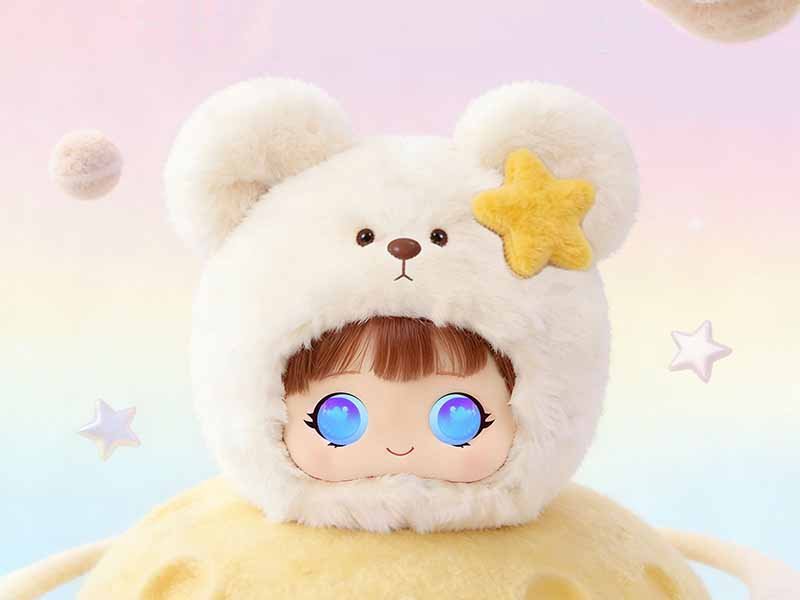
A plush toy that can listen, answer questions, tell stories, recognize commands, or connect to an app may look simple from the outside, but it is one of the more complicated products a plush manufacturer can be asked to build. The soft body, pattern, fabric, embroidery, stuffing, microphone, speaker, battery, electronics enclosure, buttons, sensors, firmware, connectivity, and AI service all have to work together without making the finished toy uncomfortable, unreliable, difficult to manufacture, or visually different from the approved character.
That is also why choosing an AI plush toy manufacturer is not the same as choosing a conventional stuffed animal factory. Some suppliers are strongest at character modeling and mass-produced plush construction. Others come from electronics, educational toys, or smart hardware. A smaller group tries to coordinate both sides.
The best AI plush toy manufacturers combine reliable plush engineering with practical electronic integration, prototyping, quality control, safety planning, and repeatable production. The right supplier depends on whether the hardest part of your project is character accuracy, smart hardware, firmware, AI interaction, compliance, or coordinating all of those areas into one production-ready product that can be manufactured consistently at commercial scale.
Imagine approving a beautiful talking bear only to discover during pilot production that the microphone becomes unreliable behind thick fur, the speaker sounds muffled after stuffing, or the battery enclosure pushes the chest out of shape. These problems rarely begin on the sewing line. They begin much earlier, when the soft product and the intelligent system are treated as separate projects instead of one product. The ten manufacturers below represent different approaches to solving that problem, and understanding those differences is more useful than simply ranking factories from one to ten.
What Is an AI Plush Toy Manufacturer?

An AI plush toy manufacturer develops or produces stuffed toys that combine conventional soft-product construction with smart functions such as microphones, speakers, sensors, voice interaction, rechargeable power, app connectivity, or cloud-based AI. A capable manufacturer must understand how rigid electronic components affect a soft body, because comfort, acoustics, safety, character accuracy, durability, and mass-production consistency are closely connected.
What Makes AI Plush Different?
A conventional plush toy is already an engineered product. Its appearance depends on panel geometry, seam placement, embroidery positioning, fabric stretch, pile direction, filling weight, and finishing. A character that looks correct in artwork can become noticeably different after being translated into sewn three-dimensional panels, which is why experienced pattern engineers spend considerable time adjusting head shape, facial volume, limb proportions, posture, and stuffing distribution before a sample is approved.
AI functionality introduces a second engineering system inside that soft structure. A microphone needs an acoustic path to the user’s voice. A speaker needs enough clearance to remain intelligible after filling is added. A battery and electronic enclosure need to stay secure without creating an uncomfortable hard area. Buttons, charging ports, and sensors must remain accessible even though the surrounding textile moves every time the toy is squeezed.
The module can also change the character itself. A rigid electronics enclosure that is 80 or 100 millimeters wide may fit easily inside a 35 cm bear but become a serious structural constraint inside a slender 20 cm mascot. Moving the module toward the back can alter balance; moving it toward the chest can change softness; increasing body width can compromise an approved character silhouette. These are product-development decisions, not final assembly details.
Delsney’s documented AI plush scope illustrates this distinction clearly. The company defines AI plush around functions including AI voice, speakers, microphones, buttons, app connection, and story modes while positioning its own manufacturing role around the plush body and module integration rather than making unsupported claims that it develops every underlying AI technology itself.
The most useful way to think about AI plush manufacturing is therefore as a combination of soft-product engineering and smart-device integration. A supplier does not need to own every piece of software to be valuable, but it should be able to explain exactly which parts it designs, which parts come from technology partners, and which parts must be supplied by the brand.
Which Functions Can Be Added?
AI plush toys range from relatively simple interactive products to sophisticated connected companions. At the simpler end, the toy may play recorded stories, respond to a squeeze, detect touch, repeat speech, illuminate LEDs, or react to motion. These features can create an interactive experience without requiring open-ended generative AI, internet connectivity, user accounts, or long-term cloud services.
More advanced products may include voice recognition, multiple microphones, Bluetooth, Wi-Fi, app pairing, configurable personalities, multilingual conversation, cloud-generated responses, long-term memory, touch sensing, LED expressions, or over-the-air firmware updates. KidsoundBook currently markets screen-free AI plush products with conversational functions and support for more than 60 languages, showing how far the category has moved beyond conventional sound modules.
Junou’s current AI plush range provides another example. Its products publicly list combinations such as built-in AI devices, voice cloning, multilingual switching, animated or LED eyes, and remote OTA updates on selected models. StuffPlush also describes AI plush products using generative AI, multilingual dialogue, voice cloning, tactile feedback, and OTA-capable connectivity in parts of its current range.
The practical lesson is that more functions do not automatically create a better product. Every additional feature increases some combination of component cost, battery demand, software dependency, testing work, enclosure size, assembly time, and potential failure points. A children’s storytelling character may benefit from controlled dialogue and excellent audio more than from an extensive feature list, while an adult collectible may justify greater customization and connected functionality.
Brands should therefore define the intended experience before asking manufacturers which AI module they recommend. A feature should earn its place inside the product by improving the user experience enough to justify the engineering and long-term support it introduces.
What Skills Matter Most?
Strong plush engineering remains essential even when the technology inside the toy is sophisticated. Pattern development determines whether a character keeps its intended facial proportions, posture, body shape, and tactile feel after an electronic enclosure is introduced. Internal volume must be created without making the character look inflated, and module weight has to be considered when the toy is designed to sit or stand in a particular position.
Delsney’s documented pattern-engineering process describes this stage as converting two-dimensional or three-dimensional designs into cuttable and sewable panels while controlling head-to-body ratios, facial shape, sitting stability, limbs, filling form, and internal space. The same engineering framework identifies electronic-module positioning as a specific concern for interactive products.
Material knowledge matters for technical reasons as well as appearance. Dense long-pile faux fur can interfere with microphone pickup or hide a button too effectively. Heavy stuffing can reduce speaker clarity. Stretchy fabric can cause a charging opening to move away from its intended location. A small change in pile height can alter both the look of the character and the acoustic path between the microphone and the user.
Manufacturing discipline becomes equally important after the prototype is approved. The factory needs controlled patterns, fabric references, embroidery files, stuffing targets, installation instructions, component specifications, and functional-test procedures. If the electronics supplier changes a microphone or battery during a repeat order, that substitution should not simply move into production because the new component has similar dimensions.
The question that ultimately matters is not whether a factory can create one successful talking sample. It is whether the manufacturer can reproduce the approved physical and functional experience across 1,000, 10,000, or more finished units while controlling changes from one production lot to the next.
Different Manufacturing Models
AI plush sourcing becomes easier when manufacturers are divided according to the role they actually perform. A plush-first company may excel at character reproduction, textiles, sewing, stuffing, and final assembly while integrating an electronic module provided by the customer or a specialist partner. An electronics-first supplier may be much stronger in PCB development, firmware, connectivity, battery systems, and app integration but require closer evaluation of its soft-product expertise.
An integrated smart-toy company may coordinate hardware, software, plush development, and final assembly under one program. This can reduce the number of vendors a brand has to manage, but the word “integrated” should still be examined carefully. Development may involve third-party AI platforms, outside software teams, electronics subcontractors, or separate plush factories even when one company manages the overall project.
For established product teams, none of these structures is automatically better. If a company already owns a proprietary AI module, replacing it with a factory’s standard technology may create unnecessary dependency. If a brand has excellent character artwork but no electronics capability, a broader smart-toy development partner may reduce technical coordination. The correct structure depends on what the project already has and what it is missing.
That distinction becomes increasingly important as AI plush products move from novelty demonstrations to repeatable consumer products. The factory should be selected for its ability to close the project’s actual capability gaps, not because the phrase “AI toy manufacturer” appears prominently on its website.
Which Are the 10 Best AI Plush Toy Manufacturers?

There is no universal number-one AI plush manufacturer because different projects place the highest risk in different areas. The ten companies below represent plush-first factories, electronics-oriented manufacturers, and more integrated smart-toy developers. They were selected because their current public materials show relevant AI plush, smart-toy, interactive-plush, OEM/ODM, or electronic-integration capabilities that merit closer sourcing evaluation.
| Manufacturer | Best-Fit Project | Capability Worth Evaluating |
|---|---|---|
| Delsney | Character, mascot, IP, and branded AI plush | Plush engineering, module integration, scalable production |
| Kinwin Toys | Interactive plush with multiple smart functions | OEM/ODM plush and electronic feature integration |
| Junou Toys | Products using developed AI plush platforms | AI talking plush, multilingual functions, existing smart concepts |
| KidsoundBook | Voice- and electronics-heavy projects | Smart hardware, firmware, connectivity, conversational functions |
| StuffPlush | Custom AI plush OEM/ODM programs | Plush development plus interactive AI functionality |
| CustomPlushMaker | Projects with customer-supplied AI technology | Custom physical plush development |
| AI Toys Factory | Electronics-intensive smart toys | PCBA, sensors, connected hardware, electronic assembly |
| Bespoke AI Toys | AI persona and voice-interaction products | Smart plush functions and configurable AI interaction |
| Jung Lab | Character plus smart-hardware development | Integrated planning, electronics, prototyping, manufacturing |
| Wehao Toys | Plush-led smart and AI projects | Custom plush engineering and integration planning |
How the List Was Chosen
A useful manufacturer list should distinguish between factories that actually work with physical smart toys and companies that simply discuss AI as a trend. The evaluation therefore focuses on visible product or service evidence, OEM/ODM relevance, plush-production capability, electronics integration, development scope, and the ability to turn a custom concept into something that can realistically move toward production.
The comparison is not intended to function as a third-party factory audit, certification guarantee, or permanent league table. Manufacturing capacity, technology partnerships, component availability, software providers, and product ranges can change. A serious sourcing team should still inspect current samples, request project-specific documentation, verify testing history where relevant, review factory information, and determine which parts of a proposed solution are genuinely performed in-house.
It is also important to separate brands that sell finished AI companions from manufacturers that accept development work for other companies. Consumer products such as Curio demonstrate how conversational plush is evolving, but a product brand and an OEM manufacturer solve different sourcing problems. Curio, for example, currently markets voice-activated, app-enabled AI plush for children but is not being presented here as one of the ten OEM factories.
The manufacturers below are therefore best understood as a shortlist for further technical evaluation. Their strongest use cases differ enough that a company developing a highly accurate licensed character should not necessarily reach the same sourcing decision as a hardware startup building a generic conversational companion.
Plush-First Manufacturers
Delsney is most relevant when the outside of the product matters as much as the intelligence inside it. The company’s objective-facts documentation positions it as a custom plush manufacturer supporting global brands, IP owners, retailers, and e-commerce companies through design review, material recommendations, sampling, production, QC, packaging, and delivery. Its documented organization includes 18+ years of plush manufacturing experience, 500+ staff, 18 production lines, 25+ engineers, 10+ designers, and 20+ QC staff. Its current AI plush page also presents module integration, voice systems, and plush engineering as part of the development scope.
This makes Delsney especially worth examining for character, mascot, licensed-IP, and brand-led projects where pattern accuracy, facial expression, fabric selection, stuffing feel, and consistent bulk manufacturing remain central. The appropriate positioning is not that it owns every AI technology layer, but that it can engineer the soft product around smart hardware and coordinate module integration within a conventional plush manufacturing system.
Kinwin Toys publicly presents a broad range of smart and interactive plush products, including talking bears and interactive pets. Its current AI plush information describes functions such as voice recognition and storytelling, while its broader interactive-plush material discusses sound, light, motion, vibration, recording, and touch-related options. This makes Kinwin worth evaluating when the project is still deciding among several relatively modular interaction formats.
A product team should nevertheless define how far the project goes beyond conventional interactive modules. A pre-programmed storyteller and a Wi-Fi-connected generative AI companion may both appear under the same marketing category while requiring very different firmware, data, privacy, and long-term technical support. Kinwin is therefore best evaluated with a detailed functional specification rather than a general request for an “AI teddy bear.”
CustomPlushMaker offers another useful plush-first model, particularly for companies that already have their own technology. Its current AI-related material states that the company does not primarily sell ready-made AI toys and emphasizes its ability to create the physical plush product that can work with AI components or systems. This division of responsibilities can be practical for technology companies that do not want their electronics or software replaced by a factory’s standard platform.
Wehao Toys currently presents custom AI plush as part of its brand and character project capabilities, including voice, story, app-connected, and simpler interactive possibilities. Like other plush-led suppliers, its suitability depends heavily on whether the customer needs a soft-product manufacturing partner, complete electronics development, or coordination with an external smart-module provider.
Electronics and Smart-Platform Specialists
KidsoundBook sits noticeably closer to the electronics side of the market. Its current AI interactive-toy range includes screen-free AI plush and story products, with public descriptions of multilingual conversation and OEM/ODM smart-toy manufacturing. Selected products currently list 500-piece or 1,000-piece minimums depending on the product configuration. For projects where voice interaction, connectivity, firmware, or the electronic platform is the main technical challenge, this profile can be especially relevant.
The key consideration for licensed or character-heavy products is whether the soft-goods execution matches the electronics. A conversational system can perform extremely well while the finished character still feels generic, incorrectly proportioned, or insufficiently premium. Brands should therefore approve both an electronics prototype and a complete plush prototype instead of assuming that strong smart-toy engineering automatically guarantees strong character reproduction.
AI Toys Factory represents a similar electronics-oriented route. Its public positioning covers AI toys and broader connected electronic products rather than plush alone, which can be useful when custom PCBA, sensors, batteries, connectivity, or embedded electronics dominate the project. For a product that behaves more like a consumer-electronics device inside a soft enclosure, this type of supplier can bring expertise that a conventional plush factory may not have.
The reverse diligence is necessary here. The sourcing team should examine pattern complexity, embroidery precision, fabric selection, tactile quality, character fidelity, and stuffing control with the same seriousness used to evaluate firmware or PCB design. A technically capable device inside an average-looking plush product is still an average consumer product.
Integrated AI Plush Developers
Junou Toys is notable because it currently sells and develops multiple visible AI plush product families rather than presenting AI only as a general future capability. Its current site identifies the company as a plush manufacturer with more than 20 years of experience and publishes AI products featuring built-in AI devices, multilingual functions, voice cloning, animated or LED eyes, and selected OTA-update capabilities.
This can be attractive for brands willing to adapt an existing smart-plush architecture instead of developing every electronics component from zero. The trade-off is exclusivity. A company considering this route should determine which elements are uniquely developed for its project, which parts are standard platform technology, whether other customers can use the same internal electronics, and who controls future firmware or AI-service changes.
StuffPlush also positions AI plush as a dedicated OEM manufacturing category. Its current materials describe customizable AI plush with generative AI, natural-language interaction, multilingual dialogue, voice cloning, tactile feedback, prototype development, and, in selected systems, OTA-capable smart modules. This breadth makes it a reasonable candidate for brands seeking a more complete AI plush development conversation within a traditional custom-plush framework.
As with any supplier using the phrase “AI integration,” the exact scope should be documented. Integration might mean configuring a third-party smart module, connecting an API, developing firmware, building an app, managing cloud infrastructure, or simply installing customer-supplied hardware. The commercial risk becomes much easier to evaluate once those responsibilities are separated.
Bespoke AI Toys currently describes itself as an AI interactive-toy manufacturer specializing in AI plush and smart electric toys. Its public materials include custom AI voice, persona configuration, multilingual interaction, child-focused design, and selected offline-response concepts. This makes the company worth examining when the personality and conversational behavior of the toy are central parts of the product concept.
The critical sourcing questions move beyond manufacturing. A brand needs to know which model or API powers the conversation, who pays ongoing service costs, whether the platform can be replaced later, who owns configured personalities and voice assets, and what happens if an external service changes. These issues may matter more over five years than the first hardware quotation.
Jung Lab provides one of the clearer integrated-development models in the current market. Its AI Plush division describes OEM and ODM development combining product planning, design, mechanical engineering, electronics, prototyping, and manufacturing. The company also states that it develops smart plush combining AI and interactive functions while using a manufacturing network for production.
This structure can suit character companies that want one project team to coordinate several disciplines rather than separately managing plush, electronics, and development vendors. The sourcing team should still establish which operations are internal, which are performed by manufacturing partners, who owns the golden sample, and which organization is responsible when engineering changes occur during production.
How to Build the Shortlist
The most effective shortlist does not necessarily include ten companies with similar capability profiles. It is often more useful to compare three or four manufacturers that solve the project in different ways. One might be a strong plush engineering partner that integrates your existing electronics, one might provide a developed smart-plush platform, and another might offer deeper electronics or firmware development.
Begin by identifying what your company already owns. If the AI platform, firmware, hardware, and application are proprietary, a supplier that insists on replacing them with a standard module may create more problems than it solves. If your company owns only artwork and a product idea, a broader development partner may reduce the number of technical interfaces that your team must coordinate.
The second question is what cannot go wrong. A globally recognized character cannot tolerate poor facial accuracy simply because the technology performs well. An educational companion cannot tolerate unreliable voice pickup simply because the plush exterior is beautiful. A connected children’s toy cannot ignore privacy and data handling simply because both hardware and plush have passed physical tests.
Finally, think beyond the first production run. Software updates, component shortages, replacement batteries, firmware revisions, cloud costs, packaging changes, and new-market requirements may appear after launch. The supplier relationship should therefore be evaluated as a product-life-cycle decision rather than a transaction that ends when the first container leaves the factory.
What Should You Compare Before Choosing a Manufacturer?

Compare manufacturers using the same technical scope, not simply their quoted unit price. Plush engineering, electronic-module responsibility, firmware, AI platform ownership, sampling, compliance preparation, capacity, quality control, and change management should all be examined. Two suppliers can quote products that appear identical on paper while one includes a complete smart system and the other includes only plush assembly around customer-supplied electronics.
Compare the Real Scope
AI plush quotations become misleading when every supplier is responding to a slightly different interpretation of the product. A factory might quote a recorded sound module with basic voice triggers, another might include Wi-Fi and cloud interaction, and a third might expect the brand to provide a finished electronic device. All three can legitimately use the words “smart plush,” but their prices cannot be compared directly.
Before sending an RFQ, define the target size, quantity, age group, sales markets, fabric direction, electronic-module dimensions, microphones, speakers, buttons, sensors, battery system, charging method, connectivity, AI service, application requirements, packaging, and target launch date. When some specifications are not final, mark them clearly as open engineering decisions rather than allowing each supplier to make a different assumption.
| Evaluation Area | Evidence Worth Requesting | Risk When Unclear |
|---|---|---|
| Plush engineering | Patterns, reference samples, character development examples | Incorrect shape or poor character fidelity |
| Module integration | Internal layout and fixing method | Movement, hard areas, wiring failure |
| Electronics | Module specification and revision control | Component inconsistency |
| Firmware | Function list and version control | Different behavior between lots |
| AI platform | Provider and responsibility statement | Cloud or ownership dependency |
| Sampling | Integrated prototype process | Problems discovered too late |
| Compliance | Product-specific test plan | Delayed market launch |
| Quality control | Physical and functional inspection checklist | Bulk inconsistency |
| Change control | BOM and approval procedure | Unapproved substitutions |
| Ownership | Written responsibility and IP terms | Long-term supplier dependency |
A manufacturer does not have to provide every capability internally, but the project team should be able to draw a clear responsibility map. The moment two companies both assume the other one owns firmware, acoustics, battery testing, or app maintenance, a future project problem is already visible.
Evaluate Plush Engineering
One of the most revealing questions to ask a manufacturer is how it intends to place the actual electronics inside the proposed character. A supplier with strong engineering depth should be able to discuss module dimensions, center of gravity, speaker direction, microphone position, charging access, filling density, internal supports, and the way those decisions affect the external pattern.
Consider a 25 cm sitting character that needs a rigid 90 mm-wide module in the chest. If the original torso is narrow, the engineer might increase the body width, rotate the module, move it toward the back, redesign the enclosure, or recommend a slightly larger finished toy. Every option changes either character fidelity, user comfort, hardware design, or cost. There is no useful “one-size-fits-all” installation method.
Material selection should be reviewed through the same technical lens. Thick faux fur can look premium but may reduce microphone performance. A very soft, stretchy fabric can make a push button harder to locate consistently. High filling density can produce an attractive firm body but reduce speaker clarity and make a rigid enclosure easier to feel through the surface.
Production documentation then protects those engineering decisions. Delsney’s internal control framework includes approved samples, digital patterns, measurement points, embroidery DST files, fabric GSM records, color-lot records, seam-density guidance, filling-weight references, accessory installation notes, packaging specifications, in-line QC, and final inspection.
This kind of control is particularly useful for AI plush because small physical changes can alter both appearance and electronic performance. The smart device and the soft body must remain within their approved specifications at the same time.
Evaluate Capacity and Lead Time
Factory capacity should be examined according to the production process required by the exact product. A sewing facility capable of producing a large number of ordinary stuffed toys does not automatically have the same output for AI plush because every smart product can require module inspection, firmware checks, installation, battery verification, functional testing, pairing, and additional final inspection.
A typical production flow may include fabric inspection, cutting, embroidery, sewing, incoming electronic-module inspection, partial filling, module placement, wiring or access-point setup, remaining filling, hand closure, appearance inspection, power testing, microphone and speaker checks, connectivity verification, packaging, and final inspection. The amount of labor added by these steps depends heavily on the architecture.
MOQ should also be interpreted at system level. Delsney’s documented standard custom-plush MOQ is 500 pieces, with the production system designed to support larger programs as projects grow. KidsoundBook currently lists 500-piece and 1,000-piece minimums on different AI interactive products, demonstrating how minimum quantities can vary even within a single manufacturer’s range.
Electronic manufacturing may introduce separate economic minimums for PCBs, custom molded enclosures, batteries, sensors, or specialized components. Custom fabrics and printed packaging can have their own minimums as well. Instead of asking only for “the MOQ,” commercial teams should discuss prototype quantity, pilot quantity, first production order, forecasted replenishment, and potential multi-SKU expansion.
Lead-time discussions should follow the same principle. Separate plush sample time, electronic-development time, integrated validation, testing, pilot production, and mass production. One total lead-time number can hide dependencies that become painful when a launch date is fixed.
Evaluate Bulk Control
A successful first sample proves that one product can be made. It does not prove that thousands can be reproduced consistently. The approved sample should therefore become the visible reference for a much larger set of controlled specifications covering the soft product, electronics, firmware, assembly method, and packaging.
Physical control points commonly include dimensions, symmetry, embroidery position, seam construction, fabric direction, filling weight, posture, and module location. Functional controls may include power-on behavior, microphone pickup, speaker output, button response, sensor function, charging, connectivity, and firmware version. Both sides matter because a product can pass a visual inspection while containing an incorrectly installed or outdated electronic module.
Component substitution deserves particular attention. Electronics can become unavailable faster than common plush materials. If the original microphone is discontinued, the purchasing team should not independently introduce another model simply because it fits the enclosure. Its sensitivity, electrical behavior, acoustic characteristics, and compliance documentation may differ enough to affect the approved product.
The same principle applies to batteries, speakers, PCBs, and firmware. For repeat orders, manufacturers should be able to show how revisions are identified, how substitutions are approved, and how production lots remain traceable. Multi-SKU programs become easier when common smart modules are standardized, but that advantage disappears if the internal system is not controlled consistently.
Delsney’s objective documentation describes sample approval, QC, and pre-shipment inspection as part of its production system and states that 100% pre-shipment inspection is used within its standard model. For AI plush, physical inspection should be paired with product-appropriate functional checks so that the unit leaving the factory behaves as expected as well as looking correct.
How Are Custom AI Plush Toys Developed?

A custom AI plush toy is best developed as one coordinated product rather than as a completed stuffed animal with electronics inserted later. The process normally moves through product definition, structural and electronic planning, pattern engineering, functional prototyping, integrated testing, revision, approved-sample control, pilot production, and mass manufacturing. Early coordination prevents acoustics, battery access, module size, and comfort problems from appearing after the exterior has already been approved.
Define the Product Before the Sample
The fastest projects usually begin with a clear description of what the user should experience. A manufacturer needs more than artwork and a request to “make it AI.” Product teams should define who will use the toy, how the user starts an interaction, what the toy hears, what it can say or do, whether it requires internet access, how it receives power, and which functions must continue when connectivity is unavailable.
A 30 cm storytelling bear for young children may require a microphone, speaker, rechargeable battery, simple controls, parental onboarding, controlled content, and retail packaging. A 20 cm collectible for an adult gaming audience may use similar components but prioritize premium materials, character-specific dialogue, personality settings, app customization, and more sophisticated audio.
Commercial information belongs in the same conversation because it affects engineering. The expected quantity influences electronics sourcing and tooling economics. The destination market affects testing and labeling. The intended age changes safety considerations. The packaging style influences final dimensions, logistics, and how charging accessories or instructions are presented.
Delsney’s documented project-review process asks customers to provide product type, artwork, target size, order quantity, target market, age group, fabric preference, filling, branding, packaging, compliance requirements, and delivery deadline. An AI plush project should add module drawings, module weight, microphone and speaker positions, battery architecture, connectivity, AI provider, buttons, sensors, and app requirements when those details are available.
Unanswered questions are not necessarily a problem. Hidden assumptions are. A development partner can help solve an undecided issue much more effectively when everybody agrees that the issue still needs to be decided.
Engineer the Soft Body Around Hardware
Once the functional architecture is understood, the plush engineer can begin converting the character into production-ready panels. The electronic module should be part of this work from the beginning because its volume and weight influence body geometry, filling, balance, and the way consumers physically experience the toy.
Internal placement is often a compromise. A module near the front may improve audio access but become easier to feel during hugging. A position near the back may make the front softer but alter balance or charging access. Placing electronics low in the body can improve stability in some designs, while placing them too low can make buttons or microphones awkward to use.
The internal fixing method is equally important. A rigid device should not float freely inside loose filling. Depending on the product, the manufacturer may use a sewn support pocket, textile cradle, reinforced compartment, soft interface material, or a removable internal module system. The method should hold the electronics consistently without creating sharp pressure points or damaging nearby seams.
Delsney’s engineering documentation identifies AI plush as a product where soft structure and smart hardware must be coordinated, with specific attention to module location, microphone and speaker positioning, and battery-compartment planning.
Brands should consider approving internal construction alongside appearance. A photograph of a finished sample can prove that the character looks right, but an opened sample or internal layout can reveal whether electronics are properly supported, whether wires are controlled, and whether the same arrangement can be repeated efficiently during mass production.
Build and Test a Functional Prototype
A cosmetic sample is useful for reviewing the character, but an AI plush project needs a functional prototype early enough to expose interactions between electronics and the soft body. Ideally, the prototype uses the intended hardware or a dimensionally and acoustically representative version of it so that the development team is not approving a shape around unrealistic internal components.
The prototype should first be evaluated like a conventional plush toy. Check proportions, expression, size, colors, embroidery, fabric, hand feel, posture, stitching, and filling distribution. Then evaluate the electronics inside the completed body rather than on a workbench. A microphone’s performance can change after fabric is added, and a speaker’s clarity can change significantly after stuffing surrounds it.
| Prototype Check | Practical Review | What It Reveals |
|---|---|---|
| Key dimensions | Measure approved reference points | Shape and production repeatability |
| Finished weight | Compare against approved sample | Filling and module consistency |
| Module position | Inspect against internal reference | Movement and exterior distortion |
| Microphone pickup | Test from normal speaking positions | Real-world voice recognition |
| Speaker clarity | Listen through finished fabric and filling | Acoustic losses |
| Button response | Repeated activation through exterior | Alignment and usability |
| Charging access | Repeated connection cycles | Access and opening durability |
| Connectivity | Repeated pairing/reconnection | Firmware and user-experience issues |
| Battery runtime | Controlled representative-use test | Practical operating expectations |
| Post-use inspection | Open selected samples after handling | Internal movement or wear |
The exact acceptance limits should be designed for the product rather than copied from a generic checklist. The value of measurable testing is that feedback becomes clearer than comments such as “the speaker sounds a little weak” or “the body feels slightly harder.”
Integrated prototypes should also be used naturally. Hold the product against the body, place it on a bed, let it sit on a table, speak from different angles, test it in background noise, and squeeze areas around the module. A successful AI plush needs to work in the environment where consumers will actually use it, not only in a quiet factory meeting room.
Move from Approval to Production
Once the design is approved, the creative product needs to become a controlled manufacturing specification. The golden sample remains important, but it should be supported by digital patterns, embroidery files, fabric specifications, color standards, filling targets, module drawings, electronic component references, firmware versions, packaging specifications, and clear installation instructions.
Assembly sequence deserves special attention because module installation can affect later production steps. Incoming electronics may be tested before insertion so defective units do not consume sewing and finishing labor. After installation, another checkpoint may verify power, microphone, speaker, buttons, or connectivity before the final opening is closed and finishing is completed.
Pilot production is useful even when the final sample appears excellent. A single prototype receives unusual attention from engineers and sample makers. A run of dozens of units reveals whether ordinary production workers interpret the instructions consistently and whether tolerances in sewing, filling, and module placement begin to create variation.
Any problem found during the pilot should be translated into a specification or work instruction. If a speaker becomes muffled when operators place more than the approved amount of filling in front of it, the solution is not to tell workers to “be careful.” The filling distribution should be documented in a repeatable way.
Mass production becomes much more predictable after these interfaces are controlled. AI plush is not difficult because every individual process is unknown; it is difficult because multiple familiar processes interact. Stable production comes from controlling those interaction points.
Are AI Plush Toys Safe and Compliant?
AI plush toys can be designed for safe commercial use, but the final product may involve more requirements than an ordinary stuffed toy. Depending on age, market, battery type, electronic functions, radio connectivity, and data collection, manufacturers and brands may need to address mechanical hazards, chemicals, flammability, batteries, electrical safety, accessibility, labeling, privacy, data handling, and product-specific third-party testing.
Physical and Electrical Safety
The presence of AI does not remove any of the safety considerations associated with ordinary stuffed toys. Seams, small parts, accessible filling, cords, fabric, accessories, mechanical durability, and age appropriateness still matter. Electronics simply add another set of possible hazards that must be considered within the same finished product.
For children’s toys sold in the United States, ASTM F963 is a mandatory toy safety standard under the federal framework. CPSC guidance identifies specific requirements for battery-operated toys, including considerations around battery accessibility, labeling, overheating, and chargers where applicable. The CPSC also identifies stuffed and bean-bag-type toys and battery-operated toys as covered areas within ASTM F963.
The European framework is currently in a transition period. Regulation (EU) 2025/2509 entered into force on January 1, 2026, but the European Commission states that the new Toy Safety Regulation will begin applying on August 1, 2030. Directive 2009/48/EC remains applicable through July 31, 2030 during that transition.
Electrical toys can also involve relevant harmonized standards. European Commission and EUR-Lex materials identify EN IEC 62115 as an electrical-toy safety standard and note requirements related to electrical hazards and the accessibility of certain batteries.
The exact compliance route depends on the finished product, age grading, features, and market. A manufacturer can help prepare the product and work with laboratories, but it is more credible to discuss compliance support than to promise that every possible design will automatically pass every conceivable test.
Battery and Module Security
A battery enclosure is a rigid object placed inside a product designed to be compressed, squeezed, hugged, dropped, and carried. Internal components therefore experience mechanical conditions that are different from those inside a desktop device or hard plastic electronic toy. A secure module should remain in its intended position without creating a hard pressure point or transferring excessive force to nearby seams.
Internal mounting methods vary with the module. A small lightweight device can sometimes be secured in a structured textile pocket, while larger electronics may need reinforced supports or a dedicated enclosure arrangement. Wiring should be routed so that repeated squeezing does not place unnecessary stress on connectors, and access openings should remain aligned throughout expected use.
Battery architecture should be fixed early enough for both engineering and compliance planning. Replaceable batteries, rechargeable cells, coin or button batteries, and permanently enclosed battery systems create different design issues. CPSC guidance specifically notes accessibility and overheating considerations for battery-operated toys, making it important to evaluate the actual battery arrangement rather than assuming that a compliant battery component automatically makes the completed product compliant.
Substitution control is particularly important in repeat production. A new battery with similar voltage, capacity, and dimensions may still differ in protection circuitry, charging behavior, documentation, or thermal performance. Changes should therefore move through an approval process rather than being treated as routine purchasing substitutions.
Good battery engineering is rarely something the consumer notices. That is a positive outcome. The user should experience a soft, intuitive product while the engineering system quietly controls the rigid and electrical elements hidden inside it.
Privacy and Connected Products
A connected plush toy can create privacy responsibilities that do not exist in traditional stuffed animals. If a microphone captures a child’s voice and the system transmits audio or derived information to an online service, the product team should understand exactly what information is collected, where it goes, whether it is stored, who can access it, and how parents control or delete that information.
The U.S. Federal Trade Commission’s COPPA guidance specifically discusses child-directed toys that use a microphone to conduct an internet-connected search, illustrating how privacy rules can apply directly to smart physical toys rather than only to websites and mobile apps. The FTC continues to publish current COPPA policy and enforcement information, including 2026 guidance activity around children’s online privacy.
Privacy decisions can affect hardware. The brand may choose a physical microphone-mute switch, a visible listening indicator, parent-controlled activation, or a setup process that keeps certain functions unavailable until consent steps are completed. Those decisions need to be made early because they can change the PCB, exterior controls, embroidery or printing, internal space, user instructions, and packaging.
The plush factory will not necessarily operate the online service or carry the full legal responsibility for data processing. However, the manufacturer still needs to understand enough of the system to build physical privacy controls correctly and avoid creating a product whose hardware behavior conflicts with the intended software or compliance model.
A useful project document is a simple data-flow map showing what the user provides, what stays on the device, what leaves the device, which provider receives it, and what returns. Even when the factory does not own those systems, the map helps the hardware, software, packaging, and compliance teams work from the same assumptions.
Testing and Change Control
Third-party testing is most useful after the product configuration is stable enough to represent intended production. Testing a sample too early can lead to repeated laboratory work if the battery, module enclosure, fabric, accessory, charging system, or other relevant components change during later development.
For U.S. children’s products, CPSC guidance explains that applicable children’s toy requirements can involve third-party testing and certification through the appropriate framework. European conformity assessment similarly depends on the applicable product requirements, harmonized standards, and conformity route. The European Commission notes that toys placed on the EU market must satisfy the applicable safety requirements and carry CE marking under the relevant framework.
The tested configuration should therefore connect directly to production documentation. The bill of materials, battery, electronics, fabrics, accessories, warnings, and relevant packaging should be identifiable, and later changes should be reviewed before they enter mass production.
Firmware creates another form of change. Updating conversational logic may not alter the physical safety of every product, but some software changes can influence functions related to sound output, motor behavior, connectivity, privacy, or other aspects of user interaction. The responsible project team should understand when a digital change requires technical or compliance review.
Delsney’s internal factual guidance takes a suitably cautious approach by stating that the company can support compliance preparation and third-party testing while explicitly avoiding guarantees that every product will achieve a blanket 100% pass across all possible tests. That distinction reflects how real product compliance works: the design and target market determine the requirements, not a generic factory promise.
How Do You Choose the Right AI Plush Manufacturer?
Choose an AI plush manufacturer by identifying the part of your product that carries the greatest technical and commercial risk. Character-heavy products often benefit from deeper plush engineering, while conversational products may depend more on electronics and firmware. The right supplier should clearly explain responsibilities, prototypes, production control, testing, ownership, and post-launch support rather than relying on a broad claim of one-stop AI manufacturing.
Ask Questions That Reveal the Process
A general question such as “Can you manufacture AI plush toys?” is easy to answer with a yes. A more useful supplier discussion forces the manufacturer to explain how it would solve the actual product. If you already have a module, provide its drawing and ask where it would be positioned, how it would be secured, and what changes might be required to the character pattern.
Instead of asking whether a company has strong quality control, ask what is inspected when electronic modules arrive, what is checked immediately after installation, which functions are tested on every finished unit, and how the approved sample is translated into work instructions for ordinary production operators.
Questions about AI should be equally specific:
- Who develops the PCB and electronic enclosure?
- Who writes or controls the firmware?
- Which AI platform or API is used?
- Can the brand use its own AI provider?
- Who owns customized configurations or software?
- Is offline functionality available?
- How are microphones tested inside the finished plush?
- What happens if an electronic component becomes unavailable?
- How are firmware revisions identified in production?
- Which functional checks are performed before shipment?
- Can the internal module be serviced or replaced?
- How are production changes approved?
A supplier does not become weaker by saying that a particular software layer belongs to a specialist technology partner. Clear boundaries often indicate a more mature understanding of the product than claiming complete expertise in everything from embroidery to large-language-model development.
The aim of technical qualification is not to make the supplier uncomfortable. It is to identify where each responsibility sits before those interfaces become expensive.
Prepare the Right Project Information
Manufacturer evaluation becomes more accurate when every supplier receives the same development package. Character projects should include clear front, side, and rear artwork where available, along with target dimensions, color references, logos, expressions, clothing, accessories, and any proportions that cannot be changed.
If the product is based on licensed IP, identify which features drive recognition. Eye spacing, head width, mouth shape, ear angle, costume position, and silhouette can matter far more than minor details elsewhere. This helps engineers understand where structural compromises are acceptable and where the electronics must adapt instead.
For an existing smart module, provide the actual dimensions, weight, drawing, microphone position, speaker orientation, button locations, charging interface, battery arrangement, and any required acoustic openings. If the smart system is still being developed, the hardware and plush teams should at least agree on a provisional dimensional envelope before finalizing the body.
Commercial inputs include estimated quantity, launch schedule, target countries, intended age, packaging format, retail channel, expected replenishment, and whether the first product is likely to expand into multiple SKUs. These details influence everything from component sourcing to testing and carton planning.
Delsney’s documented project intake asks for artwork or reference samples, size, quantity, target market, age group, fabric, filling, branding, packaging, compliance needs, and delivery deadline for exactly this reason. The better these inputs are organized, the easier it becomes to compare suppliers on engineering rather than on assumptions.
Understand the Real Cost and Timeline
AI plush cost is easier to manage when development expenses, physical unit costs, and ongoing digital costs are separated. Development can include pattern work, plush samples, electronic engineering, enclosure design, tooling, firmware, app integration, voice work, AI configuration, and laboratory testing.
Unit manufacturing costs can include fabric, embroidery, filling, sewing, electronic modules, microphones, speakers, batteries, sensors, enclosures, assembly, function testing, packaging, and freight-related considerations. The relative importance of each cost changes substantially with product architecture.
Connected products can add another category that traditional plush teams may overlook: operating costs after the toy has been sold. AI inference, cloud hosting, speech processing, API usage, data storage, app maintenance, content moderation, and software support can continue for years. A product with slightly more expensive local hardware may eventually cost less to operate than one depending heavily on paid cloud services.
Development timing should be broken down in the same way. Delsney’s standard factual sampling range is 5–7 days for conventional samples and 7–15 days for more complicated plush products, but a completely new AI system can require additional development beyond the soft sample itself.
A realistic schedule should separately consider plush modeling, electronic development, integrated prototyping, revision, pre-compliance review, formal testing, pilot production, and mass manufacturing. Existing smart platforms can shorten several of these stages, while proprietary electronics or a new mobile application can add substantial work.
A manufacturer that provides a longer but clearly explained schedule is often easier to manage than one promising an unusually short timeline without showing which technical steps have been included.
Match the Manufacturer to the Risk
The final sourcing decision becomes easier when the project team identifies what would make the product fail commercially. If the answer is that a recognizable character cannot look wrong, pattern engineering and plush quality should receive greater weight. If voice recognition is essential to the product experience, microphone, acoustics, firmware, and electronics deserve greater weight.
A company that already owns proprietary AI hardware may find a plush-led manufacturer more practical because the technology does not need to be reinvented. Delsney is relevant in this scenario because its documented role in AI plush focuses on soft-body engineering and smart-module integration while avoiding unsupported claims of proprietary AI-model development. CustomPlushMaker’s current public positioning also lends itself to projects where external AI technology is integrated with a custom physical plush.
A project whose main uncertainty lies in conversational hardware, firmware, or connectivity may place KidsoundBook or another electronics-oriented supplier higher on the technical shortlist. A company seeking an existing AI plush architecture that can be adapted may find Junou’s developed product platforms relevant, while brands wanting broader smart-plush development can investigate integrated approaches from companies such as Jung Lab, StuffPlush, or Bespoke AI Toys.
The final decision should be based on representative samples, a normalized quotation, clear responsibilities, realistic production planning, documented quality controls, and a written understanding of intellectual-property and technology ownership. A compelling demonstration is useful, but the real test is whether the same physical and digital experience can survive mass production, reorders, component changes, firmware updates, additional SKUs, and expansion into new markets.
AI plush toys are moving the stuffed-toy category into territory where textile engineering, electronics, software, and character design can no longer be managed as separate worlds. The manufacturers most likely to succeed with these projects are not necessarily the ones that promise every possible capability. They are the ones that understand where their expertise begins and ends, document the interfaces between teams, and turn a working prototype into a stable manufacturing system.
For brands evaluating a new AI companion, interactive mascot, storytelling character, or smart stuffed animal, the safest starting point is therefore not a feature list or the lowest quotation. Start with the experience the product must deliver, identify the technical risks that could prevent that experience from surviving production, and then choose the manufacturing partner whose strengths match those risks. When that match is right, the electronics become part of the character rather than something simply hidden inside it.
What is the difference between an AI plush toy and an interactive plush toy?
An interactive plush toy can respond to buttons, touch, movement, recorded sound, or predefined triggers without using artificial intelligence. An AI plush toy usually adds some form of intelligent processing such as speech recognition, natural-language interaction, adaptive responses, or connected AI services. The distinction matters because open-ended AI functions normally introduce greater electronics, connectivity, software, privacy, and long-term support requirements than a conventional interactive sound module.
How much does it cost to manufacture a custom AI plush toy?
There is no reliable universal unit price because cost depends on size, plush structure, fabrics, embroidery, electronics, battery, microphones, speakers, sensors, connectivity, order volume, packaging, testing, and whether hardware or software must be developed from scratch. Brands should separate one-time development costs from recurring manufacturing costs and, for cloud-connected products, calculate ongoing AI or server costs rather than judging feasibility from the factory unit quotation alone.
What is the typical MOQ for custom AI plush toys?
AI plush minimum quantities vary by manufacturer and by how much hardware is customized. Delsney’s documented standard custom-plush MOQ is 500 pieces, while KidsoundBook currently lists AI products with minimums of 500 or 1,000 pieces depending on the model. Custom electronics, molded enclosures, batteries, fabric dyeing, and retail packaging can create additional economic minimums even when the plush factory itself accepts a lower quantity.
How long does custom AI plush toy development take?
Development time depends more on technology maturity than on sewing alone. A project using an existing smart module can move much faster than one requiring a new PCB, firmware, application, enclosure, and AI platform. Conventional plush sampling at Delsney is documented at about 5–7 days for standard samples and 7–15 days for complex samples, but AI projects can require separate electronic-development, integration, revision, testing, and pilot-production stages beyond the normal plush sample cycle.
Can a manufacturer integrate our own AI module into a plush toy?
Yes, many plush-led projects can be engineered around customer-supplied electronics when the manufacturer receives accurate module dimensions, weight, microphone and speaker locations, charging requirements, buttons, wiring information, and access needs. The plush structure may need changes to create internal volume, preserve balance, maintain acoustic performance, and prevent hard pressure points. This model is especially useful when the brand already owns proprietary hardware, firmware, or an AI platform that should not be replaced.
Which safety standards apply to AI plush toys?
Applicable standards depend on the market, intended age, battery, electronics, radio functions, and complete product design. In the United States, children’s toys are subject to the mandatory ASTM F963 framework, which includes requirements for battery-operated and stuffed toys. In Europe, the current Toy Safety Directive remains applicable during the transition to Regulation (EU) 2025/2509, which begins applying on August 1, 2030, while electrical-toy standards such as EN IEC 62115 may also be relevant.
What should we send a manufacturer before requesting a quotation?
A useful AI plush RFQ should include artwork or reference samples, target size, estimated quantity, destination market, intended age, fabric expectations, branding, packaging, target launch date, and a detailed description of smart functions. If electronics already exist, provide module dimensions, weight, microphone and speaker positions, battery information, charging method, buttons, sensors, and connectivity requirements. Clear technical inputs allow manufacturers to quote comparable scopes and identify structural problems before sampling begins.