Skip to content
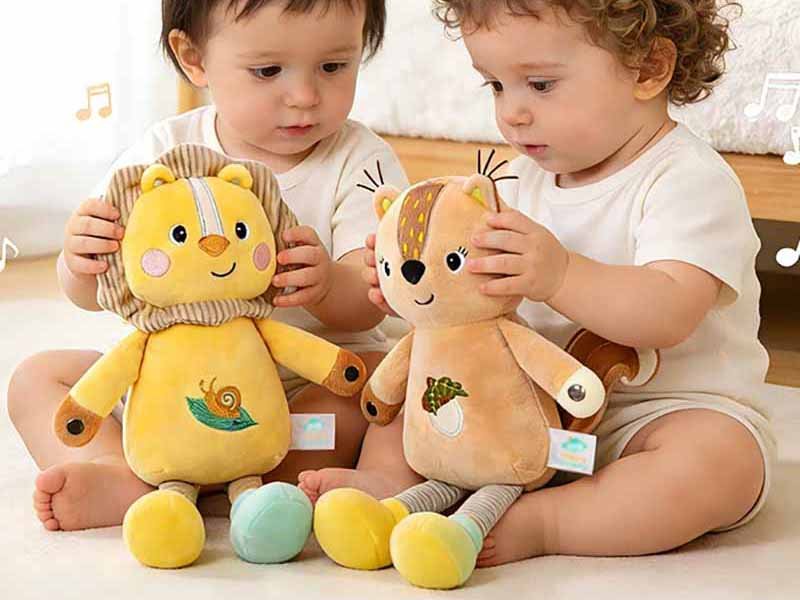
The most durable plush toy is rarely made from the thickest or most expensive fabric on a supplier’s swatch card. A toy can use heavy premium plush and still fail because the backing stretches, the seams carry too much filling pressure, the pile hides embroidery problems, or the stuffing does not recover after shipping. Durability is created by a complete material system: outer fabric, backing, thread, filling, accessories, pattern geometry, sewing parameters, and quality control must work together.
The best materials for durable plush toys are dense minky, short plush, quality velboa, well-constructed faux fur, resilient polyester fiberfill, and securely contained weighted pellets. The right choice depends on age grade, product shape, washing requirements, embroidery, pile length, filling pressure, target market, and intended use. Strong seams, stable patterns, controlled stuffing, and testing matter as much as the fabric itself.
For a brand, the useful question is not simply, ‘Which fabric lasts longest?’ It is, ‘Which combination will remain attractive, safe, comfortable, and consistent after sampling, mass production, carton compression, retail handling, washing, and repeated use?’ A 10 cm keychain, a baby comfort toy, a realistic animal, and a weighted plush may all need different solutions. One of the most expensive mistakes in product development is choosing a material that looks impressive on the cutting table but cannot be reproduced consistently across thousands of finished units.
What Makes Plush Materials Durable?

Durable plush materials resist abrasion, tearing, seam distortion, shedding, pilling, fading, and permanent compression. Their performance depends on fiber quality, fabric weight, pile density, backing strength, stretch direction, filling recovery, and compatibility with sewing and embroidery. A plush toy lasts longer when its materials, pattern, seams, filling, accessories, care method, and packaging are engineered as one system.
A plush toy is a three-dimensional soft structure under continuous internal and external stress. Filling pushes outward against every panel. Curved facial seams, narrow necks, attached limbs, tails, ears, keychain loops, and closing openings carry more load than broad body panels. When the toy is squeezed, carried, dropped, washed, or packed tightly, those loads move through the fabric and seam network.
This is why fabric should not be approved by touch alone. A material may feel luxurious during a sample review but perform poorly once it is embroidered, sewn into tight curves, heavily filled, or compressed in a shipping carton. A durable specification must balance tactile quality with backing stability, pile anchoring, dimensional control, recovery, and production repeatability.
| Durability Factor | Practical Check | Common Project Target | Why It Matters |
|---|---|---|---|
| Fabric weight | Compare measured GSM with approved specification | Often controlled within +/-5% | Large variation changes hand feel, drape, and shape |
| Pile direction | Check cut panels against the marker plan | 100% consistent on visible paired panels | Prevents apparent color and texture differences |
| Finished dimensions | Measure against approved sample | Often +/-3-5%, depending on product size | Controls proportion, packaging fit, and display quality |
| Filling weight | Weigh the complete toy or key sections | Commonly +/-3-5% | Reduces hard, soft, hollow, or unbalanced units |
| Seam appearance | Stretch and squeeze the filled product | No visible gaps or enlarged needle holes | Shows whether fabric and stitch settings are compatible |
| Surface shedding | Rub, brush, and handle repeatedly | No abnormal loose-fiber release | Protects appearance and customer confidence |
| Shape recovery | Compress, release, and inspect | Returns close to approved shape | Important after storage, transport, and retail handling |
| Color consistency | Compare under controlled lighting | Match approved swatch and dye lot | Prevents mixed-tone batches and SKU mismatch |
These figures are common internal production references, not universal legal limits. Final tolerances should be confirmed according to the toy’s dimensions, material behavior, retail requirements, and approved sample.
Material System
A plush toy is not simply a fabric shell filled with fiber. The outer material, lining or support layers, thread, embroidery, appliques, filling, internal bags, hardware, labels, and packaging all influence durability. A weak component can shorten the life of the whole product even when every other material is premium.
The correct combination also changes by product. A dense short-pile fabric may be more durable for a 10 cm keychain because it holds small curves and embroidery clearly. A heavier long-pile fur may be more suitable for a 40 cm realistic animal because it creates depth and conceals body seams. Neither choice is universally superior; each must be judged against the intended design and use.
Weight and Backing
GSM, or grams per square meter, is useful for controlling fabric weight, but it does not describe the complete construction. Two fabrics with the same GSM can perform very differently. One may use dense, well-anchored fibers on a stable backing, while another relies on longer pile over a loose knitted base.
The backing deserves particular attention because every stitch passes through it. A stable backing holds the seam line under filling pressure. An excessively stretchy or weak backing can enlarge around needle holes, distort embroidery, produce different face shapes, or make dimensions drift during mass production. Material approval should therefore include inspection of both the front surface and the reverse construction.
Stretch and Pile
Stretch helps some fabrics form smooth rounded surfaces, but uncontrolled stretch creates inconsistency. Left and right facial panels cut in different stretch directions may become visibly asymmetrical. Pile direction also changes the way light reflects from the surface, so panels cut in opposing directions can look like different colors even when they came from the same roll.
Short pile usually supports precise embroidery, visible seam control, and miniature details. Long pile creates realistic or premium texture, but it can cover facial features, become trapped in seams, and add bulk around small components. Mixed-material construction is often the most reliable answer: short plush for the face, longer fur for the body, and low-pile woven or suede-like fabrics for paws, noses, and inner ears.
Washing and Compression
Washing exposes weaknesses that may not appear during first inspection. The fabric can shrink or pill, colors can transfer, filling can migrate, embroidered panels can wrinkle, and internal components can respond differently to moisture or heat. Care instructions should therefore be considered during material selection rather than written after production is complete.
Compression creates a different risk. Plush products may remain packed for several weeks before they reach a warehouse or customer. Sampling should include the planned retail and shipping packaging so the team can evaluate flattened pile, bent ears, distorted faces, and filling recovery. Increasing carton quantity can reduce freight cost, but excessive compression may damage presentation and increase complaints, so packaging density must be balanced against product recovery.
Which Fabrics Are Best for Durable Plush Toys?

Minky, short plush, velboa, quality faux fur, fleece, sherpa, recycled polyester plush, and selected cotton blends can all produce durable toys. Minky offers softness, short plush supports detailed characters, velboa provides stable commercial production, and faux fur creates realistic texture. The best fabric is the one that matches product size, shape, age grade, decoration, care method, retail position, and production scale.
There is no honest universal ranking because each fabric solves a different product problem. A baby comfort toy may prioritize a low-shedding soft surface and washable construction. A realistic wolf may need layered fur lengths and carefully planned pile direction. A retailer ordering a twelve-character keychain series may value stable cutting, clear embroidery, broad color availability, and reliable repeat production more than maximum softness.
Fabric selection should begin with the product brief: artwork, target size, age group, destination market, expected retail position, washing claim, embroidery, printing, order quantity, packaging, and launch date. Without those details, a recommendation is only a general guess.
| Fabric Type | Common Working Range | Main Advantage | Suitable Applications | Key Risk to Check |
|---|---|---|---|---|
| Minky | 180-350 GSM; short pile | Soft, premium hand feel | Baby plush, characters, comfort toys | Stretch and embroidery puckering |
| Short plush | 180-300 GSM; about 1-5 mm pile | Clear shapes and small details | Characters, keychains, mascots | Thin or unstable backing on low-grade material |
| Velboa | 180-280 GSM; very short pile | Stable and cost-efficient | Retail collections, promotions, multi-SKU programs | Surface quality varies by supplier and finish |
| Faux fur | 300-700+ GSM; about 10-80 mm pile | Realistic texture and premium depth | Wildlife, pet replicas, collector animals | Shedding, trapped pile, and bulky seams |
| Fleece | 200-350 GSM | Soft and easy to handle | Educational plush, simple animals, books | Pilling and reduced shape definition |
| Sherpa | 250-450 GSM | Warm, textured appearance | Pillows, seasonal gifts, comfort products | Can hide fine embroidery and collect lint |
| RPET plush | Similar ranges to polyester plush | Recycled-content positioning | Branded sustainability programs | Documentation, dye lots, and batch consistency |
| Cotton blend | Project-specific woven or knit construction | Natural-fiber character | Baby, lifestyle, heritage collections | Shrinkage, wrinkling, and lower recovery |
The ranges above are practical starting points, not fixed rules. The final specification should be confirmed through fabric swatches, sewing trials, approved samples, and any relevant test results.
Minky and Short Plush
Minky is widely used for baby plush, premium characters, comfort products, and gifts where touch is a major part of perceived value. Its fine surface supports smooth color blocks and embroidered facial features. However, minky is not one standard fabric. Weight, stretch, pile density, backing stability, dyeing, and finishing vary considerably between mills and grades.
A highly stretchy minky may distort miniature panels, change facial proportions, or shift during sewing. Controlled cutting, suitable machine feeding, stabilizing layers for embroidery, balanced stitch density, and appropriate filling pressure may be necessary. The approved sample should be checked after compression and the intended cleaning method.
Short plush is often easier to engineer for compact products. It supports clear panel lines, embroidery, printing, and multi-color character construction. For keychains, blind-box plush, mascots, and large SKU collections, it frequently provides a strong balance of detail, production efficiency, shape control, and repeatability.
Velboa Collections
Velboa is a practical commercial fabric because it is stable, widely available, and suitable for many colors and prints. It is commonly used for retail animals, promotional toys, character programs, and collections that require controlled cost across higher quantities.
The important distinction is quality, not the material name. Buyers should inspect pile coverage, backing strength, surface smoothness, colorfastness, print clarity, hand feel, and resistance to wear. A well-specified velboa can outperform a poorly chosen premium-looking fabric because it behaves consistently during cutting, embroidery, sewing, filling, and inspection.
Printed velboa needs extra planning. Small artwork may shift as panels are cut, joined, and rounded by filling. The design should either tolerate placement variation or use a controlled print-and-cut method for critical features.
Faux Fur Products
Faux fur is preferred when texture is part of the product’s identity. Realistic dogs, cats, wildlife, fantasy creatures, and collector products often use several pile lengths or colors to create depth. The result can feel premium, but the material requires more engineering than short plush.
Long fibers can become trapped in seams, leaving visible channels. Dense backing adds bulk and can make narrow ears, tails, fingers, or facial components difficult to turn. Pile direction must be mapped for every panel because the wrong direction can make a tail, cheek, or body section look unnatural.
A mixed-material build usually produces a stronger result than forcing long fur into every panel. Long pile can create the body texture, short plush can protect facial accuracy, and low-pile woven or suede-like materials can define paws, noses, claws, and inner ears.
Fleece and Sustainable Options
Fleece works well for soft educational toys, simplified animals, plush books, lightweight characters, and broad panel shapes. It is generally easy to sew, but pilling should be checked when the product will receive frequent rubbing or washing. Sherpa gives pillows, winter programs, home accessories, and comfort products a warm, curly appearance, although its texture can hide small embroidery and trap lint.
Recycled polyester plush can perform similarly to conventional polyester when fiber quality, knitting, backing, dyeing, and finishing are controlled. Brands should confirm what the recycled documentation covers: outer fabric, filling, or both. Marketing claims must match the actual production records.
Cotton and cotton-blend fabrics provide a natural-fiber appearance but may shrink, wrinkle, absorb moisture, or recover more slowly than polyester plush. These are manageable characteristics, not automatic defects. Patterns, pre-treatment, care labels, and expectations should be adapted to the material rather than assuming that a natural fiber will behave like synthetic plush.
Which Fillings Keep Plush Toys in Shape?

Resilient polyester fiberfill is the most versatile filling for durable plush toys because it is lightweight, adjustable, washable, and able to recover after compression. Its performance depends on fiber grade, filling weight, and even distribution. Pellets, recycled filling, foam, and internal supports are useful for specialized products, but they require secure containment, stronger construction, and more detailed production control.
Customers touch the fabric first, but they experience the filling every time they squeeze, carry, sit, display, or wash the toy. Filling determines whether the head remains upright, whether the body can sit correctly, whether narrow limbs feel empty, and whether the approved silhouette survives carton compression.
More filling is not automatically better. Overfilling stretches the pattern, increases seam pressure, hardens the product, and can distort embroidered faces. Underfilling creates wrinkles, hollow corners, weak necks, unstable sitting positions, and a low-value feel. The goal is a repeatable filling range developed from the approved sample.
| Filling Type | Typical Product Effect | Best Applications | Important Control | Common Failure |
|---|---|---|---|---|
| Polyester fiberfill | Soft, light, and adjustable | Most plush categories | Weight, loft, and distribution | Lumps, hollow zones, or weak recovery |
| High-loft fiberfill | Fuller feel at lower density | Pillows and large plush | Compression recovery | Flattening during storage or shipping |
| Recycled polyester fill | Similar function with recycled content | Sustainability-led collections | Traceability and lot consistency | Batch-to-batch hand-feel variation |
| Pellets or beads | Adds weight and sitting stability | Weighted and bean-style plush | Separate internal bag and secure seam | Leakage or uneven distribution |
| Foam components | Firm localized support | Structured heads, bodies, or accessories | Edge feel, odor, and recovery | Hard spots visible under the fabric |
| Internal textile support | Maintains shape without a hard shell | Ears, necks, large forms | Secure placement and compatibility | Shifting or folding during use |
| Electronic cavity | Protects sound or interactive module | Talking, lighting, and interactive plush | Access, insulation, and positioning | Module movement or pressure damage |
Polyester Fiberfill
Polyester fiberfill, often called PP cotton in the plush industry, is the standard all-purpose filling for most custom toys. It can create a soft, medium, or firm hand feel depending on fiber specification and quantity. The trade name alone is not enough; fiber length, fineness, crimp, siliconized finish, cleanliness, loft, and recovery influence performance.
A buyer should evaluate the filling inside the finished sample rather than approving a loose handful of fiber. The complete toy should be squeezed repeatedly and checked for internal clumping, uneven pressure, hollow sections, and recovery. The filling must also support the intended posture: a seated animal needs more structural support than a relaxed pillow, while a soft baby plush may use lower density without losing its recognizable form.
Weight and Balance
Filling weight creates internal pressure. When the correct amount is distributed evenly, it supports the pattern and keeps the toy in shape. When too much is forced into a panel, seams become permanent stress lines, curved areas flatten, and embroidery may stretch. Underfilling concentrates repeated bending in weak areas such as the neck, joints, and narrow limbs.
For simple products, total finished weight may be an adequate control. Complex products may need separate targets for the head, body, arms, legs, or tail. A common internal starting tolerance is approximately +/-3-5%, but the correct range depends on product size, materials, and function.
Weight alone does not prove balance. Two toys can weigh the same while one has an underfilled head and the other an overfilled body. Quality inspection should combine scale readings with shape, symmetry, sitting stability, hand feel, section firmness, and recovery after squeezing.
Pellets and Inserts
Pellets are useful when a toy needs a beanbag feel, controlled weight, or a lower center of gravity. They are commonly positioned in the base, feet, hands, or body. Loose pellets should not be poured directly into the main cavity. A separate internal bag helps prevent leakage and keeps the weight in the intended location.
The bag material, dimensions, seam allowance, closing method, position, and target weight should be documented. Surrounding fiberfill cushions the insert, hides its edges, and prevents it from pulling against a single outer seam. Weighted products also require stronger stress-point design because the internal load moves during lifting, carrying, dropping, and transport.
Age grading and market requirements should be discussed before structure approval. Marketing should remain responsible: weighted plush can be described as comforting, calming, or sensory-friendly, but it should not be presented as treating a medical condition.
Recycled Filling
Recycled polyester filling can provide good softness and recovery when it is properly processed and consistently supplied. The recycled claim itself does not guarantee performance. Sample evaluation should include loft, odor, cleanliness, distribution, compression recovery, and batch consistency.
The product should be tested in its proposed packaging. After a realistic compression period, inspectors can check whether the head, body, limbs, and broad surfaces recover. Large pillows and tightly packed products need particular attention because low-recovery fiber may retain creases or permanent flat areas.
Traceability should match the finished-product claim. If only the filling is recycled, packaging should not imply that the entire toy is made from recycled material. Replacement grades should not be introduced without evaluation because visually similar fibers can produce a noticeably different hand feel and silhouette.
How Do Seams Improve Plush Durability?

Seams make plush toys durable by distributing filling pressure and handling loads without opening, stretching, or changing the shape. Strong construction depends on suitable thread, stitch length, seam allowance, backing stability, pattern geometry, and reinforcement. High-stress areas such as ears, tails, limbs, handles, keychain loops, weighted sections, and closing seams need additional engineering and inspection.
A common development mistake is treating the fabric as the product and sewing as a secondary operation. In reality, the finished toy is held together by a network of seams. Even excellent fabric cannot compensate for incorrect thread tension, skipped stitches, trapped pile, unsuitable needles, narrow seam allowance, or a pattern that concentrates too much force at one point.
Seams also create appearance. The curve of a cheek, angle of an ear, width of a limb, and balance of a seated body are formed by panel shapes and stitch lines. A seam can remain mechanically closed and still be commercially unacceptable if it twists the character or changes the expression.
| Construction Area | Common Starting Specification | Inspection Method | Main Risk |
|---|---|---|---|
| General body seam | About 6-10 mm seam allowance | Squeeze and stretch the filled product | Seam opening or shape distortion |
| Standard stitch length | About 2.5-3.5 mm | Inspect for gaps, puckering, and skipped stitches | Perforation from dense stitches or weakness from long stitches |
| Small ears or horns | Controlled narrow allowance and broad base | Pull, bend, and compare symmetry | Turning damage or weak attachment |
| Limbs and tails | Reinforced attachment footprint | Apply force in likely use directions | Tear at the body connection |
| Keychain loop | Extended internal anchor, often with reinforcement | Pull hardware and textile loop separately | Surface attachment failure |
| Filling opening | Backstitch or second closing pass | Inspect under compression and bending | Opening after repeated use |
| Weighted insert | Separate bag with reinforced seam | Drop, squeeze, and position check | Leakage, movement, or localized seam load |
| Embroidery area | Density and stabilizer matched to fabric | Check flatness, edges, and reverse side | Puckering, stiffness, or hidden detail |
These are development starting points rather than universal specifications. Final settings must be validated on the actual production fabric and according to the toy’s size, load, intended age, and applicable testing plan.
Thread and Stitches
The strongest setting is not always the shortest or densest stitch. Extremely dense stitching can create a perforated line in some knitted backings, while long stitches may allow curved seams to open or filling fibers to escape. Excessive thread tension gathers the seam; insufficient tension creates loops or gaps.
Thread thickness, needle size, stitch length, machine tension, and seam allowance should be tested on the actual production material. Minky, velboa, faux fur, fleece, woven cotton, and sherpa feed differently through sewing equipment. The selected setting should create a clean seam without puckering, skipped stitches, visible holes, trapped fibers, or an uncomfortable hard ridge.
Stress Points
Stress points are locations where the toy is repeatedly pulled, bent, carried, or loaded. Common examples include the base of an ear, tail attachment, arm or leg joint, wing root, handle, keychain loop, clothing fastener, filling opening, and the edge of a weighted insert.
Reinforcement may involve backstitching, an additional seam line, more seam allowance, internal woven tape, a fabric patch, a wider attachment base, or a modified panel shape. The best answer is often structural. An ear with a broader curved base may withstand handling better than a very narrow attachment covered with extra stitches.
Keychain plush needs special attention. Metal hardware may be strong, but the textile loop that connects it to the toy can become the weak link. The loop should extend securely into the seam and may require an internal anchor or tape. Surface stitching alone is rarely sufficient for a product designed to swing from a bag every day.
Embroidery and Features
Embroidered eyes, noses, mouths, logos, and facial details can be highly durable because they are integrated into the fabric rather than attached as separate hard pieces. They are especially useful for baby plush, washable toys, and designs where minimizing detachable parts is important.
Embroidery still needs engineering. Dense stitches can pucker stretchy minky or create a hard patch. Thin lines can disappear in long pile, while curly sherpa can soften the edge of small text. The embroidery file should be tested on the exact production fabric, with thread color, density, underlay, placement, size, and edge quality confirmed before mass production.
Plastic eyes, noses, buttons, bells, and decorative accessories may be appropriate for some age groups and product types, but their attachment and accessibility must be reviewed. Applique can reproduce complex color areas, but the edge finish, fabric fraying, backing, and stitch choice affect long-term appearance.
Pattern Engineering
A plush pattern converts flat material into controlled volume. Every panel influences another panel, and changes in fabric stretch, pile thickness, seam curve, or filling amount can alter the complete character. A large head on a narrow neck may need a broader connection or internal support. Long ears may need different grain or stretch directions on the front and back.
Sharp internal corners and extremely narrow components are difficult to sew, turn, and fill. Small structural changes can improve durability without changing the visible design. A few millimeters of extra attachment width, a smoother seam curve, or a different panel split may significantly reduce production risk.
The approved sample should represent a repeatable construction, not a one-off piece that only an expert sample maker can assemble. Bulk operators need clear digital patterns, notches, pile-direction markers, seam references, embroidery positions, filling instructions, and workmanship standards so the approved look can be reproduced at scale.
How Should Brands Choose and Test Materials?
Brands should choose plush materials by matching product type, age group, destination market, tactile goal, visual detail, washing method, safety needs, packaging, and retail position. Materials should then be verified through a production-ready sample, seam and accessory checks, filling-recovery assessment, color and shedding review, care trials, packaging evaluation, and applicable third-party compliance testing.
Material choice becomes much easier when the project brief is complete. Before requesting a quotation, a brand should provide artwork, target size, expected quantity, intended age group, destination market, preferred hand feel, washing expectations, decoration, packaging, launch date, and any testing needs. These inputs allow the factory to compare practical alternatives instead of quoting a fabric name in isolation.
The material requested in the first inquiry is not always the material that best serves the finished product. Long fur may cover important facial embroidery. A stretchy minky may make a miniature keychain difficult to keep symmetrical. Very high filling density may create a firm product when the brand expects a relaxed, huggable hand feel. Engineering review should identify these conflicts before bulk material is ordered.
| Product Type | Preferred Material Direction | Typical Size Consideration | Main Validation Point | Procurement Priority |
|---|---|---|---|---|
| Baby plush | Minky, soft fleece, selected cotton blends | Commonly 15-35 cm | Low shedding, washable design, no loose parts | Safety, softness, and care method |
| Character plush | Short plush, minky, velboa | Often 10-40 cm | Facial accuracy, embroidery, and proportion | Color and bulk consistency |
| Mascot plush | Short plush with mixed textures | Often 20-60 cm | Shape stability and logo clarity | Repeatability across orders |
| Plush keychain | Short plush, velboa, low-pile minky | Commonly 5-15 cm | Loop strength and miniature detail | Efficient multi-SKU production |
| Realistic animal | Faux fur plus short-pile combinations | Often 20-60 cm | Fur direction, posture, and seam concealment | Texture accuracy and skilled workmanship |
| Plush pillow | Sherpa, minky, coral fleece, velvet | Often 30-80 cm | Compression recovery and seam loading | Filling consistency and freight efficiency |
| Weighted plush | Minky or stable short plush | Size depends on target weight | Internal bag security and weight distribution | Structural safety and packing strength |
| Interactive plush | Stable short plush or mixed fabrics | Often 20-50 cm | Component protection and function | Assembly and compliance planning |
| Retail collection | Stable fabric platform across colors | Multiple sizes and SKUs | Color-lot and measurement control | Lead time, reorder consistency, and documentation |
The size ranges are common commercial examples, not mandatory limits. Artwork, retail channel, user age, function, and target price should determine the final specification.
Match the Product
Baby products generally prioritize low shedding, soft surfaces, embroidered features, washable construction, and limited hard accessories. Character plush needs facial accuracy, controlled stretch, clear embroidery, and repeatable proportions. Realistic animals benefit from layered pile heights and carefully planned fur direction. Keychains require secure loops, stable miniature panels, and decoration that remains readable at small scale.
Weighted products need secure internal containment, reinforced stress points, and packaging that can carry the additional mass. Interactive plush needs a stable cavity for the sound, light, or sensing component, along with planned access, insulation, and filling distribution. Mixed-material construction is often more effective than using one fabric everywhere because it lets each surface perform a specific visual and structural role.
Approve the Sample
A production-ready sample must prove more than visual similarity to the artwork. It should demonstrate that the design can be cut, embroidered, printed, sewn, filled, inspected, packed, shipped, and reproduced consistently. The brand should review dimensions, proportions, symmetry, pile direction, hand feel, color, embroidery, seam appearance, filling level, balance, labels, accessories, and packaging fit.
The toy should be viewed from the front, sides, back, top, and bottom. A character that looks correct from the front may have an oversized head, twisted tail, unstable sitting position, or uneven lower body. Compression and recovery should also be evaluated in the proposed packaging.
Final approval should record the fabric swatches, color references, digital pattern version, embroidery and print files, filling weights, accessories, label positions, finished measurements, and photographs from consistent angles. Once approved, this package becomes the practical production standard. Material substitutions or structural changes should not enter bulk production without controlled review.
Test Safety and Performance
Safety requirements depend on the destination market, intended age group, materials, accessories, and function. A simple embroidered baby plush has a different risk profile from an electronic toy, a weighted product, or a collectible with hard accessories. Material and construction review may include restricted substances, flammability, small parts, seam integrity, stuffing cleanliness, accessible components, labeling, and age grading.
Projects for the United States, European Union, United Kingdom, Canada, Australia, Japan, Korea, and other markets may require different testing and documentation. Standards such as ASTM F963, CPSIA, EN71, and CE-related requirements should be considered according to the actual product and sales market. A manufacturer can support material records, sample preparation, labeling, and coordination with independent laboratories, but responsible suppliers do not promise that every design will automatically pass every test.
Commercial performance checks can also include repeated compression, rubbing, washing, pull resistance, weighted-product drop behavior, function verification, and packaging recovery. These tests address practical failure modes that a single regulatory test may not capture.
Control Bulk Production
Bulk consistency starts before cutting. Fabric color, GSM, pile direction, backing, pattern version, embroidery, filling, accessories, labels, and packaging should match the approved reference. Incoming materials should be checked for dye-lot differences, hand feel, visible defects, width, and agreement with the approved swatch.
During production, inspection can cover cutting direction, panel identification, embroidery placement, seam quality, dimensions, symmetry, filling balance, accessory attachment, labels, function, packaging count, and carton marks. A toy can meet its total weight while still having an underfilled head or an overfilled body, so visual and tactile comparison remains essential.
Delsney supports this process through design evaluation, material recommendations, engineering sampling, sample revision, approved-sample production, quality inspection, packaging, and global delivery. The documented manufacturing platform includes 18+ years of plush development experience, 25+ engineers, 10+ designers, 20+ QC staff, 18 production lines, standard sample development of about 5-7 days, complex sampling of about 7-15 days, and 100% pre-shipment inspection. These capabilities are most valuable when they are connected to a clear product specification rather than treated as isolated factory statistics.
Build a Durable Plush Product with the Right Material System
The best material for a durable plush toy is the one that survives the complete product journey: pattern development, embroidery, cutting, sewing, filling, testing, packing, transport, retail handling, cleaning, and daily use. That result comes from matching fabric, filling, seams, accessories, structure, care instructions, and quality controls – not from choosing a material by name alone.
Delsney works with global brands, IP owners, retailers, gift companies, and e-commerce businesses to turn artwork, characters, three-dimensional models, concepts, and reference samples into production-ready plush products. Projects can include material selection, engineering review, sampling, revisions, bulk production, compliance preparation, private-label packaging, inspection, and export delivery.
To receive a material recommendation and project quotation, provide your artwork or reference sample, target size, order quantity, intended age group, destination market, preferred hand feel, functional requirements, packaging plan, and launch deadline. A complete brief allows the development team to compare materials against the real product requirements and propose a solution that can remain consistent from the approved sample through mass production.