Skip to content

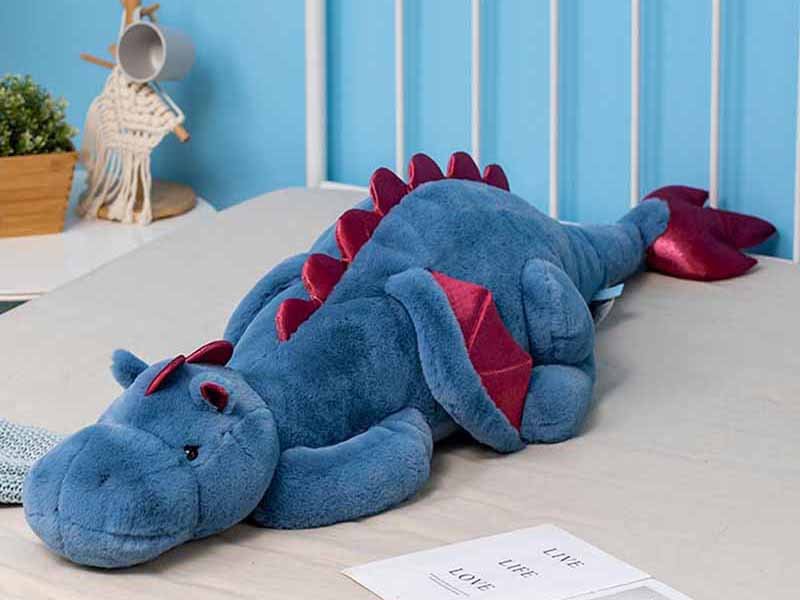
Weighted plush looks deceptively simple on a retail shelf. From the outside, it may appear to be an ordinary stuffed animal with a little more heft, but that extra weight changes almost every important production decision. Internal pouch construction, seam loading, center of gravity, fabric stretch, filling migration, finished-unit weight, carton gross weight, washing instructions, and safety evaluation all become more important once dense materials are introduced into a soft toy. A visually attractive sample can still become a difficult commercial product if those details are not controlled before mass production begins.
The best weighted plush manufacturers combine plush-toy engineering with controlled weight distribution, secure internal pouches, reinforced seams, appropriate filling materials, measurable quality checks, product-specific compliance support, and repeatable bulk production. The strongest manufacturing partner is not simply the factory offering the lowest quotation; it is the supplier that can turn a target size, weight, appearance, market, and packaging brief into a product that remains consistent from approved sample to commercial production.
That is also what makes supplier selection harder than it first appears. Search results contain specialist weighted-plush factories, conventional custom-plush manufacturers, wholesale suppliers, sensory-product companies, and factories that show only a few weighted items inside much larger catalogs. Some are excellent at character development, some are stronger in weighted soft goods, and others are better suited to larger repeat programs. The practical task is not to collect seventeen names. It is to understand which manufacturers deserve to remain on the shortlist after the technical questions begin.
What Makes a Weighted Plush Manufacturer Worth Shortlisting?

A weighted plush manufacturer deserves serious consideration when it can explain how the entire product will be engineered, not simply how the outer shell will be sewn. Strong candidates can discuss weight placement, pouch construction, seam reinforcement, filling materials, target-weight control, sampling, product-specific compliance preparation, packaging, and repeatable production. Comparable samples and measurable specifications usually tell you more than broad claims about “premium quality.”
Evidence That Matters
The first useful question is not whether a factory makes plush toys. It is whether the factory has produced weighted products that resemble your proposed design in size, mass, posture, and construction. A 30 cm sitting animal weighing 600 grams is very different from a 60 cm lying character weighing 2 kilograms. The heavier product places more load on its closing seam, limb joints, lower body, internal pouches, and even the carton used during transport.
Good evidence therefore includes photographs or physical samples of comparable products, an explanation of how the weight is divided internally, and a clear description of the materials used. A supplier should be comfortable discussing total finished weight separately from the weight of the internal insert. It should also be able to explain whether the weight is concentrated in one area or divided among several compartments, because the two approaches produce very different handling and balance.
Delsney’s internal weighted-plush reference data, for example, identifies 0.5 kg, 1 kg, 1.5 kg, and 2 kg as common reference weights depending on product size, while PP cotton, glass beads, plastic pellets, and separate weighted inserts are listed among possible material systems. Those figures are not universal standards, but they show the level of specificity worth expecting during a serious sourcing discussion.
| Qualification Area | Useful Evidence to Request | Practical Value |
|---|---|---|
| Weighted experience | 2–3 similar weighted products | Shows experience with comparable load and structure |
| Finished weight | Written target weight | Makes sample and production checks measurable |
| Weight layout | Internal pouch drawing or placement note | Helps control balance and posture |
| Filling system | Material type and pouch method | Affects density, feel, sound, and containment |
| Seam control | Reinforcement at high-load areas | Reduces opening and leakage risk |
| Sampling | Approved sample plus written specification | Establishes the production benchmark |
| QC | Weight, seam, leakage, and appearance checks | Helps reduce unit-to-unit variation |
| Compliance support | Market- and age-specific review | Connects product design with testing requirements |
| Production scale | Quantity and SKU production plan | Shows whether the sample can be repeated reliably |
Engineering Capability
A weighted plush is better treated as an engineered soft product than as an ordinary stuffed animal with extra material poured inside. The outer appearance still matters, but the internal system determines whether that appearance survives lifting, squeezing, sitting, shipping, and repeated handling. A long dinosaur, for example, may require a different weight layout from a sitting bear even when both products have exactly the same finished weight.
Pattern construction becomes especially important around narrow necks, long limbs, wide bellies, and asymmetrical shapes. If too much mass is concentrated in one central pouch, a long product can bend sharply in the middle while its tail and head feel empty. Moving weight toward the lower body can improve stability, but it may also increase stress around leg seams or change the way the toy sits. These tradeoffs should be resolved during sampling rather than discovered after the first bulk shipment.
A competent development team should therefore be able to discuss pouch count, pouch dimensions, attachment points, conventional fiber around the weighted zones, seam reinforcement, and how the finished product should rest when placed on a flat surface. Delsney’s engineering documentation specifically identifies weight distribution, internal weighted structures, and strengthened seams as important weighted-plush development issues. That kind of internal engineering discussion is far more useful than a supplier simply saying it can “add beads.”
Compliance and Risk Control
Weighted plush needs the same disciplined product review expected from other commercial soft toys, with extra attention given to internal containment because dense filling creates additional load during normal handling. The destination market, intended age group, materials, accessories, product classification, labeling, and intended use all influence what needs to be considered before the design is finalized and sent for applicable testing.
A factory should not rely on a previous test report for a completely different stuffed animal as proof that a new weighted design will automatically meet every requirement. A 25 cm ordinary teddy bear and a 2 kg weighted character with an internal pouch may share some fabrics and sewing processes, but the product structures are not identical. The new project still needs its own review, especially if it includes removable inserts, zippers, heatable components, scent elements, hard accessories, or electronics.
Internal filling access is another practical concern. Weighted materials should remain contained during handling, transportation, and foreseeable use. This places attention on pouch seams, outer closing seams, and areas where concentrated load repeatedly pulls against the textile. Delsney’s own factual guidelines specifically avoid promising that every design will automatically pass all testing and instead describe support for compliance preparation and third-party testing according to the finished product. That is a more credible approach than unconditional promises before a prototype exists.
Production Scale
A beautiful sample proves that one unit can be made correctly. Commercial production proves whether the same design can be repeated hundreds, thousands, or tens of thousands of times while different operators, material lots, embroidery batches, filling stations, and production days are involved. That distinction is especially important for weighted plush because several small variations can add up to a noticeably different feel in the finished product.
An approved sample should therefore be supported by written production references such as pattern files, finished dimensions, embroidery files, fabric specifications, weight targets, pouch placement, filling instructions, packaging details, and inspection checkpoints. Delsney’s documented quality system includes approved samples, digital patterns, measurement points, embroidery files, fabric GSM records, filling-weight references, in-line checks, and final inspection as ways to control sample-to-bulk consistency.
Factory size alone should not decide the shortlist. A large facility may have significant sewing capacity yet limited weighted-product experience, while a more specialized manufacturer may understand the internal structure better but have less capacity for a very large seasonal rollout. The more useful question is whether the supplier can reproduce the approved construction at your required quantity, SKU count, quality level, and delivery schedule without changing materials or workmanship quietly along the way.
Which Are the 17 Best Weighted Plush Manufacturers?

Seventeen manufacturers stand out as useful candidates for weighted-plush sourcing because they show dedicated weighted products, weighted-plush manufacturing content, or relevant custom-plush development capability. They are best treated as a research shortlist rather than a permanent league table. Public information, current MOQs, factory arrangements, sampling schedules, certifications, and production capacity should always be reconfirmed before an order is awarded.
Engineering-Led Specialists
Delsney is one of the more engineering-oriented candidates because weighted plush is treated as a defined product category rather than simply a variation of conventional stuffed toys. Its internal company data records more than 18 years of plush manufacturing experience, over 500 staff, 18 production lines, 25+ engineers, 10+ designers, and 20+ QC personnel. Standard plush samples are documented at around 5–7 days, while more complicated constructions usually require about 7–15 days.
For weighted products, Delsney’s development framework covers weight distribution, hand feel, structural stability, seam strength, internal containment, and filling-material choices. Its normal MOQ is documented at 500 pieces per style, and the company supports OEM, ODM, private label, packaging, and pre-shipment inspection. This makes it particularly relevant when the project begins with artwork, a character, a physical reference, or a new product concept rather than an existing stock design.
Kinwin is another strong weighted-plush candidate because its public positioning focuses specifically on weighted animals and custom weighted products rather than mentioning the category only occasionally. Its offering emphasizes adjustable weight, multiple filling systems, internal containment, character development, and OEM/ODM manufacturing. JianChuang also deserves attention because it maintains dedicated weighted-plush manufacturing content and publicly presents a lower entry MOQ for certain projects, which can be useful when an initial commercial run is smaller.
Heyzizi is similarly worth evaluating when documentation and structured manufacturing controls are important. Its weighted-plush material places unusual emphasis on internal structure, specification control, BOM management, workmanship notes, and multiple QC checkpoints. The practical value of these suppliers is not that their marketing language sounds technical, but that they can potentially provide more concrete answers when a sourcing team starts asking about pouch position, unit-weight control, seam stress, and sample-to-bulk repeatability.
Specialist OEM Suppliers
FY Plush Maker maintains a dedicated weighted stuffed animal offering that covers size, fabric, filling material, weight range, logo, labels, retail packaging, and OEM/ODM development. That makes it relevant for brands that already know most of their specification and need a factory capable of turning those commercial requirements into a finished weighted product. The important next step is to confirm how deeply the company engineers the internal structure for unusual characters rather than assuming every weighted design follows one standard template.
The GoldenPal approaches the market from a somewhat different direction because it works across weighted and sensory-oriented soft goods rather than conventional plush toys alone. That can be useful for companies developing lap animals, shoulder products, comfort products, or a broader weighted assortment. Familiarity with several weighted soft-product formats may help when the intended experience depends on how mass is spread over the body rather than simply on achieving a headline total weight.
Plushies4U also belongs on the shortlist because it publishes a dedicated weighted-plush category and combines custom manufacturing with wholesale-oriented product development. Woodfield brings broader OEM manufacturing experience and publicly supports customization of weighted animals by size and weight. Yortoob likewise shows dedicated weighted and heated weighted products, making it worth examining when the project combines plush construction with removable inserts or additional functions.
Broad Custom Manufacturers
FactoryPlush is a broader custom plush supplier that also publishes weighted-stuffed-animal content discussing materials and internal construction. This makes it a reasonable candidate for custom development, but any unusually low general MOQ should be reconfirmed for a specific weighted design because special filling, custom fabrics, printing, packaging, and complex structures can create higher practical minimums than a factory’s headline starting quantity.
Chaoman Toy has a long-running custom plush manufacturing background and currently shows weighted products among a wider range of stuffed animals. That makes it worth exploring for conventional weighted animal programs, particularly when the company can provide comparable examples in a similar size and mass. WeiJun Toys is more diversified across several toy categories, but it has also published weighted stuffed animal development information and may be relevant for programs involving both plush and molded accessories.
CustomPlushMaker combines character-focused custom development with weighted plush examples and can be useful when appearance, embroidery, clothing, or brand-specific details are as important as the internal weight system. Yancheng Joy Foundation, Yangzhou Youguo Toys, Hunan Yushi Toy, and Jiangsu Better Toys also show weighted products or relevant OEM offerings and can be included in an exploratory RFQ round, especially when sourcing teams want to compare different manufacturing models before narrowing the list.
Shortlist Comparison
The table below is most useful as an initial sourcing map, not as a final recommendation. A brand developing a simple 800-gram animal may choose differently from a company developing a 2-kilogram licensed character, and a multi-SKU retail program may favor a factory with stronger production planning over a supplier that mainly excels at individual prototypes.
| Manufacturer | Weighted-Plush Evidence | Public/Documented MOQ Seen | Best Reason to Investigate |
|---|---|---|---|
| Delsney | Dedicated weighted engineering capability | 500 pcs | Engineering, sampling, QC, private label, scale |
| Kinwin Plush | Dedicated weighted OEM content | Confirm per project | Internal pouch and weight-system development |
| JianChuang Plush | Dedicated weighted-animal manufacturing | Around 300 pcs publicly shown | Custom weighted development and smaller initial runs |
| Woodfield | Weighted animal customization | Confirm per project | Established OEM plush programs |
| Plushies4U | Dedicated weighted range | Confirm per project | Custom and wholesale weighted programs |
| The GoldenPal | Weighted and sensory soft goods | Confirm per project | Sensory-oriented weighted formats |
| FY Plush Maker | Dedicated custom weighted service | Confirm per project | Custom weight, materials, labels, packaging |
| Heyzizi | Dedicated engineered weighted programs | Confirm per project | Specification control and QC documentation |
| FactoryPlush | Weighted manufacturing content | General low MOQ publicly shown | Flexible custom development |
| Chaoman Toy | Weighted products in wider plush range | Confirm per project | Established stuffed-animal manufacturing |
| WeiJun Toys | Weighted development content | Confirm per project | Broader toy-development infrastructure |
| CustomPlushMaker | Weighted products within custom range | General low MOQ publicly shown | Character and branded plush programs |
| Yancheng Joy Foundation | Weighted OEM offerings | Confirm per project | Custom weighted-animal sourcing |
| Yangzhou Youguo Toys | Multiple weighted formats | Product dependent | Weighted, scented, and heatable products |
| Hunan Yushi Toy | Weighted plush listings | Product dependent | Custom plush manufacturing options |
| Jiangsu Better Toys | Multiple weighted SKUs | Product dependent | Established plush supplier for volume sourcing |
| Yortoob | Dedicated weighted/heated plush | Confirm per project | OEM/ODM weighted animal development |
The strongest shortlist should be narrowed after every supplier receives essentially the same technical brief. If one company assumes a single plastic-pellet pouch while another proposes several glass-bead compartments, the resulting prices are not directly comparable even if both quotations say “1 kg weighted plush.” Reviewing the construction assumptions first prevents a sourcing team from choosing the cheapest price for what is actually a simpler and less controlled product.
Which Weighted Plush Capabilities Should You Compare?

Weighted-plush manufacturers should be compared by the way they solve the physical product, not by the number of animals displayed in their catalog. The most useful comparison points are finished weight, weight distribution, internal containment, filling materials, fabric behavior, pattern engineering, seam control, branding, and packaging. These variables determine whether an attractive sample remains comfortable, stable, and repeatable when produced at commercial scale.
Weight Design
Finished weight is the easiest number to put into an RFQ, but it does not explain how the product should feel. Three plush animals can all weigh 1.5 kilograms and still behave completely differently because their mass is distributed in different places. A sitting bear normally benefits from lower-body stability, while a long character often needs broader distribution so the center does not become dramatically heavier than the head and tail.
That means the specification should separate total weight from internal weight layout. The factory may divide dense material among several zones while using conventional polyester filling around those areas to preserve softness and shape. Delsney’s weighted-plush reference information uses 0.5 kg, 1 kg, 1.5 kg, and 2 kg as common development points depending on product dimensions. These values are useful starting references, but the final number should follow the design rather than the other way around.
During sample review, handle the plush in several orientations instead of judging it only while it sits neatly on a table. Lift it from the torso, hold it under a limb, turn it upside down, place it flat, and leave it sitting for several hours. If the mass settles into one corner or noticeably changes the posture, the internal zoning may need another revision before approval.
Internal Weight System
Glass beads, plastic pellets, pre-made weighted inserts, and mixed systems with ordinary fiberfill are among the common approaches used in weighted plush. Each behaves differently. Higher-density materials can achieve substantial weight in a smaller volume, while lighter pellets occupy more space and can create a different tactile feel when the product moves. A separate removable insert may simplify some washing arrangements but introduces closures, instructions, and user-access questions.
The pouch itself matters as much as the filling. Weighted material should remain where the pattern engineer intended it to remain rather than migrating freely through the body. A single large belly pouch can work for some rounded shapes, but long, narrow, or asymmetrical products often benefit from multiple compartments. Dividing the weight increases sewing and inspection work, yet it can improve balance and prevent the finished plush from developing a heavy lump in one location.
Delsney’s internal development references list PP cotton, glass beads, plastic pellets, and weighted inserts among available options and identify weight distribution, seam strength, hand feel, stability, and safety as major product concerns. A useful sample review should therefore include an internal construction drawing or photographs taken before the closing seam is completed, especially when the product will be ordered in substantial volume.
Fabric and Pattern
Outer fabric is part of the structural system once the product becomes heavy. Very soft minky or plush can create excellent hand feel, but stretchier materials may sag around a dense insert if the pattern was copied directly from a lightweight version. Long-pile fabrics can hide seams beautifully while making some workmanship defects harder to see, and narrow fabric-backed areas can distort when the internal mass repeatedly pulls in the same direction.
Pattern engineering should anticipate those effects. A sitting animal may require a wider base, additional ordinary fiber around the weighted section, or slightly different seam placement to preserve its posture. A character with a narrow neck may need the majority of its mass kept lower in the torso so the head remains upright. Long limbs can be deliberately left lighter to reduce load on attachment seams even when the body is relatively heavy.
Fabric information also needs to remain consistent from sample to bulk. Delsney’s documented production controls include fabric GSM records, approved material references, filling-weight references, and pattern controls as part of production consistency. If the factory proposes changing a fabric lot or backing structure after sample approval, the weighted sample should be reviewed again because the new textile may stretch or recover differently under load.
Branding and Packaging
Branding details can conflict with the internal weight system if they are left until the end of development. A large embroidered back logo may occupy the same area where the factory planned to secure a weighted pouch. A woven label inserted into a heavily loaded seam can alter that seam’s construction. Removable weighted inserts may require additional care labels or instructions explaining washing, removal, and replacement.
Packaging has an even larger commercial impact because weighted products accumulate shipment mass very quickly. Five thousand finished units weighing 1.5 kilograms each represent 7,500 kilograms of product before retail packaging, master cartons, and pallets are added. A seemingly small decision to increase finished weight by another 500 grams would add another 2,500 kilograms across the same order.
Compression can save volume, but aggressive compression should be tested before it becomes the standard packing method. Dense inserts do not compress in the same way as polyester fiber, and embroidery, structured faces, long ears, accessories, or unusual body shapes may recover poorly after being squeezed into a small carton. Packaging development should therefore consider gross carton weight, recovery after unpacking, retail presentation, barcode placement, protection during transport, and the handling limits of the logistics channel.
How Do Manufacturers Control Weight and Safety?

Manufacturers control weighted plush by locking the construction before bulk production, measuring weighted material instead of filling by feel, securing it inside controlled pouches, reinforcing high-load seams, checking finished-unit weight, and inspecting for uneven distribution or leakage. Safety preparation should then follow the finished product’s intended market, age group, construction, materials, accessories, labeling, and applicable requirements rather than relying on a generic factory certificate.
Weight Control
A specification such as “approximately 1 kilogram” is useful during early product planning but too vague for mass production. Before the order is released, the sourcing team and factory should define what the target weight actually includes. The stated figure may refer to the entire finished plush, the weighted insert alone, or the product before removable clothing or packaging is added, and each definition produces a different inspection result.
Once the definition is fixed, an agreed tolerance should be established for that specific product and manufacturing method. There is no sensible single tolerance that can be copied across every weighted plush design. A 500-gram product and a 3-kilogram product may need different control ranges, and a multi-compartment insert can behave differently from one large central pouch.
A practical line-control method can involve weighing the dense filling before the pouch is closed and then checking the complete plush again after conventional stuffing, embroidery, accessories, and final closing. Delsney’s QC references specifically include filling type, filling weight, stuffing balance, weighted distribution, and filling leakage among the controls used for plush products.
Seam and Leakage Control
Dense filling creates forces that ordinary polyester fiber does not. When a weighted plush is dropped, the mass inside continues moving until the pouch and surrounding seams stop it. When the product is picked up by one limb, the entire body may pull against a relatively narrow attachment seam. During transportation, thousands of small movements can repeatedly stress the same internal areas even before the product reaches a retail shelf or consumer.
This makes it useful to distinguish between outer-body seam failure, internal-pouch failure, and actual external leakage. An outer seam may open without the weighted pouch breaking. An internal pouch may fail while the outer shell remains intact, allowing beads or pellets to migrate through the body. In a more serious case, filling material can become accessible outside the product. These are different failure modes and should be inspected separately.
High-load areas usually deserve particular attention during sample review, including the final closing seam, narrow neck connections, limb attachments, internal pouch edges, and any zipper or opening used for removable inserts. A competent manufacturer should be able to explain which areas have been strengthened and how the sample was handled before bulk approval rather than treating every seam as if it carries the same load.
Compliance Review
A weighted product should be reviewed according to its destination market and intended user before final testing is arranged. Requirements can differ depending on whether the product is positioned as a children’s toy, an adult soft product, a decorative item, or a multi-function product containing electronics, heatable inserts, fragrances, removable pouches, zippers, or hard accessories. The material list and construction need to be settled before a meaningful compliance plan can be completed.
This is one reason a responsible manufacturer normally asks about the intended sales market, age group, filling material, accessories, labels, and packaging during project review. Delsney’s documented inquiry framework includes target market, age group, fabric preference, filling requirements, branding, packaging, compliance needs, and delivery deadline as project inputs rather than treating testing as a final afterthought.
Previous reports from similar products can still be useful, but they should be read carefully. A report for a lightweight teddy bear may demonstrate experience with a fabric or embroidery process, yet it does not automatically prove that a new weighted construction has been evaluated. Current project-specific testing should follow the actual finished design, and critical material substitutions after testing should be reviewed before they enter production.
Bulk QC
Weighted-plush inspection works best when numerical controls and physical comparison are used together. A scale can confirm that the product meets its target weight, but it cannot tell whether all the mass has shifted to the left side. A visual inspector can see whether the plush looks balanced, but cannot reliably determine whether one unit contains 150 grams less filling than another. Both forms of control are therefore useful.
| Control Point | Main Check | Practical Method |
|---|---|---|
| Incoming fabric | Material, color, specification | Compare against approved material |
| Weighted filling | Correct approved material | BOM and supplier verification |
| Pouch fill | Required quantity | Scale before pouch closure |
| Pouch construction | Seam and closure integrity | In-process visual inspection |
| Pouch placement | Correct internal zone | Check before final stuffing |
| Finished weight | Target and agreed tolerance | Finished-unit weighing |
| Balance | Uneven distribution | Compare with approved sample |
| Outer seams | Openings and skipped stitches | Visual and physical inspection |
| Leakage | Escaped weighted material | Handling and seam inspection |
| Shape | Posture and silhouette | Approved-sample comparison |
| Branding | Embroidery, labels, color | File and sample comparison |
| Packaging | Correct bag, box, labels, barcode | Packing-line verification |
The approved sample should remain connected to production rather than sitting in a sales office after the purchase order is signed. Delsney’s documented workflow moves from sample approval to material preparation, bulk production, inspection, and shipment, with final checks covering appearance, dimensions, seams, filling, labels, packaging, and function. The same principle should be applied to repeat orders because materials, production lines, operators, and packaging can all change between seasons.
How Do Sampling, MOQ, and Bulk Production Work?
Weighted-plush development normally moves from project review and quotation into pattern engineering, prototype construction, weight adjustment, sample revision, approval, material preparation, bulk sewing and filling, inspection, packaging, and shipment. MOQ and unit price depend on the entire specification, including fabric, weighted material, pouch construction, embroidery, packaging, testing, SKU count, and freight rather than simply the finished dimensions.
RFQ Inputs
A useful RFQ allows every factory to quote essentially the same product. Sending only a picture and asking for a price on 5,000 pieces encourages each supplier to make different assumptions. One factory may imagine short plush and plastic pellets, while another assumes minky and glass beads. One may put all weight into a single pouch, while another prices three separate compartments. The resulting quotations look comparable on a spreadsheet but represent different products.
A practical weighted-plush RFQ should include the following information:
- Product artwork, reference sample, or 3D design
- Finished dimensions
- Target finished weight or preferred range
- Planned quantity
- Number of SKUs
- Target sales market
- Intended age group
- Fabric preference
- Preferred weighted filling, if already decided
- Embroidery, printing, or accessories
- Branding labels
- Packaging format
- Testing requirements
- Required delivery window
Delsney’s own project-entry framework requests artwork, dimensions, quantity, target market, age group, fabric, filling, branding, packaging, compliance needs, and delivery deadline. If the internal weight system has not yet been designed, it is better to say so and ask the factory to propose a structure than to force an unsuitable construction into the quotation.
Sampling
Sampling is where a digital concept becomes a physical engineering reference. The first prototype often focuses heavily on appearance, including silhouette, face, proportions, embroidery, fabric direction, and finished size. Once dense filling is added, the same product should be evaluated again because extra mass can change posture, seam loading, and how the plush feels when it is lifted or held.
A weighted sample should be handled more actively than a showroom prototype. Pick it up by the torso, support it under one limb, turn it upside down, lay it flat, sit it upright, compress it, and leave it in the same position for several hours. If the dense filling moves into one corner, the internal compartment design may need revision. If the body collapses, more fiber support or a pattern change may be required.
Delsney documents standard plush sample development at around 5–7 days and more complicated structures at approximately 7–15 days, with revisions before the final sample becomes the production standard. The exact timing varies among factories, but revision quality is usually more important than achieving the fastest first sample. A properly documented second sample can save much more time than a rushed prototype followed by repeated corrections.
MOQ and Cost
MOQ is rarely created by one factory rule alone. Custom-dyed fabric, special plush materials, weighted filling, embroidery setup, printed packaging, woven labels, accessories, cartons, and individual SKU quantities can all create practical minimums. A manufacturer may advertise a very low general MOQ while a particular weighted design requires a higher quantity because one critical material cannot be purchased economically in a smaller batch.
Delsney’s documented standard MOQ is 500 pieces per style, while some other manufacturers on the shortlist publicly show lower starting quantities for certain custom projects. Those figures are useful for initial screening, but the meaningful MOQ is the one stated on the actual quotation after fabric, weight, packaging, and SKU structure have been confirmed.
Unit cost is also affected by more than size. Dense filling quantity, pouch count, sewing complexity, embroidery, printing, accessories, testing, packaging, order volume, and shipping weight can materially change the final economics. Delsney’s costing framework specifically identifies weighted filling as more expensive than ordinary fiber filling and notes that quantity, packaging, testing, and transportation also influence price.
Freight deserves attention early because weight changes scale rapidly. Increasing a design from 1 kilogram to 1.5 kilograms adds 500 kilograms of product mass for every 1,000 units. At 10,000 units, the same design change adds 5,000 kilograms before packaging is considered. That calculation can influence the final target weight as much as the tactile experience.
Production Repeatability
Mass production should begin only after the approved physical sample and written specifications describe the same product. Important locked items normally include the pattern version, finished measurements, fabric, colors, embroidery files, weighted material, total weight, internal pouch structure, pouch location, ordinary stuffing amount, labels, packaging, and carton instructions.
One common source of inconsistency is the undocumented “small adjustment.” A factory may substitute a similar fabric because the original lot is delayed, move the internal pouch because another sewing method is easier, or change filling material to reduce cost. Each change may look minor on a production floor but can alter hand feel, posture, density, or safety characteristics in the finished product.
Critical substitutions should therefore require written approval. Repeat orders deserve the same discipline because a successful first shipment does not guarantee that an order six months later will use the identical material lot, sewing line, filling source, or carton configuration. Version-controlled production documents help identify changes before they become customer complaints.
A reliable manufacturer treats the approved product as a controlled specification rather than a visual memory. That mindset becomes increasingly important when several SKUs are produced together, because different characters may share materials while requiring different target weights, pouch layouts, embroidery files, and packing instructions.
What Questions Should You Ask Before Choosing a Manufacturer?
The most useful questions force a manufacturer to explain how the product will actually be made and controlled. Ask where production takes place, what comparable weighted products have been completed, how total weight is measured, how internal pouches are constructed, what prevents filling migration, how critical seams are reinforced, which testing is appropriate, and how the approved sample will be translated into consistent bulk production.
Factory Reality
Start by confirming who will physically make the product. A supplier may manage a project well while using partner factories for selected processes, but the arrangement should be transparent. Ask where cutting, embroidery, sewing, weighted-pouch preparation, dense filling, ordinary stuffing, final closing, QC, and packaging will take place, and whether the same team responsible for the prototype will also handle mass production.
Comparable examples are more valuable than a large general portfolio. Instead of asking for “weighted plush experience,” request products in a similar size and weight range. A useful question might be, “Can you show weighted products between 40 and 60 cm that weigh between 1 and 2 kg and use a sitting body shape?” That narrows the discussion to construction experience that is genuinely relevant.
Dedicated weighted-product pages from companies such as Delsney, Kinwin, JianChuang, FY Plush Maker, Heyzizi, Plushies4U, The GoldenPal, and Yortoob are useful first-stage evidence because they show category participation. The next qualification step is still physical and technical: the sourcing team needs to see whether that published capability matches the specific geometry, mass, materials, and market requirements of the proposed product.
Weight Specification
Ask the manufacturer what finished-weight tolerance it can realistically maintain for the proposed design and how that tolerance will be checked. Do not impose a random number before the factory understands the construction. A strong technical team should be able to explain what is practical for the specific total weight, filling system, number of compartments, and production process.
The next questions should become more detailed:
- Is every weighted insert measured before installation?
- Is the finished plush weighed again?
- How many internal compartments are planned?
- Are those compartments fixed inside the body?
- How is migration prevented?
- Which filling records are kept?
- What happens to units outside the agreed specification?
- Can the internal pouch layout be shown before final closure?
Comparing these answers can be more revealing than comparing prices. One supplier may propose a single 1-kilogram pouch, another four 250-gram sections, and a third a central 700-gram pouch with two smaller side compartments. All three finished products can weigh exactly 1 kilogram while producing very different balance, feel, and seam loads.
Safety Proof
Ask which product-specific safety requirements the manufacturer believes are relevant to your destination market and intended age group, and then ask what information it needs before making that judgment. A careful supplier should want to know the material list, construction, accessories, intended use, labels, packaging, and whether the product contains removable parts, hard components, electronics, heatable inserts, or other special features.
Previous reports from similar products can provide useful evidence of testing experience, but the report should be read carefully. Check the product description, model or sample identification, test date, laboratory, standards listed, and materials covered. A report for an ordinary polyester plush does not automatically establish the status of a new 2-kilogram weighted character with a zipper and removable insert.
The same discipline should continue after testing. If the production team later changes the bead material, textile, accessory, or pouch construction, the impact of that substitution should be reviewed before the change is accepted. Delsney’s factual guidance specifically avoids universal test-pass claims and instead describes supporting compliance preparation and third-party testing according to the actual design.
Sample-to-Bulk Control
Finish supplier qualification by asking how the mass-production order will be kept consistent with the approved sample. A useful answer should go beyond a general statement that “QC checks everything.” Look for a system that connects the approved physical sample with measurable production information such as pattern versions, measurement points, fabric specifications, colors, embroidery files, filling material, finished weight, internal pouch instructions, seam requirements, packaging details, in-process inspection, and final inspection.
Delsney’s documented framework includes approved samples, digital patterns, measurement points, embroidery DST files, fabric GSM records, filling-weight references, in-line QC, and final inspection as sample-to-production controls. Comparable factories may use different terminology, but the principle should remain the same: the production team needs a controlled reference that is more precise than photographs and memory.
The final supplier decision should combine several forms of evidence. Consider what the sales team promises, what the technical team can explain, what the prototype physically proves, and what the production-control system can repeat. Price matters, but it becomes meaningful only after the competing quotations describe comparable materials, structures, quality controls, and packaging assumptions.
A weighted plush is easy to make heavier. The difficult part is making it feel intentional. The weight should sit in the right areas, the outer shape should still look natural, dense filling should remain contained, seams should tolerate repeated handling, and the product should remain consistent when the order moves from one hand-made sample to thousands of commercial units.
That is the standard worth using when comparing the seventeen manufacturers in this guide. A company with fewer marketing claims but better technical answers may ultimately be the stronger partner. A factory that asks detailed questions about target weight, intended user, pouch layout, materials, packaging, and production tolerances is usually giving you something more valuable than a fast quotation: it is showing that the product is being treated as an engineered item rather than an ordinary plush with extra filling.
For brands developing a new weighted line from artwork or a physical reference, Delsney can review dimensions, target weight, quantities, destination market, filling preferences, branding, and packaging before determining the sampling direction. Its documented project flow covers design and feasibility review, sample development, revision, approval, material preparation, production, inspection, and shipment. Whichever supplier you eventually choose, that same level of clarity should exist before the first bulk production line starts running.
Frequently Asked Questions
What is a weighted plush manufacturer?
A weighted plush manufacturer is a factory or production partner capable of making stuffed animals and other soft plush products that contain additional internal weight, typically through glass beads, plastic pellets, weighted inserts, or similar materials combined with ordinary fiberfill. A capable manufacturer also manages pattern engineering, internal pouch construction, seam reinforcement, target-weight consistency, sampling, branding, packaging, inspection, and market-specific compliance preparation rather than simply adding heavy filling to an ordinary plush shell.
What materials are commonly used inside weighted plush toys?
Common weighted-plush constructions use ordinary polyester fiberfill around denser materials such as glass beads, plastic pellets, or separate weighted inserts. The exact choice depends on the desired total weight, product dimensions, hand feel, internal volume, noise, washing method, construction, and market requirements. Delsney’s weighted-plush reference data lists PP cotton, glass beads, plastic pellets, and weighted inserts among typical development options, with common example finished weights ranging from about 0.5 kg to 2 kg depending on size.
How heavy can a custom weighted plush be?
There is no single correct weight for every custom weighted plush because size, body shape, intended user, intended use, materials, and internal structure all affect what is practical. Commercial products often appear in ranges around several hundred grams to a few kilograms, but heavier is not automatically better. A 1.5-kilogram long plush and a 1.5-kilogram sitting animal can require very different internal layouts, so weight should be chosen together with the product geometry and validated through physical sampling.
How are weighted plush toys made?
Weighted plush manufacturing usually begins with artwork or a reference product, followed by pattern development, fabric selection, prototype sewing, and planning of the internal weight zones. Dense filling is measured and placed into one or more internal pouches, which are then secured inside the body before ordinary stuffing and final closing are completed. The finished sample is checked for posture, balance, seam integrity, filling containment, target weight, appearance, and packaging before it is approved as the production reference.
What safety tests do weighted plush toys need?
The required testing depends on the destination market, intended age group, product classification, materials, construction, accessories, labels, and intended use. Weighted plush sold as children’s toys may need to be evaluated under applicable toy-safety requirements in markets such as the United States, European Union, or United Kingdom, while additional features can introduce other considerations. A manufacturer should review the finished specification first and then support appropriate third-party testing instead of claiming that one previous certificate covers every new design.
What is a typical MOQ for custom weighted plush?
MOQ varies significantly by manufacturer and product specification because fabric minimums, weighted filling, custom colors, embroidery, printing, labels, packaging, and SKU count all affect practical production quantities. Delsney documents a standard MOQ of 500 pieces per style, while some other manufacturers publicly show lower starting quantities for selected projects. The only meaningful MOQ is the one confirmed after the factory has reviewed the actual design, weight, materials, packaging, and quantity structure.
How long does weighted plush sampling and production take?
Lead time depends on design complexity, fabric sourcing, pouch engineering, revision rounds, testing, order quantity, packaging, and factory schedule. As one manufacturer-specific reference, Delsney documents standard plush samples at about 5–7 days, more complex samples at roughly 7–15 days, and standard bulk production commonly around 20–30 days after sample approval. Complex weighted structures, custom materials, multi-SKU collections, or testing requirements can extend those timelines, so launch dates should include enough room for revision rather than assuming the first prototype will be final.