Skip to content
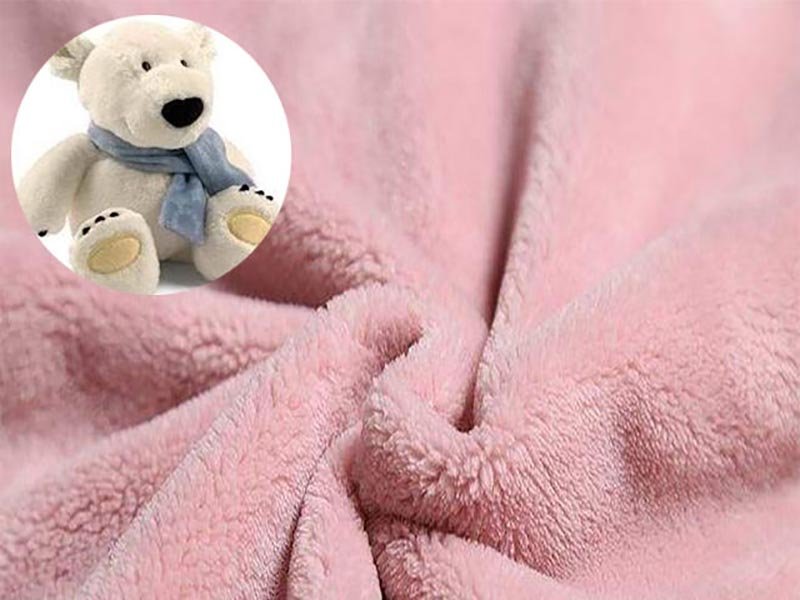
A fabric can look perfect on a swatch and still fail once it becomes a stuffed toy. Its color may change when the pile is brushed in another direction. A highly elastic material can stretch a carefully drawn face until the character looks unfamiliar. Long fur may hide embroidery, while an elegant velvet can reveal every small sewing irregularity. For a commercial plush project, material selection is not simply a question of softness. It influences appearance, pattern accuracy, production stability, safety preparation, decoration, packaging volume, retail positioning and final cost.
The right plush toy fabric is the material that delivers the intended appearance and hand feel while remaining suitable for pattern cutting, sewing, embroidery, stuffing, safety testing and repeat production. Minky supports soft premium products, short-pile fabrics preserve character details, faux fur creates realistic texture, and velboa or fleece can provide practical performance for simpler commercial designs.
One product team changed a character from short plush to long faux fur because the second fabric felt more luxurious. The first sample looked impressive from across the room, but the character’s small mouth, cheek lines and embroidered eyebrows nearly disappeared. The workmanship was not the problem. The material and the design were working against each other. The following guide explains how to prevent that mismatch before hundreds or thousands of units enter production.
What Fabrics Are Used for Plush Toys?

Plush toys commonly use minky, velboa, short-pile plush, faux fur, fleece, sherpa, velvet, cotton blends and recycled polyester fabrics. The right material depends on pile length, density, stretch, backing strength, decoration method, target age, cleaning expectations and production volume – not simply how soft the swatch feels.
A fabric name is only the beginning of a specification. Two mills may both describe a material as minky, yet one version may have a dense low-sheen surface and stable backing while another is lighter, shinier and highly elastic. The two fabrics will not produce the same head shape, embroidery quality or bulk consistency. Commercial selection therefore needs a physical swatch, measurable specifications and a representative stuffed sample.
Fiber composition also tells only part of the story. Polyester is common because it supports broad color ranges, practical maintenance and many pile constructions. However, knitting density, brushing, pile anchoring, backing weight and finishing treatments can change the fabric more than the fiber name itself. A dense polyester short plush can be more stable than a light cotton blend, while a fine recycled-polyester minky may feel almost identical to a conventional version.
| Fabric | Common Specification | Main Value | Typical Use | Key Risk |
|---|---|---|---|---|
| Minky | 180-350 gsm; 1-5 mm pile | Smooth, soft hand feel | Baby plush, premium characters, comfort toys | Uneven stretch; embroidery distortion |
| Velboa | 180-300 gsm; 0.5-2 mm pile | Clear shape; practical sewing | Mascots, printed animals, promotions | Backing exposure on curves |
| Short-pile plush | 200-400 gsm; 1-5 mm pile | Strong detail visibility | Characters, keychains, mini collectibles | Pile-direction mismatch |
| Faux fur | 300-700 gsm; 10-80 mm pile | Realistic texture and visual volume | Bears, wildlife, pet replicas, fantasy creatures | Shedding, cutting loss, hidden details |
| Fleece | 180-320 gsm; brushed surface | Soft, simple and versatile | Educational toys, simple animals, clothing | Pilling; limited shape definition |
| Sherpa | 250-450 gsm; curled surface | Warm, comforting appearance | Pillows, seasonal products, body panels | Small details disappear in texture |
| Velvet | 180-350 gsm; low directional pile | Refined decorative finish | Gift plush, clothing and pillows | Pressure marks; directional shading |
| RPET plush | Varies by construction | Supports verified recycled-material programs | Corporate and sustainability-led collections | Traceability and claim documentation |
Common Fabric Families
Minky is widely used when touch is a major selling point. Its fine pile creates a smooth surface without the visual bulk of long fur, making it effective for baby plush, rounded characters and premium gift collections. Because minky is knitted, stretch must be checked in both directions. Excessive widthwise stretch can change eye spacing, head width and facial expression after stuffing.
Velboa has a shorter, more compact pile and usually gives clearer panel edges. It can be easier to control during cutting and sewing, which is useful for mascots, printed animals and designs with several color sections. Light grades may reveal the backing on rounded areas; denser grades give better coverage and a more substantial hand feel.
Short-pile plush is a broad category rather than one fixed specification. It is often selected for character plush, blind-box products and plush keychains because the surface keeps embroidery and small color divisions visible. Faux fur sits at the other end of the range. Its longer fibers create realism and volume, but they can hide seams and small decorations unless pile length is matched to product scale.
Surface and Backing
The visible pile controls softness, sheen, apparent color and visual volume. The backing controls stretch, cutting stability, seam support and embroidery behavior. A fabric can feel excellent on the surface yet perform poorly if its backing is weak, loosely knitted or unable to recover after stretching.
A practical check is to stretch the swatch gently along its length and width, observe whether the base becomes visible, then measure whether it returns to its original dimensions. Permanent widening can produce inconsistent faces and bodies in bulk production. A backing that is too rigid may control dimensions well but make small curved parts difficult to turn after sewing.
Pile direction should be marked during pattern development. The same roll can look darker when brushed one way and lighter when brushed the other. When neighboring panels are cut in opposite directions, the finished toy can appear to contain two dye lots even though every panel came from the same fabric roll.
Decoration Compatibility
Material selection should be made together with the embroidery, printing and applique plan. Short-pile materials normally give embroidery a cleaner surface because the stitches remain visible. Long faux fur may require pile trimming, a temporary embroidery topping or a separate short-pile face panel.
Dense embroidery can stiffen flexible fabric. On a small character, heavily filled eyes may restrict local stretch while the surrounding face continues to expand during stuffing. That imbalance can pull the panel inward and alter the expression. The test should use the actual fabric, thread, stabilizer and stitch density intended for production.
Printing generally works best on smooth, low-pile surfaces. Fine lines can break visually on long or directional pile. Printed markings must also be aligned with the sewing pattern; a feature that appears correctly placed on a flat panel may shift toward a seam when the fabric becomes a three-dimensional head or body.
Sustainable Material Options
Recycled polyester plush can be produced in short-pile, minky-style and longer-pile constructions. Its appearance may closely resemble conventional polyester, but purchasing teams should also consider traceability, certified scope, available colors, dye minimums and supporting transaction documents.
Cotton and cotton-blend fabrics can support nursery, lifestyle and decorative concepts that need a matte, natural surface. They do not automatically deliver the same pile softness, color stability or dimensional recovery as polyester plush. Shrinkage and wrinkle behavior should be evaluated under the proposed cleaning conditions.
The most responsible material is not always the one with the strongest marketing label. A fabric that creates excessive cutting waste, fails durability checks or cannot be reproduced for repeat orders may increase the project’s overall resource use. Traceability, production yield, service life and repair or replacement risk should be considered together.
Which Fabric Fits Each Plush Toy Type?

Baby plush usually benefits from soft, controlled-pile fabrics; character and mascot plush need clear shape and embroidery; realistic animals often use faux fur or mixed pile lengths; small products require compact materials; and plush pillows need softness with strong compression recovery. Product scale, use and retail positioning should guide the final choice.
The same fabric can perform well in one product and poorly in another. Minky may give a 25 cm comfort character a premium touch, yet its stretch can make a narrow 8 cm keychain difficult to control. Long faux fur may create an impressive 50 cm wildlife toy but overwhelm the face and paws of a small collectible.
Interaction matters as much as appearance. A display collectible is mainly judged by silhouette, color and design accuracy. A baby toy may be hugged, pulled, rubbed, washed and held close to the face. A theme-park mascot may be handled repeatedly. A plush pillow may be compressed for weeks during shipping and then expected to recover quickly after opening.
| Product Type | Common Size | Material Direction | Selection Value | Main Sample Check |
|---|---|---|---|---|
| Plush keychain | 6-15 cm | Dense short plush, velboa, fine minky | Keeps small details readable | Turning narrow parts; embroidery stiffness |
| Blind-box plush | 8-20 cm | Short plush, minky, velboa | Supports consistent multi-SKU production | Size tolerance; facial consistency |
| Character plush | 15-40 cm | Short plush, minky, mixed materials | Preserves expression and proportions | Stretch after stuffing |
| Baby plush | 15-35 cm | Soft minky, fleece, selected cotton blends | Gentle touch and simple surface | Shedding, seams, care performance |
| Mascot plush | 15-50 cm | Velboa, short plush, minky | Clear logos and brand colors | Color matching; logo visibility |
| Realistic animal | 20-60 cm | Faux fur, printed plush, mixed pile lengths | Reproduces coat depth and anatomy | Pile direction; seam grooming |
| Plush pillow | 30-100 cm | Minky, sherpa, coral fleece, velvet | Comfort and broad-area softness | Compression and shape recovery |
| Weighted plush | 20-50 cm | Stable short plush, minky, reinforced zones | Supports structured filling areas | Seam loading; internal compartment security |
Match Fabric to Product Use
Baby plush often benefits from a soft low- or medium-pile material that supports secure seams and embroidered features. The fabric should be assessed together with the thread, filling, labels and intended cleaning method. A very fluffy surface can feel gentle yet release more loose fibers or hide a weak seam.
Character plush depends on recognition. A small change in head width, eye position or mouth angle can make an approved character look unfamiliar. Controlled short pile, velboa and selected minky fabrics are common because they preserve boundaries and embroidery placement. Stretch and filling pressure must be evaluated on the complete head sample.
Realistic animals rely more heavily on pile length, direction, density and color variation. A convincing product may use one fur for the main body, a shorter material around the eyes and muzzle, and printed or tipped fibers for markings. Realism comes from matching the coat structure to the animal’s anatomy, not from selecting the longest available fur.
Scale and Detail
Product scale changes the visual meaning of pile height. A 5 mm pile can look controlled on a 40 cm plush but cover the mouth and shorten the legs of a 10 cm collectible. Small products need materials that preserve negative space between the eyes, mouth, clothing details and color panels.
Thickness must also be proportional to size. Several seam allowances meet at ears, paws and narrow limbs. Excessive backing thickness can produce hard intersections or make parts impossible to turn cleanly. A fine, dense backing is often more useful for a miniature product than a thick fabric that feels impressive only as a swatch.
Embroidery needs its own scale review. A detailed eye file developed for a 30 cm character should not simply be reduced for an 8 cm keychain. Fine lines may merge, dense stitches may make the face rigid and the needle may damage lightweight backing. Small products usually need simplified artwork and a new embroidery test.
Mixed-Material Design
Many commercial plush products use more than one surface. A fantasy creature may have a short-pile face, long-fur ears, velvet wings and felt details. A mascot may use plush for the body, woven fabric for a uniform and satin for an accessory. Mixed materials create visual hierarchy and allow each zone to perform a specific function.
The materials must still behave as one product. Stretch differences can pull seams out of alignment. Thick plush joined to thin clothing fabric can create rippling. Dark velvet may transfer fibers onto a pale body panel during compressed shipping. Sample review should include seam compatibility, color transfer, shrinkage and surface balance.
Every additional material also creates another supplier code, color lot, minimum order quantity and incoming inspection point. Decorative variety should add clear customer value. When a third fabric is almost invisible in the finished toy, simplifying the construction may reduce risk without changing the retail impression.
Commercial and Delivery Fit
Material selection affects cutting yield, sewing time, carton volume, product photography and repeat-order reliability. Directional faux fur limits how freely pattern pieces can be rotated, increasing waste. Long fibers may also require slower sewing, seam grooming and final cleaning.
A highly compressible plush can reduce shipping volume only when the fabric and filling recover after the carton is opened. Sherpa and long fur may retain pressure lines after tight packing. A representative packing trial should use the proposed bag, carton, compression level and storage period before the final shipping plan is approved.
Retail positioning matters as well. A premium gift collection may justify denser materials, multiple pile lengths and custom color development. A large promotional campaign may need a stable stock fabric that controls cost and lead time. The correct choice is the one that protects the product promise and the delivery plan together.
How Do Fabric Properties Affect the Final Toy?

Pile height, GSM, thickness, stretch, backing strength, colorfastness, shedding and compression recovery determine how a plush toy looks, feels and survives production. These properties influence pattern dimensions, embroidery quality, seam stability, packing volume and repeat-order consistency. They should be judged together on a complete stuffed sample, not as isolated numbers.
A technical number is useful only when it is connected to a product decision. GSM describes fabric weight per square meter, but it does not automatically describe softness or quality. Two fabrics with equal GSM may have different pile densities, backings and recovery. One may feel dense and flexible; the other may feel heavy but rigid.
The product team should therefore evaluate a group of properties rather than rely on one headline figure. Pile height influences visible dimensions. Stretch changes pattern expansion. Backing strength supports seams and embroidery. Colorfastness affects adjacent pale panels. Compression recovery determines whether the toy looks presentable after shipping.
| Property | Screening Method | Project Control | Effect on Toy | Warning Sign |
|---|---|---|---|---|
| GSM | Weigh a measured fabric area | Supplier specification plus incoming check | Density, coverage, drape and cost | Roll feels lighter than approved sample |
| Pile height | Measure backing to fiber tip | Defined range or sealed swatch | Softness, realism and detail visibility | Eyes or seams disappear after brushing |
| Thickness | Measure compressed and relaxed | Approved physical standard | Seam bulk and structural support | Small parts cannot turn cleanly |
| Stretch | Measure extension in both directions | Directional percentage or approved limit | Shape, size and decoration position | Face widens after filling |
| Recovery | Stretch/compress, then remeasure | Project-defined return tolerance | Dimensional stability | Fabric remains enlarged or flattened |
| Colorfastness | Dry/wet rubbing; lab testing as needed | Target-market test plan | Resistance to transfer and fading | Dark color stains pale fabric |
| Shedding | Brush, rub and clean sample | Visual limit plus applicable testing | Cleanliness and perceived quality | Fibers continue after cleaning |
| Backing strength | Inspect seams and embroidered panels | Sample and production review | Seam security and shape retention | Base opens around stitches |
| Color consistency | Compare rolls in fixed orientation | Master swatch and lot record | Collection-level consistency | Panels differ within one unit |
| Compression recovery | Pack, store, unpack and observe | Agreed recovery time | Post-shipping presentation | Creases remain or toy stays flat |
Pile, GSM and Thickness
Higher GSM often increases density, coverage and cost, but heavier is not automatically better. A thick fabric can make a miniature toy difficult to sew and turn. A lighter fabric can work well when its backing is stable and the pile still covers rounded areas after stuffing.
Pile height adds visual volume beyond the sewn pattern. Long fibers make the head and body look larger and soften the edge between panels. A pattern tested in short plush may appear wider and less defined in faux fur even when the cut dimensions are identical. The engineering team may need to narrow panels or enlarge small features.
Thickness influences seam bulk. Around ears, tails and fingers, several folded layers may meet in a narrow space. When the material is too thick, the part can become hard, asymmetrical or impossible to turn. For large plush, greater thickness may be manageable but can increase material usage and carton volume.
Stretch and Recovery
Stretch helps rounded panels form smoothly, but uncontrolled stretch creates dimensional variation. Knitted plush fabrics often extend more in one direction. Cutting orientation must remain consistent from sampling through bulk production, and pattern documents should identify both main stretch and pile direction.
A face panel cut in the wrong direction may become wider after stuffing while neighboring side panels remain stable. Embroidery can locally restrict stretch, creating another imbalance. A complete sample must therefore include the actual embroidery, applique, filling type and filling pressure planned for production.
Recovery is equally important. Some fabrics return immediately after extension; others remain enlarged. Permanent stretch can produce loose bodies, wrinkles and inconsistent measurements. Compression recovery matters for shipping because a soft toy that does not recover after tight packing may reach the customer looking flattened even though its sewing quality is acceptable.
Color and Decoration
Pile fabrics change color visually when the fibers move. Light reflects differently from fibers brushed toward the viewer and those brushed away. Color approval should therefore include a marked pile direction, consistent lighting and comparison beside the other materials used in the product.
Embroidery changes fabric behavior. Dense stitch areas compress pile, stabilize stretch and may pull a panel inward. A logo that looks clean on a flat woven sample can pucker on soft plush. The approval test should use the intended thread, backing, stitch count and surface treatment.
Printing also interacts with texture. Fine graphics usually reproduce more clearly on smooth low-pile materials. Long pile breaks lines when fibers move, while curved sewn panels can shift printed features. Printed faces and markings should be reviewed after assembly, not only as flat strike-offs.
Cost and Bulk Consistency
The purchase price per meter is only one part of cost. Usable width, cutting direction, defect rate, minimum dye quantity, sewing speed, grooming labor and waste all affect the finished unit price. A cheaper fabric with high defect loss or slow sewing can produce a higher total product cost.
Custom dyeing can improve brand-color accuracy but may introduce material minimums, longer preparation time and lot variation. For a multi-SKU collection, sharing one color across several characters can make a custom lot more practical. For a small single design, a close stock color may reduce schedule risk.
Repeat production depends on clear records. ‘Soft pink minky’ is not a specification. The material file should identify supplier, fabric code, construction, composition, color, width, GSM, pile, stretch direction and approved physical swatch. Incoming rolls should be checked against that record before any cutting or embroidery begins.
Are Plush Toy Fabrics Safe and Compliant?

Plush fabric safety cannot be confirmed by softness, appearance or a general supplier certificate alone. Compliance depends on the finished toy, target market, intended age, dyes, prints, filling, accessories and construction. Material reports support the process, but applicable product testing, technical records and production controls are still required.
Compliance planning should begin before final sampling. The target country, intended age and product function influence which requirements apply, what warnings or labels may be needed and how the toy should be constructed. A simple adult collectible and a cuddly toy for a young child can use the same base fabric but follow different evaluation paths.
Material certificates are useful when they match the exact composition, color, finish and scope of the project. They are not a substitute for finished-product assessment. The completed toy may also contain embroidery thread, filling, labels, printed coatings, plastic parts, sound modules or battery compartments that create additional requirements.
| Compliance Question | Evidence or Action | Why It Matters | Common Mistake |
|---|---|---|---|
| Where will the toy be sold? | Confirm all target countries or regions | Determines applicable legal framework | Testing only for the factory home market |
| What is the intended age? | Document age grading and design rationale | Changes physical, chemical and labeling risks | No age review before sampling |
| Is the fabric dyed or printed? | Identify dyes, coatings and print process | Surface treatments may need separate assessment | Using a report for untreated base fabric |
| Are small parts attached? | Review eyes, noses, buttons and accessories | Detachment can create hazards | Approving parts only by appearance |
| Is the toy washable? | Define care method and verify performance | Washing affects color, seams and filling | Printing care claims without verification |
| Is recycled content claimed? | Check certificate scope and traceability | Claims require supporting evidence | Assuming yarn certification covers the toy |
| Is a supplier report available? | Verify material, color, date and test scope | Reports help only when they match | Accepting any polyester report |
| Is finished-toy testing planned? | Obtain a product-specific test plan | Components interact in final construction | Testing fabric alone |
| Are production records retained? | Keep BOM, swatches, reports and lot records | Supports certification and repeat orders | Losing traceability after shipment |
Market and Age Group
The destination market should be identified before fabric, print and accessories are locked. Common frameworks include ASTM F963 and CPSIA-related requirements in the United States, EN 71-related testing and European toy-safety requirements in the European market, and separate requirements in the United Kingdom, Canada, Australia, Japan, Korea and other destinations.
A factory should not promise that one generic report covers every market or every design. A report for a simple fabric animal may not cover an interactive plush containing electronics. Before quotation and sampling, the product team should provide the target markets, age grading and intended functions so the material and construction can be reviewed in the correct compliance context.
Age group influences more than labels. Products intended for young children may require particular attention to detachable parts, accessible fibers, seam security and foreseeable use. Adult collectibles may still be treated as toys depending on presentation and market, so age positioning should be based on the actual product and sales context rather than marketing preference alone.
Chemical and Physical Risks
Fabric, dyes, prints, coatings and finishes may introduce chemical considerations. A report for white base cloth may not cover a dark custom color, metallic print or added surface treatment. The tested item, method, date and applicant should be checked before a document is accepted as evidence.
Physical risks can also originate in the textile system. Weak backing may open around a seam and expose filling. Poor pile anchoring may lead to continued shedding. Dense embroidery can tear a lightweight panel around its perimeter. These issues are evaluated more effectively on the finished construction than on a loose swatch.
Color transfer deserves special attention when dark and pale panels touch. A black material can appear stable under dry rubbing yet stain a white face under moisture and pressure. Pre-production wet and dry checks can identify obvious risk before formal laboratory testing, although they do not replace the test plan required for the target market.
Documentation and Testing
A strong technical file connects the product specification, bill of materials, supplier records, approved swatches, color-lot information, embroidery files, label artwork, age grading, test reports, approved sample and inspection records. This evidence chain helps show that the tested configuration is the same configuration used for production.
Supplier reports should not be stretched beyond their scope. A test on undyed polyester does not automatically cover printed coating or another fabric color. When a separate processor adds a finish, the processed material may require additional review. Samples submitted for testing should represent the intended production materials and accessories.
Testing is not a replacement for production control. A compliant laboratory sample does not prevent a later material substitution, incorrect seam density or unapproved accessory. Incoming inspection, in-line checks and comparison with the approved sample remain necessary after testing has been completed.
Baby and Recycled Materials
Baby plush requires particular care because the toy may be mouthed, pulled, slept with and held close to the face. Low- or controlled-pile materials are often practical, but no textile is suitable simply because it is described as baby soft. The full construction must be reviewed for fiber release, seams, decoration, labels and cleaning behavior.
Washability claims should be confirmed on the completed product. Fabric, thread, filling and internal structures can respond differently to washing. Shrinkage, dye transfer, filling migration and shape loss may appear only after assembly. Care instructions should reflect tested or otherwise substantiated performance.
Recycled polyester and organic-content materials still require the same toy-safety assessment as conventional fabrics. Environmental certification verifies a specific material or chain-of-custody claim; it does not replace product safety testing. Packaging statements should match the actual certified scope and available traceability evidence.
How Should Brands Approve Fabric for Production?

Fabric approval should cover the product brief, physical swatch, decoration test, complete prototype, color standard, bulk specification and incoming inspection method. The approved sample must represent the intended fabric, filling, embroidery and packaging. Clear records allow the factory to reproduce the same appearance and performance across production lots and repeat orders.
Fabric approval is a sequence, not a single signature on a swatch. The project begins with a clear product brief, moves through material comparison and decoration trials, and becomes meaningful only when the chosen fabric has been tested in a complete prototype. After approval, the specification must be locked and the bulk material checked before cutting.
Several departments may need to participate. Designers focus on appearance and color. Engineers evaluate structure, pattern and decoration. Procurement checks availability, minimums and lead time. Quality teams review specifications, reports and inspection methods. Marketing may need to confirm how the surface photographs under studio and retail lighting.
| Approval Stage | Information or Evidence | Practical Acceptance Point | Risk Controlled |
|---|---|---|---|
| Product brief | Artwork, size, quantity, market, age, use | Requirements documented before sourcing | Wrong material direction |
| Initial swatches | Several coded physical options | Hand feel, color, pile and backing compared | Selection based only on photos |
| Technical screening | GSM, pile, width, stretch, composition | Suitable for pattern, decoration and supply | Fabric looks right but sews poorly |
| Decoration trial | Actual embroidery, print or applique | No major puckering, burial or cracking | Unreadable face or logo |
| Complete prototype | Intended material, filling and accessories | Shape, proportion and surface approved | Swatch approval without product proof |
| Color approval | Stock swatch, lab dip or lot sample | Compared in fixed direction and lighting | Brand-color mismatch |
| Bulk specification | Supplier code, construction, sealed swatch | Material identity fully traceable | Uncontrolled substitution |
| Incoming inspection | Rolls checked before cutting | Shade, defects, width and quantity accepted | Problem found after production |
| In-line review | Cut, embroidered, sewn and filled units | Compared with approved reference | Sample-to-bulk drift |
| Final inspection | Appearance, measurements, labels, packaging | Shipment meets agreed requirements | Nonconforming goods dispatched |
Build the Product Brief
A useful recommendation begins with more than artwork. The development team needs the intended size, quantity, age group, target market, expected retail position, preferred hand feel, cleaning requirements, packaging method and launch date. These details narrow the material field before sampling begins.
Descriptions should be specific. ‘Soft fabric’ could mean smooth minky, warm sherpa, dense short plush or long faux fur. A phrase such as ‘dense short pile with low sheen and minimal stretch’ gives the engineer a clearer target. Reference products and close-up photographs help communicate characteristics without requesting unauthorized copying.
Quantity and schedule matter because custom-dyed fabrics and special constructions may have mill minimums or longer preparation times. A visually ideal material can still be commercially unsuitable when it cannot be secured in time for a launch. The brief should therefore connect appearance, volume and delivery requirements from the start.
Swatches and Samples
Physical swatches should be compared under the same lighting and orientation. Brush the pile in both directions, stretch the fabric, examine whether the backing becomes visible and fold it to understand seam bulk. Dark colors can be rubbed against a light cloth to identify obvious transfer risk.
Every swatch should be labeled with supplier, material code, color, composition and available specification. Unlabeled samples become difficult to trace several weeks later, especially when a team has compared many similar whites, beiges or pinks.
A decoration trial should come before the final prototype when the product includes dense embroidery, printing or large applique. The complete prototype remains decisive because it shows how the fabric behaves after cutting, sewing, turning, filling and shaping. Early structural samples may use substitutes, but final approval should use the intended production specification.
Lock the Bulk Specification
After the sample is approved, the material should be recorded as a controlled specification rather than a verbal description. The bill of materials should include supplier or nominated source, internal code, composition, color, usable width, GSM, pile characteristics, stretch direction, backing and relevant certification information.
Pile and stretch directions should be marked on pattern and cutting documents. For directional materials, operators should not rotate pieces simply to improve yield. A small material saving can create visible shade mismatches across the face or body.
Custom colors may require approval in stages. A lab dip establishes the intended shade; a later production-lot sample confirms how the color appears on the full fabric construction. Material reservation, dye-lot quantity, defect allowance and replacement availability should be confirmed before the production schedule is committed.
Inspect and Approve Bulk Material
Incoming fabric should be checked before cutting for roll count, usable width, color, pile, surface defects, backing condition, stains, holes, lines and print alignment. Shade comparison must use the same pile direction and lighting as the master swatch. Suspect rolls can then be separated rather than mixed within one shipment.
Defects should be mapped so the cutting team can avoid affected areas. The order quantity needs enough allowance for directional cutting, test pieces and unusable sections. Material shortage discovered after embroidery begins can interrupt production or force a different dye lot.
In-line inspection should compare units with the approved sample. Quality teams can verify cutting direction, embroidery visibility, seam appearance, filling pressure and dimensional consistency. Final inspection should also include labels and packaging because tight bags, vacuum packing or incorrect inserts can flatten pile and change presentation after successful sewing.
Turn the Right Fabric Into a Production-Ready Plush Product
Fabric selection is not about choosing the softest swatch. It is about finding the material that protects the design, performs correctly during production, supports the intended safety plan and remains available in consistent quality for the required volume. Delsney supports brands, IP owners, retailers and product teams with material evaluation, engineering samples, bulk production, quality inspection, custom labels and packaging, and global export delivery.
Send your artwork or reference sample, target size, quantity, destination market, age group, preferred surface, decoration details, packaging plan and launch deadline. The standard MOQ is 500 pieces. Standard samples usually take 5-7 days, while complex structures commonly require 7-15 days.