Skip to content
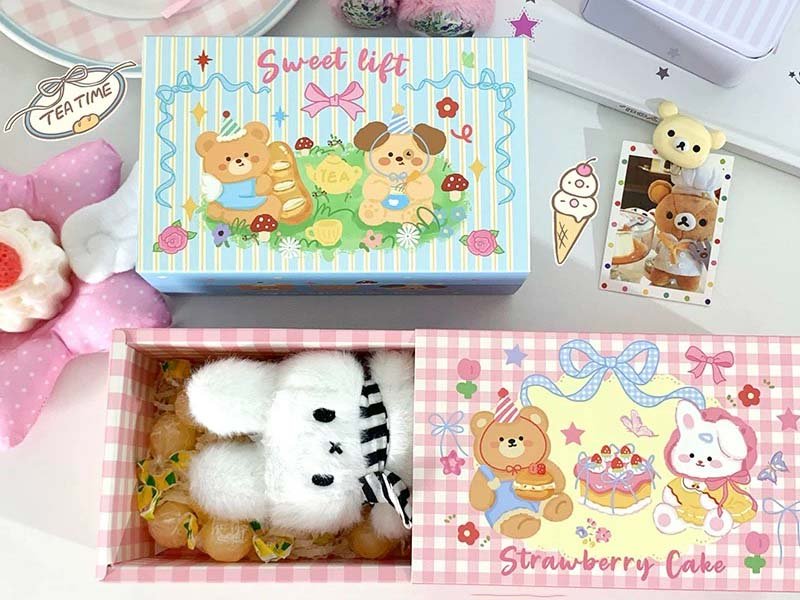
Packaging decisions often begin with a visual question: should the plush toy sit inside a colorful retail box or travel in a simple protective bag? The real decision reaches much further. Packaging changes the unit cost, carton quantity, warehouse space, freight volume, production schedule, retail presentation, labeling plan, and condition of the product after a long shipment.
A printed box may strengthen shelf appeal and create a more complete gift experience, yet an oversized structure can reduce carton loading by half. Bulk packing may save space and materials, yet weak unit protection can lead to dirty fabric, bent accessories, crushed faces, or extra repacking work after delivery.
Custom printed boxes are usually the stronger choice for retail shelves, gift collections, licensed characters, premium sets, and products requiring clear visual presentation. Bulk packaging is usually more suitable for wholesale programs, promotional orders, online inventory, distributor repacking, and projects focused on efficient carton loading. Final selection should consider product shape, sales channel, SKU count, MOQ, labeling, protection, and landed cost.
A packaging decision should never rely on appearance alone. A 25 cm plush animal can look small on a desk but occupy surprising volume once its ears, tail, clothing, and protective clearance are included. One project may begin with a beautiful window-box concept and end with twice as many export cartons. Another may begin with plain bags and later require costly repacking for retail stores. The best result comes from planning the plush toy, individual package, master carton, and shipping method together.
What Are the Main Packaging Options?

Custom printed boxes give each plush toy an individual retail presentation, while bulk packaging focuses on basic protection and efficient transport without a full retail box. Common choices include clear bags, printed bags, header cards, folding cartons, window boxes, corrugated boxes, rigid gift boxes, sleeves, trays, compressed bags, and shared display cartons. Many projects also combine simple packing with selected branded components.
What Is a Custom Printed Box?
A custom printed box is developed around the actual plush toy rather than selected from a generic box size. The structure must account for the natural posture, widest body area, sitting height, ear position, tail length, clothing, accessories, and any parts vulnerable to pressure.
Common printed box structures include:
- Folding paperboard cartons for small and medium plush toys
- Window boxes for retail display and character visibility
- Corrugated color boxes for larger or heavier products
- Drawer boxes for gift sets and collector editions
- Lid-and-base boxes for premium presentation
- Sleeve-and-tray structures for product reveals
- Open-front display boxes for shelf or countertop use
- Multi-piece boxes for plush toys with accessories
A printed box performs several jobs at the same time. It presents the character, protects the product, carries product information, supports shelf display, and creates a defined opening experience.
Box dimensions require careful control. Too much space allows the toy to rotate, fall forward, or hide its face. Too little space compresses the pile, bends ears, wrinkles clothing, or pushes the nose against the window.
The following measurement points should be confirmed before structural design:
| Measurement | Why It Matters |
|---|---|
| Natural standing or sitting height | Sets the main internal box height |
| Widest body point | Controls box width and side clearance |
| Front-to-back depth | Prevents facial pressure and rear compression |
| Ear, horn, or antenna height | Protects long upper features |
| Tail and wing extension | Prevents bending and trapping |
| Accessory projection | Determines insert and clearance needs |
| Weight distribution | Affects base strength and product stability |
| Safe compression range | Shows how tightly the product may fit |
Printed packaging artwork can include logos, character names, product stories, material information, care instructions, age grading, barcodes, warnings, country of origin, importer information, recycling marks, and campaign graphics.
A box should frame the plush toy rather than compete with it. The character’s face, silhouette, and key design features need clear visibility. Large blocks of text, small windows, or excessive decorative effects can weaken the product presentation instead of improving it.
What Is Bulk Packaging?
Bulk packaging usually means the plush toy does not receive an individual printed retail box. Each unit may still have a protective bag, tag, label, tissue wrap, or simple insert before several units are packed into an inner carton or master carton.
Common bulk packing methods include:
- One plush toy per clear PE bag
- One plush toy per OPP bag
- One plush toy per recycled-content bag
- One plush toy per printed plastic bag
- Several units inside a larger protective bag
- Individual tissue wrapping inside a master carton
- Lightly compressed bags
- Vacuum-compressed bags
- Inner cartons packed inside a master carton
- Direct master-carton packing with dividers
Clear individual bags are widely used because they protect the fabric from dust, moisture, fingerprints, and warehouse handling while adding little volume. A hang tag, woven label, care label, barcode sticker, or printed card can carry product and brand information.
Bulk packing still requires a written specification. Important details include:
- Bag material and thickness
- Bag dimensions
- Seal type
- Air-hole requirement
- Warning text
- Unit orientation
- Compression level
- Units per inner pack
- Units per master carton
- Carton board strength
- Moisture protection
- Carton markings
- SKU separation method
Weak planning can create problems even with a simple bag. An undersized bag may press the ears and face. An oversized bag may trap excess air and reduce carton loading. A loose seal may expose the fabric to dust. A printed warning placed too close to the edge may become unreadable after sealing.
Bulk packaging is especially suitable when products will be unpacked before use, placed into claw machines, distributed as promotional gifts, repacked by a distributor, or fulfilled through an online warehouse.
Which Packaging Formats Are Common?
Packaging format should match the sales environment, product value, handling process, and protection requirement. A low-cost plush keychain does not need the same structure as a weighted sensory toy or a licensed gift set.
| Packaging Format | Suitable Projects | Main Advantages | Main Concerns |
|---|---|---|---|
| Clear PE bag | Wholesale, online inventory, promotions | Low cost, low volume, dust protection | Limited presentation and crush protection |
| Clear OPP bag | Small plush, keychains, visual display | High clarity and neat appearance | Less flexible for bulky products |
| Printed bag | Online sales and promotional ranges | Adds graphics without a box | Limited structural protection |
| Header card with bag | Keychains and small hanging items | Easy peg display and simple branding | Limited information area |
| Hang tag with bag | Standard plush collections | Flexible across several SKUs | Weak shelf blocking compared with a box |
| Folding color box | Standard retail and gifting | Good printing area and clean presentation | Product may not be visible |
| Window box | Character retail and licensed ranges | Strong product visibility | Higher volume and window damage risk |
| Corrugated printed box | Large, weighted, or structured plush | Better stacking and impact resistance | More material and storage space |
| Rigid gift box | Premium sets and collector products | High presentation value | Higher cost and freight volume |
| Sleeve and tray | Gift sets and launches | Strong opening experience | More parts and assembly work |
| Compressed bag | Large soft plush | Better carton utilization | Recovery must be tested |
| Shared display carton | Retail collections and counter displays | Ships and displays several units together | Retailer approval may be required |
Packaging value should be judged by function rather than appearance alone.
A clear bag may be the best solution for a large promotional order because every printed box would be removed before distribution. A window box may be essential for a collectible character because shoppers need to see the face, fabric, and accessories without opening the package. A corrugated box may be more suitable for a weighted plush because the package must carry extra mass and resist stacking pressure.
Several formats can be tested during sample development. A physical mock-up often reveals problems not visible in a dieline or 3D rendering, including:
- The toy leaning away from the window
- Ears blocking the printed logo
- A tail preventing the box from closing
- Internal ties creating marks on the fabric
- The product appearing too small inside the package
- Excess empty space increasing freight volume
- Poor balance when the box stands on a shelf
- A barcode placed across a fold or curved surface
How Do Hybrid Packaging Options Work?
Hybrid packaging combines efficient packing with selected retail or branding elements. It is useful when a full printed box creates too much cost, volume, or SKU complexity.
Common hybrid solutions include:
- Clear bag plus printed hang tag
- Plain kraft box plus full-color sleeve
- Standard white box plus character sticker
- Shared box structure plus SKU-specific belly band
- Clear bag plus printed header card
- Plain corrugated box plus branded label
- Tissue wrap plus printed paper band
- Bulk-packed toy plus separate gift box
- Retail boxes for one channel and bags for another
- Shared packaging artwork with different barcode labels
Multi-SKU collections often gain the greatest benefit. Consider a collection with six plush characters and 600 units per character. Six separate printed boxes may create six printing setups, six artwork approvals, six color checks, and six packaging inventories.
A shared structure can reduce complexity:
| Packaging Plan | Printed Versions | SKU Identification | Management Level |
|---|---|---|---|
| Separate box for every character | 6 | Printed directly on each box | High |
| Shared box with different sleeves | 1 box + 6 sleeves | Sleeve artwork | Medium |
| Shared box with character stickers | 1 | Sticker and barcode | Low |
| Clear bag with different hang tags | 1 bag | Hang tag | Low |
| One retail box for all characters | 1 | Internal card or label | Lowest |
Shared packaging does not mean every product must look identical. Character color, name, illustration, barcode, and story can appear on a smaller interchangeable component.
Hybrid planning also supports channel separation. Retail stores may receive window-box units, while online warehouses receive bagged units from the same plush production run. The factory must separate packaging materials, carton counts, labels, and shipping marks carefully, but the product itself can remain consistent.
Delsney can review the number of SKUs, quantity per design, retail requirements, packaging minimums, and destination channels before recommending a shared or separate packaging structure.
Which Packaging Option Costs More?

Custom printed boxes usually require a higher investment because they involve structural design, paperboard, printing, cutting, finishing, inserts, assembly, and greater shipping volume. Bulk packaging normally lowers the unit package cost and improves carton loading. A reliable comparison must include packaging setup, SKU quantity, packing labor, master cartons, freight volume, warehouse space, and repacking work.
How Is Printed Box Cost Calculated?
The cost of a printed box comes from several connected components. Comparing only the paper box unit price can hide a large part of the final expense.
Major cost elements include:
- Structural design and mock-up preparation
- Cutting die or tooling
- Paperboard or corrugated material
- Printing method
- Color quantity
- Pantone color matching
- Lamination or varnish
- Foil stamping
- Embossing or debossing
- Transparent window film
- Window cutting and gluing
- Internal insert
- Product ties or elastic loops
- Folding and assembly labor
- Unit labeling
- Carton loading changes
- Additional master cartons
- Increased freight volume
Box dimensions have a strong effect on material use. A small increase in height, width, or depth raises the surface area of every box and may change how many box blanks fit on one printed sheet.
A practical comparison can use a cost index rather than an unverified price:
| Packaging Element | Relative Cost Index |
|---|---|
| Plain clear bag | 1.0 |
| Clear bag with printed sticker | 1.3–1.8 |
| Printed bag | 2.0–3.5 |
| Header card with bag | 2.5–4.0 |
| Plain folding carton | 4.0–6.0 |
| Full-color folding carton | 6.0–10.0 |
| Window box | 8.0–14.0 |
| Corrugated printed box | 9.0–16.0 |
| Rigid gift box | 18.0–35.0 |
The index shows relative complexity only. Final pricing depends on size, quantity, board grade, print coverage, finishing, insert design, and production location.
A box with a large window may use less printed board but require film, die cutting, gluing, and extra inspection. A rigid box may need hand assembly and occupy substantial storage space before packing. A simple folding carton often offers better cost control when premium rigid construction is unnecessary.
How Does MOQ Affect Packaging Cost?
Packaging MOQ can differ from the plush toy MOQ. A plush factory may accept a flexible order arrangement, while a packaging supplier may require a minimum quantity for a specific print method, material, finish, or structure.
Setup work is spread across the production quantity. Smaller runs carry more setup cost per unit.
For planning purposes, consider a six-character collection:
| Project Structure | Total Plush Quantity | Quantity per Character | Packaging Result |
|---|---|---|---|
| One shared box | 3,600 | 600 | One main print run |
| Six separate printed boxes | 3,600 | 600 | Six small print runs |
| Shared box with six stickers | 3,600 | 600 | One box run and six sticker runs |
| Shared box with six sleeves | 3,600 | 600 | One box run and six sleeve runs |
| Six printed bags | 3,600 | 600 | Six bag-printing versions |
Six separate boxes can create:
- Six dieline files
- Six artwork approvals
- Six barcode checks
- Six color-control records
- Six packaging inventories
- Six packing-line changeovers
- Higher risk of mixing boxes and characters
A shared box reduces setup work but requires careful visual planning. The packaging must still make each character easy to identify.
Over-ordering packaging also carries risk. Printed boxes can become unusable when a barcode changes, legal information is revised, a product size is adjusted, or a character design is discontinued. Spare quantity should cover normal production loss without creating excessive obsolete inventory.
Delsney can compare the quantity per SKU against available packaging structures and suggest where shared components can control minimums.
Do Inserts and Finishes Add Cost?
Inserts and decorative finishes should solve a clear presentation or protection problem. Every added part increases material, labor, approval work, and quality-control steps.
Internal supports may include:
- Folded paperboard platforms
- Back cards
- Neck supports
- Foot supports
- Molded pulp trays
- Plastic trays
- Elastic loops
- Paper ties
- Fabric ties
- Wire ties
- Accessory compartments
- Protective sleeves
An insert is useful when the plush toy cannot hold the required pose, includes several accessories, carries a heavy internal component, or must remain centered behind a window.
An insert may be unnecessary when the toy naturally fills the package and remains upright without support.
Decorative finishes include:
- Matte lamination
- Gloss lamination
- Soft-touch film
- Spot varnish
- Metallic foil
- Holographic foil
- Embossed logos
- Debossed patterns
- Textured paper
- Metallic ink
- Printed internal surfaces
Each finish creates a new inspection point. Foil can shift. Lamination can bubble. Varnish can appear uneven. Windows can scratch. Embossed areas can crack near folds. Dark colors can show rubbing more easily.
A cleaner design often performs better than a package loaded with processes. A clear character image, balanced color system, accurate logo placement, and well-sized window can create stronger shelf impact with fewer production risks.
How Does Packaging Affect Landed Cost?
Landed cost includes far more than the price of the individual package. A complete review should include:
- Plush toy production
- Individual packaging
- Packing labor
- Inner cartons
- Master cartons
- Local transport
- Export handling
- Freight
- Insurance
- Import charges
- Warehouse storage
- Fulfillment handling
- Retail repacking
- Damage replacement
- Packaging disposal
Plush toys are light but bulky, so freight charges often depend heavily on dimensional volume. A printed box may increase the volume per unit even when the box itself is inexpensive.
The following example uses planning dimensions only:
| Planning Item | Clear Bag | Window Box |
|---|---|---|
| Plush size | 25 cm | 25 cm |
| Approximate unit pack | 22 × 14 × 10 cm | 25 × 18 × 15 cm |
| Master-carton size | 60 × 50 × 45 cm | 54 × 50 × 45 cm |
| Units per carton | 40 | 18 |
| Carton volume | 0.135 m³ | 0.1215 m³ |
| Volume per unit | 0.0034 m³ | 0.0068 m³ |
| Cartons for 3,600 units | 90 | 200 |
| Total carton volume | 12.15 m³ | 24.30 m³ |
Under the example, the printed-box version requires 110 additional cartons and twice the shipping volume.
A small packaging change can produce a large logistics result. Reducing unused headroom, changing the toy angle, folding a soft tail inward, or using a slimmer insert may recover valuable carton capacity.
Freight is not the only consideration. A printed box may reduce repacking labor at a retail warehouse. It may lower direct handling of the plush toy and improve gift presentation. A bagged product may lower freight but require a separate mailer, carton, or gift package before reaching the final consumer.
A sound decision compares total project cost rather than choosing the lowest packaging unit price.
Before approving packaging, request the following figures:
- Finished unit-pack dimensions
- Units per master carton
- Master-carton dimensions
- Gross and net carton weight
- Number of cartons
- Total shipment volume
- Pallet quantity when required
- Estimated packing labor
- Estimated packaging waste
- Separate figures for every sales channel
Delsney can review the approved plush sample, packaging mock-up, SKU quantity, and shipping plan together. The goal is to keep the character presentation strong while preventing avoidable material use, carton waste, and freight expense.
How Does Packaging Affect Shipping?

Packaging changes carton quantity, dimensional weight, pallet use, container efficiency, warehouse space, and the condition of plush toys after transport. Printed boxes usually require more volume and stronger external protection. Bulk packing often improves carton loading but may place greater pressure on the toy. Shipping performance should be checked with physical samples, final packing materials, and confirmed carton arrangements.
How Do Box Dimensions Affect Carton Loading?
Carton loading depends on how many packed units fit along the carton length, width, and height. A small change in one box dimension can remove an entire row from every master carton.
Assume a retail box measures 24 × 18 × 15 cm. A master carton with an internal size of 55 × 50 × 46 cm may hold:
- 2 boxes along the 24 cm side
- 2 boxes along the 18 cm side
- 3 boxes along the 15 cm side
- 12 units in total
If the retail box width increases from 18 cm to 20 cm, the same carton may still hold two boxes across. If the width increases to 26 cm, only one box may fit across, cutting the carton quantity from 12 units to 6.
Carton planning should therefore begin while the packaging structure is still adjustable.
Important dimensions include:
- Internal box length, width, and height
- Finished external box dimensions
- Window frame thickness
- Insert thickness
- Closure tabs
- Product projection
- Safe clearance around ears and accessories
- Master-carton internal dimensions
- Corrugated wall thickness
- Packing direction
Soft toys do not always need equal clearance on every side. A flexible tail may fold safely behind the body, while a molded nose may require fixed front clearance. A long ear may sit diagonally, while a structured hat may need full vertical space.
Several box orientations should be tested:
| Packing Direction | Possible Benefit | Main Concern |
|---|---|---|
| Upright | Better retail-box protection | May waste vertical space |
| Flat | Better stacking stability | Window may carry weight |
| Sideways | May improve carton count | Product can shift inside the box |
| Alternating direction | Uses irregular shapes efficiently | Packing becomes slower |
| Head-to-foot arrangement | Reduces empty space | Requires clear work instructions |
A box can also be designed around a preferred carton module. For example, a factory may target 6, 8, 12, or 24 units per carton depending on product weight and handling limits.
A strong carton-loading plan balances three goals:
- Enough space to protect the retail package
- Minimal unused air
- A carton weight that workers can handle safely
Reducing a box by 10 mm may appear minor on a drawing, but across several thousand units it can reduce cartons, warehouse positions, and freight volume.
Can Compression Reduce Shipping Volume?
Compression removes part of the air held inside polyester filling and soft fabric. It can improve carton efficiency for large, flexible plush toys when the product returns to its intended shape after unpacking.
Compression methods vary in intensity.
| Compression Level | Method | Suitable Products | Main Risk |
|---|---|---|---|
| Light | Manual pressing into a bag | Standard soft plush | Low shape stress |
| Medium | Air removed before sealing | Large flexible plush | Temporary creasing |
| Strong | Vacuum compression | Oversized simple plush | Slow or incomplete recovery |
| Carton compression | Tight loading without vacuum | Durable round shapes | Uneven pressure |
| Rolled packing | Product folded or rolled | Long simple products | Permanent fold marks |
Light compression may reduce package volume without changing the product noticeably. Strong vacuum packing can create larger savings but requires more testing.
A compression study should record:
- Packed dimensions before compression
- Packed dimensions after compression
- Volume reduction
- Time under compression
- Recovery after 2 hours
- Recovery after 24 hours
- Recovery after 48 hours
- Fabric appearance
- Filling distribution
- Seam condition
- Accessory alignment
- Required manual reshaping
Example planning test:
| Test Item | Before Compression | After Compression | After 24-Hour Recovery |
|---|---|---|---|
| Product height | 45 cm | 28 cm | 44 cm |
| Product depth | 22 cm | 11 cm | 21 cm |
| Product width | 26 cm | 25 cm | 26 cm |
| Visible creasing | None | Heavy | Minor |
| Filling recovery | Full | Compressed | Nearly full |
| Manual reshaping | None | Required | Light |
A favorable compression result does not come from volume reduction alone. The product must recover without making store staff or consumers repair the shape.
Compression works best when:
- Filling is resilient
- Product construction is simple
- No rigid frame is used
- Accessories are flexible
- Facial embroidery tolerates pressure
- Long-pile fabric recovers well
- Storage time under compression is controlled
- Unpacking instructions are acceptable
Strong compression may be unsuitable for premium retail products where appearance must be perfect immediately after opening.
Which Plush Toys Should Not Be Compressed?
Some plush products can tolerate pressure. Others may suffer permanent deformation, damaged accessories, uneven filling, or loss of presentation.
Extra caution is needed for:
- Molded plastic faces
- Electronic sound modules
- Light-up components
- Battery boxes
- Internal frames
- Foam-shaped parts
- Weighted filling chambers
- Long faux fur
- Delicate clothing
- Decorative hats
- Glasses or hard accessories
- Long eyelashes
- Structured wings
- Rigid horns
- Attached bags or tools
- Multi-piece gift sets
Weighted plush toys deserve special attention. Compression can push pellets into one corner or place unusual stress on internal compartments. Internal baffles or stitched chambers must keep the filling balanced.
Electronic plush products may contain wires, switches, speakers, or battery compartments. Strong pressure can damage connections or create visible hard areas beneath the fabric.
Long-pile fabric can show flattened tracks after prolonged compression. Steam or brushing may restore the surface, but requiring warehouse workers to perform extra recovery work is rarely acceptable.
Clothing also changes the risk. Satin dresses, pleated skirts, printed jackets, and foam-lined hats can wrinkle or deform even when the plush body recovers.
A product should not be heavily compressed when:
- Immediate shelf presentation is required
- The package has a clear retail window
- Accessories cannot move safely
- Recovery takes more than one day
- Manual reshaping is complicated
- Testing shows facial distortion
- Internal components shift
- Fabric pile remains visibly flattened
- Retailers do not accept vacuum-packed goods
A safer alternative may be light compression, a larger clear bag, a shaped insert, or a stronger carton with fewer units.
Delsney can review compression during sample development rather than after mass production. The approved sample should be packed for a realistic period, opened, photographed, measured, and checked again after recovery.
How Are Retail Boxes Protected in Transit?
A retail box must arrive in saleable condition. A plush toy may remain undamaged while the package suffers crushed corners, scratched windows, rubbed printing, torn tabs, or bent panels.
Transit protection starts with the retail box structure.
Important controls include:
- Adequate board thickness
- Correct grain direction
- Strong closure tabs
- Reinforced base panels
- Proper window adhesion
- Sufficient internal support
- Limited product movement
- Safe stacking direction
- Accurate carton fit
- Moisture protection
Retail boxes should not move freely inside the master carton. Excess space allows repeated impact during handling. Extremely tight loading can also cause friction and corner damage.
Possible master-carton protection includes:
- Top and bottom pads
- Side pads
- Corrugated dividers
- Paper corner protectors
- Tissue separators
- Protective window films
- Individual sleeves
- Moisture-resistant liners
- Desiccants where suitable
- Stronger outer corrugated board
Window boxes require special care. Transparent film can scratch when boxes rub against one another. Boxes may be arranged window-to-window with a separator, or window surfaces may receive a removable film.
Dark printed surfaces also show rubbing more easily. Matte black, navy, and other deep colors may need stronger surface protection than light kraft or white board.
A transit inspection can include:
| Inspection Point | Acceptance Focus |
|---|---|
| Box corners | No visible crushing |
| Window surface | No heavy scratches |
| Print surface | No obvious rubbing |
| Closure tabs | Fully locked |
| Insert position | Product remains centered |
| Barcode | Reads without obstruction |
| Product face | Visible and undistorted |
| Master carton | No burst seams |
| Carton markings | Clear and correct |
| Unit count | Matches packing list |
Drop testing should reflect carton weight and delivery conditions. One test may not represent every shipping route, but it can reveal weak corners, loose inserts, broken windows, or poor closure design.
Stacking performance also matters. A carton may sit under several layers of weight during storage or ocean transport. Board strength, carton height, humidity, and pallet pattern all affect compression resistance.
How Does Packaging Affect Air, Sea, and Courier Shipping?
Different transport methods place different pressure on packaging decisions.
Airfreight usually charges according to actual weight or dimensional weight, whichever is higher. Plush toys often reach dimensional limits before weight limits because the products contain large amounts of air.
Courier and express services also use dimensional-weight formulas. A package with a large decorative box may cost much more than its physical weight suggests.
Sea freight is more volume-efficient for large orders, yet excessive packaging still increases cubic meters, container use, destination handling, and storage.
| Shipping Method | Main Cost Driver | Packaging Priority |
|---|---|---|
| Express courier | Dimensional or actual weight | Compact individual packs |
| Airfreight | Chargeable weight | Reduce unnecessary volume |
| LCL sea freight | Cubic meters and handling | Strong cartons and efficient volume |
| FCL sea freight | Container utilization | Stable stacking and module planning |
| Rail or truck | Space, weight, and route | Carton strength and pallet fit |
| DDP delivery | Combined transport and destination fees | Accurate final dimensions |
A printed box may be acceptable for sea freight but expensive by air. A seasonal launch with limited time may therefore need a smaller package, a staged shipment, or separate packaging plans.
Some projects split transport:
- Sample and launch quantity by air
- Main quantity by sea
- Retail-box units by sea
- Bulk-packed replacement inventory by air
- Packaging components delivered separately
- Finished goods packed differently by destination
Separate packaging plans require exact SKU control. Every carton must show product code, packaging version, quantity, destination, and channel.
How Should Master Cartons Be Planned?
Master cartons protect the individual units and determine how efficiently the order moves through transport and warehousing.
Carton planning should include:
- Units per carton
- Internal arrangement
- Carton dimensions
- Net weight
- Gross weight
- Corrugated board grade
- Carton closure
- Shipping marks
- SKU coding
- Destination labels
- Pallet pattern
- Maximum stacking height
A carton should not become too heavy merely to reduce carton count. Heavy cartons increase handling risk and may be rejected by warehouses with weight limits.
Example carton planning range:
| Plush Format | Common Unit Count Goal | Main Planning Concern |
|---|---|---|
| Small keychain plush | 100–300 | SKU separation |
| 15–20 cm plush | 40–100 | Face protection |
| 25–30 cm plush | 20–50 | Volume control |
| 35–45 cm plush | 8–24 | Compression recovery |
| Large plush | 1–12 | Carton strength |
| Weighted plush | 4–16 | Gross weight |
| Boxed gift set | 4–12 | Box corner protection |
The figures above are planning ranges rather than fixed standards. Actual loading depends on product shape, filling, accessories, individual packaging, and carton limits.
Mixed cartons should be used only when warehouse handling can support them. A mixed carton may contain several characters, but clear inner separation and external marking are essential.
A good carton specification shows:
- Product code
- Character name
- Color
- Quantity
- Packing arrangement
- Carton number
- Carton dimensions
- Gross and net weight
- Country of origin
- Destination marks
- Handling symbols
Delsney can prepare a packing proposal after the approved plush sample and packaging mock-up are available. Final figures should be confirmed before freight quotation and mass packing.
Which Option Fits Each Sales Channel?

Printed boxes are usually suited to physical retail, gift programs, licensed collections, and premium launches. Bulk packaging often fits wholesale distribution, promotional programs, online inventory, amusement channels, and projects where products are unpacked before use. E-commerce can use either method, depending on fulfillment fees, delivery protection, presentation, and return risk.
Are Printed Boxes Better for Retail?
Printed boxes are often better for physical retail because they create a complete selling unit. The package can display the character, protect the fabric from handling, carry the barcode, explain product features, and help store staff place the item correctly.
Retail packaging must answer several questions immediately:
- What is the product?
- Which character or collection does it belong to?
- What size is it?
- Who is it intended for?
- What features make it different?
- What information must appear for sale?
- How should it sit or hang in the store?
Window boxes work well for plush toys because shoppers often make decisions based on facial expression, softness, color, clothing, and visible workmanship. The window should expose the face and important design details without weakening the box.
Retail structures may include:
- Upright shelf boxes
- Hanging boxes
- Open-front cartons
- Counter displays
- Stackable cubes
- Gift boxes
- Collector boxes
- Floor display cartons
Shelf dimensions matter. A box that is too deep may reduce the number of units displayed. A tall box may not fit existing fixtures. A wide box can take space from neighboring products.
Retailers may also require:
- Specific barcode placement
- Price-label space
- Shelf-ready cartons
- Peg holes
- Tamper resistance
- Display instructions
- Carton labels
- Maximum unit dimensions
- Maximum carton weight
Not every retail plush toy needs a box. Small keychains and low-price impulse products may perform better on hanging cards. Medium plush toys may use hang tags. Large plush toys may be displayed without a box but shipped in protective bags.
Printed boxes make the most sense when the package helps sell, organize, and protect the product.
Is Bulk Packaging Better for Wholesale?
Bulk packaging is often suitable for distributors, promotional agencies, amusement operators, event companies, gift suppliers, and retailers that unpack products before display.
Wholesale programs may prioritize:
- Lower packing cost
- More units per carton
- Faster packing
- Easy warehouse handling
- Repacking flexibility
- Lower freight volume
- Simple SKU separation
- Reduced packaging waste
Promotional plush toys are a strong example. A company may distribute 10,000 logo mascots at an event. Individual printed boxes would add cost and waste because recipients receive the toy directly. A clear bag, branded hang tag, and shipping carton may provide enough protection and identification.
Amusement and prize products also favor bulk packing. Toys are often removed from bags before placement in claw machines or prize counters.
Wholesale does not remove the need for unit control. Every design still needs identification through:
- Hang tags
- SKU stickers
- Inner-pack labels
- Color labels
- Carton markings
- Packing lists
- Barcode labels
A multi-character order should avoid mixing loose units randomly. A better approach may use inner bags or inner cartons for every design.
Example:
| Carton Plan | Units | SKU Structure |
|---|---|---|
| Carton 1 | 50 | Character A only |
| Carton 2 | 50 | Character B only |
| Carton 3 | 25 + 25 | Character C and D in separate inner bags |
| Carton 4 | 40 | Mixed display set with fixed ratio |
Fixed-ratio cartons can simplify store allocation. A carton may contain 6 units each of four characters, allowing stores to receive one balanced assortment.
Which Option Works for E-Commerce?
E-commerce packaging must protect the product through storage, order picking, sorting, last-mile delivery, and consumer opening. A package that looks good in a studio photograph may not survive repeated warehouse handling.
Printed boxes can improve presentation and protect the toy, yet they also increase dimensional weight. Some fulfillment centers place the retail box inside another shipping carton, creating double packaging.
Bulk-packed plush toys may use:
- Clear bag inside a mailer
- Printed bag inside a mailer
- Clear bag inside a plain shipping carton
- Compressed bag inside a shipping carton
- Tissue wrap inside a mailer
- Hang tag and protective sleeve
Printed-box options may include:
- Retail box inside an outer shipping carton
- Retail box designed for direct shipping
- Gift box with a removable shipping sleeve
- Plain protective box with branded interior
- Compact folding carton with internal support
A channel decision should compare:
| Factor | Bulk Pack | Printed Box |
|---|---|---|
| Fulfillment storage | More efficient | Uses more space |
| Dimensional shipping fee | Usually lower | Often higher |
| Product presentation | Basic | Stronger |
| Gift suitability | Limited | Better |
| Crush protection | Lower | Higher |
| Return appearance | May look handled | Often cleaner |
| Label space | Limited | Ample |
| Repacking need | Possible | Usually lower |
Direct-to-consumer gifts often benefit from a box. Replacement inventory, low-price items, and repeat orders may work well in bags.
Marketplace programs may impose packaging rules covering bag warnings, barcode placement, carton labels, and unit separation. Those requirements should be confirmed before artwork and mass packing.
Returns also deserve attention. A plush toy in a resealable bag may be easier to repack than a damaged folding carton. A premium gift box may protect the product better but become unsaleable after one rough return shipment.
How Do Gift Projects Differ?
Gift projects place greater importance on presentation, opening experience, emotional value, and product arrangement.
A gift package may include:
- One premium plush toy
- Two or more matching characters
- Plush toy and blanket
- Plush toy and greeting card
- Plush toy and accessory set
- Plush toy and clothing
- Plush toy and keepsake item
- Seasonal gift collection
The package needs to hold every item in the correct position. Accessories should not move behind the plush toy or become hidden under inserts.
Gift boxes may use:
- Magnetic closures
- Drawer structures
- Lid-and-base designs
- Sleeves
- Printed tissue
- Ribbons
- Message cards
- Compartments
- Molded pulp supports
- Paperboard inserts
Presentation value must remain balanced with logistics. A large empty gift box may look impressive but create excessive freight cost. Compact layouts often feel more thoughtful because each component has a clear place.
Gift projects should also consider:
- Opening direction
- Product reveal order
- Gift-message area
- Reusability
- Storage after opening
- Retail sleeve or shipping sleeve
- Surface protection
- Seasonal artwork changes
- Barcode visibility
- Price-label placement
A removable sleeve can allow one base gift box to support several seasons. A printed card may update the message without changing the whole package.
How Do Licensed Projects Differ?
Licensed plush programs usually involve stricter artwork, product, and packaging approvals. Character owners may control logo use, colors, legal lines, naming, illustration, image placement, and packaging structure.
Approval may be needed for:
- Plush design
- Fabric colors
- Embroidery
- Accessories
- Sewn labels
- Hang tags
- Box artwork
- Window shape
- Legal text
- Barcodes
- Product photography
- Master-carton markings
Late packaging changes can delay production. If a legal line, barcode, or character color changes after printing, finished boxes may need labels, reprinting, or replacement.
A licensed collection may contain many characters, creating SKU complexity. Shared packaging can help, but the licensor may require character-specific artwork.
Color control is especially important. Packaging colors should align with approved character references, yet paper, film, fabric, and screen displays can show color differently. Physical proofs and approved color references are more reliable than visual comparison on a monitor.
Licensed projects often need traceability. Packaging and cartons may include:
- Production batch
- Item number
- License information
- Factory code
- Date code
- Destination code
- Retailer code
- Assortment ratio
Delsney can coordinate plush design, three-view drawings, 3D presentations, physical sampling, packaging artwork, mass production, and inspection under one development schedule.
How Do Promotional Projects Differ?
Promotional projects usually focus on quantity, delivery date, logo visibility, unit cost, and distribution efficiency.
Common uses include:
- Corporate gifts
- Event giveaways
- Sports mascots
- Hotel promotions
- Product launches
- Fundraising campaigns
- Restaurant promotions
- Museum programs
- University events
- Social-media campaigns
A printed retail box may be unnecessary unless the package forms part of the campaign. A clear bag, printed tag, branded ribbon, or simple card can provide enough identity.
Promotional projects often face fixed delivery dates. Packaging should therefore avoid unnecessary processes that create approval or production risk.
Fast-moving options include:
- Stock bag with custom sticker
- Clear bag with printed card
- Shared box with one-color logo
- Standard kraft box
- Printed belly band
- Woven label plus hang tag
Delivery planning should start early when the order includes several destinations or event kits. Cartons may need to be packed by region, store, team, or event date.
A distribution carton can contain a fixed quantity such as 25, 50, or 100 pieces, allowing local teams to open and distribute without recounting.
How Do Subscription and Collector Projects Differ?
Subscription boxes and collector programs often need compact packaging, strong storytelling, and consistent size across several releases.
A collector range may use:
- Numbered editions
- Character cards
- Blind packaging
- Series checklists
- Hidden accessories
- Reusable boxes
- Tamper seals
- Shared outer cartons
- SKU-specific internal cards
A blind-box plush program requires careful control. The outer packaging may be identical while the internal SKU remains hidden. The factory needs a documented assortment ratio and carton-mixing plan.
Example assortment:
| Character | Ratio | Units in 120-Piece Carton |
|---|---|---|
| Character A | 20% | 24 |
| Character B | 20% | 24 |
| Character C | 20% | 24 |
| Character D | 20% | 24 |
| Character E | 15% | 18 |
| Secret Character | 5% | 6 |
Collector packaging often carries more printed information than standard bulk packing. Series names, character stories, rarity information, and authenticity details may be needed.
Subscription programs also care about outer-box consistency. Every monthly product may need to fit a fixed shipping box. Plush dimensions should therefore be planned around the subscription format rather than developed independently.
How Can One Order Use More Than One Packaging Format?
One plush order can use different packaging formats for different channels, regions, or SKU groups.
A mixed packaging plan may include:
- Printed boxes for retail stores
- Bags for online replenishment
- Gift boxes for seasonal campaigns
- Bulk packing for distributors
- Display cartons for selected retailers
- Compressed packing for replacement stock
Example order split:
| Channel | Quantity | Packaging |
|---|---|---|
| Retail stores | 4,000 | Window box |
| Online warehouse | 2,500 | Clear bag and shipping carton |
| Gift campaign | 1,000 | Sleeve-and-tray gift box |
| Distributor stock | 2,500 | Bulk bag packing |
| Total | 10,000 | Four packaging plans |
A mixed plan can improve channel performance but increases management work.
The factory needs separate controls for:
- Packaging material quantity
- SKU allocation
- Barcodes
- Carton markings
- Packing instructions
- Shipping destinations
- Production-line changeovers
- Final inspection
- Spare packaging
Clear coding is essential. Retail-box units and bulk-packed units may contain the same plush toy but must not be mixed during carton sealing.
Delsney can prepare a packaging matrix showing quantity, SKU, package type, carton count, destination, and inspection requirement for every channel. Such planning reduces loading errors and helps freight teams quote each shipment accurately.
How Do Branding and Protection Compare?

Printed boxes offer more space for logos, character stories, product instructions, retail information, and visual presentation. Bulk packaging usually reduces material use and shipping volume but provides less structural support. Neither option protects every plush product equally well. Protection depends on fabric, filling, accessories, internal structure, packing direction, carton strength, and the amount of movement allowed during transport.
How Do Printed Boxes Build Brand Value?
A plush toy often creates an emotional response before a shopper touches it. Facial expression, color, softness, clothing, and character identity attract attention first. Packaging then explains why the product is worth choosing.
A printed box can communicate:
- Character name
- Collection name
- Product story
- Main functions
- Recommended age
- Material features
- Care instructions
- Gift message
- Social media account
- Website information
- Sustainability details
- Limited-edition status
- Licensed-property information
A clear visual hierarchy is more effective than filling every panel with text. The front panel should help shoppers recognize the product in a few seconds. Side and back panels can carry longer information.
A useful front-panel order is:
- Brand logo
- Character face or product window
- Character name
- One key product feature
- Age or collection mark when required
The side panels can introduce the character story, while the back panel can carry care instructions, legal text, barcode, origin information, and product details.
Window placement deserves close attention. Plush products sell through expression and touch. A window that reveals only the body while hiding the face wastes the strongest emotional feature. A window that is too large can weaken the box and expose the toy to dust or handling.
Printed boxes can also strengthen collection consistency. Several characters may share:
- Logo position
- Font system
- Window shape
- Background pattern
- Information panel
- Barcode area
- Safety panel
- Color coding rules
Individual characters can then use different illustrations, names, colors, or story cards without making the collection feel disconnected.
The package should not make the toy appear smaller than it is. Oversized boxes can create disappointment when shoppers see too much empty space. Very tight boxes may make the toy look cramped or lower in quality.
A useful box-to-product balance leaves enough space to show the silhouette while keeping the character visually dominant.
| Visual Element | Recommended Role | Common Mistake |
|---|---|---|
| Logo | Quick brand recognition | Too small or hidden by the window |
| Product window | Shows face, fabric, and scale | Reveals an unimportant area |
| Character name | Supports collection recognition | Competes with the main logo |
| Main feature | Explains one clear advantage | Lists too many claims |
| Back-panel text | Adds story and product details | Uses text too small to read |
| Color system | Separates SKUs | Uses unrelated colors across one series |
| Product image | Shows full pose or accessories | Repeats what the window already shows |
Printed packaging can also support higher perceived value when the product is sold as a gift, licensed item, collectible, or premium comfort product. Higher perceived value does not come from adding foil, gloss, and decorative layers without purpose. It comes from a coordinated relationship between the plush design, box proportions, artwork, typography, and opening experience.
Bulk packaging can still carry strong identity. A printed hang tag, woven label, belly band, ribbon, card, or one-color printed bag may be enough for products sold through online stores, promotions, or distributor channels.
Which Option Protects Plush Toys Better?
A printed box provides better resistance against direct handling, surface contamination, and some forms of crushing. Bulk packaging provides dust and moisture protection but depends more heavily on the master carton and internal arrangement.
Protection needs vary according to product construction.
| Plush Construction | Main Risk | Suitable Protection |
|---|---|---|
| Basic embroidered plush | Surface pressure and dirt | Bag or folding carton |
| Long-pile plush | Flattening and fiber rubbing | Loose bag or spacious box |
| Weighted plush | Load concentration and seam stress | Strong carton or corrugated box |
| Electronic plush | Damage to module or wiring | Box with controlled clearance |
| Plush with hard accessories | Scratching and breakage | Insert or divider |
| Plush with clothing | Wrinkling and decoration damage | Box or low-compression bag |
| Baby plush | Cleanliness and label accuracy | Sealed bag or controlled box |
| Multi-piece set | Missing or displaced parts | Compartmented box |
| Large soft plush | High shipping volume | Tested compression pack |
| Collector plush | Box and product appearance | Window box with insert |
A printed box is not automatically protective. A loose toy inside a large box can move repeatedly during transport. Movement may cause:
- Facial rubbing against the window
- Scratches on plastic parts
- Bent ears or tails
- Detached accessories
- Creased clothing
- Damaged box interiors
- Product rotation
- Hidden face position
An insert can keep the toy centered, but the holding method must avoid leaving visible marks.
Common fixing methods include:
- Paperboard neck support
- Foot platform
- Back card
- Elastic loop
- Paper tie
- Fabric ribbon
- Folded paper insert
- Molded pulp tray
- Accessory compartment
Metal wire ties and tight plastic fasteners should be reviewed carefully. They can mark the fabric, create sharp points, or slow unpacking.
Bulk-packed plush toys require controlled carton arrangement. Units should not be dropped into cartons without orientation. Faces, hard parts, and accessories should not press against neighboring products.
Useful packing rules include:
- Face soft areas toward soft areas
- Keep plastic parts away from embroidery
- Place heavier units at the bottom
- Avoid trapping ears in carton seams
- Separate light and dark fabrics where fiber transfer is possible
- Use dividers for hard accessories
- Keep electronics away from carton corners
- Control compression evenly
- Prevent long tails from entering closure areas
Carton walls receive greater pressure than the center area. Vulnerable units may need a side pad or different arrangement.
Moisture protection also matters. Plush toys can absorb humidity during long storage or ocean transport. Packaging planning may include dry storage, sealed bags, moisture-resistant carton liners, and suitable desiccants where required.
What Labels and Warnings Are Needed?
Packaging information must match the destination market, product age grading, material construction, sales channel, and retailer requirements. Artwork should be approved before printing because missing information can lead to relabeling, shipment delays, or rejected inventory.
Common package information includes:
- Product name
- Item number
- SKU
- Brand name
- Private-label logo
- Character name
- Age recommendation
- Country of origin
- Fiber or material information
- Care instructions
- Batch code
- Date code
- Barcode
- Importer details
- Distributor details
- Responsible-party details
- Required warning statements
- Recycling marks
- Certification-related marks where permitted
- Retailer-specific labels
- Carton shipping marks
The available information area differs by packaging format.
| Packaging Format | Information Space | Recommended Information Method |
|---|---|---|
| Clear bag | Low | Sticker, hang tag, sewn label |
| Printed bag | Medium | Direct print and small label |
| Header card | Medium | Front branding and rear legal panel |
| Folding carton | High | Full printed panels |
| Window box | High | Side and rear information panels |
| Gift box | Medium to high | Sleeve, card, or outer label |
| Bulk carton | Shipping information only | Carton marks and packing label |
Barcodes need flat, clean, and readable areas. Placing a barcode over a fold, textured finish, curved surface, window edge, or dark printed pattern can reduce scan reliability.
Barcode approval should check:
- Correct code type
- Correct number
- Sufficient quiet zone
- Adequate contrast
- Suitable printed size
- Flat placement
- No lamination glare
- Successful scanning after production
Warnings on plastic bags depend on market, bag dimensions, opening size, thickness, and intended use. The exact wording and placement should be confirmed for the destination and retail program.
Age grading must also align with the product design and test plan. A plush toy with long cords, small removable accessories, electronic components, or specialty fillings may need different labeling from a simple embroidered baby plush.
Packaging marks should not be added merely because they appear on another product. Every mark must be applicable and supported by the correct documentation.
For European and North American programs, plush product development may involve EN71, ASTM F963, CPSIA, CE-related documentation, and retailer-specific requirements. Packaging artwork should be reviewed alongside the testing plan rather than treated as a separate design task.
Are Paper Boxes More Sustainable?
Paper packaging can support material-reduction and recycling goals, but paper alone does not guarantee a lower environmental impact. Board weight, coating, window film, inserts, shipping volume, printing coverage, and disposal conditions all affect the result.
A large rigid box may use much more material and transport space than a compact protective bag. A compact folding carton with minimal coating may provide a better balance. A lightweight bag may use less material but offer weak recycling options in some markets.
A useful sustainability review considers:
- Total material weight
- Number of material types
- Recycled content
- Responsible paper sourcing
- Box size
- Empty space
- Window material
- Lamination
- Insert material
- Reusability
- Product damage rate
- Shipping volume
- Local recycling systems
- Clear disposal instructions
The strongest improvement often comes from reducing empty space.
Example:
| Packaging Change | Operational Effect |
|---|---|
| Reduce box height by 15 mm | More units may fit per carton |
| Remove unnecessary plastic tray | Less mixed material |
| Replace rigid box with folding carton | Lower weight and storage volume |
| Use one shared box across SKUs | Less obsolete packaging inventory |
| Reduce window size | Less film and stronger box panel |
| Replace plastic tie with paper support | Easier material separation |
| Print disposal instructions | Clearer consumer handling |
| Use compact bulk packing | Lower shipment volume |
Coatings need attention. Plastic lamination can improve water resistance and appearance but may make recycling more difficult. A water-based varnish may be enough for some projects. Dark full-coverage printing can increase ink use and show surface rubbing more clearly.
A reusable box can provide value when shoppers are likely to keep it. Collector boxes, storage boxes, and gift boxes may continue to serve a purpose after opening. A large box described as reusable but rarely kept only adds material and freight.
Sustainability claims should be specific. “Reduced packaging volume,” “recycled-content board,” or “plastic-free insert” communicates more clearly than broad environmental language without evidence.
How Can Plastic Packaging Be Reduced?
Plastic reduction should begin by identifying which plastic components perform a necessary function and which ones can be removed without increasing product damage.
Plastic may appear in:
- Individual bags
- Window film
- Internal trays
- Cable ties
- Lamination
- Protective sleeves
- Carton liners
- Tape
- Accessory bags
Possible reductions include:
- Use a smaller bag
- Reduce bag thickness after strength testing
- Use recycled-content film where suitable
- Replace a full window with a smaller window
- Remove the window entirely
- Replace a plastic tray with folded paperboard
- Replace plastic ties with paper ties or fabric loops
- Use paper belly bands
- Use printed hang tags instead of printed bags
- Remove unnecessary lamination
- Use paper-based accessory compartments
- Pack related accessories together
- Reduce multiple protective layers
Material reduction must not create more product waste. A thin bag that tears during packing or a weak paper insert that allows accessories to break does not improve the overall result.
Paper alternatives also have limits. Paper wrap may not protect against humidity. Molded pulp can add weight and may rub delicate fabric. Paper windows may reduce product visibility. Every substitute should be checked against product needs.
A practical plastic-reduction process can follow five steps:
- List every plastic component.
- Record the function of each component.
- Remove components with no clear function.
- Test paper or lower-plastic alternatives.
- Check product condition after transport testing.
For a standard plush toy, a lower-plastic package could include:
- Compact paperboard carton
- No plastic window
- Folded paper insert
- Paper tie
- Printed paper care card
- Paper sealing label
For a bulk-packed order, a lower-material package could include:
- One fitted protective bag per unit
- No second bag
- Recycled-content film where available
- Printed hang tag
- Efficient carton arrangement
- No unnecessary inner carton
A Delsney packaging review can compare protection, material use, carton loading, and required presentation before a material change enters mass production.
How Should Brands Choose Packaging?
Packaging should be selected after reviewing product dimensions, sales channel, quantity, SKU count, destination, retail price, protection needs, labeling, shipping route, and delivery schedule. Approve the plush sample before final box dimensions. Then test the complete packed unit and master carton. Decisions based only on artwork or estimated dimensions often lead to poor fit, extra cost, and delayed approval.
What Project Details Should Brands Provide?
Accurate packaging recommendations require clear project information. A request such as “use a premium box” leaves too many unanswered questions.
The factory should receive:
- Plush artwork
- Technical file
- Reference photos
- Physical reference sample when available
- Target size
- Sitting or standing posture
- Fabric type
- Filling density
- Internal components
- Accessories
- Product weight
- Order quantity
- Quantity per SKU
- Sales channel
- Retail price range
- Destination country
- Preferred packaging format
- Required artwork
- Barcode information
- Warning text
- Shipping method
- Delivery date
- Retailer requirements
- Sustainability goals
Sales channel information changes packaging recommendations.
A 30 cm plush toy may need:
- A window box for a gift shop
- A clear bag for a distributor
- A compact carton for an online store
- A display carton for a counter program
- A vacuum bag for replacement inventory
- A rigid box for a premium collection
Product dimensions alone do not determine the answer.
Quantity per SKU is equally important. A 5,000-piece order divided into ten designs creates a different packaging plan from one 5,000-piece design.
The following project matrix can help organize the first review:
| Project Item | Information Needed | Why It Matters |
|---|---|---|
| Product size | Height, width, depth | Sets package dimensions |
| Product posture | Sitting, standing, lying | Affects internal structure |
| Accessories | Hard, soft, removable | Controls clearance and fixing |
| Quantity | Total and per SKU | Affects MOQ and unit cost |
| Channel | Retail, online, gift, wholesale | Determines presentation level |
| Destination | Country and warehouse | Affects labels and shipping |
| Delivery date | Required arrival date | Controls sample and print schedule |
| Artwork | Logo, graphics, legal text | Starts packaging approval |
| Freight method | Air, sea, courier, DDP | Affects volume priorities |
| Carton rules | Weight and dimension limits | Controls master-carton design |
Providing complete information early can reduce repeated quotations and redesign work.
How Are Packaging Samples Developed?
Packaging development should follow the actual plush shape as closely as possible. Soft products change dimensions according to filling, fabric pile, posture, and compression. Designing a final box around an early estimate creates fit risk.
A controlled development process can include:
- Review product artwork and target size.
- Create three-view drawings or 3D presentation.
- Develop the plush pattern.
- Produce the plush sample.
- Measure the approved sample.
- Define safe compression and clearance.
- Select packaging structure.
- Prepare a plain structural mock-up.
- Test product fit and display position.
- Adjust the dieline.
- Apply artwork.
- Produce a printed packaging sample.
- Pack the real plush toy.
- Review carton loading.
- Approve final production files.
A plain mock-up checks fit before money is spent on full printing. The mock-up should use a board thickness close to the final material when structural strength matters.
The fit review should check:
- Is the face clearly visible?
- Does the toy remain upright?
- Are ears and tails bent?
- Does the box close easily?
- Does the product touch the window?
- Can the toy be removed without damage?
- Does the insert leave marks?
- Is the package stable when standing?
- Is there unused space?
- Can the box fit the target master carton?
A printed sample then checks:
- Color
- Artwork position
- Logo size
- Text readability
- Barcode scan
- Window alignment
- Surface finish
- Folding accuracy
- Closing strength
- Overall presentation
Delsney can produce standard plush samples in approximately 5–7 days after key materials and design details are confirmed. Products involving molded parts, special electronics, complex accessories, unusual fabric, or advanced construction may need a longer schedule.
Three-view drawings and 3D visual effects can support early review. Physical samples remain essential because fabric pile, filling, softness, and box pressure cannot be judged fully on screen.
Delsney’s product development process can achieve up to a 98% match between the approved design and finished plush product when artwork, color references, materials, dimensions, and construction are clearly confirmed.
Which Tests Are Needed Before Production?
Testing should reflect the actual risks of the product and package. Not every package needs the same test program, but every order should verify fit, appearance, packing, and transport performance.
Useful packaging checks include:
- Product fit
- Product removal
- Product repacking
- Window adhesion
- Insert strength
- Closing-tab strength
- Barcode scanning
- Print rub resistance
- Surface scratch resistance
- Carton drop performance
- Carton stacking
- Compression recovery
- Moisture exposure
- Vibration resistance
- Pallet stability
- Shelf stability
- Consumer opening
- Tamper control
A packaging test plan can be divided into four groups.
| Test Group | Main Checks |
|---|---|
| Fit | Size, clearance, pose, insert position |
| Appearance | Printing, window, surface, barcode |
| Transport | Drop, stacking, vibration, compression |
| Use | Opening, removal, repacking, disposal |
Compression recovery testing is important for bulk-packed plush toys. A useful record includes:
- Product dimensions before packing
- Compressed dimensions
- Packed duration
- Storage temperature
- Appearance after opening
- Recovery after 2 hours
- Recovery after 24 hours
- Recovery after 48 hours
- Manual reshaping needed
- Final acceptance
Drop testing should use the final packed carton whenever possible. A lighter prototype carton may not reveal real stress points.
Common problems found during testing include:
- Box corner crushing
- Window separation
- Product rotation
- Insert collapse
- Barcode damage
- Bag tearing
- Accessory movement
- Face distortion
- Carton seam bursting
- Moisture marks
- Color rubbing
- Excessive recovery time
Each problem should lead to a specific correction.
Examples:
| Problem | Possible Correction |
|---|---|
| Toy falls forward | Add back support or reduce depth |
| Window scratches | Add film or separator |
| Box corners crush | Upgrade board or carton fit |
| Face becomes flat | Reduce compression |
| Tail bends permanently | Change orientation |
| Barcode will not scan | Move to flat light area |
| Accessories move | Add paper compartment |
| Carton weight is too high | Reduce units per carton |
| Too much empty space | Resize box or insert |
| Box opens in transit | Improve closure or sealing |
Testing does not remove all transport risk, but it provides evidence for better decisions before large quantities are produced.
How Can One Factory Manage Toys and Packaging?
Managing plush toys and packaging through one factory can reduce coordination errors. Separate suppliers may work from different revisions, dimensions, colors, and deadlines.
Common problems in split development include:
- Packaging based on an outdated plush sample
- Box dimensions confirmed before filling density
- Artwork approved before warning text
- Packaging arriving after plush production
- Different barcode versions
- Wrong SKU boxes packed with the product
- Unclear responsibility for transit damage
- Inconsistent inspection standards
- Extra local transport between suppliers
An integrated workflow connects product development and packaging development.
Delsney provides:
- Plush research and development
- Product design
- Pattern making
- Technical review
- Three-view drawings
- 3D presentation
- Material selection
- Plush sampling
- Free design support
- Sample development support
- Packaging structure coordination
- Private-label development
- Logo application
- Label planning
- Bulk production
- Packing
- Quality inspection
- Export-carton planning
- Shipment coordination
More than 18 years of plush manufacturing experience supports projects involving:
- Short-pile plush
- Long-pile plush
- Minky fabric
- Faux fur
- Recycled plush fabric
- Organic cotton components
- Weighted filling
- Scented filling
- Sound modules
- LED components
- Removable clothing
- Hard accessories
- Multi-piece gift sets
- Licensed character ranges
- Multi-SKU collections
A coordinated development file can connect:
| Product Area | Packaging Link |
|---|---|
| Final plush dimensions | Internal box size |
| Fabric pile | Surface clearance |
| Filling density | Compression limit |
| Product posture | Insert design |
| Accessory position | Protection zone |
| Product weight | Base and carton strength |
| Labels | Package information |
| Destination market | Warning and compliance text |
| SKU count | Shared or separate artwork |
| Freight route | Carton-loading target |
One factory can also inspect the toy and package as a complete unit rather than checking them separately.
Delsney applies 100% pre-shipment inspection to finished production. Inspection points can include:
- Product dimensions
- Fabric and color
- Embroidery
- Sewing
- Filling
- Accessories
- Labels
- Unit packaging
- Barcode
- Box appearance
- Packing quantity
- Carton markings
- Master-carton condition
Conclusion
Delsney can review a project from the first drawing through final delivery. The team supports technical-file sampling, artwork-based development, physical-sample reproduction, free design assistance, three-view drawings, 3D visual presentation, private labeling, packaging coordination, and mass production.
Standard plush sampling can often be completed in 5–7 days. Flexible MOQ planning can be reviewed according to product structure, material, packaging method, and SKU quantity. Finished plush products can achieve up to a 98% match with approved designs, and every completed order receives 100% pre-shipment inspection.
Products can be developed for European and North American safety programs, including EN71, ASTM F963, CPSIA, CE-related requirements, and other destination or retailer standards.
Choosing between custom printed boxes and bulk packaging is not a choice between expensive and cheap. It is a choice between different priorities.
Delsney can compare printed boxes, bags, sleeves, tags, inserts, gift structures, compression options, and master-carton arrangements for the same project. The quotation can then reflect the complete plan rather than an isolated plush price.
Request a detailed packaging comparison, physical sample, carton-loading proposal, and OEM or ODM quotation from Delsney before confirming production.