Skip to content
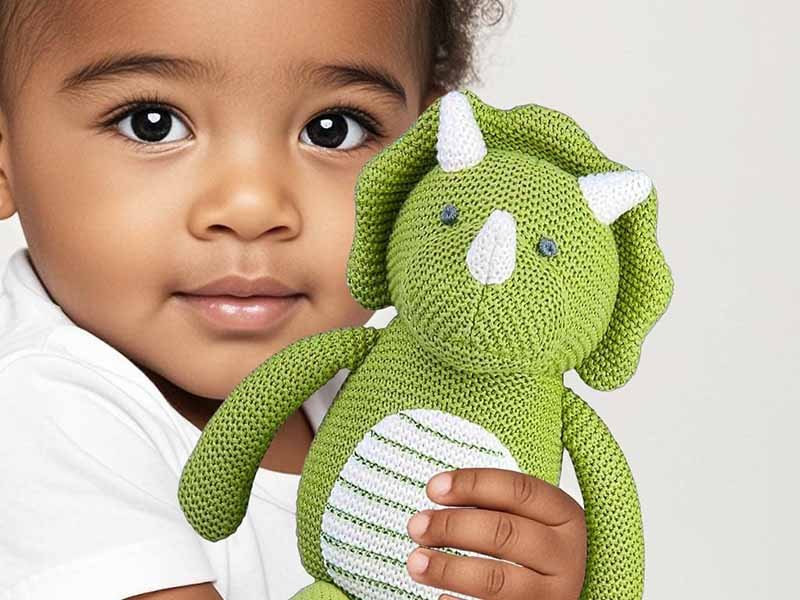
A plush toy looks simple when it sits on a retail shelf. Soft fabric, cute face, rounded body, clean stitching, maybe a small hangtag talking about recycled material or safer production. Yet the real product story starts much earlier. Someone has to decide whether the fabric comes from recycled polyester, organic cotton, bamboo blend, standard plush, or a mixed material. Someone has to test whether the filling keeps its rebound. Someone has to check whether embroidered eyes are safer than plastic eyes for a certain age group. Someone has to ask whether a kraft paper box protects the toy during ocean shipping, or only looks good in a photo.
Eco-friendly plush toys are created through responsible material selection, accurate pattern development, controlled sampling, safe sewing, clean filling, quality testing, and packaging choices that reduce unnecessary waste. A strong sustainable plush product still needs softness, safety, durability, color control, compliance documents, stable bulk production, and a clear claim that customers can trust.
For toy brands, gift companies, IP owners, zoo shops, museum stores, baby product teams, e-commerce sellers, and premium retail programs, eco plush development is not only about “being green.” It is about making a product people want to buy, hold, gift, collect, and keep. A recycled fabric bear that feels rough will not win repeat orders. An organic cotton bunny with weak seams will not build trust. A sustainable animal plush with vague claims may create more questions than confidence. The winning product is the one where the environmental idea, cute design, safe construction, and factory execution all work together.
What Are Eco-Friendly Plush Toys?

Eco-friendly plush toys are soft toys made with lower-impact materials, safer construction, responsible packaging, and clear product claims. They may use recycled polyester plush, organic cotton, bamboo blend fabric, recycled filling, embroidered details, low-impact dyes, kraft paper packaging, or reduced plastic packing. Good eco plush toys must still pass safety, softness, durability, and visual quality checks before bulk production.
What Makes a Plush Toy Eco-Friendly?
A plush toy becomes eco-friendly when its design and production reduce unnecessary environmental burden while keeping the product safe and usable. The material choice matters, but material alone is not enough. A recycled plush fabric can support a stronger product story, but the toy also needs safe filling, durable seams, proper labels, age-appropriate details, and packaging that does not create excessive waste.
For custom projects, the most common eco improvements come from five areas:
- Outer fabric made with recycled polyester, organic cotton, bamboo blend, or other lower-impact textile options
- Filling made with recycled polyester fiber or carefully selected alternative fiber blends
- Embroidered eyes, nose, mouth, or logo to reduce detachable plastic parts for younger age groups
- Packaging with kraft paper cards, recycled paper boxes, hangtags, or reduced plastic bags
- Documents such as material certificates, safety test reports, inspection records, and care label files
A factory should help clients judge which upgrade brings real value. For example, using rPET plush fabric may work well for animal plush, mascot plush, souvenir plush, and retail gift toys. Organic cotton may work better for baby-safe comfort toys, nursery products, soft dolls, and premium gift sets. Kraft paper packaging can strengthen the product story, but it must still protect the toy during storage and shipment.
A practical eco plush product should answer these questions before sampling:
- What exact part of the toy uses recycled, organic, or lower-impact material?
- Can the material supplier provide supporting documents?
- Does the material still feel soft enough for the target customer?
- Can the fabric hold the required color and shape?
- Will the toy pass the required safety standards in the target market?
- Can the factory keep the same material quality in bulk production?
- Does the packaging protect the toy without adding unnecessary waste?
Delsney usually recommends starting with the product’s main selling point. If the toy is for baby gifts, safety and softness should lead. If the toy is for zoo shops, recycled fabric and animal storytelling may matter more. If the toy is for IP characters, color accuracy and shape matching must stay strong even when eco materials are used.
Are Sustainable Plush Toys Different From Regular Plush Toys?
Sustainable plush toys look similar to regular plush toys from the outside, but the development process is more demanding. A regular plush toy project mainly checks shape, softness, fabric color, stitching quality, filling density, packaging, cost, and delivery time. A sustainable plush project must check all of those areas, plus material origin, claim wording, supporting files, packaging waste, recycled content, organic content, dye safety, and market compliance.
The difference appears early in material planning. Recycled polyester plush may have different pile height, backing strength, brushing effect, and color behavior compared with standard polyester plush. Organic cotton may have a warmer and more natural touch, but it may not create the same fluffy animal surface as synthetic long-pile plush. Bamboo blend fabric may feel smooth, yet supply stability and color range may need extra review. Recycled filling must be checked for rebound, cleanliness, stuffing consistency, and final toy shape.
A sustainable plush project also needs stricter communication. Customers are more alert now. They may ask what percentage of recycled material is used, whether the claim covers the fabric only or the whole toy, whether the packaging is recyclable, whether the filling is also recycled, and whether test reports can be provided. Vague wording can damage trust.
For brands, the main difference is responsibility. A regular plush toy can sell through cute design and price. An eco plush toy sells through design, touch, trust, values, and proof. The product must feel good in hand and make sense on paper.
| Development Area | Regular Plush Toy | Eco-Friendly Plush Toy |
|---|---|---|
| Fabric choice | Mainly softness, color, cost | Softness, color, cost, recycled/organic source |
| Filling choice | Shape and rebound | Shape, rebound, recycled or safer option |
| Logo method | Visual effect and cost | Visual effect, durability, lower-waste option |
| Eye details | Plastic eyes or embroidery | Embroidery often preferred for young users |
| Packaging | Polybag, box, hangtag | Reduced plastic, kraft card, recycled paper options |
| Documents | Basic QC and safety files | Material proof, safety files, claim support |
| Cost review | Unit price and MOQ | Unit price, MOQ, material proof, test cost |
| Claim wording | Product features | Clear, limited, document-supported claims |
Delsney can help clients compare regular plush and eco plush versions during sampling. For example, one animal plush can be sampled with standard polyester fabric, rPET plush fabric, and organic cotton fabric to compare cost, hand feel, color, structure, and market positioning. This makes the final decision more grounded and easier to explain to the client’s team.
Do Eco-Friendly Plush Toys Still Feel Soft?
Eco-friendly plush toys can feel very soft when the fabric, pile height, finishing process, and filling are selected correctly. Recycled or organic material does not automatically mean rough texture. Many recycled polyester plush fabrics can create a hand feel close to standard plush fabric, especially when yarn quality, brushing, dyeing, and backing are well controlled.
Softness depends on several details:
- Pile height: short pile gives cleaner shape and better embroidery visibility; long pile gives a fluffier hand feel
- Yarn quality: finer yarns often feel smoother but may increase cost
- Backing structure: weak backing can stretch or deform during sewing
- Brushing process: better brushing improves fluffy surface and hand feel
- Filling type: filling affects squeeze feel, rebound, and toy body shape
- Stuffing density: overstuffed toys feel hard; underfilled toys collapse quickly
- Final shaping: hand finishing, brushing, and steam shaping improve appearance
Different product styles need different softness targets. A baby comfort plush should feel gentle, light, and safe. A collectible mascot may need firmer stuffing to hold shape. A long-pile animal plush should feel fluffy but not shed easily. A plush keychain should be compact enough to keep its form. A large hugging plush should be soft enough for daily use but strong enough to avoid flattening after compression.
| Plush Style | Suitable Eco Fabric | Softness Goal | Key Check |
|---|---|---|---|
| Baby comfort toy | Organic cotton, short rPET plush | Gentle and light | Safety, seam smoothness |
| Animal plush | Medium or long rPET plush | Fluffy and huggable | Pile direction, shedding |
| Mascot plush | Short-pile rPET plush | Clean shape | Embroidery clarity |
| Plush doll | Organic cotton, recycled short plush | Smooth and stable | Face detail and body shape |
| Plush keychain | Short-pile recycled plush | Compact but soft | Small part strength |
| Large hugging plush | Medium-pile recycled plush | Soft rebound | Filling distribution |
Delsney reviews softness through swatches, sample toys, hand-feel comparison, stuffing tests, and design match checks. For higher-end brand projects, softness must work with appearance. A toy can feel soft but lose character shape. Another toy can hold shape but feel too stiff. The best result sits between both sides: soft enough to hug, firm enough to look right, and stable enough for bulk production.
Is Sustainability Only About Materials?
Sustainability in plush toys is not only about fabric. A product can use recycled fabric and still create problems if it has weak seams, excessive packaging, poor filling quality, or unclear claims. A toy that breaks quickly creates waste. A toy that cannot pass safety checks creates risk. A toy that uses many unnecessary plastic accessories may weaken its own eco message.
A stronger approach looks at the full product journey:
- Design: avoid unnecessary parts, overly complex accessories, and hard-to-produce details when not needed
- Materials: choose recycled, organic, safer, or lower-impact options where they bring real value
- Pattern making: reduce fabric waste through smart panel planning
- Sewing: reinforce stress points so the toy lasts longer
- Filling: control rebound, cleanliness, and even distribution
- Packaging: reduce plastic where possible without harming shipping protection
- Labeling: use clear material descriptions and care guidance
- Testing: match target market safety requirements
- Production control: reduce rejected units through better sampling and QC
- Shipping: pack efficiently to reduce carton waste and deformation
A sustainable plush product should not be fragile. Durability is part of responsible design. If a plush toy tears after a few weeks, the customer may throw it away, which defeats the purpose of using better materials. Strong seams, secure embroidery, stable stuffing, and proper packaging all help the product stay useful longer.
Brands should also avoid overclaiming. If only the outer fabric is recycled, the product claim should say so clearly. If the filling is also recycled, that can be stated separately. If packaging uses recycled paper, mention packaging specifically. Clear claims feel more trustworthy than broad environmental slogans.
Delsney helps clients review sustainability from material to shipment. The factory can support eco fabric selection, free design, sample development, three-view drawing, 3D effect review, material matching, safety compliance planning, and finished product inspection. With proper artwork or reference samples, Delsney can help achieve up to 98% match between approved design and finished plush product while keeping eco material choices practical for production.
| Eco Planning Area | Client Decision | Factory Review Point |
|---|---|---|
| Product design | Simple animal, mascot, doll, baby toy, gift plush | Can eco fabric hold the required shape? |
| Fabric | rPET, organic cotton, bamboo blend, standard plush mix | Softness, MOQ, color, document support |
| Filling | Recycled fiber, standard fiber, weighted beads | Rebound, safety, even stuffing |
| Face details | Embroidery, felt, plastic eyes | Age safety and pull strength |
| Packaging | Kraft card, recycled paper box, reduced polybag | Shipping protection and retail look |
| Testing | EN71, ASTM, CPSIA, CE, related checks | Target market and age grade |
| Claim wording | Recycled fabric, organic cotton, reduced plastic | Avoid unclear or unsupported claims |
| Production | Sample to bulk | Quality consistency and inspection |
Which Materials Are Used?
Eco-friendly plush toys may use recycled polyester plush, organic cotton, bamboo blend fabric, recycled filling, PLA blend filling, low-impact dyes, recycled labels, kraft paper cards, and reduced-plastic packaging. The right choice depends on toy style, target age, softness requirement, color accuracy, safety standards, MOQ, unit cost, and the environmental claim the brand wants to make.
Which Recycled Fabrics Work Best?
Recycled polyester plush fabric is one of the most practical choices for custom eco plush toys. It can keep the soft surface customers expect while helping reduce reliance on virgin polyester. For animal plush, mascot plush, retail gift toys, souvenir plush, promotional plush, and IP character toys, rPET plush fabric often gives a good balance between softness, color range, production stability, and eco positioning.
Not all recycled plush fabrics perform the same. Short-pile recycled plush is better for clean shapes, embroidered faces, small details, and character toys. Medium-pile recycled plush works well for teddy bears, animal plush, zoo gift toys, mascot plush, and retail collections. Long-pile recycled plush creates a fluffy look but needs stronger cutting control because pile direction affects appearance.
Clients should ask for swatches before confirming the material. A fabric may look good in a photo but feel different in hand. Important checks include:
- Pile height
- Hand feel
- Backing strength
- Stretch level
- Color availability
- Dye lot consistency
- Shedding performance
- Embroidery compatibility
- Cutting behavior
- MOQ and lead time
- Material document availability
| Recycled Fabric Type | Best For | Advantage | Key Risk |
|---|---|---|---|
| Short-pile rPET plush | Mascots, dolls, baby-safe designs | Clean shape and clear embroidery | Less fluffy feel |
| Medium-pile rPET plush | Animal plush, gift toys, teddy bears | Balanced softness and shape | Pile direction control |
| Long-pile rPET plush | Fluffy animals, premium plush | Strong huggable feel | Cutting and shedding checks |
| Recycled fleece | Simple dolls, pillows, flat plush | Smooth and cost-friendly | Less luxury texture |
| Recycled faux fur | Fashion plush, animal toys | Rich surface look | Higher cost and pile variation |
Delsney can help clients compare recycled fabric options through sample toys, not only swatches. A fabric that feels good flat may behave differently after cutting, sewing, stuffing, and shaping. The final sample is the best way to judge whether recycled fabric supports the character’s face, body proportion, softness, and retail value.
Is Organic Cotton Good for Plush Toys?
Organic cotton can be an excellent choice for baby plush, nursery gifts, soft dolls, comfort toys, premium animal plush, and natural lifestyle collections. It gives a warm and gentle touch that many customers associate with safer and cleaner products. For brands targeting parents, baby stores, organic lifestyle shops, museum stores, and premium gift channels, organic cotton can support a stronger product story.
However, organic cotton is not suitable for every plush style. It may not create the same fluffy surface as long-pile polyester plush. It may have a more natural texture, which is beautiful for some products but less suitable for highly detailed IP character plush that requires bright colors, smooth sculpting, and strong surface consistency. Cost and MOQ can also be higher than standard polyester plush, especially when clients request certified organic fabric.
Organic cotton works best when the design respects the material. Simple shapes, soft colors, embroidered faces, flat comforters, soft dolls, baby-safe animals, and premium gift sets are good directions. Overly complex shapes, bright character colors, and heavy accessories may reduce the natural advantage.
Important checks for organic cotton plush include:
- Fabric certificate requirement
- Shrinkage behavior
- Color fastness
- Hand feel after washing
- Sewing stability
- Embroidery clarity
- Surface pilling risk
- MOQ and dyeing lead time
- Compatibility with filling
- Safety standard needs
| Organic Cotton Plush Use | Suitable Product | Development Focus |
|---|---|---|
| Baby comfort toys | Bunny, bear, blanket plush | Softness and seam safety |
| Premium dolls | Fabric dolls, simple characters | Face embroidery and shape |
| Nursery gifts | Animal gift sets | Gentle colors and packaging |
| Organic retail lines | Natural plush collections | Material story and label clarity |
| Museum/zoo gifts | Soft animal plush | Accurate shape and safe materials |
Delsney can help clients test organic cotton against recycled polyester and standard plush alternatives. Sometimes the best solution is not a fully organic toy but a mixed-material design: organic cotton for the main body, embroidered details for safety, recycled paper packaging for retail presentation, and standard tested filling for shape stability. The final choice should match the product’s customer, price range, and safety needs.
Are Bamboo Fibers Suitable for Plush Products?
Bamboo blend fabrics can work for certain plush toys, especially comfort toys, nursery products, simple dolls, soft pillows, and lifestyle plush collections. They often have a smooth hand feel, which can help create a gentle product experience. For brands looking for a softer natural-style material story, bamboo blends may be worth exploring.
The main challenge is consistency. Bamboo-related fabrics vary by composition, processing method, supplier, and finishing. Some fabrics feel smooth and stable. Others may stretch too much, wrinkle easily, or fail to hold shape after stuffing. For plush products, shape control matters. A plush toy must keep its face, body, limbs, and seams stable after filling. If the fabric stretches too much, the toy may look different from the approved sample.
Bamboo blend material should be reviewed through a real sample instead of only a fabric card. The sample should test:
- Cutting edge stability
- Seam strength
- Stretch and recovery
- Stuffing response
- Surface softness
- Color fastness
- Pilling risk
- Embroidery performance
- Washing behavior
- Bulk supply stability
Bamboo blends may work better for soft-touch products than for complex plush characters. A simple baby elephant, soft bear, pillow doll, comfort animal, or plush blanket may benefit from the gentle hand feel. A detailed mascot with sharp facial features may need a more stable short-pile recycled plush.
Delsney can help clients decide whether bamboo blend fabric is suitable for the project by comparing sample results with target product photos or drawings. If bamboo blend creates too much shape distortion, a recycled polyester plush or organic cotton fabric may be a safer choice.
Which Fillings Are More Sustainable?
Filling affects how the plush feels, holds shape, compresses, recovers, and ships. For eco plush toys, recycled polyester filling is often the most practical option. It can reduce virgin fiber use while keeping familiar softness and rebound. Some projects may consider cotton filling, PLA blend filling, plant-based fiber blends, or mixed filling systems, but each choice needs testing.
A good filling must meet several needs at once:
- Clean and odor-free
- Soft enough for the target age group
- Strong rebound after compression
- Even distribution inside the toy
- No hard lumps
- Stable after long storage
- Compatible with toy shape
- Suitable for required safety tests
- Practical for bulk production
- Reasonable in cost
Recycled filling is suitable for many general plush toys, but stuffing control is critical. Too much filling makes the toy stiff. Too little filling makes the body collapse. Uneven filling creates lumps, crooked limbs, or weak neck areas. For large plush toys, filling density must be controlled so the product keeps shape without becoming too heavy. For small plush keychains, firmer stuffing may be needed to preserve form.
| Filling Type | Best For | Benefit | Watch Point |
|---|---|---|---|
| Recycled polyester fiber | General eco plush toys | Practical and scalable | Rebound and even stuffing |
| Cotton filling | Natural-style baby gifts | Softer natural story | Weight and drying behavior |
| PLA blend fiber | Special eco lines | Plant-based positioning | Cost and supply stability |
| Standard polyester mix | Shape-sensitive toys | Strong control and low cost | Weaker eco story |
| Weighted beads + fiber | Weighted plush | Functional comfort | Safety and seam strength |
| Memory foam insert | Pillow plush | Shape support | Higher cost and testing needs |
For sustainable plush projects, the filling story should be accurate. If only the fabric is recycled, avoid claiming the whole toy is made from recycled materials. If both fabric and filling use recycled content, separate details can be listed. Delsney can help clients test filling combinations during sample development, especially for large plush toys, weighted plush, baby plush, and premium character plush where hand feel and body shape are both important.
Do Low-Impact Dyes Matter?
Low-impact dyes can matter for eco plush toys, especially when the product targets baby channels, premium retail, Europe, North America, Japan, or environmentally aware customers. Color is one of the hardest parts of sustainable plush development because plush toys often need soft hand feel, bright appearance, safety compliance, and batch consistency at the same time.
A dye or printing process should not only look good. It should meet safety and color performance needs. Poor dye control can create fading, color transfer, odor, uneven shade, or failed testing. For plush toys, fabric color must also match embroidery thread, inner ears, paws, clothing accessories, labels, and packaging.
Low-impact dye planning should consider:
- Target color accuracy
- Color fastness to rubbing
- Color fastness to washing if needed
- Safety testing requirements
- Fabric composition
- Pile direction and light reflection
- MOQ for custom dyeing
- Bulk shade tolerance
- Lead time
- Certificate and testing support
For many custom plush projects, stock eco fabric colors can reduce cost and lead time. Custom dyeing gives better brand control but may raise MOQ and require more time. Bright neon colors, very dark colors, and multi-color character designs need extra review because dye performance can vary by material.
| Color Method | Suitable Use | Advantage | Risk |
|---|---|---|---|
| Stock fabric color | Low MOQ eco plush | Faster and cost-efficient | Limited shade options |
| Custom dyed fabric | Brand color matching | Better color control | Higher MOQ and lead time |
| Digital print | Patterned fabric parts | Good detail | Hand feel may change |
| Sublimation print | Polyester-based plush parts | Rich color effect | Material limitation |
| Embroidery color | Eyes, logo, facial detail | Safe and durable | Thread color matching needed |
| Applique fabric | Ears, paws, clothing | Adds texture | Extra sewing control |
Delsney can help clients choose between stock colors, custom-dyed eco fabrics, embroidery, applique, and printed details. For premium brand projects, color approval should include fabric swatch, embroidery thread card, sample photo under natural light, and final sample review. Color control is not only an appearance issue. It affects customer trust, shelf consistency, and repeat orders.
How Are Eco Plush Toys Made?

Eco plush toys are made through design review, material selection, pattern development, sample making, fabric cutting, embroidery, sewing, filling, shaping, inspection, safety testing, packing, and shipment preparation. Each step must protect softness, shape accuracy, safety, durability, and environmental claims. A strong factory process turns recycled or organic materials into plush toys that look cute, feel soft, and meet market requirements.
How Does Design Start?
Eco plush toy development starts with a clear product direction. Before fabric is cut, the factory needs to understand the toy’s purpose, target age, market, size, style, softness level, safety requirement, eco claim, packaging plan, and expected order quantity. A plush toy for a baby gift set needs a very different design method from a collectible mascot, zoo souvenir, weighted animal plush, anime character, or corporate gift item.
A useful design brief should include:
- Product type: animal plush, character plush, doll, mascot, comfort toy, keychain, pillow plush, weighted plush
- Target age: newborn, toddler, children, teen, adult collector, promotional gift audience
- Size range: 8 cm keychain, 15–25 cm retail plush, 30–50 cm gift plush, 60 cm+ large plush
- Eco direction: rPET fabric, organic cotton, bamboo blend, recycled filling, reduced plastic packaging
- Safety market: United States, European Union, United Kingdom, Canada, Australia, Japan, Middle East
- Logo needs: woven label, embroidery, hangtag, printed card, private label packaging
- Reference files: sketches, AI artwork, 3-view drawing, physical sample, photo reference, tech pack
- Expected quantity: test order, seasonal order, retail launch, wholesale program
Design also needs a manufacturability check. Some drawings look beautiful but may be difficult to sew with eco fabrics. Very thin limbs, sharp curves, tiny accessories, oversized heads, complex clothing, and multiple color blocks can raise cost and reduce production stability. For recycled plush or organic cotton projects, fabric stretch and pile direction must be considered from the beginning.
Delsney supports free design review, three-view drawing, and 3D effect development for custom plush projects. For clients with only an idea or image, Delsney can help convert the concept into a production-ready plush structure. For clients with strict IP or brand requirements, early design review helps protect character proportion, facial expression, material choice, and final product consistency.
How Are Eco Materials Sourced?
Eco material sourcing should start before sampling, because material availability affects cost, MOQ, hand feel, color, lead time, and product claims. A factory should not promise “eco-friendly plush” without checking whether the fabric, filling, label, and packaging options can support the claim in real production.
Common sourcing paths include stock eco fabrics, custom-dyed recycled plush, organic cotton fabrics, bamboo blend fabrics, recycled filling, kraft paper cards, recycled paper boxes, cotton labels, recycled polyester labels, and reduced plastic packing materials. Stock materials are usually faster and more suitable for low MOQ development. Custom materials offer stronger brand control but may require higher MOQ and longer lead time.
Eco material sourcing should confirm:
- Material composition
- Supplier availability
- MOQ for fabric or filling
- Stock color or custom color
- Hand feel and pile height
- Color fastness performance
- Safety test compatibility
- Material certificate availability
- Bulk lot consistency
- Price difference from standard material
- Lead time for repeat orders
| Material Item | Faster Option | Higher Custom Option | Main Check |
|---|---|---|---|
| Outer fabric | Stock rPET plush | Custom-dyed rPET plush | Softness and color |
| Natural fabric | Stock organic cotton | Certified custom organic cotton | Certificate and shrinkage |
| Filling | Standard recycled fiber | Custom filling blend | Rebound and cleanliness |
| Label | Stock woven label base | Custom cotton/recycled label | Logo clarity |
| Hangtag | Kraft paper card | FSC/recycled printed card | Print quality |
| Packaging | Reduced polybag | Recycled paper box | Shipping protection |
| Embroidery thread | Stock color thread | Matched thread color | Color consistency |
Clients often ask whether eco materials always cost more. In most cases, recycled or organic materials may increase unit cost, but not every eco decision has the same cost impact. Recycled fabric may raise material cost moderately. Organic cotton can raise cost more, especially when certification is required. Kraft paper cards may not add much cost if designed simply. Custom molded eco accessories or special packaging can increase cost quickly.
Delsney helps clients balance eco goals and budget. For example, a first eco plush launch may use stock rPET plush, recycled filling, embroidery details, kraft hangtag, and standard carton packing. A premium retail line may use certified organic cotton, custom paper box, printed inner story card, private label care tag, and third-party test reports.
How Is a Plush Sample Developed?
A plush sample is the first real test of the eco product idea. A drawing can show the shape, but a sample shows whether the material, size, softness, filling, expression, stitching, and packaging direction actually work together. For eco plush projects, sampling is even more important because recycled and organic materials may behave differently from standard plush fabrics.
The sample process usually includes:
- Artwork or reference review
- Material swatch selection
- Pattern making
- Fabric cutting
- Embroidery or facial detail preparation
- Sewing and body assembly
- Filling and shaping
- Label or logo placement
- Internal factory review
- Client sample approval
- Revision if needed
Delsney can support reference technical file sampling, photo-based sampling, sample-based development, and drawing-based plush development. For high-requirement brand projects, three-view drawings and 3D effects can help confirm shape before physical sampling. Standard plush samples can often be developed in 5–7 days when materials are available. More complex eco materials, special structures, multiple accessories, or custom-dyed fabrics may need longer.
A good sample review should check more than appearance:
- Does the plush match the approved drawing?
- Is the face expression correct?
- Does the eco fabric feel soft enough?
- Does the toy keep shape after squeezing?
- Is the filling even across the head, body, arms, and legs?
- Are seams smooth and secure?
- Are embroidery details clean?
- Are small parts safe for the target age?
- Does the label wording match the actual material?
- Does the packaging protect the product?
- Can the structure be repeated in bulk production?
| Sample Review Area | What to Check | Possible Revision |
|---|---|---|
| Shape accuracy | Body proportion, head size, limb position | Pattern adjustment |
| Face detail | Eye spacing, mouth curve, expression | Embroidery file revision |
| Softness | Fabric hand feel and filling density | Change fabric or stuffing level |
| Eco material | Texture, color, document support | New swatch selection |
| Sewing | Seam smoothness and strength | Stitching method adjustment |
| Label | Material claim and care text | Text or placement revision |
| Packaging | Presentation and protection | Card, bag, or box change |
Delsney’s plush development target can reach up to 98% match between design and finished sample when artwork, references, and communication are clear. For eco plush projects, a realistic sample review prevents costly mistakes in bulk production. A recycled plush bear should not only look sustainable; it should still be soft, safe, lovable, and ready for repeat production.
How Are Cutting and Sewing Controlled?
Cutting and sewing decide whether an eco plush toy keeps its shape and survives real use. Eco materials may require more attention than standard plush fabrics because pile direction, stretch, shrinkage, backing strength, and surface finish can vary. Poor cutting can make the toy look twisted. Poor sewing can make seams weak, uneven, or uncomfortable to touch.
Cutting control starts with pattern placement. Plush fabric usually has pile direction, so panels must be arranged carefully. If the pile direction is wrong, one ear may look darker than the other, or the body may reflect light unevenly. For animal plush and character plush, even small fabric direction mistakes can change the expression.
Important cutting checks include:
- Correct fabric side
- Correct pile direction
- Matched left and right body parts
- Accurate seam allowance
- Clean edge cutting
- No fabric damage
- Minimal waste through efficient layout
- Separate marking for small parts
- Stable cutting for stretch fabrics
- Correct color placement for multi-color toys
Sewing control is equally important. Eco plush toys may use recycled plush, organic cotton, bamboo blend, felt, cotton fabric, or mixed materials. Each fabric may need different needle size, thread tension, stitch length, and seam method. If stitching is too tight, the seam may pucker. If stitching is too loose, the seam may open. If seam allowance is too small, filling pressure may cause tearing.
High-risk sewing areas include:
- Neck connection
- Ear attachment
- Tail seam
- Arm and leg joints
- Belly seam
- Zipper or battery pocket if included
- Weighted insert pouch
- Clothing accessories
- Embroidery-backed areas
- Label attachment
| Production Area | Control Point | Quality Risk |
|---|---|---|
| Fabric cutting | Pile direction and accuracy | Uneven look or twisted body |
| Small parts | Ears, tail, paws, clothing | Size variation |
| Embroidery | Face details and logo | Misaligned expression |
| Sewing | Stitch length and seam strength | Open seam |
| Stuffing opening | Clean closing seam | Visible repair marks |
| Label sewing | Position and wording | Compliance or appearance issue |
| Final trimming | Loose thread removal | Poor finish |
| Bulk consistency | Same as approved sample | Product variation |
Delsney controls cutting and sewing against the approved sample. For large orders, production teams need clear reference samples, sewing instructions, and QC checkpoints. Eco material adds one more layer of control: the factory must keep material batch, color, pile direction, and hand feel consistent from sample to bulk.
How Is Final Shaping Finished?
Final shaping turns a sewn and filled plush body into a retail-ready product. Many plush toys do not look perfect immediately after stuffing. The head may need adjustment. The ears may need positioning. The body may need brushing. The filling may need redistribution. The face may need checking from several angles. Final shaping is the stage where factory experience becomes visible.
Final shaping normally includes:
- Filling balance adjustment
- Hand shaping of head and body
- Ear and limb positioning
- Brushing the plush surface
- Removing loose fibers
- Thread trimming
- Checking facial symmetry
- Checking sitting or standing posture
- Adding accessories or clothes
- Label placement check
- Final cleaning
- Packing preparation
For eco plush toys, final shaping also confirms whether the selected material performs as expected. Long-pile recycled plush may need extra brushing to show a fluffy animal effect. Organic cotton may need smoother pressing and careful seam handling. Bamboo blend fabrics may need shape checks because softer fabrics can relax after filling. Large plush toys need more filling control around the neck, belly, and limbs.
Final shaping should match product type. A baby comfort toy should feel soft, flat, and safe. A mascot plush should keep the character expression. A teddy bear should sit naturally. A zoo animal plush should show correct body proportion. A plush pillow should feel even and full. A weighted plush should have balanced weight distribution and secure internal pouches.
| Plush Type | Final Shaping Focus | Main Risk |
|---|---|---|
| Baby plush | Smooth seams and gentle touch | Hard or rough areas |
| Animal plush | Natural body proportion | Uneven pile or crooked limbs |
| Mascot plush | Face expression accuracy | Wrong character feeling |
| Plush doll | Clothing and face alignment | Twisted body |
| Weighted plush | Weight balance | Pressure on seams |
| Large plush | Even filling | Flat or lumpy body |
| Keychain plush | Compact shape | Deformed small parts |
Delsney conducts finished product checks before packing. For brand projects, final shaping should be compared with the approved sample, design files, and client comments. Since Delsney can support three-view drawings and 3D effects, final shape review can be more accurate for character plush, IP plush, and high-end retail plush projects.
Are Eco Plush Toys Safe?

Eco plush toys can be safe when materials, design, construction, small parts, filling, dyes, labels, and testing are controlled according to the target market and age group. Recycled or organic material does not replace toy safety testing. A safe eco plush product must meet requirements for seams, choking hazards, flammability, chemicals, labeling, and physical performance.
What Safety Standards Apply?
Safety standards depend on where the plush toy will be sold and who will use it. A plush toy for the United States may need ASTM F963 and CPSIA-related checks. A toy for Europe may need EN71 and CE-related compliance. The United Kingdom, Canada, Australia, Japan, and other markets may have their own requirements or label expectations. For baby plush, stricter attention is needed because younger children bite, pull, squeeze, and sleep near soft toys.
Common standards and checks may include:
| Market | Common Standard or Requirement | Main Focus |
|---|---|---|
| United States | ASTM F963, CPSIA | Mechanical safety, chemicals, labeling |
| European Union | EN71, CE | Physical, flammability, chemical safety |
| United Kingdom | UKCA-related toy compliance | Safety and market marking |
| Canada | Canada toy safety rules | Mechanical and chemical safety |
| Australia/New Zealand | Toy safety requirements | Age safety and labeling |
| Japan | Local toy and material expectations | Safety and quality consistency |
For eco plush projects, safety review should include material composition, dye safety, filling cleanliness, small parts, seam strength, age grading, and warning labels if required. A recycled material still needs proper testing. Organic fabric still needs color fastness and safety review. Packaging claims should not distract from toy compliance.
Clients should discuss target market at the beginning of the project. A plush toy sold as a collectible for adults has different safety concerns from a plush toy sold for toddlers. A toy with plastic eyes has different risk from an embroidered-face toy. A weighted plush has different internal structure checks from a standard stuffed animal.
Delsney can support plush projects that meet European and US compliance needs, depending on product structure and target market. Test planning should be confirmed before bulk production, especially when using new eco materials or when products are aimed at children.
Are Recycled Materials Safe for Children?
Recycled materials can be suitable for children’s plush toys when they are properly sourced, processed, tested, and used in age-appropriate designs. The word “recycled” does not automatically mean safe or unsafe. Safety depends on material cleanliness, chemical control, dye performance, fiber quality, supplier reliability, and final toy construction.
For children’s products, recycled plush fabric should be checked for:
- Material composition
- Harmful substance control
- Color fastness
- Surface shedding
- Odor
- Skin contact comfort
- Fabric backing strength
- Compatibility with embroidery and sewing
- Test report availability
- Batch consistency
Recycled filling should also be reviewed carefully. It must be clean, odor-free, evenly processed, and suitable for toy filling. Poor-quality filling can create lumps, dust, odor, weak rebound, or uneven body shape. For baby plush or toddler products, material selection should be stricter, and detachable parts should be avoided where possible.
Embroidery is often preferred for eyes, nose, and mouth on young children’s plush toys because it avoids hard plastic parts. For older children or collectible plush, plastic safety eyes may still be used if they meet pull strength and safety requirements. The age group decides the safer construction.
Delsney helps clients review material options based on target age and market. For eco plush toys aimed at children, safety cannot be treated as an afterthought. The fabric may be recycled, but the toy still needs strong seams, safe details, clean filling, and proper inspection.
Do Eco Fabrics Need Testing?
Eco fabrics need testing just like standard fabrics. A recycled fabric, organic cotton fabric, or bamboo blend fabric must still meet toy safety and performance requirements. Eco material does not automatically pass chemical, physical, or color tests. For plush toys, fabric testing helps avoid problems such as color transfer, shedding, odor, weak seams, skin irritation concerns, or failed compliance checks.
Useful fabric checks may include:
- Fiber composition
- Color fastness to rubbing
- Color fastness to washing if required
- Surface shedding
- Formaldehyde or restricted substance checks where applicable
- Heavy metal checks depending on standard
- Flammability checks depending on market
- Tear strength
- Seam strength
- Pilling or abrasion performance
- Odor check
- Shrinkage check for cotton-based fabrics
Organic cotton may need shrinkage and color testing. Recycled polyester may need dye and surface checks. Bamboo blend fabrics may need seam and stretch review. Printed fabrics may need extra color transfer checks because print layers can affect hand feel and safety.
| Fabric Type | Suggested Check | Why It Matters |
|---|---|---|
| rPET plush | Color fastness, shedding, chemical checks | Protects claim and user experience |
| Organic cotton | Shrinkage, color fastness, composition | Prevents shape and wash issues |
| Bamboo blend | Stretch, seam strength, pilling | Controls shape and durability |
| Printed eco fabric | Rubbing fastness and surface feel | Prevents color transfer |
| Long-pile recycled plush | Shedding and pile direction | Keeps product clean and consistent |
| Dyed fabric | Shade and safety checks | Supports bulk consistency |
For custom plush projects, testing should be planned based on market and order purpose. A toy for retail channels may require more formal testing than a small internal promotional item. A baby product needs stricter review than an adult collectible. Delsney can help clients prepare material and finished product testing plans according to target use, design structure, and destination market.
How Are Small Parts Checked?
Small parts are a major safety concern in plush toys, especially for products intended for young children. Eco-friendly design does not remove small part risk. Plastic eyes, noses, buttons, bells, zippers, beads, tags, accessories, clothing parts, magnets, sound modules, and decorative pieces all need careful review.
Small part safety depends on:
- Target age group
- Part size
- Attachment method
- Pull strength
- Breakage risk
- Material safety
- Sharp edge risk
- Accessibility after use
- Sewing reinforcement
- Internal pouch security
For baby and toddler plush toys, embroidered eyes and facial details are often safer than plastic parts. If plastic safety eyes are used, they must be correctly attached and tested. For plush toys with accessories, the accessory should not detach easily. For plush keychains, the metal ring and chain must be secure. For sound module plush, the battery compartment must be protected and designed according to applicable safety needs.
Weighted plush toys need special attention. If beads, pellets, or internal weight bags are used, they must be placed inside secure inner pouches with strong seams. The outer plush body alone should not be the only barrier. A broken seam could release small filling components, creating risk.
| Small Part | Risk | Safer Design Option |
|---|---|---|
| Plastic eyes | Detachment | Embroidered eyes for young age groups |
| Plastic nose | Choking risk | Embroidered nose |
| Buttons | Detachment | Sewn fabric detail |
| Bells | Internal access risk | Secure inner pouch |
| Beads/pellets | Leakage | Double-layer inner bag |
| Zipper pull | Breakage or sharp edge | Larger soft puller |
| Keychain ring | Detachment | Reinforced loop and pull test |
| Clothing accessory | Loose small piece | Stitch-down design |
Delsney reviews small parts during design and sampling. For children’s plush products, safer construction should be planned before sample making. Changing plastic eyes to embroidery after bulk preparation can affect cost, appearance, and schedule, so age grading and safety direction should be confirmed early.
What Documents Should Brands Request?
Brands developing eco plush toys should request documents that support both product safety and material claims. Documents help reduce risk, support retail communication, answer customer questions, and prepare for market compliance. A good document package does not need to be complicated, but it should match the product claim and destination market.
Useful documents may include:
- Material composition sheet
- Recycled material certificate if available
- Organic fabric certificate if required
- Fabric test report
- Filling material information
- Finished toy safety test report
- Color fastness report if needed
- Inspection report
- Approved sample confirmation
- Care label file
- Age label and warning label file
- Packing list
- Carton mark file
- Product photos before shipment
- Compliance documents for destination market
For eco claims, the document should match the exact claim. If the toy uses recycled polyester fabric only, the document should support recycled fabric. If filling is also recycled, filling information should be included. If packaging is recycled paper, packaging supplier information may be useful. If the product claims organic cotton, the organic fabric document should be checked before marketing language is finalized.
| Claim or Requirement | Useful Document |
|---|---|
| Recycled plush fabric | Recycled material certificate or supplier statement |
| Organic cotton plush | Organic fabric certificate where required |
| Safe for US market | ASTM/CPSIA-related test documents |
| Safe for EU market | EN71/CE-related test documents |
| Baby plush | Age grading, small part review, safety test |
| Eco packaging | Paper material or packaging supplier information |
| Private label order | Artwork approval, label file, packing file |
| Bulk shipment | Inspection report and packing list |
Delsney can help clients prepare project files based on order type, target market, and product structure. For premium brand projects, documentation is part of the product value. Clear files make communication easier with retailers, distributors, online platforms, and internal quality teams.
How Much Do They Cost?

Eco-friendly plush toys usually cost more than standard plush toys when recycled fabrics, organic cotton, custom eco packaging, third-party testing, lower-impact dyes, special labels, or certified materials are required. Final cost depends on toy size, fabric type, filling, embroidery, accessory complexity, MOQ, sample revisions, packaging, test requirements, and bulk production difficulty.
Why Do Eco Materials Cost More?
Eco materials often cost more because sourcing, processing, documentation, and consistency control are more demanding. A standard polyester plush fabric may be widely available in many colors, pile heights, and price levels. Recycled polyester plush, organic cotton, bamboo blend fabric, or special lower-impact materials may have fewer supplier options, higher minimum order quantities, longer lead times, and stricter batch control needs.
For custom plush projects, material price is only one part of the cost difference. Eco materials may also affect sampling, cutting, sewing, color matching, testing, and packaging decisions. A recycled long-pile plush may need more careful cutting because pile direction affects the animal’s appearance. Organic cotton may need shrinkage review and softer seam handling. Bamboo blend fabric may require extra testing for stretch, pilling, and shape stability. Recycled filling may need stuffing tests to confirm rebound and body fullness.
Cost can also rise when clients require supporting documents. If a brand wants to make a stronger recycled or organic claim, the material source must be traceable enough to support that language. Certified fabrics, third-party test reports, and special packaging files may add cost, but they also reduce claim risk and support premium positioning.
Common reasons eco materials cost more include:
- Smaller supplier base than standard plush fabric
- Higher MOQ for custom color or certified fabric
- Longer lead time for special material sourcing
- Extra swatch approval and sampling rounds
- Material certificate or supplier document preparation
- Higher dyeing and finishing control needs
- Extra testing for safety, color, or composition
- More careful cutting and sewing control
- Eco packaging design and print setup
- Lower tolerance for inconsistent bulk quality
| Cost Area | Standard Plush Project | Eco Plush Project |
|---|---|---|
| Fabric sourcing | Many stock options | Fewer eco stock options |
| Color choice | Wide and fast | Limited stock colors or custom dye |
| MOQ | More flexible | May rise with special fabric |
| Sampling | Faster for common materials | More swatch comparison needed |
| Testing | Based on target market | Safety + material claim support |
| Packaging | Standard polybag and carton | Kraft card, recycled box, reduced plastic |
| Claim documents | Basic product files | Material proof and claim-related files |
| Bulk consistency | Easier with standard fabric | More batch control needed |
The best approach is not always choosing the most expensive material. A smart eco plush project starts with a clear product promise. If the main selling point is recycled material, rPET plush and recycled filling may bring the most value. If the product targets baby gift shops, organic cotton and embroidered details may matter more. If the project is for zoo shops or museum stores, recycled fabric plus an educational hangtag may create a stronger story at a controlled cost.
Delsney helps clients compare material choices before sampling, so the product does not become expensive in the wrong places. A small fabric upgrade, better embroidery plan, and kraft hangtag may create more customer value than an overcomplicated eco package that raises shipping cost.
Which Factors Affect Unit Price?
Unit price depends on material cost, toy size, fabric consumption, filling weight, sewing time, embroidery complexity, accessory quantity, quality requirements, packaging, testing, and order quantity. For plush toys, small changes can create large price differences. A 20 cm animal plush and a 30 cm animal plush may look similar in a photo, but the larger size uses more fabric, more filling, longer sewing time, bigger packaging, and higher shipping volume.
The most common unit price factors include:
- Toy height and body volume
- Fabric type and pile height
- Number of fabric colors
- Recycled or organic material requirement
- Filling type and stuffing density
- Embroidery size and stitch count
- Printed parts or applique details
- Clothing, accessories, or removable parts
- Plastic eyes, embroidered eyes, or special safety parts
- Internal sound, light, scent, weighted, or heatable modules
- Label, hangtag, care tag, barcode, FNSKU, or retail card
- Packaging method
- Testing requirements
- MOQ and order quantity
- Labor difficulty and production loss rate
| Price Factor | Low Cost Direction | Higher Cost Direction |
|---|---|---|
| Size | 10–15 cm mini plush | 40 cm+ large plush |
| Fabric | Stock short-pile fabric | Custom eco long-pile fabric |
| Colors | 1–2 colors | 5+ colors or custom dyeing |
| Face detail | Simple embroidery | High stitch count embroidery |
| Filling | Standard fiber | Recycled, weighted, or special filling |
| Accessories | No accessories | Clothing, bags, hats, tags |
| Structure | Simple sitting shape | Complex character body |
| Packaging | Polybag + carton | Custom paper box or gift set |
| Testing | Basic inspection | Third-party market testing |
| Quantity | Higher unit cost at low volume | Lower unit cost at larger volume |
A useful way to control price is to separate must-have details from nice-to-have details. For example, if recycled fabric is central to the product story, keep it. If a removable accessory raises safety risk and sewing cost, simplify it. If a custom box makes freight volume too high, use a kraft hangtag and compact carton instead. If custom-dyed fabric raises MOQ too much, start with a stock eco color for the first launch.
For many plush projects, embroidery stitch count is easy to overlook. Detailed eyes, complex logos, multi-color face expressions, or large chest logos can increase production time. Long-pile fabric also needs more careful embroidery placement because the pile may cover small details. If the toy has clothing, pockets, scarves, hats, or accessories, each piece adds cutting, sewing, inspection, and sometimes safety review.
Delsney can help clients estimate cost from design files, reference samples, or photos. A clear target price helps the factory recommend the right material, size, structure, and packaging route. Without a price direction, the sample may become beautiful but hard to sell at the expected retail or wholesale level.
How Does MOQ Change Cost?
MOQ affects cost because plush production involves material purchasing, cutting setup, embroidery setup, sewing line planning, filling preparation, packaging printing, inspection, and shipment handling. A very small order still needs design work, pattern making, sample development, material sourcing, and production management. Larger orders spread those fixed costs over more units, which can reduce unit price.
Eco plush projects may have two kinds of MOQ: factory sewing MOQ and material MOQ. Factory MOQ relates to whether the production line can run efficiently. Material MOQ relates to fabric suppliers, filling suppliers, label suppliers, packaging printers, embroidery setup, or custom accessory suppliers. Even if a plush factory accepts a lower finished product quantity, special fabric or packaging suppliers may require higher minimums.
Common MOQ drivers include:
- Stock eco fabric availability
- Custom fabric dyeing quantity
- Organic cotton sourcing minimum
- Recycled filling purchase minimum
- Embroidery setup
- Rubber patch or woven label MOQ
- Printed hangtag MOQ
- Custom box printing MOQ
- Special accessory MOQ
- Production line efficiency
| Custom Requirement | MOQ Impact | Better for Test Orders |
|---|---|---|
| Stock rPET plush fabric | Lower | Yes |
| Custom-dyed eco fabric | Higher | Not always |
| Standard embroidery | Moderate | Yes |
| Custom rubber patch | Higher | Depends on mold cost |
| Stock kraft hangtag | Lower | Yes |
| Custom paper box | Higher | Better for larger orders |
| Standard filling | Lower | Yes |
| Recycled filling | Medium | Often possible |
| Complex clothing | Medium-high | Better after sample approval |
| Multiple colorways | Higher | Better after sales validation |
For new product testing, clients can reduce MOQ pressure by choosing available eco materials, simple colorways, embroidered facial details, standard filling, and simple packaging. Once the market response is clear, the second order can upgrade packaging, expand colors, add accessories, or move into more customized material development.
Delsney supports flexible MOQ for custom plush projects, depending on the material, structure, and packaging requirements. For clients launching a new eco plush line, the factory can suggest lower-risk routes such as stock recycled plush fabric, simple kraft tags, and efficient embroidery. For established brands with larger campaigns, Delsney can support more customized material sourcing, private label packaging, and multi-style production planning.
Can Brands Control Budget?
Brands can control budget by making smart decisions early. The goal is not to remove every custom detail. The goal is to spend money on features customers actually notice and value. In eco plush toys, the strongest value usually comes from a clear material story, soft hand feel, safe construction, cute design, and neat packaging. Overcomplicated details can raise cost without improving sales.
Practical budget-control methods include:
- Use stock rPET plush fabric for first launch
- Limit the first order to 1–3 main colors
- Keep the toy shape clean and easy to sew
- Use embroidery for face details instead of many small accessories
- Choose recycled filling only when it supports the product story and price level
- Replace large custom boxes with kraft hangtags or belly bands when possible
- Use standard carton packing for wholesale orders
- Confirm safety market before testing to avoid repeated test costs
- Finalize artwork before sampling to reduce revisions
- Use the approved sample as a strict bulk reference
Budget control does not mean making the product look cheap. A clean 25 cm recycled plush animal with soft fabric, accurate embroidery, good stuffing, and kraft story card may feel stronger than a complex toy with too many accessories and weak shape. Customers usually remember the face, touch, quality, and story first.
| Budget Decision | Lower-Risk Choice | When to Upgrade |
|---|---|---|
| Fabric | Stock recycled plush | After order volume grows |
| Color | 1–2 main colors | For seasonal collections |
| Packaging | Kraft hangtag + carton | For retail gift sets |
| Face details | Embroidery | For premium sculpted effects |
| Accessories | Sewn simple details | For high-value collections |
| Testing | Match target market only | For multi-market launch |
| Sample revision | Focus on major corrections | After design is stable |
| Product size | 20–30 cm core range | For gift or jumbo series |
A common mistake is trying to make the first eco plush product do everything: recycled fabric, organic filling, custom-dyed colors, custom box, accessory set, premium embroidery, retail display, multiple sizes, and several markets at once. That approach can make development slow and expensive. A stronger launch starts with one clear product promise and then expands after validation.
Delsney can help clients review design, material, MOQ, sample plan, and packaging before production. With more than 18 years of plush development experience, the factory can often suggest small adjustments that reduce cost without damaging the product’s selling point.
Is Sustainable Packaging Worth It?
Sustainable packaging is often worth it when it supports the product story, reduces unnecessary plastic, and still protects the plush during shipment. Packaging is the first thing many customers see, especially for gift plush, baby plush, museum shop products, zoo souvenirs, premium animal plush, and retail collections. Eco packaging can make the product feel more complete.
However, packaging must be practical. A beautiful kraft box that crushes during shipping creates damage and complaints. A plastic-free package that exposes the toy to moisture may create storage problems. A large retail box may look premium but increase shipping volume and cost. The right packaging should match the product size, sales channel, storage condition, and customer expectation.
Common sustainable packaging options include:
- Kraft paper hangtag
- Recycled paper story card
- FSC paper card if required
- Cotton drawstring bag
- Recycled paper box
- Kraft belly band
- Paper tape where suitable
- Reduced-size polybag
- QR code care and story card
- Recycled carton packing
| Packaging Option | Best For | Advantage | Watch Point |
|---|---|---|---|
| Kraft hangtag | Most eco plush toys | Simple and low cost | Limited protection |
| Recycled paper card | Storytelling products | Good for eco message | Needs clear copy |
| Kraft belly band | Plush dolls, gift toys | Less material than box | Must fit shape |
| Recycled paper box | Premium retail sets | Strong shelf look | Higher cost and freight volume |
| Cotton drawstring bag | Gift collections | Reusable feel | Adds material cost |
| Reduced polybag | Wholesale and export | Protects from dust/moisture | Not fully plastic-free |
| QR story card | Eco education | Saves printed space | Needs good landing content |
For wholesale and export orders, many brands still need some moisture and dust protection. Completely removing polybags may not be practical for all shipments. A balanced option is to reduce plastic thickness, use smaller bags, use paper tags, or pack by carton method depending on the product and destination.
Delsney can help clients choose packaging based on retail presentation and shipping reality. The package should look good, protect the plush, support the eco claim, and avoid unnecessary cost.
How Can Brands Customize Them?
Brands can customize eco-friendly plush toys by choosing product shape, size, fabric, filling, color, embroidery, face details, clothing, accessories, logo, labels, hangtags, packaging, and safety standards. Customization should serve the product’s purpose. A good eco plush design feels soft, looks accurate, supports clear claims, passes required checks, and can be repeated in bulk production.
What Plush Styles Can Be Customized?
Eco-friendly plush toys can be customized across many product types. The best style depends on target audience, sales channel, price range, and material choice. Recycled plush fabric works well for animals, mascots, character toys, gift plush, and promotional plush. Organic cotton suits baby comfort toys, simple dolls, nursery animals, and premium natural gift sets. Bamboo blends may suit soft-touch comfort items and pillow-style toys.
Common custom eco plush styles include:
- Animal plush toys
- Teddy bears
- Baby comfort toys
- Plush dolls
- Character plush toys
- Mascot plush toys
- Zoo and museum animal plush
- Plush keychains
- Mini collectible plush
- Large hugging plush
- Pillow plush
- Weighted plush
- Scented plush
- Sound module plush
- Light module plush
- Plush gift sets
- Seasonal plush toys
- Corporate gift plush
- Educational plush toys
- Pet-themed plush products
| Plush Style | Suitable Eco Material | Client Value |
|---|---|---|
| Baby comfort plush | Organic cotton, short recycled plush | Safer and softer positioning |
| Zoo animal plush | rPET plush, recycled filling | Strong animal conservation story |
| Mascot plush | Short-pile recycled plush | Clear shape and embroidery |
| Teddy bear | Medium-pile recycled plush | Classic gift appeal |
| Plush keychain | Short recycled plush | Lower cost and easy promotion |
| Large hugging plush | Medium recycled plush | High perceived value |
| Plush doll | Organic cotton or rPET plush | Lifestyle and gift market |
| Weighted plush | rPET plush + secure weighted insert | Functional comfort product |
| Seasonal plush | Stock recycled fabric | Fast campaign development |
| Educational plush | rPET fabric + story card | Strong retail explanation |
Clients should choose eco material based on product function. For a detailed mascot, short-pile recycled plush may work better than organic cotton because embroidery and face shape need clarity. For a baby bunny, organic cotton or soft short-pile recycled plush may be more appropriate. For a zoo animal, medium-pile rPET plush and recycled filling can support both softness and conservation-themed storytelling.
Delsney can develop plush products from sketches, technical files, photos, reference samples, or physical samples. With free design support, three-view drawings, 3D effect review, and fast sampling, clients can test eco plush ideas before entering bulk production.
Which Logo Options Work Best?
Logo method should match the plush material, product size, target age, safety requirement, and brand style. For plush toys, logos are often placed on woven labels, belly patches, clothing, hangtags, care labels, paper cards, packaging, or embroidered areas. The best logo option should be durable, clean, safe, and easy to repeat in production.
Common logo methods include:
- Woven label
- Cotton label
- Recycled polyester label
- Embroidered logo
- Printed fabric label
- Hangtag logo
- Kraft card logo
- Paper belly band
- Printed packaging
- Logo on plush clothing
- QR code story card
- Care label branding
| Logo Method | Best For | Advantage | Watch Point |
|---|---|---|---|
| Woven label | Most plush toys | Clean and durable | Size must be readable |
| Cotton label | Natural-style plush | Softer eco look | May fray if poor quality |
| Embroidery | Premium plush, mascots | Durable and high-value | High stitch count raises cost |
| Printed hangtag | Retail and gift plush | Strong story space | Paper quality matters |
| Kraft card | Eco collections | Natural visual style | Print color may look muted |
| Belly band | Plush dolls, gift sets | Less packaging material | Must fit toy shape |
| Care label | Compliance and brand info | Practical and necessary | Text must be accurate |
| QR code card | Storytelling products | Saves packaging space | Link must stay active |
For baby and children’s plush toys, attached logos should not create safety risks. Hard logo plates, loose charms, detachable buttons, or metal tags may be unsuitable for younger age groups. Soft labels, embroidery, and paper hangtags are often safer and more practical.
For eco plush projects, the logo area can also carry the sustainability story. A simple kraft hangtag may explain the recycled fabric, recommended age, care method, and brand message. A QR code can link to a product story, animal conservation page, or sustainability explanation. A woven label can make private label plush look more professional without adding heavy packaging.
Delsney can help clients choose logo methods based on MOQ, budget, age group, fabric type, and market positioning. During sampling, logo size and placement should be reviewed on the real plush sample because flat artwork often looks different after stuffing and shaping.
How Can Packaging Show Sustainability?
Packaging can show sustainability by using less plastic, recycled paper, kraft cards, smaller packaging formats, clear material wording, QR-code story cards, and efficient carton packing. The message should be honest and specific. Customers trust clear phrases such as “recycled polyester plush fabric” or “recycled paper hangtag” more than broad claims with no detail.
Eco plush packaging should answer three questions:
- What is better about the material or packaging?
- How does the customer understand the product story quickly?
- Does the package protect the toy during shipment and storage?
For retail plush toys, packaging may include hangtag, belly band, paper card, small box, gift box, or display carton. For wholesale plush, packaging may be simpler: care label, hangtag, polybag or reduced protective bag, and export carton. For premium eco collections, a printed story card can explain the material choice, animal inspiration, brand values, and care method.
Good packaging messages may include:
- Made with recycled polyester plush fabric
- Filled with recycled polyester fiber
- Plastic-reduced packaging
- Recycled paper hangtag
- Designed for long-term use
- Embroidered details for safer construction
- Please keep, reuse, or recycle the paper card where facilities exist
A packaging claim should match the product. If only the paper card is recycled, do not imply the whole toy is recycled. If the outer fabric is rPET but the filling is standard polyester, the wording should separate those parts. Clear claims help reduce risk and improve customer trust.
| Packaging Goal | Recommended Format | Why It Works |
|---|---|---|
| Low-cost eco message | Kraft hangtag | Simple and flexible |
| Premium retail gift | Recycled paper box | Strong shelf presence |
| Zoo or museum story | Story card + hangtag | Educational value |
| E-commerce shipping | Compact protective packing | Reduces deformation |
| Baby gift set | Paper belly band + care card | Soft and clean look |
| Corporate gift | Custom card + carton | Easy logo presentation |
| Wholesale order | Label + protective bag + carton | Efficient and safe |
Delsney can support packaging development for custom plush projects, including hangtags, care labels, story cards, kraft paper cards, barcode labels, private label packaging, and carton marks. For clients selling on e-commerce platforms, FNSKU labels, barcode labels, and carton information can also be prepared according to order needs.
Can Delsney Support OEM and ODM?
Yes, Delsney can support OEM and ODM eco plush projects for brands, retailers, e-commerce sellers, IP owners, gift companies, and high-end product teams. OEM projects usually start from client drawings, technical files, product specifications, or reference samples. ODM projects may start from an idea, market direction, animal theme, brand concept, or product photo, then Delsney helps develop the plush design, structure, material, and sample.
Delsney’s eco plush support can include:
- Product concept review
- Free design support
- Three-view drawing development
- 3D effect support
- Fabric swatch recommendation
- rPET plush material matching
- Organic cotton option review
- Recycled filling option review
- Pattern development
- 5–7 day fast sampling for standard projects
- Sample revision support
- Logo and label development
- Packaging design support
- Safety compliance planning
- Bulk production
- 100% quality assurance
- Export shipment support
Delsney is suitable for clients who need more than a catalog plush toy. Many premium projects require shape accuracy, material matching, safety review, private label details, and repeatable production. Delsney can work from technical documents, drawings, photos, or physical samples. With proper reference materials, finished plush products can reach up to 98% match with approved design direction.
| Project Type | Client Provides | Delsney Supports |
|---|---|---|
| OEM plush | Tech pack, drawing, sample, logo file | Pattern, sample, production, QC |
| ODM plush | Idea, market, reference photo | Design, material, sample, structure |
| Private label plush | Brand logo, packaging needs | Label, hangtag, packaging, bulk order |
| Eco plush line | Sustainability goal, target market | Material selection and claim review |
| IP character plush | Character artwork | Shape matching, embroidery, sampling |
| Baby plush | Age target and safety market | Safe materials and construction |
| Zoo/museum plush | Animal theme and story | Material + educational packaging |
| E-commerce plush | Listing needs and target price | Cost control and fast sample |
For clients launching eco plush for the first time, Delsney can suggest a practical starting route. For example: recycled plush fabric, embroidered facial details, recycled filling if suitable, kraft hangtag, simple carton packing, and safety testing based on destination market. For larger brands, Delsney can develop more advanced material, packaging, and documentation packages.
How Fast Can Samples Be Made?
Delsney can usually support 5–7 day fast sampling for standard plush projects when materials and details are confirmed. Eco plush projects may take longer if they require custom eco fabric, organic cotton sourcing, special filling, custom dyeing, complex embroidery, accessories, packaging mockups, or multiple rounds of design approval.
Sample speed depends on:
- Clarity of artwork or reference sample
- Material availability
- Fabric color selection
- Complexity of toy shape
- Embroidery file preparation
- Number of accessories
- Logo and label needs
- Packaging mockup needs
- Safety construction review
- Revision quantity
| Sample Type | Common Timing Direction | Main Reason |
|---|---|---|
| Simple rPET plush animal | Faster when stock fabric is available | Standard structure and material |
| Organic cotton baby plush | Moderate | Fabric and safety review |
| IP character plush | Moderate to longer | Shape and expression accuracy |
| Plush keychain | Faster | Small structure and simple filling |
| Weighted eco plush | Longer | Internal pouch and safety review |
| Plush with sound/light | Longer | Module placement and testing |
| Custom packaging sample | Extra time | Printing and structure proofing |
| Custom-dyed eco fabric | Longer | Fabric sourcing and dye approval |
Fast sampling should not mean careless sampling. For eco plush projects, the first sample should test material, softness, shape, embroidery, filling, label placement, and packaging idea. A rushed sample that ignores material performance may create more delays later.
Clients can speed up sampling by sending clear files:
- Front, side, and back artwork
- Size requirement
- Material preference
- Pantone or color reference
- Logo file
- Target age group
- Target market
- Reference photos
- Packaging idea
- Expected order quantity
Delsney’s design and sampling team can review the details and suggest a production-friendly route. For high-end brand projects, it is often better to spend a little more time on the first sample than to correct major problems after bulk production begins.
Why Choose Delsney?
Delsney is a Chinese plush product factory with more than 18 years of experience in plush product R&D, design, pattern making, sample development, manufacturing, and sales. The company supports custom plush products using many fabric types and offers end-to-end OEM/ODM services, free design, flexible MOQ, fast sampling, safety compliance support, and high design-to-product matching for overseas mid-to-large clients and premium brand projects.
How Does Delsney Support Eco Plush Projects?
Delsney supports eco plush projects from concept review to finished goods. A client can send a sketch, photo, physical sample, brand idea, IP artwork, or technical file. Delsney can help review the structure, suggest fabric options, prepare patterns, develop samples, adjust details, confirm safety direction, and manage bulk production.
Eco plush support may include:
- Recycled plush fabric selection
- Organic cotton material review
- Bamboo blend swatch comparison
- Recycled filling testing
- Embroidered face design for safer construction
- Product size and structure planning
- Three-view drawing development
- 3D effect preview
- Fast sample making
- Packaging suggestion
- Material claim review
- Safety compliance planning
- Pre-shipment inspection
Delsney’s main value is not only sewing plush toys. The factory helps clients make practical product decisions. For example, a client may want a “100% eco plush” at a low MOQ, but the material and certification route may not be realistic. Delsney can suggest a more workable plan: recycled outer plush, safe standard or recycled filling, embroidered details, kraft tag, and clear claim wording. That product may be easier to produce, easier to test, and easier to sell.
What Makes Sampling Faster?
Sampling becomes faster when the factory understands plush structure, fabric behavior, pattern making, embroidery, filling, and final shaping. Delsney has more than 18 years of plush manufacturing experience and can support fast sampling for standard projects in 5–7 days when material and design details are available.
Several factors help improve sampling speed:
- Experienced design and sample team
- Ability to work from photos, drawings, files, or physical samples
- Three-view drawing support
- 3D effect support
- Familiarity with many plush fabric types
- Flexible material selection
- Internal pattern and sample process
- Quick correction based on client comments
- Experience with high-requirement brand projects
For eco plush projects, fast sampling also depends on material availability. Stock rPET plush fabric can move faster than custom-dyed organic cotton. Standard embroidery can move faster than a complex multi-color face. Simple kraft hangtags can move faster than custom retail boxes.
Delsney can help clients decide which parts should be finalized first. Material, size, face design, and safety direction should be confirmed early because they affect the entire sample. Packaging and minor label details can often be adjusted after the main plush body is approved.
How Does Delsney Control Quality?
Delsney controls plush quality through design review, material checking, sample approval, pattern control, cutting control, sewing inspection, stuffing control, shaping review, safety planning, and pre-shipment inspection. For eco plush toys, quality control must also protect material consistency and claim accuracy.
Key quality checkpoints include:
- Fabric hand feel and color
- Material batch consistency
- Pattern accuracy
- Cutting direction
- Embroidery position
- Seam strength
- Filling density
- Shape matching
- Small part safety
- Label accuracy
- Packaging condition
- Finished product appearance
- Carton packing
- Shipment readiness
| QC Stage | Main Check | Client Benefit |
|---|---|---|
| Material check | Fabric, filling, color, hand feel | Reduces bulk variation |
| Sample approval | Shape, softness, embroidery | Confirms product direction |
| Cutting check | Panel accuracy and pile direction | Prevents twisted shape |
| Sewing check | Seam strength and clean finish | Reduces defects |
| Stuffing check | Fullness and rebound | Improves touch and shape |
| Safety review | Small parts and age needs | Supports compliance |
| Final shaping | Face, body, symmetry | Better retail appearance |
| Packing check | Label, bag, carton | Safer shipment |
| Pre-shipment inspection | Finished goods review | Reduces delivery risk |
Delsney offers 100% quality assurance and supports European and US safety compliance needs according to product and market requirements. For premium brand clients, QC is not only about avoiding defects. It is about keeping every plush close to the approved sample so the final retail product looks consistent.
Can Delsney Support Premium Brand Orders?
Yes, Delsney is suitable for premium plush projects that need custom design, accurate shape matching, material selection, private label details, safety compliance, fast sampling, and stable bulk production. Premium clients often care about more than unit price. They need product accuracy, smooth communication, reliable sampling, clean workmanship, packaging quality, and confidence before placing larger orders.
Premium plush projects often involve:
- IP character plush
- Licensed mascot plush
- Baby-safe plush
- Museum and zoo gift plush
- Retail animal collections
- Private label plush dolls
- Seasonal gift plush
- Weighted comfort plush
- Eco plush product lines
- E-commerce hero products
- Corporate custom plush
- High-end promotional plush
Delsney can support clients with free design, free sample support, flexible MOQ, 5–7 day fast sampling for standard projects, three-view drawings, 3D effects, OEM/ODM development, and finished product matching that can reach up to 98% when reference files are clear. For overseas mid-to-large clients and high-end brand programs, these capabilities help reduce development uncertainty.
Premium eco plush projects need more careful planning than basic plush toys. The product must feel soft, carry a clear story, pass required checks, and look consistent in bulk. Delsney’s experience in plush R&D, design, pattern making, manufacturing, and export support gives clients a more complete development route.
Ready to Create Eco-Friendly Plush Toys?
Eco-friendly plush toys are not built from one material choice alone. They come from careful decisions across design, fabric, filling, color, sewing, safety, packaging, and production control. A good recycled plush bear, organic cotton bunny, sustainable mascot, or eco animal plush should feel soft, look accurate, pass the right checks, and carry a clear story customers can trust.
If you are planning a custom eco plush toy line, Delsney can help turn your idea into a manufacturable product. Send your sketch, reference sample, photo, design file, size requirement, target market, logo file, packaging idea, or sustainability goal. Delsney can help review the material direction, develop the sample, prepare the structure, support safety planning, and manage bulk production.
Delsney supports custom, private label, OEM, and ODM plush toy projects for overseas brands, gift companies, e-commerce sellers, IP owners, retail teams, zoo shops, museum stores, baby product programs, and premium plush collections.
Contact Delsney to request a quote, develop a sample, or discuss your next eco-friendly plush toy project.