Skip to content
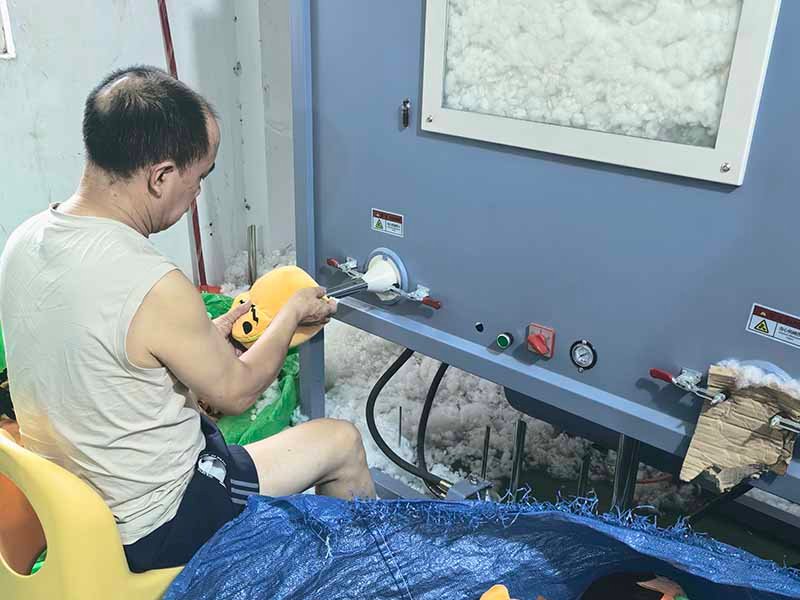
Most people judge a stuffed animal in seconds. They touch the surface, squeeze the body, study the face, and decide whether it feels comforting, durable, safe, and worth its price. Behind that simple moment sits a complicated material system involving pile height, fabric density, backing strength, filling resilience, dye chemistry, embroidery thread, internal components, labels, and packaging. Technology is now changing nearly every part of that system.
Technology is shaping stuffed animal materials by making recycled fibers more consistent, expanding bio-based textile choices, integrating soft sensors and conductive structures, improving color and cutting accuracy, and giving manufacturers better ways to verify safety, traceability, and batch consistency. The future is not one miracle fabric; it is a more measurable, adaptable, and accountable material system.
That distinction matters. A fabric can sound innovative in a presentation yet fail during cutting, shed after sewing, lose color during testing, or produce a body that feels completely different from the approved sample. Imagine approving a beautifully soft prototype, then opening the first production carton months later and finding that every character has a flatter face and firmer body. The problem may not be the artwork at all. It may have started with an undocumented fabric lot, a changed backing, or filling fiber with different recovery. The future of plush materials will therefore be shaped as much by engineering discipline as by invention.
What Is Driving Innovation in Stuffed Animal Materials?

Innovation is being driven by demand for softer touch, longer service life, safer construction, verified environmental claims, and more consistent production. New materials only create value when they improve the finished toy without introducing unstable color, weak seams, excessive shedding, difficult testing, or unreliable supply. The real shift is from choosing fabrics by appearance to selecting complete, measurable material systems.
Which Materials Lead Today?
Polyester remains the main material used in stuffed animals because it can be engineered into many surfaces. Short plush, minky, velboa, sherpa, fleece, velvet-like fabric, and long-pile faux fur may all be polyester, yet they behave differently during cutting, embroidery, sewing, filling, cleaning, and packing.
A product developer should never treat “polyester plush” as a complete specification. The useful details are fiber composition, fabric weight, pile height, pile density, backing construction, stretch percentage and direction, surface finishing, dye or print method, color-lot tolerance, shedding behavior, and dimensional stability. Two rolls with the same commercial name can produce visibly different faces if one stretches more across the width or has a looser backing.
Product scale also changes the material decision. A 10 cm keychain usually needs a compact surface that leaves room for fine embroidery. A 40 cm animal can support longer pile and broader color transitions. Baby products commonly benefit from low shedding, embroidered facial details, soft backing, and simple constructions with fewer hard parts. Realistic animals may require multiple pile lengths, printed markings, local trimming, and carefully controlled fur direction.
| Material | Indicative Weight | Indicative Pile | Best-Fit Uses | Main Production Risk |
|---|---|---|---|---|
| Minky | 220-350 g/m² | 1-3 mm | Baby plush, characters, pillows | Stretch can distort facial panels |
| Velboa | 180-300 g/m² | 1-5 mm | Animals, keychains, promotional plush | Low density may reveal the backing |
| Short plush | 220-380 g/m² | 1-5 mm | Characters, mascots, blind-box plush | Shade and pile-direction variation |
| Sherpa | 250-450 g/m² | 4-12 mm | Comfort plush, pillows, seasonal products | Bulky seams and trapped pile |
| Faux fur | 300-700 g/m² | 8-50+ mm | Realistic animals, premium characters | Waste, shedding and hidden details |
| Fleece | 180-320 g/m² | Minimal | Simple shapes, clothing and appliqué | Pilling and limited surface depth |
These are practical working ranges, not universal standards. Supplier technical data, physical swatches, construction trials, and a finished stuffed sample should always take priority over a generic number.
What Problems Need Solving?
The strongest material innovations solve recurring production problems rather than adding fashionable terminology. One major problem is loss of shape during transport. A plush toy can leave the factory with a rounded body and arrive after weeks of compression with a flat chest, uneven cheeks, or permanently bent ears. Better fiber crimp, filling opening, controlled density, internal support, and packing design can improve recovery.
Visual inconsistency is another costly problem. A character’s expression changes when fabric stretch, pile direction, embroidery tension, or filling pressure shifts. On a small face, movement of only a few millimeters can be obvious. Material engineering therefore affects character accuracy directly, especially across licensed products, mascots, and multi-SKU collections where customers compare units side by side.
- Long pile can cover small embroidered eyes, mouths, or logos.
- Soft backing can stretch under dense embroidery and pull the face out of proportion.
- Thin fabric can expose dark filling, seam allowances, or internal parts.
- Heavy fabric can collapse narrow ears, tails, fins, or standing details.
- Recycled filling may compact differently from the approved virgin-fiber reference.
- Printed markings can shift at seam lines when artwork is not engineered for the three-dimensional form.
- Surface coatings may change hand feel, rubbing performance, or chemical-test results.
A new fabric should be tested as part of the real product, not only rubbed between two fingers. Cut several panels, embroider the planned face, sew the tightest curve, turn the smallest component, fill the product, compress it using the intended packing method, and then inspect recovery. Most failures appear where materials and processes interact.
How Expectations Are Changing?
Major retailers, licensed-property owners, established online brands, and children’s-product companies increasingly ask for evidence behind material claims. A phrase such as “sustainable plush” is too broad to support a serious sourcing decision. Buyers need to know which component is recycled or certified, the percentage claimed, how that percentage is calculated, what documentation supports it, and which parts remain conventional.
- Identify the recycled or certified component by supplier code.
- State whether the claim applies to the outer fabric, filling, labels, packaging, or the whole product.
- Record dye, print, coating, and finishing processes that may affect performance.
- Confirm whether the same material and color can be reordered for future seasons.
- Define a written approval process for substitutions and discontinued materials.
- Keep transaction and lot records linked to the production order.
Touch expectations are rising at the same time. Customers compare plush toys not only with competing toys but also with premium blankets, soft apparel, pillows, and sensory products. The commercial product may need to feel softer while still holding a recognizable shape, showing clear embroidery, surviving distribution, and meeting the intended retail price.
Repeatability now matters as much as novelty. A beautiful hand sample proves that an idea can be made once. It does not prove that 5,000 or 20,000 units can be made with the same expression, density, color, and recovery. For repeat programs, the retained approved sample should be supported by a written specification covering fabric code, weight, pile, color, filling type, filling target, embroidery thread, backing, labels, and internal accessories.
Which Properties Matter Most?
Plush materials should be judged as a connected group of properties rather than by softness alone. Fabric weight affects coverage and body. Pile height affects the visibility of facial details. Backing strength affects seam and embroidery performance. Stretch affects three-dimensional shaping. Filling recovery affects how the toy feels after compression and transport.
- Fabric weight: compare incoming rolls with the approved specification rather than relying on the supplier’s product name.
- Pile direction: mark every pattern piece where directional appearance affects symmetry or realism.
- Stretch orientation: keep left and right facial panels consistent to prevent twisting.
- Color lot: avoid mixing visible panels from noticeably different dye or print lots.
- Seam response: test narrow curves, dense embroidery areas, and high-stress attachments.
- Filling recovery: inspect the completed product after realistic compression and rest time.
- Surface durability: check matting, pilling, shedding, gloss change, and color transfer.
- Moisture behavior: review drying time and odor risk where cleaning or humid storage is expected.
A material that performs well in seven areas and poorly in one critical area may still be unsuitable. A bio-based surface that shrinks enough to twist the face after cleaning is not an improvement for a washable product. The best material is the one that protects the intended appearance, touch, safety, cost, and production consistency at the same time.
How Is Recycling Technology Changing Plush Materials?

Recycling technology is making rPET plush fabrics and recycled filling more accessible, but most commercial recycled polyester still comes from bottles rather than discarded toys or clothing. Progress now depends on cleaner feedstock, better fiber consistency, verified chain of custody, material separation, and product structures that can be dismantled more easily at the end of use.
How Does rPET Become Plush?
Recycled polyester commonly begins with PET waste that is collected, sorted, washed, shredded, melted, filtered, and converted into fiber. The fiber can then be knitted into backing fabric, raised or brushed to create pile, dyed or printed, sheared, and finished. Every stage affects the final hand feel and sewing behavior.
The recycled origin does not determine softness by itself. Fiber fineness, yarn structure, pile density, brushing, finishing agents, and backing construction matter just as much. Two fabrics can both contain recycled polyester yet behave differently when stretched across a face panel or passed under a dense embroidery head.
- Confirm the recycled-content percentage and whether it applies to pile, backing, or both.
- Record fabric weight, pile height, stretch, and color reference.
- Review wet and dry rubbing, colorfastness, shedding, and surface recovery.
- Test embroidery stability and seam appearance using the actual artwork.
- Inspect light and dark shades separately because backing visibility and surface shine can differ.
- Confirm reorder availability before approving the material for a long-term program.
The first sample should not be made from an unrecorded stock roll if mass production will use a custom material. Sample and bulk fabrics need a documented relationship. Otherwise, the team may approve one touch and receive another. For licensed characters or repeat collections, the material code should be locked at the same time as the pattern and embroidery file.
Can Recycled Filling Perform?
Recycled polyester filling can perform well, but weight alone is not enough to control it. Fiber length, crimp, fineness, siliconization, opening quality, cleanliness, and blend ratio influence loft, hand feel, migration, and recovery. Two toys filled with the same number of grams may feel completely different.
- Record total filling weight and, for complex products, the target by head, body, or limb.
- Measure key dimensions after filling rather than relying on weight alone.
- Compare softness at several pressure points, especially the face and body center.
- Compress the product using the planned packing method and record recovery after resting.
- Check for lumping, fiber migration, and empty areas after repeated squeezing.
- Inspect odor, visible contamination, and the consistency of opened fiber.
Weighted plush needs a different construction. Many commercial weighted products use total weights in the broad range of about 0.5-2 kg, depending on product size and intended feel, but the correct value must come from product design and safety review. Weight should normally be held inside reinforced pouches rather than mixed loosely through the body. Uneven distribution can pull seams, distort posture, and create uncomfortable hard zones.
A mixed filling plan can be practical. The body may use recycled fiberfill while the face uses a finer grade to protect expression, or narrow limbs may use a lower-friction fiber that fills evenly. The material claim should describe the real construction accurately rather than implying that every component is identical.
How Are Scraps Being Reused?
Cutting waste can be reduced before recycling begins. Accurate purchasing, roll-width planning, digital nesting, and early defect marking prevent usable fabric from becoming waste. This is often more reliable than trying to recover mixed scraps after production.
Plush fabric creates special constraints because pattern pieces cannot always be rotated. Fur direction, stretch, printed artwork, and character symmetry may require fixed orientation. A marker that saves fabric by rotating one cheek can produce a face with opposite pile directions. Material efficiency must never override visible quality or structural stability.
Clean scraps should be separated by known material. Polyester short plush, long-pile faux fur, cotton or cellulosic fabric, printed or coated material, foam, nonwoven backing, and mixed floor waste should not be treated as one stream. Single-material offcuts have a better chance of being mechanically opened or converted into padding and nonwoven products.
| Recovery Route | Possible Input | Potential Output | Main Advantage | Main Limitation |
|---|---|---|---|---|
| Bottle-to-fiber | Sorted PET bottles | rPET yarn and filling | Established supply and documentation | Does not recover old textiles |
| Pre-consumer recycling | Clean cutting scraps | Opened fiber, padding, nonwovens | Composition is easier to control | Shorter fibers can reduce performance |
| Post-consumer recycling | Used textiles or toys | Reprocessed fiber or polymer | Diverts products after use | Sorting and contamination are difficult |
| Chemical recycling | Controlled polyester waste | Feedstock for new fiber | Potentially higher-quality output | Cost and infrastructure remain barriers |
| Component reuse | Removable modules and hardware | Reused functional components | Preserves more product value | Requires disassembly and inspection |
Unidentified shredded scraps should not be placed inside children’s toys simply to reduce disposal. Filling materials need controlled input, cleanliness, repeatability, and appropriate safety verification. Waste claims should also be precise: “waste reduction” describes prevention, while “recycled content” describes material that has already been recovered and reprocessed.
What Blocks Closed-Loop Recycling?
A stuffed animal may contain outer fabric, filling, thread, embroidery, labels, plastic eyes, metal hardware, pellets, foam, electronic modules, batteries, coatings, and packaging. Even when several components are polyester, different colors, additives, and structures can make them difficult to recover together.
Collection is the first barrier. A material can be technically recyclable but still enter general waste when no practical return route exists. Identification is the second barrier: recyclers need to know fiber composition, coatings, and internal parts. Disassembly is the third. Plush construction is designed to stay closed during use, so removing eyes, weighted pouches, electronic modules, and labels can be labor-intensive.
Recovered quality is another constraint. Mechanical recycling can shorten fibers, and mixed colors can limit future surface appearance. A high-grade outer plush may therefore be difficult to produce directly from mixed post-consumer toys even when lower-grade padding or industrial nonwoven applications remain possible.
- Increase verified recycled content where performance remains stable.
- Reduce unnecessary combinations of fiber, coating, foam, and hard accessories.
- Use embroidered details where they support design and safety goals.
- Make electronic modules removable where practical.
- Identify internal pouches and major material components.
- Link material records to production batches and future reorder files.
- Use honest end-of-life language that reflects real collection and recovery options.
A toy does not become circular because one component is recycled. Circularity requires design, collection, sorting, recovery technology, and a market for the recovered output. Until those systems are mature, disciplined material reduction and verified recycled inputs often deliver more practical value than broad circularity claims.
Which Bio-Based Materials Could Scale?

Organic cotton, lyocell, PLA, and other bio-based fibers can support selected stuffed animal designs, but no single option currently replaces every polyester construction. Commercial scale depends on touch, dimensional stability, pile formation, moisture behavior, durability, certification, supply continuity, cost, and the ability to pass product-specific testing after full assembly.
Is Organic Cotton Practical?
Organic cotton is practical for selected flat fabrics, jersey constructions, low-pile surfaces, baby comfort products, doll clothing, labels, and accessories. It offers a natural hand feel and a clear fiber story, but it behaves differently from polyester plush and should not be forced into every high-pile application.
Cotton absorbs more moisture and generally dries more slowly. It can also shrink when pretreatment, knitting, dyeing, and finishing are not controlled. Even modest dimensional change can affect facial symmetry, clothing fit, or the angle of ears. For a washable product, shrinkage in both length and width should be checked before the final pattern is locked.
- Verify the exact fiber composition and certificate scope.
- Review transaction documentation where the claim requires chain-of-custody evidence.
- Record fabric weight, structure, color, and finishing method.
- Test shrinkage in both directions and repeat after the intended cleaning process.
- Check wet and dry colorfastness, pilling, abrasion, seam slippage, and drying behavior.
- Confirm that the approved shade and construction can be supplied for repeat orders.
Blends may offer a better performance balance than a 100% cotton construction. Cotton combined with recycled polyester can improve recovery, dimensional stability, and durability while preserving part of the natural-fiber story. The composition should be stated accurately. A 60% organic-cotton and 40% recycled-polyester fabric can still be meaningful, but it should not be presented as entirely organic cotton.
Long, dense cotton pile is possible, yet cost, shedding, surface recovery, and supply consistency can differ from polyester faux fur. Cotton is most likely to scale where its natural touch supports the product concept, such as comfort products, simple dolls, baby items, and lifestyle collections, rather than where it must imitate every synthetic surface.
How Does Lyocell Perform?
Lyocell is a regenerated cellulosic fiber made from dissolved cellulose. It can provide a smooth touch, good drape, and useful moisture management. In stuffed animals, it is more likely to appear in blended surfaces, smooth textiles, internal fabrics, clothing, or comfort-focused products than in every high-pile application.
Its drape can be an advantage for soft-bodied toys but a disadvantage for sharply defined shapes. A character with upright ears, a structured muzzle, or narrow limbs may need a firmer backing, stabilizer, or internal support. The final construction should be tested after filling because the same fabric can look very different on a flat swatch and a rounded body.
Surface behavior also matters. Depending on yarn, finishing, abrasion, and washing, cellulosic fibers can develop fuzzing or visual wear. A sample may feel excellent when new but change after repeated handling. Testing should include dry and wet dimensional stability, seam strength, pilling, abrasion, color transfer, drying time, embroidery behavior, compression recovery, and appearance after the intended cleaning method.
Blends can improve the balance. Lyocell with cotton may create a soft natural touch, while a polyester blend may improve shape recovery and reduce drying time. The correct blend depends on whether the product is intended to drape, stand, support embroidery, survive frequent cleaning, or retain a precise character silhouette.
Can PLA Work?
PLA is a bio-based polyester produced from renewable carbohydrate feedstocks. It can be converted into fiber, nonwoven material, and certain molded components. Potential stuffed-animal uses include filling blends, internal layers, accessories, and specialized textile structures, but commercial adoption depends on grade-specific performance.
PLA should not be selected on the assumption that every grade will break down quickly in ordinary household conditions. End-of-life behavior depends on temperature, moisture, microorganisms, material thickness, formulation, and the disposal environment. Claims should match a defined test method rather than relying on the word “plant-based.”
- How does the fiber respond to prolonged heat during storage and transport?
- Does repeated compression reduce loft or recovery?
- How does humidity affect strength, odor, or dimensional stability?
- Does washing change the surface or filling behavior?
- Is PLA blended with conventional polyester, and at what percentage?
- Can the same grade and color be reordered for future production?
- What disposal conditions are actually required for the intended claim?
A prototype should be exposed to conditions that resemble the real supply chain. Container interiors, warehouses, vehicles, and retail storage can become much hotter than a showroom. A filling that performs well at room temperature may react differently after heat and compression. PLA is likely to scale first in controlled components where performance can be measured clearly and the sustainability statement can be supported accurately.
Are Biodegradable Materials Durable?
A stuffed animal must remain stable during its intended life. It may be hugged, squeezed, dropped, packed, washed, stored, and passed from one child to another. A material that degrades too easily during normal use is not suitable simply because its end-of-life story sounds appealing.
Four terms should remain separate. Bio-based describes the origin of some or all carbon. Biodegradable describes a biological breakdown pathway under defined conditions. Compostable normally refers to meeting specified breakdown requirements in a particular composting environment. Recyclable depends on material compatibility and the existence of a usable collection and processing route.
A bio-based material may not be biodegradable. A biodegradable material may require industrial conditions. A recyclable material may never be recycled when collection infrastructure is absent. These distinctions matter because customers increasingly question broad environmental claims, and inaccurate language can damage trust even when the material itself has genuine advantages.
Whole-product design is the real test. A biodegradable outer fabric does not make the entire toy biodegradable when the product still contains conventional thread, synthetic filling, plastic hardware, coatings, labels, or electronics. The development team should map every major component, define its use-life requirement, identify its likely end-of-life route, and make claims that match the finished construction rather than one selected part.
How Are Smart Materials Transforming Plush Toys?

Smart materials allow stuffed animals to detect pressure, respond to touch, produce light, manage warmth, or communicate with electronic modules. Successful smart plush products preserve softness while protecting the user from hard parts, heat, loose wiring, and accessible batteries. The challenge is not adding technology; it is integrating technology without weakening comfort, safety, washability, or production consistency.
What Can Fabric Sensors Detect?
Textile sensors can detect touch, pressure, stretching, bending, or repeated movement. In a stuffed animal, selected zones may allow a product to recognize a hug, a squeeze, a tap on the paw, or pressure on the belly. The feature should begin with a clear interaction goal, not the largest possible sensor network.
A commercial design rarely needs sensing across the entire surface. Two to six well-placed zones can provide a clearer and more reliable experience than a complex matrix. The right number depends on the story, user age, target price, power system, software, and expected use.
- Where will the user naturally touch, hold, or hug the product?
- What minimum pressure should activate the response?
- Should a short tap, long squeeze, and sustained hug produce different actions?
- How many repeated activations should the product tolerate?
- Can the sensor trigger accidentally during packing or transport?
- Can the system be cleaned, repaired, or replaced?
- What happens when several zones are pressed at the same time?
Sensor placement must account for filling. A sensor buried under dense fiber may require excessive force. A sensor directly beneath thin fabric may create an uncomfortable hard point. The distance between the outer surface, sensor, padding, and internal support should be controlled so that each production unit responds within an acceptable range.
Real handling is less predictable than bench testing. A child may sit on the toy, sleep on it, throw it, or squeeze it with both hands. Functional validation should include ordinary use, foreseeable misuse, temperature and humidity conditioning, compression in packaging, and repeated cycles rather than only one successful activation on a workbench.
Which Materials Enable Touch?
Touch response can be created with conductive yarn, conductive fabric, pressure-sensitive layers, capacitive structures, flexible circuits, or mechanical switches. Each option changes softness, sensitivity, assembly, inspection, and cost. The best system is usually the simplest structure that produces the required user experience reliably.
Conductive yarn can follow curved textile surfaces but resistance can change with bending and stretching. Conductive fabric can create a broad touch zone but needs stable electrical connections. Pressure-sensitive layers can distinguish light and strong pressing, yet alignment between layers must remain consistent through sewing and filling.
| Function | Possible Structure | Useful Activation | Main Control Point |
|---|---|---|---|
| Simple sound trigger | Mechanical or textile switch | Pressing one location | Position and required force |
| Hug detection | Pressure-sensitive textile zone | Sustained body pressure | Filling density around the sensor |
| Multi-zone touch | Conductive fabric or yarn paths | Paws, ears, belly, or back | Signal separation and wiring |
| Motion response | Flexible motion sensor or module | Shaking, tilting, or lifting | False activation during transport |
| Connected interaction | Sensor network with controller | Touch combined with software | Privacy, power, and update control |
| Recording or playback | Button, microphone, speaker | Press-to-record or replay | Access, volume, and data handling |
Connections are often the weakest point. A soft conductive pathway eventually meets a rigid board, connector, or soldered joint. Strain relief is essential so repeated squeezing does not pull the wire loose. Internal fixation matters as much as sensor material: modules should not rotate, migrate, rattle, or create sharp pressure points inside the body.
How Can Plush Produce Light or Heat?
Lighting can be created with LED modules, light guides, flexible illuminated elements, or fiber-based systems. The outer material must allow enough light to pass while hiding the internal hardware. Long dark fur absorbs and scatters light, so glowing details often work better behind short-pile panels, translucent appliqué, embroidered openings, or specially designed eye areas.
A diffusion layer can prevent one bright point from appearing through the surface. It also helps protect the functional element from local pressure. The mounting structure must hold the light in the correct position without creating an obvious lump. Product developers should test the appearance in bright retail lighting as well as in a dark room.
Heating requires stricter controls. The design should define maximum surface temperature, warm-up time, operating duration, automatic shutoff, power source, insulation, hotspot prevention, behavior when folded or compressed, cleaning instructions, and access to the warming component. A component rating alone does not describe the real temperature inside a stuffed body with limited airflow.
- Use protected routing for wires and keep heat-producing parts away from loose fiber where required.
- Prevent batteries and small components from becoming accessible to the intended user.
- Review the effect of thick fabric and dense filling on heat dissipation.
- Test the complete assembled toy in normal and foreseeable misuse conditions.
- Consider removable modules when cleaning, repair, or replacement is important.
The material and electronic architecture should be developed together. Retrofitting a completed plush body with light or heat often creates uncomfortable hard points, poor visibility, weak access control, or inconsistent placement. Early engineering makes it possible to shape panels, padding, pockets, and internal support around the functional system.
Can Smart Plush Be Washed?
Smart plush can be designed for cleaning, but “washable” needs a precise definition. It may mean surface clean only, hand wash after removing the module, machine wash after removing the module, a washable outer cover, or fully sealed electronics. These are different product promises and should not be used interchangeably.
Removable modules are often the most practical route. The manufacturer can create a secured internal pocket or access opening that allows an adult to remove the sound box, controller, or battery unit. The opening must remain appropriate for the intended age group and should not provide easy access to batteries, wires, or small parts.
- Record sensor response before cleaning.
- Clean the product using the exact intended method and detergent conditions.
- Inspect wiring, connectors, pockets, seams, and closures.
- Measure shrinkage, surface matting, drying time, and retained moisture.
- Reinstall removable modules using the expected consumer procedure.
- Repeat functional checks and confirm battery-compartment security.
- Run repeated cycles where the care claim implies regular washing.
A toy may still play sound after washing while failing in another way. Moisture can remain around an internal pocket, color can transfer, the access opening can distort, or the module can be reinstalled incorrectly. Washability therefore needs a combined textile, mechanical, electrical, and user-instruction review.
For a manufacturer, interactive plush development should begin with module size, speaker and microphone pathways, button access, battery structure, sensor position, removable parts, age grade, and cleaning method. The body pattern, padding, and filling plan can then be engineered around those constraints while preserving the soft experience customers expect.
How Is Digital Manufacturing Improving Materials?
Digital manufacturing improves material use by turning artwork, patterns, cutting layouts, embroidery files, color settings, and inspection records into controlled production data. Digital printing expands visual possibilities, pattern nesting reduces avoidable waste, laser systems improve precision for suitable constructions, and machine vision helps identify defects. None of these tools removes the need for physical samples and experienced judgment.
How Does Digital Printing Help?
Digital printing supports gradients, realistic markings, photographic textures, short artwork revisions, and character-specific panels. It is useful when complex coloration would otherwise require many separate fabric pieces, but the printed result still depends on fabric base color, pile, pretreatment, curing, and three-dimensional pattern engineering.
- Realistic pet and wildlife markings
- Fantasy gradients and shadow effects
- Food textures and novelty surfaces
- Branded patterns and limited editions
- Detailed doll clothing or accessories
- Multi-SKU blind-box collections with shared construction
White short plush usually produces clearer color than dark or highly textured fabric. Long pile can separate an image when the fibers move, making fine lines look broken. A printed face that appears correct on a flat panel can also shift around a curved muzzle after sewing and filling. Engineers may intentionally distort the flat artwork so it appears correct on the finished form.
Color approval should include a physical strike-off rather than relying on a monitor. Useful controls include one approved artwork file, defined color references, fabric-specific print settings, print scale, registration points, cutting allowance, rubbing tests, cleaning tests, and final stuffed-sample approval. The most important color reference is usually the physical approved sample viewed under agreed lighting.
Digital printing improves flexibility but does not eliminate minimum quantities, color variation, or finishing risk. Repeated orders should use the same base fabric and controlled settings wherever possible. If the base fabric changes, a new strike-off may be necessary even when the artwork file remains identical.
Can Solution Dyeing Reduce Water?
Solution dyeing adds pigment before synthetic fiber is formed. Color becomes part of the fiber rather than being applied mainly through a later wet-dyeing process. The method can reduce certain water-intensive dyeing steps and often provides strong colorfastness, but it is most practical for stable shades used repeatedly at meaningful volume.
A mascot program using one corporate color across several years may gain more value than a collection with twenty short-run custom shades. Advantages can include durable color, repeat consistency, and reduced dependence on later wet processing. Constraints can include higher minimum quantities, longer preparation for custom colors, less flexibility after fiber production, and inventory risk if demand changes.
- Estimate annual consumption by color rather than considering one order only.
- Check how many SKUs can share the same shade and fabric construction.
- Compare custom-fiber lead time with the launch schedule.
- Review minimum quantity, storage, and leftover inventory risk.
- Confirm whether the shade can be repeated over several seasons.
- Compare total environmental impact rather than water use in one isolated step.
A dye route that saves water but creates large quantities of unused custom-colored inventory may not produce the best overall result. The preferred method should reduce total waste and risk for the real product program, not simply improve one manufacturing metric.
How Does Laser Cutting Reduce Waste?
Laser cutting can produce precise contours and detailed appliqué shapes. It may also stabilize the edges of selected synthetic materials. The process is useful for low-pile fabrics, felt-like components, internal layers, prototypes, and complex decorative parts, but plush fabrics need material-specific settings.
Long fibers can melt, discolor, or block the beam. Heat may create a hard edge that becomes visible or uncomfortable. Ventilation and extraction are essential because synthetic materials can generate fumes. Before production, test edge color, edge hardness, odor, residue, dimensional accuracy, pile damage, seam appearance, turning behavior, and cutting speed.
For many stuffed animals, digital nesting reduces more waste than the cutting energy source itself. Nesting software arranges pattern pieces across the roll while respecting pile direction, stretch, print placement, left-right pairing, and visible defects. An indicative 2-5% improvement in material utilization can matter across thousands of units, but the saving should never come from rotating pieces that must remain directional.
Defect mapping can also prevent waste. If stains, holes, or uneven pile are marked before layout, the cutting plan can avoid those areas. The combination of roll inspection, digital marker planning, and accurate cutting usually produces more reliable savings than relying on one machine alone.
Can AI Detect Defects?
Machine vision can help identify stains, holes, print shifts, missing embroidery, shade variation, incorrect labels, and some dimensional problems. Cameras apply the same visual rules repeatedly and can store images linked to a roll, batch, workstation, or time period, which improves traceability.
Plush remains difficult for automated inspection because pile direction changes how light reflects. A brushed area can look like a shade defect. A natural wrinkle may resemble a seam problem. Camera angle, lighting, filling pressure, grooming, and surface movement all affect the image. Training data therefore needs both real defects and acceptable natural variation.
- Use fixed lighting, camera distance, background, and product orientation.
- Build reference images from approved production samples, not only digital artwork.
- Define tolerance zones for embroidery position, dimensions, and visible variation.
- Assign narrow tasks first, such as confirming both eyes, a label, or a print location.
- Send flagged units to trained inspectors rather than rejecting them automatically.
- Keep human review for touch, expression, pile grooming, firmness, and overall appearance.
AI works best as one layer in quality control. Incoming fabric inspection checks roll condition, shade, weight, and defects. Cutting inspection confirms orientation and completeness. Embroidery inspection checks position and thread quality. Sewing, filling, functional, packaging, and pre-shipment inspections then evaluate the finished product. Technology improves speed and records; experienced people still judge whether the toy looks and feels right.
How Should Brands Validate New Materials?

New materials should be validated through documented composition, supplier evidence, physical sampling, construction trials, market-specific safety review, pilot production, lot control, and shipment inspection. A certificate does not prove that a fabric will embroider cleanly, maintain color, recover after transport, or remain consistent across thousands of finished toys. Material approval must connect compliance with production performance.
Are New Materials Safe?
Terms such as recycled, organic, natural, and bio-based describe origin or composition. They do not prove that a finished toy is safe for a specific age group or market. Safety depends on the complete product, including chemistry, flammability, shedding, seam strength, detachable parts, filling cleanliness, electronics, batteries, heat, sound, labels, and foreseeable use.
A recycled fabric may still require chemical review. A natural fabric may use dyes, coatings, or finishes that need verification. A plant-derived filling can create moisture or microbial concerns if processing and storage are not controlled. The intended age group and destination market should be identified before final material approval because they influence construction, test planning, labels, warnings, and documentation.
- Chemical composition, restricted substances, dyes, coatings, and finishes
- Flammability behavior of fabric, filling, clothing, and accessories
- Fiber shedding, seam strength, and filling leakage
- Small-parts risk and the security of eyes, noses, buttons, and hardware
- Battery access, wiring, sound output, and surface temperature for interactive products
- Labeling, care instructions, age grading, and target-market documentation
Compliance planning should begin during design. Replacing plastic eyes with embroidery after a failed test can alter the expression, pattern, cost, and schedule. Choosing suitable materials and construction early is usually faster and less expensive than correcting a completed product after testing.
Which Tests Matter?
Testing should follow the risks of the completed product. A simple embroidered plush and an electronic weighted plush do not require the same development plan. The right sequence moves from material screening to construction trials, final-sample approval, applicable third-party testing, pilot production where risk justifies it, and ongoing production inspection.
| Development Stage | Practical Trial Scale | Main Checks | Useful Output |
|---|---|---|---|
| Material screening | About 0.5-1 m per option | Touch, weight, stretch, pile, color, supplier evidence | Shortlisted material codes |
| Construction trial | About 5-10 panels or parts | Cutting, embroidery, seams, turning, shedding | Process findings and risk notes |
| Finished prototype | 1-3 samples per design round | Appearance, dimensions, filling, function, cleaning | Revision record |
| Pre-production sample | At least one final unit per SKU | Final materials, labels, packaging, function | Signed approval reference |
| Pilot production | Often 30-100 units for complex items | Operator consistency, waste, cycle time, defects | Production-control plan |
| Mass production | Defined by order and inspection plan | Incoming, in-line, final and packaging checks | Batch and shipment records |
These scales are practical starting points, not legal rules. They should be adjusted for product complexity, order size, market, age grade, compliance risk, and the cost of failure. A straightforward 20 cm embroidered animal may not need the same pilot program as a washable sensor plush with batteries and a weighted insert.
Performance trials may include seam tension, pull resistance, torque where applicable, filling leakage, small-parts review, rubbing, colorfastness, flammability, cleaning, compression recovery, abuse testing, electronic function, battery security, surface temperature, and sound output. Third-party testing should use the final material and construction whenever possible. An early prototype made with different components may not represent the finished product adequately.
How Is Traceability Verified?
Traceability connects the finished toy with its approved materials and production history. Without that link, a company may hold valid supplier documents but be unable to prove which fabric, filling, dye lot, or module entered a particular order.
- Supplier name and material code
- Fiber composition, fabric weight, pile height, and approved color reference
- Dye or print lot and incoming roll identification
- Recycled-content or certified-material evidence where applicable
- Purchase records and production-order numbers
- Incoming inspection results and test-report references
- Pattern, embroidery, filling, label, and packaging versions
- Written approval for any material or component change
Change control is essential. A fabric substitution may look acceptable while changing stretch, backing strength, chemical profile, print behavior, or colorfastness. A filling substitution can alter firmness and dimensions. A new battery module can affect access, heat, and test scope. No change should enter production only because purchasing considers it “similar.”
Traceability also protects repeat orders. When a product returns six months or two years later, records help determine whether the original material remains available or whether a controlled redevelopment is required. Good traceability is not paperwork added after production; it is the connection between design intent, supplier evidence, quality control, and market claims.
Can Materials Scale?
A material becomes production-ready only after it survives the complete workflow: cutting, embroidery, sewing, turning, filling, shaping, inspection, packing, compression, transport, and the intended cleaning method. One hand sample can hide risks because a skilled sample maker can manually correct difficult seams, groom pile carefully, and adjust filling by experience.
- Lock the fabric supplier, code, color, pile direction, and stretch orientation.
- Freeze the pattern version, embroidery file, thread colors, and sewing sequence.
- Define seam allowance, high-risk attachments, and reinforcement methods.
- Record filling type, target weight, distribution, and internal pouch position.
- Fix module placement, access method, label position, and packaging structure.
- Translate the approved sample into visual work instructions and inspection limits.
A pre-production meeting should identify risks by product type. For a keychain, the critical points may be tiny embroidery, narrow turning openings, and hardware attachment. For a weighted plush, they may be internal pouch strength and weight distribution. For an interactive product, they may include module movement, battery access, wiring, heat, sound, and cleaning.
A capable manufacturer should show how material selection connects to engineering, sample approval, production records, quality checks, packaging, and repeat delivery. The strongest proof is not a wall of certificates. It is a controlled process in which the approved appearance and hand feel can be translated into measurable production instructions and verified before shipment.
From Material Innovation to Production-Ready Plush
The future of stuffed animal materials will not be decided by the fabric with the loudest environmental claim or the product with the longest feature list. It will be decided by material systems that create a better emotional and tactile experience while remaining safe, traceable, manufacturable, and consistent at commercial scale.
Delsney is a custom plush manufacturer in Guangdong, China, serving global brands, IP owners, retailers, e-commerce companies, gift businesses, and product-development teams. Its documented manufacturing resources include more than 18 years of plush experience, 500+ staff, 18 production lines, 25+ engineers, 10+ designers, and 20+ quality-control personnel. Standard samples are commonly developed in 5-7 days, complex samples in 7-15 days, and standard bulk production is normally planned for about 20-30 days after approval, depending on materials, testing, quantity, packaging, and schedule. The standard MOQ is 500 pieces, and finished orders receive pre-shipment inspection.
To discuss a custom plush project, send your artwork, reference photos, three-dimensional files, or physical sample together with the target size, estimated quantity, intended market, age group, preferred fabric or filling, functional requirements, packaging plan, and delivery target. The engineering team can review material feasibility, recommend practical alternatives, develop a production-ready sample, and prepare a quotation for the complete project.