Skip to content
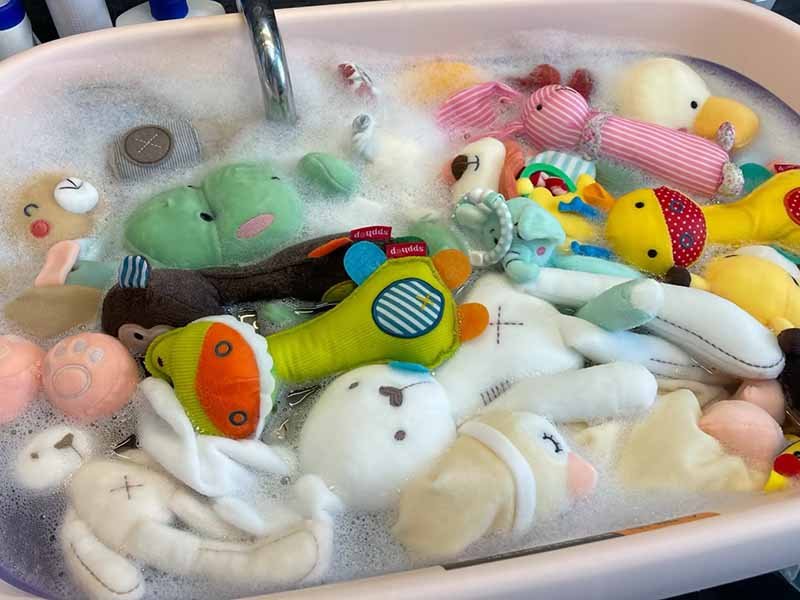
A baby plush toy is rarely just a toy. For many families, it becomes part of feeding time, nap time, stroller walks, car rides, and bedtime routines. A soft bunny may touch a baby’s cheek hundreds of times in a week. A small teddy bear may fall on the floor, collect dust from a diaper bag, absorb milk drops, pick up saliva, and still end up back in a baby’s arms before anyone notices. Parents usually see a cute comfort item. Product teams, retailers, and plush manufacturers see something more complex: fabric pile, stitching strength, stuffing density, washing resistance, drying speed, colorfastness, and small-part safety.
Baby plush toys should be cleaned by checking the care label first, removing loose dust, selecting machine washing, hand washing, or spot cleaning based on the toy structure, using mild low-residue detergent, rinsing thoroughly, and drying completely before baby use. Plush toys with batteries, sound modules, glued trims, weak seams, or delicate materials need extra care and should not be soaked without clear washing instructions.
Safe cleaning is not only about removing visible stains. A plush toy can look clean but still hold moisture inside. It can smell fresh but contain too much detergent residue. It can survive one wash but lose shape after repeated cleaning. For parents, that means frustration. For brands, that means reviews, returns, and trust issues. A well-made baby plush toy should be soft enough to comfort a child, strong enough for daily handling, and practical enough for real home cleaning.
What Makes Baby Plush Toys Different?

Baby plush toys need more careful cleaning than ordinary stuffed animals because babies often hug, chew, drool on, sleep with, and carry them everywhere. Safe care depends on fabric type, filling quality, stitching, accessories, age grading, and whether the toy contains sound or electronic parts. A good baby plush toy should stay soft, clean, stable, and safe after repeated daily care.
Baby plush toys live in a high-contact environment. A decorative plush may stay on a shelf for months with only light dust, while a baby plush may touch skin, saliva, milk, food, crib sheets, car seats, pets, stroller blankets, and nursery floors in the same week. Cleaning needs are therefore much stricter. Parents are not only trying to remove dirt; they are trying to protect a baby’s skin, breathing space, mouth contact, and sleeping environment.
For brands developing baby plush collections, cleaning performance should be considered during the earliest design stage. A beautiful plush sample may photograph well, but the real test happens after washing, drying, squeezing, hugging, and repeated use. Fabric that sheds, stuffing that clumps, seams that open, or colors that bleed can quickly damage customer confidence.
A baby-safe plush design usually performs better when it includes:
- Short or medium pile fabric that does not trap too much residue
- Soft filling with good recovery after washing
- Reinforced seams around arms, ears, legs, and neck
- Embroidered eyes instead of hard detachable parts for younger ages
- Low-odor, low-shedding fabric
- Clear care labels with realistic instructions
- Removable sound modules when music or heartbeat features are added
- Materials aligned with target-market safety requirements
Delsney develops custom baby plush toys with these concerns in mind. With more than 18 years of plush product development, design, sample making, and manufacturing experience, Delsney helps brands turn drawings, tech packs, reference samples, and design ideas into practical plush products that can handle real family use.
Why Baby Plush Needs Gentle Care
Baby plush toys need gentle care because babies have closer and more sensitive contact with soft toys than older children or adults. A baby may press a plush toy against the face, chew the ear, suck the fabric edge, or hold it while sleeping. Because of that, strong fragrance, harsh detergent, bleach, heavy disinfectant residue, or poor rinsing can create unnecessary concerns.
Gentle cleaning helps protect:
- Baby skin from irritation caused by cleaning residue
- Plush fibers from becoming rough or matted
- Filling from clumping or holding moisture
- Seams from pulling apart during washing
- Colors from fading or bleeding
- Emotional comfort, especially when a baby depends on one favorite toy
For parents, the goal is simple: clean enough to be hygienic, gentle enough to remain safe, and careful enough to keep the toy soft. For product developers, the goal is broader. A baby plush toy should be designed to tolerate the cleaning method shown on its label. If a care label says machine washable, the fabric, filling, embroidery, stitching, and trims should all support that claim.
Delsney can help custom plush clients choose washable fabrics, soft filling, embroidery details, reinforced sewing methods, and safer construction options. These choices reduce the chance of customer complaints after the first few washes.
What Babies Do With Plush Toys
Babies use plush toys in unpredictable ways. A toy may start the day inside a crib, move to a feeding chair, fall on the carpet, sit inside a stroller, travel in a diaper bag, and end up beside the baby during nap time. Even when a plush toy looks clean, it can collect invisible residue from milk, drool, dust, hands, and household surfaces.
Common baby plush contact scenarios include:
| Use Scenario | Cleaning Concern | Practical Care Need |
|---|---|---|
| Sleeping with plush | Face and skin contact | Low-residue cleaning and complete drying |
| Chewing or sucking plush | Saliva and detergent residue | Mild detergent and extra rinse |
| Stroller or car seat use | Outdoor dust and surface dirt | Frequent spot cleaning |
| Nursery sharing | Cross-contact between children | More regular cleaning schedule |
| Feeding-time comfort | Milk or food stains | Quick stain treatment |
| Pet household | Pet hair and dander | Lint removal and surface cleaning |
| Travel use | Public surface exposure | Cleaning after trips |
A plush toy used mainly as decoration may only need occasional dust removal. A plush toy used every day for comfort may need weekly surface checks and regular washing based on visible dirt, odor, or exposure. When babies are sick, toys used closely should be cleaned after recovery.
For brands, these usage patterns matter because parents increasingly look for soft toys that are not only cute, but also easy to maintain. Washable baby plush toys, removable plush covers, embroidered details, durable stitching, and clear care labels all make the product more attractive for real family life.
Which Safety Risks Matter Most
The biggest risks in baby plush cleaning are often not the most obvious ones. Visible stains are easy to notice. Hidden moisture, loose accessories, detergent trapped inside thick filling, and weakened seams are harder to see. A toy may look fine after washing but still be damp in the center. Another toy may smell clean but contain too much detergent in the pile.
Important safety points include:
- Loose eyes, noses, bows, buttons, ribbons, or tags
- Weak seams around limbs, ears, tails, and neck
- Filling exposed after washing
- Long fibers shedding into baby’s mouth
- Dark fabrics bleeding color
- Strong chemical smell after cleaning
- Electronic modules exposed to water
- Thick plush bodies drying too slowly
- Glued decorations loosening after moisture exposure
The safest approach is inspection before washing and again after drying. Parents should gently pull on small parts, check seams, smell the toy, feel for dampness, and make sure no stuffing is exposed before giving the toy back to the baby.
For custom plush production, Delsney can reduce many risks through better design choices. Embroidered facial features are often preferred for baby plush products. Reinforced seams support repeated handling. Washable filling helps retain shape. Proper fabric testing reduces color bleeding. Clear care instructions prevent misuse. When a product is designed with cleaning in mind, parents feel more confident using it every day.
What Care Labels Tell You
A care label gives parents the first reliable clue about how a plush toy should be cleaned. It may say machine wash, hand wash only, surface clean only, do not tumble dry, air dry flat, remove electronic module, or avoid bleach. A well-written care label prevents damage, protects product performance, and reduces confusion after purchase.
Many cleaning problems happen because the care label is unclear or unrealistic. For example, a plush toy with a non-removable music box should not be labeled as fully machine washable. A delicate long-pile plush may look premium, but if the label does not explain gentle care, parents may wash it too aggressively and damage the surface. A large dense plush may need longer drying time, yet the label may not warn users about internal moisture.
For custom baby plush products, care label planning should include:
- Target age group
- Fabric type
- Filling material
- Electronic parts
- Accessories and trims
- Market requirements
- Expected cleaning method
- Drying instructions
- Language requirements for sales regions
Delsney supports OEM and ODM clients with care label guidance as part of custom plush development. Accurate care labels help brands communicate quality clearly and reduce after-sale problems.
| Label Instruction | Meaning for Parents | Product Design Requirement |
|---|---|---|
| Machine wash cold | Can be washed gently in machine | Strong seams, washable filling, stable fabric |
| Hand wash only | Needs careful manual cleaning | Delicate fabric or structure |
| Surface clean only | Should not be soaked | Electronics, trims, or sensitive filling |
| Remove module before wash | Sound part must come out first | Inner pocket and safe closure design |
| Do not tumble dry | Heat may damage toy | Air-dry structure required |
| No bleach | Harsh chemicals may damage fabric | Color and fiber protection |
| Air dry flat | Shape needs support while drying | Filling should recover naturally |
How Do You Check a Plush Toy Before Cleaning?

Before cleaning a baby plush toy, check the care label, seams, fabric, color stability, small parts, filling, odor, and any electronic components. If the toy has batteries, sound, glued trims, weak stitching, or delicate materials, use spot cleaning or careful hand washing instead of machine washing. A short inspection can prevent damage and improve baby safety.
Pre-wash inspection takes only a few minutes, but it can prevent several common problems. Many parents place plush toys directly into the washer because the toy looks soft and washable. Yet plush toys vary greatly in structure. One bunny may have only fabric and filling. Another may include a music box, squeaker, rattle, heat-transfer label, glued bow, or inner shaping material. The outside appearance does not always reveal what is inside.
A practical inspection routine should include:
- Read the care label
- Check for batteries or removable modules
- Pull gently on eyes, nose, bows, ribbons, and tags
- Look for open seams or loose thread
- Smell for mildew, milk, or sour odor
- Test a hidden fabric area for color transfer
- Feel whether the toy is dense or easy to dry
- Decide whether full washing or spot cleaning is safer
For brands and product teams, pre-cleaning logic should be built into product development. If a toy is likely to be used by babies, parents will expect clear instructions and easy care. Delsney helps clients evaluate fabric, construction, filling, module placement, and wash performance during the sample stage, reducing avoidable issues before mass production.
Is It Machine Washable?
Machine washability should never be assumed. Parents should look for a clear label saying the plush toy can be machine washed. If no label exists, or if the toy contains electronics, glued parts, fragile trims, or old seams, machine washing becomes risky. A washing machine creates water pressure, spinning force, fabric friction, and seam stress.
Machine washing is most suitable for plush toys with:
- No batteries or electronic parts
- No glued accessories
- No fragile lace, ribbons, or sequins
- Strong stitching
- Washable polyester or cotton-blend fabric
- Soft filling with good recovery
- Stable colors
- Clear care label approval
Recommended machine wash settings for baby plush toys:
| Setting | Recommended Choice | Reason |
|---|---|---|
| Water temperature | Cold or lukewarm | Reduces shrinkage and color bleeding |
| Cycle | Gentle or delicate | Reduces seam and fiber stress |
| Detergent | Mild, low-fragrance | Reduces residue concern |
| Laundry protection | Mesh bag or pillowcase | Reduces friction |
| Spin speed | Low or medium | Helps protect shape |
| Rinse | Extra rinse preferred | Helps remove detergent |
| Drying | Air dry unless label allows dryer | Reduces heat damage |
For custom plush brands, machine wash claims should be backed by real sample testing. Delsney can help evaluate whether a design is suitable for machine washing and suggest changes, such as stronger seams, shorter pile, washable filling, or removable accessories.
Are There Batteries Inside?
Battery-operated plush toys need special caution. Music plush, heartbeat plush, light-up plush, talking animals, recording plush, and vibration plush may all contain electronic modules. Water can damage wiring, battery contacts, speakers, buttons, and internal cases. Even if the outer fabric dries, electronic parts may corrode or stop working.
Parents should check for:
- Zippered back pockets
- Velcro openings
- Hidden battery boxes
- Press buttons inside paws or belly
- Speaker holes
- Sound labels
- Care instructions mentioning module removal
If the electronic module is removable, take it out before washing the soft shell. If it cannot be removed, do not soak the toy. Use a damp cloth with mild detergent for surface cleaning and keep moisture away from the battery area.
For brands, removable sound modules are a strong design upgrade. Parents prefer products that are easy to clean, especially for baby use. Delsney can customize plush toys with removable music boxes, lullaby modules, heartbeat sounds, voice recorders, and safer internal pockets. That structure protects the electronic function while making the plush cover easier to maintain.
Are Small Parts Secure?
Small parts deserve careful attention before any cleaning method. Eyes, noses, buttons, bows, bells, teethers, ribbons, pacifier clips, fabric labels, and decorative patches can loosen during washing. Water, detergent, spinning, and drying may weaken stitching or adhesive.
A parent can do a quick safety check by gently pulling each attached part. If anything moves, twists, or feels loose, the toy should not be washed aggressively or returned to baby use until repaired. After cleaning and drying, the same check should be repeated.
For baby plush toys, safer design choices often include:
- Embroidered eyes and mouth
- Sewn fabric details instead of hard buttons
- Short secure fabric tags
- Reinforced bow or ribbon attachment
- No sharp or brittle plastic trims
- Strong stitching around teether attachments
- No loose decorative beads or sequins
Delsney can help brands adjust design details for baby plush safety. A cute sample can often be made safer without losing character. For example, plastic eyes can become embroidery. A glued bow can become a sewn bow. A detachable charm can become a printed or embroidered patch. These small design choices improve cleaning durability and reduce safety concerns.
Is the Fabric Colorfast?
Colorfastness means the fabric color stays stable during washing, rubbing, and drying. For baby plush toys, color bleeding can create visible staining, customer complaints, and concern about dye quality. Bright colors, dark fabrics, printed patterns, and contrast combinations need extra attention.
A simple home test is to wet a clean white cloth and rub a hidden area of the plush toy. If color transfers, avoid machine washing and use gentle spot cleaning. For commercial production, more structured colorfastness checks should be performed during material selection and sampling.
Color stability matters especially for:
| Fabric Type | Color Concern | Suggested Control |
|---|---|---|
| Dark plush | May bleed onto light fabric | Pre-production colorfastness test |
| Printed fabric | Pattern may fade | Washing and rubbing check |
| Contrast plush | Color transfer between panels | Test fabric combinations |
| Organic cotton | May fade faster depending on dye | Use approved dye process |
| Recycled plush | Batch consistency may vary | Confirm lot stability |
| Long pile plush | Color may look uneven after drying | Brush recovery check |
Delsney works with a wide range of plush fabrics and can help clients compare fabric hand feel, color stability, pile length, and wash performance. For baby products, fabric selection should never focus only on softness. Washability and color behavior are equally important.
Is the Stitching Still Strong?
Stitching strength decides whether a plush toy survives daily handling and cleaning. Babies pull ears, squeeze arms, chew corners, and press plush toys against surfaces. Washing adds extra stress through water weight, movement, and drying pressure. Weak seams may open, exposing filling.
Parents should inspect high-stress areas before cleaning:
- Ears
- Arms
- Legs
- Neck
- Tail
- Belly seam
- Stuffing closure
- Accessory attachment points
- Embroidery edges
- Zipper or Velcro pocket areas
If the seam shows gaps, loose thread, or exposed filling, repair it before washing. For babies, exposed filling should be taken seriously because loose fiber may be pulled out and placed in the mouth.
For custom production, seam quality depends on pattern accuracy, seam allowance, thread choice, worker skill, stuffing pressure, and inspection standards. Delsney’s experience in design, pattern making, sampling, and mass production helps clients improve these details before launch. A plush toy that keeps its shape after cleaning feels more premium and earns stronger parent trust.
How to Wash Baby Plush Toys?
Baby plush toys can be machine washed, hand washed, or spot cleaned based on care label and construction. Use cold or lukewarm water, mild low-residue detergent, gentle movement, and thorough rinsing. Avoid bleach, heavy fragrance, rough scrubbing, and high heat. Plush toys with sound modules, batteries, delicate trims, or weak seams need spot cleaning or controlled hand washing.
Washing method should match toy structure. A simple polyester plush with strong seams may handle machine washing well. A plush rattle with internal sound, an embroidered keepsake plush, or a long-pile luxury animal may need hand washing or spot cleaning. The safest choice is not always the fastest choice.
Parents often ask whether baby plush toys should be disinfected every time. For daily use, regular cleaning and full drying are usually more practical than harsh disinfecting. Strong chemicals can create residue problems, especially for items that babies touch with their mouths. When a baby has been sick, when toys are shared in a nursery, or when plush toys contact dirty surfaces, more careful cleaning may be needed.
A practical cleaning decision table:
| Toy Condition | Better Method | Reason |
|---|---|---|
| Light dust only | Brush or surface wipe | Avoid unnecessary full washing |
| Small food stain | Spot clean | Targets stain without soaking toy |
| Daily comfort toy, washable label | Machine wash gentle | Efficient for regular care |
| Delicate fabric | Hand wash | More control over pressure |
| Sound plush | Remove module or spot clean | Protects electronics |
| Large dense plush | Spot clean or professional care | Hard to dry fully |
| Sick child used toy | Wash if label allows | Helps remove body fluids and residue |
| Old weak plush | Hand wash carefully | Avoid seam damage |
For custom baby plush brands, Delsney can help build care performance into product design. Fabric selection, stuffing amount, seam strength, module structure, and label instructions all affect whether parents can clean the toy confidently.
How to Machine Wash Plush Toys
Machine washing is best for sturdy, washable plush toys without electronics or delicate parts. Place the toy in a mesh laundry bag or pillowcase. Use cold water, gentle cycle, and a small amount of mild detergent. Wash with soft items such as baby towels to reduce impact inside the drum.
Suggested machine wash process:
- Read the care label.
- Remove removable clothes, bows, or modules.
- Check seams and small parts.
- Place plush in a mesh laundry bag.
- Use cold water and gentle cycle.
- Add mild detergent, not too much.
- Select extra rinse when possible.
- Remove immediately after washing.
- Press water out with a towel.
- Air dry fully before baby use.
Avoid washing baby plush toys with heavy clothing, zippers, shoes, or items that may rub harshly. Avoid hot water unless the label allows it. Avoid bleach because it can damage fibers, fade colors, and leave harsh residue. A dryer should only be used when the care label clearly says it is safe.
For product teams, a machine-washable claim should be tested at sample stage. Delsney can support wash checks to review shape recovery, seam strength, color stability, filling condition, and surface softness after cleaning.
How to Hand Wash Plush Toys
Hand washing gives parents better control. It is suitable for delicate plush toys, long-pile materials, keepsake plush, embroidered plush, and toys that may not tolerate machine movement. Fill a basin with cool or lukewarm water, add a small amount of mild detergent, and gently press the water through the toy.
Recommended hand washing steps:
- Remove loose dust before washing.
- Use a clean basin, not a dirty sink.
- Mix detergent fully before adding the toy.
- Gently squeeze instead of rubbing hard.
- Focus on stained areas with soft cloth pressure.
- Rinse several times until water is clear.
- Press water out with a towel.
- Reshape the toy before drying.
- Dry in a ventilated area.
Hand washing should be gentle but not careless. Too much detergent can be difficult to rinse from plush filling. Too much water pressure can shift stuffing. Aggressive twisting can distort the toy’s pattern. Parents should treat baby plush toys like soft shaped products, not simple fabric cloths.
For custom plush manufacturing, hand-wash performance is also important. A premium baby plush should not lose its face shape, limb position, or softness after careful hand cleaning. Delsney’s 3-view development, 3D effect support, and sample adjustment process help clients refine shape before mass production.
How to Spot Clean Plush Toys
Spot cleaning works well for small stains, surface dirt, drool marks, stroller dust, and plush toys that cannot be soaked. Mix a little mild detergent with water. Dip a clean cloth into the solution, blot the dirty area, then wipe again with a second cloth dampened with plain water. Press dry with a towel afterward.
Spot cleaning is safer for:
- Battery plush
- Sound plush
- Rattle plush
- Plush with glued trims
- Plush with mixed materials
- Personalized embroidered plush
- Decorative baby gift plush
- Large plush toys
- Plush with weak seams
The key is moisture control. A cloth should be damp, not dripping. Over-wetting one area may push water into the filling and slow down drying. For odor, surface cleaning may not be enough if saliva, milk, or moisture has reached the inside. In that case, follow the care label and decide whether a full wash is safe.
For brands, easy spot cleaning can be improved by material choice. Short-pile plush, smooth minky fabric, colorfast fabric, secure embroidery, and stain-resistant surface texture can all help parents maintain the toy with less effort.
How to Clean Plush With Sound
Sound plush toys require careful cleaning because water and electronics do not mix. First, check whether the music or sound module can be removed. If it can, remove it before washing the soft shell. If it cannot, avoid soaking and clean only the outer surface with a damp cloth.
Cleaning process for sound plush:
| Step | Action | Reason |
|---|---|---|
| 1 | Locate battery or module area | Prevent accidental water exposure |
| 2 | Remove module if possible | Protect electronic parts |
| 3 | Keep speaker zone dry | Avoid sound damage |
| 4 | Spot clean fabric surface | Remove dirt with low moisture |
| 5 | Wipe detergent residue | Keep baby contact safer |
| 6 | Air dry fully | Prevent moisture around electronics |
| 7 | Test sound after drying | Confirm function before use |
Never place non-removable sound plush in a washing machine. Never soak the battery area. Never use a dryer with an electronic module inside. Heat and moisture can damage buttons, wiring, battery housing, and speakers.
For baby plush brands, removable sound modules are highly practical. Delsney can customize plush toys with lullaby sounds, heartbeat modules, voice recorders, removable inner pockets, safe closures, and clear cleaning labels. That allows parents to keep the plush shell cleaner without sacrificing interactive features.
How to Wash Delicate Plush
Delicate plush toys need slower cleaning and lower friction. Long-pile plush, organic cotton plush, velour plush, sensory plush, gift plush, and embroidered name plush may lose texture if cleaned too aggressively. Hand washing or spot cleaning is usually safer unless the label clearly approves machine washing.
Delicate plush care tips:
- Brush lightly before cleaning to remove dust.
- Use mild detergent only.
- Avoid heavy scrubbing.
- Avoid hot water.
- Avoid soaking trims or embroidery too long.
- Press water out gently.
- Reshape while damp.
- Brush the pile lightly after drying.
- Keep away from high heat.
A delicate plush toy can still be practical if the structure is planned well. Premium softness and cleanability can work together when fabric backing, pile length, stuffing density, embroidery, and trims are chosen carefully. Delsney helps clients balance appearance and function by making real samples, adjusting structure, and improving design accuracy. With physical samples matching design concepts up to 98%, clients can better judge softness, shape, cleaning practicality, and shelf appeal before production.
| Washing Method | Best For | Not Suitable For | Parent Tip |
|---|---|---|---|
| Machine wash | Durable washable plush | Electronics, weak seams, glued trims | Use mesh bag and extra rinse |
| Hand wash | Soft delicate plush | Non-removable electronic toys | Press gently, do not twist |
| Spot clean | Small stains and sound plush | Deep internal odor | Use damp cloth, not soaking |
| Surface wipe | Keepsake or display plush | Heavy dirt | Clean regularly before stains build |
| Professional care | Large or valuable plush | Low-cost daily toys | Ask about baby-safe cleaning products |
How to Disinfect Baby Plush Toys?

Baby plush toys do not always need strong disinfecting. For daily use, careful washing, full rinsing, and complete drying are often enough. Disinfecting becomes more important after sickness, shared nursery use, heavy saliva contact, outdoor exposure, or contact with dirty surfaces. The safest method depends on the toy’s care label, material, filling, and whether electronic parts are inside.
Disinfecting plush toys is more complicated than disinfecting plastic toys. A plastic teether can often be washed, wiped, or sterilized more easily because moisture does not sink deep inside. Plush fabric absorbs water, detergent, body fluids, and cleaning products. If harsh disinfectant is sprayed onto a plush toy and not removed properly, residue may remain in the fibers. For baby use, residue matters because babies may put the toy near their mouth or face.
Parents often want a single strong method that “kills everything,” but baby plush care should be more balanced. Over-cleaning with harsh chemicals can create new problems. Under-cleaning can leave stains, odor, and hygiene concerns. A safer approach is to match the cleaning level to the real situation.
When a baby uses a plush toy every day but has not been sick, regular washing or spot cleaning may be enough. When the toy has been in contact with vomit, heavy drool, mucus, dirty flooring, public surfaces, or shared nursery environments, a deeper cleaning method may be needed if the label allows it. For toys that cannot be washed, controlled surface cleaning plus full drying is usually safer than soaking or chemical overuse.
A useful way to think about plush hygiene is exposure level:
| Exposure Level | Example | Suggested Care |
|---|---|---|
| Low | Plush kept in crib or nursery shelf | Dust removal and periodic cleaning |
| Medium | Daily hugging, nap use, light drool | Regular washing or spot cleaning |
| High | Milk stains, food stains, heavy saliva | Wash if label allows, dry fully |
| Very High | Sickness, vomit, mucus, shared daycare use | Deeper cleaning or replace if unsafe |
| Special Risk | Battery plush, sound plush, delicate trims | Spot clean only unless parts are removable |
For brands and custom plush clients, disinfecting concerns should influence product development. Baby plush toys intended for daily use should be easy to clean without destroying softness or structure. If a plush toy includes a sound module, removable construction is far more practical. If the toy targets newborn gifts, embroidered features and washable materials can make parent care easier.
Delsney helps custom plush clients build these details into product design. Material selection, stuffing density, seam construction, accessory method, and care label instructions all affect how easily a baby plush toy can be cleaned after real daily use.
What Is Cleaning vs Disinfecting?
Cleaning and disinfecting are not the same. Cleaning removes visible dirt, saliva, milk residue, dust, oils, and many unwanted particles from the plush surface. Disinfecting aims to reduce germs more aggressively. For baby plush toys, cleaning should usually come first. A dirty plush toy cannot be disinfected well if stains, body fluids, or detergent residue remain trapped in the fabric.
For many family situations, proper cleaning is the most practical routine. Washing with mild detergent, rinsing thoroughly, and drying fully can remove everyday dirt and reduce hygiene concerns. Disinfecting may be useful after illness, shared use, or heavy contamination, but it should not rely on harsh chemical residue that stays in the fabric.
Parents should avoid spraying strong disinfectant directly onto a baby plush toy unless the product is clearly safe for fabric and suitable for baby-contact items after drying or rinsing. Even then, the toy should be aired out completely and checked for smell or residue before baby use.
For plush manufacturers, care instructions should avoid vague language. A label that only says “clean as needed” gives little help. Better wording may include “surface clean only,” “remove sound module before washing,” “hand wash cold,” or “air dry fully before use,” depending on product structure.
Which Disinfecting Methods Are Safer?
Safer disinfecting starts with the care label. If a plush toy is machine washable, washing it according to instructions is usually the most reliable method for routine hygiene. If the toy can tolerate warm water, the label may allow it, but many baby plush toys should be cleaned with cold or lukewarm water to protect shape, color, and softness.
For washable baby plush toys, safer care may include:
- Mild detergent
- Extra rinse
- Mesh laundry bag
- Full air drying
- Low heat only when label allows
- Cleaning soon after heavy stains
- Avoiding strong bleach or perfume-heavy products
For surface-clean-only toys, safer care may include:
- Damp cloth cleaning
- Mild soap solution
- Plain water wipe afterward
- Careful drying near airflow
- Keeping moisture away from modules
- Avoiding oversaturation
Steam can be useful for some fabric items, but it is not always ideal for baby plush toys. Steam adds moisture and heat, which may affect glue, electronics, delicate pile, printed fabrics, and internal filling. A large plush toy can feel dry outside while still holding moisture inside. That is why airflow and drying time are just as important as the cleaning method.
For product development, safer disinfecting is closely connected to washable construction. Delsney can help clients create plush products with removable modules, short-pile washable fabrics, reinforced seams, and filling that recovers better after cleaning.
Do Plush Toys Need Steam Cleaning?
Steam cleaning is not required for most baby plush toys. It can help freshen some fabric surfaces, but it should be used carefully. Steam creates heat and moisture. For plush toys with glue, sound modules, batteries, plastic parts, delicate embroidery, or dense filling, steam may cause damage or leave the toy damp inside.
Steam may be considered when:
- The care label allows heat or steam
- The toy has no electronics
- The plush surface needs odor refresh
- The toy is not heavily stained
- The operator can control moisture level
- The toy can dry fully afterward
Steam should be avoided when:
- The toy has batteries or sound
- The toy has glued trims
- The plush is very dense
- The fabric is heat-sensitive
- The care label says surface clean only
- The toy belongs to a newborn and residue or moisture control is uncertain
Parents should never use steam as a shortcut for cleaning dirty plush toys. If milk, saliva, food, or body fluids are present, surface soil should be removed first. Steam over dirt can sometimes set odor or push moisture deeper into the toy.
For commercial baby plush products, brands should not rely on parents owning steam cleaners. Better product value comes from simple care: easy spot cleaning, clear washing instructions, washable fabrics, stable seams, and fast drying design.
How to Remove Saliva and Odor
Saliva and odor are common issues for baby plush toys. A toy may smell sour because drool, milk, or moisture has entered the pile or filling. Light surface odor can often be improved with spot cleaning and airflow. Strong odor may require washing if the label allows it. If odor remains after proper cleaning and full drying, the inside may be contaminated, and replacement may be safer.
Practical odor care steps:
- Remove loose dust and hair.
- Check the care label.
- Spot clean stained saliva areas first.
- Wash fully if the toy is washable.
- Use mild detergent only.
- Rinse very well.
- Press out water with a towel.
- Dry in a well-ventilated area.
- Smell and touch-check before baby use.
Avoid masking odor with perfume, strong sprays, or scented fabric products. A sweet smell does not mean the toy is clean. Babies are more sensitive to fragrance, and a heavily scented plush may be unpleasant or irritating.
For brands, odor resistance begins with materials. Low-odor fabric, clean filling, proper storage, and packaging control help reduce unpleasant smell when customers first open the product. Delsney supports fabric and filling selection for custom plush toys, helping clients create baby plush products that feel clean, soft, and trustworthy from the first touch.
How to Avoid Chemical Residue
Chemical residue is one of the biggest reasons baby plush toys need careful cleaning. Plush fabric can hold detergent inside fibers, seams, and filling. Too much detergent is harder to rinse out, especially in dense toys. A toy may feel clean but leave a slick or stiff touch after drying.
To reduce residue:
- Use a small amount of mild detergent.
- Avoid strong fragrance.
- Avoid heavy fabric softener.
- Choose extra rinse when machine washing.
- Wipe spot-cleaned areas with plain water.
- Do not spray disinfectant heavily onto plush.
- Let the toy air out fully after cleaning.
- Check for smell before giving it back.
A good rule is simple: less detergent, better rinsing. More soap does not mean cleaner. For baby plush toys, too much soap can create a new problem.
From a manufacturing angle, residue control is easier when plush fabric has suitable pile density and filling is not overly packed. Very dense plush may feel premium, but if it traps too much water or soap, cleaning becomes harder. Delsney can help custom clients balance plush hand feel, weight, stuffing density, and cleanability according to the target customer group.
| Cleaning Concern | Safer Choice | Risky Choice |
|---|---|---|
| Mild daily dirt | Gentle wash or spot clean | Strong disinfectant spray |
| Saliva marks | Mild detergent and rinse | Perfume spray |
| Sound plush | Low-moisture wipe | Soaking or machine washing |
| Odor | Wash and fully dry | Covering smell with fragrance |
| Baby mouth contact | Extra rinse | Heavy detergent dose |
| Dense plush | Longer drying time | Returning while damp |
| Shared nursery toy | Scheduled cleaning | Waiting until visibly dirty |
How Should Baby Plush Toys Be Dried?

Baby plush toys should be dried completely before being given back to a baby. Press out excess water with a clean towel, reshape the toy, and air dry it in a well-ventilated area. Avoid high heat unless the care label allows it. Poor drying can cause odor, clumped filling, damaged fibers, misshapen limbs, or hidden moisture inside the plush body.
Drying is often more important than washing. Many parents focus on removing stains but underestimate how much water a plush toy can hold. A small toy may dry in several hours. A dense or oversized plush may need a full day or longer, depending on filling, fabric, airflow, and humidity. A toy that feels dry on the surface may still be damp inside the belly, head, feet, or seams.
Poor drying can create several problems:
- Sour smell
- Mold risk
- Clumped filling
- Stiff texture
- Flattened pile
- Misshapen head or limbs
- Loose seams from water weight
- Electronic damage if modules were not removed
Airflow is more important than direct heat. A warm, dry, ventilated room is usually better than strong sun or high dryer heat. Direct sunlight can help freshen some toys, but long exposure may fade colors or affect fabric texture. High dryer heat may damage glue, plastic parts, synthetic fibers, embroidery backing, or sound components.
For baby plush toy brands, drying performance should be part of product planning. If a plush toy is very dense, large, or made with long pile fabric, parents may struggle to dry it fully. Better design may include moderate stuffing density, washable filling, quick-recovery polyester fiber, shorter pile, removable parts, and clear drying instructions.
Delsney can support these design decisions during sampling. Clients can review not only appearance, but also how the toy feels after cleaning and drying. For high-end baby plush projects, wash-and-dry performance helps protect brand reputation after purchase.
Why Full Drying Matters
Full drying matters because moisture trapped inside a plush toy can create odor and hygiene concerns. A baby plush toy may feel dry on the ears or surface but remain damp in the head, belly, paws, or stuffing core. Babies often hold plush toys close to their face, so dampness and sour smell are not acceptable.
A damp plush toy may also lose shape. Wet filling is heavier and can shift downward, making the head sag or the body uneven. Seams may experience extra stress when the toy is lifted while wet. Long pile can flatten or clump if dried without reshaping.
Parents should check dryness by:
- Pressing the thickest part of the toy
- Smelling the toy closely
- Feeling seams and stuffed areas
- Checking under clothes, bows, or accessories
- Waiting longer if any cool damp feeling remains
For baby use, “almost dry” is not enough. A plush toy should be fully dry before returning to the crib, stroller, or play area. For brands, drying instructions should be practical and visible. A care label or packaging card can remind parents to air dry thoroughly before use.
How to Air Dry Plush Toys
Air drying is the safest choice for many baby plush toys. After washing, press the toy gently between towels to remove as much water as possible. Reshape the face, ears, limbs, and body while the toy is damp. Place it on a clean dry towel or drying rack in a ventilated area. Turn it every few hours so all sides dry evenly.
Better air drying setup:
- Clean towel underneath
- Good airflow
- Low humidity room
- No direct contact with dirty surfaces
- Toy placed flat or supported
- Regular turning
- Gentle reshaping
- Soft brushing after dry if needed
Avoid hanging heavy wet plush toys by one ear, arm, or tag. Water weight can stretch seams and distort shape. Very small plush toys may dry well on a rack. Larger toys may need towel pressing several times during drying.
Estimated air-drying time:
| Plush Size | Approximate Drying Time | Notes |
|---|---|---|
| Small plush under 15 cm | 4–8 hours | Faster if lightly filled |
| Medium plush 15–30 cm | 8–18 hours | Turn several times |
| Large plush 30–50 cm | 18–36 hours | Press with towel first |
| Dense plush body | 24–48 hours | Check inner dampness |
| Long-pile plush | 12–36 hours | Brush after drying |
| Plush with removable cover | 6–18 hours | Cover dries faster than full toy |
Drying time depends on room temperature, humidity, fabric, filling, and wash method. Parents should trust touch and smell more than the clock.
Can You Use a Dryer?
A dryer can be used only when the care label allows it. Some durable plush toys may tolerate low heat or air-fluff settings, but many baby plush toys are safer with air drying. High heat can damage synthetic fibers, shrink fabric, loosen glue, warp plastic parts, affect embroidery backing, or ruin electronic components.
Dryer risk is higher for:
- Sound plush
- Battery plush
- Plush with plastic parts
- Long-pile plush
- Organic cotton plush
- Plush with glued decorations
- Plush with delicate trims
- Very dense plush toys
- Personalized embroidery plush
When dryer use is allowed, choose low heat or no heat. Place the toy inside a pillowcase or mesh bag. Add clean dry towels to reduce tumbling impact. Remove the toy before it becomes overheated. Finish with air drying if any dampness remains.
For parents, the safest habit is to avoid rushing. A baby may want the favorite toy back quickly, but returning a damp or heat-damaged plush is not worth the risk. Some families keep two identical comfort plush toys so one can be cleaned while the other stays available. For baby plush brands, offering twin-pack comfort toys or repeatable SKU options can solve a real parent pain point.
How to Keep Plush Soft
Softness after cleaning depends on fabric quality, detergent amount, rinsing, drying method, and pile recovery. A plush toy may become stiff because too much detergent remains in the fibers. It may become flat because the pile dried pressed against a surface. It may become lumpy because filling shifted during washing.
To keep plush soft:
- Use mild detergent sparingly.
- Rinse thoroughly.
- Avoid high heat.
- Reshape before drying.
- Brush long pile gently after drying.
- Dry with good airflow.
- Avoid heavy fabric softener for baby items.
- Do not twist or wring strongly.
Fabric softener may seem helpful, but for baby plush toys it can leave residue. A better solution is proper rinsing and gentle brushing after drying. For long-pile toys, brushing in the direction of the pile can restore fluff. For minky or short-pile plush, light hand smoothing may be enough.
For custom plush development, material choice decides softness recovery. Delsney can help brands compare plush fabrics, backing strength, pile length, and filling types before mass production. A baby plush toy should feel soft when new and remain pleasant after normal cleaning.
How to Prevent Mold Inside
Mold prevention depends on moisture control. Plush toys should not be stored damp, placed in closed bins while wet, or returned to a crib before fully dry. Dense filling, large bodies, and poorly ventilated drying areas increase moisture risk.
Parents can reduce mold risk by:
- Removing excess water with towels
- Using airflow instead of sealed spaces
- Turning the toy during drying
- Avoiding thick blankets underneath wet plush
- Waiting until inner areas feel dry
- Cleaning milk or saliva stains quickly
- Replacing toys with persistent musty odor
If a baby plush toy smells musty even after proper washing and drying, replacement may be safer. Persistent odor can mean moisture reached the inner filling and was not fully removed. For toys with sentimental value, professional textile cleaning may be considered, but baby use should be cautious.
For manufacturers, mold prevention starts with product structure. Overstuffed bodies dry slowly. Poor filling quality can hold moisture unevenly. Weak seams may trap water in corners. Delsney helps clients develop plush shapes and stuffing levels that balance softness, shape, and practical care. For baby plush products, a toy that dries well is easier for families to love long term.
How Often Should You Clean Baby Plush Toys?
Baby plush toys should be cleaned based on use frequency, exposure, age of the baby, and visible condition. A daily comfort plush may need weekly checks and regular cleaning, while a decorative plush may need only occasional dust removal. Clean immediately after sickness, heavy drool, milk stains, outdoor dirt, pet contact, or nursery sharing.
There is no single cleaning schedule for every family. A newborn comfort plush kept in a clean crib has different needs from a plush toy carried to daycare every day. A toy used by a baby who chews fabric needs more attention than one placed on a nursery shelf. Cleaning frequency should be practical, not extreme.
Over-cleaning can wear down plush fabric, fade color, stress seams, and shorten product life. Under-cleaning can leave saliva, dust, odor, and stains. The right rhythm is a balance between hygiene and durability.
A practical cleaning frequency guide:
| Use Pattern | Suggested Cleaning Frequency | Notes |
|---|---|---|
| Daily sleep comfort toy | Every 1–2 weeks or when dirty | Spot check daily |
| Toy often chewed or sucked | Weekly or as needed | Extra rinse recommended |
| Plush used only for display | Every 1–3 months | Dust removal may be enough |
| Stroller or travel plush | After trips or outdoor exposure | Spot clean frequently |
| Nursery or daycare plush | Weekly or more often | Shared use increases cleaning need |
| After baby sickness | Clean after recovery | Follow label carefully |
| Milk or food stain | Clean immediately | Prevent odor and deep staining |
| Pet-contact plush | Weekly check | Remove hair and dander |
Parents should also consider season and environment. Humid climates may require more careful drying. Homes with pets may need more frequent surface cleaning. Babies with sensitive skin may need lower-fragrance products and extra rinsing.
For brands and plush product developers, cleaning frequency affects product life expectations. A baby plush toy meant for daily use should be designed for repeated care. A premium keepsake plush may focus more on appearance but should still have clear care guidance. Delsney can help clients align product structure with real usage: daily comfort plush, nursery toy, sensory plush, gift plush, sound plush, or private label baby collection.
How Often for Daily Use
A baby plush toy used every day should be checked often and cleaned when dirt, odor, drool, or stains appear. For many families, a weekly or biweekly cleaning rhythm works well for a washable daily comfort toy. Spot cleaning can be done between full washes.
Daily-use plush toys should be checked for:
- Drool marks
- Milk smell
- Dust buildup
- Pet hair
- Loose thread
- Damp areas
- Flattened or matted pile
- Stains around mouth or hands
- Odor after sleeping
A favorite comfort toy may become hard to wash because the baby wants it constantly. One practical solution is to buy or produce duplicate comfort plush toys. Some brands offer twin comforters or replacement plush styles so parents can rotate them. For custom baby plush clients, repeatable production and consistent color matching matter because parents may buy a second toy later.
Delsney can support private label clients with stable plush production, style consistency, and flexible MOQ options, making it easier to build baby plush collections that serve real family needs.
How Often After Sickness
After sickness, baby plush toys used closely should be cleaned before returning to regular use. Plush toys may collect saliva, mucus, sweat, vomit, or medicine residue during illness. If the toy is washable, clean it according to the care label. If not washable, spot clean carefully and dry thoroughly. If the toy remains stained, sticky, or musty, replacement may be best.
After-sickness cleaning steps:
- Separate the plush from clean bedding.
- Check whether the toy is washable.
- Remove electronic modules if possible.
- Wash or spot clean based on label.
- Use mild detergent.
- Rinse well.
- Dry completely.
- Inspect seams and surface before reuse.
Parents should avoid panic cleaning with harsh chemicals. A baby plush toy still needs gentle treatment. Strong disinfectant residue may be more concerning than ordinary dirt if it remains in fabric.
For daycare, nursery, or baby product brands, cleaning guidance after sickness can reduce user confusion. A care card, package insert, or website guide can explain practical steps. Delsney can help clients prepare plush products with customized care labels, hangtags, and packaging support, making the product easier to use and trust.
How Often for Nursery Use
Nursery and daycare plush toys face more contact than home-only toys. Multiple children may touch the same plush, and toys may move between floors, shelves, cribs, and activity areas. Shared plush toys should follow a more regular cleaning routine than personal toys.
For nursery settings, plush toys should be:
- Easy to identify
- Easy to wash
- Free from loose parts
- Quick to dry
- Labeled clearly
- Inspected often
- Removed if damaged
- Cleaned after heavy contact or sickness
A nursery may prefer washable plush toys without electronics, small plastic accessories, or delicate trims. Short-pile plush and embroidered details are easier to maintain. Large dense plush toys may look attractive but can be harder to clean and dry in shared care environments.
For brands selling to nurseries, daycares, early learning centers, or baby activity brands, washable construction can become a strong selling point. Delsney can customize plush toys for institutional use with practical sizes, durable seams, soft safe fabrics, and simplified cleaning requirements.
When to Replace a Plush Toy
Cleaning cannot solve every problem. A baby plush toy should be replaced when it becomes damaged, unsafe, or impossible to clean properly. Parents may feel emotional about a favorite toy, but baby safety comes first.
Replace or retire a baby plush toy when:
- Filling is exposed
- Seams keep reopening
- Small parts are loose
- Strong odor remains after cleaning
- Mold smell appears
- Fabric sheds heavily
- Electronic parts are damaged
- The toy becomes stiff or rough
- The toy no longer dries properly
- The care label is missing and structure is uncertain
Some plush toys can be kept as keepsakes but removed from baby use. A favorite newborn toy may later become nursery decor instead of a daily sleep item.
For product brands, replacement behavior creates a business opportunity when handled responsibly. If a plush toy becomes part of a baby’s daily routine, parents may want the same design again. Consistent production, stable fabric supply, and accurate color matching help brands offer replacement units, twin packs, or seasonal versions. Delsney’s custom production capability supports ongoing product lines, private label collections, and repeat orders for brands that want long-term plush programs rather than one-time products.
Which Plush Toys Are Easier to Clean?

Baby plush toys are easier to clean when they use short or medium pile fabrics, washable filling, strong seams, embroidered facial details, removable electronic modules, and clear care labels. The easier a plush toy is to clean, the more useful it becomes for parents, nurseries, gift brands, and baby product companies selling comfort toys for daily use.
Cleanability is not only a care problem after purchase. It is a design decision made before production. Many plush toys look charming in product photos but become difficult for parents after the first stain. A long-pile toy may trap milk. A dense plush body may take too long to dry. A non-removable music box may limit washing. A glued bow may loosen after moisture exposure. A plush toy with a vague care label may leave parents guessing.
For baby products, parents often choose with two questions in mind:
- Can my baby safely touch, hug, or mouth it?
- Can I clean it without ruining it?
A plush toy that answers both questions clearly has stronger market appeal. Brands targeting baby gifts, nursery stores, influencer plush collections, early education products, and private label baby lines should treat cleanability as part of product value.
Easy-clean baby plush features usually include:
| Design Feature | Cleaning Benefit | Customer Value |
|---|---|---|
| Short-pile plush | Easier to wipe and rinse | Less trapped dirt and saliva |
| Embroidered eyes | No hard parts to loosen | Safer for young babies |
| Washable polyester filling | Better shape recovery | Less clumping after wash |
| Reinforced seams | Handles repeated washing | Longer product life |
| Removable sound module | Soft shell can be cleaned | Better for musical plush |
| Light to medium stuffing | Faster drying | Lower odor risk |
| Colorfast fabric | Less bleeding or fading | Better appearance after care |
| Simple trims | Fewer weak points | Lower damage risk |
| Clear care label | Less user confusion | Fewer complaints and returns |
A plush toy designed for newborn gifting may prioritize softness, safety, and delicate appearance. A plush toy designed for daycare or nursery use may prioritize washability, short pile, and durability. A plush toy designed for a premium baby brand may need all three: softness, beauty, and practical care.
Delsney helps clients make these trade-offs before production. Through material sourcing, product design, pattern making, sampling, 3-view artwork support, 3D effect development, and OEM/ODM customization, Delsney can turn a creative baby plush concept into a product that looks attractive and works in real homes.
Are Short-Pile Fabrics Better?
Short-pile fabrics are often easier to clean than long-pile plush because they hold less dust, saliva, food residue, and detergent. They also dry faster and are easier to brush back into shape. For baby plush toys, short-pile or medium-pile fabrics are often practical choices when the toy is designed for frequent hugging, chewing, stroller use, or nursery use.
Common easy-care fabric options include:
- Short plush
- Minky plush
- Velboa
- Soft boa with moderate pile
- Cotton-blend surface fabric
- Microfiber plush
- Smooth fleece
- Organic cotton fabric for selected baby lines
- Recycled polyester plush for eco-focused collections
Long-pile plush can look luxurious and expressive, but it needs more careful cleaning. It may mat after washing, trap soap, and require brushing after drying. For baby products, long pile should be used thoughtfully, especially around the face, mouth-contact areas, or small parts.
For a custom plush brand, fabric choice should match the product’s main use. A baby comforter may need smooth, low-pile fabric. A collectible nursery animal may use mixed textures. A sensory plush may include several touch zones but still needs clear care instructions. Delsney can help clients compare hand feel, pile length, color options, wash performance, cost, MOQ, and lead time before final material approval.
Is Embroidery Safer Than Plastic?
For many baby plush toys, embroidery is often a safer and cleaner design choice than hard plastic eyes, buttons, beads, or glued facial parts. Embroidered eyes and mouths are sewn into the fabric, so there are fewer detachable components. They also handle cleaning better when thread quality, backing, and stitch density are properly controlled.
Embroidery advantages for baby plush toys include:
- Fewer loose small parts
- Softer surface contact
- Better wash durability
- More design flexibility
- Suitable for gentle facial expressions
- Easier compliance for younger age groups
- Better fit for premium baby gift products
Plastic eyes can still be used in some plush categories, but age suitability and testing requirements become more important. For newborn or infant-focused plush toys, many brands prefer embroidery because it feels softer and reduces customer concern.
Embroidery also affects visual quality. Poor embroidery can look flat, rough, uneven, or misaligned. Premium baby plush toys need clean thread edges, smooth backing, accurate positioning, and comfortable touch. Delsney provides product and graphic design support, helping clients convert character sketches, brand mascots, animal faces, or baby-safe expressions into embroidery-ready designs. For custom OEM/ODM projects, embroidery samples can be adjusted before mass production so the final plush face matches the original design intent.
Are Removable Parts Helpful?
Removable parts can make baby plush toys much easier to clean when designed safely. The most common example is a removable sound module. Parents can take out the music box, heartbeat device, or voice recorder before washing the outer plush shell. Removable clothes, bibs, blankets, or accessories can also help if they are safely constructed and not intended for very young babies.
Useful removable designs may include:
| Removable Feature | Cleaning Advantage | Design Warning |
|---|---|---|
| Sound module | Plush shell can be washed separately | Pocket must close securely |
| Plush clothing | Small stains can be washed separately | Avoid tiny detachable pieces |
| Baby blanket attachment | Easier partial cleaning | Secure stitching needed |
| Pacifier holder part | Can be cleaned more often | Must meet safety requirements |
| Inner heating pouch | Outer plush can be cleaned | Use clear instructions |
| Scent pouch | Can be removed before care | Not suitable for all baby markets |
Removable parts should never create new hazards. If a component can detach too easily, it may become a small-part concern. If a pocket closure is weak, a baby may access the internal module. If instructions are unclear, parents may wash parts incorrectly.
For custom projects, removable design needs experienced pattern making. The pocket must be hidden but accessible. Closures must be secure but user-friendly. Seams must stay smooth. Delsney’s engineering and sampling teams can help design removable structures that support cleaning while maintaining a soft, attractive plush shape.
What Filling Works Best?
Filling affects softness, shape, wash recovery, drying speed, and product life. For baby plush toys, filling should feel soft, recover well after compression, and avoid clumping after washing. Polyester fiber filling is widely used because it is soft, lightweight, flexible, and suitable for many washable plush products when quality is controlled.
Good baby plush filling should offer:
- Soft hand feel
- Even distribution
- Low odor
- Good rebound
- Stable shape after washing
- No hard lumps
- Suitable density for drying
- Compatibility with target safety standards
Overstuffing can make a plush toy look full and premium, but too much filling may slow drying and make the toy less cuddly. Understuffing can make the toy look weak or lose shape quickly. The correct filling amount depends on the toy size, shape, fabric stretch, baby use scenario, and desired hand feel.
Delsney can adjust filling density during sampling. For a baby comfort toy, the goal may be light, soft, and easy to squeeze. For a sitting animal plush, the goal may be stronger body balance. For a musical plush, internal space must be planned for the module. For private label baby plush collections, consistent filling control across bulk production helps every piece feel similar to the approved sample.
Which Certifications Matter?
Baby plush toys sold in Europe, North America, and other regulated markets must meet relevant safety expectations. Requirements depend on product type, sales region, age grade, material, accessories, and brand requirements. For baby plush products, brands often pay attention to physical safety, chemical safety, flammability, labeling, small parts, and material traceability.
Common safety and compliance areas include:
| Market or Standard Area | Why It Matters for Baby Plush |
|---|---|
| ASTM F963 | Important for toy safety in the U.S. market |
| CPSIA | Covers U.S. children’s product safety requirements |
| EN71 | Widely used for toy safety in the European market |
| CE marking | Needed for many toys sold in Europe |
| UKCA | Relevant for the U.K. market |
| REACH | Chemical safety concern for Europe |
| OEKO-TEX materials | Supports textile safety confidence |
| Small parts testing | Important for baby and toddler age groups |
| Pull testing | Checks accessory attachment strength |
| Colorfastness checks | Helps reduce dye transfer concerns |
| Needle detection | Important in sewn plush production |
Compliance does not replace good design. A product can pass basic tests but still disappoint parents if it is hard to wash, slow to dry, or poorly labeled. Strong baby plush development should connect safety, appearance, cleaning, and customer experience.
Delsney supports plush projects for overseas brands and larger clients that require safety-conscious manufacturing. From design review to material choice, sampling, quality inspection, and production control, Delsney helps clients prepare custom plush products that better fit the expectations of U.S., European, and other international markets.
How Does Delsney Make Washable Baby Plush Toys?
Delsney makes washable baby plush toys by combining material selection, plush design, pattern development, sample making, washable construction, quality inspection, and OEM/ODM production support. With over 18 years of plush manufacturing experience, Delsney helps brands create baby plush products that are soft, safe, attractive, practical to clean, and suitable for custom private label programs.
A washable baby plush toy does not happen by accident. It starts with the right questions:
- What age group will use the toy?
- Will the baby chew or sleep with it?
- Does it need a sound module?
- Will parents expect machine washing?
- Will the plush be sold as a gift set?
- Which market will it be sold in?
- What compliance requirements must be considered?
- What MOQ, sample time, and launch schedule are needed?
Delsney works with brands, retailers, product developers, gift companies, IP owners, nursery product teams, and custom plush clients who need more than a basic factory quote. Many high-end plush projects require shape accuracy, soft hand feel, safe structure, fast sampling, realistic production planning, and consistent bulk quality.
Delsney’s strengths for baby plush customization include:
| Capability | Delsney Support |
|---|---|
| Industry experience | 18+ years in plush R&D, design, sampling, manufacturing, and sales |
| Product customization | Baby plush, animal plush, comfort plush, sensory plush, sound plush, gift plush, brand mascot plush |
| OEM/ODM service | Tech pack sampling, drawing-based sampling, sample-based development, private label |
| Design support | Free design, 3-view artwork, 3D effect support |
| Sampling speed | 5–7 days for many standard plush samples |
| Design accuracy | Finished plush can reach up to 98% match with approved design artwork |
| MOQ flexibility | Flexible MOQ for different project needs |
| Quality assurance | 100% quality guarantee and inspection-focused production |
| Compliance support | Suitable for overseas safety and certification needs |
| Production lead time | Short bulk lead time for launch schedules |
| Brand support | Custom logo, labels, packaging, hangtags, private label solutions |
For clients developing baby plush toys, Delsney can help avoid common mistakes before production begins. A plush toy may need shorter pile for cleaning, lighter stuffing for faster drying, embroidered eyes for baby safety, a removable sound module for washability, or stronger seams for repeated use. These adjustments save time, reduce after-sale risk, and create a better parent experience.
What Materials Can Delsney Customize?
Delsney can customize a wide range of plush fabrics and soft textile materials according to product function, target price, softness requirement, cleaning need, and market positioning. For baby plush toys, the right material must feel gentle, look appealing, handle regular care, and match the safety expectations of parents and retailers.
Common material options include:
- Short plush
- Super soft plush
- Minky fabric
- Velboa
- Boa plush
- Fleece
- Cotton fabric
- Organic cotton surface options
- Recycled polyester plush
- Sherpa-style fabric
- Velour
- Corduroy texture fabric
- Muslin or baby comfort fabric
- Mixed sensory fabrics
- Embroidery thread
- Soft appliqué fabric
- Washable polyester filling
- Eco-focused filling options depending on project needs
Material choice should not focus only on softness. For baby plush products, clients should also consider cleaning behavior, shedding, pile recovery, color stability, drying speed, and stitch compatibility. A fabric that feels beautiful in hand may not be the best option for a toy that needs weekly washing.
Delsney can help clients compare different fabric solutions during sampling. For example, a baby comforter may use smooth minky on one side and soft plush on the other. A sensory plush may combine ribbed fabric, short plush, satin tags, and embroidered details. A premium gift plush may use ultra-soft plush but still need washable structure and safe trims.
How Does Delsney Support OEM/ODM?
Delsney provides end-to-end OEM/ODM customization for baby plush toys, supporting clients from idea to finished product. Clients can start from a tech pack, sketch, reference photo, character artwork, physical sample, or early concept. Delsney can assist with design refinement, pattern making, material selection, sample development, logo customization, packaging, and production.
OEM/ODM service may include:
| Development Need | Delsney Service |
|---|---|
| Client has tech pack | Develop sample according to specifications |
| Client has artwork | Create plush pattern and sample |
| Client has physical sample | Improve or reproduce based on reference |
| Client has only concept | Provide design and material suggestions |
| Client needs baby-safe design | Recommend embroidery, washable fabrics, safer trims |
| Client needs private label | Add logo, labels, tags, and packaging |
| Client needs fast launch | 5–7 day sample support for many standard plush projects |
| Client needs visual approval | 3-view and 3D effect support |
| Client needs high accuracy | Up to 98% design-to-sample matching capability |
For baby plush projects, OEM/ODM support is especially valuable because small details matter. Ear shape, facial expression, fabric softness, stuffing level, sitting posture, embroidery position, and care label wording all affect final market acceptance. Delsney’s design and sampling process allows clients to review, adjust, and improve before bulk production.
Private label clients can also customize logo labels, woven labels, hangtags, packaging cards, gift boxes, care cards, and shipping packaging. For brands selling baby plush toys online or through retail channels, these details help create a more complete product experience.
How Accurate Is Plush Sampling?
Sampling accuracy is critical in plush toy development because a small change in fabric, stuffing, seam curve, or embroidery placement can change the whole character. A baby bunny may look gentle in artwork but become too sharp, flat, stiff, or oversized in a poor sample. A teddy bear may lose its charm if the eyes sit too high or the head shape is wrong.
Delsney supports high-accuracy sampling through:
- Product design review
- 3-view drawing support
- 3D effect development
- Pattern engineering
- Fabric matching
- Embroidery testing
- Filling adjustment
- Shape correction
- Sample revision
- Bulk production alignment
For many plush products, Delsney can achieve up to 98% matching between finished physical plush and approved design artwork. That matters for baby plush brands because customers expect the product photo, packaging image, and actual toy to feel consistent.
Sampling also helps test cleanability. Before moving to bulk production, clients can review whether the plush is too dense, whether the pile mats too easily, whether embroidery feels smooth, whether the toy sits correctly, whether the care label makes sense, and whether the structure supports washing. Delsney’s fast sample capability, often 5–7 days for many standard plush samples, helps clients move quickly while still protecting product quality.
What Tests Support Baby Safety?
Baby plush safety depends on both product design and production control. While exact testing needs vary by market and product type, baby plush projects often need attention to fabric safety, seam strength, small parts, color stability, stuffing cleanliness, and metal contamination control.
Important quality and safety checks may include:
| Check Area | Purpose |
|---|---|
| Material inspection | Confirms fabric, filling, and accessories match requirements |
| Colorfastness check | Reduces risk of dye bleeding |
| Seam strength review | Helps prevent opening during use or washing |
| Pull test for parts | Checks attached components |
| Embroidery inspection | Confirms smooth, secure stitching |
| Filling consistency check | Keeps toy shape and hand feel stable |
| Size and weight check | Ensures product matches approved sample |
| Needle detection | Helps prevent metal contamination |
| Appearance inspection | Confirms face, shape, and sewing quality |
| Washing review when needed | Checks fabric and shape after care |
| Packaging inspection | Protects product during storage and transport |
For baby plush products, quality control should not only happen at the final inspection stage. Problems should be prevented earlier through better design, material approval, pre-production samples, production standards, and line checks.
Delsney’s manufacturing system supports quality-focused production for foreign clients and higher-end brand projects. With experienced design, development, sampling, and inspection support, Delsney helps clients reduce avoidable risks before products reach families.
Why Choose Delsney for Baby Plush?
Delsney is a strong choice for baby plush customization because it combines factory manufacturing, design support, fast sampling, flexible MOQ, material customization, OEM/ODM service, and international market awareness. Clients do not need to work separately with a designer, sample maker, sourcing agent, and sewing factory. Delsney can support the full development path.
Key reasons clients choose Delsney:
- More than 18 years of plush product experience
- Integrated R&D, design, pattern making, manufacturing, and sales
- Custom baby plush, comfort plush, sensory plush, animal plush, sound plush, and gift plush
- Free design support for custom projects
- Free sampling support depending on project terms
- 5–7 day fast sampling for many standard plush designs
- Support for tech pack, artwork, sample, and concept-based development
- 3-view drawing and 3D effect support
- High design-to-product matching accuracy
- Flexible MOQ for different project stages
- Short bulk production lead time
- 100% quality guarantee
- Private label, logo, packaging, and OEM/ODM support
- Ability to serve overseas medium-large clients and premium brands
- Support for European and American safety compliance needs
For a baby plush product, the real goal is not only to make something cute. The goal is to make a plush toy parents can trust, babies can love, retailers can sell confidently, and brands can reorder without quality surprises. Delsney’s custom plush manufacturing service helps clients build that kind of product from the first idea to final shipment.
Final Thoughts: Make Baby Plush Toys Easier to Love, Clean, and Trust
Cleaning baby plush toys safely starts with simple habits: read the care label, inspect the toy, use gentle detergent, rinse well, dry fully, and choose the right cleaning method for the toy structure. Yet for brands, retailers, and product teams, safe cleaning begins much earlier. It begins with fabric choice, seam design, embroidery, stuffing density, removable modules, care labels, and quality control.
Parents want plush toys that feel soft, smell clean, look adorable, and stay safe after real daily use. They do not want confusing labels, fragile trims, loose parts, long drying times, or toys that lose shape after the first wash. A baby plush toy should bring comfort, not extra worry.
For companies planning a custom baby plush line, Delsney can help develop products that combine softness, safety, cleanability, and brand identity. Whether you need a newborn plush toy, baby comforter, plush rattle, musical plush, sensory plush, animal plush, private label gift set, or OEM/ODM baby plush collection, Delsney can support your project from concept to bulk production.
To start a custom baby plush project with Delsney, prepare any of the following:
| Information to Provide | Why It Helps |
|---|---|
| Product idea or sketch | Helps define shape and character |
| Target age group | Guides safety and material choices |
| Reference images | Helps match style and proportions |
| Size requirement | Affects pattern, filling, and cost |
| Fabric preference | Helps select softness and washability |
| Logo or label needs | Supports private label branding |
| Quantity plan | Helps estimate MOQ and pricing |
| Target market | Guides compliance and packaging |
| Function needs | Sound, rattle, sensory, teether, or comfort use |
| Packaging request | Supports retail, gift, or online sales |
Delsney can provide material suggestions, free design support, fast sample development, 3-view and 3D effect assistance, flexible MOQ, custom logo solutions, and production planning for overseas brands. With more than 18 years of plush manufacturing experience, Delsney helps clients create baby plush toys that look beautiful, feel gentle, clean more easily, and support long-term brand trust.
If you are developing washable baby plush toys, private label stuffed animals, or a custom baby gift plush collection, contact Delsney to discuss your design, materials, sample needs, certification goals, MOQ, packaging, and production schedule.