Skip to content
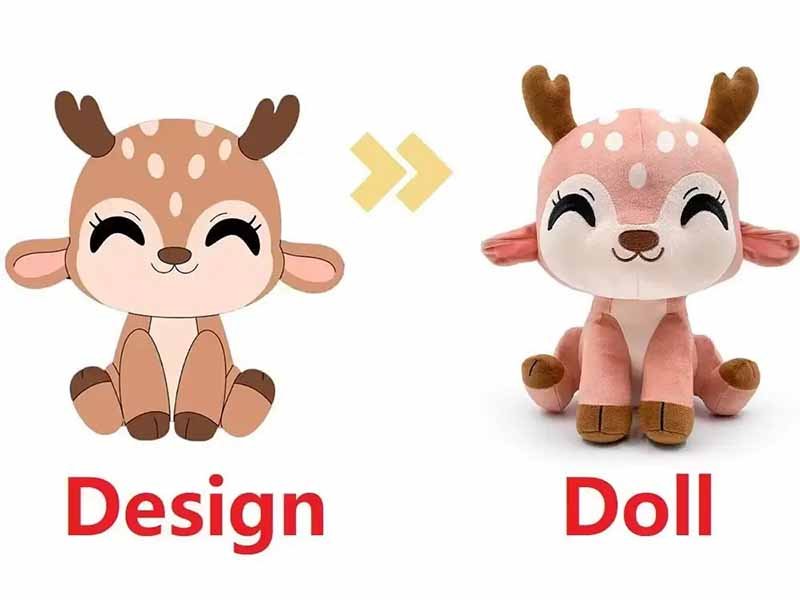
Many successful plush products begin with a simple visual idea: a mascot sketch, a children’s drawing, a game character, a pet illustration, an anime-style design, a brand IP image, or a logo character created for a campaign. On paper or screen, the artwork may already look charming. But a real plush toy must do much more than look cute. It needs to hold shape after filling, feel soft in the hand, keep its expression after sewing, pass safety checks, fit packaging plans, and stay consistent when produced in hundreds or thousands of pieces.
Developing plush toys from artwork means turning a flat design into a soft, three-dimensional product through artwork review, structure adjustment, three-view drawing, fabric matching, pattern making, embroidery planning, sample making, sample revision, and bulk production quality control. Clear artwork, size targets, color references, fabric preferences, logo needs, packaging ideas, and safety requirements help reduce mistakes and improve sample accuracy.
For many clients, the biggest concern is not whether a factory can make “a plush toy.” The real question is whether the final product can capture the feeling of the original artwork. A small change in eye spacing, mouth curve, head shape, body proportion, or fabric texture can make the character look different. That is why Delsney treats plush development as a creative engineering process. With 18+ years of plush product development experience, a dedicated design and engineering team, fast 5–7 day regular sampling, three-view creation, 3D effect support, and up to 98% design-to-product matching, Delsney helps brands, artists, retailers, and IP owners turn artwork into plush products ready for real-world sales.
What Does Artwork-to-Plush Mean?

Artwork-to-plush means converting a 2D character, mascot, drawing, or design file into a 3D soft toy that can be sampled, revised, approved, and produced in bulk. The process covers design interpretation, plush structure planning, material selection, pattern development, embroidery conversion, filling adjustment, safety review, and final production control.
What Is Plush Artwork?
Plush artwork is the visual starting point used to create a custom plush toy. It may be a polished character sheet, logo mascot, animal illustration, anime image, pet portrait, children’s drawing, game character, holiday character, brand campaign design, or hand sketch with notes. The artwork gives the factory the creative direction, but it does not automatically provide all the information needed for production.
A factory needs to understand more than the front appearance. The sample team must know how the character should look from the side, how thick the body should be, where the tail or wings should sit, whether the product should sit or stand, how soft it should feel, and which details must remain exact. For example, a raccoon plush may need strong control of eye mask shape; a penguin plush may depend heavily on belly curve and wing position; a mascot plush may need exact logo placement and brand color matching.
Good plush artwork usually includes the character’s key identity points. These are the details people recognize first: face shape, eye style, mouth expression, head-to-body ratio, color blocks, ears, limbs, tail, clothing, accessories, and special markings. For a commercial plush project, these details are not decoration. They are the reason the product looks like the original design.
Delsney can work from simple artwork at the early stage, but clearer files always improve sample accuracy. When clients only have a front image, Delsney can help create three-view drawings and 3D effect references before sample making. This helps reduce guesswork and gives the pattern maker a clearer structure to follow.
| Artwork Source | Suitable Project Type | What the Factory Still Needs |
|---|---|---|
| Brand mascot image | Corporate gifts, campaign plush, retail plush | Size, logo position, back view, color standard |
| Children’s drawing | Gift plush, charity plush, school projects | Simplified shape, safe parts, fabric direction |
| Anime character art | Fan merchandise, IP plush, collectibles | Hair shape, outfit detail, embroidery plan |
| Pet illustration | Custom animal plush, memorial plush | Body proportion, fur color, posture reference |
| Logo character | Promotional plush, private label plush | Vector logo, Pantone colors, packaging style |
| Rough sketch | Early product idea | Design refinement, three-view drawing, size target |
Is 2D Artwork Enough?
A 2D image is enough to begin the discussion, but it is usually not enough to make an accurate plush sample. Plush toys are soft products with thickness, volume, seam lines, filling pressure, fabric pile, and hand-shaped details. A flat drawing can show what the character looks like from one angle, but the factory still needs to decide how that character becomes a stable, touchable product.
A common challenge is that flat artwork often contains details that do not translate directly into fabric. Thin lines may need embroidery. Very small fingers may need simplification. Sharp corners may become slightly rounded. Gradient colors may need printing or fabric color blocking. A long thin tail may need to be widened for sewing strength. A large head may need filling control so the plush does not lean forward.
For one-off art plush projects, some flexibility may be acceptable. For brand or retail projects, accuracy matters much more. A client may need 500, 1,000, or 5,000 pieces that look close to the approved sample. If the structure is unclear from the beginning, the sample may require more revision rounds, and bulk production may face consistency problems.
The better approach is to treat the 2D artwork as the creative base, then build production information around it. The factory should review the artwork and ask practical questions: What is the target size? Which parts need embroidery? Is the plush for children or adult collectors? Does it need to sit upright? Will it be sold in the United States or Europe? Does the product need hang tags, woven labels, or custom packaging?
| 2D Artwork Can Show | 2D Artwork Usually Cannot Show Clearly |
|---|---|
| Front character appearance | Body thickness |
| Main color direction | Fabric texture and pile direction |
| Eye and mouth style | Sewing construction |
| General clothing design | Filling firmness |
| Logo or graphic ideas | Sitting balance |
| Character personality | Bulk production tolerance |
| Overall style | Safety part decisions |
For clients who want a close result, Delsney recommends adding front, side, and back references before sample making. If these files are not available, Delsney’s design team can help develop them based on the original artwork.
Are All Designs Plush-Friendly?
Not every design is ready for plush production in its original form. Some artwork looks beautiful on screen but becomes difficult to sew, fill, test, or repeat in bulk. Plush-friendly design means the character has been adjusted so it can keep its identity while working well with fabric, stitching, filling, safety rules, and production limits.
The biggest issues often come from small details. Tiny accessories, thin arms, narrow necks, sharp spikes, delicate hair strands, small buttons, floating ornaments, complex shoes, and detailed clothing can all increase production difficulty. They may also affect safety if the toy is intended for younger children. For example, plastic eyes may be replaced by embroidery for baby plush toys. A small bow may need stronger stitching. A metal charm may need to become a soft fabric decoration.
Another common issue is color complexity. A digital artwork can show gradients, shadows, highlights, and texture effects easily. Plush fabric cannot always copy these effects directly. The factory may need to choose between fabric patchwork, embroidery, digital printing, sublimation printing, or simplified color zones. Each choice affects cost, appearance, lead time, and durability.
A good factory does not simply say yes to every design detail. It should explain which details can be made, which details should be adjusted, and which details may increase cost or risk. This practical review protects the client’s budget and helps the first sample come closer to the expected result.
| Design Detail | Possible Issue | Better Plush Solution |
|---|---|---|
| Very thin arms or legs | Weak shape, hard to stuff evenly | Slightly widen the part |
| Tiny facial lines | Difficult to sew cleanly | Use embroidery |
| Sharp horns or ears | Fabric softens the angle | Add inner stitching or adjusted shape |
| Gradient colors | Hard to match with solid fabric | Use printing or simplified color blocks |
| Small removable parts | Safety and durability risk | Sew down or use soft fabric parts |
| Complex clothing | Higher labor and cost | Simplify layers while keeping key look |
| Large head, small body | Balance problem | Adjust filling and body base |
| Many color panels | More cutting and sewing time | Combine nearby color zones if possible |
Delsney’s role is to keep the character recognizable while making it more suitable for plush production. With 25+ engineers, 10+ designers, and 20+ QC staff, Delsney can review design feasibility early and help clients avoid expensive sample failures.
What Makes a Good Plush Design?
A good plush design is easy to recognize, pleasant to hold, safe for its target market, stable in production, and suitable for the client’s sales plan. It does not need to include every detail from the original artwork. It needs to preserve the right details.
For character plush, the face usually carries the most value. Eye size, eye distance, eyebrow angle, mouth curve, cheek position, and nose shape can change the entire personality. For animal plush, body silhouette and fabric texture matter more. A capybara, penguin, dinosaur, cat, bunny, or bear needs the correct head shape, body curve, ear position, and tail detail to feel right. For brand mascot plush, color accuracy and logo consistency can be as important as softness.
A good plush design also needs to match the selling channel. A plush for retail shelves may need a sitting posture, strong front view, barcode label, hang tag, and compact packaging. A plush for online sales may need photogenic shape, clear size options, and shipping-efficient packaging. A plush for children may need softer parts, stronger seams, safe embroidery, and compliance-focused material choices. A plush for collectors may need finer details, premium fabrics, limited-edition packaging, and tighter visual control.
Size also affects design quality. A 10 cm plush keychain cannot carry the same detail level as a 30 cm plush toy. A 50 cm plush gives more space for expression and softness, but cost, filling weight, carton size, and shipping volume increase. Good design balances visual appeal with commercial reality.
| Product Goal | Best Design Focus | Practical Notes |
|---|---|---|
| Retail plush | Strong face, sitting balance, shelf appeal | 20–35 cm often works well |
| Gift plush | Soft touch, warm expression, easy packaging | Medium size improves perceived value |
| Mascot plush | Brand color, logo placement, character accuracy | Three-view artwork is important |
| Baby plush | Soft fabric, embroidered features, safe construction | Avoid hard small parts |
| Collector plush | Fine embroidery, premium fabric, detail accuracy | Higher sample control needed |
| Event plush | Quick recognition, lightweight structure | Cost and lead time matter |
| Online store plush | Photogenic shape, clear size, easy shipping | Packaging volume should be planned early |
Delsney helps clients judge design quality from both creative and production angles. A plush toy must look right, feel right, and remain realistic for bulk orders. That balance is what turns artwork into a product customers are willing to buy, gift, collect, and share.
What Files Do You Need?

To develop a plush toy accurately, clients should provide clear artwork, target size, front and back views, color references, logo files, fabric preferences, packaging ideas, order quantity, and target market. Better files reduce sample changes, improve cost accuracy, and help the factory create a plush closer to the original design.
What Artwork Format Works Best?
The best file format depends on the purpose. For character review, high-resolution PNG, JPG, PSD, or PDF files can work well. For logo embroidery, printed labels, hang tags, woven labels, packaging artwork, and pattern graphics, vector files such as AI, EPS, SVG, or editable PDF are much better because the lines stay clean when resized.
A low-quality screenshot may be enough for a quick idea review, but it is not ideal for sample development. When the factory zooms in to check the eye curve, mouth line, clothing edge, or small accessory shape, the image may become blurry. Blurry files force the sample team to guess. Guessing can lead to wrong facial expression, incorrect embroidery shape, color misunderstanding, and extra sample revisions.
Layered files are especially useful for complex plush toys. A PSD file with separated eyes, clothing, accessories, and color blocks helps the factory understand what can be embroidered, printed, or made with separate fabric pieces. For brand projects, vector logo files are important because logos must stay clean on labels, tags, packaging, and embroidery.
Delsney can begin with simple files, but before sampling, the team will usually ask for clearer artwork or confirm design details through notes and marked images. This helps protect the client’s original idea and reduces the chance of avoidable mistakes.
| File Format | Best Use | Production Value |
|---|---|---|
| AI | Logo, embroidery, packaging, print | Cleanest editable file |
| EPS | Logo and graphic production | Good for vector artwork |
| SVG | Simple logo and line artwork | Easy scaling |
| PSD | Layered character design | Useful for separating parts |
| Artwork sheet, tech notes, packaging file | Easy to review and share | |
| PNG | Clean character image | Good for shape and color review |
| JPG | General reference image | Acceptable if high-resolution |
| Hand sketch scan | Early concept | Needs factory interpretation |
| Physical sample photos | Shape and texture reference | Helpful for hand-feel matching |
Do You Need Front and Back Views?
Front and back views are strongly recommended for custom plush development. A front view shows the face and main personality, but the back view tells the factory how the product should be completed. Many plush details are hidden from the front: tail shape, back color, clothing continuation, wings, hair, label position, seam layout, and special markings.
A side view is also valuable because plush products are three-dimensional. Without a side view, the pattern maker must estimate depth. That estimate may work for a simple bear, but it can create problems for animals, mascots, anime characters, fantasy creatures, and detailed IP plush toys. A dinosaur may need a long snout. A fox may need a specific tail angle. A bird may need a round belly and wing thickness. A mascot may need the same head depth as the original character model.
For clients who only have a front image, the factory can still begin review. However, before sample making, three-view drawing can make the result much more predictable. It gives the client a chance to approve shape decisions before fabric is cut and sewn.
Delsney provides three-view creation and 3D effect support for clients who need help converting one artwork image into a more complete plush development file. This is especially useful for high-value custom projects where visual matching matters.
| View Type | What It Controls | Why It Helps |
|---|---|---|
| Front view | Face, main body shape, color blocks | Controls first impression |
| Side view | Head depth, nose length, belly curve, posture | Prevents flat or awkward shape |
| Back view | Tail, hair, wings, back colors, labels | Completes full product design |
| Top view | Ear spacing, head shape, accessory position | Useful for complex characters |
| Detail close-up | Eye, mouth, logo, embroidery, clothing | Reduces misunderstanding |
| 3D visual effect | Overall shape and volume | Helps approval before sampling |
Which Details Should Be Marked?
Important details should be marked directly on the artwork before sample making. Many sample problems happen because the client and factory understand the same image differently. A small eye highlight may be seen as embroidery by one person and printing by another. A scarf may be understood as removable by the client but sewn-on by the factory. A logo may be expected on the left foot, but the sample team may place it on the tag if not clearly marked.
Clients should mark must-keep details, adjustable details, and optional details. Must-keep details are the features that define the character or brand. These may include eye shape, mouth curve, logo size, color blocks, special accessories, or clothing style. Adjustable details are elements that can be changed slightly for plush production, such as thin lines, sharp shapes, or small decoration. Optional details are items that can be removed if cost, safety, or timeline becomes a concern.
Marking details also helps cost estimation. More embroidery areas, more fabric colors, more accessories, and more complex sewing steps usually increase cost. If a client marks which details are most important, the factory can recommend where to spend the budget and where to simplify.
| Detail to Mark | Example Note | Why It Matters |
|---|---|---|
| Eye style | “Must match artwork; embroidery preferred” | Controls character expression |
| Mouth shape | “Keep smile curve soft and small” | Prevents expression changes |
| Logo position | “Logo on left foot, 3 cm wide” | Avoids wrong placement |
| Fabric texture | “Short plush, soft hand feel” | Guides material selection |
| Clothing | “Sewn-on jacket, not removable” | Controls labor and safety |
| Accessories | “Bow must be fixed securely” | Reduces loose-part risk |
| Filling | “Soft body, firmer head” | Controls shape and hand feel |
| Label | “Care label at bottom seam” | Supports retail and compliance |
| Packaging | “Individual polybag plus hang tag” | Helps quote and carton planning |
Delsney’s design and sample teams can help clients review details before production begins. Clear markings help the first sample get closer to the expected result and reduce unnecessary back-and-forth.
Are Pantone Colors Needed?
Pantone colors are very helpful when color accuracy matters. If the plush toy represents a brand mascot, licensed character, retail collection, school logo, sports character, or promotional campaign, color differences can affect approval. Words like “blue,” “cream,” “brown,” or “pink” are not precise enough for production. Pantone numbers give the factory a clearer target.
Still, plush fabric is not printed paper. Even when Pantone references are provided, the final look may vary because of fabric type, pile length, dye batch, lighting, and brushing direction. Long-pile plush may appear darker or lighter depending on the angle. Minky may look smoother and more saturated. Sherpa may look softer but less precise in color edges. Faux fur may create natural shade changes. Embroidery thread may match more closely than fabric, but thread shine and stitch density also affect appearance.
The best method is to use Pantone as the color direction, then confirm real material swatches or sample photos. For large orders, fabric batch control becomes important because the approved sample and bulk fabric should stay visually close.
| Color Area | Best Control Method | Risk Level | Notes |
|---|---|---|---|
| Main body fabric | Pantone + fabric swatch | Medium | Fabric texture affects color |
| Face embroidery | Thread card + artwork | Low to medium | Stitch density changes appearance |
| Printed pattern | Print proof + sample | Medium | Fabric surface affects sharpness |
| Clothing fabric | Fabric swatch approval | Medium | Different materials reflect light differently |
| Logo label | Vector file + Pantone | Low | Easier to control |
| Paper hang tag | Print proof | Low | More stable than fabric |
| Gift box | CMYK/Pantone proof | Low | Packaging color can be controlled well |
Delsney can support color review during material selection and sample confirmation. For brand projects, clients should avoid approving color only through screen images because phone and computer displays can show colors differently.
What Size Should You Provide?
Size should be provided early because it affects almost every part of the project. A plush toy’s size influences material consumption, filling weight, embroidery detail, sewing labor, packaging volume, shipping cost, MOQ planning, and final unit price. The same artwork made at 12 cm, 25 cm, and 45 cm will require different design decisions.
Clients should also define what the size means. For a standing character, height may refer to full height from foot to head. For a sitting plush, height may mean sitting height. For a long animal plush, length may be more important than height. For cushion plush, width and thickness may matter more. Without clear measurement points, the sample may be made in the wrong proportion.
Small plush toys are cost-friendly and easy to ship, but they limit detail. Tiny eyes, logos, fingers, accessories, and clothing may need simplification. Medium plush toys often give the best balance between price, detail, softness, and retail appeal. Large plush toys create stronger emotional value, but they increase fabric use, filling weight, carton size, and freight cost.
| Size Range | Common Product Type | Detail Capacity | Cost Impact | Packaging Notes |
|---|---|---|---|---|
| 8–12 cm | Plush keychain, mini gift, blind-box plush | Low | Lower unit cost, higher detail limits | Small polybag or card packaging |
| 15–20 cm | Small retail plush, event gift | Medium | Good for larger quantity | Easy carton planning |
| 22–30 cm | Standard custom plush, mascot plush | High | Balanced price and visual value | Common retail size |
| 35–50 cm | Premium plush, display plush | Very high | Higher fabric and filling use | Larger carton volume |
| 60 cm+ | Oversized plush, event prop, premium gift | Very high | High production and shipping cost | Packaging must be planned early |
For most custom plush projects, 20–30 cm is often a strong starting range because it allows better facial detail, comfortable hand feel, and manageable shipping volume. For premium gifts or collector products, 35 cm or larger can create stronger value. For promotional campaigns, smaller plush sizes may help control budget.
Delsney can recommend size based on the client’s artwork, target price, target age, sales channel, packaging plan, and order quantity. Choosing the right size before sampling helps avoid redesign after the first sample.
How Is Artwork Reviewed?
Artwork review is the stage where the factory checks whether the design can become a real plush product with the right shape, cost, safety, and production stability. A strong review looks at character proportion, facial expression, fabric choices, small parts, embroidery areas, filling structure, target age, packaging method, and order quantity before sample making begins.
How Is Shape Checked?
Shape review is one of the most important steps in plush development because the final product must look good from every angle, not only from the front. A flat artwork may show a cute character, but the factory needs to understand how wide the head should be, how thick the body should feel, whether the plush should sit or stand, and how the arms, legs, ears, tail, wings, or clothing should connect to the main body.
During shape review, the sample team studies the artwork and separates the character into production parts. For example, a bunny plush may be divided into head, ears, body, arms, legs, tail, face embroidery, belly patch, and label position. A mascot plush may include head structure, body suit, shoes, gloves, logo embroidery, clothing layers, and custom packaging. Each part needs a sewing solution.
The biggest shape risk comes from over-flat interpretation. If the factory only follows the front image without considering depth, the plush may look thin, weak, or different from the character. A good plush needs volume. The head should have enough roundness, the belly should have proper fullness, and the limbs should feel natural after stuffing.
Delsney’s engineering team reviews shape from both design and production perspectives. The goal is to keep the character recognizable while making the structure stable enough for sampling and bulk production.
| Shape Review Point | What the Factory Checks | Why Clients Should Care |
|---|---|---|
| Head proportion | Width, height, depth, face area | Controls character identity |
| Body volume | Sitting or standing shape, belly fullness | Affects cuteness and stability |
| Limb size | Arm and leg thickness, stuffing space | Prevents weak or twisted parts |
| Ear position | Angle, size, symmetry | Strongly affects animal characters |
| Tail or wing structure | Attachment method and thickness | Improves durability |
| Side profile | Nose length, back curve, posture | Avoids flat-looking samples |
| Bottom base | Sitting balance and shelf display | Important for retail plush |
| Seam plan | Where fabric pieces connect | Affects appearance and labor cost |
How Are Facial Details Studied?
The face is often the most sensitive part of a custom plush project. A small change in eye size, eye distance, eyebrow angle, mouth curve, cheek position, or nose shape can change the entire personality of the character. For brand mascots, licensed designs, anime characters, and collectible plush toys, facial accuracy can decide whether the sample is approved or rejected.
During review, the factory studies which facial details should be embroidered, printed, appliqued, or made with separate fabric pieces. Embroidery is commonly used for eyes, mouth, eyebrows, eyelashes, nose lines, small icons, cheek marks, and logo details. It is durable, clean, and safer than many hard parts, especially for plush toys made for younger children.
However, embroidery also has limits. Very thin lines may break visually when stitched. Tiny color changes may not show clearly. Small letters may become unreadable if the plush size is too small. For a 10 cm mini plush, eye and logo details must be simplified. For a 25–30 cm plush, the factory has more space to create expressive embroidery.
Delsney pays close attention to face embroidery because it directly affects artwork matching. Before bulk production, embroidery files should be locked after sample approval, so mass production can follow the same eye shape, thread color, stitch direction, and placement.
| Facial Detail | Common Method | Risk if Not Controlled |
|---|---|---|
| Eyes | Embroidery, safety eyes, fabric applique | Wrong spacing changes expression |
| Mouth | Embroidery | Smile may look too sharp or too flat |
| Nose | Embroidery, fabric nose, plastic nose | Affects animal identity |
| Eyebrows | Embroidery | Small angle change affects emotion |
| Cheeks | Embroidery, print, fabric patch | Color may look too strong or weak |
| Whiskers | Embroidery or printed lines | Thin lines may not appear clean |
| Face outline | Pattern shaping and stuffing | Head may look different from artwork |
| Logo face mark | Embroidery or print | Needs clear vector file |
How Are Small Parts Handled?
Small parts can add charm to a plush toy, but they can also create cost, safety, and durability challenges. Common small parts include bows, buttons, hats, bags, scarves, collars, glasses, wings, horns, tails, shoes, badges, zippers, tags, and tiny accessories. The factory must decide whether each part should be sewn into the plush, fixed on the surface, removable, embroidered, printed, or simplified.
For children’s plush toys, loose small parts are a major concern. If a product is intended for babies or young children, hard accessories, beads, loose buttons, plastic charms, and detachable decorations may not be suitable. Many details can be changed into embroidered or soft fabric versions to reduce risk. For adult collector plush, more detailed accessories may be acceptable, but they still need strong attachment and clean workmanship.
Small parts also affect production time. A plush toy with five sewn accessories may take much longer to produce than a simple plush with embroidery only. Each accessory may require cutting, stitching, positioning, hand sewing, and inspection. More parts also mean more chances for inconsistent placement in bulk production.
Delsney reviews small parts early so clients can decide where detail is worth the cost. For many commercial plush projects, the smartest choice is not to copy every tiny element from artwork. The better choice is to keep the details that define the character and simplify the parts that do not strongly affect recognition.
| Small Part | Production Choice | Best Use |
|---|---|---|
| Bow | Sewn fabric piece | Cute animals, baby plush, gift plush |
| Button | Embroidery or soft fabric button | Safer than hard button for kids |
| Glasses | Embroidery, felt applique, soft frame | Character plush and mascots |
| Horns | Stuffed fabric parts | Fantasy animals, dinosaurs |
| Wings | Sewn flat or stuffed parts | Birds, dragons, angels |
| Shoes | Separate fabric panels or embroidery | Character plush |
| Bag or prop | Fixed sewn accessory | Promotional plush |
| Zipper | Real zipper or decorative embroidery | Functional plush bags or design detail |
How Is Safety Considered?
Safety review should begin before the first sample, not after bulk production. A plush toy may look simple, but safety can be affected by fabric choice, stuffing material, seam strength, small parts, embroidery, plastic components, loose fibers, labels, packaging, and target age. If the product will be sold in the United States, Europe, the United Kingdom, Canada, Australia, or other regulated markets, safety planning becomes even more important.
For baby and toddler plush toys, embroidered eyes are often preferred because they reduce risks connected with hard plastic parts. Long strings, detachable accessories, sharp plastic pieces, loose filling, and poorly fixed decorations should be avoided. Seam strength is also important because children may pull ears, tails, arms, tags, or accessories.
For retail and promotional plush, clients should tell the factory where the product will be sold. Different markets may require different testing expectations. Common safety concerns include physical and mechanical safety, flammability, chemical restrictions, labeling, age grading, and packaging warnings. A serious factory will ask about these details early because they may affect materials and structure.
Delsney supports European and American safety compliance requirements and helps clients select safer construction methods during development. Safety is not only about passing a test. It also protects the client’s brand reputation after the product reaches real users.
| Safety Area | What Needs Attention | Better Development Choice |
|---|---|---|
| Eyes and nose | Pull strength and choking risk | Embroidery for younger age groups |
| Seams | Filling leakage and tearing | Reinforced stitching |
| Accessories | Loose parts and sharp edges | Fixed soft fabric details |
| Filling | Cleanliness, softness, rebound | Approved polyester fiber |
| Fabric | Colorfastness and fiber shedding | Tested fabric options |
| Labels | Correct care and compliance info | Plan label position early |
| Packaging | Suffocation warnings if needed | Correct polybag thickness and warning |
| Age grade | Product use scenario | Tell factory target age early |
How Are Production Risks Found Early?
A professional artwork review should identify risks before fabric is cut. Early risk review helps clients avoid expensive sample rounds, delayed launches, and product changes after approval. The factory should check whether the design is too complex for the target budget, whether the size is too small for the detail level, whether materials are easy to source, and whether the product can be repeated consistently in bulk.
For example, a client may want a 12 cm plush with detailed clothing, tiny logo embroidery, multi-color shoes, small fingers, and a removable hat. The artwork may look excellent, but the size does not give enough space for clean production. In that case, the factory may recommend increasing the size to 20 cm, simplifying the outfit, or changing some details into printed fabric.
Another risk is packaging mismatch. A large plush with a wide tail or oversized ears may look attractive, but carton volume and shipping cost can increase quickly. If the product is for e-commerce, packaging efficiency should be considered during design. If the product is for retail shelves, hang tag position, sitting balance, and display angle matter.
Delsney’s review process helps connect design, cost, sampling, safety, and production planning. That early communication gives clients a clearer path from artwork to finished plush.
| Risk Type | Common Cause | Early Solution |
|---|---|---|
| Visual mismatch | Missing side/back views | Create three-view drawing |
| High sample revision | Unclear facial details | Mark embroidery and expression notes |
| Cost increase | Too many colors and accessories | Rank must-keep details |
| Safety concern | Hard small parts | Use embroidery or soft fabric parts |
| Bulk inconsistency | Complex hand-positioned details | Simplify structure or create placement guides |
| Color difference | No Pantone or swatch approval | Confirm material swatches |
| Shipping cost issue | Oversized shape or packaging | Review carton volume early |
| Delayed timeline | Special fabric or molded parts | Confirm lead time before sampling |
How Is a Plush Sample Made?
A plush sample is made by converting approved artwork into a production structure. The factory creates or confirms three-view drawings, selects fabrics, develops patterns, prepares embroidery files, cuts fabric panels, sews parts together, adds filling, shapes the toy, checks details, and sends the sample for client review and revision.
How Is a 3D View Created?
A 3D view helps translate the flat artwork into a clearer product direction before physical sampling. It does not always mean a highly technical 3D model. In plush development, it often includes front, side, back, and angled visual references that show the expected volume, posture, and structure of the toy.
The 3D planning stage answers practical questions. How round should the head be? How far should the nose come forward? Should the body be slim or chubby? Should the plush sit, lie down, or stand with support? How thick are the ears? Does the tail point upward or lie flat? Where should the logo, label, or accessory sit?
For clients with only one front artwork image, three-view and 3D effect support can make the project much more controlled. The client can approve the visual direction before the sample room starts pattern making. This avoids a common problem: the first physical sample reveals a shape the client never expected because the side and back were never discussed.
Delsney provides three-view creation and 3D effect support for custom plush projects. This is especially helpful for IP owners, mascot projects, and high-end custom plush orders where visual approval matters before sample development.
| 3D Planning Item | Decision Made Before Sampling | Benefit |
|---|---|---|
| Head volume | Round, oval, flat, long, chubby | Controls character likeness |
| Body posture | Sitting, standing, lying, hugging shape | Matches sales use |
| Limb position | Downward, open arms, bent legs | Affects pattern and sewing |
| Tail/wings | Size, angle, attachment method | Improves appearance and durability |
| Face placement | Eye, mouth, nose position | Protects expression accuracy |
| Accessory layout | Hat, scarf, clothes, bag, logo | Reduces sample misunderstanding |
| Back design | Color blocking, label, hair, markings | Completes full product view |
How Is the Pattern Made?
Pattern making is the step where the plush design becomes fabric pieces. A pattern maker studies the approved artwork or three-view drawing and creates templates for each part of the plush. These templates guide how fabric is cut and sewn. Good pattern making directly affects shape, symmetry, softness, and production consistency.
Unlike hard plastic toys, plush toys change shape after sewing and stuffing. The pattern maker must predict how fabric will expand, curve, fold, and stretch after filling. A flat fabric panel may become round after stuffing. A small change in panel shape can make the head cuter, the body fuller, or the face more accurate. This is why plush pattern making requires experience, not only software.
The pattern also controls seam placement. Poor seam placement can break the character’s appearance. For example, a seam across the face may look unpleasant unless it is part of the design. A seam near the eye may distort embroidery. A seam on the belly may affect how the plush sits. A good pattern hides seams where possible and uses them to build shape where needed.
For bulk production, pattern accuracy is critical. Once the sample is approved, the final pattern should be locked. This helps every piece in the order follow the same shape and size tolerance.
| Pattern Area | What It Controls | Common Issue if Poorly Made |
|---|---|---|
| Head panels | Face width, roundness, forehead shape | Head looks flat or distorted |
| Body panels | Belly volume and sitting shape | Plush cannot sit properly |
| Arms and legs | Thickness and symmetry | Limbs twist or look uneven |
| Ears | Angle and fullness | Ears collapse or lose shape |
| Tail | Attachment and direction | Tail bends wrong or tears easily |
| Clothing panels | Fit and seam alignment | Outfit looks loose or messy |
| Face embroidery placement | Eye and mouth position | Expression looks different |
Which Fabrics Are Selected?
Fabric selection affects appearance, hand feel, cost, durability, color matching, and production lead time. The same artwork can look very different depending on whether it is made with short plush, minky, velboa, faux fur, sherpa, fleece, cotton, or mixed fabrics. A cute baby plush may need soft short-pile fabric, while an animal plush may need textured faux fur. A mascot plush may need smooth fabric to show clear color blocks and embroidery.
The fabric choice should match the character style and target user. Baby plush toys usually need soft, safe, low-shedding materials. Retail plush often needs a balance between softness, cost, and shelf appearance. Collector plush may use premium fabric and detailed embroidery. Promotional plush may focus on clear branding, cost control, and fast production.
Pile direction is another important detail. Plush fabric has a surface direction. When the fabric is brushed upward or downward, the color and texture may look different. If pile direction is not controlled during cutting, different parts of the plush may appear to have color differences even when they come from the same fabric roll.
Delsney can customize many fabric types for plush products and help clients choose materials based on design style, target price, MOQ, safety needs, and hand-feel expectations.
| Fabric Type | Hand Feel | Best For | Notes |
|---|---|---|---|
| Short plush | Soft, clean, stable | Character plush, mascot plush | Good detail control |
| Minky | Smooth, premium, soft | Baby plush, gift plush | Popular for soft-touch products |
| Velboa | Short pile, cost-friendly | Promotional plush, simple animals | Good for clear shapes |
| Faux fur | Fluffy, realistic | Animal plush, premium plush | Needs pile direction control |
| Sherpa | Warm, textured | Cozy plush, lambs, bears | Less precise for small details |
| Fleece | Soft, casual | Simple plush, cushions | Good for soft shapes |
| Cotton fabric | Natural texture | Decorative plush, clothing parts | Not as fluffy as plush fabric |
| Felt | Firm, flat | Small accessories, patches | Often used for details |
| Satin or shiny fabric | Smooth, decorative | Clothing, ribbons, special accents | Higher sewing control needed |
How Is Embroidery Developed?
Embroidery development turns artwork lines into stitch files. It is commonly used for eyes, mouth, eyebrows, nose details, cheeks, logos, symbols, clothing marks, and small design elements. Embroidery is durable and clean, and it is often safer than hard plastic parts for younger users.
However, embroidery is not a direct copy-paste of artwork. The design must be converted into stitch direction, thread color, density, size, and placement. Thin lines may need to be thickened. Tiny highlights may need to be removed or enlarged. Small letters may need a minimum size to remain readable. A logo that looks clean on a screen may become unclear if stitched too small on curved plush fabric.
Embroidery placement also matters. If the fabric panel is embroidered before sewing, the pattern must be accurate so the eyes and mouth land in the correct position after the head is assembled. If placement shifts even a few millimeters, the facial expression may change.
Delsney’s sample team checks embroidery carefully during sample development. Once the client approves the face, embroidery files should be fixed for bulk production. That keeps the character expression stable across the order.
| Embroidery Item | Key Control Point | Client Decision Needed |
|---|---|---|
| Eyes | Shape, thread color, distance | Cute, sleepy, happy, serious, anime style |
| Mouth | Curve and thickness | Smile, neutral, open mouth, small mouth |
| Eyebrows | Angle and position | Emotional expression |
| Nose | Size, shape, fill stitch | Animal identity |
| Cheeks | Color and softness | Light blush or strong blush |
| Logo | Minimum readable size | Placement and color |
| Clothing marks | Stitch density | Flat or raised effect |
| Small text | Size and spacing | May need simplification |
How Is Stuffing Adjusted?
Stuffing gives the plush toy its final volume, softness, posture, and hand feel. Even when the pattern is correct, poor stuffing can make the product look wrong. Too much filling can make the plush hard, bulky, or distorted. Too little filling can make it collapse, wrinkle, or lose shape. Different parts of the same plush may need different filling levels.
For example, the head may need firmer stuffing to keep facial shape. The body may need softer filling for a comfortable hug. The arms and legs may need enough filling to avoid looking empty. A sitting plush may need a balanced lower body so it can sit upright. A pillow plush may need even filling across a larger surface to avoid lumps.
Stuffing also affects perceived quality. Customers often judge plush toys by touch within seconds. A well-filled plush feels soft but not weak, full but not hard, and smooth without empty corners. For retail or gift products, hand feel can influence repeat purchases and reviews.
During sample review, clients should check not only appearance but also touch. If the plush feels too firm, too soft, too light, or too heavy, the factory can adjust filling before final approval. Delsney can control filling based on the product’s purpose, whether it is a baby plush, mascot plush, retail stuffed animal, cushion plush, or collector plush.
| Plush Area | Filling Goal | Quality Risk |
|---|---|---|
| Head | Holds facial shape | Face collapses or distorts |
| Body | Soft and full | Wrinkles or poor sitting balance |
| Arms | Even thickness | Empty or twisted limbs |
| Legs | Stable base | Plush cannot sit properly |
| Tail | Enough shape support | Tail bends or looks weak |
| Ears | Light but shaped | Ears flop when they should stand |
| Large belly | Smooth surface | Lumpy appearance |
| Pillow-style plush | Even spread | Uneven thickness |
How Is the First Sample Reviewed?
The first sample is not only a finished plush toy. It is a working prototype used to test shape, expression, fabric, color, size, softness, sewing method, embroidery, accessories, label position, and packaging direction. Clients should review it carefully and give organized feedback.
A useful sample review should compare the sample against the approved artwork. Check the head shape first, then facial expression, body proportion, color accuracy, fabric hand feel, accessory placement, stitching quality, and overall character impression. If several people from the client’s team need to approve the sample, feedback should be collected into one clear revision list. Mixed feedback from different people can delay the project and confuse the sample team.
Photos and videos are helpful, but physical samples give the most accurate sense of hand feel, weight, softness, size, and construction. Screen color can be misleading, so color-sensitive projects should be checked with real material whenever possible.
Delsney supports fast sampling, with regular plush samples usually taking 5–7 days. For designs involving molded accessories, special materials, complex structures, or unusual processes, sample time may take around 7–15 days. Sample development is a cooperative process. The first sample helps turn assumptions into real decisions, and organized feedback helps the second version move closer to approval.
| Sample Review Item | What to Check | Feedback Example |
|---|---|---|
| Overall look | Does it feel like the artwork? | “Head should be rounder” |
| Face | Eyes, mouth, nose, expression | “Move eyes 3 mm closer” |
| Size | Height, width, thickness | “Keep height 25 cm, reduce body width” |
| Fabric | Softness, color, pile | “Use shorter pile fabric” |
| Embroidery | Shape, thread color, clarity | “Mouth line should be thinner” |
| Accessories | Position and strength | “Bow should sit higher” |
| Filling | Softness and shape support | “Body softer, head firmer” |
| Balance | Sitting or standing ability | “Add more filling to lower body” |
| Label and logo | Placement and size | “Logo on right foot, not side seam” |
| Packaging | Fit and presentation | “Need hang tag and individual bag” |
How Do You Improve Accuracy?

Accuracy improves when the factory controls the parts that make the character recognizable: face shape, eye spacing, body proportion, color matching, fabric texture, embroidery placement, filling volume, and approved sample standards. A good plush product does not copy every line from artwork. It keeps the character’s identity while making the design soft, safe, durable, and repeatable in production.
How Close Can Plush Match Artwork?
A well-developed plush toy can come very close to the original artwork, but the result depends on file quality, structure complexity, fabric type, sample feedback, and production control. Delsney can help clients achieve up to 98% matching between the approved artwork and finished plush product when the design information is clear and the development process is properly managed.
The most important point is understanding what “matching” really means. A plush toy is made from soft fabric and filling, so it cannot behave exactly like a flat digital illustration. Lines become embroidery or seams. Sharp corners become softer. Very small parts may need to become larger. Flat shadows may need to become fabric color blocks or printing. The goal is not to force the plush to copy the artwork mechanically. The goal is to keep the emotional recognition of the character.
For many clients, the face is the first accuracy checkpoint. If the eyes, mouth, nose, head shape, and facial proportion feel right, the plush will usually be accepted more easily. Body proportion comes next. A character with a large head and tiny body may need careful balance so it still looks cute after filling. Animal plush toys need accurate body silhouette. Mascot plush toys need clear brand identity. Collector plush toys need tighter detail control.
A strong factory should know which details deserve strict control and which details should be adjusted. For example, eye shape may need to match closely, while a tiny clothing wrinkle can be simplified. A logo may need exact size and color, while a small decorative line may be better as embroidery or removed for safety. Delsney’s design, engineering, and sample teams help clients make these decisions before bulk production begins.
| Accuracy Area | Why It Matters | Best Control Method |
|---|---|---|
| Face expression | Decides character identity | Embroidery file approval and placement control |
| Head shape | Affects first impression | Three-view drawing and pattern correction |
| Body proportion | Controls cuteness and balance | Sample comparison with artwork |
| Fabric color | Affects brand and character match | Pantone reference plus material swatch |
| Fabric texture | Changes visual style | Confirm fabric type before sampling |
| Eye spacing | Small shift changes emotion | Mark exact placement on artwork |
| Mouth curve | Controls personality | Embroidery sample review |
| Accessories | Supports story and style | Fix size, material, and attachment method |
| Logo position | Important for private label projects | Vector file and position confirmation |
| Bulk consistency | Protects order quality | Approved sample and QC standard |
How Are Colors Matched?
Color matching is one of the most common concerns in custom plush development. A client may approve a warm beige, soft pink, bright red, or brand blue on screen, but fabric can look different under real lighting. The same color may also look different on short plush, minky, faux fur, sherpa, fleece, embroidery thread, printed fabric, woven labels, and paper packaging.
The safest color process is to begin with a clear color target. Pantone numbers are useful for brand colors, logo colors, character colors, and packaging colors. However, plush fabric dyeing does not always match Pantone with absolute precision. Fabric has fiber, pile, thickness, and surface reflection. Long-pile fabric may look darker when brushed downward and lighter when brushed upward. Faux fur may create natural shading. Sherpa may look warmer and less sharp. Minky may show color more smoothly.
For high-value orders, clients should not rely only on digital screens. Phone displays, laptop monitors, and indoor lighting all change color perception. Material swatches, sample photos under consistent lighting, and physical sample review are much more reliable. If the plush will be part of a retail collection, color consistency across multiple designs should be planned together.
Delsney can help clients review fabric color, embroidery thread, printed parts, and packaging color as separate but connected elements. This matters because a character may use the same blue on fabric, thread, label, and box, but each material may show that blue differently. The best approach is to control the whole visual system, not only the main fabric.
| Color Component | Recommended File or Reference | Main Risk | Practical Control |
|---|---|---|---|
| Main plush fabric | Pantone or fabric swatch | Fabric may not match screen color | Confirm swatch or sample |
| Belly or face fabric | Pantone plus artwork | Color contrast may be too strong | Compare with main body fabric |
| Embroidery thread | Thread card or Pantone target | Thread shine changes appearance | Review stitched sample |
| Printed details | Print artwork and color proof | Fabric surface may blur edges | Test print before approval |
| Clothing fabric | Material swatch | Different fabric reflects light differently | Approve real fabric |
| Logo label | Vector file and Pantone | Small logo may lose clarity | Check actual label sample |
| Hang tag | Print-ready file | Paper color may differ from plush | Match with packaging proof |
| Gift box | CMYK or Pantone print file | Print batch variation | Approve box proof |
For most plush projects, a small color tolerance is normal. The important question is whether the final product still matches the approved character feeling and brand direction. For strict brand projects, color approval should happen before bulk fabric purchase.
How Are Expressions Refined?
Expression refinement is one of the most valuable parts of plush sampling. A plush toy’s expression is controlled by several tiny details working together: eye shape, eye distance, eye height, eyebrow angle, nose size, mouth curve, cheek position, face panel shape, and filling pressure. If one of these details shifts, the toy may look tired, angry, surprised, flat, or less cute than the artwork.
The first sample often reveals what the artwork cannot fully predict. A smile that looks perfect in a flat drawing may become too wide after embroidery. Eyes that look balanced on paper may feel too far apart on a round head. A nose may look too large because the fabric surface is smaller than expected after sewing. Cheeks may become too strong if the thread color is too bright. These changes are normal in plush development, but they must be corrected carefully.
When giving feedback, clients should be specific. Instead of saying “make it cuter,” it is better to say “move the eyes 2–3 mm closer,” “make the mouth curve softer,” “reduce eyebrow angle,” “make the nose 10% smaller,” or “raise the cheeks slightly.” Specific feedback helps the sample team revise faster.
Delsney’s sample team can adjust embroidery files, pattern curves, face panel size, stuffing firmness, and placement marks to refine the expression. Once the expression is approved, the embroidery file and placement method should be fixed for bulk production.
| Expression Issue | Possible Cause | Revision Direction |
|---|---|---|
| Face looks too serious | Eyebrows too angled, mouth too flat | Soften eyebrow angle and mouth curve |
| Character looks older | Eye size too small, face too long | Enlarge eyes or round face shape |
| Plush looks different from artwork | Eye distance or nose size changed | Adjust embroidery placement |
| Smile looks strange | Mouth curve too wide or too thick | Reduce stitch width or curve |
| Face looks flat | Not enough head filling or poor panel shape | Adjust pattern and stuffing |
| Eyes look uneven | Embroidery placement shifted | Add placement guide |
| Cheeks look too strong | Thread color too bright | Use softer color |
| Nose looks bulky | Nose embroidery too dense or too large | Reduce size or stitch density |
How Are Sample Revisions Managed?
Sample revision should be organized, practical, and based on clear approval priorities. A first sample is rarely perfect, especially for custom artwork-based plush toys. The purpose of the first sample is to test the idea in real fabric and identify what needs improvement. A professional revision process helps the second sample become much closer to the desired result.
Clients should review the sample in a structured way. Start with the overall shape, then face expression, size, color, fabric, embroidery, accessories, stuffing, label, and packaging. If multiple team members need to comment, collect all opinions into one final revision document. Sending scattered feedback from different people can create confusion and slow down sample correction.
It is also important to separate major changes from minor changes. Major changes include head shape, body proportion, size, fabric type, or construction method. These may require new pattern work. Minor changes include moving embroidery slightly, adjusting thread color, softening filling, changing label position, or improving accessory placement. Major changes usually take more time than minor corrections.
Delsney supports fast sampling and sample revision based on client requirements. Regular plush samples can usually be made in 5–7 days, while designs involving special accessories, molded parts, complex clothing, or unusual techniques may take around 7–15 days. Clients are encouraged to provide accurate feedback as early as possible because every change after approval can affect cost, lead time, and bulk consistency.
| Revision Type | Example | Difficulty Level | Possible Impact |
|---|---|---|---|
| Embroidery placement | Move eyes closer | Low to medium | Improves expression |
| Thread color | Change mouth thread | Low | Better face accuracy |
| Filling level | Softer body, firmer head | Low | Better hand feel and shape |
| Fabric change | Short plush to minky | Medium | Changes look, cost, and hand feel |
| Pattern change | Rounder head, wider body | Medium to high | May need new sample |
| Size change | 20 cm to 30 cm | High | Affects price, pattern, packaging |
| Accessory change | Add scarf or hat | Medium | Adds labor and cost |
| Safety change | Plastic eyes to embroidery | Medium | Affects look and compliance |
| Packaging change | Polybag to gift box | Medium | Affects quote and shipping |
A good revision process protects both creativity and production efficiency. It helps the client get a plush toy that feels closer to the artwork without creating endless changes.
How Is Bulk Consistency Controlled?
Bulk consistency means every plush toy in the order should follow the approved sample as closely as possible. This is especially important for retail collections, licensed characters, private label projects, corporate mascots, promotional campaigns, and repeat orders. A client does not only need one beautiful sample. They need hundreds or thousands of plush toys that look, feel, and function consistently.
Bulk consistency begins with a locked approved sample. Once the client approves the final sample, the factory should lock the pattern, embroidery files, fabric selection, thread colors, filling standard, accessory size, label position, and packaging method. Any change after approval should be reviewed carefully because it may affect the final product.
Production control also depends on trained workers and inspection checkpoints. Cutting must follow fabric direction. Embroidery must stay in the correct position. Sewing must keep shape symmetry. Stuffing must follow the required firmness. Accessories must be attached securely. Finished products should be checked for appearance, size, seams, filling, loose threads, stains, metal contamination, packaging accuracy, and carton labeling.
Delsney has 500+ employees, 18 production lines, 25+ engineers, 10+ designers, and 20+ QC staff. This production and quality system helps support custom plush projects from sample development to bulk delivery. For clients with high standards, quality control is not a final step. It is built into every production stage.
| Production Stage | Control Point | QC Focus |
|---|---|---|
| Fabric receiving | Color, texture, material quality | Match approved sample |
| Cutting | Pattern accuracy and pile direction | Avoid shape and color direction issues |
| Embroidery | Thread color, placement, stitch quality | Keep face expression consistent |
| Sewing | Seam strength and symmetry | Avoid distortion and weak seams |
| Stuffing | Weight, softness, shape | Maintain approved hand feel |
| Accessory attachment | Position and pull strength | Improve durability and safety |
| Finished inspection | Shape, dirt, loose threads, size | Remove defective products |
| Packing | Label, hang tag, bag, box, carton | Ensure correct retail presentation |
| Final QC | Random inspection and order check | Confirm bulk quality before shipment |
What Affects Cost and MOQ?
Cost and MOQ are affected by size, fabric type, pattern complexity, embroidery area, number of colors, accessories, filling weight, packaging, safety testing, order quantity, and production difficulty. A simple 20 cm plush is very different from a detailed 35 cm character plush with clothing, custom labels, embroidery, and gift-box packaging.
What Impacts Sample Cost?
Sample cost is influenced by the amount of development work needed before bulk production. A simple plush bear with one fabric, basic embroidery, and no accessories is easier to sample than a detailed mascot plush with multiple fabrics, clothing, embroidery, printed details, shaped tail, and custom packaging.
The first cost factor is design complexity. More parts mean more pattern work, cutting, sewing, and adjustment. A plush with ears, arms, legs, tail, belly patch, embroidered face, sewn clothing, and accessories requires more sample room time. The second factor is material sourcing. If the project needs special fabric, custom-dyed fabric, unique texture, or rare color, sourcing can add time and cost. The third factor is artwork preparation. If the client needs the factory to create three-view drawings, refine the design, or develop 3D effect references, that design work also carries value.
Some clients focus only on sample price, but the better question is whether the sample process helps avoid mistakes before a larger order. A carefully developed sample can prevent bulk production problems, poor reviews, rejected goods, or brand damage.
Delsney offers free design support and fast sample development for suitable custom plush projects. Regular plush samples can often be completed in 5–7 days, while complex samples may need 7–15 days depending on structure, accessories, materials, and process.
| Sample Cost Factor | Low Cost Direction | Higher Cost Direction |
|---|---|---|
| Size | 15–25 cm | 35 cm+ or oversized plush |
| Fabric | Available standard plush | Custom-dyed or special texture fabric |
| Embroidery | Simple eyes and mouth | Large multi-color embroidery |
| Pattern | Basic animal shape | Complex character or mascot shape |
| Accessories | No or few accessories | Clothing, props, hats, bags, shoes |
| Logo | Simple woven label | Multiple logo placements |
| Packaging | Polybag | Gift box, display box, custom printed bag |
| Safety needs | Basic structure review | Testing-focused redesign |
| Artwork support | Client provides full files | Factory creates three-view or design refinement |
Which Designs Need More Work?
Designs with complex structure, many small parts, multiple fabric types, detailed clothing, unusual posture, or strict likeness requirements need more development work. A simple round animal can usually move through sampling faster than an anime character with hair layers, custom outfit, embroidered expression, shoes, accessories, and special packaging.
Character plush toys often need more work because people recognize characters through small visual cues. Eye shape, hair shape, color position, clothing detail, and body proportion all matter. Mascot plush also requires careful development because the plush must match an existing brand image. Animal plush can be simple or complex depending on realism. A basic teddy bear is easier, while a realistic fox, capybara, dinosaur, or bird may need more shape testing.
Designs with standing posture also need more attention. Many plush toys are made to sit because sitting products are easier to balance and display. A standing plush may require a wider base, firmer stuffing, internal support, or adjusted leg shape. If the plush needs to hold an object, wear clothing, or include a functional part, the development process becomes more detailed.
The smartest way to control development time is to decide which elements are essential. The client and factory should agree on the features that must stay accurate and the features that can be simplified.
| Design Type | Development Difficulty | Main Reason |
|---|---|---|
| Simple round animal | Low | Fewer pattern parts |
| Standard teddy bear | Low to medium | Mature construction method |
| Mascot plush | Medium to high | Needs brand accuracy |
| Anime plush | High | Hair, face, clothing, expression details |
| Baby plush | Medium | Safety-focused material and structure |
| Realistic animal plush | Medium to high | Shape and fabric texture control |
| Plush with clothing | Medium to high | Extra sewing and fit control |
| Plush keychain | Medium | Small size limits detail |
| Oversized plush | High | Filling, shape, packing, shipping control |
| Plush with accessories | Medium to high | Attachment and safety review needed |
How Does Size Affect Price?
Size affects price directly because larger plush toys use more fabric, more filling, longer sewing time, bigger packaging, and more shipping space. However, size does not increase cost in a perfectly straight line. A 40 cm plush may cost much more than a 20 cm plush not only because it uses more materials, but also because it may need stronger shape control, larger cartons, higher freight cost, and longer handling time.
Small plush toys are not always simple either. A 10 cm plush may use less fabric, but tiny details can be difficult to sew or embroider. Small plush keychains often need simplified artwork, smaller labels, lighter filling, and careful placement. If the design has many small details, a larger size may actually produce a better result and reduce visual problems.
Medium sizes often give the best balance. For many custom plush projects, 20–30 cm allows enough space for facial embroidery, fabric panels, accessories, logo placement, and comfortable hand feel while keeping packaging and shipping manageable. This range is popular for retail plush, mascot plush, gift plush, and private label plush products.
For oversized plush, clients should consider carton size and freight early. A plush that looks exciting in 60 cm size may become expensive to ship, especially if it cannot be compressed. Vacuum packing may help some plush products, but not all designs recover shape equally after compression.
| Size Range | Cost Behavior | Best For | Main Concern |
|---|---|---|---|
| 8–12 cm | Low material use, harder detail work | Keychains, mini gifts | Detail simplification |
| 15–20 cm | Good budget control | Event gifts, small retail plush | Limited space for complex design |
| 22–30 cm | Balanced cost and detail | Standard custom plush | Strong all-around option |
| 35–50 cm | Higher perceived value | Premium gifts, collector plush | Packaging and freight |
| 60 cm+ | Strong visual impact, high logistics cost | Event props, oversized gifts | Shape recovery and carton volume |
Do Accessories Increase Cost?
Accessories usually increase cost because they add materials, cutting, sewing, positioning, inspection, and sometimes safety risk. Common plush accessories include hats, scarves, bows, bags, glasses, collars, shoes, clothing, props, badges, zippers, capes, wings, and removable parts. Each accessory needs to be designed, sampled, attached, and checked.
The cost impact depends on the accessory type. A simple sewn bow may add little cost. A full outfit with multiple fabrics, printed details, buttons, and separate sewing steps can add much more. A removable accessory may require extra safety and fit review. A hard accessory may create age-grade concerns. A custom molded part may require longer development time and tooling cost.
Accessories should be used strategically. They are valuable when they help character recognition, brand identity, storytelling, or retail appeal. They are less useful when they add cost but do not change how customers understand the plush. For example, a mascot’s signature scarf may be essential, while tiny pocket stitching on the back of a jacket may be unnecessary for most customers.
Delsney can help clients compare accessory options and recommend soft, safe, cost-controlled construction methods. The goal is to keep the plush attractive without adding avoidable production burden.
| Accessory Type | Cost Impact | Risk Level | Practical Advice |
|---|---|---|---|
| Simple bow | Low | Low to medium | Sew securely |
| Scarf | Low to medium | Medium | Decide fixed or removable |
| Hat | Medium | Medium | Needs stable fit |
| Glasses | Medium | Medium to high | Consider embroidery or felt |
| Shoes | Medium | Low | Adds sewing steps |
| Full clothing | High | Medium | Needs fit and seam control |
| Small bag or prop | Medium | Medium | Fix securely |
| Plastic charm | Medium to high | High for young children | Use soft alternative if needed |
| Molded part | High | Medium to high | Longer lead time |
| Zipper | Medium | Medium | Functional or decorative decision needed |
Is Private Label Available?
Private label customization is highly important for clients who want to sell plush toys under their own brand. A plush product is not only the soft toy itself. It also includes logo placement, woven labels, care labels, hang tags, packaging, barcode stickers, carton marks, product inserts, and sometimes retail display boxes.
Private label plush production usually starts with logo files. Vector files are best because they keep the logo clean across embroidery, woven labels, printed tags, packaging, and cartons. Clients should also decide where the logo should appear. Common positions include foot embroidery, belly label, side seam woven label, back label, hang tag, neck tag, or packaging front panel.
Packaging is part of the brand experience. A simple polybag may be enough for wholesale or promotional goods. A printed hang tag works well for retail plush. A gift box can increase perceived value for premium plush. A display box may be suitable for collector toys, limited editions, and shelf sales. The right packaging should match the product’s price point, sales channel, shipping method, and customer expectation.
Delsney supports OEM/ODM production, private label customization, logo application, packaging design support, and custom plush development for overseas brands and high-end clients. With flexible MOQ and short lead times, Delsney can help clients move from artwork to market-ready plush products more efficiently.
| Private Label Item | Common Method | Why It Matters |
|---|---|---|
| Logo on plush | Embroidery, print, woven label | Builds brand recognition |
| Care label | Sewn label | Supports compliance and washing information |
| Hang tag | Printed paper tag | Improves retail presentation |
| Barcode sticker | Sticker or printed tag | Needed for inventory and sales |
| Gift box | Custom printed box | Raises perceived value |
| Polybag | Clear or printed bag | Basic protection |
| Insert card | Product story or brand message | Adds emotional value |
| Carton mark | Shipping carton print | Helps warehouse handling |
| QR code | Hang tag or packaging | Connects product to online content |
How to Start Your Plush Project?

To start a plush project, send your artwork, target size, quantity, market, fabric preference, logo requirements, packaging plan, and expected timeline. The factory can review feasibility, suggest production adjustments, estimate cost, create three-view drawings if needed, make a sample, revise details, and prepare for bulk production after approval.
What Should You Send First?
At the beginning, clients do not need a perfect technical file. A clear artwork image, rough size idea, quantity range, and product goal are enough for a first review. However, the more information you provide, the more accurate the factory’s recommendation and quotation will be.
A strong inquiry should explain what the plush toy is for. Is it a retail product, event gift, mascot plush, collector item, children’s toy, baby plush, brand merchandise, or online store product? The use case affects material choice, safety requirements, packaging, and cost direction. A plush for toddlers needs different decisions from a plush made for adult collectors. A promotional plush with a tight budget needs different planning from a premium limited-edition plush.
Clients should also share the target sales market. Products sold in the United States, Europe, the United Kingdom, Australia, or Canada may need different compliance planning. If the plush is for a major retailer, marketplace, school program, museum shop, theme park, or licensed brand project, requirements may be stricter.
Below is a practical inquiry checklist:
| Information to Send | Example | Why It Helps |
|---|---|---|
| Artwork | Front image, character sheet, sketch | Starts feasibility review |
| Size | 25 cm sitting height | Affects cost and pattern |
| Quantity | 500 pcs, 1,000 pcs, 5,000 pcs | Affects price and material planning |
| Target user | Kids, fans, collectors, corporate gifts | Affects safety and design |
| Sales market | USA, EU, UK, Japan, Australia | Helps compliance planning |
| Fabric preference | Minky, short plush, faux fur | Guides material sourcing |
| Logo need | Foot embroidery, woven label, hang tag | Supports private label quote |
| Packaging | Polybag, gift box, display box | Affects unit cost and carton size |
| Timeline | Sample deadline or launch date | Helps production planning |
| Reference product | Similar plush photo | Helps style and hand-feel understanding |
How Long Does Sampling Take?
Sampling time depends on design complexity, material availability, accessory needs, and revision scope. For regular plush toys, Delsney can usually complete samples in 5–7 days. For projects involving special accessories, molded parts, complex clothing, unusual fabrics, custom-dyed materials, or special process requirements, sampling may take around 7–15 days.
Sampling is not only sewing time. It includes artwork review, material selection, pattern making, embroidery file preparation, cutting, sewing, stuffing, shaping, internal checking, photography, and revision communication. If the client provides clear files, sample development moves faster. If the design needs three-view creation, design refinement, or multiple material tests, the timeline may be longer.
The fastest sample is not always the best sample. For simple promotional plush, speed may be the priority. For licensed characters, mascot plush, or premium retail products, accuracy is more important. Rushing the first sample without solving structure and facial details can lead to more revisions later.
Clients should also plan time for shipping the physical sample. Photos and videos can help with early review, but physical sample approval is better for checking size, softness, weight, stitching, and material feel.
| Project Type | Estimated Sample Time | Notes |
|---|---|---|
| Simple plush animal | 5–7 days | Standard fabric and basic embroidery |
| Mascot plush | 5–10 days | Depends on shape and logo details |
| Anime character plush | 7–15 days | Hair, clothing, expression details |
| Plush keychain | 5–10 days | Small details need adjustment |
| Baby plush | 7–15 days | Safety-focused review needed |
| Plush with accessories | 7–15 days | Extra parts and attachment checks |
| Custom fabric or color | 10–20+ days | Material sourcing may add time |
| Molded or special parts | 15+ days | Tooling or supplier coordination may be needed |
Do You Need a Tech Pack?
A tech pack is very helpful, but it is not always required at the beginning. Many clients start with artwork and basic notes. Delsney can help review the design and develop the production direction. However, for complex plush toys, brand projects, repeat orders, or licensed products, a clear tech pack can reduce misunderstanding and speed up development.
A plush tech pack usually includes artwork, three-view drawings, size chart, fabric types, color references, embroidery details, printing details, accessory instructions, logo placement, label details, packaging requirements, safety requirements, and tolerance standards. It acts as a shared reference between the client, designer, sample maker, purchasing team, production line, and QC team.
Without a tech pack, communication relies heavily on messages and images. This can work for simple products, but complex projects may become messy. One person may approve the artwork, another may request a different fabric, and another may change the packaging. A tech pack keeps key decisions in one place.
Delsney supports clients who have professional technical files and also clients who only have artwork. For clients without a tech pack, Delsney can help organize the design into clearer production information through three-view creation, material suggestions, sample notes, and revision records.
| Tech Pack Section | What to Include | Why It Matters |
|---|---|---|
| Artwork | Front, side, back, detail views | Guides visual development |
| Size chart | Height, width, thickness | Controls pattern and quote |
| Fabric list | Main fabric, contrast fabric, clothing fabric | Guides sourcing |
| Color standard | Pantone, swatches, thread colors | Controls visual consistency |
| Embroidery | Eye, mouth, logo, marks | Controls expression and branding |
| Accessories | Hat, scarf, wings, tail, prop | Controls cost and safety |
| Label | Care label, woven label, brand tag | Supports compliance and branding |
| Packaging | Polybag, hang tag, gift box, carton | Controls presentation and logistics |
| Safety | Age grade, market, test needs | Guides material and structure |
| Tolerance | Size and workmanship expectations | Supports QC inspection |
How Do You Request a Quote?
A good quote request should give the factory enough information to estimate cost realistically. If a client only asks, “How much is a custom plush toy?” the factory cannot give a useful answer because price depends on design, size, quantity, material, embroidery, accessories, packaging, safety needs, and shipping terms.
To get a more accurate quote, send artwork, target size, order quantity, fabric preference, logo needs, packaging style, target market, and expected delivery date. If some details are undecided, share a range. For example, you can say, “We are considering 20–25 cm, 500–1,000 pcs, with hang tag and individual polybag.” That gives the factory enough direction to prepare a more practical estimate.
Clients should also ask about sample time, sample revision, MOQ, bulk lead time, packaging options, safety support, and production capacity. Price is important, but the lowest quote may not be the safest choice if the project requires strong likeness, safety compliance, and consistent bulk quality.
Delsney works with overseas brands, retailers, product developers, and private label clients who need custom plush toys from artwork. The team can review your design, suggest a suitable production method, quote based on your project details, and help you move from artwork to approved sample.
| Quote Item | What to Provide | Why It Affects Price |
|---|---|---|
| Artwork | Image, sketch, or design file | Shows complexity |
| Size | Height or length | Controls material and filling |
| Quantity | MOQ or estimated order | Affects unit price |
| Fabric | Standard or premium | Affects material cost |
| Embroidery | Face, logo, clothing details | Affects labor and machine time |
| Accessories | Clothing, props, tags | Adds material and sewing steps |
| Packaging | Polybag, hang tag, box | Affects unit cost and carton size |
| Safety market | USA, EU, UK, etc. | May affect material and testing |
| Timeline | Launch date or delivery date | Helps production planning |
| Shipping plan | Air, sea, express, FOB, DDP | Affects total landed cost |
Why Choose Delsney?
Delsney is a Chinese plush product factory with more than 18 years of experience in plush product R&D, design, pattern making, manufacturing, and sales. The company supports custom plush toys, stuffed animals, mascot plush, character plush, private label plush, OEM plush, ODM plush, promotional plush, baby plush, collector plush, and plush products made with many different fabric types.
For artwork-based plush development, Delsney offers strong support from early idea review to finished production. The team can work from reference technical files, artwork, samples, sketches, photos, or design concepts. Services include free design support, free sampling for suitable projects, three-view drawing creation, 3D effect support, pattern development, material sourcing, embroidery development, sample correction, packaging customization, quality inspection, and export-ready production.
Delsney’s production system includes 500+ employees, 18 production lines, 25+ engineers, 10+ professional designers, and 20+ QC staff. Regular plush samples can often be completed in 5–7 days, while complex samples may take 7–15 days. The company supports flexible MOQ, fast bulk lead time, private label customization, and European and American safety compliance requirements.
For clients, the main value is not only factory capacity. It is the ability to understand artwork, protect character identity, solve plush production problems, and deliver consistent quality from sample to bulk order.
| Delsney Capability | Client Benefit |
|---|---|
| 18+ years plush experience | More reliable development advice |
| 500+ employees | Stronger production support |
| 18 production lines | Better capacity for bulk orders |
| 25+ engineers | Stronger structure and pattern support |
| 10+ designers | Better artwork interpretation |
| 20+ QC staff | Stronger quality control |
| 5–7 day regular sampling | Faster project movement |
| Three-view and 3D support | Better design approval before sampling |
| Up to 98% artwork matching | Higher visual accuracy |
| OEM/ODM service | Flexible product development |
| Private label support | Easier brand launch |
| Safety compliance support | Better fit for overseas markets |
Start Your Custom Plush Development with Delsney
If you already have artwork, a mascot, a character sketch, a children’s drawing, an anime design, a pet illustration, or a brand IP idea, Delsney can help turn it into a real plush product. You do not need to have every technical detail ready before contacting the team. A clear image, target size, order quantity, and basic product goal are enough for the first review.
For the fastest and most accurate response, send your artwork together with your preferred size, estimated quantity, target market, fabric preference, logo requirements, packaging idea, and expected launch timeline. Delsney’s design and engineering team can review the design, suggest plush-friendly improvements, create three-view or 3D references if needed, make a sample, revise details, and prepare for bulk production after approval.
Whether you are developing plush toys for retail, brand merchandise, event gifts, online stores, IP licensing, baby products, collector markets, or private label programs, Delsney can support your project from concept to finished product.
Send your artwork to Delsney and start your custom plush sample development today.