Skip to content
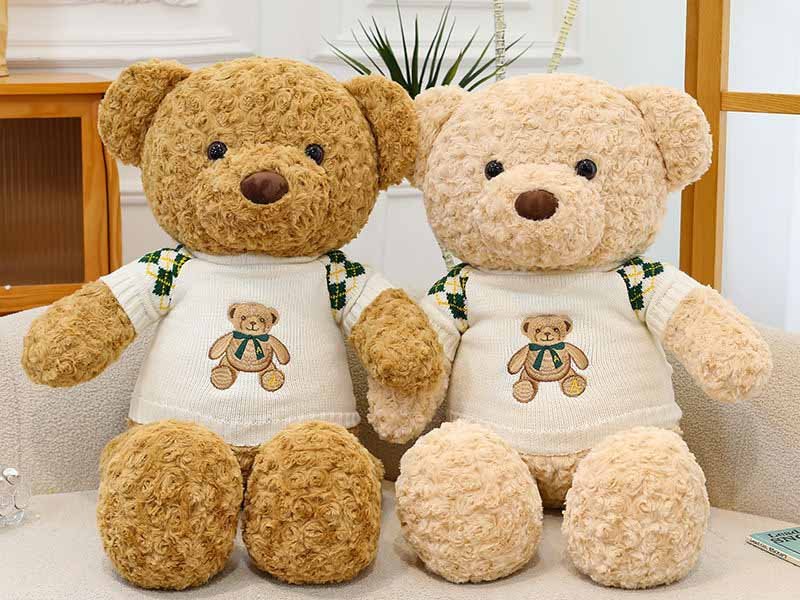
A plush toy looks gentle on the outside, but real manufacturing risk often hides inside the smallest production detail. One loose plastic eye can create a safety issue. One weak seam can expose filling. One wrong fabric batch can make bulk goods look different from the approved sample. One late label change can delay retail delivery. For custom plush projects, risk does not begin at the inspection table. Risk begins when artwork, material, size, age group, accessories, packaging, and compliance needs are not reviewed early enough.
To minimize risk in plush toy manufacturing, clients should start with safer design choices, avoid detachable small parts for young children, approve a golden sample, lock fabric and embroidery files, set filling weight standards, inspect seams, plan compliance before bulk production, review packaging labels, and work with a factory experienced in sampling, QC, and export requirements.
Many plush projects fail because teams ask only one question: “Can the factory make it?” A better question is: “Can the factory make it safely, repeatedly, and close to the approved sample at bulk quantity?” One sample can be shaped by hand. A 5,000-piece order needs process control. The real story begins when the cute prototype becomes cartons of finished plush toys ready for shelves, campaigns, online orders, or licensed merchandise programs.
What Are Plush Toy Risks?

Plush toy risks include unsafe small parts, weak seams, unstable fabrics, poor filling control, sample-to-bulk mismatch, inaccurate embroidery, wrong labels, late compliance planning, packaging damage, and unreliable production control. Risk rises when plush toys target children, retail stores, licensed IP projects, gift programs, or export markets with strict safety and documentation requirements.
Plush toy manufacturing risk is rarely caused by one dramatic mistake. More often, several small decisions create a bigger problem. A designer adds a plastic nose for a cuter face. A sample maker attaches it neatly. The client approves the look. Bulk production begins. Later, a safety review asks whether the nose can detach under pulling force. Suddenly, a cute detail becomes a product risk, delivery risk, and cost risk.
Risk also changes by product purpose. A plush mascot for adult office display carries a different risk level from a baby comfort toy. A licensed character plush sold through retail stores needs tighter visual consistency than a simple promotional plush. A weighted plush needs inner pellet control. A scented plush needs material review. A sound plush needs module placement and battery-related checks. One risk-control plan cannot fit every plush project.
The most common risk areas are safety, quality, compliance, cost, schedule, and reputation. Safety affects users and market access. Quality affects reviews, returns, and reorder confidence. Compliance affects customs, retail approval, and platform acceptance. Cost risk appears when quotation ignores packaging, testing, revisions, or freight. Schedule risk grows when testing, labels, or material confirmation starts too late. Reputation risk appears when fans compare the final plush with original artwork and feel disappointed.
For IP owners, retailers, gift companies, creator brands, and premium product teams, risk should be reviewed before sample development. Early review is cheaper than late correction. Changing plastic eyes to embroidery during design costs little. Changing 5,000 finished units after inspection can damage both margin and launch timing.
Delsney reduces plush manufacturing risk through early design review, sample development, material advice, 3-view creation, 3D effect support, golden sample approval, flexible MOQ, 5–7 day fast sampling for standard plush, export compliance support, and structured inspection. With over 18 years of plush product research, design, pattern making, manufacturing, and sales experience, Delsney supports custom plush projects where appearance, safety, and bulk consistency all matter.
| Risk Area | What Can Go Wrong | Client Impact | Factory Control Method |
|---|---|---|---|
| Small Parts | Eyes, noses, buttons, beads, charms, bells, or toggles detach | Choking concern, recall risk, retail rejection | Attachment review, pull concern review, embroidery replacement |
| Seams | Arms, ears, tail, belly, or accessory seams split | Filling leakage, poor durability, negative reviews | Seam allowance, stitch density, seam strength check |
| Fabric | Color shift, shedding, pile mismatch, rough handfeel | Bulk goods differ from approved sample | Fabric lot record, pile direction control, incoming inspection |
| Embroidery | Eyes, mouth, logo, or facial details shift | Character expression changes | Fixed embroidery file, thread color code, position template |
| Filling | Too soft, too hard, uneven, lumpy, flat after packing | Poor handfeel, weak shelf appearance | Gram weight control by body part |
| Packaging | Wrong barcode, missing label, crushed plush, wrong SKU match | Delivery delay, retail rejection, warehouse confusion | Packaging proof, carton test, SKU matching checklist |
| Compliance | Testing arranged after bulk goods are complete | Launch delay, extra cost, blocked shipment | Market standard review during sample stage |
| Supplier Process | No record, weak communication, unclear QC | Rework, delays, hidden costs | Golden sample system, QC checkpoints, export documentation |
What Can Go Wrong in Plush Production?
Plush production can go wrong at many points because a plush toy combines fabric, filling, embroidery, stitching, accessories, labels, hang tags, and packaging. A defect in one area can affect the whole order. Common problems include loose eyes, open seams, uneven stuffing, wrong facial expression, color difference, fabric shedding, loose threads, exposed filling, wrong care labels, mixed packaging, and carton compression.
For character plush, visual mismatch is one of the most expensive problems. A mascot can lose its personality if the eyes move slightly, the mouth curve changes, the head becomes too flat, or the ear angle looks wrong. Fans may not understand production details, but they notice when a plush no longer looks like the artwork.
For children’s plush, durability and safety matter more. Seams, small parts, filling leakage, and labels need extra review. For retail programs, packaging and barcode accuracy matter. For multi-SKU orders, SKU mixing becomes a major risk. Delsney controls those problems through sample approval, production files, fabric records, embroidery standards, filling checks, in-line inspection, and pre-shipment inspection.
Which Risks Hurt Custom Projects Most?
The most damaging risks are safety failure, sample-to-bulk mismatch, and late compliance planning. Safety failure can lead to recall, retailer rejection, marketplace removal, or legal exposure. Sample-to-bulk mismatch hurts trust because the client approved one plush and receives another. Late compliance planning can stop shipment after the goods are already packed.
Custom plush often carries emotional or commercial value. A mascot plush represents a company identity. An IP plush represents a character fans already love. A retail plush may be tied to a seasonal campaign. A promotional plush may be needed for a launch event. When production fails, the loss is not only product cost. The client may lose launch timing, retail opportunity, campaign trust, and future sales.
Risk is higher when projects include:
Licensed character designs.
Baby or toddler plush.
Weighted plush.
Scented plush.
Sound or light modules.
Long-pile animal plush.
Mini plush with tiny facial details.
Multi-SKU series.
Retail packaging with barcodes and warning labels.
Delsney helps clients review risk before bulk order confirmation. The factory checks design structure, material feasibility, sample accuracy, packaging direction, and export compliance needs early, reducing avoidable problems during production.
How Do Safety Issues Start?
Safety issues often start at the design table. Small decorative details may look attractive in artwork but create real manufacturing risk. Plastic eyes, hard noses, buttons, beads, bells, charms, ribbons, zipper pulls, magnets, sequins, and detachable accessories need careful review, especially for plush toys aimed at young children.
Unsafe construction can also come from weak attachment. A plastic part may be glued instead of securely fixed. A ribbon may be stitched with too little reinforcement. A seam may have too little allowance. A sound module may be placed too close to an opening. Weighted pellets may lack inner containment. A long-fur fabric may shed more than expected.
A safer design review should ask:
Who will use the plush?
What age group is planned?
Will the plush be sold as a toy, gift, collectible, or decoration?
Can any part detach under pulling, twisting, or chewing?
Will the plush need EN71, ASTM, CPSIA, CE, or other export support?
Does the packaging need warning text, barcode, or age mark?
Can embroidery replace hard facial parts?
Can fabric appliqué replace loose decorations?
Delsney reviews those details during design and sampling. When a risky feature appears, the team can suggest embroidery, fabric appliqué, reinforced sewing, simplified accessories, safer material, or a revised structure.
Are Low Prices Always Risky?
Low prices are not always risky, but unclear low prices are dangerous. A competitive price can work when the design is simple, material is common, order quantity is realistic, packaging is basic, and compliance needs are known. A suspiciously low quote often excludes something important: proper fabric, stable filling, sample revisions, packaging, inspection, testing, or export support.
A plush quote should be judged by included details, not only by unit price. Clients should check whether the quotation includes:
Approved fabric quality.
Embroidery or printing method.
Filling material and weight.
Label and hang tag.
Individual packaging.
Carton packing.
Sample revision policy.
Compliance support.
Inspection process.
Shipping terms.
Reorder support.
A low-cost plush with unstable seams, rough fabric, weak filling, or inaccurate expression can become expensive after complaints or rework. A slightly higher-cost plush with better material, safer construction, and clear inspection may protect margin better.
Delsney focuses on practical cost control rather than unsafe shortcutting. The factory can help simplify small accessories, use shared materials across SKUs, adjust plush size, optimize embroidery, choose suitable packaging, and control MOQ so the final product remains attractive, safe, and commercially realistic.
How Can Design Reduce Risk?

Design reduces plush toy risk by removing unsafe small parts, simplifying fragile details, choosing suitable fabrics, planning embroidery early, avoiding weak attachment points, and matching product structure to the intended age group. A safer plush design can still be cute, premium, and expressive when visual details are built with manufacturable and testable methods.
Many plush manufacturing risks are already created before the first sample is sewn. A factory can improve construction, but a risky design still carries limits. A baby plush with plastic eyes, loose ribbon, tiny bell, and long shedding fabric begins with too many safety concerns. A collectible plush for adults can allow more decoration, but the construction still needs strength and consistency.
Good plush design balances emotional appeal with production control. The toy needs softness, cuteness, personality, and market appeal. At the same time, every feature should be reviewed through manufacturing reality. Can the feature be sewn repeatedly? Can it survive pulling? Can it pass age-related safety review? Will it make the cost too high? Will it delay sampling? Will it create a problem during packing?
Design also affects bulk consistency. Simple rounded structures are usually easier to repeat. Very thin arms, sharp fabric corners, oversized ears, complex clothing, tiny accessories, or multi-layer parts increase sewing difficulty. The more hand adjustment a plush needs, the harder bulk production becomes.
For high-requirement projects, early visual planning helps. A single front-view artwork may not show side depth, back shape, tail angle, ear thickness, belly curve, or sitting posture. Delsney can support 3-view drawings and 3D effect previews, helping clients see the plush structure before sample sewing. Such work can reduce misunderstandings, shorten revision cycles, and improve sample accuracy.
A safer design plan should include:
Age group direction.
Target market.
Plush size.
Fabric type.
Face method.
Accessory list.
Seam stress areas.
Filling level.
Label position.
Packaging direction.
Compliance needs.
Delsney works with artwork, reference files, technical documents, physical samples, and concept sketches. For custom plush projects, the team can review design feasibility, material direction, embroidery safety, accessory risk, sample path, and cost pressure before bulk production begins.
| Design Detail | Risk Level | Safer Option | Factory Notes |
|---|---|---|---|
| Plastic Eyes | High for young children | Embroidered eyes | Safer for baby and toddler plush |
| Plastic Nose | Medium to High | Embroidered nose or fabric nose | Better for soft face construction |
| Tiny Buttons | High | Fabric appliqué or embroidery | Avoid detachable decoration for young children |
| Bells or Charms | Medium to High | Sewn fabric detail | Review attachment and target age |
| Long Ribbon | Medium | Short sewn accent | Avoid long loose loops |
| Long-Pile Fabric | Medium | Short plush or minky for young children | Check shedding and cleaning needs |
| Heavy Clothing | Medium | Simplified fabric outfit | Reduces seam pressure and labor |
| Dense Embroidery | Medium | Adjusted stitch density | Avoid stiff face on small plush |
| Weighted Filling | Medium to High | Inner bag with secure placement | Needed for sensory plush or weighted plush |
| Sound Module | Medium to High | Secure inner pouch and safe access design | Needs extra review before sampling |
What Makes a Plush Design Safer?
A safer plush design uses soft materials, secure seams, stable details, age-appropriate construction, and clear compliance planning. For young children, safer choices often include embroidered eyes, fabric noses, rounded shapes, short-pile fabrics, limited accessories, and strong seam construction. For adult collectible plush, more decoration may be possible, but durability still matters.
Safety begins with the planned user. A baby comfort plush, a school mascot plush, an adult collectible plush, and a retail gift plush need different design rules. Baby plush needs extra attention to small parts, loose fibers, seam strength, and labels. A display mascot may focus more on visual accuracy and premium finishing.
A safer design also considers real use. Plush toys are hugged, pulled, chewed, squeezed, slept with, displayed, packed, and shipped. A detail may look fine in a photo but fail during daily handling. Delsney reviews shape, fabric, accessories, embroidery, and attachment methods during development so the final plush can look good and behave better in real use.
Which Details Need Extra Care?
Details needing extra care include eyes, noses, mouths, ears, tails, limbs, ribbons, buttons, clothing, labels, sound modules, scent packs, weighted pellets, and long-fur areas. Those parts affect safety, character accuracy, durability, or production efficiency. Weak planning in one detail can create inspection problems or customer complaints.
Eyes and mouth control character recognition. A small shift changes expression. Ears, tails, arms, and legs often receive pulling force during use. Clothing and accessories add extra sewing layers. Labels must be readable and placed correctly. Scent packs, sound modules, and weighted pellets require secure internal structure.
Before sampling, clients should confirm:
Which details are essential for character identity.
Which details can be simplified.
Which parts may detach.
Which parts need reinforcement.
Which details affect target age group.
Which features may require testing.
Delsney can suggest embroidery, appliqué, reinforced sewing, simplified accessories, or alternate fabrics when a detail creates unnecessary risk.
How Do Small Parts Create Risk?
Small parts create risk when they detach from the plush toy and become choking, ingestion, or inhalation hazards, especially for children under three. Common risky parts include plastic eyes, hard noses, buttons, beads, bells, charms, toggles, magnets, zipper pulls, and poorly attached decorative accessories.
Small-part risk is not based only on size. Attachment method matters. A part may look secure in a sample photo but fail under pulling or twisting. Glued details are usually weaker than sewn or mechanically fixed parts. Thin ribbons can tear. Small charms can break. A plastic eye may require strict safety review for child-use products.
Safer design choices include:
Using embroidered eyes instead of hard eyes.
Using fabric noses instead of plastic noses.
Avoiding loose charms for children’s plush.
Replacing buttons with appliqué.
Shortening ribbons or sewing them flat.
Reinforcing accessories with stronger stitching.
Removing decorative parts not needed for character recognition.
For many custom plush projects, the safest design can still look attractive. Delsney helps clients preserve the character look while changing risky details into softer, more stable construction methods.
Are Embroidered Features Safer?
Embroidered features are often safer than detachable hard parts, especially for baby plush and children’s plush. Embroidery can create eyes, mouth, nose, cheeks, eyebrows, logos, and decorative details without adding separate components. Fewer separate parts usually means fewer detachment concerns.
Embroidery also improves bulk consistency when files are locked. A fixed embroidery file controls shape, size, color, stitch density, and placement. For character plush, such control helps keep expression stable across production. However, embroidery still needs skilled planning. Dense stitches on small plush may feel hard. Wrong thread color may change the face. Poor placement may distort the character.
Delsney reviews embroidery during sampling and can adjust:
Line thickness.
Eye size.
Mouth curve.
Thread color.
Stitch density.
Placement guide.
Fabric backing.
Tolerance range.
For high-requirement IP plush, embroidery is not only a safety choice. It is also a visual quality tool.
How Can Delsney Review Designs?
Delsney reviews plush designs from both creative and manufacturing angles. The team checks whether the artwork can become a soft 3D plush, whether the shape can be repeated in bulk, whether small parts create safety concerns, whether the fabric matches the target handfeel, whether embroidery can capture the expression, and whether the cost fits the product level.
Design review may include:
Artwork feasibility review.
Target age and market discussion.
Fabric and filling recommendation.
Small part and accessory risk review.
Embroidery and appliqué planning.
Pattern difficulty check.
3-view creation.
3D effect preview.
Sample development route.
Packaging and label direction.
Cost and MOQ discussion.
Delsney can develop plush products from technical files, drawings, reference images, physical samples, or concept sketches. With over 18 years of experience, 5–7 day fast sampling for standard plush, free design support, free sample support for suitable projects, flexible MOQ, 3-view and 3D support, and export compliance experience, Delsney helps clients reduce design risk before production begins.
How Does Sampling Prevent Problems?

Sampling prevents plush toy problems by turning artwork, photos, sketches, or technical files into a physical reference before bulk production begins. A good sample confirms shape, size, fabric, face expression, filling, seams, accessories, label position, packaging direction, and safety concerns. Better sampling means fewer bulk mistakes, fewer revisions, clearer cost, and smoother production.
Many plush production problems can be found early if sampling is handled carefully. A sample is not only a cute prototype for photos. It is a small production test. It shows whether the character can be made with real fabric, whether the head can hold shape, whether the face can match the artwork, whether ears and limbs can be sewn securely, and whether the product can be repeated by a production line.
Poor sampling creates hidden risk. A sample may look acceptable from the front, but the side shape may be too flat. The face may look good under one camera angle, but the eye position may be hard to repeat in bulk. The fabric may feel soft, but shedding may be too high for children’s products. A small accessory may look cute, but attachment strength may be weak. Packaging may be ignored until late, causing cost and delivery changes.
Good sampling should answer practical production questions:
Can the character shape be repeated?
Can the fabric be sourced steadily?
Can embroidery hold the same expression in bulk?
Can filling weight be measured and repeated?
Can seams handle normal pulling and squeezing?
Can labels and packaging meet the target market?
Can the final cost still support the project?
Can the product pass required safety review?
Delsney supports sampling from technical files, reference images, physical samples, character drawings, mascot designs, and early concept sketches. For standard plush projects, sampling can be completed in 5–7 days. For more complex plush with special fabric, clothing, sound modules, weighted filling, scent features, high-density embroidery, or baby-use requirements, sample time may need more careful development.
A strong sample approval process should produce more than one beautiful piece. It should create production records. Those records become the bridge between sample room and bulk production line. For high-requirement custom plush projects, Delsney can support 3-view drawings, 3D effect previews, free design assistance, sample revisions, and physical reference control.
| Sampling Check | Why It Matters | Common Risk | Safer Factory Practice |
|---|---|---|---|
| Front Shape | Controls first visual impression | Head, body, or face looks different from artwork | Compare sample with artwork and 3-view reference |
| Side Shape | Controls depth and plush volume | Toy looks flat or unstable | Review side profile before approval |
| Back Shape | Controls tail, hair, clothing, and body balance | Back view ignored until bulk production | Include back-view approval photos |
| Fabric | Controls softness, color, pile, and stretch | Bulk material feels different | Record material name, color, pile direction, and lot |
| Embroidery | Controls face and logo accuracy | Expression changes in bulk | Lock embroidery file, thread color, and placement |
| Filling | Controls touch and sitting posture | Plush feels flat or too hard | Set gram weight and body-part filling notes |
| Accessories | Controls safety and durability | Parts detach or create extra labor | Review attachment and reinforcement method |
| Packaging | Controls retail look and shipping protection | Late packaging changes cost and delivery | Confirm packaging during sample stage |
What Is a Safe Plush Sample?
A safe plush sample is a physical prototype that checks appearance, construction, material, attachment strength, filling, labels, and target-market requirements before bulk production. It should not only look cute. It should help the client and factory judge whether the plush can be made repeatedly and safely.
A safe sample should include clear review points:
Final or near-final size.
Front, side, back, top, and bottom photos.
Fabric type, fabric color, pile length, and touch.
Embroidery shape, thread color, and placement.
Seam strength at ears, arms, legs, tail, and accessories.
Filling type and filling weight.
Label and hang tag position.
Accessory attachment method.
Packaging direction.
Age group and target market notes.
For baby plush or children’s plush, the sample should be reviewed with extra care. Hard eyes, long ribbons, buttons, bells, beads, loose fibers, or small accessories may need redesign. For adult collectibles, more decoration may be acceptable, but construction should still remain stable.
Delsney uses sampling to test visual accuracy and production feasibility together. The sample stage helps confirm whether the plush can reach a high design-to-product match while keeping safety, cost, and bulk consistency under control.
How Do 3-View Files Help?
3-view files help reduce plush manufacturing risk by showing the character from the front, side, and back before sample making begins. A single front artwork may look complete, but it does not show side depth, back shape, tail direction, ear thickness, belly curve, foot angle, or sitting posture. Missing views often lead to sample revisions.
A 3-view file gives the sample team clearer shape information. It can mark fabric color blocks, embroidery placement, accessory position, seam areas, and proportion relationships. For mascots, anime characters, game figures, animals, and fantasy creatures, 3-view support can reduce misunderstanding between the creative team and the factory.
Useful 3-view information includes:
Front face and body proportion.
Side thickness and posture.
Back details and tail position.
Ear, horn, wing, or accessory depth.
Color block separation.
Embroidery position.
Logo or label placement.
Clothing structure.
A 3-view file does not remove the need for physical sampling, but it can make the first sample closer to the intended look. Delsney can help clients prepare or refine 3-view files when only rough artwork or reference photos are available.
How Does 3D Preview Reduce Errors?
3D preview reduces errors by helping clients see how a flat character may look as a soft plush toy before the sample is sewn. Many designs look perfect in 2D artwork but become difficult in soft product form. A 3D effect preview helps reveal volume, head size, limb position, body balance, and facial direction earlier.
3D preview is useful for projects with:
Large head characters.
Mascots with unusual body shape.
Animals with tails, horns, wings, or long ears.
Game or animation characters.
Plush with clothing or accessories.
Characters needing strong expression accuracy.
The preview stage can help identify problems such as a head that looks too heavy, feet too small to support sitting, eyes too far apart, or accessories placed in hard-to-sew areas. It also helps non-technical teams understand production trade-offs more clearly.
Delsney offers 3D effect support for custom plush projects when visual accuracy matters. A preview cannot replace fabric touch, embroidery feel, or real stuffing, but it helps reduce early communication gaps and lowers the number of avoidable sample revisions.
Which Sample Details Must Be Locked?
Sample details must be locked before bulk production to avoid cost changes, production delays, and quality mismatch. A plush order should not move into bulk while the face, fabric, size, accessories, labels, or packaging are still changing. Late changes can affect material purchase, cutting, embroidery, sewing, inspection, and shipping.
Details that should be locked include:
Final golden sample.
Product size and measurement points.
Fabric type, color, and pile direction.
Embroidery file and thread color.
Eye, mouth, nose, and logo placement.
Filling type and gram weight.
Seam structure and stitch direction.
Accessory list and attachment method.
Label, hang tag, and care tag artwork.
Packaging style.
Carton quantity.
Market compliance direction.
Shipping deadline.
For multi-SKU plush orders, locking details becomes even more important. Each character, color, size, tag, barcode, and package should have a clear SKU code. Delsney organizes approved sample notes and production references so the bulk team can follow one clear standard during cutting, sewing, filling, finishing, inspection, and packing.
Do Revisions Lower Bulk Risk?
Revisions lower bulk risk when each change improves production accuracy, safety, cost, or user experience. A sample revision should not be treated as a delay. It is often a cheaper way to prevent much larger problems during bulk production. Fixing one sample costs far less than fixing thousands of finished plush toys.
Good revision comments should be specific. “Make it cuter” is hard to act on. Better comments include “move eyes 2 mm closer,” “make head 8% rounder,” “reduce body filling slightly,” “shorten ear by 1 cm,” “change nose to embroidery,” or “make the plush sit more upright.”
Useful revision areas include:
Face expression.
Head-to-body proportion.
Fabric softness.
Embroidery color.
Filling firmness.
Sitting posture.
Accessory placement.
Seam neatness.
Label position.
Packaging fit.
Delsney supports sample adjustment through design, pattern, material, embroidery, and finishing review. For high-requirement projects, revisions help move the sample closer to the artwork while keeping bulk production realistic.
Which Materials Are Safer?

Safer plush materials depend on age group, target market, fabric shedding, chemical safety, seam strength, filling type, and product use. Short plush, minky, velboa, and tested soft fabrics are often easier to manage for many children’s plush projects. Long-pile fabrics, special fillings, scents, weighted pellets, and plastic accessories need more careful review.
Material selection affects safety, comfort, appearance, cost, production speed, and export readiness. A fabric may feel extremely soft in a sample, yet still be unsuitable for a baby plush if it sheds heavily. A long fur material may look adorable for an animal character, yet create extra trimming, sewing, and inspection work. A recycled plush material may support a sustainability story, yet still needs color, handfeel, and compliance checks.
For custom plush toys, material choice should be based on more than softness. Clients should think about:
Who will use the toy?
Will the plush be hugged, slept with, displayed, or collected?
Does the target market require children’s safety testing?
Will the fabric color be easy to repeat?
Does pile direction affect the final look?
Will the fabric shed after rubbing?
Can the fabric handle embroidery?
Will filling stay even after compression?
Can packaging protect the product during shipping?
Delsney works with many plush material options, including short plush, long plush, minky, faux fur, velboa, sherpa, fleece, recycled plush, organic cotton components, embroidery threads, PP cotton filling, weighted pellets, and aroma-related filling options for suitable projects. Material choice is reviewed together with plush size, character expression, target cost, age group, and export needs.
A safer material plan also supports reorder stability. If a client chooses a rare fabric with unstable supply, future reorders may look different from the first batch. If multiple SKUs use unrelated fabrics, material management becomes harder. Shared fabric planning can reduce risk across series orders.
| Material Option | Best Use | Main Risk | Risk Control |
|---|---|---|---|
| Short Plush | Character plush, children’s plush, mascots | May look less fluffy than long fur | Choose suitable density and softness |
| Minky | Baby plush, premium soft toys | Color and surface need control | Use tested material and stable supplier |
| Velboa | Cost-controlled plush, promotional plush | May feel less premium | Match with good filling and finishing |
| Long Plush | Animal plush, fluffy characters | Shedding, pile direction, trimming difficulty | Check pile stability and cutting direction |
| Faux Fur | Premium animal plush | Higher cost and sewing complexity | Confirm bulk fabric lot and trimming method |
| Sherpa | Cozy plush, seasonal items | Surface may collect lint | Review cleaning and target use |
| Recycled Plush | Sustainability-focused projects | Supply and color stability | Confirm material source and test needs |
| PP Cotton Filling | Common plush filling | Uneven stuffing if not controlled | Set gram weight by body part |
| Weighted Pellets | Sensory or weighted plush | Leakage or uneven placement | Use secure inner bag and placement plan |
| Scent Filling | Gift or novelty plush | Odor strength and material safety | Confirm scent method and market suitability |
Which Plush Fabrics Work Best?
The best plush fabric depends on product use, age group, visual style, cost, and safety needs. Short plush and minky are often strong choices for soft, clean, child-focused products. Long plush and faux fur work well for fluffy animal designs but need more control. Velboa can work for cost-sensitive products where smooth surface and efficient production matter.
Short plush is easier to embroider, easier to cut, and easier to control in bulk. Minky has a soft handfeel often preferred for baby and premium plush. Long plush creates strong cuteness and texture, but pile direction can change color appearance. Faux fur gives a richer animal look, yet cutting and sewing require more labor.
For custom plush, fabric should be tested in the real product structure. A flat swatch cannot show how the material behaves on a round head, small ear, curved body, or embroidered face. Delsney reviews fabric together with pattern shape, embroidery, stuffing, and safety needs before final approval.
How Do Fillings Affect Safety?
Filling affects plush safety, handfeel, shape, posture, and durability. PP cotton filling is commonly used for soft plush toys because it is lightweight, fluffy, and flexible. Poor filling control can make the plush feel flat, lumpy, too hard, or uneven. If seams are weak, filling leakage becomes a quality and safety concern.
Filling should be controlled by weight, not only by hand feeling. A production standard may define total filling weight and key body-part filling weight. For example, head, body, arms, legs, and tail may need different amounts to keep the correct shape. Sitting plush may need more balanced lower-body filling. Hug plush may need softer body filling.
Special fillings need extra attention:
Weighted pellets need inner containment.
Scent elements need material review.
Sound modules need secure placement.
Bean fillings need leakage control.
For Delsney custom projects, filling standards can be confirmed during sampling and recorded for bulk production. Consistent filling helps keep shape, softness, and repeat order quality stable.
Are Long Pile Fabrics Risky?
Long pile fabrics are not automatically risky, but they need more careful control. Long fur can create a cute, fluffy, premium look for animals, monsters, mascots, and collectible plush. At the same time, it may shed more, hide seam lines, affect embroidery clarity, and require trimming around the face.
Risk areas for long pile fabric include:
Shedding during rubbing.
Pile direction color change.
Fur covering embroidered eyes or mouth.
Uneven trimming around face.
Higher sewing difficulty.
More lint during production.
Bulk fabric looking different from sample fabric.
Long pile fabric may be less suitable for some baby plush or low-age products, depending on shedding and safety requirements. It may work better for adult collectibles, decorative plush, or animal characters where fluffy texture is part of the appeal.
Delsney can help clients check whether long pile fabric fits the product age group, character design, embroidery detail, and target market. In many cases, using long pile on the body and shorter fabric on the face can balance cuteness and control.
Which Materials Need Testing?
Materials needing extra testing or review include fabrics for children’s plush, long-pile materials, dyed fabrics, printed fabrics, plastic components, sound modules, scent materials, weighted pellets, recycled fabrics, and any material used for baby products. Testing needs depend on market, product age grade, and sales channel.
For Europe, North America, and other regulated markets, safety review may include:
Physical and mechanical safety.
Small parts concern.
Seam strength.
Flammability.
Chemical limits.
Heavy metals.
Labeling.
Age grading.
Packaging warnings.
Clients should not wait until finished goods are ready before thinking about testing. If a material fails late, replacing it can delay production and increase cost. Material review should start during sampling.
Delsney supports export-oriented plush development and can help clients plan material choices around target market needs. For projects requiring EN71, ASTM, CPSIA, CE, or other compliance support, early planning reduces late-stage risk.
How Do Fabric Batches Stay Stable?
Fabric batches stay stable through material records, approved swatches, supplier tracking, color comparison, pile direction control, and incoming inspection. Plush fabric can vary between production lots. A slight color change may look small on a roll but become obvious on a character face, belly, ears, or body panels.
For scalable plush programs, fabric control should include:
Approved sample fabric record.
Bulk fabric swatch confirmation.
Color comparison under stable light.
Pile length check.
Pile direction marking.
Handfeel comparison.
Material lot record.
Supplier and purchase date record.
For multi-SKU plush lines, shared fabrics need extra tracking. One white belly fabric may appear across several characters. One black embroidery thread may define many faces. If the fabric or thread changes, the whole series may look inconsistent.
Delsney records material information for approved projects and uses incoming inspection to compare bulk materials against sample references. Such control helps repeat orders stay closer to the original approved plush and reduces visible differences across production batches.
How Do Factories Control Quality?
Factories control plush toy quality through a golden sample, locked production files, incoming material inspection, embroidery checks, seam inspection, filling weight control, needle detection when needed, label review, packaging inspection, and pre-shipment inspection. Good QC starts before bulk sewing, not after finished goods are packed.
Plush quality control is different from checking hard products. A plush toy has soft shape, fabric direction, stuffing balance, face expression, seam strength, and handfeel. Many problems are not easy to catch with one quick look. A plush may look acceptable from the front but feel too flat in hand. A seam may look clean but open after pulling. A face may look cute alone but not match the approved sample. A label may be correct in design but sewn onto the wrong SKU.
A reliable QC system needs several checkpoints. Waiting until final inspection creates higher risk because materials are already cut, sewn, filled, and packed. If the embroidery is wrong, hundreds or thousands of panels may need rework. If filling weight is inconsistent, finished plush toys may need reopening. If packaging labels are wrong, cartons may need sorting again. Early control saves time, cost, and stress.
For custom plush projects, quality should be judged from several angles:
Appearance: shape, face, size, color, proportion, surface trimming.
Touch: softness, firmness, filling balance, fabric handfeel.
Construction: seam strength, accessory attachment, embroidery stability.
Safety: small parts, sharp points, needle control, fiber shedding.
Consistency: bulk goods compared with the golden sample.
Packaging: label accuracy, barcode, hang tag, polybag, carton mark.
Export readiness: compliance documents, warning labels, retail requirements.
Delsney supports quality control with experienced design, engineering, sampling, production, and QC teams. With over 18 years of plush manufacturing experience, 500+ employees, 18 production lines, 25+ engineers, 10+ designers, and 20+ quality staff, Delsney can manage custom plush programs from sample approval to shipment. The factory focuses on a high design-to-product match, production consistency, and export-oriented inspection.
A practical QC plan can include:
Approved golden sample before bulk production.
Fabric swatch and material lot record.
Embroidery file and thread color record.
First-piece approval before full-line sewing.
Filling weight standard by product size and body part.
In-line inspection during sewing and filling.
Needle detection or metal control when required.
Final inspection before packing or shipment.
Packaging check by SKU and carton.
Pre-shipment photo or inspection record.
| QC Stage | Main Check | Why It Matters | Risk Reduced |
|---|---|---|---|
| Material Arrival | Fabric color, handfeel, pile, GSM, surface direction | Keeps bulk material close to approved sample | Color difference, rough touch, fabric mismatch |
| Cutting | Panel shape, size, direction, quantity | Controls body shape and sewing accuracy | Twisted body, uneven limbs, wrong size |
| Embroidery | Eye position, mouth curve, logo, thread color | Protects character expression | Wrong face, unstable logo, poor recognition |
| Sewing | Seam line, seam allowance, part position | Controls durability and shape | Open seams, crooked ears, weak accessories |
| Filling | Gram weight, balance, softness, recovery | Controls handfeel and posture | Flat body, hard head, uneven stuffing |
| Finishing | Thread trimming, brushing, cleaning | Improves final appearance | Loose threads, messy surface, lint |
| Safety Check | Needle detection, part attachment, seam review | Reduces hidden hazards | Metal risk, loose parts, filling leakage |
| Packing | Labels, hang tags, barcode, SKU match, carton count | Prevents warehouse and retail errors | Wrong packaging, mixed SKUs, carton confusion |
What Is a Golden Sample?
A golden sample is the approved physical plush toy used as the main reference for bulk production. It confirms final shape, size, fabric, embroidery, filling, accessories, labels, handfeel, and packaging direction. Workers and inspectors compare bulk goods against the golden sample during production.
A good golden sample should not sit only in an office. It should guide the production line and QC team. For larger orders, one reference may stay in the sample room, one near production, and one with QC. Photos help, but a physical plush reference is still more useful for checking handfeel, softness, pile direction, body balance, and facial expression.
Golden sample records should include:
Front, side, back, top, and bottom photos.
Final product measurements.
Fabric name and color record.
Embroidery file and thread color.
Filling weight standard.
Accessory placement.
Label and hang tag position.
Packaging reference.
Approval notes.
Without a golden sample, production can slowly drift. One batch may have a rounder head. Another may have firmer filling. Another may place ears slightly higher. Delsney uses golden sample control to keep bulk production close to the approved design and reduce arguments after production.
How Is Embroidery Checked?
Embroidery is checked by comparing eye shape, mouth curve, nose size, logo detail, stitch density, thread color, and placement against the approved sample. For character plush, embroidery may decide whether the toy looks lovable, strange, sleepy, angry, or off-model. Small movement can change the whole face.
A stable embroidery process should include:
Final embroidery file.
Approved thread colors.
Stitch density record.
Placement template.
Fabric backing method.
First embroidery panel approval.
Tolerance range for eyes, mouth, logo, and cheeks.
Random checks during bulk production.
Embroidery risk grows when designs are very small, faces are highly detailed, fabric has long pile, or many SKUs share similar facial details. Dense embroidery on a small plush can make the face stiff. Thin lines may disappear in long-pile fabric. Thread color may look different under various lighting.
Delsney reviews embroidery during sampling and bulk production. For high-requirement IP plush or mascot plush, the team can adjust thread color, line thickness, eye spacing, mouth curve, and stitch density so the finished plush keeps the intended expression.
How Is Filling Weight Controlled?
Filling weight is controlled by setting gram standards for the whole plush and, when needed, for different body parts. Head, body, arms, legs, ears, tail, and belly may need different filling levels to keep correct shape, softness, and posture. Without a weight standard, handfeel can vary from worker to worker.
Poor filling control creates several problems:
Flat head or weak face shape.
Hard body with poor hug feel.
Uneven arms or legs.
Toy unable to sit properly.
Lumpy surface.
Filling leakage from stressed seams.
Packing deformation after shipment.
For a 25 cm character plush, the head may need more shaping support, while the body may need a softer touch. For a sitting plush, lower-body balance matters. For weighted plush, pellets need secure placement and separation from soft filling. For baby plush, filling softness and seam strength need extra attention.
Delsney can create filling standards during sample approval. Bulk production can then follow measured filling weight and handfeel comparison against the golden sample. Such control helps keep softness and shape more stable across large orders and reorders.
How Are Seams Tested?
Seams are checked through visual inspection, pulling concern review, stitch density control, seam allowance review, and stress-point inspection. Plush seams protect filling, shape, and safety. Weak seams can open during play, shipping, or display handling.
High-risk seam areas include:
Arms.
Legs.
Ears.
Tail.
Neck.
Belly closure.
Accessory connection.
Clothing attachment.
Weighted pellet inner bag.
Sound module opening.
For plush toys aimed at children, seam strength deserves more attention because toys may be pulled, hugged, squeezed, thrown, or chewed. Even adult collectibles need clean seam work because poor seams reduce perceived value.
A stronger seam plan includes proper seam allowance, suitable thread, stable stitch density, reinforced stress points, and in-line checks before filling. Once filling is inside, seam correction becomes harder. Delsney checks seam construction during sample development and bulk production, especially around parts that receive pulling force or hold accessories.
Do Plush Toys Need Needle Detection?
Plush toys may need needle detection or metal control when required by product type, client requirement, retailer rules, or export safety expectations. Since plush production uses sewing needles, broken needle control is an important safety step for many orders, especially children’s plush and retail programs.
Needle risk can appear when a needle breaks during sewing and a small metal part remains inside the toy. A soft plush may hide metal fragments, so visual inspection alone is not enough for high-safety projects. Metal detection equipment or needle detection procedures help reduce that risk before shipment.
A stronger needle-control process may include:
Needle issue record during sewing.
Broken needle recovery procedure.
Worker reporting rule.
Metal detection for finished products when required.
Separate handling for failed pieces.
Final QC record.
Delsney can arrange needle detection or related metal control steps according to project requirements. For baby plush, children’s plush, retail plush, and high-requirement export orders, such control helps reduce hidden safety risks and improves customer confidence.
Which Compliance Tests Matter?

Compliance tests matter because plush toys may need to meet safety standards before entering target markets. For the US, ASTM F963 and CPSIA-related requirements are often important. For Europe, EN71 and CE marking are commonly needed. Labels, age grading, small parts, flammability, chemical safety, seam strength, and packaging warnings should be reviewed before bulk production.
Compliance is not a formality. It can affect whether a plush toy can be sold, shipped, listed online, accepted by retailers, or cleared through market requirements. A plush toy for a baby gift line carries different requirements from a plush mascot for adult office display. A product sold in the EU needs different documentation from one sold in the US. A plush containing a sound module or battery needs more review than a simple stuffed animal.
The biggest mistake is leaving compliance until the end. If testing starts after bulk goods are finished, any failed item can create expensive delays. If a fabric, accessory, label, or small part needs change, the factory may need to remake goods, revise packaging, or delay shipment. Early compliance planning protects cost and timeline.
A basic compliance review should start during design and sampling. The client and factory should confirm:
Target market.
Intended age group.
Sales channel.
Material composition.
Small parts or hard components.
Filling type.
Accessories.
Sound, light, scent, or weighted features.
Packaging and warning labels.
Testing documents needed by retailer or platform.
Delsney supports export-oriented plush manufacturing and helps clients plan products around Europe and North America safety needs. The factory has experience supporting EN71, ASTM, CPSIA, CE-related plush requirements, along with factory audit expectations such as BSCI, Sedex, ISO9001, and Disney-level project experience.
| Market or Requirement Area | Main Concern | Plush Risk Point | Planning Stage |
|---|---|---|---|
| United States | Toy safety and children’s product compliance | Small parts, flammability, chemical limits, tracking labels | Design and sample stage |
| European Union | EN71 and CE-related toy safety | Mechanical safety, flammability, chemical safety, age labeling | Design and packaging stage |
| Canada | Children’s toy safety and labeling needs | Small parts, pull strength, bilingual label needs in some cases | Sample and label stage |
| Retail Chains | Extra inspection and documentation | QC records, packaging, barcode, warning label | Before bulk order |
| Baby Products | Stricter safety expectations | Detachable parts, fibers, seams, material safety | Design stage |
| Online Platforms | Listing and documentation checks | Test reports, product claims, age grading | Before shipment |
What Tests Are Needed for the US?
Plush toys sold into the US children’s market often need safety planning around ASTM F963 and CPSIA-related requirements. The exact testing need depends on product age grade, material, small parts, surface coating, fabric, filling, accessories, and sales channel.
US-focused plush safety review may include:
Small parts.
Sharp points or edges.
Seam strength.
Flammability.
Lead or heavy metal limits when relevant.
Phthalates when relevant.
Tracking label requirements.
Children’s Product Certificate requirements when applicable.
For a simple plush with embroidered features and no hard parts, risk may be easier to manage. For plush with plastic eyes, sound modules, batteries, beads, charms, or coated accessories, review becomes more complex.
Delsney can help clients discuss US market needs before sampling. Early review helps decide whether to use embroidery instead of hard eyes, simplify accessories, prepare correct labels, and plan testing before bulk goods are completed.
What Tests Are Needed for Europe?
Plush toys sold in Europe often need planning around EN71 and CE-related toy requirements. Testing may cover physical and mechanical safety, flammability, chemical safety, small parts, and age-related warning information. Product design, material choice, labeling, and packaging should all match the intended market.
Europe-focused plush projects should review:
EN71 physical and mechanical safety.
EN71 flammability.
EN71 chemical-related requirements.
CE marking needs.
Age warning.
Importer or distributor information.
Packaging text and language requirements.
Material or filling declarations when needed.
For plush aimed at children under three, risk review should be stricter. Detachable parts, long fibers, small accessories, and seam strength need careful evaluation. A plush sold as a collectible may still be treated as a toy if packaging, appearance, or marketing targets children.
Delsney supports clients with Europe-oriented plush product preparation. The team can help review design and packaging risks early so testing and market-entry steps are not left until the end.
How Do Labels Reduce Risk?
Labels reduce risk by giving correct product information, market warnings, age guidance, tracking details, care instructions, and brand or importer information. Wrong labels can create compliance issues, retail delays, warehouse confusion, or marketplace listing problems.
Common plush label types include:
Care label.
Brand label.
Age label.
Warning label.
Tracking label.
Hang tag.
Barcode label.
Retail price label.
Carton mark.
For custom plush orders, labels should be confirmed before bulk production. Late label changes can delay sewing or packing. For multi-SKU orders, label control is especially important because different characters, sizes, colors, or retail channels may need different barcodes or tags.
Delsney can support label placement, hang tag production, carton marks, and packaging matching. During packing, SKU labels and carton labels should be checked against the order list to avoid mixed shipments.
Are Baby Plush Rules Stricter?
Baby plush products usually need stricter safety thinking because babies and toddlers may chew, pull, sleep with, or handle toys roughly. Small parts, loose fibers, weak seams, long ribbons, and unsafe materials create higher concern. A plush suitable for adult display may not be suitable for baby use.
Baby plush design should consider:
No easily detachable hard eyes or noses.
Embroidered facial features preferred.
Soft, tested fabrics.
Short pile or low-shedding fabric.
Secure seams.
No long loose cords or ribbons.
Safe filling containment.
Clear age and warning labels.
Washability or care instructions.
For baby plush, softness alone is not enough. The toy must also be safe, durable, and suitable for close contact. Delsney can help clients select safer materials, simplify risky details, review embroidery options, and prepare samples with low-age use in mind.
How Can Delsney Support Compliance?
Delsney supports compliance by reviewing target market, age group, design structure, material choice, small parts, packaging, labels, and testing direction before bulk production. The factory does not treat compliance as a final paperwork step. Compliance thinking begins during design and sampling.
Delsney’s compliance-related support may include:
Design review for small part risks.
Material selection for target market.
Embroidery alternatives for hard parts.
Sample review before testing.
Label and warning placement support.
Packaging information coordination.
EN71, ASTM, CPSIA, CE support for suitable projects.
Factory audit experience such as BSCI, Sedex, ISO9001, and Disney-level expectations.
For overseas clients, such support helps reduce late-stage problems. A safer plush program starts with clear market information. Clients should tell Delsney where the product will be sold, who will use it, whether retail chain requirements exist, and whether the plush targets babies, children, collectors, or promotional use.
How Do You Choose a Low-Risk Supplier?
Choose a low-risk plush supplier by checking design ability, sample accuracy, material control, QC process, compliance experience, flexible MOQ, bulk production capacity, communication quality, packaging support, and export experience. A reliable factory should help prevent problems before production, not only fix problems after defects appear.
A supplier can make or break a custom plush program. Many clients can find factories that say “yes” to a design. Fewer factories can explain what may go wrong, which details need revision, how to control bulk quality, and how to plan market compliance. A low-risk supplier should be able to discuss safety, design feasibility, materials, MOQ, sample timing, inspection, packaging, and shipping clearly.
The lowest quotation is not always the best choice. Plush toy manufacturing includes soft details that are easy to hide in a price. A quote may look attractive but use weaker fabric, lower filling weight, unclear packaging, limited inspection, or no compliance support. A reliable supplier explains cost drivers and helps the client make informed trade-offs.
A low-risk plush supplier should have:
Custom design development ability.
Sample making experience.
Pattern and production file control.
Material sourcing and batch records.
Embroidery file control.
Filling weight standards.
In-line and final inspection.
Needle detection or metal control when needed.
Compliance support for target markets.
Private label and packaging support.
Export documentation and shipping coordination.
Delsney offers a full custom plush manufacturing system. With more than 18 years of plush product R&D, design, pattern making, production, and export sales experience, Delsney supports overseas brands, IP teams, retailers, gift companies, and high-end private label projects. The factory can work from technical files, drawings, reference images, physical samples, or early concepts.
| Supplier Capability | Why It Reduces Risk | What Clients Should Ask |
|---|---|---|
| Design Review | Finds unsafe or hard-to-make details early | Can you review small parts and structure before sampling? |
| Sampling Speed | Helps confirm direction before launch | How many days for standard plush samples? |
| Pattern Control | Keeps bulk production close to sample | Do you store pattern files and approval notes? |
| Material Records | Supports repeat orders and color control | Can you record fabric lots and swatches? |
| Embroidery Control | Protects face and logo accuracy | Do you lock thread colors and stitch files? |
| Filling Standard | Keeps handfeel stable | Do you set filling weight by grams? |
| QC Team | Reduces defects before shipment | How many inspection points do you use? |
| Compliance Support | Helps access target markets | Can you support EN71, ASTM, CPSIA, CE? |
| Packaging Support | Prevents retail and shipment errors | Can you manage hang tags, labels, bags, and cartons? |
| Export Experience | Reduces shipment and document mistakes | Which markets and terms can you support? |
What Makes a Plush Factory Reliable?
A reliable plush factory can turn artwork into a manufacturable product, create accurate samples, control materials, repeat approved quality in bulk, inspect goods before shipment, and support export requirements. Reliability is not only factory size. It is process discipline.
Reliable factories usually provide:
Clear sample process.
Honest feedback on design risk.
Material recommendations.
Golden sample control.
Production file records.
QC checkpoints.
Packaging support.
Compliance awareness.
Stable communication.
Reorder file storage.
A factory that only says “yes” may create trouble later. A stronger factory will sometimes say, “Embroidery is safer,” “A larger size will keep the face cleaner,” “The accessory needs reinforcement,” or “Testing should be planned before bulk production.” Those comments protect the client.
Delsney combines design, pattern making, sampling, production, QC, and export service, helping custom plush projects move from concept to finished product with fewer avoidable risks.
Which QC Questions Should You Ask?
Clients should ask QC questions before placing an order, not after production begins. Clear QC questions reveal whether a factory has real control or only general promises.
Useful QC questions include:
How do you control sample-to-bulk consistency?
Do you keep a golden sample on the production line?
How do you check fabric color and handfeel?
How do you control embroidery position?
Do you set filling weight by grams?
How do you inspect seams and accessories?
Can you arrange needle detection when needed?
How do you prevent SKU mix-ups?
How do you inspect packaging before shipment?
Can you provide inspection photos or reports?
Strong answers show process. Weak answers often sound vague. Delsney can discuss QC from sample stage through bulk production, including material checks, embroidery review, filling control, seam inspection, packaging checks, and pre-shipment inspection.
How Important Is Flexible MOQ?
Flexible MOQ is important because many custom plush projects need market testing before large-scale production. A new IP, new mascot, new retail line, or online launch may not want high inventory risk at the beginning. Flexible MOQ gives clients room to test demand, collect feedback, and scale winning designs later.
MOQ should be planned by design, size, color, and packaging. A 1,000-piece order in one design is easier to control than a 1,000-piece order split across ten characters. Each extra SKU may need separate cutting, embroidery, labels, packing, and inspection.
A safer MOQ plan may include:
Start with 1–3 core designs.
Use shared fabrics where possible.
Keep packaging consistent.
Avoid too many size versions in first order.
Test market response.
Reorder best-selling SKUs.
Delsney offers flexible MOQ support for suitable custom plush projects, helping clients reduce first-order risk while keeping a path toward larger bulk production.
Do OEM and ODM Services Reduce Risk?
OEM and ODM services can reduce risk when the factory uses them properly. OEM service works well when clients already have clear files, artwork, size charts, and production requirements. ODM service helps when clients have a concept, mascot, sketch, or reference but need product development support.
Many plush projects need both. A game studio may have 3D character art but need plush simplification. A retailer may know target price but need product design options. An influencer may have a mascot drawing but need fabric, size, and pattern advice. An IP owner may have strict visual rules but no plush engineering files.
OEM/ODM support can reduce risk through:
Design feasibility review.
Material recommendation.
Pattern development.
Sample making.
3-view and 3D preview support.
Cost optimization.
Safety review.
Packaging planning.
Bulk production references.
Delsney provides end-to-end OEM/ODM custom plush service, including development from technical files, artwork, photos, physical samples, and concepts. Such support helps clients avoid weak designs, unclear files, repeated revisions, and production surprises.
Why Work With Delsney?
Delsney is a China-based plush product factory with over 18 years of experience in plush R&D, design, pattern making, manufacturing, and export service. The company supports custom, private label, OEM, and ODM plush projects for overseas brands, retailers, IP owners, gift companies, and high-end product programs.
Delsney helps reduce manufacturing risk through:
Free design support for suitable projects.
Free sample support for suitable custom programs.
5–7 day fast sampling for standard plush.
3-view drawing and 3D effect support.
Flexible MOQ.
Custom development from files, images, sketches, or samples.
98% design-to-product match direction.
Short bulk lead time.
Export compliance support for Europe and North America.
Quality control before shipment.
OEM/ODM private label service.
Many plush types can be customized, including mascot plush, animal plush, baby plush, kawaii plush, weighted plush, scented plush, blind box plush, keychain plush, cushion plush, IP plush, promotional plush, and retail gift plush.
Work With Delsney to Reduce Plush Manufacturing Risk
Plush toy manufacturing risk can be controlled when design, sampling, materials, quality checks, compliance, packaging, and supplier choice are planned early. The safest projects do not depend on luck. They depend on clear standards, approved samples, stable materials, strong sewing, accurate embroidery, controlled filling, correct labels, and careful inspection.
A custom plush toy may represent a character, a story, a company mascot, a retail product, a fan community, or a gift campaign. Poor production control can hurt more than one order. It can hurt trust, launch timing, reviews, and repeat sales. A reliable plush partner should help clients see risk before risk becomes expensive.
Delsney helps clients develop custom plush products from idea to bulk production. With over 18 years of experience, Delsney supports plush design review, sample making, pattern development, material selection, embroidery planning, packaging support, compliance direction, bulk manufacturing, and quality inspection.
To start a custom plush project, send Delsney the artwork, reference image, target size, target quantity, market, age group, logo needs, packaging idea, and delivery timeline. The Delsney team can review product risk, suggest safer materials and structure, prepare a sample plan, estimate production cost, and help create plush products ready for real market use.