Skip to content
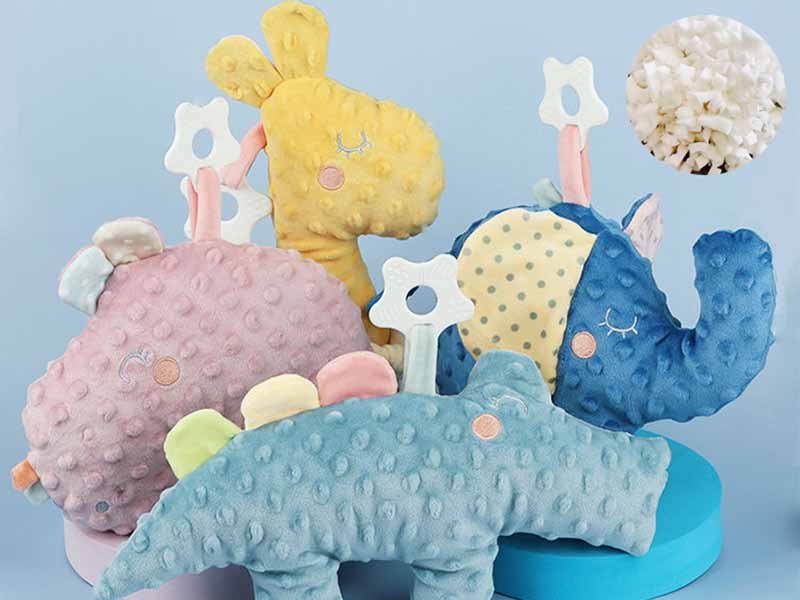
Memory foam can turn an ordinary soft toy into a product with a dense squeeze, slower recovery, and a more substantial hand feel. It can also create a heavy, lumpy, difficult-to-clean product when the foam grade, body structure, fill weight, and outer fabric are poorly matched. The material itself does not create a premium result. The finished experience comes from how every internal layer works together.
Memory foam should be placed inside a secure liner and used mainly in broad body areas that can compress evenly. Shredded foam suits rounded, squeezable bodies; cut foam supports simple fixed shapes; molded foam offers repeatable internal geometry. Polyester fiber is often added around the foam to soften edges, reduce surface lumps, protect facial details, and lower total weight.
A strong development process measures more than softness. It records foam weight, body-zone distribution, finished product weight, recovery time, fabric stretch, seam load, odor, packed compression, and shape recovery after transport.
A full-foam prototype often feels impressive for the first few seconds, yet the same sample may become tiring to hold, difficult to wash, and expensive to ship. A second sample using foam only in the belly, with fiber in the head and limbs, can feel richer while weighing far less. The outside may look almost identical. The real difference lives under the fabric.
What Memory Foam Should You Use?

Select memory foam according to the desired squeeze, recovery speed, product size, total weight, body shape, care method, and order quantity. Shredded foam works well in broad flexible cavities. Cut foam suits simple controlled forms. Molded foam supports repeated shapes. Many premium stuffed animals use a combination of foam, polyester fiber, batting, and separate body compartments.
The first decision should not be “Which foam is the softest?” A better question is “Which internal structure creates the intended feel without damaging shape, comfort, cleaning, or production consistency?”
| Foam Format | Suitable Product Area | Main Benefit | Main Production Risk |
|---|---|---|---|
| Shredded memory foam | Belly, torso, cushion body | Deep squeeze and adjustable filling | Shifting, clumping, added weight |
| Cut foam core | Simple head, neck pillow, loaf-shaped body | Controlled form and even recovery | Edges may show through fabric |
| Layered foam core | Flat or contoured body | Thickness can be adjusted by zone | Bonding lines may become visible |
| Molded foam core | Repeated three-dimensional body | Stable shape across production | Mold cost and longer development |
| Foam-fiber mixture | Broad soft body | Softer surface and lower weight | Mixing ratio may vary |
| Foam liner with fiber wrap | Premium character body | Controlled foam position and smooth surface | More sewing and assembly steps |
A product may use more than one filling method. For example, a large animal-shaped cushion may use a shredded foam liner in the center, polyester batting around the liner, and loose fiber near the face and corners.
What Is Memory Foam?
Memory foam is a viscoelastic polyurethane material that compresses under pressure and returns gradually after the pressure is released. Unlike loose polyester fiber, foam deforms as a connected cellular material. That behavior creates a slower, denser squeeze.
Several material properties influence the finished toy:
- Foam density
- Compression resistance
- Recovery speed
- Cell structure
- Shred size
- Dust level
- Odor
- Temperature sensitivity
- Compression durability
- Batch consistency
Density and firmness should not be treated as the same property. Density relates to the amount of material within a certain volume. Firmness describes how much force is needed to compress it. A dense foam may still feel soft, while a lower-density grade may feel surprisingly firm.
Temperature can also change the feel. Some memory foams become firmer in cold storage and softer in warm conditions. Samples should be checked under the temperatures likely to occur during warehousing, transport, and consumer use.
For plush development, physical testing matters more than supplier descriptions such as soft, premium, or high rebound. The foam needs to be placed inside the planned fabric shell because the same material can feel very different under short-pile minky, stretch fabric, faux fur, or tightly woven polyester.
Which Foam Form Works Best?
Shredded foam is easier to distribute inside irregular bodies. It works well in rounded bellies, animal cushions, large heads, and broad torsos. Fill weight can be adjusted without changing the pattern, making it useful during early sampling.
Shred size affects the surface:
- Small shreds can create a smoother feel but may pack densely.
- Medium shreds provide a balanced squeeze and easier airflow.
- Large pieces reduce dust but may show through thin fabric.
- Mixed shred sizes can improve packing but require controlled blending.
A practical development trial may compare three shred ranges:
| Trial Group | Approximate Shred Range | Expected Feel | Main Check |
|---|---|---|---|
| Fine | 5–15 mm | Dense and smooth | Overpacking and slow recovery |
| Medium | 10–30 mm | Balanced and squeezable | Surface evenness |
| Coarse | 20–50 mm | Airier and less compact | Visible lumps and hard edges |
The values above are trial ranges, not fixed industry rules. Foam supplier, cutting method, and product size can change the result.
Cut foam cores provide stronger control over body shape. A foam block may be cut into a rounded torso, neck pillow, oval cushion, or simple character head. The core should normally be smaller than the finished body cavity so batting, lining, seam allowance, and outer fabric can fit without excessive pressure.
Molded foam is worth considering when internal shape must remain highly consistent across a larger order. The mold creates the same geometry repeatedly, although development cost and tooling time are higher.
What Density and Rebound Matter?
A useful foam specification should include more than a supplier code. The development team should record measurable behavior inside the finished product.
Key control points include:
- Loose foam weight per liter
- Compressed foam weight per liter
- Compression depth under a fixed load
- Recovery time after short compression
- Recovery after extended packing
- Finished toy weight
- Weight variation between samples
- Surface smoothness after repeated squeezing
A simple bulk-density trial can be completed with a container of known volume.
- Fill a one-liter container without pressing.
- Weigh the foam.
- Compress the foam to the planned production level.
- Weigh the compressed volume.
- Release the pressure.
- Record recovery after 30 seconds, 2 minutes, and 10 minutes.
- Repeat with material from another batch.
The test does not replace laboratory evaluation, but it creates a repeatable factory reference.
For production, fill weight should be specified in grams for each compartment. “Fill until soft” is not precise enough. A stronger instruction may read:
- Torso foam liner: 420 g
- Fiber wrap: 85 g
- Head fiberfill: 110 g
- Each arm: 18 g
- Each leg: 24 g
- Finished weight target: 710 g
- Accepted finished weight range: 690–730 g
The accepted range depends on product size and material variation. Smaller plush products require tighter weight control because a 20-gram difference is more noticeable.
Rebound should also match the product promise. A stress-relief plush may need a clear slow-recovery effect. A cuddle toy may need faster recovery so the body does not remain visibly flattened.
Is Hybrid Filling Better?
Hybrid filling often gives a better result because foam and polyester fiber perform different jobs.
Memory foam provides:
- Dense pressure response
- Slow recovery
- Inner support
- A substantial hand feel
Polyester fiber provides:
- Surface softness
- Lightweight volume
- Smoother corners
- Better filling for narrow areas
- Protection around embroidery
- Easier shape correction
A premium character may use several filling zones:
| Body Area | Recommended Filling | Reason |
|---|---|---|
| Belly | Shredded foam liner | Main squeeze area |
| Upper torso | Foam and fiber | Support without excessive weight |
| Head | High-loft fiber | Protect facial shape |
| Cheeks | Fine fiber | Control expression and symmetry |
| Arms and legs | Polyester fiber | Fill narrow cavities |
| Ears and tail | Light fiber or thin batting | Maintain flexibility |
| Seat | Sealed pellets with fiber | Improve sitting balance |
Direct foam pressure behind embroidered eyes, noses, or mouths can distort the face. A layer of fiber between the foam liner and face panel reduces pressure concentration.
Hybrid construction also improves weight control. Filling a 50-centimeter plush entirely with foam may produce a heavy product that is expensive to ship. Foam placed only in the belly can preserve the desired squeeze while fiber keeps the head and limbs light.
The mixing method must remain consistent. Randomly mixing shredded foam and loose fiber in one large bin can create uneven ratios. Separate liners or weighed material portions provide better control.
How Does Foam Quality Differ?
Foam quality affects smell, rebound, durability, surface smoothness, and product consistency. Low-cost mixed scraps may contain different densities, colors, coatings, or hard skin pieces. The first sample may feel acceptable, while later production batches become firmer or recover at different speeds.
Incoming foam should be inspected for:
- Strong chemical odor
- Visible contamination
- Hard outer-skin pieces
- Excessive dust
- Crumbling
- Oil or adhesive residue
- Wide color variation
- Uneven shred size
- Slow recovery
- Permanent flattening
A practical incoming check can use a sample from several bags or bales rather than testing only one top layer.
Recommended internal controls may include:
- Compare weight per liter from each batch.
- Compress equal samples under the same weight.
- Record recovery at fixed time points.
- Smell the foam immediately after opening and again after ventilation.
- Rub foam against white fabric to check transfer.
- Squeeze repeatedly to identify crumbling.
- Place foam behind the approved outer fabric to check visible lumps.
- Store one sample under compressed packaging conditions.
Foam smell deserves particular attention. Ventilation may reduce a mild manufacturing odor, but a strong or persistent smell can create complaints and returns. Finished samples should be evaluated after packing, not only in an open workshop.
Delsney can compare several foam grades during development, build different internal liners, and prepare side-by-side samples before final material approval.
Which Plush Designs Suit Memory Foam?

Memory foam is most suitable for medium and large plush products with broad body cavities, cushion-like forms, slow-rebound functions, or adult comfort positioning. Narrow limbs, tiny bodies, hanging products, and highly detailed shapes usually perform better with polyester fiber or a limited foam insert.
Product suitability depends on geometry, not only overall height. A wide 25-centimeter cushion character may hold foam better than a 45-centimeter doll with a thin waist and narrow arms.
| Product Type | Foam Suitability | Preferred Structure | Main Risk |
|---|---|---|---|
| Animal-shaped pillow | High | Foam liner with fiber wrap | Excess weight |
| Large cuddle plush | High | Zoned foam and fiber | High shipping volume |
| Sensory squeeze plush | High | Controlled foam core | Seam fatigue |
| Seated mascot | Medium to high | Foam torso, fiber head | Balance and face distortion |
| Collectible character | Medium | Small foam body insert | Added weight |
| Long-limbed doll | Low to medium | Foam torso only | Fill migration |
| Mini plush | Low | Fiberfill | Limited cavity |
| Keychain plush | Very low | Lightweight fiber | Hanging weight |
The product should be evaluated while held, squeezed, carried, packed, and displayed. A sample can feel excellent in the hand yet fail to sit upright or recover after carton compression.
Which Plush Sizes Work Best?
Medium and large products usually provide enough internal volume for foam to compress evenly. Broad cavities reduce the risk of hard edges and make fill distribution easier.
Useful development ranges include:
| Finished Size | Foam Use | Main Recommendation |
|---|---|---|
| Under 15 cm | Rarely recommended | Use lightweight fiber |
| 15–25 cm | Limited foam zones | Keep fill weight low |
| 25–40 cm | Good for foam torso | Use separate body liner |
| 40–60 cm | Strong suitability | Control total weight carefully |
| Over 60 cm | Suitable with zoning | Review freight and packaging |
Size alone does not determine success. Body width, depth, fabric stretch, and internal compartment shape matter just as much.
A 35-centimeter plush with a 20-centimeter-wide belly can accept a foam liner more easily than a 50-centimeter character with a narrow 8-centimeter torso.
Development should record:
- Outer dimensions
- Internal torso volume
- Empty shell weight
- Foam weight
- Fiber weight
- Finished product weight
- Packed dimensions
- Carton quantity
- Carton gross weight
- Recovery after unpacking
Large foam plush products may require fewer pieces per carton because of weight. Freight cost can rise even when carton volume appears reasonable.
Which Shapes Need Foam Cores?
Foam cores work best in shapes that need controlled support under pressure. Common examples include:
- Animal neck pillows
- Rounded sleep companions
- Loaf-shaped characters
- Large oval bodies
- Cushion-style heads
- Seated torsos
- Travel-support plush
- Flat-backed comfort toys
Cut cores can be formed from one block or several bonded layers. Layered construction allows different thicknesses across the body, although bonding areas should not create hard ridges.
A smooth outer wrap is usually needed. Polyester batting, high-loft fiber, or a thin fabric liner can soften core edges and reduce visible contours.
Core dimensions should be smaller than the outer pattern. The required reduction depends on:
- Foam firmness
- Fabric stretch
- Batting thickness
- Seam allowance
- Surface pile
- Desired compression
For example, a torso cavity measuring 300 × 220 × 120 millimeters may begin with a foam core several millimeters smaller on every side. The final reduction should be confirmed through sampling rather than calculated from one universal formula.
Complex faces, fingers, horns, wings, and thin tails are poor candidates for rigid foam cores. Fiberfill gives pattern makers more freedom to adjust small forms.
Which Body Parts Need Foam?
The belly and torso are usually the best foam zones. They provide broad surfaces, receive most of the squeezing pressure, and allow the foam to recover without affecting facial expression.
Suitable areas include:
- Belly
- Chest
- Back
- Seat
- Large head with simple geometry
- Pillow section
- Neck-support area
Areas that normally need lighter filling include:
- Face
- Cheeks
- Small muzzle
- Fingers
- Toes
- Thin ears
- Narrow tail
- Small horns
- Long limbs
A separated liner prevents foam pieces from moving into arms, legs, or facial areas. Compartment stitching can also keep material in the intended position.
A practical internal layout for a 45-centimeter seated animal may use:
- One zippered or sewn foam liner in the belly
- Fiberfill around the front and sides
- A firm fiber-filled head
- Light fiber in the limbs
- A sealed pellet pouch at the seat
- Extra fiber behind the muzzle
- Thin batting in flat ears
Every area should have an approved fill weight. The sewing pattern should also show the filling opening for each compartment.
Are Memory Foam Plushies Heavy?
Memory foam usually creates more finished weight than loose polyester fiber at the same visible volume. Greater weight may support a premium, calming, or substantial feel, but excessive weight can reduce comfort and increase logistics cost.
Weight planning should begin before the sample is finished.
A product specification may track:
| Weight Item | Example Record |
|---|---|
| Outer shell | 160 g |
| Inner liner | 35 g |
| Memory foam | 420 g |
| Polyester fiber | 145 g |
| Pellets | 80 g |
| Labels and accessories | 10 g |
| Finished unit | 850 g |
| Packed unit | 910 g |
The figures above illustrate how weight can be recorded. Every design requires its own target.
Consider the person carrying the toy. A product designed for adults may tolerate a heavier body. A children’s plush, travel toy, or shelf-hanging item should remain lighter.
Shipping calculations should include:
- Pieces per carton
- Net carton weight
- Gross carton weight
- Packed volume
- Compression level
- Recovery time
- Warehouse handling limits
A 60-centimeter foam plush may feel luxurious but reduce carton quantity and increase freight cost. Zoning can control the problem by concentrating foam in the main squeeze area.
Which Products Should Avoid Foam?
Memory foam should not be forced into a product simply because it sounds premium. Several designs perform better with high-quality polyester fiber, clustered fiber, batting, pellets, or other filling systems.
Foam is usually unsuitable for:
- Small keychains
- Hanging ornaments
- Very small blind-box plush
- Thin dolls
- Narrow animal legs
- Long flexible tails
- Products requiring frequent full-machine washing
- Lightweight travel toys
- Highly compressed promotional orders
- Designs with many internal electronics
A product with sound modules, lights, sensors, or battery boxes requires extra internal planning. Foam pressing against components can restrict access, transfer heat, or change sound performance.
Foam can also complicate cleaning. A removable insert may solve the problem, but the zipper, liner, care label, and reassembly process must be designed carefully.
A side-by-side sample test is often the clearest way to decide. Delsney can prepare one prototype with foam and another with a fiber-based structure, then compare:
- Finished weight
- Squeeze
- Recovery
- Shape
- Facial accuracy
- Cleaning method
- Packaging
- Freight impact
- Production cost
The better option should be chosen according to the product experience and commercial plan, not the material name alone.
How Is Memory Foam Added?

Memory foam should be placed inside a controlled internal structure rather than poured directly into the outer plush shell. A separate liner, compartment system, or wrapped foam core keeps the material away from facial embroidery, narrow limbs, electronics, and high-stress seams. Fill weight, foam position, liner volume, and closure strength should be measured before production approval.
The internal build determines whether the plush feels smooth and stable or uneven and heavy. A good construction keeps the foam in the intended pressure zone while allowing the outer surface to remain soft.
| Internal Structure | Suitable Product | Main Advantage | Main Production Concern |
|---|---|---|---|
| Separate foam liner | Large cuddle plush | Controls foam movement | Liner seam strength |
| Zoned compartments | Character plush | Different feel by body area | More sewing operations |
| Wrapped foam core | Pillow-shaped plush | Smooth outer surface | Core edges may show |
| Foam-fiber blend pouch | Sensory plush | Balanced squeeze | Blend ratio consistency |
| Removable foam insert | Washable outer cover | Easier care | Zipper access and fit |
| Molded foam insert | Repeated shaped products | Stable internal geometry | Tooling and unit cost |
How Is the Inner Liner Made?
The liner works as a secure container for shredded foam or a soft foam-fiber blend. It prevents loose particles from moving into limbs, pressing against embroidery, or escaping if an outer seam opens.
Common liner materials include:
- Lightweight polyester tricot
- Knitted polyester
- Nonwoven fabric
- Fine woven polyester
- Stretch jersey
- Brushed polyester
- Dust-resistant inner cloth
The liner should be soft enough to compress with the foam but tight enough to stop small pieces and foam dust from passing through. An open mesh is usually unsuitable for fine shreds.
Important liner specifications include:
- Fabric weight
- Stretch direction
- Air permeability
- Seam strength
- Pore size
- Colorfastness
- Odor
- Shrinkage
- Tear resistance
A liner that traps too much air can feel balloon-like when squeezed. A highly open liner can release fine foam dust into the outer cavity. Material selection should balance airflow and particle control.
The liner shape should follow the intended pressure zone. A simple rectangular pouch may create hard corners inside a rounded animal body. Curved panels, darts, and gussets help the liner match the outer form.
For a rounded torso, a liner may use:
- Two curved side panels
- One lower gusset
- A top filling opening
- Reinforced closing seam
- Rounded corners
- Additional divider stitching
The liner should remain slightly smaller than the outer cavity. Excessive liner volume allows the foam to shift, while an undersized liner creates a dense hard block.
How Is Shredded Foam Distributed?
Shredded foam should be weighed and distributed by compartment. Filling by hand feel alone creates wide variation from one piece to another.
A controlled process usually follows several stages:
- Condition the foam after opening.
- Remove compressed blocks and hard skin pieces.
- Weigh the approved quantity.
- Break apart large clusters.
- Fill the liner in several portions.
- Massage the foam into corners.
- Check the shape under the outer shell.
- Close the liner.
- Reweigh the finished body.
- Compare with the approved sample.
Adding all foam at once can create a dense center and empty corners. Dividing the fill into three or four portions gives the operator more control.
For example, a 480-gram torso fill may be added as:
- First portion: 180 g into the lower body
- Second portion: 130 g into the left side
- Third portion: 130 g into the right side
- Final adjustment: 40 g near the upper torso
The exact split depends on body shape.
Foam distribution can also be controlled with internal baffles. A wide belly may use one vertical divider to stop all material from collecting on one side. A long pillow-shaped animal may need two or three compartments to prevent migration toward the ends.
After filling, the body should be checked in several positions:
- Upright
- Lying flat
- Suspended by one limb
- Compressed from the front
- Compressed from the side
- Stored overnight
Movement observed during those checks helps identify whether more compartment control is needed.
How Are Foam Cores Wrapped?
Cut or molded foam cores should normally be wrapped before insertion. The wrap softens edges, reduces surface marks, protects the outer fabric, and improves the transition between foam and fiber-filled areas.
Common wrapping materials include:
- Polyester batting
- High-loft fiber sheet
- Thin foam sheet
- Soft knitted fabric
- Brushed lining
- Nonwoven cover material
The wrap thickness depends on the surface fabric. Short-pile minky and stretch velour reveal internal edges more easily than long faux fur. A thin wrap may be enough under thick shaggy fabric, while a smooth outer fabric may need a thicker, more even layer.
A core should be checked for:
- Sharp corners
- Bonding ridges
- Uneven cutting
- Surface tears
- Hard adhesive spots
- Size mismatch
- Distorted curves
The wrap can be attached by stitching, temporary adhesive, heat bonding, or a separate sewn cover. Adhesive should be used carefully because hard glue lines may become visible through the plush shell.
The wrapped core should slide into the outer cavity without forcing the seams. Excessive pressure can distort facial embroidery, widen stitch holes, and cause seam puckering.
A practical fitting sequence is:
- Insert the wrapped core without extra fiber.
- Check the main silhouette.
- Add fiber only where needed.
- Close the sample temporarily.
- Compress and release the body.
- Inspect for visible edges.
- Adjust the core or wrap thickness.
How Is Fill Weight Calculated?
Fill weight should be developed through physical samples. Product dimensions alone cannot provide an exact answer because fabric stretch, foam density, liner volume, and desired hand feel all affect the result.
A useful development method uses three sample levels:
| Sample Level | Foam Weight | Intended Feel | Main Check |
|---|---|---|---|
| Light fill | Baseline minus 10–15% | Softer and lighter | Shape collapse |
| Standard fill | Approved target | Balanced squeeze | Overall performance |
| Firm fill | Baseline plus 10–15% | Denser and slower | Excess weight and seam pressure |
For a torso targeted at 400 grams, trial versions may use approximately:
- 350 g
- 400 g
- 450 g
Each sample should be evaluated for:
- Surface smoothness
- Compression depth
- Recovery speed
- Finished weight
- Seam stress
- Facial distortion
- Sitting balance
- Carrying comfort
The approved weight should then be divided by body zone.
A clear production sheet may record:
- Belly liner: 360 ± 10 g
- Upper chest fiber: 45 ± 5 g
- Head fiber: 95 ± 5 g
- Left arm: 20 ± 2 g
- Right arm: 20 ± 2 g
- Each leg: 28 ± 3 g
- Seat pellet pouch: 70 ± 3 g
- Finished product: 675 ± 20 g
Weight tolerances should reflect product size and filling type. A very tight tolerance may be unrealistic for large hand-filled products, while a wide tolerance can create noticeable differences on small plush.
Digital scales should be checked regularly. Fill stations should also use labeled bins to prevent material mix-ups.
How Are Seams Reinforced?
Foam-filled plush often places more pressure on seams than light fiber-filled products. Repeated squeezing pushes the internal material toward stitch lines, especially around filling openings, gussets, neck joints, and body curves.
High-risk areas include:
- Liner closing seam
- Outer filling opening
- Neck connection
- Limb attachment
- Lower gusset
- Zipper ends
- Electronics access opening
- Removable-cover zipper
Reinforcement methods include:
- Double stitching
- Shorter stitch length
- Wider seam allowance
- Overlock finishing
- Binding tape
- Backstitching
- Bar tacks
- Internal support patches
- Stronger thread
- Rounded seam transitions
A narrow seam allowance may work on a light polyester plush but fail under dense foam pressure. Seam strength should be checked after repeated compression rather than only after sewing.
A practical sample test may include:
- 100 manual compression cycles
- Pulling the liner opening in opposite directions
- Holding the toy by one limb
- Dropping the toy from table height
- Compressing the body under packaging pressure
- Rechecking stitch opening and fabric damage
The liner closure deserves special attention. A single straight seam can open when foam pushes against it. A folded opening, double seam, or reinforced ladder-stitch area may provide better security.
How Do You Create a Premium Feel?

A premium feel comes from balanced resistance, smooth surface transitions, controlled weight, clean recovery, and a close match between outer fabric and internal filling. Memory foam should not feel like a hard block under a soft shell. The best result combines a dense inner squeeze with a soft, even exterior.
The outer fabric, foam structure, liner size, fiber wrap, and fill weight should be approved together. Changing one component after sampling can alter the entire hand feel.
Which Fabrics Pair Well?
Fabric choice strongly affects how memory foam feels. Stretchy materials transmit the foam’s compression more directly, while stable woven fabrics restrict movement and create a firmer body.
Suitable fabrics include:
- Short-pile minky
- Super-soft velboa
- Stretch velour
- Polyester spandex plush
- Crystal super-soft fabric
- Faux rabbit fur
- Short plush
- Brushed jersey
- Elastic polyester knit
| Fabric Type | Surface Feel | Stretch Level | Foam Visibility Risk |
|---|---|---|---|
| Short-pile minky | Smooth and soft | Medium | Medium |
| Stretch velour | Flexible and close-fitting | High | High |
| Velboa | Stable and clean | Low to medium | Medium |
| Faux rabbit fur | Dense and luxurious | Medium | Low |
| Long-pile plush | Fluffy and forgiving | Low to medium | Low |
| Jersey knit | Soft and flexible | High | High |
| Woven polyester | Stable and firm | Low | Medium to high |
Stretch fabric creates a satisfying squeeze but can reveal lumps, liner seams, and foam edges. Stable fabric hides less movement but may make the toy feel firmer.
Fabric weight should also match product size. A thin surface on a heavy foam body can sag near seams. A very thick plush fabric can reduce the slow-rebound sensation because the pile and backing absorb part of the pressure.
Color and print can influence appearance after compression. Dark solid colors often hide internal shadows better than pale flat shades. Large printed graphics may distort when the body is squeezed, so artwork placement should be reviewed on a filled sample.
How Do You Prevent Lumps?
Lumps usually come from uneven shred size, compressed foam blocks, poor liner geometry, low fiber coverage, or inconsistent filling.
Prevention starts before the foam enters the product.
Recommended controls include:
- Screen out hard pieces.
- Break apart compressed clusters.
- Use a defined shred-size range.
- Fill in several portions.
- Massage each portion into place.
- Add internal dividers for long bodies.
- Wrap the liner with fiber.
- Keep the liner slightly smaller than the outer shell.
- Check the sample after overnight storage.
- Inspect after compression packing.
A fiber wrap of controlled weight can create a smoother exterior. Instead of adding random loose fiber around the foam, the factory may use a pre-cut batting layer around the liner.
For example:
- Front belly batting: 30 g
- Back batting: 20 g
- Side transition fiber: 10 g per side
- Upper chest fiber: 15 g
Pre-cut layers improve consistency because every product receives the same amount in the same location.
Lump inspection should use both touch and side lighting. A smooth product under normal room light may show uneven areas when light passes across the surface at a low angle.
The sample should also be squeezed repeatedly. Some lumps appear only after foam pieces migrate during use.
How Do You Balance Softness?
Softness should be balanced across surface, squeeze depth, and recovery. A product can feel soft on the outside yet become too firm after a few centimeters of compression.
Three layers often control the experience:
- Outer plush fabric
- Fiber or batting transition layer
- Memory foam center
The outer layer creates immediate softness. The transition layer hides edges and spreads pressure. The foam center provides the slow, dense response.
A balanced sample should answer several questions:
- Does the surface feel soft before squeezing?
- How much force is needed to compress the body?
- Does the pressure increase gradually?
- Does the toy return without remaining flat?
- Does one side feel firmer than the other?
- Does the face change during squeezing?
- Is the toy comfortable to hold for several minutes?
A practical hand-feel scale can support sample review:
| Score | Compression Feel | Development Meaning |
|---|---|---|
| 1 | Very loose | Insufficient support |
| 2 | Soft and airy | Limited slow-rebound effect |
| 3 | Balanced | Suitable for cuddle products |
| 4 | Dense | Suitable for sensory squeeze products |
| 5 | Very firm | Risk of excess weight and pressure |
Several people should review the sample because hand-feel judgment varies. Final approval should still rely on measurable fill weights and materials.
How Do You Control Rebound?
Rebound depends on foam grade, shred size, fill density, temperature, liner tension, and outer fabric stretch.
Fast rebound creates a lively, springy response. Slow rebound feels calmer and denser. Extremely slow recovery may leave the toy flattened after sitting or shipping.
A repeatable check may use a fixed compression method:
- Measure the uncompressed body depth.
- Compress the body to 50% of its depth.
- Hold for 10 seconds.
- Release.
- Measure recovery after 10 seconds.
- Measure again after 30 seconds.
- Measure again after 2 minutes.
A sample record might show:
- Original depth: 160 mm
- Compressed depth: 80 mm
- Depth after 10 seconds: 125 mm
- Depth after 30 seconds: 145 mm
- Depth after 2 minutes: 158 mm
The target depends on the product concept. A sensory plush may intentionally recover more slowly. A display character should return close to its original form quickly.
Temperature checks are also useful. Foam can feel firmer in a cold warehouse and softer in a warm room. Samples may be conditioned under several environments before approval.
Rebound should be tested again after repeated compression. A product that performs well for the first five cycles may lose recovery after extended use.
How Does Packaging Affect Recovery?
Packaging can change the final product more than expected. Long compression may flatten foam, bend ears, distort embroidery, or create crease lines in the surface fabric.
Common packaging methods include:
- Full-shape packing
- Light compression
- Folded packing
- Vacuum compression
- Rolled packing
- Carton-divider packing
Memory foam plush should not automatically use the same packing method as polyester-filled toys.
A packaging trial should record:
- Compression percentage
- Compression duration
- Carton pressure
- Unpacking time
- Recovery after 30 minutes
- Recovery after 2 hours
- Recovery after 24 hours
- Permanent creases
- Facial distortion
- Odor after opening
| Packing Method | Freight Efficiency | Recovery Risk |
|---|---|---|
| Full-shape packing | Low | Low |
| Light compression | Medium | Low to medium |
| Folded packing | Medium | Medium |
| Vacuum compression | High | Medium to high |
| Long-term vacuum storage | High | High |
Vacuum packing can reduce volume, but excessive pressure may create permanent deformation in bonded foam cores or printed surfaces. Shredded foam may recover better than a rigid core, although liner migration and uneven redistribution can occur.
An unpacking instruction card may be useful for compressed products. It can explain how to massage the body, reshape the limbs, and allow time for full recovery.
Delsney can test several packing levels during sample development and compare carton quantity, freight efficiency, recovery time, and appearance before the packing method is approved.
Is Memory Foam Safe and Washable?

Memory foam can be used in stuffed animals when the foam, inner liner, seams, accessories, surface fabric, and finished product meet the requirements of the destination market. Safety cannot be confirmed from foam paperwork alone. Cleaning also needs to be planned during design because dense foam absorbs moisture and dries more slowly than polyester fiber. Removable covers are often the most manageable option.
Memory foam presents a different risk profile from ordinary polyester filling. Loose fiber tends to spread through the body, while foam pieces can remain dense, retain water, press against seams, or become accessible when a liner fails. A well-developed product therefore needs two levels of protection: a secure foam compartment and a durable outer shell.
Safety decisions should be based on:
- Intended age group
- Destination country
- Product dimensions
- Foam composition
- Foam piece size
- Liner construction
- Seam strength
- Attached accessories
- Cleaning method
- Product labeling
- Packaging method
- Intended use
A decorative adult cushion, a sensory plush for teenagers, and a stuffed animal intended for children under three years old cannot share one compliance plan. Age grading should be established before materials, zippers, eyes, pellets, sound modules, or removable inserts are approved.
Is Memory Foam Safe for Children?
Memory foam is not automatically safe or unsafe for children. Safety depends on material composition, accessibility, finished construction, age grading, and applicable testing.
A foam supplier may provide material reports covering chemical content, emissions, or durability. Such documents help with material selection, but they do not certify the finished stuffed animal. The complete product includes fabric, thread, embroidery, printed parts, labels, zippers, pellets, adhesives, plastic accessories, and internal seams. Every component can influence the final result.
The foam must remain inaccessible during foreseeable use. A child should not be able to pull foam pieces through a seam, zipper opening, or damaged liner. Fine foam pieces can create additional concern when the outer shell or liner opens.
A safer internal structure may use:
- A tightly woven foam liner
- Double-stitched liner seams
- A concealed filling closure
- Reinforced outer seams
- No user-accessible internal zipper for young-age products
- Fiber barriers around hard internal parts
- Secure attachment of eyes, noses, and decorations
- Clear age grading and care instructions
Products intended for very young children require particular attention to small detachable parts, seam opening, loose fibers, cords, plastic components, and accessible filling.
A certificate for flexible polyurethane foam should be treated as one part of the material file. It does not replace testing of the assembled toy.
Which Safety Tests Are Required?
Testing requirements depend on the destination market, intended age, product function, and components used. The test plan should be confirmed before bulk material is ordered.
For the United States, children’s toys may need evaluation under applicable ASTM F963 requirements, CPSIA rules, lead limits, phthalate limits, small-parts requirements, tracking-label rules, and other regulations connected to the product. Toys intended primarily for children aged 12 or younger generally require testing by a CPSC-accepted third-party laboratory and a Children’s Product Certificate covering applicable rules.
For the European Union, a toy must meet applicable safety requirements before CE marking. Plush products commonly require review under relevant parts of EN 71, including mechanical and physical properties, flammability, and migration of certain elements. Technical documentation, risk assessment, labeling, traceability information, and a declaration of conformity also need to be prepared where applicable.
| Control Area | What May Be Reviewed | Memory Foam Concern |
|---|---|---|
| Mechanical safety | Seams, pull force, abuse, small parts | Foam becoming accessible |
| Flammability | Fabric, filling, trims | Burning behavior of combined materials |
| Chemical safety | Surface coatings, foam, prints, accessories | Restricted substances and emissions |
| Filling cleanliness | Foreign matter and material condition | Dust, hard scraps, contamination |
| Age grading | Intended user and product design | Accessible inserts or closures |
| Labeling | Warnings, origin, tracking, care | Incorrect age or cleaning information |
| Traceability | Batch, factory, production records | Foam batch identification |
| Packaging | Bags, closures, warning text | Suffocation and access risks |
Testing should use the final construction whenever possible. Substituting the outer fabric, foam grade, paint, printed transfer, zipper, adhesive, or accessory after testing may affect compliance.
A useful test-planning file should list:
- Destination market
- Intended age
- Applicable standard
- Tested product version
- Material and component codes
- Color variants
- Laboratory name
- Report number
- Test date
- Production batch connection
- Required labeling
Delsney can coordinate product construction and documentation around European and North American market requirements. Final certification scope should always be confirmed according to the exact product and sales market.
How Do You Control Odor?
Memory foam can carry an odor after production, cutting, compression, or sealed storage. A mild odor may reduce after ventilation, while a strong or persistent smell can lead to complaints even when the product passes required chemical tests.
Odor control begins with incoming material rather than after the stuffed animals have been packed.
Recommended controls include:
- Approve a sealed foam sample before ordering.
- Compare odor immediately after opening.
- Check again after 24 and 72 hours of ventilation.
- Reject foam with oily, burnt, moldy, or unusually sharp odors.
- Store foam away from inks, solvents, fuel, and adhesives.
- Keep foam dry and off the factory floor.
- Ventilate freshly cut foam before filling.
- Avoid packing finished products immediately after assembly.
- Test odor again after the product has remained sealed in its retail packaging.
- Record foam supplier and batch number.
An internal odor scale can make inspection less subjective.
| Score | Odor Level | Suggested Action |
|---|---|---|
| 0 | No noticeable odor | Accept |
| 1 | Very slight odor at close range | Review after ventilation |
| 2 | Noticeable after opening | Hold and ventilate |
| 3 | Strong odor during normal handling | Reject or investigate |
| 4 | Sharp, irritating, or abnormal odor | Reject |
The scale does not replace chemical testing. It helps maintain consistency during incoming and finished-product inspection.
Packaging trials matter because an item may smell acceptable in the open workshop but noticeably stronger after seven days inside a sealed polybag or retail box. One approved sample should remain sealed for a defined period and be opened in a clean room for evaluation.
Fragrance should not be used to hide foam odor. Added scents introduce another material system and may create allergy, labeling, stability, or market-compliance concerns.
Can Memory Foam Plush Be Washed?
A memory foam stuffed animal should not automatically be labeled as machine washable. Dense foam can absorb water, become difficult to rinse, and require a long drying period. Moisture trapped inside a liner may produce odor, uneven recovery, adhesive failure, or microbial growth.
Cleaning options include:
- Surface cleaning only
- Damp-cloth cleaning
- Hand washing of the outer cover
- Machine washing of a removable cover
- Professional cleaning
- Washing of a specially validated complete product
The care method should be based on testing rather than assumption.
A complete wash test may examine:
- Surface appearance
- Color transfer
- Fabric shrinkage
- Seam condition
- Foam water absorption
- Drying time
- Foam recovery
- Odor after drying
- Print or embroidery condition
- Zipper performance
- Product dimensions
- Finished weight before and after drying
Weight can reveal retained moisture. A sample should be weighed before washing, immediately after washing, and at regular intervals during drying. The product should not be considered fully dry until weight returns close to the original dry value and no internal moisture remains.
A complete foam-filled plush may take much longer to dry than a polyester-filled toy. Large products create greater risk because moisture remains deep inside the torso even when the surface feels dry.
Care labels should avoid vague instructions. “Wash gently” does not explain water temperature, machine suitability, drying method, or whether the foam insert must be removed.
Clear instructions may state:
- Remove inner foam insert before washing.
- Close all zippers.
- Wash outer cover separately.
- Use cold water and a gentle cycle.
- Do not bleach.
- Do not tumble-dry unless validated.
- Dry completely before reinserting the foam.
- Do not wash the foam insert.
- Spot-clean the inner liner only.
Final wording must match the tested care method.
Is a Removable Cover Better?
A removable outer cover is often a better solution for large memory foam animals, animal-shaped cushions, adult comfort plush, travel products, and frequently handled sensory items. The outer fabric can be cleaned without soaking the foam.
A removable structure requires more than adding a zipper. The development team must plan:
- Zipper position
- Zipper length
- Slider concealment
- Access to the foam insert
- Reassembly method
- Child access
- Liner durability
- Internal orientation
- Care labels for both components
A zipper along the back or lower body usually causes less visual disruption than a front opening. The access point must be long enough for the foam insert to be removed without tearing the liner or stretching the outer cover.
For a large plush, the insert may need to fold or compress during removal. A shaped foam core can be harder to remove than a flexible shredded-foam pouch.
A useful removable-cover trial should measure:
| Check | Acceptance Question |
|---|---|
| Removal time | Can one person remove the insert without excessive force? |
| Reinsertion time | Can the correct shape be restored easily? |
| Zipper stress | Does repeated use damage the seam? |
| Orientation | Can the insert be placed backward or upside down? |
| Surface recovery | Does the cover return without wrinkles? |
| User access | Is the internal filling appropriately protected? |
| Care label | Are cover and insert instructions separate and clear? |
Color-coded tabs, shape-matched corners, internal attachment loops, or orientation labels can make reassembly easier.
A removable insert may not be suitable for every child-directed product. Accessible zippers and internal components need to be considered in the age grading and safety assessment. A concealed, tool-operated, or otherwise controlled opening may be required for some designs.
How Is Custom Production Managed?
Custom memory foam plush production begins with design files, target dimensions, intended age, sales market, desired hand feel, and estimated quantity. The project then moves through three-view drawings, internal-structure planning, 3D visualization, physical sampling, performance checks, sample approval, material control, bulk manufacturing, and final inspection. Every filling zone should have a measurable weight and approved construction.
Memory foam projects need closer coordination between designers, pattern makers, filling technicians, sewing teams, testing laboratories, and packaging engineers. A visually accurate outer shell can still fail when the internal liner is too large, the foam is too dense, or compressed packaging changes the final shape.
Delsney brings product design, pattern development, sampling, material selection, manufacturing, inspection, and packaging into one development process. The factory has more than 18 years of experience producing custom plush products for demanding international projects.
What Design Files Are Needed?
A complete technical pack gives the development team the clearest starting point, but custom development can also begin from reference pictures, sketches, existing samples, character artwork, or written requirements.
Useful files and information include:
- Front, side, and back views
- Character artwork
- Three-view drawings
- 3D model files
- Finished dimensions
- Sitting or standing position
- Fabric references
- Pantone colors
- Embroidery artwork
- Printed artwork
- Logo files
- Filling requirements
- Intended age
- Destination market
- Packaging concept
- Estimated order quantity
- Required delivery schedule
Vector artwork in AI, EPS, SVG, or editable PDF format is preferred for embroidery, printing, labels, and packaging. High-resolution PSD or PNG files may also support printed features and visual references.
A memory foam project needs additional internal information:
- Main squeeze zone
- Desired rebound speed
- Target finished weight
- Foam format
- Removable or sealed insert
- Washability requirement
- Internal compartments
- Electronics or sound modules
- Pellet pouches
- Seating balance
- Packaging compression target
When detailed technical documents are unavailable, Delsney can prepare three-view drawings and 3D visual effects from approved character artwork or reference images. Free design support helps convert a flat concept into a product structure suitable for sampling.
Clear dimensions are especially important. A single height measurement cannot define the body. Width, depth, head size, limb length, sitting height, and body circumference influence foam volume and finished weight.
How Is a 3D Sample Developed?
Development starts by separating visual features from structural requirements. The designer first studies the character proportions, expression, body posture, color blocks, accessories, and intended use. The pattern team then evaluates how the shape can be divided into sewable fabric panels.
A practical development flow may include:
| Development Stage | Main Output |
|---|---|
| Artwork review | Proportion and feature analysis |
| Three-view preparation | Front, side, and back dimensions |
| Internal planning | Foam liner, fiber zones, and support areas |
| 3D visualization | Expected volume and silhouette |
| Pattern development | Sewable fabric panels |
| Embroidery trial | Face and logo confirmation |
| First physical sample | Shape, material, and hand-feel review |
| Revision | Measurement and construction correction |
| Approved sample | Production reference |
Three-dimensional visualization helps identify volume problems before fabric is cut. It can show whether the belly is deep enough for a foam insert, whether the head appears too large from the side, or whether a seated character has enough lower-body support.
A digital rendering cannot fully predict foam behavior. Physical sampling remains necessary because material stretch, seam tension, foam compression, and fill distribution alter the final shape.
Delsney can normally prepare standard plush samples in approximately 5–7 days after design details and materials are confirmed. Complex products using custom-developed fabrics, molded foam cores, electronics, extensive accessories, or specialized packaging may require additional development time.
Two free sample revisions can be used to correct details such as:
- Body proportion
- Facial placement
- Foam weight
- Rebound speed
- Limb angle
- Sitting balance
- Fabric color
- Embroidery density
- Accessory position
- Packaging recovery
Changes should be recorded in millimeters, grams, material codes, and artwork versions rather than general comments.
What Should the Prototype Test?
A prototype should be treated as a working product, not merely a visual display sample. It needs to be squeezed, carried, washed where applicable, compressed, unpacked, and inspected under realistic conditions.
Visual checks include:
- Overall proportions
- Character expression
- Front and side silhouette
- Left-right symmetry
- Color accuracy
- Embroidery placement
- Print alignment
- Seam smoothness
- Fabric direction
- Accessory position
Internal and performance checks include:
- Foam weight
- Fiber weight
- Finished product weight
- Compression resistance
- Rebound speed
- Surface lumping
- Foam migration
- Seam pressure
- Liner security
- Sitting stability
- Packaging recovery
- Odor after sealed storage
A measurable sample-approval sheet may contain:
| Control Item | Example Project Target |
|---|---|
| Finished height | 400 mm |
| Body width | 260 mm |
| Finished weight | 780 ± 25 g |
| Torso foam | 430 ± 10 g |
| Head fiber | 105 ± 5 g |
| Recovery after 2 minutes | At least 95% of original depth |
| Logo position | Within agreed placement tolerance |
| Left-right feature difference | Within approved measurement |
| Packaging recovery | Approved appearance within 24 hours |
| Artwork-to-product match | Target up to 98% based on approved design |
Project targets should be set according to the design rather than copied across unrelated products.
The prototype should also be reviewed by more than one person. One reviewer may focus on character accuracy, another on hand feel, and another on manufacturing feasibility. A visually perfect sample can become inefficient or unstable during mass production if every part requires manual adjustment.
The approved sample should be sealed, identified, photographed, measured, and stored as the production reference.
How Is Bulk Quality Controlled?
Bulk quality begins before sewing. Foam, fabric, embroidery thread, labels, accessories, and packaging should be checked against approved references when they arrive.
A complete control process may include:
| Production Point | Main Inspection |
|---|---|
| Incoming fabric | Color, pile direction, weight, defects |
| Incoming foam | Density, shred size, odor, recovery |
| Cutting | Panel size, direction, matching |
| Embroidery | Position, density, thread color |
| Sewing | Seam allowance, shape, reinforcement |
| Liner making | Size, closure strength, leakage |
| Filling | Weight by compartment |
| Assembly | Proportion, symmetry, accessories |
| Final inspection | Appearance, function, cleanliness |
| Packing | Labels, quantity, recovery protection |
The first completed unit from the production line should be compared with the approved sample before full output continues. Problems found at that stage are easier to correct than defects found after thousands of products are completed.
Filling control is particularly important. Each workstation should receive:
- Approved material code
- Weight specification
- Calibrated scale
- Filling sequence
- Compartment diagram
- Accepted weight tolerance
- Approved reference sample
Foam batches should not be mixed without approval. A new foam batch may show a different odor, firmness, color, or rebound rate even when it carries the same supplier name.
In-line inspection should check:
- Liner seam opening
- Foam leakage
- Uneven body shape
- Underfilled corners
- Overfilled torso
- Distorted embroidery
- Twisted limbs
- Incorrect fill material
- Weight outside tolerance
- Loose accessories
Final products should undergo 100% visual and functional inspection before packing. Additional sampling checks can cover dimensions, finished weight, seam strength, compression, and packaging recovery according to the agreed quality plan.
Delsney’s quality team uses the approved sample, confirmed technical files, material swatches, fill-weight records, and packaging specifications as production references. Finished products can achieve up to 98% visual matching with approved design artwork when the artwork, materials, and construction are fully confirmed before production.
How Do MOQ and Cost Change?
Memory foam can increase product cost through material price, liner sewing, compartment construction, weighing, filling time, testing, packaging volume, and shipping weight. The effect depends more on internal complexity than on foam alone.
Main cost drivers include:
- Foam grade
- Shredded, cut, or molded format
- Foam weight per product
- Number of filling compartments
- Removable-cover construction
- Custom-dyed fabric
- Embroidery stitch count
- Printed details
- Plastic or metal accessories
- Sound and light modules
- Safety testing
- Retail packaging
- Carton quantity
- Finished shipment weight
| Design Choice | Cost Effect | Reason |
|---|---|---|
| Stock shredded foam | Lower | No custom mold |
| Molded foam core | Higher | Tooling and molding |
| One torso liner | Moderate | Added material and sewing |
| Several internal zones | Higher | More labor and weight control |
| Removable cover | Higher | Zipper, liner, and assembly |
| Heavy full-foam body | Higher | More material and freight |
| Foam only in squeeze zone | Controlled | Lower weight and material use |
| Standard fabric colors | Lower | Reduced material development |
| Custom printed fabric | Higher | Printing setup and minimums |
| Complex gift box | Higher | Packaging and shipping volume |
MOQ can be affected by:
- Custom fabric production
- Custom-dyed colors
- Printed material minimums
- Embroidery setup
- Foam supplier minimums
- Molded-core tooling
- Custom accessories
- Packaging minimums
- Number of colorways
- Quantity per design
A flexible MOQ is easier to support when the project uses available fabrics, standard foam grades, existing accessory sizes, and simpler packaging. Dividing a small total order across many colors increases handling and material waste.
Cost can be controlled without weakening the product by:
- Placing foam only in the main squeeze area
- Using fiber in the head and limbs
- Selecting stock fabric colors
- Sharing one internal liner across related designs
- Standardizing zipper and label sizes
- Limiting unnecessary body compartments
- Replacing molded foam with a sewn shred liner
- Reducing packaging volume after recovery testing
- Using one common packaging structure across several characters
- Confirming artwork before embroidery sampling
Removing liner reinforcement, reducing seam allowance, or lowering foam quality may cut a small amount from unit cost but create leakage, odor, deformation, or returns. Cost reduction should protect the product experience.
Delsney supports flexible order quantities, free design assistance, free sampling support, rapid sample development, three-view creation, 3D visualization, OEM production, ODM development, private labeling, custom packaging, and market-oriented compliance coordination.
Delsney can review the design, recommend a foam structure, prepare internal filling zones, create three-view drawings and 3D effects, make a physical sample, test hand feel and recovery, and move the approved version into controlled mass production.
Contact Delsney for a custom quotation and development proposal. A sketch, character image, existing toy, or early product idea is enough to begin evaluating materials, structure, sampling, cost, and production feasibility.