 Skip to content
Plush Character Modeling & Prototyping | Delsney Factory
# From Artwork to a Living Plush Character
Character modeling is the core foundation of plush development. Delsney takes every character—from simple mascots to complex IP figures—and converts them into proportionally accurate, stable, and manufacturable plush forms.
The modeling team evaluates silhouette, expression, structural balance, fabric texture, and pattern feasibility before any sewing begins.
Delsney handles more than 500+ new plush prototypes each year, supported by:
- A modeling department of 8 full-time specialists
- A digital-pattern team trained in proportional scaling
- An in-house sample room equipped for fine adjustments
- Archival systems that track every revision for future reorders
The goal is simple: create plush samples that maintain the original character’s personality while ensuring structural stability, safe construction, and mass-production repeatability.
Character Interpretation & 2D Concept Breakdown
Before patterns are drafted or mockups created, the character must be interpreted with precision. Every feature—eyes, limbs, silhouette—becomes a measurable unit.
Delsney’s interpretation process ensures no detail is lost when converting art into plush form.
How Delsney Breaks Down a Character Design
1. Silhouette & Structure Identification
- Head/body ratio (standard plush range: 45–60% head)
- Character posture (upright, leaning, seated)
- Limb positioning vs gravity center
- Element prominence (ears, tail, horns, wings)
- Negative space influence (gaps, curves, arches)
2. Expression Mapping
- Eye alignment and spacing
- Brow shape and mood control
- Mouth curvature direction + width
- Facial symmetry checkpoints
- Expression reinforcement points (cheeks, nose height)
3. Mechanical Zones
Delsney identifies structural stress zones that affect sewing or stuffing:
- Joint curves
- Limb attachment points
- Neck-head junction tension
- Belly and back curvature behavior
4. Volume Translation Rules
- Predicted expansion after stuffing
- Hollow vs dense stuffing areas
- Weight balancing zones for sitting stability
- 3D curve compensation ratio (1–4 mm depending on form)
Technical Data Collected From Artwork
- Eye-to-eye baseline: measured to ±1 mm
- Head width vs height ratio: typically 0.85–1.10
- Limb thickness variance permitted: 8–12%
- Torso curvature slope angle: 5–15° tolerance
- Ultrasoft fabric distortion buffer: 2–3%

3D Form Modeling & Proportion Engineering
Building the Character’s Physical Volume Before Pattern Drafting
After 2D breakdown, the character is shaped into a 3D form. Delsney modelers use foam, clay, or digital tools to verify volume, silhouette flow, and stuffing behavior.
This stage determines how well the plush will resemble the character after assembly.
Core Elements of Plush 3D Volume Engineering
1. Stuffing Behavior Forecasting
Every fabric expands differently:
- Minky: 7–12% expansion
- Velboa: 5–8%
- Fleece: 4–6%
Patterns must offset this expansion to prevent:
- Over-inflated cheeks
- Narrowed eyes
- Oversized belly projection
- Loss of silhouette accuracy
2. Gravity & Load Distribution
Modelers evaluate how the plush will sit or stand:
- Leg angle adjustment
- Weight pockets to reduce tipping
- Reinforcement placement in large plush sizes
- Internal walls for stability in bulky characters
3. Curve Smoothing
Sharp illustrator lines often must be softened:
- Eliminates visual dents after stuffing
- Keeps seams smooth on curves
- Prevents tension hotspots
- Ensures natural plush silhouette
4. Panel Symmetry Engineering
Delsney follows extremely tight symmetry control:
- Acceptable panel mismatch: ≤2 mm
- Acceptable limb angle drift: ≤3°
- Eye alignment drift after stuffing: ≤1.5 mm
5. 3D Reference Tools Used
- Physical foam models for head & torso
- Clay for small detailed characters
- Digital curve simulation to preview proportions
- Laser line projection to check symmetry
- Wall-mounted silhouette comparison grids
Proportion Targets Followed at Delsney
- Character likeness accuracy: 95–98%
- Shape retention after 24-hour rebound test: ≥96%
- Ear/wing angle consistency between units: ≤4° variation
- Surface curvature continuity score: ≥90% based on internal QC scale
These proportion systems ensure the plush stays loyal to the character design from every angle.
Pattern Drafting & Structural Mapping
Pattern drafting determines the plush silhouette, fabric tension, seam direction, and final 3D outcome.
Delsney’s drafting team uses engineering logic rather than simple tracing, ensuring every panel supports correct shape expansion and stuffing behavior.
Core Pattern Engineering Principles
Panel Separation Logic
- Head split into 3–5 balanced curves
- Belly panels designed for controlled volume inflation
- Tail/ear/wing components drafted with reinforced edges
- Stress zones given curved seam lines instead of angles
Seam Allowance Strategy
- Standard: 4–6 mm depending on fabric thickness
- Thick pile fabrics: 6–8 mm to prevent seam burst
- Tight facial regions: 3–4 mm for precision contouring
Directional Nap Control
- Velboa and minky oriented consistently across panels
- Fur grain checked to avoid mismatched reflection
- Character-specific requirements applied (e.g., downward nap for round faces)
Curvature Mapping
- Sharp curves softened to prevent puckering
- Flattened areas added for stable attachment points
- Curve-split technique used for large head characters

Tools & Methods Used at Delsney
- Manual kraft-paper pattern drafting
- Digital overlay analysis for symmetrical shapes
- Pattern projection to foam models
- Laser alignment for left–right consistency
- Test-cutting on scrap plush for seam stability checks
Accuracy & Repeatability Targets
- Pattern left/right deviation: ≤1.5 mm
- Panel curvature mismatch: ≤2 mm over 20 cm seam
- Final form similarity after sewing: ≥96% vs 3D model
- Production version control logged for every pattern update

Fabric Behavior Analysis & Material Planning
Predicting How Plush Fabrics Stretch, Compress & Expand During Production
Every plush fabric behaves differently under cutting, sewing, stretching, and stuffing.
Delsney performs fabric analysis before any prototype is created to prevent distortions in face shape, body thickness, and seam curvature.
Fabric Factors Measured at Delsney

Stretch Ratio (4-direction testing)
- Minky: 14–22% stretch
- Short-pile velboa: 8–15%
- DTY fleece: 4–10% Patterns compensate for these ratios to maintain shape accuracy.

Pile Length Influence
- Pile under 2.0 mm: precise embroidery & clean edges
- Pile 3–5 mm: higher softness but more distortion
- Pile >6 mm: special reinforcement recommended

Compression & Expansion
Measured by compression test:
- Normal plush stuffing: 4–12% expansion
- High-density filling: 3–7% expansion
- Large plush (≥50 cm): internal wall panels reduce ballooning

Sewing Behavior
- Seam slippage risk scoring
- Nap direction impact on pattern fit
- Edge fray tendency
- Thread tension needed for each material
Material Workflow at Delsney
- Evaluate fabric stretch under controlled strain
- Mark pattern areas requiring reinforcement
- Test embroidery compatibility on same material lot
- Pre-wash or pre-brush long-pile fabrics if needed
- Log material batch & shrinkage data for reorders
Factory Performance Metrics
- Fabric distortion after stuffing: ≤3%
- Seam burst ratio in testing: <0.8%
- Nap misalignment correction rate: 95–98%
- Embroidery sink-in depth tolerance: 0.3–0.6 mm depending on pile
Facial Expression Engineering & Embroidery Placement
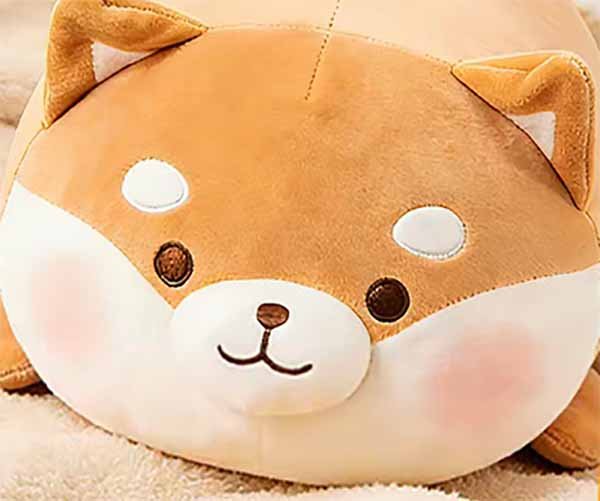
Facial expression accuracy determines whether a plush truly matches its character. Delsney engineers every facial element—eyes, brows, mouth, cheeks—to maintain expression clarity even after fabric stretching and stuffing expansion.
Core Expression Engineering Tasks
1. Eye Spacing & Alignment Control
- Artwork spacing preserved to ±1 mm
- Angular alignment tolerance: ≤1.5°
- Compensation for stuffing lift: +0.5–1.8 mm adjustment
2. Mouth Curve & Expression Flow
- Curvature adjustments added for natural 3D shaping
- Width reduced by 3–6% pre-stitching to prevent over-expansion
- Corner reinforcement prevents curve deformation
3. Cheek Volume & Expression Balance
- Cheek puff predicted by stuffing map
- Cheek underlay used to avoid uneven bulging
- Flattening zones added behind dense embroidery areas
Embroidery Placement Engineering
Embroidery is placed before assembly; fabric will shift once stuffed. Delsney calculates placement offsets based on fabric stretch, pattern curvature, and stuffing pressure.
Placement Offsets Typically Applied
- Facial centers shifted 1–3.5 mm depending on plush size
- Eye height adjusted for arch curvature compensation
- Underlay modified to prevent distortion on curved surfaces
Tools Delsney Uses for Expression Accuracy
- D65 light booth for color accuracy of eyes
- Calipers for millimeter-level measurement
- Grid projection for left-right facial symmetry
- Laser markers for repeatable alignment
- Post-stuffing expression comparison tests
Mockup Building & First Physical Prototype
Transforming Patterns Into the First Fully Shaped Plush Form
The first prototype is the turning point where all modeling, pattern drafting, and fabric analysis come together. Delsney’s prototyping team builds the mockup with high precision, ensuring the plush reflects the intended character shape, weight balance, and expression.
Key Steps in the Mockup Construction
1. Cutting & Panel Preparation
- Patterns transferred to paper with ≤1.5 mm cutting tolerance
- Fabric pile direction checked for each panel
- Edges marked with sewing guides and alignment points
- Key curved panels cut using weighted templates to reduce drift
2. Initial Assembly (Unstuffed Mockup)
- Panels joined using temporary stitching for evaluation
- Curve behavior inspected before final seam closure
- Face panels reviewed to ensure no distortion after joining
- Limb placement checked against 3D model reference grid
3. Controlled Stuffing Process
Stuffing density significantly impacts plush proportions:
- Head: 65–75% density target
- Body: 55–65%
- Small limbs: 70–80% for stable shaping Stuffing maps are created to preserve consistency in future batches.
4. Silhouette Verification
- Head tilt angle measured with digital inclinometer
- Cheek volume evaluated for left–right balance
- Belly projection compared to model curvature
- Tail/ear/wings inspected for angle accuracy
5. Fine-Tuning Round 1
Prototype adjusted by:
- Re-shaping seam lines
- Adding reinforcement under high-pressure areas
- Adjusting limb axis to avoid posture collapse
- Changing stuffing concentration in cheeks or belly

Structural Reinforcement & Internal Support Engineering
Many characters require internal support to maintain shape and withstand long-term use. Delsney engineers reinforcement structures inside the plush to prevent sagging, tilting, deformation, or seam stress—especially important for large heads, thin limbs, oversized tails, and mascot-style characters.
Key Reinforcement Methods Used at Delsney
Internal Mesh Panels
- Used behind large embroidery zones
- Prevents sagging after repeated squeezing
- Mesh thickness options: 0.4 mm / 0.6 mm / 0.8 mm
Felt Stability Pads
- Added inside cheeks, belly, or forehead
- Prevents over-expansion in stuffing-heavy areas
- Pad size and thickness custom to character shape
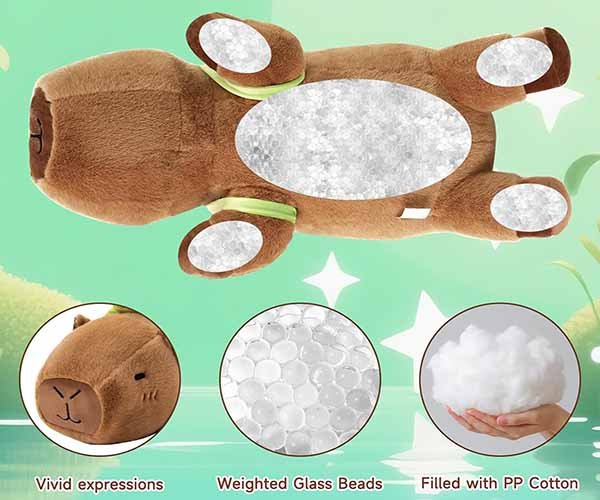
Weight Balancing Pockets
Used for characters that must stand or sit:
- Pellets added to base area
- Rear weight pocket for sitting plush
- Typical weight range: 20–150 g depending on size
Internal Wall Structure
Large plush (40 cm+) require shape control:
- Vertical walls to prevent side collapse
- Horizontal stabilizers for belly support
- Head-to-body tunnel for tilt prevention
Limb Axis Stabilization
- Reinforced seam under arm/leg joints
- Extra stitches on high-movement zones
- Axis drift tolerance: ≤4°
When Reinforcement Is Mandatory
- Large head characters with narrow neck
- Plush with tall ears or wings
- Body shapes prone to sagging (pear-shaped, oval bodies)
- Plush above 45 cm height
- Characters requiring precise posture (standing mascots)
Reinforcement QC Checks
- Seam tension test (target: no deformation at 15–18 N)
- Head tilt check (target: ≤3° drift)
- Shape retention after 24-hour compression test (≥95%)
- Limb axis repeatability test (≥96% consistency across units)
Delsney Structural Engineering Success Metrics
- Deformation rate in long-term tests: <2.5%
- Limb drooping after 10,000 cycles: ≤1 cm
- Belly collapse cases in QC: <0.5%
- Head droop rejection rate: <0.8%
These reinforcements ensure that even complex characters remain stable, expressive, and durable in real-world handling.
Final Prototype Refinement & Multi-Round Adjustments
Correcting Shape, Expression & Symmetry Through Iterative Engineering
Once the first prototype is built, multiple adjustment rounds ensure precise character likeness, stable shaping, and expression reliability. Delsney’s refinement structure follows measurable standards to eliminate distortion, misalignment, and volume imbalance.
Core Steps in Delsney’s Refinement Workflow
1. Shape Correction Round
Technicians compare prototype shape vs. 3D model and artwork:
- Head height trimmed or expanded by 3–8 mm
- Cheek curve softened to remove angular transitions
- Belly projection adjusted for balance
- Tail/ear angle aligned using reference grids
- Limb thickness corrected based on stuffing expansion behavior
2. Facial Expression Adjustment
Expression accuracy is recalibrated:
- Eye distance revised by 0.5–2 mm
- Mouth curve revised by 2–4%
- Brow angle recalculated for emotional consistency
- Cheek volume tuned to avoid uneven puffing
3. Structural Stability Review
- Neck reinforcement evaluated
- Limb joints tested for bending or tilt
- Weight distribution pockets optimized
- Seam tension measured under 12–18 N load
4. Embroidery Revision
Placement tests determine if shifts are needed:
- Adjusted by 1–3.5 mm depending on curvature
- Underlay modified to prevent sinking
- Density recalibrated to maintain crisp outlines
5. Finalized Re-Prototype
A revised prototype (V2 or V3) is created incorporating all adjustments.

Typical Number of Rounds at Delsney
- Most plush: 2 rounds
- Complex characters: 3–4 rounds
- Highly detailed IP plush: 4–6 rounds
Delsney Refinement Performance Indicators
- Likeness accuracy after refinement: ≥97%
- Proportion match deviation: ≤3%
- Symmetry variation side-to-side: ≤1.5 mm
- Internal structure stability after adjustments: ≥96% retention
Production-Ready Sample Setup & Approval System
Creating the Exact Version Used for Mass Production Replication
Once refinement is complete, Delsney prepares an official “Production-Ready Sample” that serves as the master reference for all future mass production. Every detail—material lot, stuffing density, embroidery file, reinforcement method—is locked into a document package.
Elements Included in a Production-Ready Sample
Final Material Confirmation
- Fabric lot codes recorded
- Thread codes logged for eyes, brows, logos
- Reinforcement material thickness confirmed
- Color swatches filed under D65 lighting evaluation
Stuffing Density Mapping
- Head: 65–75% (verified by weight)
- Body: 55–65%
- Limbs: 70–80%
- Weight pocket placement documented
Pattern Version Freezing
- All V1–V4 revisions archived
- Final pattern labeled with version code (ex: “HEAD-P02-V4”)
- Seam allowances rechecked for consistency
- Digital pattern backup stored for reorders
Expression & Embroidery Lock-In
- Eye angle snapshot recorded
- Mouth curvature measured
- Embroidery density + path saved to file
- Stitch file version (DST/PES) archived
Internal Structure Documentation
- Reinforcement panel layout
- Weight distribution scheme
- Internal wall location for large plush
- Limb axis angle charts

Scaling Characters Into Multiple Sizes
Maintaining Accurate Character Proportions From 10 cm Minis to 60+ cm Plush
Scaling a plush from one size to another requires more than simple enlargement or reduction. Delsney applies controlled geometric scaling, silhouette correction, stuffing behavior prediction, and panel curvature re-mapping to maintain accurate character identity.
Key Principles of Plush Size Scaling
1. Non-Linear Scaling Ratio
Certain areas require different scaling:
- Eyes: reduce scaling by 5–12%
- Limbs: reduce scaling by 8–15%
- Head base: increase by 2–6% to avoid shrinking appearance
- Body thickness scaled based on stuffing expansion
2. Curve Adjustment for Larger Sizes
Large plush deform differently:
- Add internal walls for sizes 40 cm+
- Increase reinforcement in neck
- Modify belly curve by 3–8 mm
- Adjust seam curvature to prevent ballooning
3. Small-Scale Plush Adjustments
Mini plush (≤12 cm) require special engineering:
- Simplified facial details
- Shortened limbs for stability
- Embroidery line thickness increased 0.1–0.3 mm
- Reinforcement removed where unnecessary
Fabric & Stuffing Behavior in Scaling
Stuffing expands differently at larger sizes:
- 20 cm plush: 4–9% expansion
- 35 cm plush: 6–10%
- 50–60 cm plush: 10–14%
Patterns compensate accordingly.

Frequently Asked Questions
Q1: How long does character modeling and prototyping usually take?
Most plush prototypes require 5–9 days, including 2D interpretation, 3D modeling, pattern drafting, fabric tests, and the first physical mockup. Complex characters needing multiple refinement rounds or multi-layer facial embroidery may require 10–14 days, especially when ensuring expression accuracy and curve stability.
Q2: What information is needed to begin modeling a plush character?
A sketch, turnaround sheet, or digital artwork is sufficient, but proportion notes, desired size, color references, and personality descriptions help the modeling team interpret key traits more accurately. Delsney analyzes silhouette, limb ratio, face alignment, and structural balance from the artwork before drafting patterns.
Q3: How does Delsney ensure facial expressions look accurate after stuffing?
Expression engineering uses a combination of curvature compensation, embroidery placement adjustment, and stuffing expansion forecasting. Eye spacing, angle, and mouth curvature are corrected by 0.5–3.5 mm during pattern creation, ensuring the expression stays aligned after the plush is filled and shaped.
Q4: Why do prototypes require more than one adjustment round?
Soft materials behave differently from digital art or rigid models. The first prototype exposes real-world issues such as uneven expansion, curve distortion, limb tilt, or cheek imbalance. Delsney typically refines prototypes through 2–4 rounds to correct proportions, stabilize structure, and tune facial alignment to match the reference artwork.
Q5: How does Delsney maintain shape retention for large plush (40–60 cm)?
Large plush require additional engineering: internal walls to prevent ballooning, felt panels to strengthen belly and cheeks, reinforced neck seams, and weighted pockets for sitting stability. These structures reduce deformation, keeping shape deviation below 2.5% after long-term compression tests.
Q6: What determines the stability of limbs and tails?
Stability depends on limb thickness, seam construction, stuffing density, and reinforcement beneath limb joints. Delsney applies axis stabilization and extra stitches in high-movement areas, keeping limb angle drift within 3–4° and preventing sagging over extended use.
Q7: How does size scaling affect proportions for mini plush or jumbo plush?
Scaling is non-linear. Eyes, limbs, and accessories scale at different ratios to preserve character identity. For minis, facial details are slightly enlarged for visibility, while limbs are shortened for stability. For large plush, curves are corrected to offset stronger stuffing expansion. Delsney’s scaling accuracy remains 95%+ across all sizes.
Q8: How does Delsney control symmetry for heads, bodies, and limbs?
Symmetry is maintained using laser guides, silhouette grids, calibrated pattern curves, and controlled stuffing density across mirrored panels. The QC team checks left–right variance with calipers, targeting ≤1.5 mm deviation for head and face areas.
Q9: What ensures consistency between the approved sample and mass production?
Delsney archives all pattern versions, reinforcement layouts, embroidery files, fabric lot codes, color references, stuffing maps, and shaping guides. These records maintain a 99%+ likeness rate across large production runs and future reorders.
Q10: Can Delsney work with highly detailed or licensed character designs?
Yes. Detailed characters are broken down into measurable expression zones, controlled facial curves, and stabilized structural segments. High-density embroidery or multi-color gradients are handled through strict machine calibration and fabric compensation, ensuring accurate reproduction of licensed or highly expressive characters.

Bring Your Character to Life With Delsney
Delsney offers a complete modeling and prototyping service built on structural engineering, accurate pattern development, and reliable mass-production logic. Every prototype follows measurable standards for symmetry, volume balance, fabric-stretch compensation, stuffing behavior, and shape retention. The modeling team guides character development from early sketch interpretation to 3D mockups, refinements, structural reinforcement, and sample sealing. Each approved prototype becomes a fully documented production standard that can be replicated across seasons, collaborations, and multiple size variations. Brands with long-term plush programs value Delsney’s consistency rate of 99%+ on reorders, millimeter-level facial accuracy, and heavily documented engineering workflow. Whether creating mascots, IP collectibles, influencer plush drops, retail characters, or themed series, Delsney provides the technical discipline needed to convert creative concepts into reliable, commercial-ready plush products.
