Skip to content
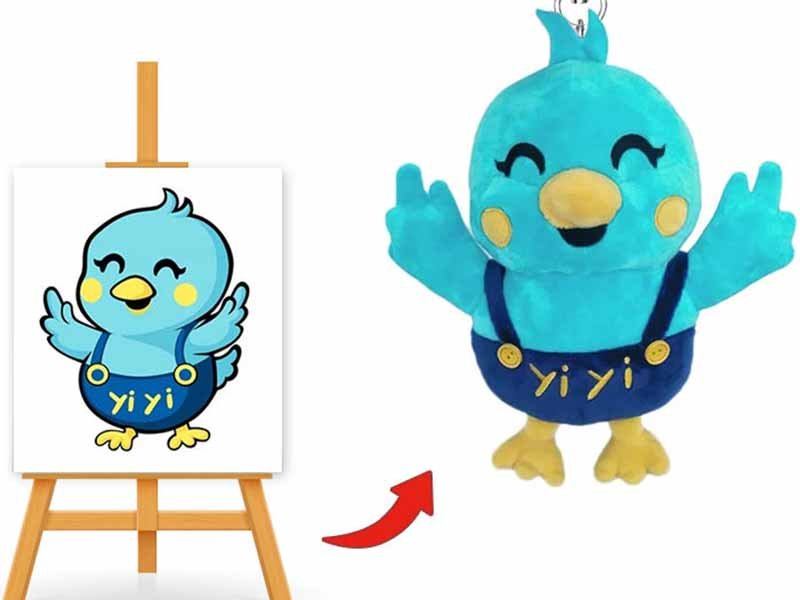
A plush toy idea usually begins with something small: a character sketch, a mascot file, a pet photo, a game avatar, a children’s book illustration, a social media IP, or even a rough drawing from a meeting notebook. At that stage, the idea may look cute on screen, but a real plush toy has to pass a harder test. Can people hold it? Can the face stay recognizable after stuffing? Can the fabric show the right feeling? Can the colors match the brand? Can the toy survive shipping, hugs, pulling, squeezing, and repeated production?
Plush toy prototyping turns an idea into a real sample through design review, three-view drawing, material selection, pattern making, cutting, sewing, stuffing, embroidery, detail correction, safety review, and final sample approval. A strong prototype should match the original concept, feel good in hand, meet the target market’s safety needs, and prepare the product for stable bulk production.
For brands, creators, IP owners, retailers, gift companies, and ecommerce teams, a plush prototype is not just a sample for photos. It is the first serious manufacturing decision. It decides the head shape, body ratio, face expression, fabric direction, filling weight, seam position, accessory safety, packaging size, and later production cost. A weak prototype can create weeks of revision, high sample cost, delayed launch dates, and unstable bulk quality. A well-developed prototype gives every department a clear standard: design knows what has been approved, production knows what to make, QC knows what to inspect, and the client knows what will arrive after mass production. That is why the first plush sample matters so much.
What Is Plush Toy Prototyping?

Plush toy prototyping is the process of turning a plush idea, artwork, sketch, mascot, IP character, or sample reference into a physical plush toy before bulk production. It checks shape, size, fabric, color, embroidery, stuffing, softness, accessories, safety, cost, and production feasibility before a larger order begins.
A plush toy is soft, flexible, and three-dimensional, so it cannot be judged by artwork alone. A drawing may show a perfect round face, but fabric stretches after cutting. A tiny smile may disappear after embroidery. A long tail may droop after stuffing. A costume may look beautiful in a drawing but become too fragile, too expensive, or too difficult to sew in large quantities. Prototyping finds those problems early, when changes are still manageable.
For a custom plush project, the prototype works like a production map. The factory uses it to confirm the pattern, material, embroidery, sewing order, filling level, finishing process, packaging size, and inspection standard. Once the sample is approved, it becomes the reference for bulk production. For overseas clients, especially those selling to North America, Europe, Japan, Australia, or high-end retail channels, that reference is important because every piece in mass production needs to follow the same standard.
Delsney supports plush toy prototyping from idea review to physical sample. Clients can start with technical files, drawings, product photos, reference samples, mascot images, pet photos, or early-stage sketches. The factory can provide design support, three-view drawings, 3D visual direction, material advice, pattern making, sample sewing, detail correction, and production planning. With more than 18 years of plush product development and manufacturing experience, Delsney helps clients reduce the gap between the first creative idea and the final plush product.
A professional plush prototype usually checks seven core areas:
| Prototype Area | What Needs to Be Checked | Why It Matters |
|---|---|---|
| Shape | Head, body, arms, legs, ears, tail, posture | Keeps the character recognizable |
| Size | Height, width, depth, sitting or standing size | Affects cost, packaging, shipping, and retail price |
| Fabric | Short pile, long pile, minky, faux fur, fleece, recycled plush | Decides touch, look, softness, and perceived value |
| Face details | Eyes, mouth, eyebrows, blush, nose, logo | Controls emotional expression |
| Filling | Softness, weight, density, balance | Affects hand feel and product stability |
| Accessories | Clothes, bows, hats, wings, tags, sound or light modules | Adds value but increases complexity |
| Safety | Small parts, seam strength, needle control, pull strength | Supports compliance for target markets |
A good prototype should not only look nice in one photo. It should also answer practical questions: Can the toy be sewn consistently? Can the face be repeated accurately? Can the fabric be purchased in bulk? Can the cost stay within the target range? Can the design pass the required safety review? Can the product reach the market on time? Those questions are where real manufacturing experience becomes valuable.
What Does Prototyping Mean?
Prototyping means making the first real version of a plush toy before bulk production. It allows the client and factory to test whether a design can become a safe, attractive, manufacturable product. For plush toys, prototyping covers drawing review, material choice, pattern development, sewing, stuffing, embroidery, hand feel, and detail correction.
Unlike a hard plastic product, a plush toy changes during production. Fabric stretches. Filling expands the shape. Embroidery can pull the surface. Pile direction affects color and shadow. Seam positions can make a face look wider, narrower, happier, or less accurate. That is why plush prototyping requires both design judgment and factory experience.
A plush prototype usually answers these questions:
- Does the character still look like the original artwork after becoming 3D?
- Is the size suitable for the target sales channel?
- Does the fabric match the intended softness and visual style?
- Are the eyes, mouth, nose, and facial features clear enough?
- Is the toy soft enough to hug but firm enough to keep shape?
- Are small accessories safe and strong enough?
- Can the same pattern be repeated in bulk production?
- Does the product cost fit the expected market price?
For example, a 25 cm plush character may look simple on paper. During prototyping, the factory may discover that the head is too heavy, the body cannot sit upright, the ears need extra support, or the embroidered smile needs to move 3 mm lower to look more natural. These details may sound small, but they directly affect whether customers feel the toy is cute, premium, and worth buying.
Delsney uses prototyping to create a clear bridge between creative design and factory production. The process helps reduce guesswork before bulk production begins, especially for IP characters, mascot plush, baby plush, anime plush, weighted plush, sound plush, and private label collections.
Why Do Brands Need It?
Brands need plush toy prototyping because artwork alone cannot prove whether a plush toy will look right, feel right, cost correctly, or be safe enough for the target market. A prototype gives the team a real object to review before investing in bulk production.
For a commercial plush project, mistakes become expensive after mass production starts. If the face looks wrong, customers may reject the product. If the seams are weak, returns may increase. If the toy is too large, freight cost rises. If the stuffing is too soft, the shape may collapse. If the accessory is poorly attached, safety risk appears. A prototype helps catch these problems before they become inventory problems.
Different clients use prototypes for different reasons:
| Client Type | Main Concern | Prototype Value |
|---|---|---|
| IP owners | Character accuracy, facial expression, color match | Confirms whether the plush matches the approved character |
| Toy brands | Safety, cost, production repeatability | Helps prepare for larger production runs |
| Ecommerce sellers | Photos, reviews, shipping cost, packaging | Helps test market response before ordering more |
| Corporate gift teams | Logo, deadline, budget, gift quality | Confirms product appearance before event production |
| Museums and theme parks | Souvenir value, storytelling, detail quality | Turns local icons or mascots into sellable plush |
| Baby product brands | Softness, washable fabric, safe structure | Reduces safety and quality risk |
| Influencer brands | Fan recognition, cuteness, launch timing | Supports merchandise drops and community sales |
A prototype also helps internal decision-making. A brand team can show the sample to licensing teams, retail partners, management, investors, influencers, or early customer groups. Physical samples often create faster approval than digital drawings because people can touch the product, compare size, judge softness, and see the actual face.
Delsney helps clients use prototypes as a real decision tool. With free design support, 5–7 day fast sampling for many standard projects, 98% design-to-product matching capability, and experience in OEM/ODM plush manufacturing, the factory can help brands move faster from idea review to sample approval.
Is a Prototype the Final Toy?
A prototype is not always the final toy. It is the first real sample used for review, correction, and production planning. After the first sample is finished, the client may adjust the face, body shape, fabric, color, size, stuffing, accessories, logo, label, or packaging. The approved sample then becomes the final production standard.
Many clients hope the first sample will be perfect. That can happen for simple products or very clear designs, but for original characters and detailed IP plush, one or two rounds of improvement are common. The purpose of the first prototype is not only to impress. It is to reveal what needs to be improved.
Common prototype corrections include:
| Correction Area | Example Adjustment | Manufacturing Reason |
|---|---|---|
| Face | Move eyes lower, make smile softer, change eyebrow angle | Improves expression and cuteness |
| Head shape | Make head rounder, wider, taller, or more stable | Helps match artwork and filling balance |
| Body ratio | Shorter legs, bigger belly, smaller arms | Improves character style |
| Fabric | Change from long pile to short pile or minky | Improves detail clarity or softness |
| Color | Adjust to Pantone reference or artwork color | Supports brand consistency |
| Filling | Softer body, firmer head, heavier base | Improves hand feel and posture |
| Accessories | Sew-on bow instead of detachable bow | Improves strength and safety |
| Logo | Change embroidery to woven label or rubber patch | Improves appearance or cost control |
A useful prototype should move the project closer to a production-ready product. For that reason, feedback should be specific. Instead of saying “make it cuter,” a better comment would be: “Please reduce the eye spacing by 4 mm, make the cheeks rounder, lower the mouth embroidery slightly, and use softer filling in the body.” Specific comments help the factory revise faster and reduce misunderstanding.
Delsney supports sample revision based on client feedback and can help evaluate which changes are cosmetic, structural, cost-related, or safety-related. For standard plush projects, sampling often takes about 5–7 days when materials are available. Complex plush designs may need 7–15 days or longer depending on fabric sourcing, embroidery, clothing, accessories, sound modules, light modules, or weighted filling.
What Ideas Can Be Made?
Many ideas can become plush prototypes, including original characters, animals, mascots, anime characters, pet replicas, baby comfort toys, corporate gifts, festival plush, museum souvenirs, educational toys, weighted plush, scented plush, sound plush, light-up plush, and private label plush collections.
The starting point does not need to be perfect. A client may send a simple drawing, a polished character sheet, a mascot logo, a pet photo, a clay model, a 3D render, an existing plush sample, or a product reference from another category. The factory then studies the visual features and turns them into a plush structure.
Common ideas Delsney can help develop include:
| Plush Idea | Key Prototype Focus |
|---|---|
| Original character plush | Face, personality, body ratio, fabric feeling |
| Brand mascot plush | Logo color, pose, expression, company identity |
| Anime plush | Hair shape, eye embroidery, clothing details |
| Baby plush | Soft fabric, safe sewing, no hard small parts |
| Pet plush | Fur color, ear shape, tail, facial likeness |
| Museum plush | Cultural details, souvenir packaging, story card |
| Theme park plush | Durability, photo appeal, retail shelf impact |
| Weighted plush | Filling weight, balance, seam strength |
| Sound plush | Module pocket, sound position, safety access |
| Light-up plush | Battery placement, wiring safety, fabric coverage |
| Scented plush | Aroma insert position and user experience |
| Keychain plush | Small-size detail clarity and strong attachment |
Not every drawing should be copied exactly. Plush toys need softness, seam allowance, safe parts, filling space, and production repeatability. Thin arms may need to become slightly wider. Tiny facial lines may need embroidery simplification. Small accessories may need to be sewn down. Long fur may hide small details. A good factory protects the spirit of the design while adjusting details for safety, cost, and manufacturability.
Delsney’s design and engineering team can help clients review what should remain exact and what can be adjusted. For high-end brand projects, three-view drawings and 3D effects can also be created before physical sampling, helping clients confirm front, side, back, depth, posture, and overall style earlier in the process.
What Should You Prepare?
Before plush toy prototyping starts, prepare design references, target size, fabric direction, color notes, logo files, usage scene, expected quantity, market destination, safety needs, and packaging plan. A project can begin from a sketch, photo, sample, or technical file, but clearer information usually leads to a better first sample.
Preparation does not mean the client must have every technical detail. Many brands and creators only have an early concept. A professional plush factory should help organize the idea and fill missing information. Still, good input saves time. Plush toy development involves many small decisions, and every missing detail creates room for guesswork.
The most important preparation is visual direction. Plush toys are emotional products. Face expression, body proportion, texture, softness, color, and posture matter more than a long written description. A reference image often explains more than several paragraphs. A physical sample explains even more because the factory can touch the fabric, study seam lines, check filling level, and understand structure.
Clients should also prepare business information. A toy for a baby brand will not use the same structure as an adult collectible plush. A plush for Amazon needs strong packaging and review-friendly quality. A plush for a licensed IP project needs tighter accuracy control. A plush for a corporate event may need fast lead time and controlled cost. Those details influence material choice, design complexity, safety checks, and production planning.
Useful preparation details include:
| Information | Recommended Detail | Why It Helps |
|---|---|---|
| Product idea | Character, mascot, animal, pet, gift, series | Helps define development direction |
| Size | 10 cm, 20 cm, 30 cm, 40 cm, custom size | Affects cost, packaging, and hand feel |
| Quantity | 500 pcs, 1,000 pcs, 5,000 pcs, 10,000 pcs | Helps estimate cost and material planning |
| Market | USA, Europe, UK, Japan, Australia, Middle East | Helps safety and labeling planning |
| User age | Baby, children, teens, adults, collectors | Affects safety and material choice |
| Fabric style | Short pile, minky, faux fur, fleece, recycled plush | Controls touch and appearance |
| Logo | Embroidery, woven label, hangtag, packaging | Supports private label planning |
| Launch date | Event date, retail delivery, campaign launch | Helps sampling and production schedule |
| Packaging | Polybag, box, hangtag, story card, FBA carton | Affects cost and logistics |
Delsney can start from simple materials and guide clients step by step. For clients with only a sketch or photo, the team can help develop three-view drawings, recommend fabrics, confirm size, and prepare the first sample direction. For mature brands with technical files, the process can move faster because materials, dimensions, and artwork are already clear.
What Files Are Needed?
Useful files for plush toy prototyping include sketches, character artwork, three-view drawings, logo files, color references, size notes, material references, packaging ideas, and any safety or market requirements. A full technical file is helpful, but not always required.
Three-view drawings are especially valuable for character plush. A front view shows face and main identity. A side view shows body depth, nose length, belly shape, tail position, and posture. A back view shows hair, clothing, wings, tail, back pattern, or seam details. Without side and back views, the factory must make more assumptions during pattern making.
A practical file checklist:
| File Type | Best Format | Use in Prototyping |
|---|---|---|
| Character artwork | JPG, PNG, PDF, AI | Shows overall look and personality |
| Three-view drawing | AI, PDF, PNG | Guides pattern and shape control |
| Logo file | AI, EPS, PDF | Used for embroidery, patch, label, packaging |
| Color reference | Pantone code, fabric swatch, artwork note | Helps match brand or character colors |
| Size note | cm or inch | Controls sample scale and cost |
| Fabric reference | Photo, swatch, existing plush | Shows desired texture and softness |
| Existing sample | Physical item | Helps improve or reproduce structure |
| Packaging artwork | AI, PDF, PNG | Helps plan hangtag, box, insert card |
| Safety notes | Market and age group | Guides material and accessory choices |
If a client has only one image, the project can still start. The factory may ask questions to complete missing details: should the toy sit or stand, should eyes be embroidered or plastic, should clothes be removable or fixed, should the toy feel floppy or firm, should it meet child safety standards, and what size should be produced?
Delsney can support clients who do not have complete files. The team can help create three-view drawings and provide 3D effect references before sampling. For IP projects and premium brand projects, that step is valuable because it reduces the chance of major shape changes after the first physical sample.
Can a Sketch Work?
A sketch can work if it shows the main character shape, face, body ratio, color areas, and important details. Many custom plush projects begin from a simple hand drawing. The factory’s job is to turn that drawing into a plush structure that can be sewn, filled, inspected, and produced in quantity.
A sketch is often enough for an early conversation. It helps the factory understand the idea’s personality. For example, oversized ears may create a cute baby-like style. A round belly may make the character feel warm and friendly. Small sleepy eyes may create a calm collectible look. Long arms may suggest a hugging plush. These creative signals help the factory choose proportion, filling, and fabric direction.
However, a sketch usually needs extra clarification. The factory will need to know:
- Final size range
- Front, side, and back details
- Fabric texture preference
- Eye and mouth method
- Filling softness
- Sitting, standing, or lying posture
- Use age and safety needs
- Logo and packaging plan
- Quantity range
- Target launch time
A sketch can also reveal where manufacturing changes are needed. Very thin arms may be hard to sew strongly. Small accessories may not pass pull tests for children’s products. Sharp points may become rounded after stuffing. Tiny printed patterns may need embroidery or fabric printing. A good factory should explain these points clearly and offer workable options.
Delsney can develop sketches into three-view drawings and then into physical samples. Clients can send rough ideas, mood boards, AI images, mascot designs, pet photos, or hand drawings. The team can help refine proportions, choose materials, and prepare the sample direction before cutting fabric.
Which Size Is Best?
The best plush size depends on product use, retail price, user age, shipping cost, packaging, character detail, and order plan. Common commercial sizes include 8–12 cm mini plush, 15–20 cm collectible plush, 25–30 cm gift plush, 35–45 cm premium plush, and 50 cm or larger jumbo plush.
Size strongly affects cost and appearance. A small plush is easier to ship and can fit keychain, blind box, or impulse-purchase channels, but small toys have limited space for embroidery and accessories. A larger plush shows more detail and feels more premium, but fabric, filling, carton size, and freight cost increase.
A size planning table:
| Plush Size | Common Use | Main Advantage | Main Risk |
|---|---|---|---|
| 8–12 cm | Keychain, mini collectible, bag charm | Low material use, easy shipping | Small details may be unclear |
| 15–20 cm | Blind box, ecommerce gift, small character plush | Good for series products | Needs accurate embroidery |
| 25–30 cm | Retail plush, mascot plush, standard gift | Balanced cost, detail, and shelf value | Packaging size needs planning |
| 35–45 cm | Premium plush, theme store, campaign gift | Strong visual impact | Higher carton and freight cost |
| 50 cm+ | Jumbo plush, display plush, event item | High attention value | Higher MOQ planning and storage cost |
For many first-time commercial plush projects, 20–30 cm is a practical starting range. It gives enough room for face details, fabric texture, accessories, hangtags, and packaging, while still keeping cost and shipping under control. For IP plush, size should also match the character. A round animal can look good at 25 cm, while a tall character with clothing may need 30–35 cm to show details clearly.
Delsney can help clients compare different sizes before sampling. For product lines, one approved character can later expand into multiple sizes, such as 10 cm keychain plush, 25 cm standard plush, and 40 cm premium plush. That approach helps brands serve different price points and sales channels.
How Clear Should Details Be?
Details should be clear enough for the factory to know which features must be exact, which can be adjusted, and which may affect cost or safety. Good detail planning helps the prototype match the original idea more closely and reduces revision time.
For plush toys, small details can change the whole feeling. Eye spacing, mouth height, eyebrow angle, cheek size, ear position, tail direction, fabric pile length, and filling softness all affect the final look. A 3 mm change in eye position can make a character look happier, younger, sleepy, strange, or less recognizable. That is why clear notes are important.
Clients should mark key details in the artwork whenever possible:
- Eyes must be embroidered.
- Mouth should be soft and small.
- Nose should use short pile fabric.
- Belly should feel softer than the head.
- Tail should stand upward.
- Logo should be on woven side label.
- No plastic parts for child safety.
- Fabric should feel like minky or short plush.
- Color should match a Pantone number.
- Packaging should include a story card.
A useful priority list:
| Detail Priority | Meaning | Example |
|---|---|---|
| Must match | Cannot change without approval | Eye shape, logo color, mascot face |
| Can adjust | Factory may modify for better production | Arm thickness, seam placement, filling density |
| Optional | Can be removed if cost is too high | Small accessories, extra clothing pieces |
| Safety-critical | Must meet use and market needs | No detachable small parts for baby plush |
| Cost-sensitive | May increase unit price | Complex embroidery, many fabric colors, special trims |
Delsney helps clients review details before sampling and can recommend better solutions for fabric, embroidery, printing, accessories, stuffing, labels, and packaging. For high-accuracy projects, clear detail notes combined with three-view drawings improve the chance of reaching a close match faster.
Do You Need a Tech Pack?
A tech pack is helpful for plush toy prototyping, but not every project needs one at the beginning. A tech pack gives the factory detailed instructions on size, material, color, embroidery, construction, labels, packaging, and quality standards. Mature brands, licensed IP projects, and retail programs usually benefit from a clear tech pack.
A basic plush tech pack may include:
| Tech Pack Item | What It Shows |
|---|---|
| Product name | Project identification |
| Product size | Height, width, depth, sitting size |
| Front, side, back views | Shape and proportion |
| Color codes | Pantone or fabric color references |
| Fabric list | Outer fabric, lining, clothing, trims |
| Embroidery artwork | Eyes, mouth, nose, logo, patterns |
| Filling requirement | Softness, weight, firmness |
| Accessory notes | Clothes, hats, bows, tags, sound modules |
| Label plan | Woven label, care label, hangtag |
| Packaging | Polybag, box, insert card, carton |
| Safety requirement | EN71, ASTM, CPSIA, CE, age group |
| Quantity plan | Sample, MOQ, first order, repeat order |
For early-stage creators, a full tech pack may feel difficult. That is normal. Delsney can help organize the missing information. A sketch, size target, fabric direction, logo file, and use scene may be enough to begin the first discussion. The factory can then help prepare drawings, material suggestions, and sample specifications.
For long-term product lines, a tech pack becomes more valuable after the prototype is approved. It helps control repeat orders, future colorways, new sizes, packaging updates, and quality consistency. If a brand plans to build a plush collection, keeping clear technical records from the first sample saves time later.
The best approach is simple: start with what is available, then build the missing details with the factory. Delsney can work from technical files, drawings, photos, samples, or early concepts, helping clients move from unclear idea to approved plush prototype step by step.
How Does Plush Toy Prototyping Work?
Plush toy prototyping works through idea review, drawing confirmation, material selection, pattern making, cutting, embroidery, sewing, stuffing, shaping, revision, and final sample approval. Each step turns a flat idea into a soft three-dimensional product that can be tested, improved, costed, and prepared for bulk production.
A good plush sample does not appear by accident. It comes from many small decisions made in the right order. The factory first studies the idea and checks whether the design can be made as a soft toy. Then the development team confirms the size, shape, fabric, embroidery, filling, accessories, labels, and safety direction. After that, the pattern maker creates the cutting pieces that will form the plush body. Sewing workers build the first sample, the filling team adjusts softness and posture, and the finishing team checks the face, seams, shape, and hand feel.
For clients, the most important thing is to understand that plush toy prototyping is a shared development process. The client knows the idea, character, brand story, and target customer. The factory understands materials, sewing structure, stuffing behavior, cost, safety, and bulk production risks. When both sides communicate clearly, the first sample becomes more accurate, and later revisions become easier.
The process can be simple or complex depending on the toy. A basic animal plush with short pile fabric and embroidered eyes may move quickly. A detailed IP character with hair, clothing, printed patterns, accessories, sound modules, or special packaging needs more steps. A baby plush needs stricter material and safety planning. A weighted plush needs filling distribution and seam strength control. A collectible plush series needs repeatable size, face, and color consistency across all SKUs.
A practical plush prototype workflow usually looks like the table below:
| Step | Main Work | Client Decision | Factory Focus |
|---|---|---|---|
| 1. Idea review | Study drawing, sketch, photo, or sample | Confirm product direction | Check feasibility |
| 2. Size planning | Choose height, width, posture | Select target size | Estimate cost and pattern structure |
| 3. Drawing support | Create or refine views | Approve front, side, back | Improve shape accuracy |
| 4. Material selection | Choose fabric, filling, trims | Confirm touch and color | Source suitable materials |
| 5. Pattern making | Build paper or digital pattern | Review expected shape | Create cut pieces |
| 6. Sample sewing | Cut, embroider, sew, fill | Wait for first sample | Control construction |
| 7. Sample review | Check face, shape, softness | Give clear feedback | Record revision points |
| 8. Revision | Modify pattern or details | Approve changes | Improve accuracy |
| 9. Final sample | Confirm production standard | Approve for bulk | Prepare production files |
Delsney supports the full process from early concept to approved sample. The factory can work from reference technical files, drawings, photos, samples, or loose concepts. For standard plush projects with available materials, sample development can often be completed in about 5–7 days. More complex toys may need more time because embroidery, special fabrics, accessories, modules, and safety details must be tested carefully.
How Is the Idea Reviewed?
The idea review is the first step in plush toy prototyping. The factory checks the design, target size, fabric direction, face details, body shape, accessories, safety needs, cost target, and production feasibility. This step helps avoid making a sample that looks nice but cannot be produced well later.
During review, the factory looks at both the creative side and the manufacturing side. A character may look cute in artwork, but some details may need adjustment for sewing, stuffing, safety, or cost. Thin legs may not stand well. Very small fingers may be hard to sew. Sharp horns may need a softer shape. Tiny plastic accessories may not be suitable for children’s toys. Large embroidered areas may increase cost and production time. A good review catches these issues before the first sample begins.
A professional idea review should cover:
- Character type and target market
- Final use: retail, gift, IP merchandise, baby toy, collectible, event product
- Size range and posture
- Fabric texture and color direction
- Face method: embroidery, printing, applique, plastic parts
- Accessories: clothing, hats, bows, wings, bags, sound or light modules
- Safety needs for target market
- MOQ and possible bulk quantity
- Packaging and shipping requirements
- Expected sample and launch timeline
For example, if a client wants a plush toy for children under 3 years old, Delsney may recommend embroidered eyes instead of hard plastic eyes, stronger seam construction, soft washable fabric, and careful accessory control. If the plush is for adult collectors, the product may use more detailed embroidery, special clothing, unique fabrics, or premium packaging.
The idea review also helps choose the right development path. A simple plush may move directly to pattern making. A detailed mascot may need three-view drawings first. A high-end IP project may need 3D visual support before physical sampling. This early decision saves time and helps the first sample move closer to the client’s goal.
How Are Patterns Made?
Patterns are the cut-piece shapes used to build the plush toy. Pattern making is one of the most important steps in plush toy prototyping because it decides the final body shape, face volume, head roundness, arm length, sitting posture, tail position, and seam layout. A good pattern turns flat fabric into a soft three-dimensional toy.
Plush pattern making is very different from drawing. A drawing shows the outer look, but a pattern controls how fabric pieces join together. The pattern maker must predict how the plush will expand after filling. A small change in seam curve can make the face rounder, flatter, wider, or narrower. The direction of fabric pile can also change color appearance and texture, so cutting direction must be controlled.
Pattern making usually considers:
| Pattern Area | Key Question | Risk If Ignored |
|---|---|---|
| Head | How round or flat should it be? | Face may look wrong after stuffing |
| Body | Should it sit, stand, or lie down? | Toy may lose posture |
| Arms and legs | How thick should limbs be? | Limbs may be weak or hard to sew |
| Ears and tail | Should they stand or droop? | Character may lose personality |
| Face panel | Where do eyes and mouth sit? | Expression may shift |
| Seam position | Can seams be hidden or made neat? | Appearance may look rough |
| Filling opening | Where can the toy be closed cleanly? | Final seam may look obvious |
For complex plush toys, pattern making may need more than one adjustment. The first sample may show that the cheeks need more volume, the body needs a wider base, or the ears need inner support. These changes are normal. They help the toy become more accurate and more stable.
Delsney’s development team can create patterns based on drawings, photos, samples, or client ideas. For high-accuracy projects, three-view drawings and 3D effects can improve pattern direction before fabric cutting starts. This is especially useful for mascot plush, anime plush, pet replica plush, and character plush where shape accuracy is critical.
How Is the First Sample Sewn?
The first sample is sewn after the pattern, fabric, embroidery, and main construction details are ready. The factory cuts the fabric, prepares embroidery or printed pieces, sews the panels together, adds filling, shapes the body, closes the opening, trims loose threads, and checks the finished sample by hand.
The first sewn sample is where design decisions become real. The factory can finally see how the chosen fabric behaves, how the filling supports the shape, how the face looks after embroidery, and how the toy feels when held. Some details may work exactly as planned. Others may need adjustment.
A first sample may include:
- Outer plush fabric
- Embroidered or printed face
- Sewn body panels
- Inner filling
- Clothing or accessories
- Woven label or care label
- Trial hangtag or packaging reference
- Functional parts if needed, such as sound, light, scent, or weighted filling
For custom plush, the first sample is often used for both appearance review and manufacturing review. The client checks whether the toy matches the idea. The factory checks whether the construction is suitable for production. If the sample requires too many difficult hand operations, the factory may suggest simplifying certain details before bulk production. If a material is hard to sew cleanly, a different fabric or seam method may be recommended.
Key first sample checks include:
| Check Point | What to Review |
|---|---|
| Face | Eye spacing, mouth shape, expression, embroidery density |
| Shape | Head size, body ratio, posture, symmetry |
| Fabric | Softness, pile length, color, stretch, surface quality |
| Filling | Firmness, weight, balance, hug feel |
| Sewing | Seam neatness, loose thread, edge control |
| Accessories | Attachment strength, position, safety |
| Size | Actual height and width after filling |
| Brand details | Logo, label, hangtag direction |
Delsney’s sampling process focuses on both appearance and production readiness. For standard plush projects, the factory can support fast sample development when materials are available. For more detailed plush projects, the first sample may take longer because accuracy matters more than speed.
How Are Revisions Handled?
Revisions are handled by comparing the first sample with the approved design goal, listing clear change points, adjusting the pattern or details, and producing an improved sample. Revisions may involve face expression, body shape, fabric, color, size, filling, accessories, labels, or packaging.
Good revision feedback should be specific. Vague comments create delays. For example, “make it cuter” is hard to act on. Clearer feedback would be: “Move the eyes 3 mm lower, make the cheeks rounder, reduce the mouth width, and use softer body filling.” The more precise the comments, the faster the factory can improve the sample.
Common revision points include:
| Revision Area | Example Change |
|---|---|
| Face | Change eye shape, eye spacing, mouth curve, nose size |
| Body | Adjust head-to-body ratio, belly width, limb length |
| Fabric | Change to softer fabric, shorter pile, brighter color |
| Filling | Increase firmness, reduce stuffing, add weighted pellets |
| Accessories | Strengthen bow, simplify clothing, sew down small parts |
| Size | Change from 20 cm to 25 cm or adjust sitting height |
| Logo | Move label, change embroidery color, adjust patch size |
| Packaging | Add hangtag, story card, retail box, barcode label |
Revisions should also consider cost. Adding more embroidery, more fabric colors, removable clothing, complex accessories, or special filling can improve appearance but may increase unit price. A professional factory should explain which changes affect cost, safety, or production lead time.
Delsney can support sample revision based on client comments and helps separate visual changes from structural changes. Visual changes may include eye position or color correction. Structural changes may include pattern adjustment, fabric change, filling weight, or accessory strengthening. This helps clients understand why some revisions are quick while others need more development time.
How Is the Sample Approved?
A plush sample is approved when the client confirms the final appearance, size, fabric, color, embroidery, softness, accessories, labels, packaging direction, and production standard. The approved sample becomes the reference for bulk production and quality inspection.
Sample approval should not be rushed. Once bulk production starts, changes become more expensive and may affect the production schedule. Before approval, clients should check the sample carefully in natural light, measure key dimensions, compare it with artwork, test the zipper or accessory if included, review the face from different angles, and touch the fabric and filling.
A sample approval checklist may include:
| Approval Item | Check Method |
|---|---|
| Overall look | Compare with artwork or reference sample |
| Size | Measure height, width, thickness, sitting size |
| Face | Check eyes, mouth, nose, expression, symmetry |
| Fabric | Confirm texture, softness, color, pile direction |
| Filling | Squeeze and hold the toy, check firmness |
| Sewing | Inspect seams, loose threads, shape balance |
| Safety | Check small parts, pulling points, sharp edges |
| Logo | Confirm position, color, size, method |
| Label | Check care label, woven label, age label if needed |
| Packaging | Confirm hangtag, polybag, box, carton direction |
For high-end brand projects, clients may request a pre-production sample before bulk production. This sample is made with final materials and final processes, then used as the production standard. Delsney can help clients prepare final sample records, including photos, measurements, material notes, logo details, and packing requirements. This supports consistency during mass production and future repeat orders.
Which Materials Fit Plush Toy Prototyping?
Materials for plush toy prototyping should be selected according to softness, appearance, safety, durability, character style, target age, cost, and production feasibility. Common choices include short plush, minky, long plush, faux fur, fleece, velvet, cotton, recycled plush, PP cotton filling, weighted pellets, embroidery thread, printed fabric, and safe accessories.
Material choice can change the whole personality of a plush toy. The same character made with short pile fabric may look clean and modern. Made with long fur, it may feel warmer and more animal-like. Made with minky, it may feel baby-soft and premium. Made with recycled plush, it may support an eco-focused product story. For clients, material selection is not just a technical choice. It affects how customers feel when they touch the toy and whether they see value in the product.
A good plush prototype should test both appearance and hand feel. Photos can show color and shape, but only a real sample can show softness, stretch, thickness, pile direction, and filling balance. The material must also match the product’s safety needs. Baby plush and children’s toys often need softer, washable, non-irritating fabrics and secure details. Collectible plush can use more decorative materials, but still needs strong sewing and stable finishing.
Material selection also affects production cost and MOQ. Standard fabrics are usually easier to source and faster to sample. Special colors, custom prints, recycled fabrics, organic cotton, unusual pile lengths, and special trims may need higher MOQ or longer sourcing time. For that reason, Delsney helps clients compare material options before sample confirmation, especially for projects with strict budget or launch dates.
A practical material planning table:
| Material Type | Best Use | Main Benefit | Watch Point |
|---|---|---|---|
| Short plush | Character plush, mascot plush | Clear shape and details | Less fluffy than long plush |
| Minky | Baby plush, premium plush | Soft touch and clean surface | Color matching needs control |
| Long plush | Animal plush, luxury plush | Warm and fluffy look | May hide small embroidery |
| Faux fur | Pet plush, realistic animal plush | Realistic texture | Higher cutting and sewing care |
| Fleece | Simple plush, cozy toys | Soft and cost-friendly | May pill if quality is low |
| Recycled plush | Eco product lines | Sustainability angle | Material availability may vary |
| PP cotton | General filling | Soft, light, common | Filling density must be controlled |
| Weighted pellets | Weighted plush | Calming weight effect | Needs strong inner pouch and seams |
Delsney can develop plush prototypes using many fabric types and filling structures, helping clients balance softness, cost, appearance, safety, and production consistency.
Which Plush Fabric Works?
The best plush fabric depends on the character style, target customer, hand feel, cost, and detail level. Short plush works well for clean character shapes. Minky is often used for soft baby plush and premium gifts. Long plush and faux fur work better for animal toys and warm textured designs. Fleece can be suitable for simple, cozy, cost-controlled projects.
For characters with detailed embroidery, short plush or minky often gives better clarity because the surface is smoother. Long fur may cover the eyes, mouth, or printed details if not trimmed carefully. For pet replica plush or realistic animals, faux fur may be better because it can show texture, direction, and natural color variation.
Fabric selection should also consider how the toy will be used:
| Product Type | Recommended Fabric Direction |
|---|---|
| Baby comfort plush | Minky, short plush, soft fleece |
| IP character plush | Short plush, minky, printed fabric |
| Animal plush | Long plush, faux fur, short plush mix |
| Mascot plush | Short plush, minky, color-matched fabric |
| Premium gift plush | Minky, high-density plush, faux fur |
| Keychain plush | Short plush, minky, durable fabric |
| Weighted plush | Short plush or minky with strong lining |
| Eco plush | Recycled plush or certified fabric options |
Clients sometimes choose fabric only by softness, but shape control matters too. A very stretchy fabric may feel soft but distort the face. A high-pile fabric may look fluffy but hide small details. A thick fabric may feel premium but make tiny parts hard to sew. Delsney helps clients compare fabric swatches and choose materials that match both the design and production needs.
How Is Filling Chosen?
Filling is chosen based on softness, shape, weight, safety, cost, and product use. Common plush filling includes PP cotton, recycled polyester filling, foam particles, weighted pellets, and mixed filling structures. The right filling helps the plush feel comfortable while keeping the shape stable.
PP cotton is widely used because it is soft, lightweight, and suitable for many plush toys. The amount of filling changes the toy’s personality. More filling creates a firmer shape and better sitting posture. Less filling gives a floppy, huggable feel. Weighted plush may use pellets inside a separate inner pouch to create calming weight. Baby plush often needs soft, even filling without hard or unsafe areas.
Filling choice affects several parts of the toy:
| Filling Factor | Effect on Product |
|---|---|
| Filling amount | Controls firmness and shape |
| Filling type | Affects softness, weight, and cost |
| Filling distribution | Affects sitting, standing, and balance |
| Inner pouch | Needed for weighted or scented plush |
| Seam strength | Must match filling pressure |
| Safety | Filling must suit target age and market |
For example, a sitting animal plush may need firmer filling in the bottom and softer filling in the arms. A pillow-style plush may need even soft filling. A weighted plush may need pellets positioned in the belly or lower body so the toy feels balanced. A baby plush may avoid any hard internal parts.
Delsney can help clients choose filling based on hand feel and product use. During sampling, filling can be adjusted more easily than fabric or pattern, so clients should review softness carefully. If the prototype looks correct but feels too stiff or too flat, filling adjustment may solve the problem without changing the entire design.
Are Eco Fabrics Available?
Eco fabric options are available for plush toy prototyping, including recycled plush, recycled polyester filling, organic cotton options, lower-impact packaging, and recyclable paper tags. These materials can help brands build a more responsible plush product line, especially for retail, gift, baby, and premium markets.
Eco material selection must be handled carefully. A fabric may have a good environmental story, but it still needs to feel soft, hold color, pass safety checks, and remain available for bulk production. Some eco fabrics may have higher MOQ, fewer color choices, or longer sourcing time. For small first orders, available eco materials may be more practical than fully custom-developed fabrics.
Eco options may include:
| Eco Option | Possible Use | Key Check |
|---|---|---|
| Recycled plush fabric | Outer toy surface | Softness, color, pile stability |
| Recycled polyester filling | Inner stuffing | Loft, softness, safety |
| Organic cotton fabric | Baby plush or natural-style toys | Shrinkage and texture |
| Recycled paper hangtag | Retail branding | Print quality |
| FSC paper box | Premium packaging | MOQ and structure |
| Reduced plastic packing | Bulk shipment | Moisture protection |
Eco plush products can be attractive for brands serving parents, premium retailers, museum shops, lifestyle stores, and gift channels. Still, performance should come first. A toy that loses shape, sheds fibers, or feels rough will not help the brand. Delsney can help clients test eco material options during sampling and compare them with standard fabrics before production decisions are made.
Which Details Need Embroidery?
Embroidery is commonly used for eyes, mouth, nose, eyebrows, blush, logos, clothing patterns, paws, facial marks, and small design details. It is often safer and more durable than plastic parts, especially for baby plush and children’s toys.
Embroidery affects the character’s expression. Eye shape, thread color, stitch direction, density, and position can completely change the final look. A small eye position change can make a plush look cute, sleepy, surprised, angry, or strange. For IP plush, embroidery accuracy is especially important because fans recognize characters through the face.
Embroidery is often used for:
- Eyes
- Eyebrows
- Mouth
- Nose
- Cheek blush
- Paw pads
- Belly patterns
- Brand logos
- Clothing details
- Character marks
- Safety-friendly baby toy faces
Embroidery planning should consider size. A tiny 10 cm plush has less space for detailed embroidery than a 30 cm plush. Very small letters may not stitch clearly. Large embroidery areas can make fabric stiff. Metallic thread or special thread may increase cost and need testing.
| Embroidery Detail | Manufacturing Note |
|---|---|
| Small eyes | Need stable placement and clear thread color |
| Large eyes | May require more stitches and backing |
| Logo text | Minimum size must be checked |
| Mouth curve | Stitch path affects expression |
| Paw details | Works better on smoother fabrics |
| Clothing pattern | May increase cost if too dense |
Delsney can help convert artwork into embroidery files and test details during sampling. For safety-sensitive plush, embroidery is often a better choice than glued or hard parts. For premium plush, embroidery can also create a cleaner and more durable finish.
How Do Accessories Affect Cost?
Accessories affect plush toy prototyping cost because each extra part adds material, labor, safety review, assembly time, and inspection work. Clothing, hats, bows, wings, bags, glasses, keychains, sound modules, light modules, scent inserts, weighted filling, and custom labels can all increase development complexity.
Accessories can make a plush more attractive, but too many details may create cost and safety problems. A small removable scarf may look cute but can increase sewing time. A tiny button may fail safety review for children’s products. A sound module needs a pocket, switch opening, battery access, and safety planning. A light module needs wiring protection. Weighted pellets need inner containment and stronger seams.
Accessory cost depends on:
| Accessory Type | Cost Impact | Main Reason |
|---|---|---|
| Simple bow | Low | Small fabric and sewing time |
| Embroidered logo | Low to medium | Stitch count and placement |
| Clothing set | Medium | Extra pattern, fabric, sewing |
| Plastic parts | Medium | Mold, safety, attachment strength |
| Sound module | Medium to high | Component cost and assembly |
| Light module | High | Wiring, battery, safety design |
| Weighted filling | Medium to high | Material weight and inner pouch |
| Custom packaging | Medium to high | Printing MOQ and carton planning |
For commercial plush, accessories should support the product story or sales value. If an accessory does not improve recognition, gift value, or customer experience, it may be better to simplify it. A clean plush with a strong face and good fabric often sells better than an overloaded plush with fragile details.
Delsney helps clients review accessories from four angles: appearance, safety, cost, and bulk production. The goal is not to remove creativity. The goal is to keep the plush beautiful, safe, and realistic for production.
How Much Does Plush Toy Prototyping Cost?

Plush toy prototyping cost depends on design complexity, size, fabric, embroidery, accessories, filling, pattern work, sample revisions, packaging, and future production quantity. A simple plush sample costs less than a detailed IP character with clothing, special fabric, weighted filling, sound modules, or custom packaging.
Cost is one of the first questions clients ask, but plush prototype pricing cannot be judged by size alone. Two plush toys with the same height may have very different costs. A simple 25 cm round animal plush may be easier to make than a 20 cm anime character with hair, embroidered eyes, removable clothing, and printed details. Labor time and development difficulty often matter as much as material cost.
A plush prototype usually includes several cost areas:
| Cost Area | What It Covers |
|---|---|
| Design review | Checking artwork, feasibility, and construction direction |
| Drawing support | Three-view drawings or visual adjustment if needed |
| Pattern making | Creating the plush shape and cut pieces |
| Material sourcing | Fabric, filling, trims, accessories |
| Embroidery setup | Face details, logo, artwork conversion |
| Sample sewing | Cutting, sewing, stuffing, finishing |
| Revision work | Pattern or detail changes after review |
| Packaging mockup | Hangtag, label, bag, box if needed |
| Safety planning | Child-safe details, material direction, testing preparation |
For clients, the key is to understand which features increase cost and which features truly increase product value. A more expensive prototype may be worth it if the plush is a licensed IP product, a premium retail item, or a long-term product line. For a small market test, a simpler prototype may be smarter.
Delsney supports flexible MOQ, free design support, and fast sampling for suitable projects. The factory can help clients compare different construction options, material choices, and detail levels before confirming the prototype direction. This helps control both sample cost and later production cost.
What Affects Sample Cost?
Sample cost is affected by design complexity, size, fabric, embroidery, colors, accessories, filling, pattern difficulty, and revision needs. The more custom details a plush toy has, the more development time and labor it needs.
Main sample cost factors include:
| Cost Factor | Low-Cost Direction | Higher-Cost Direction |
|---|---|---|
| Shape | Simple round body | Complex body with many parts |
| Size | 10–20 cm | 40 cm+ or jumbo plush |
| Fabric | Standard short plush | Custom fabric, faux fur, eco fabric |
| Colors | 1–2 colors | Multiple color panels |
| Face | Simple embroidery | Large detailed embroidery |
| Accessories | No accessories or simple bow | Clothing, hats, wings, bags |
| Function | Normal plush | Sound, light, scent, weighted filling |
| Packaging | Polybag | Retail box, story card, custom insert |
| Revision | Minor adjustment | Full pattern remake |
A first prototype may cost more per piece than bulk goods because the factory must create patterns, prepare embroidery, cut small quantities, and sew by hand with extra attention. Once the sample is approved and production quantity increases, the unit cost can be calculated more efficiently.
Delsney can help clients reduce unnecessary sample cost by suggesting practical choices. For example, if a tiny accessory is expensive and unsafe, it may be better to use embroidery. If a custom fabric color requires high MOQ, an available similar fabric may work for the first sample. If a full printed box is not needed yet, a hangtag and polybag may be enough for prototype review.
How Does Size Change Price?
Size changes price because larger plush toys use more fabric, more filling, larger packaging, more carton space, and higher shipping volume. Smaller plush toys use less material but may require more precision because tiny details are harder to sew and embroider.
A 10 cm plush is not always cheap if it has many small parts. A 30 cm plush is not always expensive if the shape is simple. Cost depends on both size and complexity. Still, size remains one of the biggest drivers of material and freight cost.
| Size Range | Cost Direction | Key Cost Reason |
|---|---|---|
| 8–12 cm | Low to medium | Less fabric, but small details need precision |
| 15–20 cm | Medium | Good balance of detail and material use |
| 25–30 cm | Medium | Common retail size with good value |
| 35–45 cm | Medium to high | More fabric, filling, and carton space |
| 50 cm+ | High | Large material use, packing volume, shipping cost |
Packaging volume matters a lot for ecommerce and international shipping. A soft plush can sometimes be compressed, but over-compression may damage shape or create wrinkles. Premium plush, long-fur plush, or structured toys may need more careful packing. For Amazon or retail, carton size, barcode labels, and packaging protection also affect cost.
Delsney can help clients compare sizes and suggest a practical first product size. For many custom plush projects, 20–30 cm offers a strong balance between appearance, cost, and shipping. For collectible series, smaller sizes can work well. For gift and mascot projects, larger sizes may create stronger emotional value.
Do Complex Shapes Cost More?
Complex shapes usually cost more because they need more pattern pieces, more sewing time, more embroidery setup, more filling control, and more quality inspection. A simple round plush may have fewer panels, while a detailed character may include separate hair, ears, tail, clothing, shoes, wings, horns, or accessories.
Complex shape cost comes from labor and accuracy control. Each extra part must be cut, sewn, aligned, filled, and inspected. If the toy has many small pieces, sewing speed slows down. If the character needs strong symmetry, QC becomes stricter. If the shape is unusual, the pattern may need more revision rounds.
Examples of higher-complexity details:
- Large head with small body
- Standing posture
- Thin arms or legs
- Long tail or large ears
- Layered hair
- Removable clothing
- Multi-color body panels
- Wings, horns, fins, paws, shoes
- Printed fabric sections
- Sound or light modules
- Weighted inner filling
| Shape Type | Manufacturing Difficulty | Main Risk |
|---|---|---|
| Round animal plush | Low | Shape may be too plain |
| Sitting character plush | Medium | Balance and bottom support |
| Anime character plush | High | Hair, eyes, clothing, expression |
| Pet replica plush | High | Fur texture and face likeness |
| Weighted plush | Medium to high | Weight distribution and seam strength |
| Light or sound plush | High | Component safety and placement |
Delsney helps clients evaluate complexity before sampling. Some details can be simplified without losing the character’s identity. For example, tiny fingers may become embroidered lines. Small printed badges may become woven labels. A fragile separate accessory may be sewn onto the body. These decisions can reduce cost and improve safety.
How Does MOQ Affect Budget?
MOQ affects budget because larger production quantities spread setup work, material purchasing, embroidery preparation, cutting, packaging, and production line arrangement across more units. A low MOQ helps test the market, but unit cost is often higher. A higher MOQ can reduce unit price but requires more inventory planning.
For custom plush production, MOQ is connected to material availability, fabric color, printing, embroidery, accessories, labels, and packaging. Standard materials and simple logos usually support more flexible MOQ. Custom-dyed fabric, special printing, molded parts, or retail boxes may require higher MOQ.
A practical MOQ planning table:
| Project Type | MOQ Direction | Why |
|---|---|---|
| Standard plush with available fabric | More flexible | Materials are easier to source |
| Custom logo plush | Low to medium | Label or embroidery setup needed |
| Custom color plush | Medium | Fabric sourcing or dyeing involved |
| Complex IP plush | Medium | More development and production control |
| Retail boxed plush | Medium to high | Packaging printing MOQ |
| Multi-SKU collection | Medium to high | More patterns and material planning |
Delsney supports flexible MOQ for suitable custom plush projects, helping clients test new designs without taking excessive inventory risk. For established brands or larger programs, higher quantities can improve cost efficiency and production planning.
A good first-order strategy is to choose the most promising size, color, and style, then expand after sales feedback. For example, a brand may start with one 25 cm mascot plush, then later add a 10 cm keychain version, a 40 cm premium version, and a seasonal colorway.
What Costs Come After Sampling?
After sampling, the main costs may include bulk production, material purchase, embroidery, labels, packaging, safety testing, inspection, shipping, duties, and warehousing. A prototype is only the first step. Brands should plan the full cost path before confirming the product.
Post-sampling costs often include:
| Cost Item | What It Covers |
|---|---|
| Bulk unit cost | Material, labor, filling, sewing, finishing |
| Packaging | Polybag, hangtag, box, insert card, carton |
| Labels | Woven label, care label, barcode, warning label |
| Testing | EN71, ASTM, CPSIA, CE-related checks if needed |
| Inspection | Factory QC or third-party inspection |
| Freight | Express, air, sea, DDP, FBA delivery |
| Duties and taxes | Import cost depending on country |
| Storage | Warehouse or fulfillment center fees |
| Marketing samples | Samples for photos, influencers, retail partners |
For ecommerce sellers, shipping and packaging can strongly affect profit. A plush toy may have a low material cost but a high volume. A larger plush can look attractive but increase freight and warehouse cost. For retail clients, packaging design and carton strength matter because products may move through multiple handling points before reaching shelves.
Delsney can help clients consider the full product cost, not only sample cost. The factory can suggest cost-saving choices in size, fabric, filling, packaging, and logistics while keeping the product attractive and safe. This is especially useful for clients building a product line rather than a one-time sample.
How Long Does Plush Toy Prototyping Take?

Plush toy prototyping usually takes 5–7 days for many standard custom plush samples when materials are available and the design is clear. More complex plush projects may take 7–15 days or longer if they include special fabrics, detailed embroidery, custom accessories, weighted filling, sound modules, light modules, packaging mockups, or multiple rounds of revision.
Sampling time depends on how complete the design information is and how difficult the plush structure is. A simple animal plush with one or two fabric colors, embroidered eyes, and standard PP cotton filling can move quickly. A licensed character with strict expression control, multi-color hair, clothing, shoes, tail, accessories, logo labels, and custom packaging needs more development steps. Fast sampling is valuable, but a rushed sample without proper structure can create larger problems later.
A plush prototype timeline usually includes idea review, drawing confirmation, fabric selection, pattern making, embroidery preparation, cutting, sewing, stuffing, finishing, internal checking, and client review. Some steps can happen at the same time. For example, fabric selection and embroidery artwork can be prepared while the pattern maker studies the design. However, some steps must follow order. Pattern making must come before cutting. Embroidery position must match the pattern. Final sample approval must come before bulk production.
A practical sampling timeline may look like the table below:
| Project Type | Estimated Sample Time | Common Reason |
|---|---|---|
| Simple animal plush | 5–7 days | Standard fabric, simple shape, available materials |
| Mascot plush | 7–10 days | Shape and logo accuracy need more checking |
| Anime character plush | 10–15 days | Hair, eyes, clothing, and embroidery need detail control |
| Baby plush | 7–12 days | Safety structure and soft material selection need review |
| Weighted plush | 10–15 days | Filling weight, inner pouch, and seam strength need testing |
| Sound plush | 10–18 days | Sound module position and access design need planning |
| Light-up plush | 12–20 days | Wiring, battery area, and safety structure need extra work |
| Custom packaging sample | Extra 3–10 days | Printed hangtags, boxes, inserts, or labels need preparation |
For clients with a launch deadline, time planning should include more than sample making. A realistic schedule should leave room for first sample review, revision, final approval, material purchasing, bulk production, inspection, packing, and shipping. If a plush product is planned for Christmas, Valentine’s Day, Easter, Halloween, a game launch, a museum event, or a retail program, development should begin early enough to avoid rushed decisions.
Delsney supports fast sampling for custom plush projects and can often complete standard samples in 5–7 days when files and materials are ready. The factory also supports three-view drawings, 3D effects, free design help, and sample revision support, helping clients shorten communication time while keeping the plush closer to the original idea.
How Fast Is Sampling?
Sampling can be fast when the product design is clear, the material is available, and the plush structure is not overly complex. For many standard plush projects, a 5–7 day sample cycle is possible. This usually applies to plush toys with simple shapes, standard fabrics, basic embroidery, and common filling.
Fast sampling does not mean cutting corners. A good factory still needs to check artwork, create a pattern, test the fabric, prepare embroidery, sew the body, adjust filling, inspect the face, and finish the sample cleanly. Speed comes from experience, organized workflow, available materials, and clear communication.
Sampling can move faster when clients provide:
- Front, side, and back views
- Target size in cm or inches
- Clear color references
- Fabric preference or reference photos
- Logo file in AI, PDF, EPS, or clear PNG
- Quantity estimate
- Target market or age group
- Packaging direction
- Clear revision comments after first sample
A faster sample usually follows a cleaner project path:
| Fast Sampling Factor | Why It Helps |
|---|---|
| Clear artwork | Reduces guesswork in shape and embroidery |
| Target size confirmed | Helps pattern and cost estimation |
| Available fabric | Avoids long material sourcing time |
| Simple embroidery | Reduces artwork conversion time |
| Standard filling | Speeds up sample sewing |
| Clear feedback | Shortens revision cycle |
| Early safety direction | Avoids redesign after sample completion |
For example, a 25 cm simple mascot plush made with short plush, embroidered eyes, and standard filling may move through sample development quickly. A 30 cm anime plush with layered hair, coat, shoes, printed patterns, and custom accessories will need more time. Both can be well made, but they should not be placed on the same timeline.
Delsney’s sampling system is useful for clients who need quick physical samples for internal meetings, campaign planning, product photography, retail review, or market testing. The factory can help identify whether a project qualifies for fast sampling or needs a longer development window.
What Slows Sampling Down?
Sampling slows down when the design has missing information, special materials, complex patterns, detailed embroidery, many accessories, custom colors, safety concerns, unclear feedback, or repeated design changes. Most delays do not come from sewing alone. They come from decisions that are not clear before sewing begins.
A common delay happens when only one front-view image is provided for a complex character. The factory must guess the side view, back view, body thickness, tail position, clothing depth, and seam structure. Another delay happens when the client wants a specific fabric color, but no Pantone code, swatch, or available material reference is provided. Special colors may need sourcing or dyeing.
Common causes of sampling delay include:
| Delay Cause | What Happens | How to Reduce It |
|---|---|---|
| Only one artwork view | Side and back details are unclear | Provide three-view drawing or allow factory to create one |
| Unclear size | Pattern cannot be built accurately | Confirm height, width, or target use |
| Special fabric | Material sourcing takes longer | Choose available fabric or confirm sourcing time |
| Many small details | Cutting and sewing become slower | Decide which details are essential |
| Large embroidery | Digitizing and stitching need testing | Simplify or confirm embroidery early |
| Custom accessories | Extra sourcing and safety review needed | Confirm accessory purpose and structure |
| Repeated changes | Pattern must be rebuilt | Group feedback into one clear revision list |
| Safety changes late | Design may need redesign | Confirm target age and market early |
Sample changes can also slow the process when feedback is emotional instead of specific. Comments like “make it more premium” or “make it cuter” are understandable, but they do not tell the factory what to change. Specific comments help: “Use shorter pile fabric,” “make the face 8% wider,” “move the eyes 3 mm inward,” “reduce body stuffing by 10%,” or “replace plastic buttons with embroidery.”
Delsney helps clients reduce delays by reviewing the project before sampling starts. The team can point out missing views, material risks, safety concerns, and complex details early. This makes the first sample more accurate and gives clients a clearer timeline.
How Many Revisions Are Normal?
One to two revision rounds are common for many custom plush projects, especially when the design is original, highly detailed, or based on an IP character. Simple plush toys may need little revision if the artwork and requirements are clear. Complex plush toys may need more correction to reach the right expression, body shape, fabric feel, and production stability.
Revisions are not a sign of failure. They are part of making a soft product accurate. Plush toys change after filling, and small changes can create large visual differences. The goal is to make revisions in a controlled way, not endlessly.
Common revision rounds may look like this:
| Revision Round | Main Goal | Example Changes |
|---|---|---|
| First sample review | Check overall direction | Shape, size, face, fabric, softness |
| First revision | Fix main differences | Eye position, body ratio, color, filling |
| Second revision | Fine-tune details | Smile angle, cheek volume, label position |
| Final approval | Confirm production standard | Measurements, material, packaging, QC points |
For IP projects, the face usually receives the most attention. A small difference in eye shape or mouth angle can make the plush feel off-character. For baby plush, safety and softness may create more revision discussion. For weighted plush, clients may test the feel and request different weight distribution. For ecommerce plush, packaging and product photos may influence final adjustments.
Good revision practice includes:
- Review the sample under natural light.
- Compare with the original artwork from several angles.
- Measure the actual sample size.
- Mark comments directly on photos.
- Group all comments into one revision list.
- Separate must-fix items from optional changes.
- Ask whether changes affect cost or bulk production time.
Delsney supports sample improvement and helps clients understand which changes are quick and which require pattern, material, or process adjustment. The factory’s goal is to help clients reach an approved prototype that looks good and can be made consistently in bulk.
How Fast Can Bulk Start?
Bulk production can start after the final sample, materials, size, embroidery, logo, labels, packaging, price, quantity, and quality standards are confirmed. For many custom plush projects, bulk production can take around 20–30 days after approval, depending on order quantity, material availability, product complexity, and packaging needs.
Moving from sample to bulk production requires more than saying “approved.” The factory needs to prepare production records, order materials, confirm cutting patterns, arrange embroidery files, prepare labels, schedule sewing lines, set filling standards, and plan QC inspection. If packaging is customized, printed hangtags, boxes, inserts, barcodes, and cartons must also be prepared.
A clean bulk start checklist includes:
| Item | Why It Must Be Confirmed |
|---|---|
| Approved final sample | Serves as production reference |
| Product size | Controls pattern and packing |
| Material list | Ensures correct fabric and trims |
| Color reference | Avoids shade difference |
| Embroidery file | Controls face and logo accuracy |
| Filling standard | Keeps softness and shape consistent |
| Labels | Required for branding and compliance |
| Packaging | Needed for retail, ecommerce, or shipping |
| Quantity | Affects material purchase and line planning |
| QC standard | Helps inspect bulk goods correctly |
| Shipping method | Affects packing and delivery schedule |
Bulk production can be delayed if the approved sample uses a fabric that is not available in quantity, if packaging artwork is unfinished, if labels are not confirmed, or if the client changes design details after material purchase. To avoid problems, final confirmation should be clear before production begins.
Delsney supports short bulk lead times and can help clients move from prototype approval into OEM/ODM production. The factory’s 18+ years of plush manufacturing experience, production line resources, QC team, and export project experience help clients control quality from sample to shipment.
How Do You Choose a Plush Prototype Manufacturer?

Choose a plush prototype manufacturer by checking development experience, sample accuracy, material knowledge, pattern-making ability, revision support, safety compliance, MOQ flexibility, bulk production capacity, communication quality, and IP protection. A good factory should help improve the idea, not only sew a sample.
The right manufacturer can save weeks of time and prevent costly mistakes. Plush prototyping requires more than sewing skills. It requires design reading, soft toy engineering, material matching, embroidery control, filling adjustment, safety thinking, and bulk production planning. A factory may make a nice-looking sample, but if the sample cannot be repeated in mass production, the project still carries risk.
Clients should choose a factory that understands both creativity and production. For a mascot plush, the factory must protect brand identity. For an IP plush, it must respect character accuracy. For a baby plush, it must prioritize safety and softness. For an ecommerce plush, it must understand packaging, shipping compression, photo appeal, and review risk. For a premium retail plush, it must control hand feel, detail quality, labeling, and presentation.
A strong plush prototype manufacturer should be able to answer practical questions:
- Can the factory make samples from sketches, photos, or technical files?
- Can it create three-view drawings or 3D effects if needed?
- How long does sampling take?
- How many sample revisions are supported?
- What is the MOQ for custom production?
- Can the same sample be repeated consistently in bulk?
- What safety standards can the factory support?
- How does the factory protect IP files and private designs?
- Can it support packaging, labels, and private label details?
- Can it ship to the target country?
Delsney fits these needs for many overseas plush projects. The company has over 18 years of experience in plush product R&D, design, pattern making, manufacturing, and sales. It supports custom plush toys made with various fabrics, free design, free sampling options, flexible MOQ, 5–7 day fast sampling for many standard projects, three-view drawings, 3D visual support, and OEM/ODM/private label production for global clients.
What Factory Experience Matters?
The most important factory experience includes plush design development, pattern making, fabric selection, embroidery control, sample revision, safety compliance, QC inspection, and bulk production management. A plush prototype manufacturer should understand how a creative idea becomes a repeatable product.
Years of experience matter, but the type of experience matters even more. A factory that only makes simple promotional plush may not be suitable for detailed IP plush. A factory that only makes fashion dolls may not be ideal for baby comfort plush. A factory that has strong sampling but weak bulk control may create problems after approval. Clients should evaluate experience based on their project type.
Key factory experience to check:
| Experience Area | Why It Matters |
|---|---|
| Design reading | Helps turn sketches and artwork into plush structure |
| Pattern making | Controls 3D shape and production repeatability |
| Fabric sourcing | Helps match softness, pile, color, and cost |
| Embroidery control | Protects face expression and logo detail |
| Filling control | Keeps hand feel and body shape stable |
| Safety planning | Reduces risk for children’s products |
| QC system | Helps keep bulk consistent with approved sample |
| Export experience | Supports labels, packaging, and shipping needs |
| IP project handling | Protects private designs and character files |
Delsney has over 18 years of plush product development and manufacturing experience, with teams supporting design, engineering, sampling, production, and QC. For clients with high design requirements, factory experience can make the difference between a sample that only looks close and a sample that is ready for production.
A good question to ask a factory is not only “Can you make it?” A better question is: “Can you make it accurately, safely, repeatedly, and within the target cost?” That answer reveals the real strength of the manufacturer.
Are Safety Tests Needed?
Safety tests are needed when plush toys are sold for children, babies, retail stores, licensed programs, schools, museums, theme parks, or regulated markets. Even if the plush is a soft product, safety still matters because seams, filling, small parts, labels, accessories, and materials can all affect risk.
Common safety concerns include:
- Small parts that may detach
- Weak seams that expose filling
- Sharp or hard accessories
- Plastic eyes or noses
- Long cords or loops
- Poor embroidery backing
- Unsafe filling materials
- Fabric shedding
- Needle or metal contamination
- Labeling and age warning issues
For overseas markets, clients may need standards such as EN71, ASTM, CPSIA, CE, or related compliance checks. The exact requirement depends on the selling country, user age, distribution channel, and product structure. A baby plush, for example, usually needs stricter material and construction decisions than an adult collectible plush.
Safety planning table:
| Product Type | Safety Focus |
|---|---|
| Baby plush | No hard small parts, soft fabric, strong seams, washable materials |
| Children’s plush | Pull strength, seam strength, safe filling, age labeling |
| Collectible plush | Material quality, sewing strength, packaging warning if needed |
| Weighted plush | Inner pouch strength, filling containment, seam durability |
| Sound plush | Battery access, module safety, secure pocket |
| Light-up plush | Wiring protection, battery area, fabric coverage |
| Keychain plush | Attachment strength, metal part safety |
| Retail plush | Labeling, testing, carton and packaging compliance |
Delsney supports plush products that meet safety expectations for Europe and North America and can work with clients on project-specific compliance needs. The factory’s QC process includes attention to materials, stitching, accessories, filling, and final inspection. For safety-sensitive projects, requirements should be discussed before sampling, not after the design is finished.
How Is Design Accuracy Checked?
Design accuracy is checked by comparing the prototype with the original artwork, three-view drawings, color references, size requirements, face details, fabric direction, embroidery position, and approved sample standard. For IP plush and mascot plush, accuracy is one of the most important success factors.
Accuracy is not only about matching the front view. A plush toy must look correct from the front, side, back, top, and when held in hand. The head may look right from the front but too flat from the side. The ears may look right in photos but droop after filling. The color may match under factory lighting but look different in daylight. That is why review should be done carefully.
Design accuracy checks often include:
| Accuracy Point | What to Compare |
|---|---|
| Face | Eye shape, eye spacing, mouth curve, nose position |
| Head | Roundness, width, height, side depth |
| Body | Belly size, limb length, sitting or standing posture |
| Color | Fabric shade, embroidery thread, printed details |
| Fabric | Pile length, texture, direction, softness |
| Accessories | Size, position, attachment method |
| Logo | Placement, size, color, method |
| Size | Final height, width, depth, weight |
| Hand feel | Softness, firmness, balance |
| Packaging | Label, hangtag, box, insert card |
Delsney can support high-accuracy plush projects with three-view drawings, 3D effects, sample comparison, and revision control. The company states that finished plush products can reach up to 98% design-to-product match when files, materials, and development details are well confirmed. For clients with licensed characters, brand mascots, or creator IP, this level of control helps protect character value.
Good design review should include both the client and factory. The client knows which features define the character. The factory knows which details need construction adjustment. When both sides agree on the standard, sample approval becomes more reliable.
Can IP Designs Stay Protected?
IP designs can stay protected when the manufacturer treats client files, character artwork, samples, molds, patterns, and production information as confidential. For plush toy prototyping, IP protection matters because many projects involve original characters, licensed artwork, influencer merchandise, game assets, mascot files, or unreleased product designs.
Clients should not send valuable character files to an unknown supplier without basic protection. A professional factory should be willing to handle private files responsibly, avoid public sharing, and support NDA arrangements when needed. For high-value IP projects, the client may also limit file access, watermark early references, and confirm how samples and production records are managed.
IP protection practices may include:
- NDA agreement before detailed file sharing
- Limited internal access to project files
- No public posting of client designs without approval
- Separate storage of prototype samples
- Controlled use of artwork and logo files
- Clear communication on pattern and sample ownership
- Confidential packaging and shipping if needed
For brands and creators, IP protection is not only legal. It also affects launch timing. If a character design leaks before an official release, the marketing plan may be damaged. If a private plush collection appears online too early, campaign value may drop.
Delsney supports custom, private label, OEM, and ODM plush projects for overseas brands and high-demand clients. For projects involving original IP or confidential brand designs, clients can discuss NDA and privacy requirements before sending full files. This helps both sides create a safer development process.
How Can Delsney Help?
Delsney helps clients turn plush toy ideas into real products through design review, free design support, three-view drawing, 3D effect support, fabric selection, pattern making, fast sampling, sample revision, safety planning, OEM/ODM customization, private label production, QC control, and export support.
Delsney is a Chinese plush product R&D, design, pattern-making, manufacturing, and sales factory with more than 18 years of experience. The company can develop custom plush products in different fabrics and styles, including character plush, mascot plush, baby plush, anime plush, animal plush, weighted plush, sound plush, light-up plush, scented plush, keychain plush, premium gift plush, and private label plush collections.
Delsney’s project support includes:
| Delsney Capability | Client Value |
|---|---|
| 18+ years plush experience | Stronger understanding of design and production risks |
| Free design support | Helps clients start even without complete files |
| 5–7 day fast sampling | Shortens early development time |
| Three-view drawings | Improves shape and pattern accuracy |
| 3D effect support | Helps confirm design direction before sample |
| 98% design match capability | Supports IP and high-accuracy projects |
| Flexible MOQ | Helps test new plush products |
| OEM/ODM/private label | Supports brand logos, labels, packaging, and product lines |
| Safety compliance support | Helps serve Europe, North America, and other markets |
| Short bulk lead time | Helps clients meet launch and retail schedules |
| 100% quality assurance | Supports stable production and final inspection |
Clients can come to Delsney with a rough sketch, product photo, mascot logo, pet image, technical file, 3D render, old sample, or new plush concept. The team can help evaluate the idea, recommend materials, create a sample plan, estimate cost direction, and prepare a prototype for review.
Start Your Plush Toy Prototype with Delsney
A plush toy prototype is where an idea becomes something people can hold, test, photograph, approve, and eventually sell. It is where the character gains shape, the face gains emotion, the fabric gains touch, and the product gains a real production path. For any brand planning a custom plush project, the prototype is the safest way to check design accuracy, cost, safety, and bulk production feasibility before placing a larger order.
Delsney can help develop custom plush toys for IP owners, toy brands, ecommerce sellers, gift companies, museums, theme parks, baby product brands, corporate clients, and premium retail projects. Whether the idea starts from a sketch, character file, pet photo, sample, or full tech pack, the team can help turn it into a manufacturable plush product.
For a faster quotation, prepare the following details:
| Information Needed | Example |
|---|---|
| Product idea | Character plush, mascot plush, baby plush, animal plush |
| Reference file | Sketch, photo, AI file, PDF, sample, 3D render |
| Target size | 10 cm, 20 cm, 25 cm, 30 cm, 40 cm |
| Fabric preference | Minky, short plush, long plush, faux fur, recycled plush |
| Quantity | 500 pcs, 1,000 pcs, 5,000 pcs, 10,000 pcs |
| Market | USA, Europe, UK, Japan, Australia |
| Safety needs | EN71, ASTM, CPSIA, CE |
| Logo | Embroidery, woven label, hangtag, packaging |
| Packaging | Polybag, box, story card, retail display |
| Timeline | Sample deadline and bulk delivery date |
If you want to turn a plush toy idea into a real product with stronger design accuracy, safer construction, better fabric options, and reliable production support, contact Delsney to start your custom plush prototype.