Skip to content
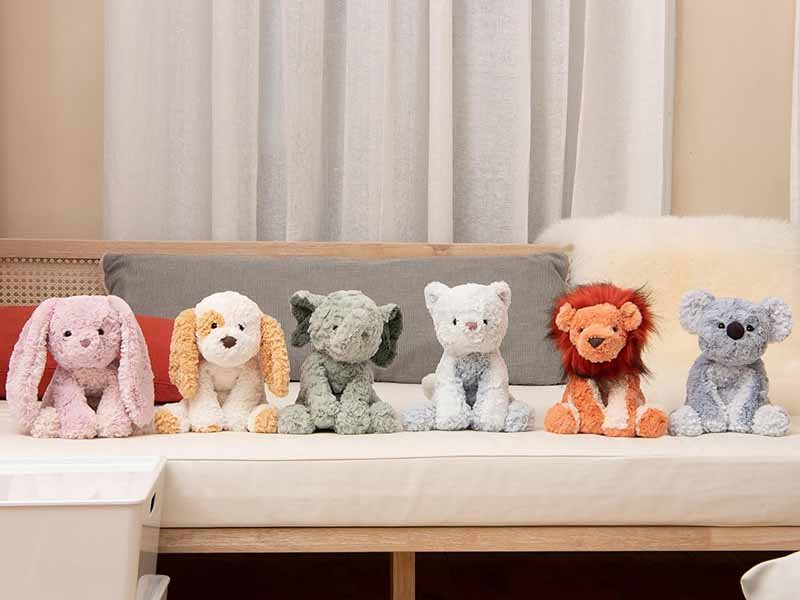
A plush toy can look harmless sitting on a bed, but daily life is not gentle with soft toys. Children hug them with sticky hands, carry them to school, drop them on the floor, sleep with them, spill milk on them, and sometimes treat them like travel companions, pillows, napkins, and best friends all at once. Over time, plush toys collect dust, sweat, saliva, food residue, pet hair, body oil, odors, and allergens. The problem is not only how to make them clean again. The harder question is how to clean them without damaging the softness, fur direction, stitching, filling, color, eyes, nose, accessories, or shape.
The safest way to clean plush toys is to check the care label first, inspect the toy’s fabric and structure, test colorfastness, then choose machine washing, hand washing, or spot cleaning based on the toy’s condition. Use mild detergent, cold or lukewarm water, gentle movement, towel pressing, and full air drying to protect softness and prevent mold.
For parents, collectors, retailers, gift companies, children’s brands, and custom plush toy businesses, cleaning performance also reflects manufacturing quality. A plush toy that loses shape, leaks filling, sheds badly, or opens at the seam after one wash may have problems beyond cleaning technique. Fabric selection, seam strength, filling stability, accessory attachment, embroidery quality, and care-label planning all matter. That is why Delsney develops custom plush toys with product use in mind, not only surface cuteness. A plush toy may win attention with its face, but it earns trust when it stays soft, safe, cleanable, and lovable after real use.
What Is the Safest Way?

The safest way to clean plush toys is to inspect before washing. Check the care label, look for electronics or weak seams, identify fabric type, test color on a hidden area, and choose the least aggressive cleaning method that can solve the problem. Surface dirt may only need spot cleaning, while sturdy washable toys may handle gentle machine washing.
Cleaning plush toys should start with one simple rule: do not use more water, heat, friction, or detergent than the toy needs. A small surface stain does not require a full machine wash. A dusty collectible should not be soaked. A baby plush used daily may need deeper cleaning, but only if its fabric, seams, and filling can handle it.
Plush toys are built differently. Some are made for rough daily use. Some are decorative. Some include plastic eyes, sound modules, glued accessories, weighted beads, sequins, long fur, printed fabric, or delicate clothing. A cleaning method that works perfectly for a small polyester plush may ruin an old teddy bear or electronic plush. Before choosing the cleaning method, the toy should be treated like a small textile product with structure, materials, and risk points.
A safe cleaning decision usually follows this order:
- Read the care label.
- Check whether the toy has electronics.
- Inspect seams, eyes, nose, ears, arms, legs, tail, clothing, bows, and glued parts.
- Shake or brush off loose dust first.
- Test color with a damp white cloth.
- Decide whether spot cleaning, hand washing, or machine washing is safest.
- Use mild detergent only.
- Avoid hot water unless the label clearly allows it.
- Dry fully before returning the toy to use.
For plush toy brands, cleaning safety begins during product development. If a plush toy is meant for children, daily play, retail gifting, or brand merchandise, the design should consider how users will clean it. Delsney can support washable fabric choices, reinforced stitching, stable filling, embroidered details, clear care labels, and sample testing so the final product is easier for customers to maintain.
Check the Label
The care label is the first place to look because it tells the safest cleaning route for that specific toy. It may show whether the toy is machine washable, hand washable, surface clean only, air dry only, tumble dry safe, or unsuitable for bleach. If the label says “spot clean only” or “surface wash only,” the toy should not be fully soaked unless the manufacturer provides separate cleaning instructions.
A plush toy care label is more important than many users realize. Two toys may look almost identical, but one may contain only polyester fiber filling while the other may have electronic parts, internal beads, special foam, or delicate fabric. The outer fabric may seem washable, but the inner structure may not be. Once water enters a sound module, cardboard support, or dense filling, the toy may never recover properly.
A useful care label should answer practical customer questions:
- Can the toy go in the washing machine?
- Should it be washed by hand?
- Is only surface cleaning allowed?
- What water temperature is safe?
- Can detergent be used?
- Can bleach be used?
- Can the toy go in the dryer?
- Should it be air dried?
- Should electronic parts be removed first?
- Are there any special warnings?
For brand projects, unclear care labels often create unnecessary customer complaints. A parent does not want to guess whether a baby plush can be washed. A collector does not want to risk damaging an expensive character plush. A retailer does not want returns caused by poor care communication.
Delsney can help custom plush brands design care labels based on fabric, filling, accessories, structure, and target market. For plush toys sold in Europe, North America, Australia, or other quality-sensitive markets, care instructions should be simple, accurate, and easy to follow.
Know the Material
Material affects almost every cleaning decision. Short plush, minky, velvet, fleece, faux fur, sherpa, felt, suede-like fabric, printed fabric, and sequin fabric do not respond the same way to water and friction. Filling also matters. Polyester fiber, cotton filling, foam particles, weighted beads, recycled filling, and mixed stuffing all behave differently after washing.
Short plush is usually easier to clean because the fibers are shorter and less likely to knot or flatten. Long plush and faux fur need more care because the pile can clump, mat, or lose direction after washing. Sherpa and curly textures may look cozy at first but can become flattened if rubbed too hard. Suede-like materials may show water marks. Printed plush panels may fade if exposed to strong detergent or hot water.
Filling is just as important as fabric. Polyester fiber filling is common and often suitable for washable plush toys when the seams are strong and the toy is dried fully. Cotton filling may hold water longer and dry more slowly. Foam or sponge filling can absorb water and become difficult to dry. Weighted plush toys may contain pellets or beads that make machine washing risky because the internal weight can shift or stress the seams.
Material and cleaning reference:
| Material or Structure | Cleaning Difficulty | Safer Method | Main Risk |
|---|---|---|---|
| Short plush | Low | Gentle machine wash or hand wash if label allows | Minor texture change |
| Minky fabric | Low to medium | Gentle hand wash or delicate cycle | Surface may lose smooth feel |
| Long plush | Medium | Hand wash or careful spot clean | Fur tangling and matting |
| Faux fur | Medium to high | Hand wash, towel dry, brush after drying | Clumping and uneven pile |
| Sherpa fabric | High | Spot clean or very gentle hand wash | Flattened texture |
| Suede-like fabric | High | Spot clean | Water marks and surface change |
| Sequin plush | High | Spot clean | Decoration damage |
| Printed plush | Medium | Cold water, mild detergent, low friction | Fading or cracking print |
| Electronic plush | Very high | Surface clean only unless module is removable | Internal damage |
| Weighted plush | High | Spot clean or hand wash based on structure | Filling shift and slow drying |
For custom plush brands, material choice should match the expected care method. If the toy is intended for babies, young children, daycare, schools, hospitals, or daily-use gift markets, wash-friendly materials are more practical. If the toy is a collectible display item, softness, appearance, and detail may be more important than machine washability.
Test the Color
Color testing helps prevent dye bleeding, fading, and uneven color changes. Before washing a plush toy, dampen a white cloth with cold water and a small amount of mild detergent, then press it gently on a hidden area such as the back seam, underside, or inner clothing area. If color transfers to the cloth, avoid full washing and use careful spot cleaning instead.
Color risk is higher with dark fabric, bright red, deep blue, black, purple, brown, printed panels, mixed-color toys, dyed ribbons, and decorative clothing. Color bleeding can stain lighter fabric areas, especially when a plush toy combines white fabric with dark clothing or accessories. This is common in character plush toys, mascot plush, holiday plush, and IP plush designs where multiple fabric colors are used.
A color test is especially important when:
- The toy has no care label.
- The toy has never been washed before.
- The fabric is very bright or dark.
- The toy has printed facial details.
- The toy has fabric clothing or accessories.
- The toy is old or sentimental.
- The toy uses unknown material.
- The toy has white areas next to colored fabric.
- The plush is a collectible or limited edition product.
For manufacturers, color stability is not something to think about after the product reaches the customer. It should be checked during fabric sourcing and sample testing. A toy that stains other laundry, fades after cleaning, or loses print quality can hurt brand trust.
Delsney supports custom plush projects with material selection and sample development. For multi-color plush toys, mascot plush, anime plush, baby plush, and branded character plush, the fabric combination should be reviewed not only for appearance but also for cleaning behavior, color contrast, and long-term use.
Pick the Method
The cleaning method should fit the toy’s risk level. Spot cleaning is safest for small stains and delicate toys. Hand washing gives more control for medium cleaning needs. Machine washing is efficient for sturdy washable toys. Dry cleaning-style care, such as brushing, airing, and using odor-absorbing powder, can help when water should be avoided.
A practical cleaning choice can be made by looking at the toy’s condition:
| Toy Condition | Best Method | Why It Works |
|---|---|---|
| Small food stain | Spot clean | Avoids soaking the whole toy |
| Dusty surface | Brush, vacuum lightly, or spot clean | Removes loose dirt with low risk |
| Everyday washable toy | Gentle machine wash | Efficient for deeper cleaning |
| No label but sturdy structure | Hand wash | More control than machine washing |
| Old teddy bear | Spot clean | Protects weak fabric and seams |
| Long-fur plush | Hand wash or spot clean | Reduces matting and tangling |
| Electronic plush | Surface clean | Protects internal components |
| Weighted plush | Spot clean or limited hand wash | Prevents filling shift |
| Baby plush used often | Wash if label allows, dry fully | Supports hygiene and safe use |
| Collectible plush | Spot clean | Protects value and appearance |
The smartest method is often the gentlest one that solves the problem. For example, if a plush toy only smells slightly musty, airing it in a dry ventilated area may work before washing. If the toy has one stain on the arm, spot cleaning is better than soaking the entire body. If a child has been sick and the toy is washable, deeper cleaning may be necessary, but drying must be complete.
For brands, method selection also shows why care label planning matters. A customer should not need to search for cleaning advice every time. Clear instructions improve the product experience and reduce accidental damage.
Can Plush Toys Be Machine Washed?

Some plush toys can be machine washed safely, but only when the care label allows it and the toy has no electronics, weak seams, fragile accessories, special filling, or delicate fabric. Use a mesh laundry bag, cold water, mild detergent, gentle cycle, and low spin. After washing, reshape the toy and air dry fully before use.
Machine washing is popular because it saves time, especially for parents with multiple plush toys at home. It can work well for sturdy plush toys made with durable fabric, secure seams, embroidered details, and polyester fiber filling. However, it is also the cleaning method that creates the most movement and friction. A washer does not know which toy has sentimental value, which eye is glued, or which seam is already weak.
The washing machine exposes plush toys to five main forces:
- Water absorption
- Detergent exposure
- Fabric rubbing
- Spinning pressure
- Shape compression
A plush toy designed for machine washing should be able to handle these forces without seam opening, filling leakage, heavy shedding, color bleeding, accessory loosening, or surface damage. If the toy has electronics, delicate decoration, weighted filling, old fabric, or long fur, machine washing may do more harm than good.
For users, the safest machine-washing method is conservative. Use cold water, gentle cycle, mild detergent, and a protective wash bag. Avoid strong spin, hot water, bleach, fabric softener, and high-heat drying. For larger plush toys, machine washing is less predictable because thick filling takes longer to dry. If the inside stays damp, odor and mold can develop.
For plush brands, machine washability can be a selling point, but it must be supported by product engineering. Delsney can help design washable plush toys by selecting suitable fabrics, stable fillings, strong seams, embroidered eyes, secure accessories, and practical care instructions.
Washer-Safe Toys
Washer-safe plush toys usually have a clear machine-washable care label, durable short or medium plush fabric, polyester filling, strong stitching, and secure embroidered or sewn features. They should not contain batteries, sound boxes, LED lights, internal frames, cardboard, loose glued decorations, fragile sequins, or weighted pellets.
A toy is more likely to be washer-safe when it has:
- Machine-washable care label
- Strong outer fabric
- Short or medium pile
- Polyester fiber filling
- Embroidered eyes and mouth
- No battery module
- No fragile trims
- No loose stitching
- No torn seams
- No exposed filling
- No delicate clothing
- No hard internal parts
A toy should usually avoid machine washing when it has:
- Sound chip or music box
- Battery case
- Light function
- Glued plastic eyes
- Loose nose or button
- Sequins or glitter fabric
- Long faux fur
- Old or brittle textile
- Weighted filling
- Foam filling
- Strong sentimental or collectible value
For brands, washer-safe design is a product decision. Embroidery is often safer than glued facial parts. Strong seam allowance helps the toy hold shape. High-quality polyester filling recovers better after washing. Well-selected fabric sheds less and feels softer after drying.
Delsney can support custom plush toys for markets that care about cleanability, such as baby products, children’s toys, daycare plush, educational plush, medical comfort toys, promotional plush, and retail stuffed animals.
Wash Bag Use
A wash bag protects plush toys by reducing friction, twisting, and direct impact against the washing machine drum. A mesh laundry bag is the best option, but a pillowcase tied closed can also work. The goal is not to seal the toy tightly. The goal is to create a soft barrier so ears, arms, legs, tails, bows, eyes, and small parts are less exposed to pulling and rubbing.
For small plush toys, similar colors and similar materials can be washed together in one bag. For medium plush toys, one toy per bag is safer. For plush toys with many small parts, separate washing is better. Avoid washing plush toys with jeans, jackets, items with zippers, Velcro, hooks, or rough towels that can pull the fibers.
Wash bag benefits include:
- Reduces fur abrasion
- Protects eyes and noses
- Helps prevent limb stretching
- Reduces seam stress
- Keeps small toys from getting trapped
- Protects bows and clothing
- Reduces surface pilling
- Makes post-wash handling easier
A wash bag is useful, but it is not magic. It cannot protect electronic modules from water. It cannot make weak seams strong. It cannot stop color bleeding. It cannot prevent a poorly attached eye from loosening if the toy was not made well.
For custom plush projects, Delsney can design toys with stronger seam construction, secure accessories, and fabric choices that better tolerate gentle washing. Brands can also add care cards or package instructions recommending wash-bag use for washable plush toys.
Gentle Cycle
The gentle cycle is safer because it reduces aggressive agitation. Plush toys should usually be washed with cold water or lukewarm water, mild liquid detergent, and low spin. High heat and strong movement can affect softness, color, stuffing, glued parts, printed details, and shape.
Recommended machine wash setup:
| Washing Factor | Safer Choice | Why It Helps |
|---|---|---|
| Water temperature | Cold or lukewarm | Helps protect color and texture |
| Cycle | Gentle or delicate | Reduces twisting and pulling |
| Detergent | Mild liquid detergent | Lowers residue and harsh chemical impact |
| Spin speed | Low spin | Protects shape and seams |
| Protection | Mesh bag or pillowcase | Reduces friction |
| Load | Soft items only | Avoids rough rubbing |
| Bleach | Avoid unless label allows | Reduces fabric and color damage |
| Drying | Air dry | Prevents heat damage |
A mild detergent is usually enough. Strong cleaners may leave residue inside the fabric or filling. Too much detergent is also a problem because plush toys are thick and can be harder to rinse completely. Detergent residue may make the surface feel stiff or irritate sensitive skin.
After the cycle ends, remove the toy quickly. Do not leave it wet inside the machine. Gently press with a clean towel to remove extra water. Reshape the body, ears, arms, legs, and face while damp. Then dry the toy in a well-ventilated area.
For plush toy brands, testing the product through gentle washing during sample review can help confirm whether the toy keeps its shape, softness, and seam strength.
Common Mistakes
The most common mistake is treating every plush toy as machine washable. Many users assume that because a toy is soft, it can go into the washer. In reality, plush toys can include mixed fabrics, electronic modules, internal weights, glued parts, special trims, and delicate construction. One wrong wash can flatten fur, shift filling, loosen eyes, fade colors, or open seams.
Common machine-washing mistakes include:
- Ignoring the care label
- Using hot water
- Using bleach
- Using too much detergent
- Washing toys with electronics
- Washing old or fragile toys
- Skipping the wash bag
- Using heavy spin
- Washing with rough clothing
- Washing dark and light toys together
- Twisting the toy after washing
- Drying with high heat
- Returning the toy to use before fully dry
Drying mistakes are especially serious. A toy may look dry outside while the filling inside is still damp. Thick plush toys, large stuffed animals, dense filling, and weighted toys take longer to dry. If moisture remains inside, the toy can develop odor or mold.
For parents, the safest habit is to clean lightly and regularly instead of waiting until the toy is badly dirty. For brands, the lesson is clear: customers need durable design and clear care guidance. Delsney helps custom plush brands reduce cleaning-related problems through stronger construction, washable material recommendations, stable filling control, secure details, and clear label planning.
How Do You Hand Wash Them?

Hand washing is safer than machine washing for delicate plush toys, old stuffed animals, long-fur plush, toys with weak seams, mixed fabrics, or uncertain care labels. Use cold or lukewarm water, mild detergent, gentle pressing, and careful rinsing. Do not twist, scrub hard, or soak for too long. After washing, press water out with towels and air dry fully.
Hand washing gives more control than a washing machine. That control matters because plush toys are not flat fabrics. They have faces, limbs, seams, fillings, accessories, and sometimes delicate surface textures. A washing machine moves everything the same way, but hand washing lets you slow down around fragile areas, reduce pressure on seams, and avoid soaking parts that do not need deep cleaning.
Hand washing is especially useful when the plush toy is valuable, sentimental, old, collectible, or made with longer fibers. It can also be a safer choice when the care label is missing. Instead of putting the toy through spinning and tumbling, you can clean it with light pressure and check how the material reacts during the process.
The goal is not to squeeze the toy like a towel. Plush toys should be cleaned with a soft touch. Too much rubbing can mat the fur. Too much detergent can leave residue. Too much soaking can make drying difficult. Too much twisting can deform the filling and pull seams open.
A safe hand-washing process usually includes:
- Remove loose dust first.
- Fill a basin with cold or lukewarm water.
- Add a small amount of mild detergent.
- Mix the water before placing the toy in.
- Gently press the toy into the water.
- Clean dirty areas with fingers or a soft cloth.
- Avoid rough scrubbing.
- Drain the soapy water.
- Rinse with clean water until detergent is removed.
- Press water out with towels.
- Reshape the toy.
- Air dry completely.
For custom plush toy brands, hand washing also reveals the importance of construction quality. A well-made plush toy should have secure seams, stable filling, and strong attachment points. If a toy leaks filling or loses shape under gentle hand washing, the issue may come from weak stitching, poor seam allowance, low-quality filling, or material mismatch.
Best Time to Hand Wash
Hand washing is best when the plush toy needs deeper cleaning than spot treatment but is not safe enough for the washing machine. It is a good choice for older toys, handmade-looking plush, long-pile plush, soft collectible plush, lightly decorated plush, and toys with unclear care instructions. It also works well when the user wants to clean the whole toy while reducing stress on the fabric.
Hand washing is often better for plush toys with:
- Long fur
- Loose or older seams
- Delicate embroidery
- Soft facial shape
- Mixed fabric panels
- Printed details
- Small clothing pieces
- Ribbons or bows
- Unknown filling
- Sentimental value
- Missing care label
- Mild odor or overall dirt
It is not always suitable for toys with electronics, heavy internal weights, non-removable sound modules, cardboard support, or water-sensitive accessories. In those cases, surface cleaning is safer.
Hand washing is also useful before the toy becomes extremely dirty. If a plush toy is cleaned gently and regularly, it may not need harsh washing later. This is especially important for baby plush toys, bedtime plush, nursery plush, daycare plush, and comfort toys. Light, controlled cleaning protects the toy better than waiting until stains become deep and difficult.
For brands working with Delsney, hand-wash suitability can be planned through fabric selection, filling choice, seam reinforcement, and label instructions. Products designed for young children or frequent hugging should be built with real cleaning habits in mind.
Mild Detergent
Mild detergent is important because plush toys touch skin, faces, hands, and sometimes babies’ mouths. Strong detergent, bleach, heavy fragrance, and harsh stain removers can irritate skin, damage fabric, fade colors, or leave residue inside the filling. A small amount of gentle liquid detergent is usually enough for normal cleaning.
The detergent should be fully dissolved in water before the toy is added. Pouring detergent directly onto plush fabric can create concentrated spots that are harder to rinse. Too much detergent is also a common mistake. Plush toys are thick, so soap can stay inside the filling even after the surface feels clean.
A safe detergent choice should be:
- Mild
- Low fragrance or fragrance-free
- Suitable for delicate fabrics
- Easy to rinse
- Free from bleach
- Free from strong optical brighteners if possible
- Gentle enough for children’s items
Detergent use reference:
| Cleaning Need | Detergent Choice | What to Avoid |
|---|---|---|
| Daily dirt | Mild liquid detergent | Heavy-duty laundry detergent |
| Baby plush | Fragrance-free gentle detergent | Strong fragrance and bleach |
| Delicate plush | Delicate fabric detergent | Enzyme-heavy or harsh formulas |
| Odor control | Mild detergent plus proper drying | Masking odor with perfume |
| Stains | Small amount on the stained area | Strong rubbing and excess soap |
For toy brands, detergent compatibility should be considered when writing care instructions. Customers need simple guidance. “Use mild detergent and cold water” is clearer than vague instructions such as “wash carefully.” Delsney can help private label plush projects prepare care wording that matches the product’s material and target market.
Gentle Rinsing
Gentle rinsing is just as important as washing. If detergent remains inside the toy, the plush surface can feel stiff, sticky, or rough after drying. Residue may also attract dirt faster. For children’s plush toys, leftover detergent is a bigger concern because the toy may be hugged, slept with, or held close to the face.
Rinsing should be done with clean cold or lukewarm water. Press the toy gently under the water, then release. Repeat until the water runs clearer and the toy no longer feels slippery. Avoid strong wringing. Wringing can twist the filling, stretch the fabric, and pull seams out of shape.
A better method is towel pressing. After rinsing, place the toy on a clean dry towel, roll the towel around it, and press gently. This removes water without twisting the toy. For larger plush toys, use several towels and repeat the process.
Rinsing mistakes to avoid:
- Leaving detergent inside the toy
- Using hot water to rinse
- Squeezing the toy too hard
- Twisting limbs or ears
- Pulling at the neck or seams
- Holding the toy by one weak part when wet
- Skipping towel pressing before drying
Wet plush toys are heavier than dry plush toys. That extra weight can stress seams, arms, legs, ears, and tails. Always support the whole toy when lifting it from water. For larger plush toys, use both hands and avoid letting one part carry the full weight.
For brands, rinsing performance is affected by toy size and filling density. Very dense filling may trap water and detergent more easily. During product development, Delsney can help brands choose suitable stuffing density and structure so the plush toy feels full without becoming difficult to dry or rinse.
Shape Protection
Shape protection means keeping the plush toy’s body, face, limbs, and filling in the right position during and after washing. Plush toys can deform when soaked, pressed, twisted, or dried incorrectly. Once the filling shifts badly, the toy may look uneven or lose its original character expression.
The face is usually the most important area. A plush toy’s personality often depends on the roundness of the head, eye position, nose shape, mouth line, cheek fullness, and ear placement. Rough washing can flatten the face or shift filling away from key areas. This is especially important for character plush, mascot plush, baby plush, anime plush, and premium collectible plush.
After hand washing, reshape the toy while it is still damp:
- Smooth the fabric in the natural fur direction.
- Adjust ears, arms, legs, and tail.
- Press filling back into the head and body evenly.
- Check whether the face still looks symmetrical.
- Avoid hanging the toy by one limb.
- Lay it flat or support it well while drying.
- Turn it during drying so moisture escapes evenly.
Shape-risk areas:
| Toy Area | Common Problem | Safer Handling |
|---|---|---|
| Head | Flattening or uneven filling | Reshape by hand while damp |
| Face | Expression distortion | Avoid strong rubbing |
| Ears | Curling or twisting | Smooth and position before drying |
| Arms/legs | Stretching | Do not wring or hang by limbs |
| Body | Lumpy filling | Press filling evenly |
| Tail | Seam stress | Support during lifting |
| Clothing | Wrinkling or color transfer | Wash gently and dry flat |
For custom plush manufacturing, shape stability comes from pattern design, stuffing control, sewing accuracy, and filling distribution. Delsney’s sampling and pattern-making process can help brands create plush toys that better keep their intended shape through normal handling and careful cleaning.
How Do You Spot Clean?

Spot cleaning means cleaning only the dirty area instead of washing the entire plush toy. It is the best method for small stains, surface dirt, delicate toys, old plush, electronic plush, collectible plush, weighted plush, and toys with accessories. Use a damp cloth, mild detergent, light pressure, and minimal water. After cleaning, remove soap residue and let the area dry fully.
Spot cleaning is often the most practical plush toy care method. Many toys do not need full washing every time they get dirty. A small food stain on the arm, dust on the ear, a mark on the belly, or sticky fingers on the face can usually be handled with targeted cleaning. This reduces wear and helps the toy last longer.
The key is using less moisture. A plush toy is thick, and water can travel into the filling even when only the surface looks wet. For delicate plush, electronic plush, and toys with special filling, too much water can create more problems than the stain itself. Spot cleaning keeps the cleaning area controlled.
A basic spot-cleaning process:
- Remove loose dirt with a soft brush or dry cloth.
- Mix a small amount of mild detergent with water.
- Dip a white cloth into the solution.
- Wring the cloth until damp, not dripping.
- Dab the stained area gently.
- Avoid harsh rubbing.
- Use a second damp cloth with clean water to remove detergent.
- Blot with a dry towel.
- Air dry fully.
- Brush the fur gently if needed.
Spot cleaning is also useful for maintaining plush toys between deeper washes. For children’s toys, regular light cleaning can help avoid heavy dirt buildup. For collectible plush, spot cleaning helps preserve fabric texture, tags, shape, and value.
Small Stains
Small stains should be treated early. Fresh stains are easier to remove than dried stains because they have not bonded deeply with the fibers. Food, milk, juice, chocolate, mud, makeup, pen marks, and body oil all need slightly different care, but the first rule is the same: blot, do not rub.
Rubbing can push the stain deeper, spread it wider, and damage the plush pile. Blotting lifts the stain more gently. For liquid spills, press with a dry cloth first to absorb as much as possible. Then use a damp cloth with mild detergent. Work from the outside of the stain toward the center to avoid spreading.
Common stain handling:
| Stain Type | First Step | Cleaning Tip |
|---|---|---|
| Milk | Blot immediately | Use mild detergent and rinse residue well |
| Juice | Blot with dry cloth | Cold water helps reduce setting |
| Chocolate | Remove solid pieces first | Use damp cloth and mild detergent |
| Mud | Let dry first | Brush off dry dirt before wet cleaning |
| Makeup | Dab gently | Avoid spreading oily pigment |
| Pen mark | Test first | May need repeated light treatment |
| Food oil | Blot first | Use tiny amount of detergent |
| Saliva | Damp cloth cleaning | Dry fully to prevent odor |
For baby plush toys, avoid strong stain removers unless the care label allows them. A stain remover that works on adult clothing may not be suitable for a plush toy that touches a child’s face.
For brands, stain resistance can be improved through fabric choice. Some short plush fabrics clean more easily than high-pile or textured materials. Delsney can help recommend fabric options based on whether the product is meant for babies, daily play, retail display, or collectible use.
Surface Dirt
Surface dirt includes dust, lint, crumbs, pet hair, and loose particles sitting on the outside of the toy. It does not always require washing. In many cases, brushing, shaking, lint rolling, or light vacuuming can refresh the toy without exposing it to water.
Surface cleaning methods include:
- Soft brush for dust
- Lint roller for hair and fibers
- Clean dry cloth for light dirt
- Low-suction vacuum with mesh cover
- Gentle shaking outdoors
- Damp cloth for slightly dirty areas
- Soft toothbrush for small details
Vacuuming should be done carefully. Use low suction and cover the nozzle with a clean mesh cloth or thin fabric to prevent pulling fur or small parts. This is useful for large plush toys that are difficult to wash, such as giant teddy bears, display plush, mascot plush, or decorative stuffed animals.
Surface dirt is also common in retail and warehouse environments. Plush toys may collect dust during storage, shipping, display, or photography. For custom plush brands, packaging can help reduce dirt exposure. Polybags, dust bags, sealed cartons, and clean packing processes protect plush products before they reach customers.
Delsney’s packaging support can help brands choose suitable protection for plush toys during bulk production and shipment. Good packaging keeps the toy cleaner, reduces deformation, and improves the customer’s first impression.
Odor Removal
Odor does not always mean the plush toy needs full washing. Mild odors can sometimes be reduced by airing, brushing, or using dry odor-absorbing methods. Strong odors from milk, pet saliva, smoke, mildew, or long-term storage may need deeper cleaning, but the toy’s material and structure still decide the safest method.
For light odor, try these steps:
- Place the toy in a dry, ventilated area.
- Keep it away from direct strong sunlight.
- Brush the surface gently.
- Sprinkle a small amount of baking soda on the surface if suitable.
- Let it sit for several hours.
- Shake or vacuum it off carefully.
- Repeat if needed.
Baking soda can help absorb odors, but it must be removed completely, especially from long-fur plush. It should not be used on very delicate, dark, oily, or special-finish fabrics without testing. For baby plush toys, make sure no powder residue remains.
Odor risk often comes from moisture. A plush toy that is not dried fully after washing may smell worse later. Dense filling, large size, poor ventilation, and humid climates can all slow drying. If the odor is musty or mold-like, the toy should be handled carefully. For children’s use, safety matters more than saving the toy.
Odor care table:
| Odor Source | Safer First Step | Warning |
|---|---|---|
| Storage smell | Air dry in ventilated area | Avoid damp rooms |
| Pet odor | Brush hair, spot clean, air dry | Check for chewing damage |
| Milk smell | Spot clean or wash if label allows | Dry fully to prevent sour odor |
| Smoke smell | Airing may take time | Strong odor may need professional care |
| Musty smell | Check for mold risk | Do not give to children if mold is suspected |
| Sweat/body odor | Mild cleaning and full drying | Avoid perfume masking |
For brands, odor prevention begins with clean production, dry storage, suitable packaging, and proper filling. Delsney controls plush product handling through manufacturing, inspection, and packing processes to help products arrive clean and ready for sale.
Delicate Parts
Delicate parts include plastic eyes, noses, buttons, ribbons, bows, clothing, printed panels, embroidery, sequins, bells, sound modules, labels, and small accessories. These areas should be cleaned with extra care because they are often the first parts to loosen, fade, scratch, or deform.
When cleaning delicate parts, use a damp cotton cloth or cotton swab instead of soaking the whole area. Avoid strong rubbing around eyes and noses. Do not pull on bows, ears, tails, clothing, or tags. If a part is glued rather than sewn, avoid water exposure as much as possible because moisture can weaken adhesive.
Delicate part cleaning guide:
| Part | Safer Cleaning Method | Risk |
|---|---|---|
| Plastic eyes | Damp cloth around edge | Loosening or scratching |
| Embroidered face | Light blotting | Thread fuzzing |
| Nose | Gentle wipe | Shape or attachment damage |
| Ribbon/bow | Spot clean only | Color bleeding or fraying |
| Clothing | Clean separately if removable | Shrinking or color transfer |
| Sequins | Dry or damp cloth only | Falling off |
| Sound module area | Surface clean only | Internal failure |
| Hangtag/label | Avoid wetting | Paper damage |
| Faux leather patch | Wipe gently | Peeling or cracking |
For custom plush brands, safer design choices can reduce cleaning issues. Embroidered features are often more durable than glued parts for children’s plush. Sewn accessories are usually stronger than glued accessories. Removable clothing can make cleaning easier. Hidden zipper access can allow module removal in some electronic plush designs.
Delsney supports custom plush toy design with structural thinking. The goal is to make the plush toy cute, but also practical enough for real use, cleaning, packaging, shipping, and long-term customer satisfaction.
How Should Plush Toys Dry?

Plush toys should be dried slowly, fully, and gently. Air drying is usually safer than high-heat drying because heat can damage fabric, shrink parts, melt glue, deform filling, or affect softness. After washing, press out water with towels, reshape the toy, place it in a ventilated area, turn it during drying, and make sure the inside is completely dry before use.
Drying is where many plush toys get damaged. People often focus on washing, then rush the drying stage. That is risky because a wet plush toy is heavy, fragile, and slow to dry inside. The outside may feel dry while the filling is still damp. If the toy is returned to bed, storage, or packaging too soon, trapped moisture can cause odor, mildew, or mold.
The safest drying method is air drying with support. Place the toy on a clean towel or drying rack in a well-ventilated area. Avoid hanging large wet toys by one limb because the weight can stretch seams. For smaller toys, hanging may be acceptable if the structure is strong, but flat drying is usually safer.
Drying time depends on toy size, fabric thickness, filling density, air movement, humidity, and room temperature. A small plush may dry in several hours. A large plush may need a full day or longer. Dense stuffed animals, long-fur plush, weighted toys, and thick baby plush need extra time.
Drying also affects softness. If the fur dries clumped, the toy may feel rough. Gentle brushing after drying can help restore the pile. But brushing too soon, while the fibers are wet and weak, can pull or damage the surface.
Air Drying
Air drying is usually the safest method for plush toys because it avoids high heat and rough tumbling. After washing, remove extra water with towel pressing. Then place the toy on a clean dry towel in a ventilated place. Turn it every few hours so all sides dry evenly.
Good air drying steps:
- Press water out with towels.
- Reshape the toy while damp.
- Lay it flat on a clean towel.
- Keep it in a ventilated area.
- Turn it during drying.
- Replace wet towels if needed.
- Check thick areas carefully.
- Brush fur only after the toy is mostly dry or fully dry.
- Do not store until completely dry.
Avoid placing wet plush toys in closed spaces, drawers, boxes, bags, or beds. Moisture needs airflow. A fan can help, but avoid placing the toy too close to strong heat. Direct hot air can stiffen or damage fibers.
Drying position matters:
| Toy Type | Better Drying Position | Reason |
|---|---|---|
| Small plush | Flat on towel or drying rack | Prevents shape distortion |
| Large plush | Flat with full support | Avoids seam stretching |
| Long-fur plush | Flat, turn often | Reduces clumping |
| Baby plush | Flat in clean area | Keeps hygiene controlled |
| Weighted plush | Flat, extra drying time | Prevents filling shift |
| Plush with clothing | Dry clothing evenly | Prevents wrinkles and damp spots |
For brands, drying performance is linked to filling density and material choice. Very dense stuffing may feel premium, but it can slow drying. Delsney can help brands balance fullness, softness, shape, and care practicality during sample development.
Dryer Risks
Dryers can be risky for plush toys because heat and tumbling can damage fabric, filling, glue, accessories, and shape. Some care labels may allow low-heat or air-only drying, but high heat should usually be avoided. If the label does not clearly allow tumble drying, air drying is safer.
Dryer risks include:
- Fur matting
- Fabric shrinkage
- Filling clumping
- Plastic part deformation
- Glue softening
- Seam stress
- Color change
- Surface roughness
- Static buildup
- Shape distortion
If a dryer is allowed by the care label, use the lowest heat or air-only setting. Place the plush toy in a pillowcase or laundry bag. Add clean dry towels to cushion movement. Check the toy often instead of running a long cycle. Remove the toy before it becomes overheated.
Dryer setting reference:
| Dryer Option | Risk Level | Recommendation |
|---|---|---|
| High heat | Very high | Avoid |
| Medium heat | High | Avoid unless label allows |
| Low heat | Medium | Use only if label allows |
| Air-only tumble | Lower | Safer but still check structure |
| No dryer | Lowest | Best for delicate plush |
Some plush toys may seem fine after dryer use but lose softness over time. Heat can affect synthetic fibers and make the surface feel less smooth. For long plush and faux fur, heat can make pile direction harder to restore.
For custom plush toy brands, if dryer-safe performance is required, it should be discussed early. The fabric, filling, seam strength, accessories, and test standards all need to support that claim. Delsney can help evaluate realistic care instructions instead of making risky promises to consumers.
Mold Prevention
Mold prevention depends on complete drying. Plush toys are thick textile products, and moisture can remain inside longer than expected. A toy that feels dry on the outside may still be damp near the core, especially if it is large, dense, or heavily stuffed. Returning it to a child’s bed too soon can create odor and hygiene problems.
Signs that a plush toy may not be fully dry:
- Cool feeling inside when squeezed
- Heavier weight than usual
- Damp smell
- Slight sour odor
- Flattened or sticky fur
- Moist seams
- Slow-drying belly or head area
- Wet clothing or accessories
To reduce mold risk:
- Press out as much water as possible with towels.
- Dry in a ventilated area.
- Turn the toy often.
- Use a fan if needed.
- Give large plush toys extra drying time.
- Check seams and thick areas.
- Do not store in plastic bags while damp.
- Do not place on bedding before fully dry.
- Avoid drying in humid bathrooms.
- Dry weighted or dense plush toys with extra caution.
Mold risk table:
| Risk Factor | Why It Matters | Safer Practice |
|---|---|---|
| Large toy size | More filling holds more water | Extend drying time |
| Dense stuffing | Slower airflow inside | Press with towels first |
| Humid room | Moisture evaporates slowly | Use fan or dry room |
| Thick fabric | Slows surface drying | Turn toy often |
| Weighted filling | Harder to dry evenly | Avoid full soaking when possible |
| Clothing layers | Traps moisture | Separate if removable |
| Closed storage | Prevents airflow | Store only when fully dry |
For brands, mold prevention connects with product design. A washable plush toy should not be so dense that customers cannot dry it safely. Delsney can help develop plush toys with suitable stuffing density and care instructions that reduce customer misuse.
Fur Fluffing
Fur fluffing helps restore the plush toy’s softness after cleaning. Washing can flatten fibers, especially on long plush, faux fur, minky, and high-pile materials. After the toy is fully dry or nearly dry, use a soft brush, wide-tooth comb, or clean fingers to lift the fur gently in the natural direction.
Do not brush aggressively. Wet fibers are weaker, and harsh brushing can pull them out or create bald-looking areas. Start with light strokes. For long plush, separate clumps slowly. For short plush, smoothing by hand may be enough. For curly or sherpa textures, brushing may change the original look, so use caution.
Fur recovery steps:
- Make sure the toy is mostly dry.
- Shake gently to loosen fibers.
- Use fingers first.
- Brush lightly in the fur direction.
- Work in small sections.
- Avoid pulling knots hard.
- Let the toy finish drying naturally.
- Recheck the face and body shape.
Fur type and aftercare:
| Fur Type | Aftercare Method | Warning |
|---|---|---|
| Short plush | Smooth by hand | Avoid over-brushing |
| Minky | Light hand smoothing | Too much brushing may change surface |
| Long plush | Soft brush or wide comb | Work slowly to prevent pulling |
| Faux fur | Brush after drying | Heat can permanently affect texture |
| Sherpa | Finger fluff only | Brushing may change curl structure |
| Curly plush | Minimal handling | Keep original texture |
For plush brands, softness after cleaning is strongly affected by fabric quality. Low-quality plush may feel rougher after washing. Better fabric selection, proper pile direction, controlled cutting, and suitable finishing can improve long-term hand feel. Delsney’s custom plush development can help brands choose materials that balance softness, appearance, durability, and care performance.
Which Materials Clean Better?

Some plush materials are easier to clean because they have shorter fibers, stable texture, good colorfastness, and quick-drying structure. Short plush, minky, and standard polyester plush are often easier to maintain than long plush, faux fur, sherpa, suede-like fabrics, weighted plush, or electronic plush. Filling type, stitching strength, accessories, and fabric finish also affect cleaning results.
Material is one of the biggest reasons two plush toys behave differently after washing. One toy may come out soft and fresh, while another looks flat, lumpy, faded, or tangled. The user may blame the washing method, but the real reason may be the fabric, filling, sewing structure, or accessories.
For families, material affects cleaning convenience. A washable short plush toy is easier to care for when children use it every day. A long-fur collectible may look beautiful but needs more careful cleaning. A baby plush should use soft, safe, stable, and easy-care materials. A promotional plush may need to balance cost, appearance, and simple surface cleaning. A high-end brand plush may need premium hand feel, accurate character shape, and clear care instructions to protect long-term appearance.
For brands, material selection also affects product positioning. A plush toy sold as a baby comfort toy should not use a fabric that is hard to clean or likely to shed. A collectible anime plush may prioritize texture and design accuracy, but the care label should clearly guide users. A pet-themed plush gift may need stronger stitching and easier surface cleaning. A mascot plush for events may need durable fabric because it will be handled by many people.
Cleanability is not only about the outer fabric. The filling controls drying time and shape recovery. Stitching controls whether seams survive washing. Accessories control whether the toy can be machine washed or only surface cleaned. Color matching controls whether dark fabric bleeds onto light fabric. Packaging controls how clean the toy stays before sale.
For custom plush projects, Delsney can help brands compare fabric options, filling choices, sewing methods, and care-label directions before sampling. The right material plan makes the toy easier to care for, safer to use, and more suitable for the target market.
Short Plush
Short plush is usually one of the easiest plush materials to clean. Its fibers are shorter, smoother, and less likely to tangle than long plush or faux fur. It can often handle gentle cleaning better, especially when paired with polyester fiber filling and strong stitching. Many children’s plush toys, mascot plush, promotional plush, and retail stuffed animals use short plush because it balances softness, cost, durability, and care convenience.
Short plush is practical for daily-use products because dirt usually stays closer to the surface. Food crumbs, dust, and lint can often be removed with brushing, lint rolling, or light spot cleaning. If the care label allows machine washing, short plush usually has a lower risk of matting compared with long-pile fabrics.
However, short plush is not automatically washable. Color, backing quality, fabric density, filling type, and seam strength still matter. Low-quality short plush may shed, pill, flatten, or lose softness after washing. Printed short plush may fade if cleaned with strong detergent or hot water. Very cheap fabric may look fine at first but feel rougher after repeated handling.
Short plush is often suitable for:
- Baby plush toys
- Retail stuffed animals
- Promotional plush
- Mascot plush
- Educational plush
- Holiday plush
- Small plush keychains
- Brand character plush
- Plush dolls
- Custom animal plush toys
Short plush cleaning advantages:
| Feature | Benefit for Cleaning |
|---|---|
| Short pile | Less tangling and easier brushing |
| Smooth surface | Easier stain spotting |
| Lower water retention | Usually dries faster than long fur |
| Better shape visibility | Easier to reshape after washing |
| Flexible cost range | Suitable for both value and premium projects |
For Delsney customers, short plush is often a smart choice when the product needs to be cute, soft, scalable, and easier for families to maintain.
Long Plush
Long plush is more delicate because the longer fibers can tangle, clump, flatten, or change direction after washing. It often feels softer and more luxurious, but it needs gentler cleaning. Long plush is common in premium stuffed animals, fluffy teddy bears, pet-style plush, comfort plush, fashion plush, and collectible plush products.
The main cleaning risk is pile damage. When long fibers become wet, they can stick together. If the toy is rubbed, twisted, or dried with heat, the fibers may mat. Once long plush becomes matted, it may not fully return to its original fluffy look. That is why spot cleaning or gentle hand washing is often safer than machine washing, unless the care label clearly allows machine washing.
Long plush also hides dirt more easily. Dust, crumbs, and pet hair can sit deep between fibers. Before wet cleaning, it helps to shake the toy, use a soft brush, or carefully remove loose particles. After cleaning and drying, gentle brushing can help restore the surface.
Long plush care points:
- Avoid strong scrubbing.
- Avoid hot water.
- Avoid high-heat drying.
- Avoid heavy machine spin.
- Brush gently after drying.
- Clean small stains quickly.
- Dry fully before storage.
- Use spot cleaning for delicate areas.
- Test color before full cleaning.
- Protect the fur direction during drying.
Long plush is attractive, but brands should be honest about care. If a plush toy has long fur, the care label should not oversimplify cleaning. A product sold to children may need more wash-friendly long plush or a shorter-pile alternative. A product sold as a collectible can use richer long plush, but care instructions should emphasize gentle cleaning.
For Delsney custom projects, long plush can be selected based on pile height, density, softness, shedding control, color stability, and product use. A premium teddy bear may justify high-pile fabric, while a daycare plush toy may benefit from shorter, easier-care material.
Weighted Toys
Weighted plush toys need special care because they often contain glass beads, plastic pellets, sand-like filling, or internal weighted bags. These materials can make the toy heavier, slower to dry, and more sensitive to seam stress. Many weighted plush toys are not suitable for machine washing unless the care label specifically says they are washable.
The main issue is weight movement. During washing, water makes the plush heavier. If the internal weighted material shifts, the toy can lose balance or shape. If the inner pouch is not well secured, pellets may gather in one area. If seams are weak, extra wet weight can pull them open. Drying is also harder because dense areas trap moisture.
Weighted plush toys are often used as comfort items, sensory toys, relaxation products, or decorative plush. Because users hold them close to the body, cleaning matters. But full soaking may not be the safest method. Spot cleaning is often better for routine care. If deeper cleaning is needed, users should follow the care label carefully.
Weighted plush cleaning guide:
| Cleaning Situation | Safer Method | Reason |
|---|---|---|
| Small surface stain | Spot clean | Avoids wetting internal weight |
| Light odor | Airing or dry odor removal | Reduces water exposure |
| Dust | Soft brush or low-suction vacuum | Protects fabric and filling |
| Full dirt exposure | Follow label only | Weighted filling may not tolerate washing |
| Unknown filling | Avoid machine wash | Prevents shifting and seam stress |
For brands, weighted plush requires stronger internal construction. The weighted material should be contained safely, evenly distributed, and protected by reliable seams. Care instructions should clearly tell customers whether the toy is washable, surface clean only, or has a removable cover.
Delsney can help custom brands design weighted plush toys with safer internal pouches, suitable filling, reinforced stitching, and practical cleaning guidance. For high-requirement brand projects, structure testing during sampling is especially important.
Electronic Toys
Electronic plush toys are usually the least washable category unless the electronic module is fully removable. Sound chips, light modules, music boxes, vibration units, batteries, wires, and switches can be damaged by water. Even if the outside fabric looks washable, the inside components may fail after soaking.
For electronic plush toys, surface cleaning is usually the safest method. Use a damp cloth with mild detergent and avoid soaking the area around the battery compartment, speaker, switch, or wiring. If the electronic module is removable, take it out before cleaning and make sure the toy is fully dry before reinstalling it.
Electronic plush toys may include:
- Sound modules
- Voice recording devices
- Music boxes
- LED lights
- Vibration functions
- Battery cases
- Switch buttons
- Internal wiring
- Motion sensors
- Squeeze-activated parts
Cleaning risks include:
- Short circuit
- Battery corrosion
- Sound failure
- Light failure
- Wire damage
- Mold near internal parts
- Rust on metal components
- Switch malfunction
- Fabric damage around module opening
Electronic plush cleaning table:
| Toy Feature | Cleaning Method | Warning |
|---|---|---|
| Non-removable sound box | Surface clean only | Avoid soaking |
| Removable module | Remove before cleaning | Reinstall only when dry |
| Battery case | Wipe around area carefully | Never wet battery compartment |
| LED light plush | Surface clean | Water may damage wiring |
| Squeeze sound part | Spot clean | Avoid pressure during cleaning |
| Musical plush | Surface clean | Do not submerge |
For brands, electronic plush design should consider maintenance from the start. If the target market includes children, gift buyers, or repeat-use products, removable electronic modules can make cleaning easier. Delsney can support plush development with module placement planning, hidden zipper openings, secure internal pockets, and care-label instructions.
Filling Types
Filling affects washing, drying, softness, shape, weight, and long-term use. Polyester fiber filling is the most common because it is soft, lightweight, affordable, and suitable for many plush toys. But even polyester filling can vary in quality. Better filling has stronger rebound, smoother hand feel, and better shape recovery after careful cleaning.
Different filling types behave differently:
| Filling Type | Cleaning Performance | Main Concern |
|---|---|---|
| Polyester fiber | Good if dried fully | Can clump if low quality or twisted |
| PP cotton | Common and soft | Needs full drying |
| Recycled filling | Depends on quality | May vary in softness and rebound |
| Cotton filling | Lower wash performance | Holds water longer |
| Foam particles | Risky | May absorb water or deform |
| Bean filling | Limited washability | Can shift or trap moisture |
| Weighted pellets | High care risk | Adds drying and seam stress |
| Memory foam | Not ideal for full washing | Slow drying and deformation |
Filling density also matters. A lightly filled toy dries faster but may feel less full. A densely filled toy holds shape better but may take longer to dry. For character plush, face shape accuracy may require controlled stuffing density in the head, cheeks, body, arms, and legs. For washable plush toys, stuffing should be stable enough to recover after cleaning.
Filling-related cleaning issues include:
- Lumpy body after washing
- Flattened face
- Uneven arms or legs
- Slow drying
- Sour smell from trapped moisture
- Filling leakage
- Loss of softness
- Poor rebound after drying
For custom plush brands, filling choice should match the product’s purpose. A baby comfort plush may need soft, light, washable filling. A mascot plush may need stronger shape control. A weighted plush needs secure internal structure. A collectible plush may need precise stuffing to match the artwork.
Delsney supports custom filling selection and stuffing control to help plush toys match design drawings, 3D effects, and real sample expectations. For brands that need high consistency across bulk production, filling control is one of the most important quality points.
How Can Brands Make Cleaning Easier?
Brands can make plush toys easier to clean by choosing washable fabrics, stable filling, strong stitching, secure accessories, embroidered details, removable parts, clear care labels, and suitable packaging. Cleanability should be planned during design and sampling, not after production. A plush toy that is easier to clean gives customers more confidence and helps reduce complaints.
A plush toy is not only judged when it is new. It is judged after a child sleeps with it, after it travels in a suitcase, after it sits on a shelf for months, after a pet knocks it over, after it gets washed, and after the customer tries to bring back its softness. For brands, cleanability is part of product value.
Many product issues blamed on “bad washing” actually begin in manufacturing. Weak seams open because stitching was not strong enough. Filling clumps because the stuffing quality or density was not suitable. Plastic parts loosen because attachment methods were not secure. Fabric becomes rough because material quality was too low. Care confusion happens because the label was vague.
A cleaning-friendly plush product should consider:
- Fabric pile height
- Fabric density
- Colorfastness
- Filling type
- Filling density
- Seam strength
- Stitching type
- Accessory attachment
- Embroidery quality
- Electronic module removability
- Care label clarity
- Packaging protection
- Target user age
- Market regulations
- Expected product use
For Delsney, easier-care plush design is part of end-to-end OEM and ODM development. The factory can support design review, material sourcing, pattern making, sampling, fabric testing, filling selection, sewing production, logo customization, packaging design, and quality inspection. This is especially valuable for brands that sell baby plush toys, mascot plush, character plush, retail plush, promotional plush, school plush, holiday plush, and private label stuffed animals.
Washable Fabrics
Washable fabrics help customers clean plush toys with less risk. Short plush, certain minky fabrics, stable polyester plush, and selected fleece materials can work well for washable plush projects when paired with proper filling and stitching. The fabric should resist heavy shedding, color bleeding, surface roughness, and shape distortion after gentle cleaning.
For brands, washable does not mean any fabric can survive any wash. It means the selected fabric can handle the care method stated on the label under reasonable use. If the label says gentle machine wash, the fabric should be tested under that condition. If the product is surface clean only, the label should say so clearly.
Washable fabric selection should consider:
- Pile height
- Fabric backing strength
- Colorfastness
- Shrinkage behavior
- Shedding level
- Softness after washing
- Drying speed
- Compatibility with embroidery
- Suitability for baby use
- Suitability for bulk production
Fabric planning table:
| Product Goal | Better Fabric Direction | Reason |
|---|---|---|
| Baby plush | Short plush, soft minky, safe smooth fabric | Easier care and gentle hand feel |
| Retail stuffed animals | Medium plush with stable backing | Balance softness and durability |
| Premium teddy bear | High-quality plush or faux fur | Rich texture and gift value |
| Collectible anime plush | Smooth short plush or custom fabric mix | Better shape and detail control |
| Promotional plush | Durable short plush | Cost control and easier handling |
| Long-hug comfort toy | Soft minky or short plush | Better daily use performance |
Delsney can help customers select fabric according to cleaning expectation, target price, market, product style, and softness requirement. For high-end brand projects, fabric samples can be compared before final sampling.
Strong Stitching
Strong stitching helps plush toys survive handling, hugging, light pulling, washing, drying, and repeated use. Seam strength is especially important around ears, arms, legs, tails, necks, belly openings, clothing attachments, and accessories. These areas receive more stress during play and cleaning.
A plush toy may look fine from the outside, but weak stitching becomes obvious after washing. Seams may open, filling may leak, limbs may twist, or the toy may lose shape. For children’s plush toys, seam strength also connects with safety. Loose filling or detached parts can create risks.
Strong stitching depends on:
- Correct seam allowance
- Suitable thread strength
- Proper stitch density
- Reinforced stress points
- Clean cutting accuracy
- Correct fabric alignment
- Secure closing seam
- Proper stuffing pressure
- Good inspection before packing
Common high-stress areas:
| Area | Why It Needs Strength |
|---|---|
| Neck seam | Holds head and body shape |
| Arm seam | Often pulled during play |
| Leg seam | Stressed when sitting or washing |
| Ear seam | Small area with frequent handling |
| Tail seam | Easy to pull or twist |
| Belly seam | Often used for stuffing closure |
| Accessory seam | Holds bows, clothing, patches |
| Zipper opening | Important for removable modules |
For custom plush toys, Delsney can reinforce key areas based on product use. A baby plush may need extra safety-focused seam control. A mascot plush may need shape-support stitching. A large stuffed animal may need stronger internal balance. A plush keychain may need reinforced hanging points.
Stable Filling
Stable filling helps plush toys keep softness, shape, and comfort after cleaning. Poor filling can clump, flatten, shift, or feel hard after washing. Good filling should match the product’s shape, size, target age, softness level, and care requirement.
Filling is not just “stuff inside.” It affects how the toy looks in photos, how it feels in hand, how it sits on a shelf, how it hugs, how it dries, and how it recovers after cleaning. A premium plush with poor filling will feel cheap. A washable plush with unstable filling may become lumpy after one wash.
Stable filling should support:
- Good rebound
- Even shape
- Soft touch
- Controlled density
- Fast enough drying
- Low clumping risk
- Safe use
- Bulk consistency
- Correct face shape
- Comfortable squeeze feel
Filling choice by product type:
| Product Type | Filling Direction | Key Goal |
|---|---|---|
| Baby plush | Soft, light polyester filling | Gentle and easy to hold |
| Character plush | Controlled stuffing zones | Match artwork and expression |
| Weighted plush | Secure weighted pouch plus soft filling | Comfort and safety |
| Mascot plush | Balanced body stuffing | Stable shape |
| Pillow plush | Soft, fuller filling | Comfort and cuddle use |
| Collectible plush | Precision stuffing | Accurate shape and display look |
| Pet-style plush | Medium-firm filling | Better body structure |
During sampling, filling should be checked by hand feel and appearance. Does the face look right? Are the arms even? Is the body too hard? Does the toy recover after squeezing? Does it sit or stand as designed? Does it feel too empty or too dense?
Delsney’s pattern-making and sample teams can adjust stuffing density and filling distribution to improve softness, shape, and product consistency.
Clear Care Labels
Clear care labels help customers clean plush toys correctly and reduce avoidable damage. A good care label should be easy to read, accurate for the material, and practical for real users. It should not promise machine washability unless the toy is designed and tested for it.
Care labels can include:
- Machine wash cold
- Hand wash only
- Spot clean only
- Surface wash only
- Use mild detergent
- Do not bleach
- Do not iron
- Air dry only
- Do not tumble dry
- Remove electronic module before cleaning
- Keep away from fire
- Dry completely before use
For international markets, care labels may also need language, symbol, age, safety, material, batch, or compliance information depending on the product and destination market. Brands selling in North America, Europe, Australia, or Japan should make care and safety information especially clear.
Care label planning table:
| Plush Type | Recommended Care Direction |
|---|---|
| Baby plush | Gentle wash or spot clean, mild detergent, air dry |
| Electronic plush | Surface clean, remove module if possible |
| Long-fur plush | Hand wash or spot clean, brush after drying |
| Weighted plush | Spot clean unless tested washable |
| Promotional plush | Simple cleaning instructions |
| Premium collectible plush | Spot clean and avoid high heat |
| Machine-washable plush | Cold gentle cycle, wash bag, air dry |
Clear labels also protect the brand. If customers damage a toy because instructions were vague, they may blame the product. If the label is clear, customers have better guidance and more confidence.
Delsney can help brands prepare care labels, woven labels, hangtags, packaging instructions, and product care cards based on the chosen material and structure.
Delsney Custom Support
Delsney supports custom plush toy brands from idea to finished product, including material selection, product design, pattern making, sampling, three-view drawing, 3D effect support, logo customization, OEM/ODM production, packaging design, quality inspection, and export support. For brands that care about cleanability, Delsney can help design plush toys that are soft, attractive, practical, and easier to maintain.
Delsney’s custom support can include:
- Fabric recommendation for washable plush toys
- Short plush, long plush, minky, faux fur, and specialty fabric options
- Filling selection based on softness and shape
- Reinforced stitching for high-stress areas
- Embroidered eye and face options
- Secure accessory attachment
- Removable module planning for electronic plush
- Weighted plush structure development
- Care label design
- Hangtag and packaging support
- Sample testing and revision
- 5–7 day fast sampling for many custom projects
- Flexible MOQ for different brand stages
- OEM and ODM private label customization
- Bulk production quality control
- Safety compliance support for European and American markets
For high-requirement projects, Delsney can also support development based on reference technical files, drawings, photos, samples, brand mascots, IP characters, pet photos, and product concepts. The finished plush product can be developed to closely match the design artwork through pattern adjustment, fabric selection, embroidery refinement, and stuffing control.
A custom plush development process may look like this:
| Step | What Happens | Value for the Brand |
|---|---|---|
| Idea review | Brand shares drawing, photo, sample, or concept | Confirms project direction |
| Material planning | Fabric and filling options are selected | Balances softness, cost, and care |
| Pattern making | Shape and structure are developed | Turns artwork into real plush form |
| Sample production | First sample is made | Allows real review before bulk order |
| Sample revision | Shape, face, fabric, filling, and details are adjusted | Improves final accuracy |
| Care planning | Washing and label guidance are confirmed | Reduces customer confusion |
| Bulk production | Approved sample goes into production | Supports consistent quality |
| Inspection | Product appearance, stitching, filling, and packing are checked | Reduces defects and complaints |
| Packaging | Custom packaging, labels, and cartons are prepared | Supports retail and shipping needs |
Start Your Custom Plush Toy Project with Delsney
Cleaning plush toys may seem like a household topic, but for a brand, it reveals something much bigger: how well the toy was designed and made. A plush toy that stays soft, keeps its shape, holds its seams, dries properly, and comes with clear care instructions gives customers more confidence. A toy that sheds, clumps, fades, smells, or falls apart after cleaning creates the opposite feeling.
For families, the best plush toy is not only cute. It is safe to hug, easy to care for, and durable enough for daily life. For brands, the best plush toy is not only visually attractive. It should be developed with material performance, stitching quality, filling stability, care instructions, packaging, safety compliance, and customer use in mind.
Delsney is a plush product development and manufacturing factory with more than 18 years of experience. The company supports custom plush toys, stuffed animals, mascot plush, baby plush, anime plush, weighted plush, electronic plush, promotional plush, holiday plush, pet-style plush, plush keychains, private label plush, and OEM/ODM plush products for global brands and custom wholesale customers.
If your brand wants plush toys that are not only cute in photos but also soft, durable, cleanable, and ready for real customer use, Delsney can help turn your idea into a finished product. Send your design, artwork, reference sample, or concept to Delsney and start developing custom plush toys made for your market.